Pemetrexed-mb
Ukraine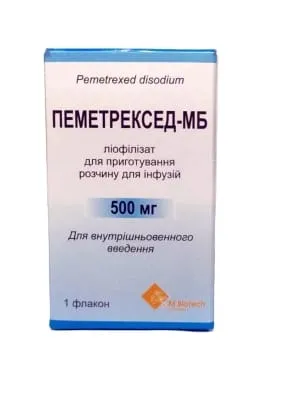
Table of Contents
INSTRUCTIONS FOR MEDICAL USE OF THE MEDICINAL PRODUCT PEMETREXED-MB (PEMETREXED-MB)
Composition:
Active substance: pemetrexed;
1 vial contains pemetrexed disodium equivalent to pemetrexed 100 mg or 500 mg;
Excipients: mannitol (E 421), sodium hydroxide, hydrochloric acid concentrated.
Pharmaceutical form. Lyophilisate for solution for infusion.
Main physicochemical properties: lyophilized powder or mass of white to pale yellow or greenish-yellow color.
Pharmacotherapeutic group. Antineoplastic agents and immunomodulators. Antimetabolites. Folic acid analogues. Pemetrexed.
ATC code L01B A04.
Pharmacological Properties
Pharmacodynamics
Pemetrexed is a multi-targeted antifolate antineoplastic agent that disrupts key folate-dependent metabolic processes essential for cellular replication.
In vitro studies have demonstrated that pemetrexed inhibits thymidylate synthase (TS), dihydrofolate reductase (DHFR), and glycinamide ribonucleotide formyltransferase (GARFT), which are critical folate-dependent enzymes involved in the de novo biosynthesis of thymidine and purine nucleotides. Pemetrexed enters cells via both the reduced folate carrier and folate-binding membrane protein transport systems. Once inside the cell, pemetrexed is rapidly converted to polyglutamate forms by the enzyme folylpolyglutamate synthetase. These polyglutamate forms accumulate within cells and are more potent inhibitors of TS and GARFT than the parent compound. Polyglutamation is a time- and concentration-dependent process that occurs more extensively in tumor cells than in healthy tissues. Polyglutamated metabolites have a prolonged intracellular half-life, resulting in sustained drug activity within malignant cells.
Studies using the mesothelioma cell line MSTO-211H demonstrated synergistic effects when pemetrexed was combined with cisplatin.
Pharmacokinetics
The pharmacokinetic properties of pemetrexed were studied in 426 oncology patients with various solid tumors following administration as monotherapy via 10-minute infusion at doses ranging from 0.2 to 838 mg/m². Pemetrexed has a steady volume of distribution of approximately 9 L/m². In vitro studies showed that approximately 81% of pemetrexed is protein-bound in plasma. The degree of renal impairment does not affect protein binding. Pemetrexed undergoes limited hepatic metabolism; 70–90% of the administered dose is excreted unchanged in urine within 24 hours after administration. In vitro studies indicate that pemetrexed is actively secreted via OAT3 (organic anion transporter 3).
The total plasma clearance of pemetrexed is 91.8 mL/min, and the plasma elimination half-life is 3.5 hours in patients with normal renal function (creatinine clearance of 90 mL/min).
Inter-patient variability in clearance is moderate, amounting to 19.3%. The overall systemic exposure to pemetrexed (AUC) and peak plasma concentration increase proportionally with dose escalation. The pharmacokinetics of pemetrexed remain consistent across multiple treatment cycles.
Concomitant administration of cisplatin does not affect the pharmacokinetics of pemetrexed. Oral supplementation with folic acid and intramuscular administration of vitamin B₁₂ do not influence the pharmacokinetics of pemetrexed.
Clinical characteristics.
Indications.
Malignant pleural mesothelioma.
Pemetrexed-MB in combination with cisplatin is indicated for the treatment of patients with malignant unresectable pleural mesothelioma.
Non-small cell lung cancer.
Pemetrexed-MB in combination with cisplatin is indicated for the treatment of patients with locally advanced or metastatic non-squamous non-small cell lung cancer in the first-line chemotherapy.
Pemetrexed-MB as monotherapy is indicated for maintenance treatment of patients with locally advanced or metastatic non-squamous non-small cell lung cancer whose disease has not progressed following platinum-based chemotherapy.
Pemetrexed-MB as monotherapy is indicated for the treatment of patients with locally advanced or metastatic non-squamous non-small cell lung cancer in the second-line chemotherapy.
Contraindications.
Hypersensitivity to the active substance or to any of the excipients of the medicinal product.
Breastfeeding period.
Concomitant use of yellow fever vaccine.
Special precautions.
As with handling other potentially toxic antineoplastic agents, careful attention should be paid to safety measures during preparation and administration of pemetrexed infusion solution. Use of gloves is recommended. If pemetrexed solution comes into contact with the skin, the skin should be washed immediately with soap and water. If pemetrexed solution comes into contact with mucous membranes, they should be rinsed with water. Pemetrexed does not cause blistering. There is no specific antidote to reverse bleeding caused by pemetrexed. Several cases of bleeding attributed to pemetrexed have been reported, which were not considered serious by investigators. Bleeding should be managed according to local standards.
Interaction with other medicinal products and other forms of interaction.
Pemetrexed is primarily eliminated unchanged by the kidneys via tubular secretion or, less frequently, by glomerular filtration. Concomitant use of nephrotoxic drugs (e.g., aminoglycosides, loop diuretics, platinum compounds, cyclosporine) may reduce pemetrexed clearance. Such combinations should be used with caution. If necessary, creatinine clearance should be closely monitored.
Concomitant use of substances that are also eliminated via tubular secretion (e.g., probenecid, penicillin) may potentially reduce pemetrexed clearance. These medicinal products should be combined with pemetrexed cautiously. If necessary, creatinine clearance should be closely monitored.
In patients with normal renal function (creatinine clearance ≥ 80 mL/min), high doses of nonsteroidal anti-inflammatory drugs (NSAIDs, such as ibuprofen >1600 mg/day) and acetylsalicylic acid (≥ 1.3 g/day) may reduce pemetrexed elimination and thereby increase the frequency of adverse reactions. Therefore, high doses of NSAIDs or acetylsalicylic acid should be used cautiously in combination with pemetrexed in patients with normal renal function (creatinine clearance ≥ 80 mL/min).
In patients with mild to moderate renal impairment (creatinine clearance 45–79 mL/min), concomitant use of pemetrexed with NSAIDs (e.g., ibuprofen) or high-dose acetylsalicylic acid should be avoided for 2 days before, on the day of, and for 2 days after pemetrexed administration.
In the absence of data on potential interactions with NSAIDs having a long half-life, such as piroxicam or rofecoxib, concomitant use of these agents in patients with mild to moderate renal impairment should be discontinued 5 days before, on the day of, and for 2 days after pemetrexed administration. If concomitant use of NSAIDs is necessary, patients should be closely monitored for signs of toxicity, particularly myelosuppression and gastrointestinal toxicity.
Pemetrexed undergoes minimal hepatic metabolism. In vitro studies with human liver microsomes suggest that pemetrexed does not clinically significantly inhibit the clearance of drugs metabolized by CYP3A, CYP2D6, CYP2C9, or CYP1A2.
Interactions common to all cytotoxic agents.
Due to an increased risk of thrombosis, oncology patients are frequently prescribed anticoagulant therapy. High individual variability in coagulation status during the disease and the potential for interaction between oral anticoagulants and antineoplastic chemotherapy necessitate increased monitoring frequency of INR (International Normalized Ratio) if oral anticoagulants are used in such patients.
Concomitant use is contraindicated: yellow fever vaccine – due to the risk of developing fatal generalized vaccine disease.
Concomitant use is not recommended: live attenuated vaccines (except yellow fever vaccine, for which concomitant use is contraindicated) – due to the risk of systemic, possibly fatal, disease. The risk is increased if the patient already has immunosuppression due to the underlying disease. In such cases, inactivated vaccines should be used if available (e.g., poliomyelitis).
Special precautions for use.
Pemetrexed can suppress bone marrow function, manifesting as neutropenia, thrombocytopenia, anemia (or pancytopenia); myelosuppression is usually the dose-limiting toxicity. Myelosuppression should be monitored throughout treatment. Pemetrexed must not be administered to patients until the absolute neutrophil count (ANC) has recovered to ≥ 1.5 × 10⁹/L and platelet count to ≥ 100 × 10⁹/L. Dose reduction in subsequent cycles is based on the following parameters from the previous treatment cycle: the lowest ANC value, platelet count, and the highest grade of non-hematologic toxicity.
Lower overall toxicity and reduced incidence of grade 3/4 hematologic and non-hematologic toxicities, such as neutropenia, febrile neutropenia, and neutropenia-associated infection, have been observed when folic acid and vitamin B₁₂ were administered prior to pemetrexed. Therefore, patients receiving pemetrexed therapy should receive folic acid and vitamin B₁₂ prophylactically to reduce treatment-related toxicity.
Skin reactions have been observed in patients who did not receive corticosteroids. Pre-treatment with dexamethasone (or equivalent) may reduce the frequency and severity of skin reactions.
Clinical experience with pemetrexed in patients with creatinine clearance below 45 mL/min is limited; therefore, pemetrexed should not be administered to such patients.
Patients with mild to moderate renal impairment should avoid taking non-steroidal anti-inflammatory drugs (NSAIDs), such as ibuprofen and acetylsalicylic acid (> 1.3 g/day), starting 2 days before, on the day of, and for 2 days after pemetrexed administration.
For patients with mild to moderate renal impairment receiving pemetrexed therapy, NSAIDs with a long elimination half-life should be discontinued at least 5 days before, on the day of, and for 2 days after pemetrexed administration.
Severe renal disorders, including acute renal failure, have been reported both with pemetrexed monotherapy and in combination with other chemotherapeutic agents. Most patients who developed such disorders had risk factors for renal impairment, including dehydration, arterial hypertension, or diabetes.
The impact of cavity fluids such as pleural effusion and ascites on pemetrexed pharmacokinetics has not been fully established. In a phase 2 study of pemetrexed involving 31 patients with solid tumors and stable fluid levels in serous cavities, no differences were observed in dose-normalized plasma concentration or pemetrexed clearance compared to patients without serous cavity fluid. Therefore, drainage should be considered prior to administering pemetrexed to patients with significant volumes of cavity fluid.
Severe dehydration associated with gastrointestinal toxicity of pemetrexed in combination with cisplatin has been observed. Therefore, patients should receive adequate antiemetic therapy and appropriate hydration before and/or after treatment.
Serious cardiovascular events, including myocardial infarction, and cerebrovascular events have been infrequently reported in clinical trials of pemetrexed, usually when pemetrexed was administered in combination with other cytotoxic agents. Most patients in whom such events occurred had pre-existing cardiovascular risk factors.
Most cancer patients are immunocompromised; therefore, concomitant use of live attenuated vaccines is not recommended.
Pemetrexed may cause genetic damage. Sexually active men should not plan fatherhood during pemetrexed therapy and for 6 months after treatment. Effective contraception or abstinence from sexual intercourse is recommended. Due to the potential of pemetrexed to cause irreversible infertility, men are advised to consider sperm banking prior to starting treatment.
Women of childbearing potential must use effective contraception during pemetrexed therapy.
Cases of "radiation recall" have been reported in patients who received prior radiation therapy weeks or years earlier.
The medicinal product contains approximately 54 mg of sodium per vial, which should be taken into account for patients on a sodium-controlled diet.
Use during pregnancy or breastfeeding.
Contraception.
Women of childbearing potential must use effective contraception during pemetrexed therapy. Pemetrexed may cause genetic damage.
Pregnancy.
There are no data on the use of pemetrexed in pregnant women. However, like other antimetabolites, pemetrexed may cause severe fetal malformations when administered during pregnancy. Reproductive toxicity has been observed in animal studies. Pemetrexed should not be used during pregnancy except in cases of clear medical necessity and only after careful assessment of benefit to the mother versus risk to the fetus.
Breastfeeding.
It is unknown whether pemetrexed is excreted in human milk. Adverse reactions in breastfed infants cannot be excluded. Therefore, breastfeeding must be discontinued during pemetrexed therapy.
Ability to affect reaction speed when driving or operating machinery.
No studies on the effect of pemetrexed on the ability to drive or operate machinery have been conducted. However, fatigue has been reported with pemetrexed; therefore, patients should exercise caution when driving or operating machinery.
Method of administration and dosage.
The medicinal product should be administered under the supervision of a qualified physician experienced in the use of anticancer agents.
Administration of combination with cisplatin.
The recommended dose of Pemetrexed-MB is 500 mg/m² body surface area (BSA) as an intravenous infusion administered over 10 minutes on day 1 of each 21-day cycle. The recommended dose of cisplatin is 75 mg/m² BSA as an infusion administered over 2 hours, approximately 30 minutes after completion of pemetrexed infusion on day 1 of each 21-day cycle. Patients should receive adequate antiemetic therapy. Appropriate hydration should be administered before and/or after cisplatin administration.
Administration as monotherapy.
For the treatment of non-small cell lung cancer (NSCLC) after prior chemotherapy, the recommended dose of Pemetrexed-MB is 500 mg/m² BSA as an intravenous infusion administered over 10 minutes on day 1 of each 21-day cycle.
Premedication regimen.
To reduce the frequency and severity of skin reactions, corticosteroids should be administered one day before, on the day of, and the day after pemetrexed administration. The corticosteroid dose should be equivalent to 4 mg of dexamethasone orally twice daily.
To reduce toxicity, patients receiving pemetrexed therapy must be given daily folic acid supplements or multivitamins containing folic acid (350–1000 mcg). At least 5 daily doses of folic acid should be taken during the 7-day period before the first dose of pemetrexed. Folic acid supplementation should continue throughout the entire course of therapy and for 21 days after the last dose of pemetrexed. Patients should also receive vitamin B12 intramuscularly once daily during the week before the first dose of pemetrexed and once every 3 cycles thereafter. Subsequent vitamin B12 injections may be administered on the day of pemetrexed infusion.
Monitoring.
In patients receiving pemetrexed, complete blood counts including differential white blood cell (WBC) counts and platelets should be checked before each administration. A biochemical blood test should be performed before each chemotherapy cycle to assess liver and kidney function. Absolute neutrophil count (ANC) must be ≥ 1.5 × 10⁹/L and platelet count ≥ 100 × 10⁹/L prior to each chemotherapy cycle.
Creatinine clearance must be ≥ 45 mL/min.
Total bilirubin levels should not exceed 1.5 times the upper limit of normal. Alkaline phosphatase (AP), ALT, and AST levels should not exceed normal limits by more than 3 times. Elevations in AP, ALT, and AST levels up to 5 times the upper limit of normal are acceptable if liver metastases are present.
Dose modification.
Dose adjustments prior to initiation of the next cycle should be based on the lowest hematological values or the maximum non-hematological toxicity observed after the previous treatment cycle. Treatment may be delayed to allow sufficient time for recovery. After recovery, patients should resume therapy according to the recommendations in Tables 1–3, corresponding to the use of Pemetrexed-MB as monotherapy or in combination with cisplatin.
Table 1
| Dose modification of Pemetrexed-MB (combination therapy or monotherapy) and cisplatin. Hematological toxicity |
|
| Parameters |
Dose |
| Lowest value of ANC < 0.5×10⁹/L and lowest value of platelets ≥ 50×10⁹/L |
75 % of previous dose (for both drugs) |
| Lowest value of platelets < 50×10⁹/L regardless of the lowest value of ANC |
75 % of previous dose (for both drugs) |
| Lowest value of platelets < 50×10⁹/L in the presence of bleeding, regardless of the lowest value of ANC |
50 % of previous dose (for both drugs) |
and Criteria according to the Common Toxicity Criteria of the National Cancer Institute, USA (CTC v2.0; NCI 1998) correspond to the definition of bleeding ≥ CTC grade 2.
If a patient develops signs of non-hematological toxicity (except neurotoxicity) ≥ grade 3, administration of Pemetrexed-MB should be discontinued until lower values are achieved or values corresponding to the baseline prior to initiation of therapy in this patient are reached. Therapy should be continued according to the recommendations outlined in Table 2.
Table 2
| Dose modification of Pemetrexed-MB (combination therapy or monotherapy) and cisplatin. Nonhematologic toxicity a,b |
||
| Pemetrexed-MB dose (mg/m2) |
Cisplatin dose (mg/m2) |
|
| Any grade 3 or 4 toxicity, except mucositis |
75 % of previous dose |
75 % of previous dose |
| Any diarrhea requiring hospitalization (regardless of grade), or grade 3 or 4 diarrhea |
75 % of previous dose |
75 % of previous dose |
| Mucositis grade 3 or 4 |
50 % of previous dose |
100 % of previous dose |
a According to the National Cancer Institute Common Toxicity Criteria (CTC v2.0; NCI 1998).
b Excluding neurotoxicity.
Recommended dose modification of Pemetrexed-MB and cisplatin in the case of neurotoxicity is provided in Table 3. In the event of grade 3 or 4 neurotoxicity, treatment should be discontinued.
Table 3
| Dose modification of Pemetrexed-MB (combination therapy or monotherapy) and cisplatin. Neurotoxicity |
||
| CTCa grade |
Pemetrexed-MB dose (mg/m2) |
Cisplatin dose (mg/m2) |
| 0-1 |
100% of previous dose |
100% of previous dose |
| 2 |
100% of previous dose |
50% of previous dose |
a Criteria according to the National Cancer Institute Common Toxicity Criteria (CTC v2.0; NCI 1998).
Treatment with Pemetrexed-MB should be discontinued if any hematological or non-hematological toxicity of grade 3 or 4 occurs after two dose reductions, or immediately discontinued if neurotoxicity of grade 3 or 4 occurs.
Elderly patients. Clinical studies provided no evidence that patients aged 65 years or older have a higher risk of developing adverse effects compared to patients under 65 years of age. There is no need for dose reduction except as recommended for all patients.
Patients with renal impairment (using the standard Cockcroft-Gault formula or glomerular filtration rate (GFR) determined by plasma clearance of Tc99m-DPTA). Pemetrexed is predominantly excreted unchanged by the kidneys. Dose adjustments were not required in clinical studies for patients with creatinine clearance of at least 45 mL/min, except as recommended for all patients. The number of patients with creatinine clearance below 45 mL/min was insufficient to make dosing recommendations specifically for this patient group. Therefore, the use of pemetrexed in patients with creatinine clearance <45 mL/min is not recommended.
Patients with hepatic impairment. No correlation has been established between AST, ALT, total bilirubin levels, and the pharmacokinetics of pemetrexed. However, the effect of the drug in patients with hepatic dysfunction, such as bilirubin levels >1.5 times the upper limit of normal (ULN) or aminotransferase levels >3 times ULN (without liver metastases), or >5 times ULN (with liver metastases), has not been specifically studied.
Method of administration.
Warnings regarding the preparation and administration of Pemetrexed-MB are provided in the section "Special precautions". Pemetrexed-MB should be administered as an intravenous infusion over 10 minutes on day 1 of each 21-day cycle. Recommendations for reconstitution and dilution of Pemetrexed-MB are provided below.
Recommendations for administration
- Appropriate aseptic technique should be used during reconstitution and subsequent dilution of pemetrexed for intravenous infusion.
- Calculate the required dose and number of vials of Pemetrexed-MB. Each vial contains an excess of pemetrexed to ensure the labeled dose can be withdrawn.
- Reconstitute the contents of the 500 mg vial with 20 mL of 0.9% sodium chloride injection solution (without preservatives) to obtain a solution containing 25 mg/mL of pemetrexed. Gently shake each vial until the lyophilisate is completely dissolved. The resulting solution should be clear, colorless to yellow or green-yellow, and free from particulate matter. The pH of the reconstituted solution is 6.6–7.8. FURTHER DILUTION IS REQUIRED.
- The required volume of the reconstituted pemetrexed solution should be further diluted to a total volume of 100 mL with 0.9% sodium chloride solution (without preservatives) and administered as an intravenous infusion over 10 minutes.
- The pemetrexed infusion solution prepared as described above is compatible with infusion bags and administration sets made of polyvinyl chloride and polyolefin.
- Parenteral preparations should be inspected visually for particulate matter and discoloration prior to administration. If particulate matter is present, the solution must not be used.
- The pemetrexed solution is intended for individual use only. Any unused medicinal product or waste material should be disposed of in accordance with current regulations.
Children.
There are no relevant data available on the use of Pemetrexed-MB in pediatric practice for the treatment of malignant pleural mesothelioma and non-small cell lung cancer.
Overdose.
Symptoms. The following symptoms have been reported: neutropenia, anemia, thrombocytopenia, mucositis, sensory polyneuropathy, and rash. Expected complications of overdose include bone marrow suppression, manifesting as neutropenia, thrombocytopenia, and anemia. In addition, infection (with or without fever), diarrhea, and/or mucositis may occur.
Treatment. If overdose is suspected, the patient should be monitored, appropriate blood tests performed, and symptomatic therapy administered as needed. Administration of calcium folinate/folic acid should be considered.
Adverse reactions.
Adverse reactions reported most frequently during administration of pemetrexed, both as monotherapy and in combination therapy, include bone marrow suppression manifested as anemia, neutropenia, leukopenia, and thrombocytopenia, as well as gastrointestinal toxicity presenting as anorexia, nausea, vomiting, diarrhea, constipation, pharyngitis, mucositis, and stomatitis. Other adverse reactions include renal toxicity, increased levels of aminotransferases, alopecia, asthenia, dehydration, rash, infection/sepsis, and neuropathy. Stevens–Johnson syndrome and toxic epidermal necrolysis have been reported rarely.
The table below shows the frequency and severity of adverse effects observed in > 5 % of 168 patients with mesothelioma randomly assigned to receive cisplatin plus pemetrexed and 163 patients with mesothelioma randomly assigned to receive cisplatin monotherapy. All patients in both treatment groups received full supplementation with folic acid and vitamin B12.
Within each group, adverse reactions are listed in descending order of frequency, categorized as: very common (≥ 1/10), common (≥ 1/100 to < 1/10), uncommon (≥ 1/1000 to < 1/100), rare (≥ 1/10000 to < 1/1000), very rare (< 1/10000), and frequency not known (cannot be estimated from available data).
Table 4
| Body systems |
Frequency |
Symptoms* |
Pemetrexed/cisplatin (N=168) |
Cisplatin (N=163) |
|||
| Any-grade toxicity (%) |
Grade 3-4 toxicity (%) |
Any-grade toxicity (%) |
Grade 3-4 toxicity (%) |
||||
| Blood and lymphatic system |
Very common |
Neutropenia/ granulocytopenia |
56.0 |
23.2 |
13.5 |
3.1 |
|
| Leukopenia |
53.0 |
14.9 |
16.6 |
0.6 |
|||
| Hemoglobin decrease |
26.2 |
4.2 |
10.4 |
0.0 |
|||
| Platelet count decrease |
23.2 |
5.4 |
8.6 |
0.0 |
|||
| Metabolism and nutrition disorders |
Common |
Dehydration |
6.5 |
4.2 |
0.6 |
0.6 |
|
| Nervous system |
Very common |
Sensory neuropathy |
10.1 |
0.0 |
9.8 |
0.6 |
|
| Common |
Taste disturbance |
7.7 |
0.0*** |
6.1 |
0.0*** |
||
| Ophthalmologic disorders |
Common |
Conjunctivitis |
5.4 |
0.0 |
0.6 |
0.0 |
|
| Gastrointestinal system |
Very common |
Diarrhea |
16.7 |
3.6 |
8.0 |
0.0 |
|
| Vomiting |
56.5 |
10.7 |
49.7 |
4.3 |
|||
| Stomatitis/pharyngitis |
23.2 |
3.0 |
6.1 |
0.0 |
|||
| Nausea |
82.1 |
11.9 |
76.7 |
5.5 |
|||
| Anorexia |
20.2 |
1.2 |
14.1 |
0.6 |
|||
| Constipation |
11.9 |
0.6 |
7.4 |
0.6 |
|||
| Common |
Dyspepsia |
5.4 |
0.6 |
0.6 |
0.0 |
||
| Skin and subcutaneous tissue |
Very common |
Rash |
16.1 |
0.6 |
4.9 |
0.0 |
|
| Alopecia |
11.3 |
0.0*** |
5.5 |
0.0*** |
|||
| Renal disorders |
Very common |
Creatinine increase |
10.7 |
0.6 |
9.8 |
1.2 |
|
| Creatinine clearance decrease** |
16.1 |
0.6 |
17.8 |
1.8 |
|||
| General disorders |
Very common |
Fatigue |
47.6 |
10.1 |
42.3 |
9.2 |
|
* Reference to National Cancer Institute, USA, CTC criteria for each grade of toxicity (version 2.0), except for the criterion "decreased creatinine clearance".**
** This term is derived from the CTC category "Other renal/urinary tract disorders".
*** According to the National Cancer Institute, USA, CTC criteria (version 2.0; NCI 1998), alopecia and taste disorders should be reported as grade 1 or 2.
The 5% threshold in this table was set to include all symptoms considered possibly related to pemetrexed and cisplatin.
Clinically significant CTC toxicity observed in >1% and ≤5% of patients randomly assigned to receive cisplatin and pemetrexed includes renal failure, infection, fever, febrile neutropenia, increased levels of AST, ALT, and gamma-glutamyl transferase (GGT), urticaria, and chest pain.
Clinically significant CTC toxicity observed in ≤1% of patients randomly assigned to receive cisplatin and pemetrexed includes arrhythmia and motor neuropathy.
Table 5 shows the frequency and severity of adverse reactions observed in >5% of the 265 patients randomly assigned to receive pemetrexed monotherapy with folic acid and vitamin B12, and the 276 patients randomly assigned to receive docetaxel monotherapy. All patients had histologically confirmed locally advanced or metastatic non-small cell lung cancer and had received prior chemotherapy.
Table 5
| Organ systems |
Frequency |
Symptoms* |
Pemetrexed (N=265) |
Docetaxel (N=276) |
||
| Any-grade toxicity (%) |
Grade 3-4 toxicity (%) |
Any-grade toxicity (%) |
Grade 3-4 toxicity (%) |
|||
| Blood and lymphatic system disorders |
Very common |
Neutropenia/granulocytopenia |
10.9 |
5.3 |
45.3 |
40.2 |
| Leukopenia |
12.1 |
4.2 |
34.1 |
27.2 |
||
| Hemoglobin decrease |
19.2 |
4.2 |
22.1 |
4.3 |
||
| Common |
Thrombocyte count decrease |
8.3 |
1.9 |
1.1 |
0.4 |
|
| Gastrointestinal disorders |
Very common |
Nausea |
30.9 |
2.6 |
16.7 |
1.8 |
| Anorexia |
21.9 |
1.9 |
23.9 |
2.5 |
||
| Vomiting |
16.2 |
1.5 |
12.0 |
1.1 |
||
| Stomatitis/pharyngitis |
14.7 |
1.1 |
17.4 |
1.1 |
||
| Diarrhea |
12.8 |
0.4 |
24.3 |
2.5 |
||
| Common |
Constipation |
5.7 |
0.0 |
4.0 |
0.0 |
|
| Hepatobiliary disorders |
Common |
AlAT (SGPT) |
7.9 |
1.9 |
1.4 |
0.0 |
| AsAT (SGOT) |
6.8 |
1.1 |
0.7 |
0.0 |
||
| Skin and subcutaneous tissue disorders |
Very common |
Rash/desquamation |
14.0 |
0.0 |
|
0.0 |
| Common |
Pruritus |
6.8 |
0.4 |
1.8 |
0.0 |
|
| Alopecia |
6.4 |
0.4** |
37.7 |
2.2** |
||
| General disorders |
Very common |
Fatigue |
34.0 |
5.3 |
35.9 |
5.4 |
| Common |
Fever |
8.3 |
0.0 |
7.6 |
0.0 |
|
* Reference to National Cancer Institute, USA, CTC criteria based on laboratory values for each grade of toxicity (version 2.0).
** According to the National Cancer Institute, USA, CTC criteria (version 2.0; NCI 1998), alopecia should be reported as toxicity of grade 1 or 2.
The 5% threshold in this table is included to capture all symptoms considered related to pemetrexed.
Clinically significant CTC toxicities observed in ≥1% and ≤5% (commonly) of patients randomly assigned to pemetrexed therapy include infection without neutropenia, febrile neutropenia, allergic reactions/hypersensitivity, increased creatinine levels, motor neuropathy, sensory neuropathy, erythema multiforme, and abdominal pain.
Clinically significant CTC toxicities observed in <1% (rarely) of patients randomly assigned to pemetrexed therapy include supraventricular arrhythmias.
Clinically significant laboratory indicators of overall grade 3 and 4 toxicities were similar to the integrated phase 2 results across three pemetrexed monotherapy trials (n=164) and the phase 3 trial described above, except for neutropenia (12.8% vs. 5.3%, respectively) and increased alanine aminotransferase levels (15.2% vs. 1.9%, respectively). These discrepancies were likely due to differences in patient populations, as the phase 2 trials included both chemotherapy-naïve patients and those with extensive prior therapy for breast cancer and pre-existing liver metastases and/or baseline abnormalities in liver function tests.
Table 6 shows the frequency and severity of adverse events observed in >5% of 839 patients with non-squamous non-small cell lung cancer randomly assigned to pemetrexed and cisplatin, as well as 830 patients randomly assigned to cisplatin and gemcitabine. All patients had histologically confirmed locally advanced or metastatic non-squamous non-small cell lung cancer and all received full supplementation with folic acid and vitamin B12.
Table 6
| Organ systems |
Frequency |
Symptoms* |
Pemetrexed/cisplatin (N=839) |
Gemcitabine/cisplatin (N=830) |
||
| Any-grade toxicity (%) |
Grade 3-4 toxicity (%) |
Any-grade toxicity (%) |
Grade 3-4 toxicity (%) |
|||
| Blood and lymphatic system disorders |
Very common |
Decreased hemoglobin |
33.0* |
5.6* |
45.7* |
9.9* |
| Neutropenia/ granulocytopenia |
29.0* |
15.1* |
38.4* |
26.7* |
||
| Leukopenia |
17.8 |
4.8* |
20.6 |
7.6* |
||
| Decreased platelet count |
10.1* |
4.1* |
26.6* |
12.7* |
||
| Nervous system disorders |
Common |
Sensory neuropathy |
8.5* |
0.0* |
12.4* |
0.6* |
| Taste disturbance |
8.1 |
0.0*** |
8.9 |
0.0*** |
||
| Gastrointestinal disorders |
Very common |
Nausea |
56.1 |
7.2* |
53.4 |
3.9* |
| Vomiting |
39.7 |
6.1 |
35.5 |
6.1 |
||
| Anorexia |
26.6 |
2.4* |
24.2 |
0.7* |
||
| Constipation |
21.0 |
0.8 |
19.5 |
0.4 |
||
| Stomatitis/ pharyngitis |
13.5 |
0.8 |
12.4 |
0.1 |
||
| Diarrhea without colostomy |
12.4 |
1.3 |
12.8 |
1.6 |
||
| Common |
Dyspepsia/heartburn |
5.2 |
0.1 |
5.9 |
0.0 |
|
| Skin and subcutaneous tissue disorders |
Very common |
Alopecia |
11.9* |
0*** |
21.4* |
0.5*** |
| Common |
Rash/desquamation |
6.6 |
0.1 |
8.0 |
0.5 |
|
| Renal disorders |
Very common |
Increased creatinine |
10.1* |
0.8 |
6.9* |
0.5 |
| General disorders |
Very common |
Fatigue |
42.7 |
6.7 |
44.9 |
4.9 |
*P-value ≤ 0.05 for comparison of pemetrexed/cisplatin and gemcitabine/cisplatin arms, obtained using Fisher’s exact test.
** According to the National Cancer Institute, USA, CTC (version 2.0; NCI 1998) for each toxicity grade.
*** According to the National Cancer Institute, USA, CTC (version 2.0; NCI 1998), taste disturbance and alopecia should be reported as grade 1 or 2.
A 5% threshold is used in this table to include all symptoms considered related to pemetrexed.
Clinically significant toxicity observed in ≥ 1% and ≤ 5% of patients randomized to receive cisplatin and pemetrexed includes increased AST levels, increased ALT levels, infection, febrile neutropenia, renal failure, fever, dehydration, conjunctivitis, and decreased creatinine clearance.
Clinically significant toxicity observed in < 1% of patients randomized to receive cisplatin and pemetrexed includes increased GGT levels, chest pain, arrhythmia, and motor neuropathy.
Clinically significant toxicity by gender was similar across all patient populations receiving pemetrexed with cisplatin.
Table 7 shows the frequency and severity of adverse events observed in > 5% of the 800 patients randomized to receive pemetrexed and 402 patients randomized to receive placebo in the maintenance monotherapy pemetrexed study (JMEN study) and in the long-term maintenance monotherapy pemetrexed study (PARAMOUNT study). All patients had stage IIIB or IV non-small cell lung cancer and had previously received platinum-based chemotherapy. Patients received full supplementation with folic acid and vitamin B12.
Table 7
| Organ systems |
Frequency |
Signs* |
Pemetrexed (N=800)*** |
Placebo (N=402)*** |
||
| Any grade toxicity (%) |
Grade 3-4 toxicity (%) |
Any grade toxicity (%) |
Grade 3-4 toxicity (%) |
|||
| Blood and lymphatic system disorders |
Very common |
Hemoglobin decreased |
18.06 |
4.5 |
5.2 |
0.5 |
| Common |
Leukopenia |
5.8 |
1.9 |
0.7 |
0.2 |
|
| Neutropenia |
8.4 |
4.4 |
0.2 |
0.0 |
||
| Nervous system disorders |
Common |
Sensory neuropathy |
7.4 |
0.6 |
5.0 |
0.2 |
| Gastrointestinal disorders |
Very common |
Nausea |
17.3 |
0.8 |
4.0 |
0.2 |
| Anorexia |
12.8 |
1.1 |
3.2 |
0.0 |
||
| Common |
Vomiting |
8.4 |
0.3 |
1.5 |
0.0 |
|
| Stomatitis/ mucositis |
6.8 |
0.8 |
1.7 |
0.0 |
||
| Hepatobiliary disorders |
Common |
AlAT (SGPT) |
6.5 |
0.1 |
2.2 |
0.0 |
| AsAT (SGOT) |
5.9 |
0.0 |
1.7 |
0.0 |
||
| Skin and subcutaneous tissue disorders |
Common |
Rash/desquamation |
8.1 |
0.1 |
3.7 |
0.0 |
| General disorders |
Very common |
Fatigue |
24.1 |
5.3 |
10.9 |
0.7 |
| Common |
Pain |
7.6 |
0.9 |
4.5 |
0.0 |
|
| Edema |
5.6 |
0.0 |
1.5 |
0.0 |
||
| Renal disorders |
Common |
Renal disorders**** |
7.6 |
0.9 |
1.7 |
0.0 |
ALT – alanine aminotransferase; AST – aspartate aminotransferase; NCI – National Cancer Institute, USA; CTCAE – Common Terminology Criteria for Adverse Events.
* Frequency criteria: very common – ≥ 10 %; common – > 5 % and < 10 %. In this table, the 5 % threshold was introduced to include all symptoms considered to be related to pemetrexed.
** Refers to the National Cancer Institute (USA) CTC criteria for laboratory values for each toxicity grade (version 3.0, NCI 2003). The reported frequency of events corresponds to CTCAE version 3.0 requirements.
*** The integrated adverse reactions table contains pooled data from the pemetrexed maintenance therapy studies JMEN (N=663) and PARAMOUNT (N=539).
**** General term encompassing increased blood/serum creatinine levels, decreased glomerular filtration rate, renal failure, and other renal and urinary system events.
Clinically significant toxicity observed in ≥1 % and ≤ 5 % of patients randomized to pemetrexed therapy includes febrile neutropenia, infection, thrombocytopenia, diarrhea, constipation, alopecia, rash/pruritus, fever (without neutropenia), eye disorders (including conjunctivitis), increased lacrimation, dizziness, and motor neuropathy.
Clinically significant toxicity observed in < 1 % of patients randomized to pemetrexed therapy includes allergic reactions/hypersensitivity, erythema multiforme, supraventricular arrhythmia, and pulmonary embolism.
Safety was evaluated in patients randomized to pemetrexed therapy (N=800). The incidence of adverse reactions was assessed in patients who received ≤ 6 cycles of pemetrexed maintenance treatment (N=519) compared to those who received > 6 cycles of pemetrexed treatment (N=281). An increased incidence of adverse reactions (all grades of severity) was observed with longer duration of treatment. A significant increase in the incidence of an adverse event possibly related to the drug, namely grade 3 or 4 neutropenia, was observed with longer duration of pemetrexed use (≤ 6 cycles – 3.3 %; > 6 cycles – 6.4 %; p=0.046). There was no statistically significant difference in the incidence of other individual grade 3, 4, and 5 adverse events with longer treatment duration.
Serious cardiovascular and cerebrovascular events, including myocardial infarction, angina, cerebrovascular accident, and transient ischemic attack, were infrequently reported in clinical trials of pemetrexed, usually in combination with other cytotoxic agents. Most patients in whom such events occurred had a history of cardiovascular risk factors.
Potentially serious cases of hepatitis were rarely reported during clinical trials.
Cases of pancytopenia were infrequently reported during clinical trials of pemetrexed.
Cases of colitis (including intestinal and rectal hemorrhage, sometimes fatal, intestinal perforation, intestinal necrosis, and appendicitis) were infrequently reported during clinical trials in patients treated with pemetrexed.
Cases of interstitial pneumonitis with respiratory failure, sometimes fatal, were infrequently reported during clinical trials in patients treated with pemetrexed.
Cases of edema in patients receiving pemetrexed treatment were infrequently reported.
Cases of esophagitis/radiation esophagitis were infrequently reported during clinical trials of pemetrexed.
Cases of sepsis, sometimes fatal, were frequently reported during clinical trials of pemetrexed.
During post-marketing surveillance of pemetrexed, the following adverse reactions have been observed.
Acute renal failure was infrequently reported both during pemetrexed monotherapy and in combination with other chemotherapeutic agents.
Radiation pneumonitis was infrequently reported in patients who received radiation therapy before, during, or after pemetrexed treatment.
"Radiation recall" reactions were rarely reported in patients who had previously received radiation therapy.
Peripheral ischemia, sometimes leading to limb necrosis, was infrequently reported.
Bullous disorders, including Stevens-Johnson syndrome and toxic epidermal necrolysis, were rarely reported, with some cases being fatal.
Immune-mediated hemolytic anemia was rarely reported in patients receiving pemetrexed.
Anaphylactic shock was rarely reported.
Exudative erythema, predominantly affecting the lower limbs, has been reported with unknown frequency.
Shelf life. 2 years.
Reconstituted solution. In accordance with preparation recommendations, the reconstituted lyophilisate and infusion solution of Pemetrexed-MB do not contain antimicrobial preservatives.
Chemical and physical stability of the reconstituted lyophilisate and pemetrexed infusion solution has been demonstrated for 24 hours when stored refrigerated. From a microbiological standpoint, the prepared infusion solution of Pemetrexed-MB should be used immediately. If the medicinal product is not used immediately, the user is responsible for appropriate storage at 2 °C - 8 °C for no more than 24 hours.
Storage conditions.
No special storage conditions are required. Keep out of reach of children.
Store for up to 24 hours after reconstitution at 2 °C - 8 °C.
Incompatibilities. Pemetrexed is incompatible with calcium-containing diluents, such as Ringer's solution. Incompatibility studies for pemetrexed are lacking; therefore, it must not be mixed with any other medicinal product.
Packaging.
1 vial per cardboard carton.
Prescription status. Prescription only.
Manufacturer.
RELIANCE LIFE SCIENCES PRIVATE LIMITED
RELIANCE LIFE SCIENCES PRIVATE LIMITED
Manufacturer's address and site of operations.
PLANT 6, R-282, TTC AREA MIDC, DHIRUBHAI AMBANI LIFE SCIENCES CENTRE, THANE BELAPUR ROAD, NAVI MUMBAI, MAHARASHTRA 400701, INDIA
PLANT 6, R-282, TTC AREA OF MIDC, DHIRUBHAI AMBANI LIFE SCIENCES CENTRE, THANE BELAPUR ROAD, NAVI MUMBAI, MAHARASHTRA 400701, INDIA
Marketing Authorization Holder.
M.BIOTECH LIMITED
M.BIOTECH LIMITED
Address of the Marketing Authorization Holder.
Gladstone House, 77-79 High Street, Egham TW20 9HY, Surrey, United Kingdom
Gladstone House, 77-79 High Street, Egham TW20 9HY, Surrey, United Kingdom