Pancreonor® 10000
Ukraine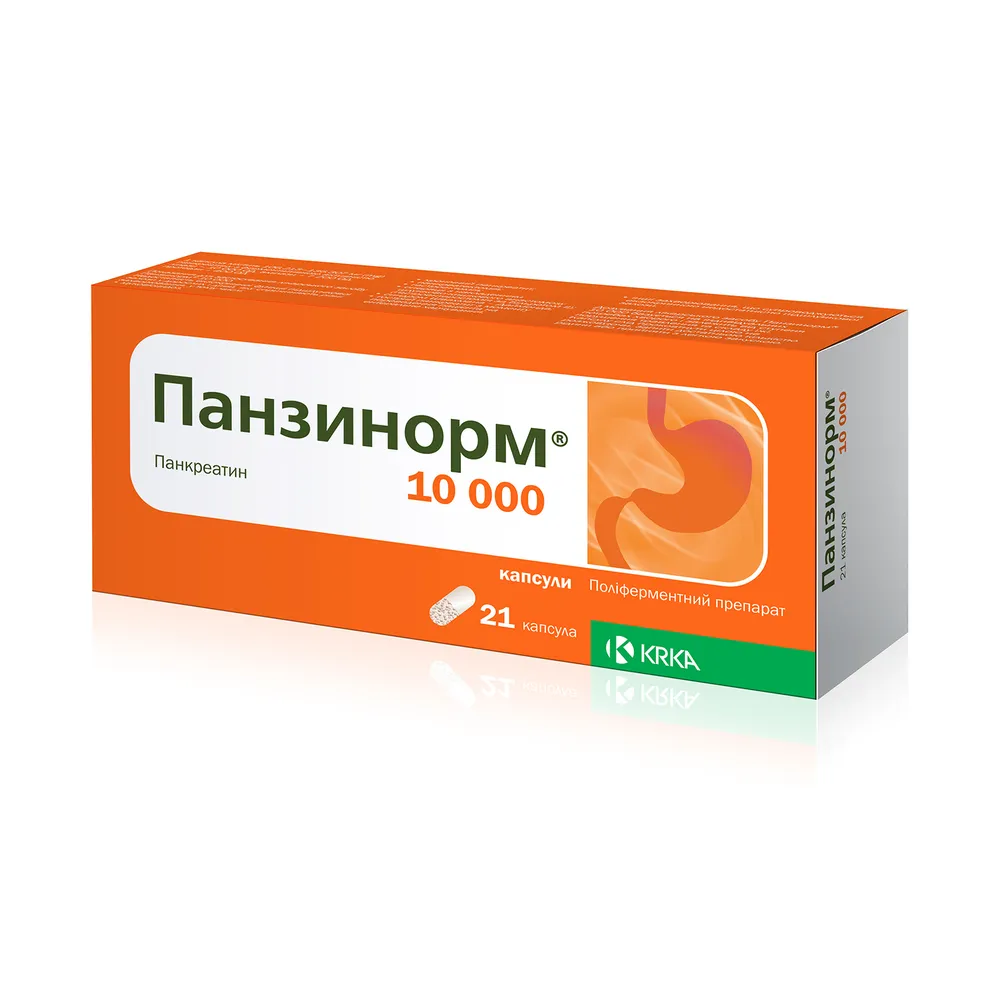
Table of Contents
INSTRUCTIONS FOR MEDICAL USE OF THE MEDICINAL PRODUCT Panzynorm® 10 000 (Panzynorm 10 000)
Composition:
Active substance: pancreatin (porcine);
1 capsule contains 106.213–136.307 mg of pancreatin with enzymatic activity of lipase – 10,000 IU, amylase – 7,200 IU, protease – 400 IU;
Excipients: methacrylic acid copolymer dispersion (containing methacrylic acid and ethacrylate copolymer (1 : 1), polysorbate 80, sodium lauryl sulfate, water), triethyl citrate, talc, simethicone emulsion 30% (containing simethicone, methylcellulose, sorbic acid, water);
hard gelatin capsule contains: gelatin, titanium dioxide (E 171).
Pharmaceutical form. Capsules.
Main physicochemical properties: white, opaque capsules filled with beige-brown granules with a characteristic odor.
Pharmacotherapeutic group. Digestive enzymes. Pancreatic enzyme preparations. ATC code A09AA02.
Pharmacological properties.
Pharmacodynamics.
Pancreatin 10,000 capsules compensate for pancreatic enzyme deficiency, accelerate catabolism, and improve the clinical picture in cases of impaired digestion. The active enzymes are released in the small intestine, where they continue to exert their action. High lipase activity is crucial in the treatment of digestive disorders caused by digestive enzyme insufficiency. Lipase breaks down fats into fatty acids and monoglycerides, enabling their absorption as well as the absorption of fat-soluble vitamins. Amylase breaks down carbohydrates into dextrins and sugars, while protease acts on proteins. Panzinorm® 10 000 improves nutritional status by enhancing the absorption of various food components and also prevents or reduces steatorrhea and symptoms associated with impaired digestion. Panzinorm® 10 000 may reduce pain in chronic pancreatitis. This effect is attributed to the action of protease, which decreases pancreatic secretion. The mechanism of this effect has not been fully elucidated.
Clinical characteristics.
Indications.
Exocrine pancreatic insufficiency in adults and children caused by various diseases, including:
- cystic fibrosis;
- chronic pancreatitis;
- pancreatectomy;
- gastrectomy;
- gastrointestinal anastomosis surgery (Billroth II gastrenterostomy);
- Schwachman-Diamond syndrome;
- acute pancreatitis from the moment the patient is switched to enteral nutrition;
- other diseases associated with exocrine pancreatic insufficiency.
Contraindications.
Hypersensitivity to the active substance, pork, or other components of the medicinal product.
Acute pancreatitis or acute exacerbation of chronic pancreatitis.
Interaction with other medicinal products and other forms of interaction.
Pancreatic enzymes inhibit the absorption of folic acid. When bicarbonates and cimetidine are used concomitantly with high doses of pancreatic enzymes, periodic analysis of serum folic acid salt concentrations is recommended, and additional folic acid supplementation should be provided if necessary.
Pancreatic enzymes may reduce the effectiveness of acarbose and miglitol.
Acid-resistant microgranules contained in PanzyNorm® 10 000 are destroyed in the duodenum. If the duodenum is excessively acidic, enzymes may be released untimely. Administration of H2-receptor antagonists or proton pump inhibitors, which reduce gastric acid secretion, may allow some patients to reduce the dose of PanzyNorm® 10 000.
Pancreatic enzymes may reduce iron absorption, but the clinical significance of this interaction is unknown.
Special precautions for use.
The drug contains active enzymes that may damage the mucous membrane of the oral cavity; therefore, capsules should be swallowed whole, without chewing, and taken with sufficient fluid.
In patients with cystic fibrosis who have received high doses of pancreatin preparations, narrowing of the ileocecal region and colon (fibrosing colonopathy) has been observed.
As a precautionary measure, it is recommended that if unusual abdominal discomfort or changes in abdominal symptoms occur, medical advice should be sought to exclude the possibility of fibrosing colonopathy, especially if the patient is receiving more than 10,000 IU of lipase/kg/day.
There is a theoretical risk of transmission of porcine viral infections, including infections caused by novel or undefined viruses. The presence of porcine viruses capable of infecting humans cannot be completely ruled out. However, to date, no cases of infectious disease transmission have been reported following the use of porcine pancreatin preparations.
Use with caution in patients with renal insufficiency or hyperuricemia.
Use during pregnancy or breastfeeding.
There are no data on the safety of lipase, amylase, and protease during pregnancy.
Animal studies have not shown any direct or indirect adverse effects on pregnancy, embryonal development, parturition, or postnatal development.
Should be prescribed with caution to pregnant women. Enzymes are not absorbed from the gastrointestinal tract; however, risk cannot be entirely excluded. The medicinal product should be used in pregnant and breastfeeding women only if the expected benefit to the mother outweighs the potential risk to the fetus or infant.
Ability to affect the speed of reactions when driving or operating machinery.
No effects on the ability to drive a vehicle or operate machinery have been observed.
Method of Administration and Dosage
The dosage of the medication is based on individual patient needs and depends on the degree of digestive impairment and dietary composition. The medication should be taken during or immediately after meals.
The capsule should be swallowed whole without chewing and accompanied by an adequate amount of liquid or taken with a light snack. For easier administration (in children and elderly patients), the capsule may be opened and the acid-resistant granules mixed with soft food that does not require chewing, such as apple puree, or with a liquid having a neutral or slightly acidic pH (e.g., yogurt, grated apple). This mixture should be consumed immediately.
During treatment with Pancreatinum® 10,000, it is very important to maintain adequate fluid intake, especially during periods of increased fluid loss. Fluid deficiency may exacerbate constipation.
Dosage in cystic fibrosis.
General recommendations for pancreatic enzyme replacement therapy:
The initial dose for children under 4 years of age is 1000 IU of lipase per kilogram of body weight with each meal; for children aged 4 years and older, it is 500 IU of lipase per kilogram of body weight per meal.
The dose should be individually adjusted depending on disease severity, control of steatorrhea, and maintenance of adequate nutritional status.
The maintenance dose for most patients should not exceed 10,000 IU of lipase per kilogram of body weight per day or 4000 IU of lipase per 1 gram of dietary fat consumed.
Dosage in other forms of exocrine pancreatic insufficiency
The dose should be individually adjusted depending on the degree of digestive impairment and fat content of the diet. The usual initial dose ranges from 10,000 to 25,000 IU of lipase with each main meal. However, some patients may require higher doses to control steatorrhea and maintain adequate nutritional status. According to standard clinical practice, a minimum of 20,000 to 50,000 units of lipase should be taken with meals. The lipase dose with main meals (breakfast, lunch, or dinner) may range from 25,000 to 80,000 IU, while for light snacks between main meals, the dose should be half of the individual main-meal dose.
Children.
Used in pediatric practice.
Overdose.
There are no data regarding systemic toxicity in case of overdose. Overdose may cause nausea, vomiting, diarrhea, hyperuricemia, uricosuria, perianal irritation, and very rarely, predominantly only in patients with cystic fibrosis, fibrosing colonopathy.
In case of overdose, the medication should be discontinued; recommended measures include hydration and symptomatic treatment.
Side effects.
Immune system:
hypersensitivity reactions, including rash, itching, redness of the skin, sneezing, urticaria, lacrimation, bronchospasm, airway obstruction, anaphylactic reactions.
Gastrointestinal tract:
nausea, vomiting, abdominal pain, constipation or diarrhea, flatulence, irritation of the skin around the mouth or anus, especially after taking high doses.
In isolated cases in patients with cystic fibrosis, administration of the drug in high doses (more than 10,000 IU lipase/kg body weight/day) may lead to formation of strictures in the colon or ileocecal region. If sudden or worsening abdominal pain or increased flatulence occurs, examination should be performed to rule out possible fibrosing colonopathy.
Effects on laboratory and instrumental test results:
hyperuricemia, hyperuricosuria, folic acid deficiency.
Shelf life.
3 years.
Storage conditions.
Store at a temperature not exceeding 25 °C in the original packaging to protect from moisture.
Keep out of reach of children.
Packaging.
7 capsules per blister; 3, 8, or 12 blisters per carton.
Prescription status.
Over-the-counter.
Manufacturer.
KRKA, d.d., Novo mesto / KRKA, d.d., Novo mesto.
Manufacturer's address.
Smarjeska cesta 6, 8501 Novo mesto, Slovenia / Smarjeska cesta 6, 8501 Novo mesto, Slovenia.