Pantestin-darnitsa®
Ukraine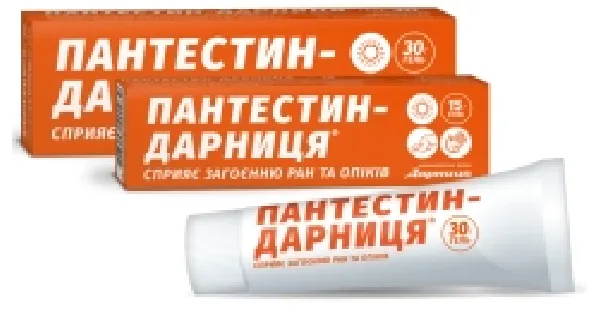
Table of Contents
INSTRUCTIONS FOR MEDICAL USE OF THE MEDICINAL PRODUCT PANTHESTIN-DARNITSA® (Panthestin-dARNITSA)
Composition:
Active substances: dexpanthenol, miramistin;
1 g of gel contains: dexpanthenol (D-panthenol) 50 mg, miramistin 5 mg;
Excipients: propylene glycol, polyethylene glycol (macrogol 400), poloxamer, cetyl alcohol, stearyl alcohol, purified water.
Pharmaceutical form. Gel.
Main physicochemical properties: homogeneous white gel with a faint specific odor.
Pharmacotherapeutic group.
Medicinal products promoting wound healing (scar formation). ATC code D03A X.
Pharmacological properties.
Pharmacodynamics.
The active ingredient of the medicinal product Pantestin-Darnytsia® dexpanthenol is a provitamin. When applied to the skin, dexpanthenol penetrates into epithelial cells and is transformed into pantothenic acid, which is a component of coenzyme A involved in the synthesis of structural materials. This enhances the processes of formation and regeneration of skin, difficult-to-heal wounds, and complicated wounds.
Since difficult-to-heal wounds are usually complicated by wound infection, the cationic antiseptic miramistin has been included in the medicinal product for the prevention and treatment of wound infection, whose antimicrobial action complements the effect of dexpanthenol.
Pharmacokinetics.
Dexpanthenol is metabolized in the tissues at the site of application. It practically does not penetrate into the systemic circulation.
Miramistin, due to the properties of polymeric substances in the ointment base, is retained on the wound surface and is not absorbed into the systemic circulation.
Clinical characteristics.
Indications.
- Surgery: treatment of wounds of various localization and etiology, including postoperative wounds, trophic ulcers, and pressure sores in the regeneration phase (II phase of the wound process).
- Burn medicine: treatment of granulating burn wounds, preparation for autodermoplasty, improvement of skin graft survival after plastic surgeries, treatment of sunburns.
- Radiation medicine: prevention of radiation injuries of mucous membranes, skin, and surrounding tissues; treatment of radiation ulcers in the regeneration phase.
- Dentistry: treatment of periodontal diseases (catarrhal, ulcerative-necrotic gingivitis, localized periodontitis, generalized periodontitis); treatment of oral mucosa diseases (stomatitis, chronic recurrent aphthous stomatitis); traumatic injuries of the oral mucosa (denture stomatitis).
- Pediatrics: diaper rash and diaper dermatitis; prevention of their infection.
- Gynecology: treatment of cervical erosion, erosive colpitis, and injuries of the vaginal mucosa.
- Treatment of skin infections, particularly secondarily infected eczema and neurodermatitis.
- Treatment of minor abrasions, cuts, scratches, burns, and prevention of their infection in cases of domestic trauma.
Contraindications.
Hypersensitivity to the active substances or to any of the excipients of the medicinal product.
Dexpanthenol is contraindicated for application to wounds in patients with hemophilia due to the high risk of bleeding.
Interaction with other medicinal products and other forms of interaction.
When used concomitantly with other medicinal products, the following interactions are possible:
With anionically active substances (e.g. soap solutions) – inactivation of the antimicrobial effect of miramistin. Concomitant use should be avoided.
With systemic or topical antibiotics – reduced microbial resistance to antibiotics.
With depolarizing muscle relaxants (e.g. succinylcholine chloride, decamethonium bromide) – enhanced efficacy of the latter.
With non-depolarizing muscle relaxants – reduced efficacy of the latter, due to the ability to stimulate acetylcholine synthesis.
The medicinal product must not be used together with other antiseptics that inactivate the antimicrobial activity of miramistin.
Special precautions for use
Avoid contact of the gel with the eyes. If the medicinal product comes into contact with the eyes, rinse thoroughly with water.
Extensive, heavily contaminated or deep wounds, as well as wounds resulting from bites or punctures, require medical intervention (risk of tetanus). If wound size remains significant or the wound does not heal within 10–14 days, the appropriateness of continuing treatment with this medicinal product should be reassessed. This is also necessary if pronounced perifocal hyperemia, swelling, severe pain, increased exudation, or fever accompanying the injury occurs (risk of sepsis).
The medicinal product is not recommended for use in the first phase of wound healing when purulent exudation is pronounced.
If symptoms persist or the condition worsens, consult a physician.
Do not use this medicinal product with other medicinal products without prior consultation with a physician.
Note that this medicinal product contains propylene glycol, stearyl alcohol, and cetostearyl alcohol. When applied topically, these excipients may cause skin irritation and local skin reactions (e.g., contact dermatitis).
Use during pregnancy or breastfeeding
This medicinal product may be used during pregnancy or breastfeeding only on medical advice; however, its application over large skin areas should be avoided.
Ability to influence reaction speed when driving or operating machinery
The medicinal product does not affect reaction speed when driving or operating machinery.
Method of Administration and Dosage
The medicinal product is intended for topical use. After standard wound treatment, apply the gel in a thin layer directly onto the wound, then cover with a sterile gauze dressing. If necessary, the medicinal product may be applied onto the dressing material first, which is then placed on the wound.
In the presence of exudate, the wound should be rinsed with a solution of furacilin (1:5000) or hydrogen peroxide (3%) and dried with a gauze swab prior to application of the medicinal product.
For dermatological conditions and sunburns: apply the gel directly to the affected area 2–3 times daily.
For gynecological conditions (cervical erosion, erosive colpitis): medicated tampons may be inserted deeply into the vagina while lying down.
For dental conditions: the medicinal product may be used only by adults, applied topically inside the oral cavity. After individual oral hygiene procedures, rinse the mouth and then apply a thin layer of the gel onto the surface of the gums or the affected area of the oral mucosa. Avoid drinking or eating for one hour after application. In the treatment of traumatic lesions of the oral mucosa (denture stomatitis), dental prostheses may be used after applying the gel to the affected area. Apply the medicinal product 2–3 times daily. Treatment duration is 7–10 days, or until complete healing of the lesion or reduction of inflammatory processes.
Children.
The medicinal product may be used in pediatric practice (for clinical signs of skin damage – from the first days of life). Treatment duration is determined individually by the physician. For infants under 1 year of age, apply the medicinal product with every diaper change until clinical signs of skin damage have resolved.
Overdose.
Overdose is unlikely with topical application, as the active components of the medicinal product are practically not absorbed into the systemic circulation.
In case of accidental ingestion, toxic effects are not expected. If gastrointestinal disturbances occur, symptomatic therapy should be administered.
Adverse reactions.
Immune system side effects: hypersensitivity reactions may occur in cases of individual intolerance to the drug, typically manifesting as skin-related changes. These include itching, hyperemia, localized or generalized rashes varying in clinical presentation and severity. In some cases, local skin irritation may occur, accompanied by a burning sensation, which spontaneously resolves within 15–20 seconds and does not require discontinuation of the medication.
Skin and subcutaneous tissue side effects: contact dermatitis, allergic dermatitis, erythema, eczema, urticaria, skin irritation, skin swelling, vesicles, dryness of the skin, exudation.
If any adverse reactions occur, discontinue use of the medication and consult a physician.
Shelf life.
2 years.
Storage conditions.
Store in the original packaging at a temperature not exceeding 25 °C. Do not freeze. Keep out of reach of children.
Packaging.
15 g or 30 g in a tube; 1 tube per carton.
Availability.
Over-the-counter (without prescription).
Manufacturer.
JSC "Pharmaceutical Company "Darnitsya".
Manufacturer's address and location of business operations.
13, Borispilska Street, Kyiv, 02093, Ukraine.