Ornimac
Ukraine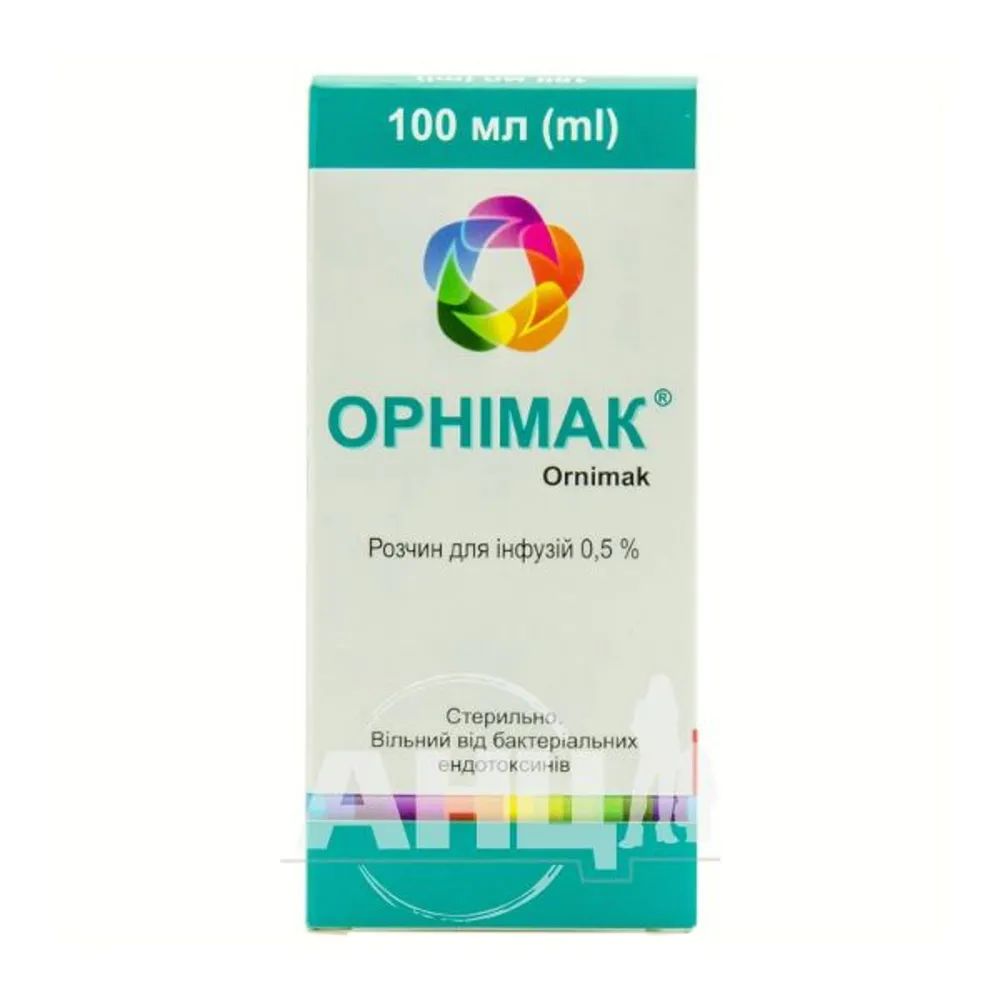
Table of Contents
INSTRUCTIONS for medical use of the medicinal product ORNIMAK® (ORNIMAK)
Composition:
Active substance: ornidazole;
500 mg of ornidazole (calculated as dry 100% substance) in 100 ml of solution;
Excipients: sodium chloride, disodium edetate, diluted hydrochloric acid, sodium hydroxide, water for injections.
Pharmaceutical form. Infusion solution.
Main physicochemical properties: clear, colorless or slightly yellow liquid.
Pharmacotherapeutic group. Antibacterials for systemic use. Imidazole derivatives. ATC code J01X D03.
Pharmacological properties.
Pharmacodynamics.
The mechanism of action of ornidazole is associated with disruption of DNA structure in susceptible microorganisms. Ornidazole is active against Trichomonas vaginalis, Entamoeba histolytica, Giardia lamblia (Giardia intestinalis), as well as certain anaerobic bacteria such as Bacteroides, Fusobacterium spp.; anaerobic bacteria: Clostridium spp., sensitive strains of Eubacterium spp.; anaerobic cocci: Peptococcus spp., Peptostreptococcus spp.
It readily penetrates the microbial cell and, by binding to DNA, disrupts the replication process.
Pharmacokinetics.
Ornidazole penetrates well through the blood-brain and placental barriers, enters cerebrospinal fluid, bile, and passes into breast milk. After intravenous administration at a dose of 15 mg/kg and subsequent dosing of 7.5 mg per 1 kg of body weight every 6 hours, the steady-state concentration ranges from 18 to 26 μg/mL. Approximately 30–60% of the drug is metabolized in the body via hydroxylation, oxidation, and glucuronidation.
Excretion. Ornidazole is excreted mainly in the urine (60–80%), of which nearly 20% is unchanged, and 6–15% in the feces.
Clinical characteristics.
Indications.
Parenteral administration of the drug is indicated in cases of acute and severe infection or when oral administration is not possible, for the following diseases and conditions:
- anaerobic systemic infections caused by microorganisms sensitive to ornidazole: septicemia, meningitis, peritonitis, postoperative wound infections, sepsis, septic abortion, and endometritis;
- prophylaxis of infections caused by anaerobic bacteria during surgical procedures (especially surgeries on the colon and rectum), and in gynecological operations;
- severe forms of amebic dysentery, all extraintestinal forms of amebiasis, giardiasis, hepatic abscess.
Contraindications.
Hypersensitivity to the components of the drug or to other nitroimidazole derivatives. Central nervous system (CNS) disorders, epilepsy, multiple sclerosis, chronic alcoholism. Circulatory disorders, pathological blood conditions or other hematological abnormalities.
Interaction with other medicinal products and other types of interactions.
Alcohol should not be consumed during treatment with ornidazole and for at least 3 days after discontinuation of the drug. Ornidazole enhances the effect of oral coumarin anticoagulants (warfarin), requiring appropriate adjustment of their dosage.
Ornidazole prolongs the muscle-relaxant effect of vecuronium bromide.
Concomitant use of phenobarbital and other enzyme inducers reduces the plasma half-life of ornidazole, whereas enzyme inhibitors (e.g., cimetidine) increase it.
Special precautions.
When recommended doses are exceeded, there is a certain risk of developing adverse reactions in children, patients with liver impairment, and patients who abuse alcohol. If high doses of ornidazole are used and treatment lasts longer than 10 days, clinical and laboratory monitoring is recommended.
In patients with a history of blood disorders, leukocyte monitoring is recommended, especially when repeated treatment courses are administered.
During ornidazole therapy, exacerbation of central or peripheral nervous system disorders may occur. If peripheral neuropathy, impaired motor coordination (ataxia), dizziness, or clouding of consciousness develops, treatment should be discontinued.
Exacerbation of candidiasis may occur, which requires appropriate treatment.
During hemodialysis, reduced elimination half-life should be taken into account, and additional doses of the drug should be administered before or after hemodialysis.
During lithium therapy, concentrations of lithium salts, creatinine, and electrolytes should be monitored.
The effect of other medicinal products may be increased or decreased during treatment with ornidazole.
This medicinal product contains 15.43 mmol (or 354.7 mg) of sodium per 100 ml. Caution is advised when administering to patients on a sodium-restricted diet.
Use during pregnancy or breastfeeding.
Ornidazole is contraindicated during the first trimester of pregnancy. In the second and third trimesters, the drug should be used only if strictly indicated. If ornidazole use is necessary, breastfeeding should be discontinued.
Ability to affect reaction speed when driving or operating machinery.
When using ornidazole, adverse effects such as drowsiness, muscle rigidity, dizziness, tremor, seizures, impaired coordination, and transient loss of consciousness may occur. Patients should take these potential effects into account when driving or operating machinery.
Dosage and Administration.
The dosage and duration of treatment are determined by a physician according to the nature of the disease and treatment regimen.
The medicinal product should be administered intravenously over 15–30 minutes.
For anaerobic systemic infections: in adults and children aged 12 years and older, the initial dose is 500–1000 mg, followed by 500 mg every 12 hours or 1000 mg every 24 hours for 5–10 days (step-down dosing). After the patient's condition has stabilized, oral administration of ornidazole should be initiated (e.g., 500 mg tablets, 1 tablet every 12 hours).
For children under 12 years of age with body weight exceeding 6 kg, the daily dose should be calculated at 20 mg/kg body weight, divided into two doses, administered for 5–10 days.
For prophylaxis of anaerobic infections during surgical procedures: in adults and children aged 12 years and older, ornidazole should be administered at a dose of 500–1000 mg 30 minutes before surgery.
For prophylaxis of mixed infections, ornidazole should be used in combination with aminoglycosides, penicillin, or cephalosporins. The drugs should be administered separately.
Severe amoebic dysentery, all extraintestinal forms of amoebiasis, giardiasis, hepatic abscess: for adults and children aged 12 years and older, the initial dose is 500–1000 mg, followed by 500 mg every 12 hours for 3–6 days.
For children under 12 years of age with body weight exceeding 6 kg, the daily dose should be calculated at 20–30 mg/kg body weight, divided into two doses.
In case of impaired renal function, prolong the interval between doses or reduce the single and daily dose of the drug.
Children.
Ornidazole is contraindicated in children with body weight less than 6 kg.
Overdose.
Symptoms: loss of consciousness, headache, dizziness, tremor, seizures, depression, peripheral neuritis, nausea, vomiting, anorexia, and possible exacerbation of symptoms of other adverse reactions.
Treatment: symptomatic; no specific antidote is known.
Adverse Reactions
Blood and lymphatic system disorders: signs of bone marrow suppression, moderate leukopenia, neutropenia.
Immune system disorders: hypersensitivity reactions, including anaphylactic shock, angioedema.
Skin and subcutaneous tissue disorders: skin rashes, urticaria, skin hyperemia, pruritus.
Nervous system disorders: dizziness, somnolence, headache, tremor, muscle rigidity, coordination disturbances, ataxia, seizures, transient loss of consciousness, confusion, signs of sensory or mixed peripheral neuropathy, excitement.
Gastrointestinal disorders: taste disturbances, metallic taste in the mouth, dry mouth, coated tongue, nausea, vomiting, dyspepsia, sensation of heaviness and tenderness in the epigastric region.
Hepatobiliary disorders: hepatotoxicity, changes in liver function tests.
General disorders and administration site conditions: increased body temperature; chills; general weakness; fatigue; dyspnea; changes at the injection site, including pain, redness, burning sensation at the injection site.
Other: darkening of urine color, cardiovascular disorders, including arterial hypotension.
Reporting of suspected adverse reactions
Reporting suspected adverse reactions after authorization of the medicinal product is of great importance. It allows continuous monitoring of the benefit-risk balance of the medicinal product. Healthcare professionals and patients, as well as their legal representatives, are encouraged to report all suspected adverse reactions and lack of efficacy via the Automated Pharmacovigilance Information System at the following link: https://aisf.dec.gov.ua.
Shelf life. 2.5 years.
Storage conditions. Store in the original packaging at a temperature not exceeding 25 °C, in a place inaccessible to children.
Incompatibility.
Do not mix the medicinal product with other injectable solutions during administration.
Packaging. 100 ml in a vial; 1 vial per carton.
Prescription status. Prescription only.
Manufacturer. Private Joint-Stock Company "Infuziya".
Manufacturer's address and location of operations.
84A Nemirivske Highway, village Vinnitski Khotory, Vinnitsa district, Vinnitsa region, 23219, Ukraine.