Optex
Ukraine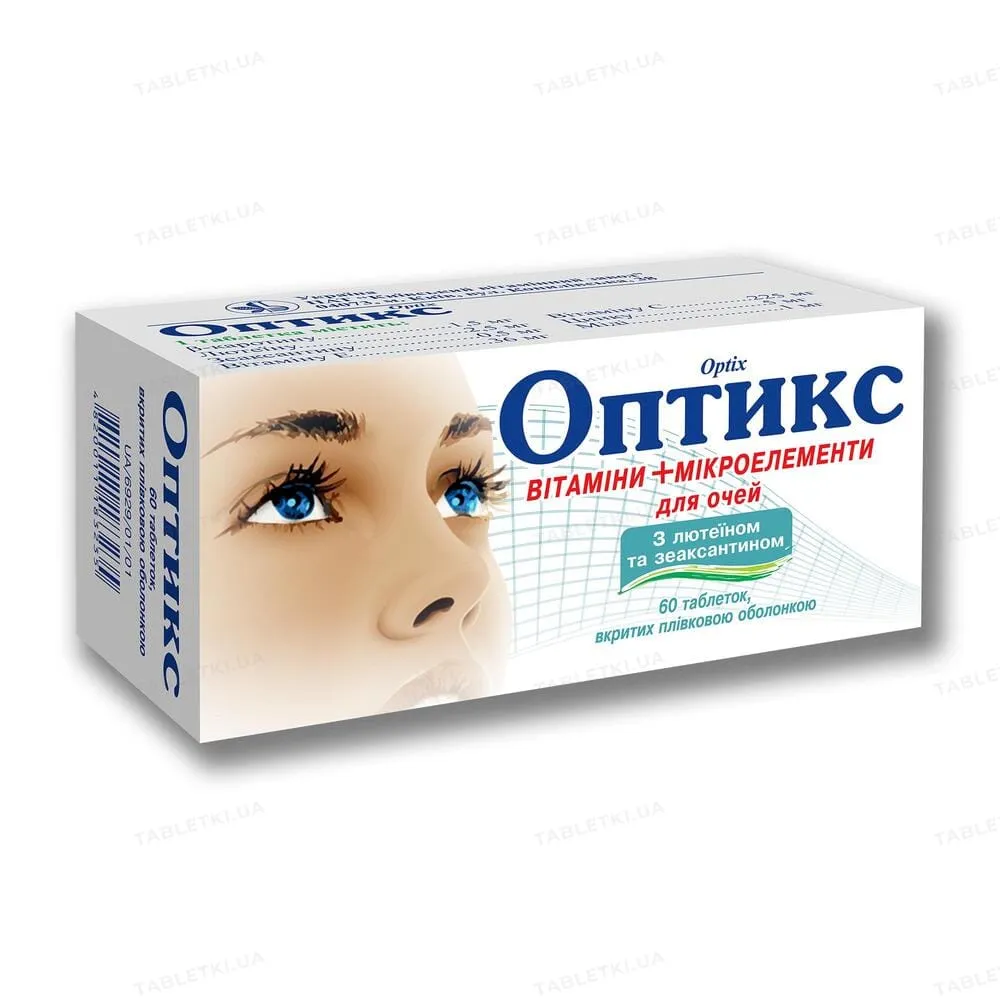
Table of Contents
INSTRUCTION FOR MEDICAL USE OF THE MEDICINAL PRODUCT OPTIX (OPTIX)
Composition:
Active substances:
1 tablet contains: β-carotene 1.5 mg; lutein 2.5 mg; zeaxanthin 0.5 mg; vitamin E 36 mg; vitamin C 225 mg; zinc 5 mg; copper 1 mg;
Excipients: calcium sulfate, microcrystalline cellulose, stearic acid, sodium croscarmellose, magnesium stearate, colloidal anhydrous silicon dioxide, hypromellose (hydroxypropylmethylcellulose);
coating: Opadry II Yellow film-coating mixture: hypromellose (hydroxypropylmethylcellulose), titanium dioxide (E 171), polydextrose, yellow iron oxide (E 172), maltodextrin, talc, medium-chain triglycerides.
Pharmaceutical form. Film-coated tablets.
Main physicochemical properties: round, biconvex tablets, film-coated, light brownish-yellow to brownish-yellow in colour.
Pharmacotherapeutic group. Multivitamin preparations with other additives.
ATC code A11A B.
Pharmacological properties.
Pharmacodynamics.
A combined medicinal product containing vitamins, minerals, and plant carotenoids.
Replenishes deficiencies of vitamins and minerals. Exerts an antioxidant effect. The action of the drug is determined by the effects of the substances contained in its composition.
Luetein and zeaxanthin – specific carotenoids present directly in the retina of the eye (in the so-called "macula"). The action of these substances is due to their high antioxidant activity and ability to filter harmful portions of the light spectrum.
Lutein and zeaxanthin exert antioxidant, screening, and light-absorbing effects, preventing the development of age-related disorders.
β-carotene plays an important role in the formation of the visual pigment rhodopsin, which ensures adaptation of the eye to reduced illumination, and also exerts an antioxidant effect.
The action of vitamin C – a water-soluble antioxidant – in the preparation combines with vitamin E, protecting cells and tissues from damaging effects of excessive amounts of free radicals and lipid peroxidation.
Copper and zinc function as components of numerous metalloenzymes, catalyzing their activity and preventing the formation of free radicals.
Clinical characteristics.
Indications.
- Supplementation of essential vitamins and minerals in eye diseases (age-related macular degeneration, cataract, retinopathies, optic nerve disorders).
- Prevention of age-related vision disorders and eye diseases in risk groups (individuals over 55 years of age; patients with diabetes mellitus; those with hereditary predisposition to cataract or retinal degeneration; smokers; individuals with light eye color).
- Prevention of eye diseases under conditions of high visual strain (computer work, exposure to UV radiation, television screen emissions); in cases of impaired night vision adaptation; during recovery after ophthalmological surgeries.
Contraindications.
Hypersensitivity to components of the drug, severe renal insufficiency, chronic glomerulonephritis, sarcoidosis, hypervitaminosis A and E, thrombophlebitis, disorders of iron or copper metabolism, thyrotoxicosis, concomitant use of retinoids.
Interaction with other medicinal products and other forms of interaction.
When used with other medicinal products containing the same vitamins and minerals, the cumulative effect of vitamins should be taken into account.
Concomitant use of cholestyramine, colestipol, orlistat, and laxatives reduces absorption of carotenoids.
Vitamin C enhances the effect and adverse reactions of sulfonamides.
Absorption of vitamin E may be impaired by iron and silver preparations.
Special precautions.
The maximum effect of carotenoids is observed when taken with food containing fats (especially plant oils).
Do not exceed the recommended dose.
The medicinal product contains lactose and therefore should not be used in patients with hereditary galactose intolerance, glucose-galactose malabsorption, or lactase deficiency.
The medicinal product should be used with caution in patients with urolithiasis, decompensated heart failure, cholelithiasis, chronic pancreatitis, acute nephritis, or a tendency towards thrombosis. It is contraindicated in patients with fructose intolerance.
The medicinal product is not recommended to be prescribed together with other multivitamins, as this may lead to vitamin overdose in the body.
Use during pregnancy or breastfeeding.
During pregnancy or breastfeeding, the medicinal product may be used only if, in the opinion of the physician, the expected benefit to the mother outweighs the potential risk to the fetus/child.
Ability to influence reaction rate while driving or operating machinery. No effect.
Dosage and Administration.
The medicinal product is taken orally during or after meals. The recommended dose for adults and children aged 12 years and older is 1 tablet once daily for 2–3 months.
Maximum daily dose – 1 tablet. The duration of treatment is determined individually by a physician. If necessary, repeat courses may be prescribed after consultation with a physician, in case of absence of a stable therapeutic effect.
Children. The medicinal product is not recommended for use in children under 12 years of age.
Overdose.
In case of overdose, adverse reactions of the medicinal product may be intensified, leading to manifestations of hypervitaminosis (A, C, E), allergic reactions, and gastrointestinal disturbances, including epigastric pain, nausea, vomiting, flatulence, diarrhea, and increased nervous system excitability.
Treatment: activated charcoal, gastric lavage, symptomatic therapy.
Adverse Reactions.
In individuals with increased sensitivity – allergic reactions (skin rashes, urticaria, etc.), including anaphylactic shock, angioneurotic edema, hyperthermia, itching sensation, bronchospasm; headache, dizziness.
There have been no reports of adverse effects of lutein, zeaxanthin, or small amounts of vitamin C (up to 2000 mg/day for adults).
Manifestations of adverse effects of copper may include abdominal pain, nausea, vomiting, and diarrhea.
Prolonged use of excessive amounts of zinc may lead to copper deficiency.
If any adverse reactions occur, discontinue use of the medicinal product and consult a physician.
Shelf life. 3 years.
Storage conditions.
Store in the original packaging at a temperature not exceeding 25 ºC.
Keep out of reach of children.
Packaging.
10 tablets in a blister; 3 blisters per pack.
10 tablets in a blister; 6 blisters per pack.
Prescription status. Over-the-counter.
Manufacturer. JSC "KYIV VITAMIN PLANT".
Manufacturer's address and location of its business operations.
38 Kopilivska Street, Kyiv, 04073, Ukraine.
Web-site: www.vitamin.com.ua.
INSTRUCTION
for medical use of the medicinal product
OPTIX
(OPTIX)
Composition:
Active substances:
1 tablet contains: β-carotene 1.5 mg; lutein 2.5 mg; zeaxanthin 0.5 mg; vitamin E 36 mg; vitamin C 225 mg; zinc 5 mg; copper 1 mg;
Excipients: calcium sulfate, microcrystalline cellulose, stearic acid, sodium croscarmellose, magnesium stearate, colloidal anhydrous silicon dioxide, hypromellose (hydroxypropylmethylcellulose);
coating: film-coating mixture Opadry II Yellow: hypromellose (hydroxypropylmethylcellulose), titanium dioxide (E 171), polydextrose, yellow iron oxide (E 172), maltodextrin, talc, medium-chain triglycerides.
Medicinal form. Film-coated tablets.
Main physicochemical properties: round-shaped, biconvex tablets coated with a film layer ranging from light brown-yellow to brown-yellow in color.
Pharmacotherapeutic group. Multivitamin preparations with other additives.
ATC code A11A B.
Pharmacological properties.
Pharmacodynamics.
A combination medicinal product containing vitamins, minerals, and plant carotenoids.
Replenishes vitamin and mineral deficiencies. Exerts antioxidant effects. The action of the drug is due to the effects of its constituent components.
Lutein and zeaxanthin – specific carotenoids present directly in the retina of the eye (the so-called "macula"). The action of these substances is due to their high antioxidant activity and ability to filter harmful parts of the light spectrum.
Lutein and zeaxanthin exert antioxidant, screening, and light-absorbing effects, reducing the risk of age-related disorders.
β-carotene plays an important role in the formation of the visual pigment rhodopsin, which ensures eye adaptation to low light conditions, and also exerts antioxidant effects.
The action of vitamin C – a water-soluble antioxidant – combines in the formulation with vitamin E, which protects cells and tissues from damage caused by excess free radicals and lipid peroxidation.
Copper and zinc function as components of numerous metalloenzymes, catalyzing their activity and preventing the formation of free radicals.
Clinical characteristics.
Indications.
- Supplementation of essential vitamins and minerals in eye diseases (age-related macular degeneration, cataract, retinopathies, optic nerve disorders).
- Prevention of age-related vision disorders and eye diseases in high-risk groups (individuals over 55 years; patients with diabetes mellitus; those with hereditary predisposition to cataract or retinal degeneration; smokers; individuals with light eye color).
- Prevention of eye diseases under conditions of increased eye strain (computer work, exposure to UV rays, screen radiation); in cases of impaired night vision adaptation; during recovery after ophthalmic surgeries.
Contraindications.
Hypersensitivity to the components of the medicinal product, severe renal insufficiency, chronic glomerulonephritis, sarcoidosis, hypervitaminosis A and E, thrombophlebitis, disorders of iron or copper metabolism, thyrotoxicosis, concomitant use of retinoids.
Interaction with other medicinal products and other types of interactions.
When used with other medicinal products containing the same vitamins and minerals, the cumulative effect of vitamins should be taken into account.
Concomitant use of cholestyramine, colestipol, orlistat, and laxatives reduces the absorption of carotenoids.
Vitamin C enhances the effects and adverse reactions of sulfonamides.
Absorption of vitamin E may be impaired by iron, silver preparations.
Special precautions.
Maximum carotenoid effect is observed when taken with food containing fats (especially plant oils).
Do not exceed the recommended dose.
The medicinal product contains lactose; therefore, it should not be used in patients with hereditary galactose intolerance, glucose-galactose malabsorption, or lactase deficiency.
The medicinal product should be used with caution in patients with nephrolithiasis, decompensated cardiac function, cholelithiasis, chronic pancreatitis, acute nephritis, or thrombophilia. It is contraindicated in patients with fructose intolerance.
The medicinal product is not recommended to be prescribed with other multivitamins due to the risk of vitamin overdose.
Use during pregnancy or breastfeeding.
During pregnancy or breastfeeding, the medicinal product should be used only if, in the physician’s opinion, the expected benefit to the mother outweighs the potential risk to the fetus/child.
Effect on ability to drive or operate machinery. Does not affect.
Method of administration and dosage.
The medicinal product is taken orally during or after meals. For adults and children aged 12 years and older, the recommended dose is 1 tablet once daily for 2–3 months.
Maximum daily dose – 1 tablet. The duration of treatment is determined individually by a physician. If necessary and in the absence of sustained effect, repeated courses may be prescribed after consultation with a physician.
Children. The medicinal product is not intended for children under 12 years of age.
Overdose.
In case of overdose, adverse reactions of the medicinal product may intensify, leading to manifestations of hypervitaminosis (A, C, E), allergic reactions, and gastrointestinal disturbances such as epigastric pain, nausea, vomiting, flatulence, diarrhea, and increased nervous system excitability.
Treatment: activated charcoal, gastric lavage, symptomatic therapy.
Adverse reactions.
In individuals with increased sensitivity – allergic reactions (skin rashes, urticaria, etc.), including anaphylactic shock, angioedema, hyperthermia, itching sensation, bronchospasm; headache, dizziness.
No adverse effects have been reported for lutein, zeaxanthin, or small amounts of vitamin C (up to 2000 mg/day for adults).
Manifestations of adverse effects of copper may include abdominal pain, nausea, vomiting, and diarrhea.
Prolonged use of excessive amounts of zinc may lead to copper deficiency.
In case of any adverse reactions, discontinue use of the medicinal product and consult a physician.
Shelf life. 3 years.
Storage conditions.
Store in the original packaging at a temperature not exceeding 25 ºC.
Keep out of reach of children.
Packaging.
10 tablets in a blister; 3 blisters per pack.
10 tablets in a blister; 6 blisters per pack.
Prescription status. Over-the-counter.
Manufacturer. JSC "KYIV VITAMIN PLANT".
Manufacturer's address and location of its business operations.
38 Kopilivska Street, Kyiv, 04073, Ukraine.
Web-site: www.vitamin.com.ua.