Ondansetron
Ukraine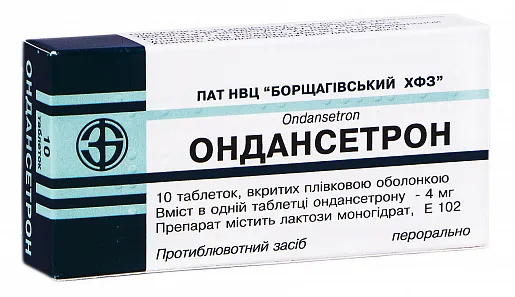
Table of Contents
INSTRUCTION FOR MEDICAL USE OF THE MEDICINAL PRODUCT ONDANSETRON (Ondansetron)
Composition:
Active substance: ondansetron;
1 tablet contains 4 mg or 8 mg of ondansetron, calculated as ondansetron hydrochloride dihydrate;
Excipients: lactose monohydrate, microcrystalline cellulose, hypromellose, magnesium stearate, pregelatinized starch, titanium dioxide (E 171), glycerol triacetate.
Pharmaceutical form. Film-coated tablets.
Main physico-chemical properties: film-coated tablets, white or almost white, straight-sided cylindrical, with convex ends.
Pharmacotherapeutic group. Antiemetic agents and drugs for relief of nausea. Serotonin 5HT3-receptor antagonists. Ondansetron.
ATC code A04AA01.
Pharmacological Properties.
Pharmacodynamics.
Ondansetron hydrochloride is an antagonist of serotonin receptors of the 5-HT3 subtype. The exact mechanisms of antiemetic action have not been fully established. It is known that radiation and cytotoxic chemotherapy lead to the release of serotonin (5-HT) from enterochromaffin cells of the small intestine. Initiation of the vomiting reflex is associated with the interaction of serotonin with 5-HT3 receptors located on afferent endings of the vagus nerve. Activation of vagal afferent endings may cause the release of serotonin in the central nervous system from the chemoreceptor trigger zone located in the area of the floor of the fourth ventricle of the brain. Ondansetron is believed to block the initiation of the vomiting reflex both at the level of vagal afferent nerve endings and at serotonin receptors located in the central nervous system.
Ondansetron has sedative effects but does not alter plasma prolactin levels and does not reduce psychomotor activity in patients.
The mechanisms of ondansetron’s antiemetic action in the postoperative period are not well studied.
Pharmacokinetics.
The bioavailability of ondansetron after oral administration is approximately 60%. It undergoes extensive metabolism in the body, and metabolites are excreted in feces and urine. After oral administration, peak plasma concentrations are reached within 1.5 hours. Plasma protein binding is about 73%. The majority of the administered dose is metabolized in the liver.
The elimination half-life is 3–4 hours; in elderly individuals, it may extend up to 6–8 hours. Less than 10% of the active substance is excreted unchanged in urine.
In vitro metabolism studies indicate that ondansetron is a substrate for hepatic cytochrome P450 enzyme system, including CYP1A2, CYP2D6, and CYP3A4. The metabolism of ondansetron is primarily mediated by CYP3A4. Since ondansetron metabolism can be carried out by several cytochrome P450 enzymes, a deficiency in one of these enzymes does not significantly alter the total clearance of ondansetron, as the deficiency is compensated by other enzymes in the metabolic pathway.
Clinical characteristics.
Indications.
Nausea and vomiting caused by cytotoxic chemotherapy and radiation therapy. Prevention of nausea and vomiting in the postoperative period.
Contraindications.
Hypersensitivity to the components of the drug or to other selective 5HT3 serotonin receptor antagonists.
Severe hepatic impairment, abdominal surgery.
Concomitant use of ondansetron with apomorphine is contraindicated, as cases of severe arterial hypotension and loss of consciousness have been observed with their combined use.
Interaction with other medicinal products and other forms of interaction.
Specific studies have shown that ondansetron does not interact with alcohol, temazepam, furosemide, tramadol, or propofol.
Ondansetron is metabolized by various hepatic cytochrome P450 enzymes: CYP3A4, CYP2D6, and CYP1A2.
Due to the diversity of ondansetron-metabolizing enzymes, inhibition or reduced activity of one of them (e.g., genetic deficiency of CYP2D6) is normally compensated by other enzymes and will have no effect or only a negligible effect on overall creatinine clearance. However, despite the variety of metabolic enzymes, increased clearance and reduced plasma concentrations of orally administered ondansetron have been observed in patients receiving CYP3A4 inducers (i.e., phenytoin, carbamazepine, and rifampicin).
Medicinal products that prolong the QTc interval. When ondansetron is used concomitantly with other drugs that prolong the QTc interval, careful consideration of the expected therapeutic benefit versus the potential risk is required.
The list below includes medicinal products associated with QTc interval prolongation and/or ventricular fibrillation/torsades de pointes ("torsade de pointes"). Not all drugs within the listed pharmacological classes necessarily have such associations:
- Class IA antiarrhythmics (quinidine, procainamide, disopyramide);
- Class III antiarrhythmics (amiodarone, sotalol, ibutilide, dronedarone);
- Class IC antiarrhythmics (flecainide, propafenone);
- Antiemetics (dolasetron, droperidol, chlorpromazine, prochlorperazine);
- Tyrosine kinase inhibitors (vandetanib, sunitinib, nilotinib, lapatinib);
- Antipsychotic agents (chlorpromazine, pimozide, haloperidol, ziprasidone);
- Antidepressants (citalopram, fluoxetine, venlafaxine, tricyclic/tetracyclic antidepressants such as amitriptyline, imipramine, maprotiline);
- Opioids (methadone);
- Domperidone;
- Macrolide antibiotics and analogs (erythromycin, clarithromycin, telithromycin, tacrolimus);
- Quinolone antibiotics (moxifloxacin, levofloxacin, ciprofloxacin);
- Antimalarials (quinine, chloroquine);
- Azole antifungals (ketoconazole, fluconazole, voriconazole);
- Histone deacetylase inhibitors (vorinostat);
- β2-adrenergic agonists (salmeterol, formoterol).
Medicinal products causing electrolyte imbalance. Concomitant use of ondansetron with drugs that may disrupt electrolyte balance should be avoided. Examples of such medicinal products include:
- Loop, thiazide, and thiazide-like diuretics;
- Laxatives and enemas;
- Amphotericin B;
- High doses of corticosteroids.
The above lists of potentially interacting drugs are not exhaustive. It is necessary to monitor current information sources to identify newly recognized drugs that prolong the QTc interval or cause electrolyte disturbances.
Tramadol. According to a limited number of clinical studies, ondansetron may reduce the analgesic effect of tramadol.
Apomorphine. Concomitant use of ondansetron with apomorphine hydrochloride is contraindicated due to observed cases of severe hypotension and loss of consciousness (see section "Contraindications").
Serotonergic agents. As with other serotonergic agents, serotonin syndrome—a potentially life-threatening condition—may occur when using a 5HT3 serotonin receptor antagonist antiemetic in combination with other drugs that may affect the serotonergic neurotransmitter system (including triptans, selective serotonin reuptake inhibitors (SSRIs), serotonin-norepinephrine reuptake inhibitors (SNRIs), lithium, sibutramine, fentanyl and its analogs, dextromethorphan, tramadol, tapentadol, meperidine, methadone, and pirtazepine, or St. John's wort (Hypericum perforatum)), as well as with drugs that reduce serotonin metabolism (such as MAO inhibitors, including linezolid—an antibiotic that is a reversible non-selective MAO inhibitor—and methylene blue) (see section "Special precautions").
Special precautions for use
Ondansetron is ineffective in preventing nausea and vomiting associated with motion sickness.
There is experience of cross-sensitivity among various 5-HT3 receptor antagonists. Therefore, in patients with hypersensitivity to one of the 5-HT3 receptor antagonists, similar reactions to other antagonists may be more pronounced due to cross-reactivity. If even a mild hypersensitivity reaction occurs to any of the 5-HT3 receptor antagonist drugs, switching to another 5-HT3 antagonist is not recommended due to the potential for an enhanced hypersensitivity reaction.
Transient ECG changes, including dose- and infusion rate-dependent QT interval prolongation, have been rarely observed during ondansetron administration. Post-marketing surveillance data have reported cases of ventricular tachycardia/torsades de pointes associated with ondansetron use. Therefore, the drug should be used with caution in patients who have or may develop QT interval prolongation. Cases of torsades de pointes may be asymptomatic or may present with dizziness, rapid heartbeat, syncope, or seizures; this condition may progress to ventricular fibrillation and sudden cardiac death.
Ondansetron should be avoided in patients with congenital long QT syndrome. Ondansetron should be used with caution in patients with cardiac rhythm or conduction disorders, in patients receiving antiarrhythmic drugs or β-blockers, and in patients who have or may develop QT interval prolongation, including those with electrolyte imbalances, congestive heart failure, bradyarrhythmias, or those receiving other drugs known to cause QT prolongation or electrolyte disturbances. Hypokalemia and hypomagnesemia should be corrected prior to initiating ondansetron therapy.
Examples of risk factors for developing ventricular tachycardia/torsades de pointes include: female sex; age ≥65 years; baseline QT/QTc prolongation; genetic ion channel or regulatory protein disorders; family history of sudden cardiac death before age 50; heart disease (myocardial ischemia or infarction, left ventricular hypertrophy, cardiomyopathy, conduction system diseases); presence of arrhythmias (especially ventricular arrhythmias, atrial fibrillation); bradycardia (<50 beats/min); acute neurological disorders (intracranial or subarachnoid hemorrhage, stroke, traumatic brain injury); nutritional imbalance (eating disorders, extreme diets); diabetes mellitus; autonomic neuropathy.
Serotonin syndrome has been reported following concomitant use of ondansetron and other serotonergic drugs, with symptoms including: mental status changes (agitation, hallucinations, coma), autonomic instability (tachycardia, labile blood pressure, hyperthermia), neuromuscular abnormalities (hyperreflexia, incoordination), and gastrointestinal symptoms (nausea, vomiting, diarrhea). If serotonin syndrome occurs, ondansetron should be discontinued and symptomatic treatment initiated. If concomitant treatment with ondansetron and other serotonergic drugs is clinically justified, appropriate patient monitoring is recommended (see section "Interaction with other medicinal products and other forms of interaction").
Cases of myocardial ischemia have been reported in patients receiving ondansetron. In some patients, particularly after intravenous administration, symptoms appeared immediately after ondansetron infusion. Patients should be informed about the signs and symptoms of myocardial ischemia.
Ondansetron does not affect the cytochrome P450 system, but the use of other drugs capable of influencing the activity of these enzymes may alter the clearance and half-life of ondansetron.
Ondansetron increases colonic transit time; therefore, continuous monitoring is required in patients receiving ondansetron who show even mild signs of intestinal obstruction.
In children receiving ondansetron concomitantly with hepatotoxic chemotherapeutic agents, careful monitoring for possible liver function abnormalities is required.
Since the tablets contain carbohydrates, including lactose, the drug should not be administered to patients with carbohydrate intolerance or rare hereditary conditions such as galactose intolerance, lactase deficiency, or glucose-galactose malabsorption.
Use during pregnancy or breastfeeding
Contraception
If ondansetron is administered to women of childbearing potential, consideration should be given to the use of contraception.
Pregnancy
Based on results from epidemiological studies, ondansetron may be associated with craniofacial malformations when used during the first trimester of pregnancy. In one cohort study involving 1.8 million pregnancies, ondansetron use during the first trimester was associated with an increased risk of cleft palate [3 additional cases per 10,000 women exposed; adjusted relative risk: 1.24 (95% confidence interval 1.03–1.48)]. Available epidemiological data on cardiac malformations show conflicting results.
Animal studies do not indicate direct or indirect harmful effects on reproductive function.
Ondansetron should not be used during the first trimester of pregnancy.
Breastfeeding
It is unknown whether ondansetron is excreted in human milk; therefore, breastfeeding should be discontinued during treatment.
Ability to affect reaction speed when driving or operating machinery
Due to the potential for nervous system-related adverse reactions, patients should be advised to avoid driving or operating machinery during treatment with this medicinal product.
Administration and Dosage.
The drug is administered orally.
The choice of dosage regimen depends on the emetogenic potential of the anticancer therapy and is determined individually.
Moderate emetogenic chemotherapy and radiation therapy.
Adults should be given 8 mg 1–2 hours before treatment initiation, followed by 8 mg every 12 hours. To prevent delayed or prolonged nausea and vomiting in subsequent days, administer 8 mg twice daily throughout the chemotherapy course and for 5 days after its completion. The severity of vomiting should be considered when selecting the dose. For high-dose partial abdominal irradiation, administer 8 mg every 8 hours.
The drug should be taken throughout the entire course of chemotherapy and radiation therapy, as well as for 1–2 days (if necessary, 3–5 days) after completion of therapy.
Highly emetogenic chemotherapy.
Adults: Orally administer 24 mg of ondansetron (concurrently with dexamethasone phosphate) 1–2 hours before the start of chemotherapy. To prevent delayed vomiting in the following days, continue with 8 mg twice daily throughout the chemotherapy course and for 5 days after its completion.
Children. This medicinal formulation should not be used in children under 4 years of age.
Immediately before chemotherapy, ondansetron (injection solution) should be administered as a single intravenous injection.
Oral administration should begin 12 hours later, with 4 mg given every 12 hours, continuing for up to 5 days. The total daily dose of ondansetron must not exceed 32 mg.
Postoperative nausea and vomiting.
Adults: To prevent postoperative nausea and vomiting, the drug may be administered orally at a dose of 16 mg one hour before the start of anesthesia. The maximum daily dose of ondansetron is 32 mg.
Children: For this indication, ondansetron in the form of injection solution is recommended.
For all types of therapy.
Elderly patients.
There is no need to adjust the dose in patients aged 65 years and older.
Patients with renal impairment.
There is no need to modify the dosage regimen or route of administration in patients with impaired kidney function.
Patients with moderate hepatic impairment.
In patients with moderate liver function impairment, ondansetron clearance is significantly reduced and plasma half-life is prolonged. The maximum daily dose of the drug in such patients should not exceed 8 mg.
Patients with impaired sparteine/debrisoquine metabolism.
The elimination half-life of ondansetron in patients with normal sparteine and debrisoquine metabolism remains unchanged. In these patients, repeated administration results in drug concentrations similar to those in patients with intact metabolism. Therefore, no dosage adjustment is required for this patient group.
Children.
This medicinal formulation should not be used in children under 4 years of age.
Overdose.
Currently, there is limited information regarding ondansetron overdose. In most cases, symptoms are similar to those observed in patients receiving recommended doses.
Symptoms. In one patient, sudden blindness (amaurosis) lasting 2–3 minutes combined with severe constipation developed after a single intravenous dose of 72 mg of ondansetron. In another patient, hypotension (and loss of consciousness) occurred after oral intake of 48 mg of ondansetron. A vasovagal episode with transient second-degree heart block was observed after a 4-minute infusion of 32 mg of ondansetron. Neuromuscular disturbances, autonomic instability, somnolence, and brief generalized tonic-clonic seizures (resolved after benzodiazepine administration) were observed in a one-year-old child who swallowed 7 or 8 ondansetron tablets of 8 mg each (a dose approximately 40 times higher than the recommended pediatric dose of 0.1–0.15 mg/kg). In all cases, these effects fully resolved.
Treatment: Discontinue the drug and provide symptomatic and supportive therapy. Ipecacuanha is not recommended for treating ondansetron overdose, as its effect may be ineffective due to the antiemetic action of ondansetron. There is no specific antidote.
Further management of patients should be based on clinical indications or, if possible, in accordance with recommendations from the national poison control center.
Ondansetron prolongs the QT interval in a dose-dependent manner. In case of overdose, ECG monitoring is recommended.
Children. Serotonin syndrome has been reported in infants and children aged 12 months to 2 years following accidental overdose of orally administered ondansetron (doses exceeding the recommended level of 4 mg/kg).
Adverse reactions.
The adverse reactions listed below are classified by system organ class and frequency: very common (≥1/10), common (≥1/100 to <1/10), uncommon (≥1/1000 to <1/100), rare (≥1/10000 to <1/1000), very rare (<1/10000).
In clinical studies, the most commonly reported adverse reactions were: headache (11%), constipation (4%), sensation of warmth or flushing (<1%).
Immune system disorders.
Rare: immediate-type allergic reactions, sometimes severe, including anaphylaxis, bronchospasm, urticaria, and angioedema.
Central nervous system disorders.
Very common: headache.
Uncommon: seizures, movement disorders (including extrapyramidal reactions such as oculogyric crisis, dystonic reactions, and dyskinesia), without persistent clinical consequences.
Rare: dizziness during rapid intravenous administration; central nervous system depression, paraesthesia.
Eye disorders.
Rare: transient visual disturbances (blurred vision), transient blindness, mainly during intravenous administration.
Cardiovascular system disorders.
Uncommon: arrhythmias, chest pain (with or without ST-segment depression), bradycardia, arterial hypotension, arterial hypertension, tachycardia, syncope.
Common: sensation of warmth, flushing.
Respiratory, thoracic and mediastinal disorders.
Uncommon: hiccups, cough.
Gastrointestinal disorders.
Common: constipation, diarrhoea, dry mouth, abdominal pain.
Hepatobiliary disorders.
Uncommon: asymptomatic elevation of liver function tests, hepatic function abnormalities.
General disorders: weakness, syncope. These events occur primarily in patients receiving chemotherapy regimens containing cisplatin.
Metabolism and nutrition disorders.
In approximately 5% of patients, there was a transient increase of more than two times the upper limit of normal for SGOT and SGPT. It is unknown whether this increase is dose- or duration-of-treatment-related.
Cases of hepatic failure and fatal outcomes have been reported in cancer patients receiving multiple concomitant medications, including potentially hepatotoxic cytotoxic chemotherapy and antibiotics. The etiology of hepatic failure in these cases remains unclear. Rare cases of hypokalaemia have also been reported.
Post-marketing adverse reactions.
The adverse reaction profile in children and adolescents was comparable to that in adults.
Immune system disorders.
Rare: hypersensitivity reactions, sometimes severe (laryngeal oedema, stridor, laryngospasm, cardiopulmonary shock/cardiac arrest).
Cardiovascular system disorders.
Uncommon: myocardial infarction (<0.01%), angina pectoris, chest pain with or without ST-segment depression, arrhythmias (including ventricular or supraventricular tachycardia, premature ventricular contractions, and atrial fibrillation), electrocardiographic changes (including second-degree atrioventricular block), palpitations, and syncope.
Frequency not known: myocardial ischaemia (see section "Special precautions for use").
Rare and predominantly following intravenous administration of ondansetron, transient ECG changes have been reported, including QT interval prolongation, ventricular flutter/fibrillation, ventricular fibrillation, cardiac arrest, and sudden death.
Eye disorders.
Rare cases of transient blindness have been reported, usually within the recommended dose range and predominantly during intravenous administration. In most cases, blindness resolved within 20 minutes.
Hepatobiliary disorders.
Asymptomatic elevation of liver function parameters.
Central nervous system disorders.
Transient dizziness (<0.1%), mainly during or after completion of intravenous infusion of ondansetron.
Uncommon (<1%): extrapyramidal reactions, including oculogyric crisis/dystonic reactions (orofacial dyskinesia, opisthotonus, tremor), movement disorders, and dyskinesias, without persistent clinical consequences.
Serotonin syndrome has been reported with the use of 5-HT3 receptor antagonists (including ondansetron hydrochloride) in combination with other serotonergic drugs and/or neuroleptics.
Skin and subcutaneous tissue disorders.
Very rare: bullous skin and mucosal reactions, including fatal cases, such as toxic skin eruptions including Stevens-Johnson syndrome and toxic epidermal necrolysis.
These reactions have been reported in patients taking other medicinal products as well.
Shelf life. 3 years.
Storage conditions.
Store in the original packaging at a temperature not exceeding 30 °C.
Keep out of the reach of children.
Packaging.
10 tablets in a blister. 1 blister per cardboard pack.
Prescription status. Prescription only.
Manufacturer.
JSC "Technolog".
Manufacturer's address and place of business.
8 Stara Proryzna Street, Uman, Cherkasy region, 20300, Ukraine.