Olsapres
Ukraine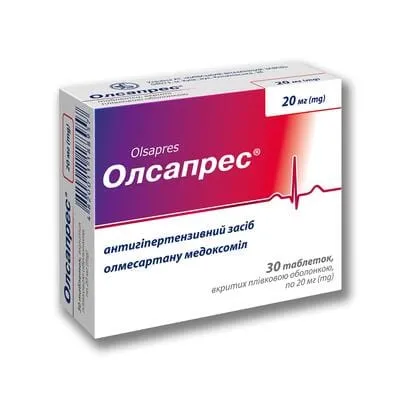
Table of Contents
INSTRUCTIONS FOR MEDICAL USE OF THE MEDICINAL PRODUCT OLSAPRES® (OLSAPRES)
Composition:
Active substance: olmesartan medoxomil;
1 tablet contains olmesartan medoxomil 20 mg or 40 mg;
Excipients: microcrystalline cellulose; low-substituted hydroxypropylcellulose; lactose monohydrate; hydroxypropylcellulose; magnesium stearate;
Coating: film-coating mixture Opadry II White: (hypromellose (hydroxypropylmethylcellulose); lactose monohydrate; titanium dioxide (E171); polyethylene glycol (macrogol)).
Pharmaceutical form. Film-coated tablets.
Main physicochemical properties:
20 mg tablets: white, round, biconvex tablets, film-coated;
40 mg tablets: white, oval, flat tablets with beveled edges, film-coated.
Pharmacotherapeutic group. Angiotensin II receptor blockers. ATC code C09CA08.
Pharmacological properties.
Pharmacodynamics.
Pharmacodynamic properties.
Olmesartan medoxomil is a potent, orally active, selective antagonist of angiotensin II receptors (type AT1). It is expected to block all actions of angiotensin II mediated by the AT1 receptor, regardless of the source or pathway of angiotensin II synthesis. Selective antagonism of angiotensin II AT1 receptors leads to an increase in plasma renin levels and concentrations of angiotensin I and II, as well as to a slight reduction in plasma aldosterone concentration.
Angiotensin II is the primary vasoactive hormone of the renin-angiotensin-aldosterone system and plays a key role in the pathophysiology of arterial hypertension via type 1 (AT1) receptors.
Clinical efficacy and safety.
In arterial hypertension, olmesartan medoxomil induces a dose-dependent, prolonged reduction in blood pressure. There is no evidence of arterial hypotension after the first dose, tachyphylaxis during long-term treatment, or withdrawal syndrome upon discontinuation of therapy.
Once-daily administration of olmesartan medoxomil provides effective and smooth blood pressure reduction over 24 hours. A single daily dose provides the same blood pressure reduction as splitting the daily dose into two administrations throughout the day.
Significant blood pressure reduction is observed as early as 2 weeks after initiation of treatment. With continuous therapy, maximal blood pressure reduction is achieved by 8 weeks after the start of treatment. When used concomitantly with hydrochlorothiazide, additional blood pressure reduction is observed, and this combination is well tolerated.
The effect of olmesartan on mortality and morbidity is currently unknown.
It is known that in the randomized study of olmesartan and prevention of microalbuminuria in diabetes (ROADMAP study), which included 4447 patients with type II diabetes, normoalbuminuria, and at least one cardiovascular risk factor, the potential delay in the onset of microalbuminuria with olmesartan treatment was evaluated. During the subsequent study, which lasted on average 3.2 years, patients received olmesartan or placebo in addition to other antihypertensive drugs, excluding angiotensin-converting enzyme (ACE) inhibitors or angiotensin II receptor blockers (ARBs).
Regarding the primary endpoint, the study demonstrated a statistically significant reduction in the primary endpoint of time to onset of microalbuminuria in the olmesartan group.
After adjusting for differences in blood pressure levels, this risk reduction was no longer statistically significant. Microalbuminuria developed in 8.2% (178 out of 2160) of patients in the olmesartan group and in 9.8% (210 out of 2139) of patients in the placebo group.
Regarding secondary endpoints, cardiovascular events occurred in 96 patients (4.3%) receiving olmesartan and in 94 patients (4.2%) in the placebo group. The frequency of fatal outcomes due to cardiovascular disease was higher with olmesartan than with placebo [15 patients (0.7%) vs. 3 patients (0.1%)], despite similar rates of non-fatal stroke [14 patients (0.6%) vs. 8 patients (0.4%)], non-fatal myocardial infarction [17 patients (0.8%) vs. 26 patients (1.2%)], and fatal outcomes from other non-cardiovascular causes [11 patients (0.5%) vs. 12 patients (0.5%)]. With olmesartan use, overall mortality numerically increased [26 patients (1.2%) vs. 15 patients (0.7%)], primarily due to a higher number of fatal cardiovascular events.
From published data, it is known that in a study of diabetic nephropathy evaluating the reduction in the incidence of end-stage renal disease with olmesartan (ORIENT study), the effects of olmesartan on renal and cardiovascular outcomes were investigated in 577 randomized Japanese and Chinese patients with type II diabetes and overt nephropathy. During the subsequent study, which lasted on average 3.1 years, patients received olmesartan or placebo in addition to other antihypertensive drugs, including ACE inhibitors.
The primary composite endpoint (time to first doubling of serum creatinine concentration, end-stage renal disease, death from any cause) occurred in 116 patients in the olmesartan group (41.1%) and in 129 patients in the placebo group (45.4%) [relative risk (RR) 0.97 (95% confidence interval (CI) 0.75–1.24); p = 0.791]. The secondary composite endpoint related to cardiovascular disease occurred in 40 patients receiving olmesartan (14.2%) and in 53 patients in the placebo group (18.7%). This composite cardiovascular endpoint included fatal outcomes due to cardiovascular disease in 10 (3.5%) patients receiving olmesartan compared to 3 (1.1%) in the placebo group, overall mortality in 19 (6.7%) patients compared to 20 (7.0%) patients, non-fatal stroke in 8 (2.8%) patients compared to 11 (3.9%) patients, and non-fatal myocardial infarction in 3 (1.1%) patients compared to 7 (2.5%) patients, respectively.
Pediatric population
The antihypertensive effects of olmesartan medoxomil in the pediatric population were analyzed in a randomized, double-blind, placebo-controlled study involving 302 patients aged 6 to 17 years. The study group consisted of non-black race patients (112 patients) and a racially mixed group (190 patients, including 38 non-black patients). The cause of arterial hypertension was predominantly essential hypertension (87% in the non-black group and 67% in the mixed group). Patients with body weight from 20 to < 35 kg were randomized to receive 2.5 mg olmesartan medoxomil (low dose) or 20 mg (high dose) once daily, and patients with body weight ≥ 35 kg were randomized to receive 5 mg (low dose) or 40 mg (high dose) once daily. Olmesartan medoxomil significantly reduced both systolic and diastolic blood pressure in a body weight-dependent manner. At both low and high doses, olmesartan medoxomil significantly reduced systolic blood pressure by 6.6 and 11.9 mm Hg from baseline, respectively. This effect was also observed during the withdrawal phase, during which both mean systolic and diastolic blood pressure showed statistically significant rebound in the placebo group compared to the olmesartan medoxomil group. In the pediatric population, treatment was effective for both primary and secondary arterial hypertension. As in adult patients, blood pressure reduction in black children was less pronounced. From published data, in a study of 59 patients aged 1 to 5 years with body weight ≥ 5 kg, during the open-label phase patients received 0.3 mg/kg olmesartan medoxomil once daily for 3 weeks, followed by randomization in the double-blind phase to receive either olmesartan medoxomil or placebo. After 2 weeks of withdrawal, mean systolic/diastolic blood pressure at the lower point was 3/3 mm Hg lower in the group randomized to receive olmesartan medoxomil; this difference in blood pressure values was not statistically significant (95% CI from -2 to 7 / from -1 to 7).
Other information
From published data, two large randomized controlled trials—ONTARGET (global trial of endpoints with telmisartan alone and with ramipril) and VA NEPHRON-D (a study on nephropathy in diabetes conducted by the U.S. Department of Veterans Affairs)—evaluated the use of combination therapy with ACE inhibitors and ARBs.
The ONTARGET study included patients with a history of cardiovascular or cerebrovascular disease or type II diabetes with signs of complications. The VA NEPHRON-D study included patients with type II diabetes and diabetic nephropathy.
These studies showed that, compared to monotherapy, combination therapy did not provide significant beneficial effects on renal and/or cardiovascular outcomes but increased the risk of hyperkalemia, acute kidney injury, and/or hypotension. Given the similar pharmacodynamic properties of ACE inhibitors and ARBs, these conclusions are applicable to other representatives of these drug classes. Therefore, patients with diabetic nephropathy should not receive concomitant therapy with ACE inhibitors and ARBs.
The ALTITUDE study (aliskiren in type II diabetes with cardiovascular and renal endpoints) investigated the benefit of adding aliskiren to standard therapy with ACE inhibitors or ARBs in patients with type II diabetes and chronic kidney disease, cardiovascular disease, or both. This study was prematurely terminated due to an increased risk of adverse effects. Compared to the placebo group, patients in the aliskiren group had numerically higher rates of fatal cardiovascular events and stroke, and adverse events and serious adverse events (hyperkalemia, hypotension, and renal function impairment) occurred more frequently in the aliskiren group.
Pharmacokinetics.
Absorption and distribution.
Olmesartan medoxomil is a prodrug. It is rapidly converted into the pharmacologically active metabolite olmesartan by esterases in the intestinal mucosa and in portal blood during absorption from the gastrointestinal tract.
Unmetabolized olmesartan medoxomil or unchanged medoxomil side chain are not detected in plasma or excretory products. The mean absolute bioavailability of olmesartan from the tablet formulation is 25.6%.
The mean maximum plasma concentration (Cmax) of olmesartan is reached approximately 2 hours after oral administration of olmesartan medoxomil, and plasma concentration increases almost linearly with increasing single oral doses up to 80 mg.
Food has practically no effect on the bioavailability of olmesartan; therefore, olmesartan medoxomil can be administered independently of food intake.
No clinically significant differences in olmesartan pharmacokinetics were observed by gender.
Plasma protein binding of olmesartan medoxomil is extensive (99.7%), but the potential for clinically significant displacement from protein binding with other concurrently administered highly protein-bound drugs is low (as confirmed by the absence of clinically significant interaction between olmesartan medoxomil and warfarin). Binding of olmesartan to blood cells is negligible. The mean volume of distribution after intravenous administration is small (16–29 L).
Metabolism and elimination.
Total plasma clearance is typically 1.3 L/h (CV, 19%) and is relatively slow compared to hepatic blood flow (approximately 90 L/h). After administration of a single oral dose of radiolabeled 14C-olmesartan medoxomil, 10–16% of the administered radioactivity was excreted in urine (mostly within 24 hours after dose administration), and the remainder was excreted in feces. Based on the systemic availability index (25.6%), it can be calculated that absorbed olmesartan is eliminated both renally (approximately 40%) and via the liver and biliary tract (approximately 60%). All excreted radioactivity was identified as olmesartan. No other significant metabolites were detected. Enterohepatic recirculation of olmesartan is minimal. Since a significant portion of olmesartan is excreted via the biliary tract, the use of the drug in patients with biliary obstruction is contraindicated (see section "Contraindications").
The terminal elimination half-life of olmesartan ranges from 10 to 15 hours after multiple oral doses. Steady state is achieved after the first few doses, with no further accumulation observed by day 14 of repeated dosing. Renal clearance is approximately 0.5–0.7 L/h and is dose-independent.
Pharmacokinetics in special patient populations.
Pediatric population
The pharmacokinetics of olmesartan were studied in patients with arterial hypertension aged 1 to 16 years. Olmesartan clearance in these patients was similar to that in adults, adjusted for body weight.
Pharmacokinetic data are lacking in children with renal impairment.
Elderly (aged 65 years and older)
In patients with arterial hypertension, steady-state area under the concentration-time curve (AUC) increased by approximately 35% in elderly patients (aged 65–75 years) and by approximately 44% in patients aged 75 years and older compared to younger patients. This is at least partially related to the average reduction in renal function in this patient group.
Renal impairment
In patients with mild, moderate, or severe renal impairment, steady-state AUC values increased by 62%, 82%, and 179%, respectively, compared to healthy control volunteers (see section "Dosage and administration" and "Special precautions").
Hepatic impairment
After a single oral dose, AUC values of olmesartan in patients with mild or moderate hepatic impairment were 6% and 65% higher, respectively, than in healthy patients. Two hours after dosing, the unbound fraction of olmesartan was 0.26%, 0.34%, and 0.41% in healthy volunteers and patients with mild and moderate hepatic impairment, respectively. After repeated dosing, mean AUC of olmesartan in patients with moderate hepatic impairment was 65% higher than in healthy volunteers. Mean Cmax values of olmesartan were similar in patients with hepatic impairment and healthy volunteers. The use of olmesartan medoxomil in patients with severe hepatic impairment has not been evaluated (see section "Dosage and administration" and "Special precautions").
Interaction with other medicinal products.
Colesevelam (a bile acid-binding agent)
Concomitant administration of 40 mg olmesartan medoxomil and 3750 mg colesevelam hydrochloride resulted in a 28% reduction in Cmax (maximum concentration) of olmesartan and a 39% reduction in AUC of olmesartan. A weaker effect (reduction in Cmax and AUC by 4% and 15%, respectively) was observed when olmesartan medoxomil was administered 4 hours before colesevelam hydrochloride.
The elimination half-life of olmesartan decreased by 50–52%, regardless of whether it was administered simultaneously with colesevelam hydrochloride or 4 hours before this agent (see section "Interaction with other medicinal products and other forms of interaction").
Preclinical safety data
From published data, in chronic toxicity studies in rats and dogs, the effects of olmesartan medoxomil were similar to those of other AT1 receptor antagonists and ACE inhibitors: increased blood urea nitrogen (BUN) and creatinine concentrations (due to functional renal changes caused by AT1 receptor blockade), reduced heart weight, decreased erythrocyte parameters (erythrocyte count, hemoglobin, hematocrit), and histological signs of kidney injury (foci of renal epithelial regeneration, thickening of the basement membrane, dilatation of renal tubules).
These adverse effects, caused by the pharmacological action of olmesartan medoxomil, have also been observed in preclinical studies with other AT1 receptor antagonists and ACE inhibitors and can be reduced by concurrent oral administration of sodium chloride.
In both animal species, increased plasma renin activity and hypertrophy/hyperplasia of renal juxtaglomerular cells were observed. These changes, typical of the class of ACE inhibitors and other AT1 receptor antagonists, appear to have no clinical significance.
Like other AT1 receptor antagonists, olmesartan medoxomil increases the frequency of chromosomal breaks in vitro in cell cultures. However, similar effects were not reproduced in several in vivo studies where olmesartan medoxomil was administered orally at very high doses up to 2000 mg/kg. Overall, comprehensive genotoxicity study data suggest that genotoxic effects of olmesartan are unlikely during clinical use.
Carcinogenic effects of olmesartan were not observed in a two-year study in rats and in two six-month studies in transgenic mice. In reproductive toxicity studies in rats, olmesartan medoxomil did not affect fertility and had no teratogenic effects. As with other angiotensin II receptor antagonists, offspring survival was reduced after exposure to olmesartan medoxomil, and female rats treated during late pregnancy and lactation showed renal pelvis dilation. As with other antihypertensive agents, olmesartan medoxomil was more toxic to pregnant rabbits than to pregnant rats, but did not exert fetotoxic effects.
Clinical characteristics.
Indications.
Treatment of essential arterial hypertension in adult patients.
Treatment of arterial hypertension in children and adolescents aged 6 to 18 years.
Contraindications.
- Hypersensitivity to the active substance or to any of the excipients of the medicinal product (see "Composition").
- Pregnancy or women planning to become pregnant (see "Special precautions", "Use during pregnancy or breastfeeding").
- Biliary obstruction (see "Pharmacokinetics").
Concomitant administration of olmesartan medoxomil with medicinal products containing aliskiren is contraindicated in patients with diabetes mellitus and renal impairment (glomerular filtration rate (GFR) < 60 mL/min/1.73 m²) (see "Interaction with other medicinal products and other forms of interaction", "Pharmacodynamics").
Interaction with other medicinal products and other forms of interaction.
Effect of other medicinal products on olmesartan medoxomil.
Other antihypertensive agents
The antihypertensive effect of olmesartan medoxomil may be enhanced when administered concomitantly with other antihypertensive agents.
ACE inhibitors, angiotensin II receptor blockers, or aliskiren
Dual blockade of the renin-angiotensin-aldosterone system (RAAS) by combining ACE inhibitors, angiotensin II receptor blockers, or aliskiren is associated with a higher incidence of adverse effects such as hypotension, hyperkalaemia, and impaired renal function (including acute renal failure), compared to monotherapy with agents acting on the RAAS (see "Contraindications", "Special precautions", "Pharmacodynamics").
Potassium-containing preparations and potassium-sparing diuretics
Concomitant use of agents acting on the renin-angiotensin-aldosterone system with potassium-sparing diuretics, potassium supplements, potassium-containing salt substitutes, or other agents that may increase potassium levels (e.g., heparin) may lead to increased serum potassium concentrations; therefore, such concomitant use is not recommended (see "Special precautions").
Nonsteroidal anti-inflammatory drugs (NSAIDs)
NSAIDs, including acetylsalicylic acid at doses exceeding 3 g per day, as well as COX-2 inhibitors and angiotensin II receptor antagonists, may act synergistically to reduce glomerular filtration. Concomitant use of these agents is associated with a risk of acute renal failure. In such cases, renal function should be monitored at the beginning of treatment and adequate fluid intake should be maintained.
Additionally, NSAIDs may reduce the antihypertensive effect of angiotensin II receptor antagonists when used concomitantly, potentially leading to decreased efficacy.
Bile acid sequestrant colesevelam
Concomitant administration of the bile acid sequestrant colesevelam hydrochloride reduces systemic exposure to peak plasma concentrations of olmesartan and shortens its elimination half-life. Administration of olmesartan medoxomil at least 4 hours before colesevelam hydrochloride reduces their interaction. Therefore, olmesartan medoxomil should be administered at least 4 hours prior to colesevelam hydrochloride (see "Pharmacokinetics").
Other medicinal products
A moderate reduction in bioavailability of olmesartan medoxomil has been observed following treatment with antacids (magnesium-aluminum hydroxide). Concomitant administration with warfarin and digoxin does not affect the pharmacokinetics of olmesartan medoxomil.
Effect of olmesartan medoxomil on other medicinal products.
Lithium-containing preparations
Increased and reversible serum lithium concentrations and increased lithium toxicity have been observed when lithium is used concomitantly with angiotensin-converting enzyme inhibitors and angiotensin II receptor antagonists; therefore, such combination is not recommended (see "Special precautions"). If concomitant use is necessary, careful monitoring of serum lithium concentrations during treatment is recommended.
Other medicinal products
No clinically significant interactions between olmesartan medoxomil and warfarin, digoxin, antacid (aluminum hydroxide/magnesium hydroxide), hydrochlorothiazide, or pravastatin have been observed. Specifically, olmesartan medoxomil did not significantly affect the pharmacodynamics of warfarin or the pharmacokinetics of digoxin.
Furthermore, no clinically significant inhibitory effect of olmesartan medoxomil on human cytochrome P450 enzymes 1A1/2, 2A6, 2C8/9, 2C19/2D6, 2E1, and 3A4 was observed in vitro, and minimal or no induction effect on cytochrome P450 was observed in rats. Therefore, no in vivo interaction studies with known inhibitors or inducers of cytochrome P450 enzymes were conducted, and clinically significant interactions between olmesartan and medicinal products metabolized by the aforementioned cytochrome P450 enzymes are not expected.
Paediatric population
Interaction studies of olmesartan medoxomil with other medicinal products have been conducted only in adult patients. It is unknown whether interaction data in adults and children are similar.
Special precautions for use.
Reduced blood volume
In patients with reduced circulating blood volume and/or hyponatremia due to intensive diuretic therapy, restricted salt intake, diarrhea, or vomiting, symptomatic arterial hypotension may develop, particularly after administration of the first dose of the medicinal product. These conditions should be corrected prior to initiating treatment with olmesartan medoxomil.
Other conditions associated with activation of the renin-angiotensin-aldosterone system
Patients in whom vascular tone and renal function depend significantly on the activity of the renin-angiotensin-aldosterone system, such as patients with severe congestive heart failure or renal disease, including renal artery stenosis, may experience acute hypotension, azotemia, oliguria, or, rarely, acute renal failure when treated with drugs affecting this system. Treatment with angiotensin II receptor antagonists may be associated with similar effects.
Vasorenal hypertension
Administration of drugs affecting the renin-angiotensin-aldosterone system in patients with bilateral renal artery stenosis or stenosis of the artery of a single functioning kidney is associated with a risk of severe arterial hypotension and renal failure.
Renal impairment and kidney transplantation
In patients with renal impairment receiving olmesartan medoxomil, periodic monitoring of serum potassium and creatinine concentrations is recommended. Olmesartan medoxomil is not recommended for patients with severe renal impairment (creatinine clearance less than 20 mL/min) (see "Dosage and administration", "Pharmacokinetics"). Experience with olmesartan medoxomil in patients who have recently undergone kidney transplantation or in patients with end-stage renal disease (creatinine clearance less than 12 mL/min) is lacking.
Hepatic impairment
Olmesartan medoxomil is not recommended for use in patients with severe hepatic impairment due to lack of experience with its use (see "Dosage and administration" regarding dosage adjustments in mild to moderate hepatic impairment).
Hyperkalemia
Drugs affecting the renin-angiotensin-aldosterone system may induce hyperkalemia. The risk is increased in elderly patients and may be life-threatening in patients with renal impairment or diabetes mellitus, particularly when combined with other drugs that increase serum potassium levels and/or in the presence of intercurrent illnesses.
Before prescribing concomitant medications affecting the renin-angiotensin-aldosterone system, the benefit-risk ratio of such treatment should be carefully evaluated and alternative therapeutic options considered (also see section "Dual blockade of the renin-angiotensin-aldosterone system (RAAS)"). Major risk factors for hyperkalemia include:
- diabetes mellitus, renal impairment, patients aged 70 years or older;
- combination with one or more drugs affecting the renin-angiotensin-aldosterone system and/or potassium supplements. Some drugs, even drug classes, may cause hyperkalemia: salt substitutes containing potassium, potassium-containing preparations, potassium-sparing diuretics, ACE inhibitors, angiotensin II receptor antagonists, nonsteroidal anti-inflammatory drugs including selective COX-2 inhibitors, heparin, immunosuppressants such as cyclosporine or tacrolimus, trimethoprim;
- intercurrent illnesses and conditions, including dehydration, acute decompensated heart failure, metabolic acidosis, worsening of renal impairment, acute deterioration of renal function (e.g., due to infections), cell lysis such as in acute limb ischemia, rhabdomyolysis, polytrauma.
In patients with such risk factors, regular monitoring of serum potassium concentration is recommended (see "Interaction with other medicinal products and other forms of interaction").
Dual blockade of the renin-angiotensin-aldosterone system (RAAS)
Evidence indicates that concomitant use of ACE inhibitors, angiotensin II receptor blockers, or aliskiren increases the risk of hypotension, hyperkalemia, and decreased renal function (including acute renal failure). Therefore, dual blockade of the RAAS by concomitant use of ACE inhibitors, angiotensin II receptor blockers, or aliskiren is not recommended (see "Interaction with other medicinal products and other forms of interaction", "Pharmacodynamics").
If dual blockade therapy is considered absolutely necessary, it should be administered only under specialist supervision with regular and careful monitoring of renal function, electrolyte levels, and blood pressure.
ACE inhibitors and angiotensin II receptor blockers should not be used concomitantly in patients with diabetic nephropathy.
Lithium preparations
As with other angiotensin II receptor antagonists, concomitant use of lithium with olmesartan medoxomil is not recommended (see "Interaction with other medicinal products and other forms of interaction").
Aortic or mitral valve stenosis; obstructive hypertrophic cardiomyopathy
Olmesartan medoxomil should be used with caution in patients with aortic or mitral valve stenosis or obstructive hypertrophic cardiomyopathy.
Primary hyperaldosteronism
Patients with primary hyperaldosteronism do not respond to antihypertensive drugs acting via inhibition of the renin-angiotensin system. Therefore, olmesartan medoxomil is not recommended for such patients.
Sprue-like enteropathy
In very rare cases, severe chronic diarrhea with substantial weight loss has been reported, developing several months to years after initiation of treatment in patients taking olmesartan; the cause is likely a localized delayed hypersensitivity reaction. Intestinal mucosal biopsies in such patients often show villous atrophy. If these symptoms occur in a patient during treatment with olmesartan and other likely etiologies are excluded, olmesartan therapy should be discontinued immediately and not restarted. If diarrhea persists for more than one week after discontinuation of the drug, referral to a specialist (e.g., a gastroenterologist) is recommended.
Ethnic differences
As with all angiotensin II receptor antagonists, the antihypertensive effect of olmesartan medoxomil is somewhat less in Black patients compared to others, possibly due to a higher prevalence of low renin levels in this population.
Pregnancy
Angiotensin II antagonists should not be initiated during pregnancy. In women planning pregnancy, antihypertensive therapy with angiotensin II antagonists should be replaced with alternative antihypertensive agents with an established safety profile during pregnancy. Upon diagnosis of pregnancy, treatment with angiotensin II antagonists should be discontinued immediately and alternative therapy initiated if necessary (see "Contraindications", "Use during pregnancy or breastfeeding").
Other
Marked reduction in blood pressure with any antihypertensive therapy in patients with ischemic heart disease or cerebrovascular disease may lead to myocardial infarction or stroke.
Intestinal angioedema
Cases of intestinal angioedema have been reported in patients receiving angiotensin II receptor blockers [including olmesartan] (see section "Adverse reactions"). These patients presented with abdominal pain, nausea, vomiting, and diarrhea. Symptoms resolved after discontinuation of angiotensin II receptor blockers. If intestinal angioedema is diagnosed, treatment with olmesartan should be discontinued and appropriate monitoring initiated until complete resolution of symptoms.
This medicinal product contains lactose. Patients with rare hereditary problems of galactose intolerance, Lapp lactase deficiency, or glucose-galactose malabsorption should not take this medicinal product.
Use during pregnancy or breastfeeding.
Pregnancy
Olmesartan medoxomil (Olspres®) is contraindicated in pregnant women or women who are planning to become pregnant. If pregnancy is confirmed during treatment with Olspres®, the drug should be discontinued immediately and replaced with another medicinal product approved for use during pregnancy. Epidemiological data on teratogenic risk of ACE inhibitors in the first trimester of pregnancy are inconclusive; however, a small increased risk cannot be excluded. Although there are no controlled epidemiological data on the risk of angiotensin II receptor antagonists, similar risks may exist with this class of drugs. If long-term therapy with angiotensin II receptor antagonists is essential, women planning pregnancy should be switched to alternative antihypertensive agents with proven safety during pregnancy. Upon diagnosis of pregnancy, angiotensin II receptor antagonists should be discontinued immediately and alternative therapy initiated. In the second and third trimesters, angiotensin II receptor antagonists have toxic effects on the fetus (renal dysfunction, oligohydramnios, delayed skull ossification) and on the neonate (renal failure, arterial hypotension, hyperkalemia) (see section "Preclinical safety data" above). If angiotensin II receptor antagonists are used during the second and third trimesters, fetal renal function and skull ossification should be assessed by ultrasound. Neonates whose mothers were treated with angiotensin II receptor antagonists should be monitored for possible arterial hypotension (see "Contraindications" and "Special precautions for use").
Breastfeeding
Olmesartan has been shown to be excreted into milk in rats, but human data are lacking. Breastfeeding women should not use Olspres® due to lack of experience with its use during this period. Alternative antihypertensive agents with proven safety during breastfeeding, especially when nursing newborns or preterm infants, should be considered instead of Olspres®.
Ability to influence the ability to drive and use machines.
Olspres® has a minor or moderate influence on the ability to drive and use machines. Dizziness or increased fatigue may occasionally occur in patients receiving antihypertensive therapy, which may impair reaction ability.
Method of Administration and Dosage
Adults
The initial daily dose of olmesartan medoxomil is 10 mg once daily. If the reduction in blood pressure is inadequate, the dose should be increased to 20 mg once daily. If necessary, the dose may be further increased to 40 mg once daily (maximum daily dose) or hydrochlorothiazide may be added to the treatment regimen.
The antihypertensive effect of olmesartan medoxomil is generally observed within 2 weeks after initiation of therapy, with maximum effect achieved by 8 weeks of treatment. This should be taken into account when considering dose adjustments for any patient.
Elderly Patients (aged 65 years and older)
Dose adjustment is generally not required in elderly patients (see recommended doses for patients with renal impairment). When increasing the daily dose to the maximum of 40 mg, careful monitoring of blood pressure is recommended.
Patients with Renal Impairment
The maximum daily dose for patients with mild to moderate renal impairment (creatinine clearance 20–60 mL/min) is 20 mg, as there is no experience with higher doses in this patient group. Olmesartan medoxomil is not recommended in patients with severe renal impairment (creatinine clearance <20 mL/min) due to limited experience in such patients (see sections "Special Warnings and Precautions" and "Pharmacokinetics").
Hepatic Impairment
No dose adjustment is required in patients with mild hepatic impairment. In patients with moderate hepatic impairment, the initial dose of olmesartan medoxomil is 10 mg daily, with a maximum dose of 20 mg daily. When olmesartan medoxomil is co-administered with diuretics and/or other antihypertensive agents in patients with hepatic impairment, careful monitoring of blood pressure and renal function is required. Olmesartan medoxomil is not recommended in patients with severe hepatic impairment due to insufficient experience with its use (see sections "Special Warnings and Precautions" and "Pharmacokinetics"). Olmesartan medoxomil should not be used in patients with biliary obstruction (see section "Contraindications").
Pediatric Population
Children and adolescents aged 6 to 18 years
The recommended initial dose of olmesartan medoxomil in children and adolescents aged 6 to 18 years is 10 mg once daily. If blood pressure is not adequately controlled, the dose may be increased to 20 mg once daily. If a greater reduction in blood pressure is needed, the dose of olmesartan medoxomil may be increased up to 40 mg daily in children with body weight ≥35 kg. In children with body weight <35 kg, the daily dose should not exceed 20 mg.
Method of Administration
To ensure consistent dosing, Olpres® should be taken approximately at the same time each day, with or without food (e.g., during breakfast). Tablets should be swallowed with sufficient fluid (e.g., one glass of water). The tablet should not be chewed.
Children
The drug is indicated for the treatment of arterial hypertension in children and adolescents aged 6 to 18 years. Safety and efficacy in children aged 1 to 5 years have not yet been established. Available data are presented in sections "Adverse Reactions" and "Pharmacodynamics", but dosage recommendations cannot be provided. The drug should not be used in children under 1 year of age due to safety concerns and lack of data.
Overdose
Information on overdose is limited. The most likely manifestation of overdose is hypotension. In case of overdose, close monitoring of the patient and symptomatic, supportive therapy are recommended.
There is no data available on the removal of olmesartan medoxomil by dialysis.
Adverse Reactions
The most commonly occurring adverse reactions during treatment with Olspres® are headache (7.7%), influenza-like symptoms (4.0%), and dizziness (3.7%).
In placebo-controlled monotherapy studies, dizziness was the only treatment-related adverse reaction (incidence 2.5% with olmesartan medoxomil versus 0.9% in the placebo group).
The frequency of laboratory parameter abnormalities was slightly higher with olmesartan medoxomil compared to placebo: hypertriglyceridemia – 2.0% with olmesartan medoxomil versus 1.1% with placebo; increased creatine phosphokinase levels – 1.3% with olmesartan medoxomil versus 0.7% with placebo.
The following terms were used to classify the frequency of adverse reactions: very common (≥ 1/10); common (≥ 1/100, < 1/10); uncommon (≥ 1/1,000, < 1/100); rare (≥ 1/10,000, < 1/1,000); very rare (< 1/10,000); frequency not known (cannot be estimated from available data).
| Organ systems by MedDRA classification |
Adverse reactions |
Frequency |
| Blood and lymphatic system disorders |
Thrombocytopenia |
Uncommon |
| Immune system disorders |
Anaphylactic reaction |
Uncommon |
| Metabolism and nutrition disorders |
Hypertriglyceridemia |
Common |
| Hypercholesterolemia |
Uncommon |
|
| Hyperuricemia |
Common |
|
| Hyperkalemia |
Rare |
|
| Nervous system disorders |
Dizziness |
Common |
| Headache |
Common |
|
| Ear and labyrinth disorders |
Vertigo |
Uncommon |
| Cardiac disorders |
Angina pectoris |
Uncommon |
| Tachycardia |
Uncommon |
|
| Vascular disorders |
Arterial hypotension |
Rare |
| Respiratory, thoracic and mediastinal disorders |
Brонchitis |
Common |
| Pharyngitis |
Common |
|
| Cough |
Common |
|
| Rhinitis |
Common |
|
| Gastrointestinal disorders |
Gastroenteritis |
Common |
| Diarrhea |
Common |
|
| Abdominal pain |
Common |
|
| Nausea |
Common |
|
| Dyspepsia |
Common |
|
| Vomiting |
Uncommon |
|
| Sprue-like enteropathy (see "Special precautions") |
Very rare |
|
| Angioneurotic intestinal edema |
Rare |
|
| Hepatobiliary disorders |
Autoimmune hepatitis* |
Not known |
| Skin and subcutaneous tissue disorders |
Exanthema |
Uncommon |
| Allergic dermatitis |
Uncommon |
|
| Urticaria |
Uncommon |
|
| Rash |
Uncommon |
|
| Pruritus |
Uncommon |
|
| Alopecia |
Not known |
|
| Angioedema |
Rare |
|
| Musculoskeletal and connective tissue disorders |
Arthritis |
Common |
| Back pain |
Common |
|
| Bone pain |
Common |
|
| Myalgia |
Uncommon |
|
| Arthralgia |
Uncommon |
|
| Muscle cramps |
Rare |
|
| Renal and urinary disorders |
Hematuria |
Common |
| Urinary tract infection |
Common |
|
| Acute renal failure |
Rare |
|
| Renal function impairment |
Rare |
|
| General disorders |
Pain |
Common |
| Chest pain |
Common |
|
| Peripheral edema |
Common |
|
| Influenza-like symptoms |
Common |
|
| Increased fatigue |
Common |
|
| Facial swelling |
Uncommon |
|
| Asthenia |
Uncommon |
|
| Malaise |
Uncommon |
|
| Lethargy |
Rare |
|
| Investigations |
Increased liver enzymes |
Common |
| Increased blood urea |
Common |
|
| Increased blood creatine phosphokinase |
Common |
|
| Increased blood creatinine |
Rare |
* During the post-marketing period, cases of autoimmune hepatitis with a latency period of several months to years have been reported, which were reversible upon discontinuation of olmesartan.
Isolated cases of rhabdomyolysis, temporally associated with angiotensin II receptor blockers, have been reported.
Additional information on special patient populations
Paediatric population
Literature data indicate that safety monitoring of olmesartan medoxomil was conducted in clinical studies involving 361 children and adolescents aged 1 to 17 years. Although the nature and severity of adverse reactions were similar to those observed in adults, the following were reported at higher frequencies in children:
- Nasal bleeding is a common adverse reaction (≥ 1/100 to < 1/10) not reported in adult patients;
- During the 3-week double-blind study period, the incidence of treatment-emergent dizziness and headache was nearly twice as high in children aged 6 to 17 years receiving high-dose olmesartan medoxomil.
Overall, the safety profile of olmesartan medoxomil in paediatric patients did not differ significantly from that in adult patients.
Elderly patients (aged 65 years and older)
In elderly patients, hypotension may occur somewhat more frequently (from "rare" to "uncommon").
Reporting of suspected adverse reactions
Reporting suspected adverse reactions after medicine authorization is important. It allows continued monitoring of the benefit-risk balance of the medicine. Healthcare professionals, patients, and their legal representatives should report all suspected adverse reactions and lack of efficacy via the automated pharmacovigilance information system at: https://aisf.dec.gov.ua.
Shelf life. 2 years.
Storage conditions.
Store in the original packaging at a temperature not exceeding 25°C.
Keep out of reach of children.
Packaging.
10 tablets in a blister; 3 blisters per carton.
Prescription status. Prescription only.
Manufacturer. JSC "KYIV VITAMIN PLANT".
Manufacturer's address and location of business activity.
38 Kopilivska Street, Kyiv, 04073, Ukraine.
Web-site: www.vitamin.com.ua