Octreotide - mb
Ukraine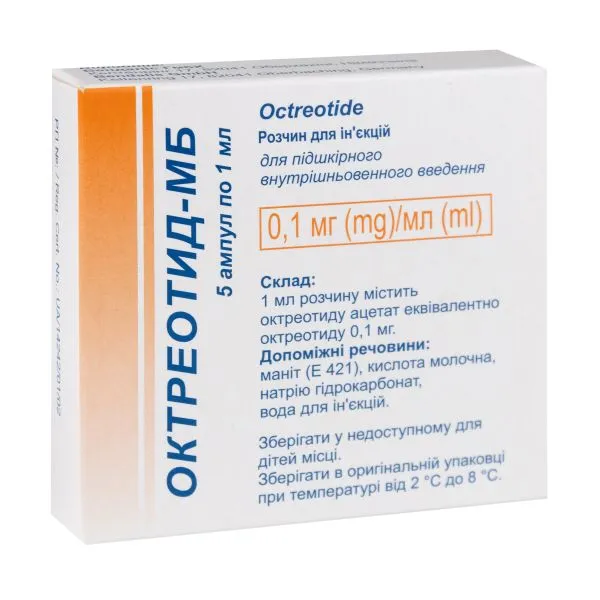
Table of Contents
INSTRUCTIONS FOR MEDICAL USE OF THE MEDICINAL PRODUCT OCTREOTIDE-MB (OCTREOTIDE-MB)
Composition:
Active substance: octreotide;
1 ml of solution contains octreotide acetate equivalent to octreotide 0.05 mg, or 0.1 mg, or 0.5 mg;
Excipients: mannitol (E 421), lactic acid, sodium bicarbonate, water for injections.
Pharmaceutical form. Injection solution.
Main physicochemical properties: clear, colorless liquid.
Pharmacotherapeutic group.
Hormonal preparations for systemic use. Pituitary and hypothalamic hormones. Hypothalamic hormones. Somatostatin and analogues. Octreotide.
ATC code H01CB02.
Pharmacological Properties
Pharmacodynamics
Octreotide is a synthetic octapeptide, a derivative of the natural hormone somatostatin, with similar pharmacological effects but significantly longer duration of action. The drug suppresses pathologically elevated secretion of growth hormone (GH), as well as peptides and serotonin produced by the gastroenteropancreatic endocrine system.
In animals, octreotide is a more potent inhibitor of the release of growth hormone, glucagon, and insulin than somatostatin, with greater selectivity for suppressing growth hormone and glucagon.
In healthy individuals, Octreotide-MB suppresses:
- GH secretion induced by arginine, physical exercise, and insulin-induced hypoglycemia;
- secretion of insulin, glucagon, gastrin, and other peptides of the gastroenteropancreatic endocrine system stimulated by food intake, as well as arginine-stimulated insulin and glucagon secretion;
- thyrotropin secretion induced by thyrotropin-releasing hormone (TRH).
Unlike somatostatin, octreotide suppresses GH more than insulin, and its administration is not associated with rebound hypersecretion of hormones (i.e., growth hormone in patients with acromegaly).
In patients with acromegaly, Octreotide-MB reduces plasma concentrations of GH and insulin-like growth factor-1 (IGF-1). A suppression of GH by 50% or more is observed in 90% of patients; a reduction in plasma GH levels to below 5 ng/mL is achieved in approximately half of patients. In most patients with acromegaly, Octreotide-MB significantly reduces the severity of symptoms such as headache, skin and soft tissue swelling, hyperhidrosis, joint pain, and paresthesias. In patients with large GH-secreting pituitary adenomas, treatment with Octreotide-MB may lead to some reduction in tumor size.
In patients with functional endocrine tumors of the gastrointestinal tract and pancreas, Octreotide-MB exerts various endocrine effects that influence several clinical manifestations of the disease. Clinical and symptomatic improvement is observed in patients who continue to experience symptoms related to tumors despite prior treatments, including surgery, hepatic artery embolization, and various chemotherapy regimens (e.g., streptozotocin and 5-fluorouracil).
The effects of Octreotide-MB on different types of tumors are described below.
In carcinoid tumors, administration of Octreotide-MB may reduce the severity of symptoms such as flushing and diarrhea, which is often accompanied by decreased plasma serotonin concentration and reduced urinary excretion of 5-hydroxyindoleacetic acid.
In tumors characterized by hyperproduction of vasoactive intestinal peptide (VIP), Octreotide-MB leads to a reduction in severe secretory diarrhea typical of this condition in most patients, thereby improving quality of life. Concomitant electrolyte imbalances, such as hypokalemia, are also reduced, allowing discontinuation of enteral or parenteral fluid and electrolyte replacement. According to computed tomography data, tumor progression may slow down or stop, and tumor size—including liver metastases—may even decrease in some patients. Clinical improvement is usually accompanied by a reduction (sometimes to normal levels) in plasma VIP concentration.
In glucagonomas, drug administration leads to a marked reduction in necrolytic migratory erythema, a characteristic feature of this condition, in most cases. Octreotide-MB has no significant effect on mild diabetes mellitus, which is commonly associated with glucagonomas, and usually does not reduce the need for insulin or oral hypoglycemic agents. In patients suffering from diarrhea, the drug helps reduce it, leading to weight gain. Octreotide-MB often causes a rapid decrease in plasma glucagon concentration, although this effect may not persist during long-term treatment. Nevertheless, symptomatic improvement remains stable over prolonged periods.
In gastrinomas/Zollinger-Ellison syndrome, therapy with proton pump inhibitors or H2-receptor antagonists may reduce gastric acid production. However, diarrhea, another major symptom, may not be adequately relieved by proton pump inhibitors or H2-receptor blockers. In some patients, Octreotide-MB may further reduce gastric acid hypersecretion and alleviate symptoms, including diarrhea, by suppressing elevated gastrin levels.
In patients with insulinomas, Octreotide-MB reduces the level of immunoreactive insulin in the blood. This effect, however, may be transient—approximately 2 hours. In patients with resectable tumors, Octreotide-MB may help restore and maintain normoglycemia in the preoperative period. In patients with unresectable benign or malignant tumors, glycemic control may improve even without sustained long-term reduction in blood insulin levels.
In patients with tumors hypersecreting growth hormone-releasing factor (somatoliberinomas), Octreotide-MB reduces the severity of acromegaly symptoms. This is presumably due to inhibition of growth hormone-releasing factor and GH secretion. Subsequently, pituitary hypertrophy may decrease.
In patients undergoing pancreatic surgery, administration of Octreotide-MB during and after surgery reduces the incidence of typical postoperative complications (e.g., pancreatic fistulas, abscesses, sepsis, postoperative acute pancreatitis).
In patients with variceal bleeding from esophageal and gastric varices due to liver cirrhosis, administration of the drug in combination with specific treatment (e.g., sclerotherapy) leads to more effective control of bleeding, reduced incidence of early rebleeding, decreased transfusion requirements, and improved 5-day survival. Although the exact mechanism of action of Octreotide-MB is not fully established, it is believed that the drug reduces splanchnic blood flow by inhibiting vasodilatory hormones such as VIP and glucagon.
Pharmacokinetics
Absorption
After subcutaneous administration, octreotide is rapidly and completely absorbed. Maximum plasma concentration is reached within 30 minutes.
Distribution
Plasma protein binding is 65%. Binding to blood cellular elements is negligible. The volume of distribution is 0.27 L/kg.
Elimination
Total clearance is 160 mL/min. The elimination half-life after subcutaneous injection is 100 minutes. After intravenous administration, elimination occurs in two phases, with half-lives of 10 and 90 minutes, respectively. The majority of the administered peptide dose is excreted in feces; approximately 32% is excreted unchanged in urine.
Renal impairment
Renal impairment does not affect the total exposure (area under the concentration-time curve, AUC) of subcutaneously administered octreotide.
Hepatic impairment
Elimination capacity may be reduced in patients with liver cirrhosis, but not in patients with hepatic steatosis.
Clinical characteristics.
Indications.
Acromegaly, for controlling the main manifestations of the disease and reducing plasma levels of growth hormone (GH) and insulin-like growth factor 1 (IGF-1) when surgical treatment and radiotherapy have not provided sufficient efficacy. Octreotide-MB is also indicated for the treatment of patients with acromegaly who have refused surgery or have contraindications to it, as well as for short-term treatment between courses of radiotherapy until its full effect develops.
Relief of symptoms associated with endocrine tumors of the gastrointestinal tract and pancreas:
- carcinoid tumors with carcinoid syndrome;
- VIPomas (tumors characterized by overproduction of vasoactive intestinal peptide);
- glucagonomas;
- gastrinomas/Zollinger-Ellison syndrome, usually in combination with histamine H2-receptor antagonists or proton pump inhibitors;
- insulinomas (for control of hypoglycemia in the preoperative period, as well as for maintenance therapy);
- somatostatinomas (tumors characterized by overproduction of growth hormone-releasing factor).
Octreotide-MB is not an antitumor agent; therefore, its use cannot lead to cure in these patients.
Prevention of complications following pancreatic surgery.
Control and prevention of recurrent bleeding from esophageal varices in patients with liver cirrhosis (in combination with specific therapeutic measures, e.g., endoscopic sclerotherapy).
Contraindications.
Known hypersensitivity to octreotide or to any of the excipients of the drug.
Interaction with other medicinal products and other forms of interaction.
Dosage adjustment of drugs such as β-blockers, calcium channel blockers, or agents used to control fluid and electrolyte balance may be required when administered concomitantly with octreotide.
Dosage adjustment of insulin and antidiabetic agents may be necessary during concomitant treatment with octreotide.
Octreotide has been shown to reduce intestinal absorption of cyclosporine and to delay absorption of cimetidine.
Concomitant administration of octreotide and bromocriptine increases the bioavailability of bromocriptine.
Limited published data suggest that somatostatin analogs may reduce the metabolic clearance of substances metabolized by cytochrome P450 enzymes, possibly due to suppression of growth hormone. Since such an effect of octreotide cannot be excluded, caution should be exercised when using other medicinal products that are primarily metabolized by CYP3A4, as well as those with a narrow therapeutic index (e.g., quinidine, terfenadine).
Special precautions for use.
General
Since growth hormone-secreting pituitary tumors may occasionally enlarge, causing serious complications (e.g., visual field defects), careful monitoring of all patients is essential. If signs of tumor enlargement occur, alternative treatment options should be considered.
The therapeutic effect of lowering GH levels and normalizing IGF-1 concentrations in women with acromegaly may potentially restore fertility. Women of reproductive age should be advised to use adequate contraceptive methods during octreotide therapy (see also section "Use during pregnancy or breastfeeding").
Thyroid function should be monitored in patients receiving long-term octreotide therapy.
Liver function should be monitored during octreotide therapy.
Cardiovascular effects
Bradycardia has been reported infrequently. Dose adjustments of drugs such as β-blockers, calcium channel blockers, or agents affecting fluid or electrolyte balance may be required.
Cases of atrioventricular block (including complete atrioventricular block) have been observed in patients receiving continuous infusion of high doses (100 micrograms/hour) and in patients receiving intravenous bolus octreotide (50 micrograms bolus followed by 50 micrograms/hour continuous infusion). Therefore, the maximum dose of 50 micrograms/hour should not be exceeded (see section "Dosage and administration"). Patients receiving high-dose intravenous octreotide should be under appropriate cardiac monitoring.
Gallbladder-related effects
Cholelithiasis is frequently observed during octreotide therapy and may be associated with cholecystitis and bile duct dilation. Therefore, ultrasound examination of the gallbladder is recommended before initiation of Octreotide-MB therapy and every 6–12 months during treatment.
Gastrointestinal and pancreatic endocrine tumors
During treatment of gastrointestinal and pancreatic endocrine tumors, a sudden loss of symptomatic control by Octreotide-MB may rarely occur, accompanied by rapid return of severe symptoms. Discontinuation of the drug may lead to worsening or recurrence of symptoms.
Glucose metabolism
Due to its inhibitory effects on GH, glucagon, and insulin, Octreotide-MB may disturb glucose regulation. Glucose tolerance after food intake may be impaired, and in some cases, chronic administration may lead to persistent hyperglycemia. Hypoglycemia may also occur.
In patients with insulinomas, octreotide may increase the intensity and duration of hypoglycemia due to its relatively stronger inhibitory effect on GH and glucagon secretion compared to insulin, as well as its relatively short inhibitory effect on insulin secretion. These patients should be closely monitored at the beginning of Octreotide-MB therapy and with each dose adjustment. Noticeable fluctuations in blood glucose concentration may be reduced by more frequent administration of smaller doses.
The requirement for insulin or oral hypoglycemic agents in patients with type I diabetes may be reduced during Octreotide-MB administration. In non-diabetic patients and in patients with type II diabetes who have partially intact insulin reserve, Octreotide-MB administration may enhance postprandial glycemia. Careful monitoring of glucose tolerance and antidiabetic therapy is recommended.
Esophageal varices
Since episodes of bleeding from esophageal varices are associated with an increased risk of developing insulin-dependent diabetes or changes in insulin requirements in patients with pre-existing diabetes, appropriate monitoring of blood glucose levels is necessary.
Local reactions
In a 52-week toxicity study in rats, sarcomas at the subcutaneous injection site were observed predominantly in males, but only at the highest dose (approximately 8 times higher than the maximum human dose based on body surface area). In a 52-week toxicity study in dogs, no hyperplastic or neoplastic lesions were observed at the injection site. There have been no reports of tumors at injection sites in patients treated with octreotide for up to 15 years. All available data suggest that the findings in rats are species-specific and not relevant to human use.
Nutrition
Octreotide-MB may impair fat absorption from food in some patients.
Reduced vitamin B12 levels and abnormal Schilling test results have been observed in some patients receiving octreotide therapy. Vitamin B12 levels should be monitored during Octreotide-MB therapy in patients with a history of vitamin B12 deficiency.
Pancreatic function:
Exocrine pancreatic insufficiency (EPI) has been observed in some patients receiving octreotide therapy for gastroenteropancreatic neuroendocrine tumors. Symptoms of EPI may include steatorrhea, diarrhea, abdominal bloating, and weight loss. Screening and appropriate management of EPI according to clinical guidelines should be considered in symptomatic patients.
Sodium content
Octreotide-MB contains less than 1 mmol (23 mg) of sodium, i.e., the preparation is practically sodium-free.
Use during pregnancy or breastfeeding.
Pregnancy
There is limited data (fewer than 300 outcomes) on octreotide use in pregnant women, but in approximately one-third of cases, pregnancy outcomes are unknown. Most reports come from post-marketing use of octreotide, with more than 50% of cases involving pregnant patients with acromegaly. Most women received octreotide during the first trimester at doses of 100–1200 mcg/day as subcutaneous octreotide or 10–40 mg/month as octreotide LAR.
Congenital anomalies in the child were reported in approximately 4% of pregnancies with known outcomes. No association with octreotide use was established in these cases.
Animal studies have not shown any direct or indirect harmful effects on the reproductive system.
As a precautionary measure, octreotide use during pregnancy should be avoided.
Breastfeeding period
Breastfeeding is contraindicated during treatment with Octreotide-MB. It is unknown whether octreotide passes into human breast milk. Excretion of octreotide into breast milk has been observed in animal studies.
Fertility
It is unknown whether octreotide affects human fertility. In male offspring of females treated with octreotide during pregnancy and lactation, delayed descent of the testes was observed. However, in experimental studies, octreotide did not affect fertility in male or female rats at doses up to 1 mg/kg body weight per day.
Ability to influence reaction rate while driving or operating machinery.
Octreotide-MB has no or negligible influence on the ability to drive vehicles or operate machinery. Patients should be advised to exercise caution when driving or operating machinery if they experience dizziness, asthenia/fatigue, or headache during octreotide therapy.
Method of Administration and Dosage
Dosage
In acromegaly, the initial dose is 0.05–0.1 mg administered subcutaneously every 8 or 12 hours. Subsequent dosage adjustments should be based on monthly measurements of serum growth hormone (GH) and insulin-like growth factor-1 (IGF-1) levels, clinical symptoms, and drug tolerability (target blood hormone levels: GH < 2.5 ng/mL, IGF-1 within normal range). The optimal daily dose for most patients is 0.3 mg. The maximum daily dose is 1.5 mg, which should not be exceeded. In patients receiving a stable dose of octreotide, GH and IGF-1 levels should be monitored every 6 months.
If adequate reduction in GH levels and improvement in clinical symptoms are not observed within 3 months of treatment with Octreotide-MB, therapy should be discontinued.
In gastrointestinal and pancreatic endocrine tumors, the initial dose is 0.05 mg administered subcutaneously 1–2 times daily. Subsequently, depending on the achieved clinical effect, influence on tumor-secreted hormone levels (in carcinoid tumors, urinary 5-hydroxyindoleacetic acid excretion), and tolerability, the dose may be gradually increased to 0.1–0.2 mg three times daily. Higher doses may be required in exceptional cases.
Maintenance doses should be individually tailored.
If no improvement occurs within 1 week of treatment with Octreotide-MB at the maximally tolerated dose, therapy should be discontinued.
For prevention of complications after pancreatic surgery, the drug is administered subcutaneously at 0.1 mg three times daily for 7 consecutive days, starting on the day of surgery (at least 1 hour before laparotomy).
In bleeding from esophageal varices, the drug is administered at a dose of 25 mcg/hour by continuous intravenous infusion for 5 days. Octreotide-MB can be diluted with 0.9% sodium chloride solution.
In patients with cirrhosis and bleeding from gastric and esophageal varices, good response to octreotide has been observed with a stable dose of up to 50 mcg/hour administered as continuous intravenous infusion for 5 days.
Use in patients with renal impairment
Renal impairment does not affect the AUC of octreotide administered by subcutaneous injection. Therefore, dose adjustment is not required.
Use in patients with hepatic impairment
In patients with liver cirrhosis, the elimination half-life of the drug may be prolonged, necessitating adjustment of the maintenance dose.
Use in elderly patients
There is no evidence of reduced tolerability or need for dosage adjustment in elderly patients treated with Octreotide-MB.
Method of Administration
Octreotide-MB can be administered directly by subcutaneous injection or by intravenous infusion after dilution.
Subcutaneous administration
Patients who self-administer the drug via subcutaneous injection must receive precise instructions from a physician or nurse.
To minimize injection site discomfort, it is recommended to bring the solution to room temperature before injection. Repeated injections into the same site within a short time interval should be avoided.
Ampoules should be opened only immediately before administration, and any unused portion of the drug should be discarded.
Intravenous infusions
Parenteral drug solutions should be carefully inspected before use for changes in color or presence of particulate matter. Prior to intravenous infusion, the drug must be diluted. Octreotide-MB remains chemically and physically stable for 24 hours in sterile sodium chloride 0.9% solution or sterile 5% dextrose (glucose) in water. However, since Octreotide-MB may affect glucose homeostasis, sodium chloride 0.9% solution is preferred over dextrose solution. The diluted solution remains physically and chemically stable for at least 24 hours at temperatures not exceeding 25°C. From a microbiological standpoint, the diluted solution should be used immediately. If not used immediately, the responsibility for storage conditions and duration lies with the user.
Children
Octreotide-MB is contraindicated in children due to lack of clinical experience.
Overdose
A limited number of accidental overdoses of octreotide in adults and children have been reported. In adults, doses ranged from 2400–6000 mcg/day administered by continuous infusion (100–250 mcg/hour) or subcutaneously (1500 mcg three times daily). Reported adverse effects include: arrhythmia, arterial hypotension, cardiac arrest, cerebral hypoxia, pancreatitis, hepatic steatosis, diarrhea, weakness, somnolence, weight loss, hepatomegaly, and lactic acidosis.
In children, octreotide doses ranged from 50–3000 mcg/day administered by continuous infusion (2.1–500 mcg/hour) or subcutaneously (50–100 mcg). The only adverse event reported was mild hyperglycemia.
Cases of atrioventricular block (including complete atrioventricular block) have been observed in patients receiving high-dose continuous infusion (100 mcg/hour) and in patients receiving octreotide as an intravenous bolus (50 mcg bolus followed by 50 mcg/hour continuous infusion).
In cancer patients receiving octreotide doses of 3000–30000 mcg/day administered subcutaneously in divided doses, no unexpected adverse effects were observed.
Treatment: symptomatic therapy.
Adverse reactions
Short description of the drug’s safety profile
The most common adverse reactions associated with octreotide treatment are those affecting the gastrointestinal tract, nervous system, liver and gallbladder, as well as metabolism and nutrition.
The adverse reactions most frequently reported during clinical trials with octreotide were: diarrhea, abdominal pain, nausea, flatulence, headache, cholelithiasis, hyperglycemia, and constipation. Other commonly reported adverse reactions included: dizziness, local pain, biliary concretions, thyroid dysfunction (e.g., decreased levels of thyroid-stimulating hormone, decreased total T4 levels, and decreased free T4 levels), loose stools, impaired glucose tolerance, vomiting, asthenia, and hypoglycemia.
In isolated cases, gastrointestinal adverse reactions may mimic acute intestinal obstruction – progressive abdominal distension, severe epigastric pain, abdominal tenderness, and muscle rigidity.
Pain or sharp pain, pricking or burning sensation at the site of subcutaneous injection, accompanied by redness and swelling, rarely lasts longer than 15 minutes. Local discomfort may be reduced by allowing the solution to reach room temperature before injection or by administering a smaller volume of a more concentrated solution.
Although fecal fat excretion may increase, there is no evidence that long-term treatment with Octreotide-MB leads to nutritional deficiencies due to malabsorption.
Gastrointestinal adverse effects may be minimized by avoiding food intake before or immediately after subcutaneous administration of Octreotide-MB; the drug should be administered between meals or at bedtime.
Rare cases of acute pancreatitis have been reported. This phenomenon usually occurs within the first hours or days after subcutaneous administration of Octreotide-MB and resolves upon discontinuation of the drug. In addition, pancreatitis may develop in patients receiving long-term subcutaneous Octreotide-MB, secondary to gallstone disease.
In patients with acromegaly and carcinoid syndrome, the following ECG changes have been observed: QT interval prolongation, axis deviation, early repolarization, low voltage, R/S transition, early R wave progression, and non-specific ST-T wave changes. A causal relationship between these findings and octreotide acetate has not been established, as many of these patients have underlying cardiovascular disease (see section "Special precautions for use").
The adverse reactions listed below in Table 1 were collected from clinical trials of octreotide.
Adverse drug reactions (Table 1) are categorized by frequency using the following classification: very common (≥ 1/10); common (≥ 1/100, < 1/10); uncommon (≥ 1/1000, < 1/100); rare (≥ 1/10,000, < 1/1000); very rare (< 1/10,000), including isolated case reports. Within each frequency group, adverse reactions are listed in descending order of severity.
Table 1
Adverse drug reactions reported during clinical trials
| From the gastrointestinal tract |
|
| Very common |
Diarrhea, abdominal pain, nausea, constipation, flatulence |
| Common |
Dyspepsia, vomiting, bloating, steatorrhea, frequent loose stools, change in stool color |
| From the nervous system |
|
| Very common |
Headache |
| Common |
Dizziness |
| From the endocrine system |
|
| Common |
Hypothyroidism, thyroid dysfunction (e.g., decreased levels of thyroid-stimulating hormone, decreased total T4 levels, decreased free T4 levels) |
| From the hepatobiliary system |
|
| Very common |
Cholelithiasis |
| Common |
Cholecystitis, gallstones, hyperbilirubinemia |
| From metabolism and nutrition |
|
| Very common |
Hypoglycemia |
| Common |
Hypoglycemia, impaired glucose tolerance, anorexia |
| Uncommon |
Dehydration |
| General disorders and administration site conditions |
|
| Very common |
Injection site reactions |
| Common |
Asthenia |
| Laboratory investigations |
|
| Common |
Elevated transaminase levels |
| From the skin and subcutaneous tissue |
|
| Common |
Pruritus, rash, alopecia |
| From the respiratory system |
|
| Common |
Dyspnea |
| From the cardiovascular system |
|
| Common |
Bradycardia |
| Uncommon |
Tachycardia |
Post-marketing studies
The adverse reactions listed in Table 2 were reported voluntarily, and it is not always possible to reliably determine their frequency or establish a causal relationship to the use of the drug.
Table 2
Adverse reactions reported in spontaneous reports
| From the blood and lymphatic system |
Thrombocytopenia |
| From the immune system |
Anaphylaxis, allergy/hypersensitivity reactions |
| From the skin and subcutaneous tissue |
Urticaria |
| From the hepatobiliary system |
Acute pancreatitis, acute hepatitis without cholestasis, cholestatic hepatitis, cholestasis, jaundice, cholestatic jaundice |
| From the cardiac vascular system |
Arrhythmia |
| Laboratory findings |
Increased levels of alkaline phosphatase, increased levels of gamma-glutamyl transferase |
Description of selected adverse reactions
Biliary system disorders
Somatostatin analogues have been shown to inhibit gallbladder contractility and reduce bile secretion, which may lead to gallbladder abnormalities and sludge formation. Gallstone development has been observed in 15–30% of patients receiving long-term octreotide therapy. The prevalence of this condition in the general population (aged 40–60 years) is 5–20%. Gallstone formation is usually asymptomatic. If symptoms occur, treatment with bile acid dissolution therapy or surgical intervention should be considered.
Gastrointestinal disorders
In isolated cases, gastrointestinal adverse reactions may mimic acute intestinal obstruction — progressive abdominal distension, severe epigastric pain, abdominal tenderness, and rigidity.
It is known that the frequency of gastrointestinal adverse reactions decreases with continued treatment.
Gastrointestinal side effects may be reduced by avoiding food intake before or immediately after subcutaneous administration of octreotide; the drug is recommended to be administered between meals or before bedtime.
Hypersensitivity and anaphylactic reactions
During the post-marketing period, cases of hypersensitivity and allergic reactions have been reported. When such reactions occur, they predominantly affect the skin, and less frequently the oral cavity and respiratory tract. Isolated cases of anaphylactic shock have been reported.
Local reactions
Pain or sensations of tingling, pricking, or burning at the site of subcutaneous injection, accompanied by redness and swelling, rarely last longer than 15 minutes. Local discomfort may be reduced by allowing the solution to reach room temperature before injection or by administering a smaller volume of a more concentrated solution.
Metabolism and nutrition disorders
Although fecal fat excretion may increase, there are currently no data indicating that long-term octreotide treatment leads to nutritional deficiencies due to malabsorption.
Pancreatic disorders
Very rare cases of acute pancreatitis have been reported. This phenomenon usually occurs within the first hours or days after subcutaneous octreotide administration and resolves upon discontinuation of the drug. Additionally, in patients receiving long-term subcutaneous octreotide, pancreatitis may develop secondary to gallstone disease.
Cardiovascular disorders
Bradycardia is a common adverse reaction during treatment with somatostatin analogues. In patients with acromegaly and carcinoid syndrome, the following ECG changes have been observed: QT interval prolongation, axis deviation, early repolarization, low voltage, R/S transition, early R wave progression, and non-specific ST-T wave changes. The relationship between these findings and octreotide has not been established, as many of these patients have underlying cardiovascular disease (see section "Special precautions").
Thrombocytopenia
During the post-marketing period, cases of thrombocytopenia, including in patients with liver cirrhosis receiving octreotide (intravenously), have been reported. This phenomenon resolved after discontinuation of the drug.
Shelf life. 5 years.
During use, the vial may be stored at room temperature for up to 2 weeks.
Storage conditions.
Store in the original packaging at a temperature of 2 °C to 8 °C.
Keep out of the reach of children.
Incompatibilities.
Octreotide acetate is unstable in solutions for total parenteral nutrition.
Do not use solvents not specified in the section "Dosage and administration". Octreotide is unstable in solutions for total parenteral nutrition.
Packaging.
1 ml in a vial.
5 vials per cardboard pack.
Prescription status. Prescription only.
Manufacturer.
Bendalis GmbH
Bendalis GmbH
Manufacturer’s address and place of business.
Keltenring 17, Oberhaching, Bavaria, 82041, Germany
Keltenring 17, Oberhaching, Bavaria, 82041, Germany
Marketing Authorization Holder.
M.Biotech Ltd
M.Biotech Ltd
Address of the Marketing Authorization Holder.
Gladstone House, 77–79 High Street, Egham TW20 9HY, Surrey, United Kingdom
Gladstone House, 77–79 High Street, Egham TW20 9HY, Surrey, United Kingdom