Ofev
Ukraine
Table of Contents
INSTRUCTIONS FOR MEDICAL USE OF THE MEDICINAL PRODUCT OFEV® (OFEV®)
Composition:
Active substance: nintedanib;
1 capsule contains 100 mg or 150 mg of nintedanib (as esilate);
Excipients: medium-chain triglycerides, solid fat, lecithin (soy) (E 322);
Capsule shell: gelatin, glycerol 85%, titanium dioxide (E 171), iron oxide red (E 172), iron oxide yellow (E 172);
Black ink for capsule marking: shellac, ethanol, propylene glycol (E 1520), iron oxide black (E 172).
Pharmaceutical form. Soft capsules.
Main physicochemical properties:
OFEV, 100 mg soft capsules
Elongated opaque soft gelatin capsules of peach color, with the "Boehringer Ingelheim" company logo and the marking "100" printed in black ink on one side.
The capsules contain a viscous suspension of bright yellow color.
OFEV, 150 mg soft capsules
Elongated opaque soft gelatin capsules of brown color, with the "Boehringer Ingelheim" company logo and the marking "150" printed in black ink on one side.
The capsules contain a viscous suspension of bright yellow color.
Pharmacotherapeutic group. Antineoplastic agents. Protein kinase inhibitors.
ATC code: L01EX09.
Pharmacological properties
Pharmacodynamics
Mechanism of action
Nintedanib is a low-molecular-weight tyrosine kinase inhibitor that blocks receptors, including platelet-derived growth factor receptor (PDGFR) α and β, fibroblast growth factor receptor (FGFR) 1–3, and vascular endothelial growth factor receptor (VEGFR) 1–3. In addition, nintedanib inhibits the kinases Lck (lymphocyte-specific protein tyrosine kinase), Lyn (protein tyrosine kinase), Src (proto-oncogene protein tyrosine kinase), and CSF1R (colony-stimulating factor 1 receptor). Nintedanib competitively interacts with the adenosine triphosphate (ATP)-binding site of these kinases and blocks intracellular signal transduction cascades that have been shown to be involved in the pathogenesis of fibrotic tissue remodeling in interstitial lung diseases.
Pharmacodynamic effects
In in vitro studies using human cells, nintedanib was shown to inhibit processes involved in the initiation of fibrotic pathogenesis, including the release of pro-fibrotic mediators from peripheral blood mononuclear cells and polarization of macrophages toward alternatively activated macrophages. Nintedanib has been demonstrated to suppress fundamental processes in organ fibrosis, including fibroblast proliferation and migration, transformation into the active myofibroblast phenotype, and extracellular matrix secretion. In animal studies across multiple models of idiopathic pulmonary fibrosis (IPF), systemic sclerosis-associated interstitial lung disease (SSc-ILD), interstitial lung disease (ILD), rheumatoid arthritis (RA)-associated ILD, and fibrosis of other organs, nintedanib demonstrated anti-inflammatory and anti-fibrotic effects in the lungs, skin, heart, kidneys, and liver. Nintedanib also demonstrated vascular activity. It reduced dermal microvascular endothelial cell apoptosis and attenuated pulmonary vascular remodeling by decreasing vascular smooth muscle cell proliferation, pulmonary vessel wall thickness, and the proportion of occluded pulmonary vessels.
Clinical efficacy and safety
Idiopathic pulmonary fibrosis (IPF)
The clinical efficacy of nintedanib was evaluated in patients with IPF in two randomized, double-blind, placebo-controlled phase III trials with identical design (INPULSIS-1 (1199.32) and INPULSIS-2 (1199.34)). Patients with baseline predicted forced vital capacity (FVC) < 50% or diffusing capacity for carbon monoxide (DLCO), corrected for hemoglobin, < 30% of predicted value at baseline were excluded from the study. Patients were randomized in a 3:2 ratio to receive either OFEV 150 mg or placebo, administered twice daily for 52 weeks.
The primary endpoint was the annual rate of decline in forced vital capacity (FVC). Key secondary endpoints included change from baseline in the total score of the St. George's Respiratory Questionnaire (SGRQ) at week 52 and time to first acute exacerbation of IPF.
Annual rate of decline in FVC
The annual rate of decline in FVC (in mL) showed a significant reduction in patients receiving nintedanib compared to those receiving placebo. The treatment effect was consistent across both trials (see Table 1).
Table 1
Annual rate of decline in FVC in the INPULSIS-1, INPULSIS-2, and pooled analysis of the treated patient population
| Study |
INPULSIS-1 |
INPULSIS-2 |
INPULSIS-1 and INPULSIS-2, pooled data |
|||
| Treatment |
Placebo |
OFEV 150 mg twice daily |
Placebo |
OFEV 150 mg twice daily |
Placebo |
OFEV 150 mg twice daily |
| Number of patients analyzed |
204 |
309 |
219 |
329 |
423 |
638 |
| Mean change (SE) over 52 weeks |
−239.9 |
−114.7 |
−207.3 |
−113.6 |
−223.5 |
−113.6 |
| (18.71) |
(15.33) |
(19.31) |
(15.73) |
(13.45) |
(10.98) |
|
| Comparison with placebo |
||||||
| Difference1 |
125.3 |
93.7 |
109.9 |
|||
| 95% CI |
(77.7, |
(44.8, |
(75.9, |
|||
| 172.8) |
142.7) |
144.0) |
||||
| p-value |
< 0.0001 |
0.0002 |
< 0.0001 |
|||
| 1 Assessed based on a regression model with random coefficients. CI – confidence interval. SE – standard error. |
In a sensitivity analysis assuming that patients who were missing data at week 52 had a decline in FVC after the last observed value similar to that observed in all placebo-treated patients, the adjusted difference in the annual rate of FVC decline between the nintedanib and placebo groups was 113.9 mL/year (95% CI 69.2, 158.5) in the INPULSIS-1 trial and 83.3 mL/year (95% CI 37.6, 129.0) in the INPULSIS-2 trial.
Figure 1 shows the time course of change from baseline in both treatment groups, based on pooled data from the INPULSIS-1 and INPULSIS-2 trials.
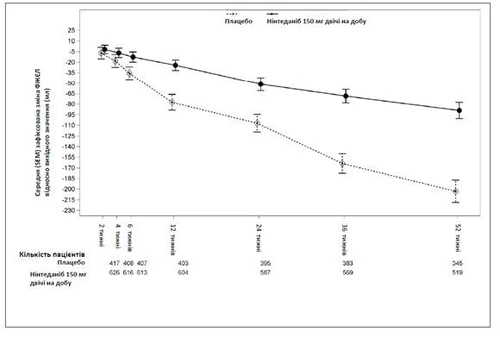
Figure 1. Mean (SEM) observed change in FVC over time from baseline (mL), pooled data from INPULSIS-1 and INPULSIS-2.
Analysis of data on patients who responded to treatment in terms of FVC
In both INPULSIS trials, the percentage of patients who responded to treatment in terms of FVC—defined as patients in whom the absolute predicted decline in FVC (%) did not exceed 5% (a threshold associated with increased mortality risk in IPF)—was significantly higher in the nintedanib group than in the placebo group. Similar results were observed when analyzing data using the traditional threshold of 10% (see Table 2).
Table 2
Percentage of patients who responded to treatment in terms of FVC at week 52 in INPULSIS-1, INPULSIS-2, and pooled data in the treated patient population
| Study |
INPULSIS-1 |
INPULSIS-2 |
INPULSIS-1 and INPULSIS-2, pooled data |
|||
| Treatment |
Placebo |
OFEV, 150 mg twice daily |
Placebo |
OFEV, 150 mg twice daily |
Placebo |
OFEV, 150 mg twice daily |
| Number of patients analyzed |
204 |
309 |
219 |
329 |
423 |
638 |
| 5 % threshold |
||||||
| Number (%) of patients who responded to treatment based on FVC1 |
78 (38.2) |
163 (52.8) |
86 (39.3) |
175 (53.2) |
164 (38.8) |
338 (53.0) |
| Compared with placebo |
||||||
| Odds ratio |
1.85 |
1.79 |
1.84 |
|||
| 95 % CI |
(1.28, 2.66) |
(1.26, 2.55) |
(1.43, 2.36) |
|||
| p-value2 |
0.0010 |
0.0011 |
<0.0001 |
|||
| 10 % threshold |
||||||
| Number (%) of patients who responded to treatment based on FVC1 |
116 (56.9) |
218 (70.6) |
140 (63.9) |
229 (69.6) |
256 (60.5) |
447 (70.1) |
| Compared with placebo |
||||||
| Odds ratio |
1.91 |
1.29 |
1.58 |
|||
| 95 % CI |
(1.32, 2.79) |
(0.89, 1.86) |
(1.21, 2.05) |
|||
| p-value2 |
0.0007 |
0.1833 |
0.0007 |
|||
1Patients who responded to treatment were those with an absolute decline in FEV1 of no more than 5 or 10% from the calculated FEV1 value in %, depending on the threshold value, assessed at week 52.
2Based on logistic regression.
Time to disease progression (absolute decline in calculated FEV1 value in % by ≥10% or death)
In both INPULSIS trials, a clinically meaningful reduction in the risk of disease progression was demonstrated in patients receiving nintedanib compared to those receiving placebo. In the pooled analysis, the hazard ratio was 0.60, indicating a 40% reduction in the risk of disease progression in patients treated with nintedanib compared to those receiving placebo.
Table 3
Percentage of patients with absolute decline in calculated FEV1 value in % by ≥10% or death (events) over 52 weeks and time to disease progression in the INPULSIS-1, INPULSIS-2, and pooled data within the treated patient population
| Study |
INPULSIS-1 |
INPULSIS-2 |
INPULSIS-1 and INPULSIS-2, pooled data |
|||||
| Treatment |
Placebo |
OFEV 150 mg twice daily |
Placebo |
OFEV 150 mg twice daily |
Placebo |
OFEV 150 mg twice daily |
||
| Number of patients in the risk set |
204 |
309 |
219 |
329 |
423 |
638 |
||
| Patients with events, N (%) |
83 |
75 |
92 |
98 |
175 |
173 |
||
| (40.7) |
(24.3) |
(42.0) |
(29.8) |
(41.4) |
(27.1) |
|||
| Comparison versus placebo1 |
||||||||
| p-value2 |
0.0001 |
0.0054 |
< 0.0001 |
|||||
| Hazard ratio3 |
0.53 |
0.67 |
0.60 |
|||||
| 95% CI |
(0.39, 0.72) |
(0.51, 0.89) |
(0.49, 0.74) |
|||||
| 1 Based on data collected over a period of up to 372 days (52 weeks + 7 days). 2 Based on the log-rank test. 3 Based on Cox regression model. |
||||||||
Change from baseline in total SGRQ score at Week 52
In the pooled analysis of the INPULSIS trials, baseline SGRQ scores were 39.51 in the nintedanib group and 39.58 in the placebo group. The adjusted mean change from baseline in total SGRQ score at Week 52 was smaller in the nintedanib group (3.53) compared to the placebo group (4.96), with a treatment difference of -1.43 (95% CI: -3.09, 0.23; p = 0.0923). Overall, the effect of nintedanib on health-related quality of life, as measured by the total SGRQ score, was modest and demonstrated less deterioration compared to placebo.
Time to first acute exacerbation of IPF
In the pooled analysis of the INPULSIS trials, patients receiving nintedanib had a numerically lower risk of first acute exacerbation compared to those receiving placebo (see Table 4).
Table 4
Percentage of patients with acute exacerbations of IPF (events) over 52 weeks and time to first acute exacerbation based on investigator-reported data from INPULSIS-1, INPULSIS-2, and pooled data in the treated patient population
| Study |
INPULSIS-1 |
INPULSIS-2 |
INPULSIS-1 and INPULSIS-2, pooled data |
|||||
| Treatment |
Placebo |
OFEV 150 mg twice daily |
Placebo |
OFEV 150 mg twice daily |
Placebo |
OFEV 150 mg twice daily |
||
| Number of patients in the risk set |
204 |
309 |
219 |
329 |
423 |
638 |
||
| Patients with events, N (%) |
11 (5.4) |
19 (6.1) |
21 (9.6) |
12 (3.6) |
32 (7.6) |
31 (4.9) |
||
| Comparison with placebo1 |
||||||||
| p-value2 |
0.6728 |
0.0050 |
0.0823 |
|||||
| Hazard ratio3 |
1.15 |
0.38 |
0.64 |
|||||
| 95% CI |
(0.54, 2.42) |
(0.19, 0.77) |
(0.39, 1.05) |
|||||
| 1 Based on data collected up to 372 days (52 weeks + 7 days). |
||||||||
Sensitivity analysis showed that the percentage of patients who had at least one adjudicated exacerbation during 52 weeks was lower in the nintedanib group (1.9% of patients) than in the placebo group (5.7% of patients). In the time-to-first-adjudicated-exacerbation analysis using pooled data, a hazard ratio (HR) of 0.32 (95% CI 0.16, 0.65; p = 0.0010) was derived. This indicates that the risk of the first IPF exacerbation was statistically significantly lower in the nintedanib group than in the placebo group at any time point.
Survival analysis
In the pooled analysis of survival data adjusted for prespecified variables from the INPULSIS trials, all-cause mortality over the 52-week period was lower in the nintedanib group (5.5%) than in the placebo group (7.8%). In the time-to-death analysis, an HR of 0.70 (95% CI 0.43, 1.12; p = 0.1399) was determined. Results for all survival endpoints (such as on-treatment mortality and mortality due to respiratory events) demonstrated a consistent numerical difference in favor of nintedanib.
Table 5
All-cause mortality (events) over 52 weeks in the INPULSIS-1, INPULSIS-2, and pooled data across the treated patient population
| Study |
INPULSIS-1 |
INPULSIS-2 |
INPULSIS-1 and INPULSIS-2, pooled data |
|||
| Treatment |
Placebo |
OFEV 150 mg twice daily |
Placebo |
OFEV 150 mg twice daily |
Placebo |
OFEV 150 mg twice daily |
| Number of patients in the risk set |
204 |
309 |
219 |
329 |
423 |
638 |
| Patients with events, N (%) |
13 (6.4) |
13 (4.2) |
20 (9.1) |
22 (6.7) |
33 (7.8) |
35 (5.5) |
| Comparison with placebo1 |
||||||
| p-value2 |
0.2880 |
0.2995 |
0.1399 |
|||
| Relative risk3 |
0.63 |
0.74 |
0.70 |
|||
| 95% CI |
(0.29, 1.36) |
(0.40, 1.35) |
(0.43, 1.12) |
|||
| 1 Based on data collected over a period of up to 372 days (52 weeks + 7 days). 2 Based on the log-rank test. 3 Based on the Cox regression model. |
Long-term treatment with Ofev in patients with IPF (INPULSIS-ON)
A total of 734 patients with IPF participated in the open-label extension study of Ofev. Patients who completed the 52-week treatment period in the INPULSIS trials received open-label treatment with Ofev in the INPULSIS-ON extension study. The median duration of exposure for patients who received Ofev in both studies (INPULSIS and INPULSIS-ON) was 44.7 months (range: 11.9–68.3). Investigational efficacy endpoints included annual rates of decline in FVC over 192 weeks, which was -135.1 (5.8) mL/year in all treated patients, consistent with the annual rate of FVC decline observed in patients receiving Ofev in the phase III INPULSIS trials (-113.6 mL/year). The safety profile of Ofev in the INPULSIS-ON study was consistent with the safety profile observed in the phase III INPULSIS trials.
Patients with IPF and severe impairment of lung function (INSTAGE)
INSTAGE was a multicenter, multinational, prospective, randomized, double-blind, parallel-group clinical trial of 24 weeks’ duration involving patients with IPF and severe impairment of lung function (DLCO ≤ 35%). A total of 136 patients received Ofev monotherapy. The result for the primary endpoint showed a reduction in the total score of the St. George's Respiratory Questionnaire (SGRQ) by -0.77 units at week 12, based on the adjusted mean change from baseline. A post hoc comparison demonstrated that the decline in forced vital capacity (FVC) in these patients was consistent with the FVC decline observed in patients with less advanced disease receiving Ofev in the phase III INPULSIS trials.
The safety and tolerability profile of Ofev in patients with IPF and severe impairment of lung function was consistent with that observed in the phase III INPULSIS trials.
Additional data from the phase IV INJOURNEY study evaluating Ofev 150 mg twice daily in combination with pirfenidone
Concomitant treatment with nintedanib and pirfenidone was evaluated in an exploratory, open-label, randomized 12-week study comparing nintedanib 150 mg twice daily plus pirfenidone as add-on therapy (with dose titration up to 801 mg three times daily) versus nintedanib 150 mg twice daily as monotherapy in 105 randomized patients. The primary endpoint was the percentage of patients experiencing gastrointestinal adverse events from baseline at 12 weeks. Gastrointestinal adverse events were common and consistent with the established safety profiles of each component. The most frequent adverse events were diarrhea, nausea, and vomiting in patients receiving pirfenidone in combination with nintedanib compared to those receiving nintedanib monotherapy. Mean absolute changes in FVC (forced vital capacity) from baseline at 12 weeks were –13.3 (17.4) mL in patients receiving nintedanib and pirfenidone as add-on therapy (n = 48), compared with –40.9 (31.4) mL in patients receiving nintedanib as monotherapy (n = 44).
Other chronic fibrosing interstitial lung diseases (ILD) with a progressive phenotype
The clinical efficacy of nintedanib was evaluated in patients with other chronic fibrosing interstitial lung diseases (ILD) with a progressive phenotype in a phase III, double-blind, randomized, placebo-controlled trial (INBUILD). Patients with IPF were excluded. Patients with a clinical diagnosis of chronic fibrosing ILD were enrolled if they had relevant fibrosis (characteristic fibrotic features >10%) on high-resolution computed tomography (HRCT) and clinical evidence of disease progression (decline in FVC ≥10%, decline in FVC ≥5% and <10% with worsening symptoms or HRCT findings, or worsening symptoms and HRCT findings within 24 months prior to screening). Patients were required to have an FVC ≥45% of predicted and DLCO between 30% and <80% of predicted. Disease progression had to have occurred despite treatment considered appropriate by investigators according to clinical practice for the respective ILD.
A total of 663 patients were randomized in a 1:1 ratio to receive either 150 mg of Ofev twice daily or matching placebo for a minimum of 52 weeks. The median duration of exposure to Ofev over the entire study was 17.4 months, with a mean duration of exposure of 15.6 months. Randomization was stratified based on HRCT fibrotic pattern as assessed by central experts. A total of 412 patients with a fibrotic pattern consistent with usual interstitial pneumonia (UIP) on HRCT and 251 patients with other fibrotic patterns on HRCT were randomized. For analysis in this study, two primary populations were defined: all patients (overall population) and patients with a fibrotic pattern consistent with UIP on HRCT. Patients with other fibrotic patterns on HRCT represented an additional population.
The primary endpoint was the annual rate of decline in forced vital capacity (FVC) (mL) over 52 weeks. Key secondary endpoints included absolute change from baseline in the King's Brief Interstitial Lung Disease questionnaire (K-BILD) score over 52 weeks, time to first acute exacerbation of ILD or death over 52 weeks, and time to death over 52 weeks.
Patients had a mean age (standard deviation [SD; min–max]) of 65.8 (9.8; 27–87) years and a mean FVC of 69.0% of predicted (15.6; 42–137). The main clinical diagnoses of ILD in the study populations were hypersensitivity pneumonitis (26.1%), autoimmune ILD (25.6%), idiopathic nonspecific interstitial pneumonia (18.9%), unclassified idiopathic interstitial pneumonia (17.2%), and other ILDs (12.2%).
Annual rate of FVC decline
The annual rate of FVC decline (mL) over 52 weeks demonstrated a significant reduction in patients receiving Ofev compared to those receiving placebo (Table 6), corresponding to a relative treatment effect of 57.0%.
Table 6
Annual rate of FVC decline (mL) over 52 weeks
| Parameters |
Placebo |
OFEV 150 mg twice daily |
| Number of patients analyzed |
331 |
332 |
| Rate of decline over 52 weeks, mL (SE) |
-187.8 (14.8) |
-80.8 (15.1) |
| Comparison with placebo |
||
| Difference |
107.0 |
|
| 95% CI |
(65.4; 148.5) |
|
| p-value |
< 0.0001 |
|
1 Based on a random regression of coefficients with fixed categorical treatment effect, HRCT patterns, fixed time effect, baseline FVC [mL], as well as accounting for treatment-by-time interaction and baseline-by-time interaction.
Similar results were observed in the subgroup of patients with a UIP pattern on HRCT. The treatment effect was consistent in the additional subgroup of patients with other fibrotic patterns on HRCT (p-value for interaction = 0.2268) (Fig. 2).
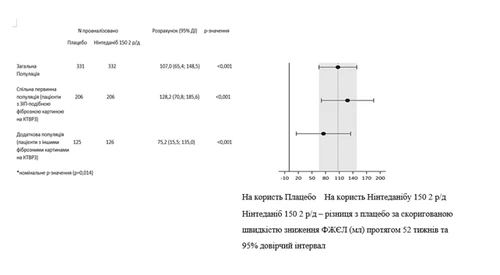
Fig. 2. Diagram of annual rate of decline in FVC (mL) over 52 weeks in patient populations.
The effect of OFEV on reducing the annual rate of FVC decline was confirmed by all pre-specified sensitivity analyses; consistent results were observed in pre-specified efficacy subgroups: by sex, age, race, baseline FVC (% predicted), and primary underlying clinical diagnosis of ILD.
Figure 3 shows the evolution of FVC change from baseline in treatment groups.
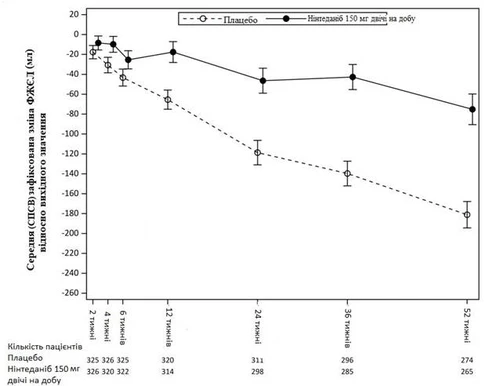
Fig. 3. Mean LS (Least Squares) mean change in FVC from baseline (mL) over 52 weeks.
Additionally, favorable effects of OFEV were observed on adjusted mean absolute change in FVC (% predicted) compared to baseline at week 52. The adjusted mean absolute change in FVC (% predicted) from baseline to week 52 was lower in the nintedanib group (-2.62%) than in the placebo group (-5.86%). The adjusted mean difference between treatment groups was 3.24 (95% CI: 2.09; 4.40; nominal p < 0.0001).
Analysis of patients achieving therapeutic benefit based on FVC
The proportion of patients achieving therapeutic benefit based on FVC, defined as patients with a relative decline in FVC of no more than 5% of predicted, was higher in the OFEV group compared to placebo. Similar results were observed in analyses using a 10% threshold (Table 7).
Table 7
Annual rate of decline in FVC (mL) over 52 weeks
| Treatment |
Placebo |
OFEV, 150 mg twice daily |
| Number of patients analyzed |
331 |
332 |
| 5 % threshold value |
||
| Number (%) of patients achieving therapeutic effect based on FVC1 |
104 (31.4) |
158 (47.6) |
| Compared with placebo |
||
| Odds ratio2 |
2.01 |
|
| 95 % CI |
(1.46; 2.76) |
|
| p-value |
< 0.0001 |
|
| 10 % threshold value |
||
| Number (%) of patients achieving therapeutic effect based on FVC1 |
169 (51.1) |
197 (59.3) |
| Compared with placebo |
||
| Odds ratio2 |
1.42 |
|
| 95 % CI |
(1.04; 1.94) |
|
| p-value |
0.0268 |
|
1 Patients who achieved a therapeutic effect, as assessed by FEV1, were those who did not have a relative decline in FEV1 (% predicted) of more than 5% or more than 10%, depending on the threshold criteria and FEV1 assessment at week 52 (patients with missing data at week 52 were considered not to have achieved the therapeutic effect).
2 Based on a logistic regression model with continuous covariate baseline FEV1 (%) and binary covariate HRCT pattern.
Time to first acute exacerbation of IPF or death
Throughout the study, the proportion of patients experiencing at least one first acute exacerbation of IPF or death was 13.9% in the Ofev group and 19.6% in the placebo group. The HR was 0.67 (95% CI: 0.46, 0.98; nominal p = 0.0387), indicating a 33% reduction in the risk of first acute exacerbation of IPF or death in patients receiving Ofev compared to those receiving placebo (Fig. 4).
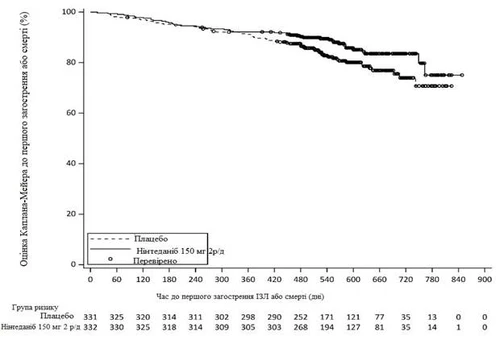
2 BID – twice daily
Fig. 4. Time to first acute exacerbation of IPF or death.
Survival analysis
The risk of death was lower in the Ofev treatment group compared to the placebo group. The HR was 0.78 (95% CI: 0.50, 1.21; nominal p = 0.2594), indicating a 22% reduction in the risk of death in patients receiving Ofev compared to those receiving placebo.
Time to disease progression (absolute decline in FEV1 (% predicted) ≥ 10%) or death
In the INBUILD study, the risk of disease progression (absolute decline in FEV1 (% predicted) ≥ 10%) or death was lower in patients receiving Ofev. The proportion of patients with the defined event was 40.4% in the Ofev group and 54.7% in the placebo group. The HR was 0.66 (95% CI: 0.53, 0.83; p = 0.0003), indicating a 34% reduction in the risk of disease progression (absolute decline in FEV1 (% predicted) ≥ 10%) or death in patients receiving Ofev compared to those receiving placebo.
Quality of life
Adjusted mean change from baseline in the total K-BILD score at week 52 was -0.79 units in the placebo group and 0.55 in the Ofev group. The difference between treatment groups was 1.34 (95% CI: -0.31, 2.98; nominal p = 0.1115).
The adjusted mean absolute change from baseline in dyspnea symptoms according to the L-PF questionnaire at week 52 was 4.28 in the Ofev group compared to 7.81 in the placebo group. The adjusted mean difference between groups in favor of Ofev was -3.53 (95% CI: -6.14, -0.92; nominal p = 0.0081). The adjusted mean absolute change from baseline in cough symptoms according to the L-PF questionnaire at week 52 was -1.84 in the Ofev group compared to 4.25 in the placebo group. The adjusted mean difference between groups in favor of Ofev was -6.09 (95% CI: -9.65, -2.53; nominal p = 0.0008).
Interstitial lung disease associated with systemic sclerosis (systemic sclerosis-associated ILD, ILD-SSc)
The clinical efficacy of nintedanib was evaluated in patients with ILD-SSc in a double-blind, randomized, placebo-controlled Phase III trial (SENSCIS). Patients had a diagnosis of ILD-SSc based on the 2013 American College of Rheumatology/European League Against Rheumatism classification criteria for systemic sclerosis (SSc) and high-resolution computed tomography (HRCT) of the chest within the previous 12 months. A total of 580 patients were randomized in a 1:1 ratio to receive either Ofev 150 mg twice daily or placebo for a minimum of 52 weeks. Of these, 576 patients received treatment. Randomization was stratified by anti-topoisomerase antibody (ATA) status. Individual patients remained on blinded treatment for up to 100 weeks (median exposure to Ofev 15.4 months; mean exposure to Ofev 14.5 months).
The primary endpoint was the annual rate of decline in forced vital capacity (FVC) over 52 weeks. Key secondary endpoints were the absolute change from baseline in modified Rodnan skin score (mRSS) at week 52 and the absolute change from baseline in total score of the St. George's Respiratory Questionnaire (SGRQ) at week 52.
In the overall population, 75.2% of patients were female. The mean (standard deviation (SD), min.–max.) age was 54 (12.2; 20–79) years. Overall, 51.9% of patients had diffuse cutaneous systemic sclerosis (dcSSc); 48.1% had limited cutaneous systemic sclerosis (lcSSc). The mean (SD) time since the first non-Raynaud symptom was 3.49 (1.7) years. 49.0% of patients received stable mycophenolate therapy at baseline. The safety profile in patients who did or did not receive mycophenolate at baseline was similar.
Annual rate of decline in FVC
The annual rate of decline in FVC (mL) over 52 weeks was significantly reduced by 41.0 mL in patients receiving Ofev compared to those receiving placebo (Table 8), corresponding to a relative treatment effect of 43.8%.
Table 8
Annual rate of decline in FVC (mL) over 52 weeks
| Treatment |
Placebo |
OFEV 150 mg twice daily |
| Number of patients analyzed |
288 |
287 |
| Rate1 (SE) of decline over 52 weeks |
-93.3 (13.5) |
-52.4 (13.8) |
| Comparison with placebo |
||
| Difference 1 |
41.0 |
|
| 95% CI |
(2.9, 79.0) |
|
| p-value |
< 0.05 |
1 Based on random regression coefficients with fixed categorical effects of treatment, ATA status, patient sex, fixed time effect, baseline FVC (ml), age, and patient height, as well as accounting for the dependence of treatment efficacy on time and the dependence of changes on baseline level over time. A random effect was included for individual patient measurement time points and time. Within-subject errors were modeled using an unstructured variance-covariance matrix. Between-subject variability was modeled using a variance-covariance matrix with variance components.
The effect of OFEV on reducing the annual rate of FVC decline was consistent in pre-specified sensitivity analyses; heterogeneity was not observed in pre-specified patient subgroups (e.g., by age, sex, and use of mycophenolate).
Furthermore, similar effects were observed for other lung function endpoints, including change in FVC at Week 52 (Figure 5 and Table 9) from baseline and predicted rate of FVC decline in % over 52 weeks (Table 10), providing additional support for the effect of OFEV in slowing the progression of SSc-ILD. Additionally, fewer patients in the OFEV group experienced an absolute FVC decline > 5% (20.6% in the OFEV group vs. 28.5% in the placebo group, OR=0.65, p=0.0287). Relative FVC decline in ml > 10% was similar between groups (16.7% in the OFEV group vs. 18.1% in the placebo group, OR=0.91, p=0.6842). In these analyses, missing FVC values at Week 52 were imputed using the worst on-treatment value observed in each patient.
An exploratory analysis of data up to 100 weeks (maximum treatment duration in the SENSCIS trial) shows that the treatment effect of OFEV in slowing the progression of SSc-ILD is maintained beyond 52 weeks.
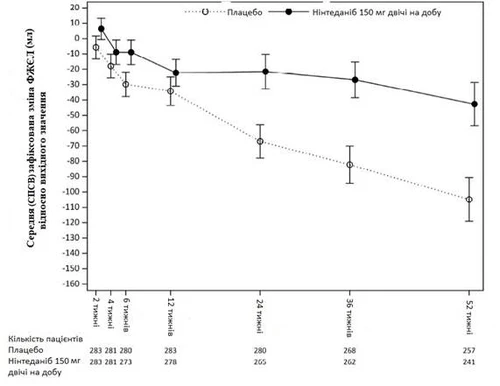
Figure 5. Mean (SE) observed change in FVC from baseline (ml) over 52 weeks.
Table 9
Absolute change in FVC (ml) from baseline at Week 52
| Treatment |
Placebo |
OFEV 150 mg twice daily |
| Number of patients analyzed |
288 |
288 |
| Mean (SD) at baseline |
2541.0 (815.5) |
2458.5 (735.9) |
| Mean1 (SE) change from baseline at 52 weeks |
-101.0 (13.6) |
-54.6 (13.9) |
| Comparison vs placebo |
||
| Mean1 |
|
|
| 95% CI |
(8.1; 84.7) |
|
| p-value |
< 0.05 |
1 Based on a mixed model for repeated measurements (MMRM) with fixed categorical effects of ATA status, visit, treatment-by-visit interaction, baseline-by-visit interaction, patient age, sex, and height. Visit was treated as a repeated measure. Within-subject errors were modeled using an unstructured variance-covariance matrix. Adjusted mean was based on the total number of all analyzed patients in the model (not only those with measurements taken at baseline and at week 52).
Table 10
Annual rate of decline in FEV1 (%) over 52 weeks
| Treatment |
Placebo |
OFEV 150 mg twice daily |
| Number of patients analyzed |
288 |
287 |
| Rate1 (SE) of decline over 52 weeks |
-2.6 (0.4) |
-1.4 (0.4) |
| Comparison with placebo |
||
| Difference 1 |
1.15 |
|
| 95% CI |
(0.09; 2.21) |
|
| p-value |
< 0.05 |
1 Based on a random regression of coefficients with fixed categorical treatment effect, ATA status, fixed time effect, baseline FVC (% predicted), as well as accounting for time-dependent treatment efficacy and time-dependent changes from baseline. A random effect was included for patient-specific observation time and time point. Within-subject errors were modelled using an unstructured variance-covariance matrix. Between-subject variability was modelled using a variance-covariance matrix with variance components.
Change from baseline in skin score according to modified Rodnan scale (mRSS) at week 52
Adjusted mean absolute change from baseline in mRSS at week 52 was similar in the OFEV treatment group (-2.17 (95% CI -2.69, -1.65)) and the placebo group (-1.96 (95% CI -2.48, -1.45)). The adjusted mean difference between treatment groups was -0.21 (95% CI -0.94, 0.53; p = 0.5785).
Change from baseline in total score of St George's Respiratory Questionnaire (SGRQ) at week 52
Adjusted mean absolute change from baseline in total SGRQ score at week 52 was similar in the OFEV treatment group (0.81 (95% CI -0.92, 2.55)) and the placebo group (-0.88 (95% CI -2.58, 0.82)). The adjusted mean difference between treatment groups was 1.69 (95% CI -0.73, 4.12; p = 0.1711).
Survival analysis
Mortality rate during the entire study period was similar in the OFEV treatment group (N = 10; 3.5%) and the placebo group (N = 9; 3.1%). In the time-to-death analysis over the entire study period, a hazard ratio (HR) of 1.16 (95% CI 0.47, 2.84; p = 0.7535) was determined.
QT interval
In a dedicated study involving patients with renal cell carcinoma, QT/QTc interval measurements were performed; these measurements demonstrated that a single oral dose of 200 mg of nintedanib, as well as multiple oral doses of 200 mg nintedanib administered twice daily for 15 days, did not prolong the QT interval corrected by Fridericia.
Children.
OFEV has not been studied in pediatric clinical practice for IPF.
Pharmacokinetics.
Absorption
Maximum plasma concentration of nintedanib is reached approximately 2–4 hours after oral administration of the soft gelatin capsule formulation taken with food (range 0.5–8 hours). Absolute bioavailability of the 100 mg dose in healthy volunteers is 4.69% (90% CI 3.615–6.078). Absorption and bioavailability are reduced due to transporter effects and significant presystemic metabolism. Nintedanib exposure increases proportionally with dose (in dose ranges of 50–450 mg once daily and 150–300 mg twice daily). Steady-state plasma concentrations are achieved within a maximum of one week after initiation of treatment.
Nintedanib exposure increases by approximately 20% when administered after food compared to administration in the fasted state (95% CI 95.3–152.5%), and absorption is slowed (median time to maximum plasma concentration (tmax) is 2.00 hours in the fasted state; 3.98 hours after food).
Distribution
Nintedanib distribution follows a two-phase kinetic pattern. After intravenous infusion, a large volume of distribution (Vss) is observed during the terminal phase: 1050 L, geometric coefficient of variation (gCV) 45.0%).
In vitro binding of nintedanib to human plasma proteins is considered substantial, with a bound fraction of 97.8%. The main protein involved in binding is serum albumin. Nintedanib is predominantly distributed in plasma, with a blood-to-plasma ratio of 0.869.
Biotransformation
The main reaction involved in nintedanib metabolism is hydrolytic cleavage by esterases, leading to the formation of the free acid metabolite of nintedanib (BIBF 1202). Subsequently, BIBF 1202 is glucuronidated by uridine-5’-diphosphate-glucuronosyltransferase (UGT) enzymes, specifically UGT 1A1, UGT 1A7, UGT 1A8, and UGT 1A10, forming the BIBF 1202 glucuronide.
CYP isoenzyme-mediated biotransformation of nintedanib occurs only to a minor extent; the main isoenzyme involved is CYP 3A4. In a human ADME study, the major metabolite formed via CYP isoenzymes was not detectable in plasma. In vitro studies indicate that CYP-dependent metabolism accounts for approximately 5%, whereas esterase-mediated cleavage accounts for 25%. Nintedanib, BIBF 1202, and BIBF 1202 glucuronide did not inhibit or induce CYP isoenzymes in preclinical studies. Therefore, drug interactions between nintedanib and CYP substrates, CYP inhibitors, or CYP inducers are not expected.
Elimination
Total plasma clearance after intravenous infusion is high (1390 mL/min, gCV 28.8%). Urinary excretion of unchanged active substance within 48 hours after oral administration of nintedanib is approximately 0.05% of the dose (gCV 31.5%), and after intravenous administration approximately 1.4% (gCV 24.2%); renal clearance is 20 mL/min (gCV 32.6%). After oral administration of [14C]-nintedanib, radioactivity was predominantly excreted via bile and found in feces (93.4% of dose, gCV 2.61%). Renal excretion fraction in total clearance is low (0.649% of dose (gCV 26.3%)). Elimination is considered complete (more than 90%) within 4 days after administration. Terminal elimination half-life of nintedanib ranges from 10 to 15 hours (gCV approximately 50%).
Linearity/non-linearity
Pharmacokinetics (PK) of nintedanib can be assumed to be linear over time (i.e., single-dose data can be extrapolated to multiple-dose data). Accumulated Cmax values after multiple dosing exceed the single-dose Cmax by a factor of 1.04, and AUCτ values by a factor of 1.38. Minimal residual nintedanib concentrations remain stable for more than one year.
Transport
Nintedanib is a substrate of P-glycoprotein (P-gp). See section "Interaction with other medicinal products and other forms of interaction" for information on potential interactions of nintedanib with this transporter. In vitro studies have shown that nintedanib is not a substrate or inhibitor of OATP-1B1, OATP-1B3, OATP-2B1, OCT-2, or MRP-2. Nintedanib is also not a substrate of BCRP. In vitro studies have demonstrated that nintedanib has weak inhibitory activity against OCT-1, BCRP, and P-gp, which is considered to have minimal clinical significance. The same conclusion applies to nintedanib as an OCT-1 substrate.
Pharmacokinetics in special patient populations
Pharmacokinetic properties of nintedanib were comparable in healthy volunteers, patients with IPF, patients with other progressive fibrosing interstitial lung diseases, patients with SSc-ILD, and oncology patients. Based on results from population pharmacokinetic analysis in patients with IPF and non-small cell lung cancer (NSCLC) (N = 1,191) and descriptive studies, factors such as patient sex (adjusted for body weight), mild to moderate renal impairment (based on creatinine clearance), alcohol consumption, or P-glycoprotein genotype did not influence nintedanib exposure. Population pharmacokinetic analysis revealed a moderate influence of sex, body weight, and race on nintedanib exposure, as described below. Due to high inter-subject variability in exposure, these minor influences were not considered clinically significant (see section "Special precautions for use").
Age
Nintedanib exposure increases linearly with age. In 45-year-old patients, AUCτ,ss was 16% lower, and in 76-year-old patients, 13% higher compared to patients with a median age of 62 years. The age range evaluated in the analysis was 29–85 years; age over 75 years was observed in approximately 5% of the patient population. Based on population pharmacokinetic modeling, patients aged 75 years and older showed approximately 20–25% higher nintedanib exposure compared to patients under 65 years of age.
Similar studies in children have not been conducted.
Body weight
An inverse correlation between body weight and nintedanib exposure was observed. In patients with a body weight of 50 kg (5th percentile), AUCτ,ss increased by 25%, and in patients with a body weight of 100 kg (95th percentile), decreased by 19% compared to patients with a median body weight of 71.5 kg.
Race
Average nintedanib exposure is 33–50% higher in Chinese, Taiwanese, and Indian patients, 16% higher in Japanese patients, and 16–22% lower in Korean patients compared to Caucasian patients (adjusted for body weight). Data in Black/African patients are very limited; the range of these data is similar to that in Caucasian patients.
Hepatic impairment
In a dedicated Phase I study in volunteers with mild hepatic impairment (Child-Pugh class A), exposure based on Cmax and AUC was 2.2 times higher compared to healthy volunteers (90% CI 1.3–3.7 for Cmax and 90% CI 1.2–3.8 for AUC, respectively). In volunteers with moderate hepatic impairment (Child-Pugh class B), exposure was 7.6 times higher based on Cmax (90% CI 4.4–13.2) and 8.7 times higher based on AUC (90% CI 5.7–13.1) compared to healthy volunteers. Studies in patients with severe hepatic impairment (Child-Pugh class C) have not been conducted.
Concomitant therapy with pirfenidone
In a dedicated pharmacokinetic study, concomitant administration of nintedanib and pirfenidone was investigated in patients with IPF (idiopathic pulmonary fibrosis). Group 1 received a single 150 mg dose of nintedanib before and after increasing pirfenidone dose to 801 mg three times daily at steady state (N = 20 treated patients). Group 2 received steady-state treatment with 801 mg pirfenidone three times daily and participated in pharmacokinetic parameter assessment before and after 7 days of concomitant treatment with nintedanib 150 mg twice daily (N = 17 treated patients). In Group 1, adjusted geometric mean ratio [90% confidence interval (CI)] values for Cmax and AUC0-tz of nintedanib were 93% (57–151%) and 96% (70–131%), respectively (n = 12 for within-subject comparison). In Group 2, adjusted geometric mean ratio (90% CI) values were 97% (86–110%) and 95% (86–106%) for Cmax,ss and AUCτ,ss of pirfenidone, respectively (n = 12 for between-subject comparison).
This study did not reveal any evidence of significant pharmacokinetic drug interaction between nintedanib and pirfenidone when used in combination (see section "Special precautions for use").
Concomitant treatment with bosentan
In a dedicated pharmacokinetic study, concomitant administration of OFEV with bosentan was investigated in healthy volunteers. Subjects received a single dose of OFEV 150 mg before and after multiple doses of bosentan 125 mg twice daily under inpatient conditions. Adjusted geometric mean ratios (90% confidence interval (CI)) were 103% (86–124%) and 99% (91–107%) for Cmax and AUC0-tz of nintedanib, respectively (n=13), indicating that concomitant administration of nintedanib with bosentan does not alter nintedanib pharmacokinetics.
Concomitant use of oral hormonal contraceptives
In a dedicated pharmacokinetic study, female patients with SSc-ILD received a single dose of a combination of 30 µg ethinylestradiol and 150 µg levonorgestrel before and after taking 150 mg nintedanib twice daily for at least 10 days. Adjusted geometric mean ratios (90% confidence interval (CI)) were 117% (108–127%; Cmax) and 101% (93–111%; AUC0–tz) for ethinylestradiol, and 101% (90–113%; Cmax) and 96% (91–102%; AUC0–tz) for levonorgestrel, respectively (n = 15), indicating that concomitant administration of nintedanib does not have a significant effect on plasma levels of ethinylestradiol and levonorgestrel.
Exposure-response coefficient
Exposure-response analyses in patients with IPF and other chronic fibrosing interstitial lung diseases with progressive phenotype revealed a weak association between plasma nintedanib levels and increased ALT and/or AST levels. The actual administered dose may be a better predictor of the risk of diarrhea of any intensity, although plasma nintedanib levels cannot be excluded as a risk-determining factor (see section "Special precautions for use").
Clinical characteristics.
Indications.
OFEV is indicated for the treatment of idiopathic pulmonary fibrosis (IPF) in adults.
OFEV is also indicated for the treatment of other chronic fibrosing interstitial lung diseases (ILD) with a progressive phenotype in adults (see section "Pharmacological properties. Pharmacodynamics").
OFEV is indicated for the treatment of interstitial lung disease associated with systemic sclerosis (systemic scleroderma) (ILD-SSc).
Contraindications.
Pregnancy (see section "Use during pregnancy or breastfeeding").
Hypersensitivity to nintedanib, peanuts, soy, or to any of the excipients of the medicinal product.
Interaction with other medicinal products and other forms of interaction.
P-glycoprotein (P-gp)
Nintedanib is a P-gp substrate (see section "Pharmacological properties. Pharmacokinetics"). A dedicated drug interaction study demonstrated that co-administration with the potent P-gp inhibitor ketoconazole increases nintedanib exposure by a factor of 1.61 for AUC and by a factor of 1.83 for Cmax. A dedicated interaction study showed that concomitant administration of rifampicin (a potent P-gp inducer) reduces nintedanib exposure by 50.3% for AUC and by 60.3% for Cmax (compared to nintedanib alone). Potent P-gp inhibitors (e.g., ketoconazole, erythromycin, or cyclosporine) may increase nintedanib exposure when co-administered with OFEV. Therefore, nintedanib tolerability should be closely monitored in patients. If adverse reactions occur, temporary interruption of treatment, dose reduction, or discontinuation of OFEV therapy may be required (see section "Dosage and administration").
Potent P-gp inducers (e.g., rifampicin, carbamazepine, phenytoin, and St. John’s wort preparations) may reduce nintedanib exposure. It is recommended to consider alternative concomitant therapies with no or minimal P-gp inducing effects.
Cytochrome (CYP) isoenzymes
CYP isoenzymes play only a minor role in the biotransformation of nintedanib. In preclinical studies, nintedanib and its metabolites (BIBF 1202 – the free acid metabolite of nintedanib and its glucuronide BIBF 1202 glucuronide) did not inhibit or induce CYP isoenzymes (see section "Pharmacological properties. Pharmacokinetics"). Therefore, the likelihood of drug interactions involving CYP metabolism is considered low.
Concomitant use with other medicinal products
Concomitant administration of nintedanib with oral hormonal contraceptives did not significantly alter the pharmacokinetics of oral contraceptives (see section "Pharmacological properties. Pharmacokinetics").
Concomitant administration of nintedanib with bosentan does not alter the pharmacokinetics of nintedanib (see section "Pharmacological properties. Pharmacokinetics").
Special precautions for use.
Gastrointestinal disorders
Diarrhea
In clinical trials (see section "Pharmacological properties. Pharmacodynamics"), diarrhea was the most common gastrointestinal adverse reaction (see section "Adverse reactions"). In most patients, these adverse events were of mild to moderate severity and occurred during the first 3 months of treatment.
During the post-marketing period, serious cases of diarrhea have been reported, leading to dehydration and electrolyte imbalances. Treatment of diarrhea (adequate hydration and anti-diarrheal medications, e.g., loperamide) should be initiated at the first signs of diarrhea. Dose reduction or interruption of treatment may be necessary if diarrhea develops. Treatment with OFEV may be resumed at a reduced dose (100 mg twice daily) or full dose (150 mg twice daily). If severe diarrhea persists despite symptomatic treatment, therapy with OFEV should be discontinued.
Nausea and vomiting
Nausea and vomiting were commonly reported gastrointestinal adverse events (see section "Adverse reactions"). In most patients, nausea and vomiting were of mild to moderate severity. In the study, the frequency of nausea and vomiting leading to discontinuation of OFEV therapy was 2.1% and 1.4%, respectively.
If symptoms persist despite appropriate symptomatic therapy (including antiemetic agents), dose reduction or temporary interruption of treatment may be required. Treatment may be resumed at a reduced dose (100 mg twice daily) or full dose (150 mg twice daily). If severe symptoms persist, therapy with OFEV should be discontinued.
Liver function disorders
The safety and efficacy of OFEV in patients with moderate (Child-Pugh class B) and severe (Child-Pugh class C) hepatic impairment have not been studied. Therefore, treatment of such patients with OFEV is not recommended (see section "Dosage and administration"). Due to the enhanced effect of the drug, the risk of adverse reactions may be increased in patients with mild hepatic impairment (Child-Pugh class A). For patients with mild hepatic impairment (Child-Pugh class A), treatment with a reduced dose of OFEV is required (see sections "Dosage and administration" and "Pharmacological properties. Pharmacokinetics").
Cases of drug-induced liver injury, including severe liver injury with fatal outcome, have been observed during nintedanib treatment. Most hepatic events occur within the first three months of treatment. Therefore, liver transaminase and bilirubin levels should be measured before initiating treatment and during the first month of OFEV therapy. Thereafter, these parameters should be monitored regularly during the next two months of treatment and periodically thereafter, e.g., during each patient visit or as clinically indicated.
In most cases, elevations in liver enzymes [ALT, AST, alkaline phosphatase, gamma-glutamyl transferase (GGT); see section "Adverse reactions"] and bilirubin were reversible after dose reduction or treatment interruption.
If transaminase levels (AST or ALT) increase more than 3 times the upper limit of normal, dose reduction or interruption of OFEV therapy with close monitoring of the patient is recommended. Once transaminase levels return to baseline, treatment with OFEV may be resumed at the full dose (150 mg twice daily) or reduced dose (100 mg twice daily), which may subsequently be increased to the full dose (see section "Dosage and administration"). If elevated liver function tests are associated with clinical signs of liver injury, such as jaundice, treatment with OFEV should be permanently discontinued. Alternative causes of elevated liver enzymes should be investigated.
Patients with low body weight (≤65 kg), of Asian origin, and female patients are at increased risk of elevated liver enzymes. Nintedanib exposure increases linearly with age, which also increases the risk of elevated liver enzyme levels (see section "Pharmacological properties. Pharmacokinetics"). Close monitoring is recommended for patients with these risk factors.
Kidney function
Cases of impaired kidney function/renal failure, some of which were fatal, have been observed during nintedanib treatment (see section "Adverse reactions").
Patients should be monitored during nintedanib therapy, particularly those with risk factors for impaired kidney function/renal failure. Dose adjustment should be considered in case of impaired kidney function/renal failure (see section "Dosage and administration. Dose adjustment").
Bleeding
Inhibition of the vascular endothelial growth factor receptor (VEGFR) may be associated with an increased risk of bleeding.
Patients with known risk of bleeding, including those with hereditary predisposition to bleeding or those receiving high-dose anticoagulant therapy, were excluded from clinical trials. During the post-marketing period, mild and severe bleeding events, some of which were fatal, have been reported (including in patients receiving anticoagulant therapy or other drugs that may cause bleeding, as well as in patients not receiving anticoagulant therapy). Therefore, OFEV therapy should be prescribed to these patients only if the expected benefit outweighs the potential risk.
Arterial thromboembolism
Patients with recent myocardial infarction or stroke were not included in clinical trials. Arterial thromboembolic events were rare in the studies (2.5% in the OFEV group vs. 0.7% in the placebo group in the INPULSIS study; 0.9% in the OFEV group vs. 0.9% in the placebo group in the INBUILD study; 0.7% in the OFEV group vs. 0.7% in the placebo group in the SENSCIS study). In the INPULSIS studies, myocardial infarction occurred more frequently in the OFEV group (1.6%) compared to the placebo group (0.5%), whereas adverse reactions reflecting ischemic heart disease were comparable between the OFEV and placebo groups. In the INBUILD study, myocardial infarction occurred at a low frequency: 0.9% in the OFEV group vs. 0.9% in the placebo group. In the SENSCIS study, arterial thromboembolic events were rare: 0.7% in the placebo group and 0.7% in the OFEV group. Myocardial infarction occurred at a low frequency in the placebo group (0.7%) and was not observed in the OFEV group. Caution should be exercised when treating patients with high cardiovascular risk, including known coronary artery disease. Consideration should be given to interrupting treatment in patients who develop symptoms of acute myocardial ischemia.
Aneurysms and arterial dissection
The use of vascular endothelial growth factor (VEGF) inhibitors in patients with or without hypertension may lead to the development of aneurysms and/or arterial dissection. The risk should be carefully evaluated before initiating OFEV in patients with risk factors such as hypertension or a history of aneurysm.
Vein thromboembolism
An increased risk of venous thromboembolic complications was not observed in patients receiving nintedanib in clinical trials. However, due to the mechanism of action of nintedanib, a potential increased risk of thromboembolic events cannot be excluded.
Gastrointestinal tract (GIT) perforation and ischemic colitis
In clinical trials, the incidence of perforation was 0.3% in both treatment groups. However, due to the mechanism of action of nintedanib, the risk of gastrointestinal tract perforation may be increased. During the post-marketing period, cases of gastrointestinal tract perforation and ischemic colitis, some of which were fatal, have been reported. Particular attention should be paid to treating patients with a history of abdominal surgery, peptic ulcer, diverticular disease, or concomitant use of corticosteroids or NSAIDs. Therefore, OFEV should be used no earlier than 4 weeks after abdominal surgery. Treatment with OFEV should be discontinued in case of gastrointestinal tract perforation or ischemic colitis. In exceptional cases, OFEV may be restarted after complete recovery from ischemic colitis and careful assessment of the patient's condition and other risk factors.
Nephrotic proteinuria and thrombotic microangiopathy
Very rare cases of nephrotic proteinuria, with or without impaired kidney function, have been reported during the post-marketing period. Histological findings in individual cases were consistent with glomerular microangiopathy with or without thrombi in the kidneys. Symptoms resolved after discontinuation of OFEV, although residual proteinuria was observed in some cases. Discontinuation of treatment should be considered in patients with signs or symptoms of nephrotic syndrome.
The use of VEGF inhibitors has been associated with thrombotic microangiopathy, including very few reports with nintedanib. If laboratory or clinical findings suggest thrombotic microangiopathy in patients receiving nintedanib, treatment with nintedanib should be discontinued and a thorough evaluation of thrombotic microangiopathy should be performed.
Arterial hypertension
OFEV may increase blood pressure; therefore, blood pressure should be monitored periodically and as clinically indicated.
Pulmonary hypertension
Data on the use of OFEV in patients with pulmonary hypertension are limited.
Patients with significant pulmonary hypertension (cardiac index ≤2 L/min/m², parenteral epoprostenol/treprostinil, or significant right ventricular failure) were excluded from the INBUILD and SENSCIS studies. Close monitoring of patients with pulmonary hypertension is recommended.
Impaired wound healing
An increased frequency of impaired wound healing was not observed in clinical trials. Due to the mechanism of action of nintedanib, this substance may negatively affect wound healing. No specific studies on the effect of nintedanib on wound healing have been conducted. Therefore, treatment with OFEV should be initiated or resumed (if interrupted due to surgery) based on clinical judgment regarding adequate wound healing.
Treatment of patients with very rare progressive fibrosing ILDs
The INBUILD study was not designed or powered to provide evidence of benefit of nintedanib in subgroups with ILD diagnoses. Consistent effect was demonstrated across subgroups based on ILD diagnoses (see section "Pharmacodynamics"). Experience with nintedanib in very rare progressive fibrosing ILDs is limited. Clinical criteria for progression used in the INBUILD study are described in the section "Pharmacodynamics".
Concomitant therapy with pirfenidone
A dedicated pharmacokinetic study evaluated concomitant treatment with nintedanib and pirfenidone in patients with idiopathic pulmonary fibrosis (IPF). This study did not reveal any evidence of significant pharmacokinetic drug interaction between nintedanib and pirfenidone when used in combination (see section "Pharmacological properties. Pharmacokinetics"). Given the similar safety profiles of both drugs, additive adverse reactions, including gastrointestinal and hepatic events, may be expected. The benefit-risk ratio of concomitant treatment with pirfenidone has not been established.
Effect on QT interval
No evidence of QT interval prolongation was observed with nintedanib in the clinical trial program (see section "Pharmacological properties. Pharmacodynamics"). Since some other tyrosine kinase inhibitors are known to affect QT interval, nintedanib should be used with caution in patients at risk of QT prolongation.
Allergic reactions
Products containing soy are known to cause allergic reactions, including severe anaphylactic shock, in individuals with soy allergy. Patients with known allergy to peanut protein are at risk of severe reactions to products containing soy. One 100 mg capsule contains 1.2 mg of soy lecithin; one 150 mg capsule contains 1.8 mg of soy lecithin.
Use during pregnancy or breastfeeding.
Women of childbearing potential
Nintedanib may have adverse effects on the human fetus. Women of childbearing potential should use effective contraception to avoid pregnancy during treatment with OFEV and for at least 3 months after the last dose of OFEV. Nintedanib does not significantly affect plasma levels of ethinylestradiol and levonorgestrel (see section "Pharmacological properties. Pharmacokinetics"). The effectiveness of oral hormonal contraceptives may be reduced in case of vomiting and/or diarrhea or other conditions affecting absorption. Women taking oral hormonal contraceptives and experiencing such conditions should be advised to use alternative highly effective contraceptive methods.
Pregnancy
No specific studies on the use of OFEV in pregnant women have been conducted. However, reproductive toxicity of this active substance has been demonstrated in preclinical animal studies. Since nintedanib may have embryotoxic effects in humans, it should not be used during pregnancy (see section "Contraindications"). A pregnancy test should be performed before starting OFEV therapy and during treatment as appropriate.
Patients should inform their physician immediately if pregnancy occurs during OFEV therapy.
If pregnancy develops during OFEV treatment, therapy should be discontinued and the patient should be informed about the potential embryotoxic risk of the drug.
Breastfeeding
There are no data on the excretion of nintedanib and its metabolites into human breast milk. Preclinical studies have shown that a small amount of nintedanib and its metabolites (≤0.5% of the administered dose) passes into breast milk in animals during lactation. Therefore, risk to newborns and infants cannot be excluded. Breastfeeding should be discontinued during treatment with OFEV.
Fertility
No signs of fertility impairment in males were observed in preclinical studies. In subacute and chronic toxicity studies, where systemic exposure to the drug was comparable to that achieved with the maximum recommended human dose (150 mg twice daily), no signs of fertility impairment were observed in female animals.
Ability to influence reaction speed when driving or operating machinery.
OFEV has a minor influence on the ability to drive or operate machinery. Patients should be advised to exercise caution when driving or operating machinery during treatment with OFEV.
Dosage and Administration
Treatment with the medicinal product should be initiated by a physician experienced in managing patients with diseases for which the drug OFEV is approved.
Dosage
The recommended dose of the drug is 150 mg twice daily, approximately 12 hours apart. A dose of 100 mg twice daily is recommended only for patients who do not tolerate the 150 mg twice daily dose.
If any dose of the drug is missed, the patient should continue taking the drug at the next scheduled dose according to the original dosing regimen. The patient must not take an additional dose if a dose has been missed. The maximum daily dose is 300 mg.
Dosage Adjustment
In the event of adverse reactions to OFEV (see sections "Special Warnings", "Adverse Reactions"), in addition to symptomatic therapy, if necessary, dose reduction or temporary interruption of treatment is recommended until the adverse reaction decreases to a level allowing resumption of therapy. Treatment with OFEV may be resumed at the full dose (150 mg twice daily) or at a reduced dose (100 mg twice daily). If the patient does not tolerate the dose of 100 mg twice daily, treatment with OFEV should be discontinued.
If diarrhea, nausea, and/or vomiting persist despite appropriate supportive therapy (including antiemetic treatment), dose reduction or discontinuation of treatment may be required. Treatment with OFEV may be resumed at a reduced dose (100 mg twice daily) or at the full dose (150 mg twice daily). In case of persistent severe diarrhea despite symptomatic treatment, therapy with OFEV should be discontinued (see section "Special Warnings").
In case of an increase in aspartate aminotransferase (AST) or alanine aminotransferase (ALT) levels more than 3 times above the upper limit of normal, interruption of OFEV therapy is recommended. Once the values return to normal, treatment with OFEV may be resumed at a reduced dose (100 mg twice daily), which may later be increased to the full dose (150 mg twice daily) (see sections "Special Warnings", "Adverse Reactions").
Special Patient Groups
Elderly patients (≥ 65 years of age)
No general differences in safety and efficacy of the drug have been observed in elderly patients. Dose adjustment based on age is not required. Patients aged 75 years and older may require dose reduction to minimize adverse events (see section "Pharmacological Properties. Pharmacokinetics").
Renal Impairment
Dose adjustment is not required for patients with mild or moderate renal impairment. Safety, efficacy, and pharmacokinetics of nintedanib have not been studied in patients with severe renal impairment (creatinine clearance < 30 mL/min).
Hepatic Impairment
For patients with mild hepatic impairment (Child-Pugh class A), the recommended dose of OFEV is 100 mg twice daily, approximately 12 hours apart. For these patients, interruption or discontinuation of treatment should be considered to monitor for adverse reactions. Safety and efficacy of nintedanib have not been studied in patients with moderate (Child-Pugh class B) or severe (Child-Pugh class C) hepatic impairment. Therefore, treatment of patients with moderate or severe hepatic impairment with OFEV is not recommended (see section "Pharmacological Properties. Pharmacokinetics").
Pediatric Population
Safety and efficacy of OFEV in children (under 18 years of age) have not been established. Data are lacking.
Administration
OFEV is intended for oral use. Capsules should be taken with food, swallowed whole with water; they should not be chewed. Do not open or crush the capsule. In case of contact with the capsule contents, wash hands immediately with plenty of water.
Children
The drug is not used in pediatric practice.
Overdose
Symptoms
Cases of overdose have been reported in two patients participating in an oncology program who received the drug at a maximum dose of 600 mg for eight days. The adverse events observed were consistent with the known safety profile of nintedanib: increased liver enzyme activity and gastrointestinal disorders. Both patients fully recovered from the adverse events. In the INPULSIS trials, one case of accidental overdose was reported, where a patient took 600 mg daily for 21 days. During this period of incorrect dosing, only one mild adverse event (nasopharyngitis) occurred, which resolved without any other adverse reactions being recorded.
Treatment
There is no specific antidote. In case of overdose, the drug should be discontinued and symptomatic treatment should be administered.
Adverse reactions
In clinical trials and the post-marketing period, the most common adverse reactions associated with the use of nintedanib were diarrhea, nausea and vomiting, abdominal pain, decreased appetite, weight loss, and increased liver enzymes.
For information on the management of certain adverse reactions, see section "Special precautions for use".
Table 11 lists adverse reactions according to MedDRA system organ classes and frequency of occurrence, categorized using the following frequency criteria:
very common (> 1/10); common (> 1/100 to < 1/10); uncommon (> 1/1,000 to < 1/100); rare (> 1/10,000 to < 1/1,000); very rare (< 1/10,000); not known (cannot be estimated from the available data).
Table 11
| Frequency |
|||
| System organ class |
Idiopathic pulmonary fibrosis (IPF) |
Interstitial lung disease associated with systemic sclerosis (systemic scleroderma) (SS-ILD). |
Other chronic fibrosing interstitial lung diseases (ILD) with progressive phenotype |
| Blood and lymphatic system disorders |
|||
| Thrombocytopenia |
Uncommon |
Uncommon |
Uncommon |
| Metabolism and nutrition disorders |
|||
| Weight decreased |
Common |
Common |
Common |
| Decreased appetite |
Common |
Common |
Very common |
| Dehydration |
Uncommon |
Not known |
Uncommon |
| Cardiac disorders |
|||
| Myocardial infarction |
Uncommon |
Not known |
Uncommon |
| Vascular disorders |
|||
| Bleeding (see section "Special precautions") |
Common |
Common |
Common |
| Hypertension |
Uncommon |
Common |
Common |
| Arterial aneurysms and dissections |
Not known |
Not known |
Not known |
| Gastrointestinal disorders |
|||
| Diarrhea |
Very common |
Very common |
Very common |
| Nausea |
Very common |
Very common |
Very common |
| Abdominal pain |
Very common |
Very common |
Very common |
| Vomiting |
Common |
Very common |
Very common |
| Pancreatitis |
Uncommon |
Not known |
Uncommon |
| Colitis |
Uncommon |
Uncommon |
Uncommon |
| Hepatobiliary disorders |
|||
| Drug-induced liver injury |
Uncommon |
Uncommon |
Common |
| Elevated liver enzymes |
Very common |
Very common |
Very common |
| Elevated alanine aminotransferase (ALT) |
Common |
Common |
Very common |
| Elevated aspartate aminotransferase (AST) |
Common |
Common |
Common |
| Elevated gamma-glutamyl transferase (GGT) |
Common |
Common |
Common |
| Hyperbilirubinemia |
Uncommon |
Not known |
Uncommon |
| Elevated alkaline phosphatase in blood (ALP) |
Uncommon |
Common |
Common |
| Skin and subcutaneous tissue disorders |
|||
| Rash |
Common |
Uncommon |
Common |
| Pruritus |
Uncommon |
Uncommon |
Uncommon |
| Alopecia |
Uncommon |
Not known |
Uncommon |
| Renal and urinary disorders |
|||
| Renal failure (see section "Special precautions") |
Not known |
Uncommon |
Not known |
| Proteinuria |
Uncommon |
Not known |
Uncommon |
| Nervous system disorders |
|||
| Headache |
Common |
Common |
Common |
Description of individual adverse reactions
Diarrhea
In clinical trials (see section "Pharmacological properties. Pharmacodynamics"), diarrhea was the most common adverse event affecting the gastrointestinal tract. In most patients, adverse events were of mild to moderate severity. Diarrhea occurred in more than two-thirds of patients within the first 3 months of treatment.
In most patients, adverse events were managed successfully by using anti-diarrheal therapy, dose reduction, or discontinuation of treatment (see section "Special precautions for use"). An overview of diarrhea cases in clinical trials is presented in Table 12.
Table 12
Diarrhea cases in clinical trials over 52 weeks
| Study |
INPULSIS |
INBUILD |
SENSCIS |
|||
| Treatment |
Placebo |
OFEV |
Placebo |
OFEV |
Placebo |
OFEV |
| Diarrhea |
18.4 % |
62.4 % |
23.9 % |
66.9 % |
31.6 % |
75.7 % |
| Severe diarrhea |
0.5 % |
3.3 % |
0.9 % |
2.4 % |
1.0 % |
4.2 % |
| Diarrhea leading to reduction in dose of OFEV |
0 % |
10.7 % |
0.9 % |
16.0 % |
1.0 % |
22.2 % |
| Diarrhea leading to discontinuation of treatment with OFEV |
0.2 % |
4.4 % |
0.3 % |
5.7 % |
0.3 % |
6.9 % |
Elevation of liver enzymes
In the INPULSIS trials, elevation of liver enzymes (see section "Special precautions") was observed in 13.6% of patients receiving nintedanib (OFEV) compared to 2.6% of patients receiving placebo. In the INBUILD trial, elevation of liver enzymes was observed in 22.6% of patients receiving OFEV compared to 5.7% receiving placebo. In the SENSCIS trial, elevation of liver enzymes occurred in 13.2% of patients receiving OFEV compared to 3.1% of patients receiving placebo. Elevations in liver enzymes were reversible and not associated with clinically evident liver disease. Additional information regarding special patient categories, recommended measures, and dose adjustments in the case of diarrhea and elevated liver enzymes is provided in the sections "Special precautions" and "Dosage and administration".
Hemorrhage
In clinical trials, the incidence of hemorrhagic events was slightly higher or comparable in the OFEV treatment group compared to placebo (10.3% in the OFEV group vs. 7.8% in the placebo group in the INPULSIS trial; 11.1% in the OFEV group vs. 12.7% in the placebo group in the INBUILD trial; 11.1% in the OFEV group vs. 8.3% in the placebo group in the SENSCIS trial). Mild epistaxis was the most commonly reported hemorrhagic adverse event. Serious hemorrhagic events were infrequent in both groups (1.3% in the OFEV group vs. 1.4% in the placebo group in the INPULSIS trial; 0.9% in the OFEV group vs. 1.5% in the placebo group in the INBUILD trial; 1.4% in the OFEV group vs. 0.7% in the placebo group in the SENSCIS trial).
Post-marketing hemorrhagic events have been reported involving the gastrointestinal, respiratory, and central nervous systems, but are not limited to these. The highest frequency of hemorrhage was associated with the gastrointestinal system (see section "Special precautions").
Proteinuria
In clinical trials, the incidence of proteinuria was low and comparable between treatment groups (0.8% in the OFEV group vs. 0.5% in the placebo group in the INPULSIS trial; 1.5% in the OFEV group vs. 1.8% in the placebo group in the INBUILD trial; 1.0% in the OFEV group vs. 0.0% in the placebo group in the SENSCIS trial). Nephrotic syndrome was not reported during clinical trials.
During the post-marketing period, very rare cases of nephrotic-range proteinuria, with or without impaired renal function, have been reported. Histological findings in individual cases were consistent with glomerular microangiopathy, with or without renal thrombi. Resolution of symptoms was observed after discontinuation of OFEV, although residual proteinuria was present in some cases. Treatment interruption should be considered in patients who develop signs or symptoms suggestive of nephrotic syndrome (see section "Special precautions").
Reporting of adverse reactions
Reporting of adverse reactions following marketing authorization of the medicinal product is important. This allows continued monitoring of the benefit-risk balance of the medicinal product. Healthcare professionals are requested to report any suspected adverse reactions via the national reporting system.
Shelf life. 3 years.
Storage conditions.
Store at temperatures not exceeding 25°C, in the original packaging to protect from moisture.
Keep out of reach of children.
Packaging.
10 capsules in a blister pack made of aluminum foil with perforation; 6 blisters per cardboard box.
Prescription status.
Prescription only.
Manufacturer.
Boehringer Ingelheim Pharma GmbH & Co. KG.
Manufacturer's address.
Binger Strasse 173, 55216, Ingelheim am Rhein, Germany.