Nurofen intensiv
Ukraine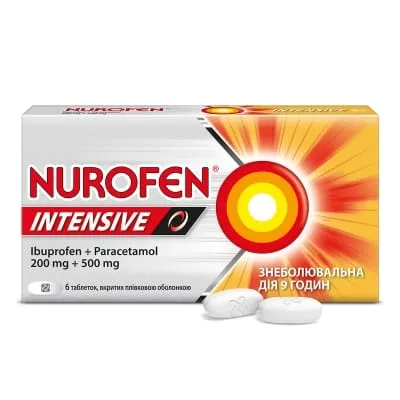
Table of Contents
INSTRUCTIONS |
| Pharmaceutical form. Film-coated tablets. Main physicochemical properties: white to almost white, pearl, oval-shaped film-coated tablet with engraved characteristic swirls. |
| Pharmacotherapeutic group. Drugs for the treatment of the musculoskeletal system, anti-inflammatory and antirheumatic agents, nonsteroidal agents, propionic acid derivatives. Ibuprofen, combinations. ATC code M01AE51. |
Pharmacological properties.Pharmacodynamics. The pharmacological action of ibuprofen and paracetamol differs in site and mechanism of action but is synergistic, resulting in enhanced analgesic and antipyretic effects compared to either substance used alone. Ibuprofen is a nonsteroidal anti-inflammatory drug (NSAID), a propionic acid derivative, which has demonstrated efficacy in inhibiting the synthesis of prostaglandins — mediators of pain and inflammation. Ibuprofen exerts analgesic, antipyretic, and anti-inflammatory effects. Additionally, ibuprofen reversibly inhibits platelet aggregation. Experimental data indicate that ibuprofen may competitively inhibit the effect of low-dose acetylsalicylic acid on platelet aggregation when both drugs are used concomitantly. Some pharmacodynamic studies have shown that administration of single 400 mg doses of ibuprofen within 8 hours before or within 30 minutes after immediate-release acetylsalicylic acid (81 mg) was associated with reduced effect of aspirin/acetylsalicylic acid on thromboxane formation or platelet aggregation. Although there is uncertainty regarding extrapolation of these data to clinical settings, it cannot be excluded that regular long-term use of ibuprofen may reduce the cardioprotective effect of low-dose acetylsalicylic acid. With occasional use of ibuprofen, such clinically significant effect is considered unlikely. The mechanism of action of paracetamol is not fully established; however, there is convincing evidence of its analgesic effect on the central nervous system. Biochemical studies suggest inhibition of COX-2 activity in the central nervous system. Paracetamol may also stimulate descending serotonergic pathways (5-hydroxytryptamine), suppressing pain signal transmission in the spinal cord. This product is particularly suitable for treating pain requiring stronger analgesia than provided by 400 mg ibuprofen or 1000 mg paracetamol alone. Studies using this combination in models of acute pain (postoperative dental pain) and chronic knee joint pain have demonstrated high efficacy in reducing acute pain intensity (93.2%) and in long-term treatment of chronic pain (60.2%). This medication has a rapid onset of action, with confirmed noticeable pain relief occurring on average within 18.3 minutes. Significant pain reduction occurs on average within 44.6 minutes. The analgesic effect of this drug is significantly longer (9.1 hours) than that of 500 mg paracetamol (4 hours). Pharmacokinetics. Ibuprofen is rapidly absorbed from the gastrointestinal tract and extensively bound to plasma proteins. Ibuprofen is detectable in plasma within 5 minutes, reaching peak concentration within 1–2 hours after administration on an empty stomach. Ibuprofen is metabolized in the liver and excreted by the kidneys. The elimination half-life is approximately 2 hours. Paracetamol is rapidly absorbed from the gastrointestinal tract. At therapeutic concentrations, plasma protein binding is low, although it depends on dose. Paracetamol is detectable in plasma within 5 minutes, reaching peak concentration within 0.5–0.67 hours after administration on an empty stomach. Paracetamol is metabolized in the liver and excreted in urine primarily as conjugates. Less than 5% of paracetamol is excreted unchanged. A hydroxylated metabolite formed in very small amounts in the liver under the influence of mixed oxidases and detoxified by conjugation with hepatic glutathione may accumulate in cases of paracetamol overdose and cause liver tissue damage. The elimination half-life is approximately 3 hours. No significant differences in the pharmacokinetic profiles of paracetamol and ibuprofen were observed in elderly patients. The bioavailability and pharmacokinetic profile of ibuprofen and paracetamol in this product are not altered by single or repeated doses of this combination. The formulation of this product uses a technology designed to ensure simultaneous release of ibuprofen and paracetamol, thereby potentiating the effects of each active ingredient. Clinical characteristics.Indications. Symptomatic treatment of mild to moderate pain associated with migraine, headache, back pain, menstrual pain, toothache, rheumatic and muscular pain, pain in mild forms of arthritis, symptoms of cold and flu, sore throat, and fever. This product is particularly suitable for treating pain requiring stronger analgesia than ibuprofen or paracetamol used alone. |
| Contraindications. This product is contraindicated:
|
| Interaction with other medicinal products and other forms of interaction. This product, like other paracetamol-containing products, is contraindicated during concomitant use with other products containing paracetamol due to increased risk of serious adverse reactions. This product (like other ibuprofen-containing products and NSAIDs) should not be used in combination with:
Experimental data suggest that ibuprofen may inhibit the effect of low-dose acetylsalicylic acid (aspirin) on platelet aggregation when used concomitantly. However, the possibility of extrapolating these data to clinical situations is limited; therefore, there are no definitive conclusions that regular long-term use of ibuprofen may reduce the cardioprotective effect of low-dose acetylsalicylic acid. With occasional use of ibuprofen, such clinically significant effects are considered unlikely;
This product (like other paracetamol-containing products) should be used with caution in combination with the following medicinal products:
This product (like other ibuprofen-containing products and NSAIDs) should be used with caution in combination with the following medicinal products. Anticoagulants. NSAIDs may enhance the therapeutic effect of anticoagulants such as warfarin. The anticoagulant effect of warfarin and other coumarins may be enhanced with prolonged regular daily use of paracetamol, increasing the risk of bleeding. Antihypertensive and diuretic agents. Nonsteroidal anti-inflammatory drugs may reduce the therapeutic effect of these drugs and increase the risk of nephrotoxic effects. In some patients with impaired renal function (e.g., dehydrated patients or elderly patients with reduced renal function), concomitant use of an ACE inhibitor or angiotensin II antagonist with cyclooxygenase-inhibiting agents may lead to further deterioration of renal function, possibly resulting in acute renal failure, which is usually reversible. Therefore, such combinations should be prescribed with caution, especially in elderly patients. For long-term treatment, adequate hydration should be ensured, and monitoring of renal function should be considered at the start of combined therapy and periodically thereafter. Diuretics may increase the risk of NSAID nephrotoxicity. Antiplatelet agents and selective serotonin reuptake inhibitors. Risk of gastrointestinal bleeding may be increased. Cardiac glycosides. NSAIDs increase glycoside levels in plasma, may exacerbate cardiac dysfunction, and reduce glomerular filtration rate. Cyclosporine. Possible increased risk of nephrotoxicity. Corticosteroids may increase the risk of adverse gastrointestinal reactions (gastrointestinal ulcers or bleeding). Lithium and methotrexate. Evidence suggests potential elevation of plasma lithium and methotrexate levels. Mifepristone. NSAIDs should not be used earlier than 8–12 days after mifepristone administration, as they reduce its efficacy. Quinolone antibiotics. Animal studies indicate that NSAIDs may increase the risk of seizures associated with quinolone antibiotics. The risk of seizures increases with concomitant use of NSAIDs and quinolones. Tacrolimus. Possible increased risk of nephrotoxicity with concomitant use of NSAIDs and tacrolimus. Zidovudine. Increased risk of hematological toxicity with concomitant use of zidovudine and NSAIDs. Evidence suggests increased risk of hemarthrosis and hematoma in HIV-infected patients with hemophilia receiving concomitant zidovudine and ibuprofen. Antiemetics. The absorption rate of paracetamol may be increased by metoclopramide or domperidone. |
Special precautions for use.Do not exceed recommended doses. If symptoms worsen, consult a physician. Keep out of reach of children. Paracetamol. Paracetamol should be administered with caution in patients with severe renal or hepatic insufficiency. The risk of paracetamol overdose is higher in patients with non-cirrhotic alcoholic liver disease. In case of overdose, seek immediate medical advice, even if the patient feels well, due to the risk of delayed severe liver damage. Do not take other products containing paracetamol. If this occurs, seek immediate medical advice, even if you feel well, as this may lead to overdose. Ibuprofen. Adverse effects can be minimized by using the lowest effective dose needed to relieve symptoms for the shortest duration necessary to control symptoms, and taken with food. Elderly patients. In elderly patients, the frequency of adverse reactions caused by nonsteroidal anti-inflammatory drugs increases, especially gastrointestinal bleeding or perforations, which may be fatal. If NSAID use is necessary, the lowest effective dose should be used for the shortest possible duration. Patients should be regularly monitored for possible gastrointestinal bleeding during NSAID therapy. Respiratory effects. Patients with bronchial asthma or allergic diseases, or with such conditions in their history, may develop bronchospasm after NSAID use. Systemic lupus erythematosus and mixed connective tissue disease. In patients with systemic lupus erythematosus and mixed connective tissue disease, the risk of developing aseptic meningitis may increase. Effects on cardiovascular and cerebrovascular systems. Patients with a history of arterial hypertension and/or heart failure should start treatment cautiously (medical consultation required), as fluid retention, hypertension, and edema have been reported with ibuprofen and other NSAID therapies. Clinical trial data indicate that ibuprofen use, especially at high doses (2400 mg/day), may be associated with an increased risk of arterial thrombotic complications (e.g., myocardial infarction or stroke). Overall, epidemiological data do not suggest that low-dose ibuprofen (e.g., ≤1200 mg/day) is associated with an increased risk of arterial thrombotic complications. Patients with uncontrolled arterial hypertension, congestive heart failure (NYHA class II–III), diagnosed ischemic heart disease, peripheral arterial disease, and/or cerebrovascular disease should only be treated with ibuprofen after careful assessment of the clinical condition. High doses (2400 mg/day) should be avoided. A careful assessment of the clinical condition should also be performed before initiating long-term treatment in patients with cardiovascular risk factors (such as arterial hypertension, hyperlipidemia, diabetes, smoking), especially if high doses of ibuprofen (2400 mg/day) are required. Crowe syndrome has been reported in patients receiving ibuprofen therapy. Crowe syndrome manifests with cardiovascular symptoms due to coronary artery spasm caused by an allergic or hypersensitivity reaction, potentially leading to myocardial infarction. Cardiovascular, hepatic, and renal insufficiency NSAID use may cause dose-dependent reduction in prostaglandin synthesis and development of renal insufficiency. Patients at higher risk include those with impaired renal, cardiac, or hepatic function, patients taking diuretics, and elderly patients. Renal function should be monitored in such patients. Gastrointestinal effects. Nonsteroidal anti-inflammatory drugs should be prescribed with caution in patients with gastrointestinal disorders in their history (ulcerative colitis and Crohn's disease), as these conditions may worsen. Cases of gastrointestinal bleeding, perforation, and ulcers, which may be fatal, have been reported at any stage of NSAID therapy, regardless of the presence of warning symptoms or a history of severe gastrointestinal disorders. The risk of gastrointestinal bleeding, ulceration, or perforation increases with higher NSAID doses, a history of ulcers (especially with complications such as bleeding or perforation), and in elderly patients. For these patients, treatment should be initiated with the lowest effective dose. For such patients, combination therapy with protective agents (e.g., misoprostol or proton pump inhibitors) should be considered, as well as for patients requiring concomitant low-dose acetylsalicylic acid or other drugs that may increase gastrointestinal risk. Patients with a history of gastrointestinal disorders, particularly elderly patients, should be informed about any adverse gastrointestinal symptoms (especially bleeding), particularly at the beginning of treatment. This product should be prescribed with caution to patients receiving concomitant medications that may increase the risk of ulceration or bleeding, such as oral corticosteroids, anticoagulants (e.g., warfarin), selective serotonin reuptake inhibitors, or antiplatelet agents such as aspirin. The occurrence of gastrointestinal bleeding or ulcers in patients receiving ibuprofen-containing products requires immediate discontinuation of treatment with this product. Severe skin adverse reactions Severe skin adverse reactions have been reported with ibuprofen use, including exfoliative dermatitis, erythema multiforme, Stevens-Johnson syndrome, toxic epidermal necrolysis, drug reaction with eosinophilia and systemic symptoms (DRESS syndrome), and acute generalized exanthematous pustulosis, which may be life-threatening or fatal (see section "Adverse Reactions"). Most such reactions occurred within the first month. If signs and symptoms indicating these reactions occur, ibuprofen use should be immediately discontinued and alternative treatment considered (if needed). Masking symptoms of underlying infections. Nurofen Intensive may mask symptoms of infectious disease, potentially delaying appropriate treatment and thereby complicating disease progression. This has been observed in community-acquired bacterial pneumonia and bacterial complications of chickenpox. When Nurofen Intensive is used for fever or pain relief during infection, monitoring of the infectious condition is recommended. In outpatient settings, patients should consult a physician if symptoms persist or worsen. Effect on female fertility. Limited data suggest that medicinal products inhibiting cyclooxygenase/prostaglandin synthesis may affect ovulation. This effect is reversible upon discontinuation of treatment. Women with fertility problems or undergoing infertility evaluation should avoid using this product. This medicinal product contains sodium; caution is advised in patients on a sodium-restricted diet. Use during pregnancy or breastfeeding . Pregnancy There is no experience with the use of this product in pregnant women. Extensive data in pregnant women do not indicate teratogenic or fetal/neonatal toxicity. Epidemiological studies on nervous system development in children exposed to paracetamol in utero have not yielded conclusive results. Paracetamol may be used during pregnancy if clinically necessary, but should be used at the lowest effective dose for the shortest duration and with the least possible frequency. From the 20th week of pregnancy, ibuprofen use may cause oligohydramnios due to fetal renal dysfunction. This may occur soon after starting treatment and is usually reversible upon discontinuation. Additionally, there are reports of arterial duct constriction after second-trimester treatment, most of which resolved after treatment cessation. Therefore, ibuprofen should not be prescribed during the first and second trimesters unless necessary. If ibuprofen is used by a woman trying to conceive or during the first and second trimesters of pregnancy, the dose should be as low as possible and treatment duration as short as possible. Prenatal monitoring for oligohydramnios and arterial duct constriction should be considered after ibuprofen exposure for several days starting from the 20th gestational week. Ibuprofen use should be discontinued if oligohydramnios or arterial duct constriction is detected. During the third trimester of pregnancy, all prostaglandin synthesis inhibitors may pose risks: Risks to the fetus:
Risks to the mother at the end of pregnancy and to the newborn:
Therefore, Nurofen® Intensive is contraindicated during the third trimester of pregnancy (see section "Contraindications"). Breastfeeding period Ibuprofen and its metabolites may pass into breast milk in very low concentrations (0.0008% of maternal dose). Harmful effects on infants are unknown. Paracetamol is excreted in breast milk but in clinically insignificant amounts. Available published data do not preclude the use of the product during breastfeeding. Therefore, there is no need to discontinue breastfeeding during short-term therapy with this product at recommended doses. Ability to affect reaction speed when driving or operating machinery. Adverse effects such as dizziness, drowsiness, fatigue, and visual disturbances may occur after NSAID use. Patients experiencing such adverse reactions should not drive or operate machinery. |
Method of administration and dosage.For oral short-term use only. The lowest effective dose should be used for the shortest time necessary to relieve symptoms (see section "Special precautions for use"). If disease symptoms persist for more than 3 days, consult a physician for diagnosis confirmation and treatment adjustment. Treatment duration is determined individually by the physician depending on disease course and patient condition. For adults, take 1 tablet up to 3 times daily, with at least 6 hours between doses. Tablets should be taken with water. If 1 tablet does not relieve disease symptoms, take 2 tablets per dose, but no more than 3 times daily. The interval between doses should be at least 6 hours. Do not take more than 6 tablets (3000 mg paracetamol, 1200 mg ibuprofen) within 24 hours. To minimize the likelihood of adverse effects, take the product with food. Elderly patients. No dose adjustment is required. Due to the possibility of adverse effects, the condition of elderly patients should be closely monitored. If NSAIDs are necessary, the lowest effective dose should be used for the shortest possible duration. Patients should be regularly monitored for gastrointestinal bleeding during NSAID therapy. Children. Not to be used in children (under 18 years of age). |
| Overdose. Paracetamol. Liver damage is possible in adults who have taken 10 g (equivalent to 20 tablets) or more of paracetamol. Intake of 5 g (equivalent to 10 tablets) or more of paracetamol may lead to liver damage if:
HIV infection, cachexia, or starvation. Symptoms. Symptoms of paracetamol overdose within the first 24 hours include pallor, nausea, vomiting, anorexia, and abdominal pain. Liver damage may manifest within 12–48 hours after overdose, indicated by abnormal liver function tests. Glucose metabolism disturbances and metabolic acidosis may occur. In severe poisoning, liver failure may progress to encephalopathy, hemorrhage, hypoglycemia, coma, and may be fatal. Acute renal failure with acute tubular necrosis may present with severe flank pain, hematuria, proteinuria, and may develop even in the absence of severe liver damage. Cardiac arrhythmias and pancreatitis have also been reported. Treatment. Prompt medical assistance is required in case of paracetamol overdose. The patient should be taken immediately to hospital for medical evaluation, even if early symptoms of overdose are absent. Symptoms may be limited to nausea and vomiting and may not reflect the severity of overdose or risk of organ damage. Treatment should be conducted according to established treatment guidelines. Activated charcoal treatment should be considered within 1 hour after ingestion of an excessive paracetamol dose. Plasma paracetamol concentration should be measured 4 hours or later after ingestion (earlier concentrations are unreliable). N-acetylcysteine treatment can be administered within 24 hours after paracetamol ingestion, but maximum protective effect is achieved when administered within 8 hours after overdose. The efficacy of the antidote decreases sharply after this time. If necessary, N-acetylcysteine is administered intravenously according to established dosing guidelines. In the absence of vomiting, methionine may be used orally as an alternative in remote areas outside hospital settings. Treatment of patients with severe liver dysfunction within 24 hours after paracetamol ingestion should follow established guidelines. Ibuprofen. Administration of ibuprofen at doses exceeding 400 mg/kg in children may cause overdose symptoms. In adults, the dose-dependent effect is less pronounced. The elimination half-life in overdose is 1.5–3 hours. Symptoms. In most patients who have ingested clinically significant amounts of nonsteroidal anti-inflammatory drugs, only nausea, vomiting, epigastric pain, or very rarely diarrhea may occur. Tinnitus, headache, and gastrointestinal bleeding may also occur. In more severe poisoning, toxic effects on the central nervous system may occur, manifesting as drowsiness, occasionally nervous excitation, disorientation, or coma. Seizures may occasionally occur. In severe poisoning, metabolic acidosis may develop; prothrombin index/international normalized ratio (INR) may be elevated, likely due to effects on blood clotting factors. Acute renal failure and liver damage may occur in the presence of dehydration. In patients with bronchial asthma, disease exacerbation is possible. Treatment. Treatment should be symptomatic and supportive, including ensuring airway patency and monitoring cardiac symptoms and vital signs until stabilization. Oral activated charcoal is recommended within 1 hour after ingestion of a potentially toxic amount of the drug. In cases of frequent or prolonged seizures, intravenous diazepam or lorazepam should be administered. Bronchodilators should be used for bronchial asthma treatment. |
Adverse Reactions
The results of clinical studies conducted with this medicinal product do not indicate any additional adverse reactions other than those observed with ibuprofen or paracetamol when used separately.
The adverse reactions listed below have been observed in patients receiving either ibuprofen or paracetamol alone, during both short-term and long-term use.
Frequency is defined as follows: very common (≥1/10), common (≥1/100 to <1/10), uncommon (≥1/1,000 to <1/100), rare (≥1/10,000 to <1/1,000), very rare (<1/10,000), frequency not known (cannot be estimated from the available data). Within each frequency group, adverse reactions are listed in decreasing order of severity.
Blood and lymphatic system disorders
Very rare: disorders of the hematopoietic system1
Immune system disorders
Uncommon: hypersensitivity reactions including urticaria and pruritus2
Very rare: severe hypersensitivity reactions. Symptoms may include facial, tongue, and laryngeal swelling, dyspnea, tachycardia, and hypotension (anaphylaxis, angioneurotic edema, or severe shock)2
Psychiatric disorders
Very rare: confusion, depression, and hallucinations
Nervous system disorders
Uncommon: headache and dizziness
Very rare: aseptic meningitis3, paresthesia, optic neuritis, and somnolence
Eye disorders
Very rare: visual disturbances
Ear and labyrinth disorders
Very rare: tinnitus and vertigo
Cardiac disorders
Very rare: heart failure and edema4, Kounis syndrome
Vascular disorders
Very rare: hypertension4
Respiratory, thoracic and mediastinal disorders
Very rare: respiratory hypersensitivity, including asthma, asthma exacerbation, bronchospasm, and dyspnea2
Gastrointestinal disorders
Common: abdominal pain, vomiting, diarrhea, nausea, dyspepsia, and gastrointestinal discomfort5
Uncommon: peptic ulcer, gastrointestinal perforation or gastrointestinal hemorrhage, melena, hematemesis6, oral mucosal ulcers, exacerbation of colitis and Crohn’s disease7, gastritis, pancreatitis, flatulence, and constipation
Hepatobiliary disorders
Very rare: liver function abnormalities, hepatitis, and jaundice8
Skin and subcutaneous tissue disorders
Common: increased sweating
Uncommon: various skin rashes2
Very rare: severe skin adverse reactions (including erythema multiforme, exfoliative dermatitis, Stevens-Johnson syndrome, and toxic epidermal necrolysis), purpura
Frequency not known: drug reaction with eosinophilia and systemic symptoms (DRESS syndrome); acute generalized exanthematous pustulosis; photosensitivity reactions
Renal and urinary disorders
Very rare: nephrotoxicity in various forms, including interstitial nephritis, nephrotic syndrome, acute and chronic renal failure9
General disorders
Very rare: fatigue and discomfort
Investigations
Common: increased alanine aminotransferase, increased gamma-glutamyl transferase, worsening of liver function tests due to paracetamol, increased blood creatinine, increased blood urea
Uncommon: increased aspartate aminotransferase, increased blood alkaline phosphatase, increased blood creatine phosphokinase, decreased hemoglobin, and increased platelet count
Description of selected adverse reactions
1 Examples include agranulocytosis, anemia, aplastic anemia, hemolytic anemia, leukopenia, neutropenia, pancytopenia, and thrombocytopenia. Initial symptoms include fever, sore throat, oral ulcers, flu-like symptoms, severe exhaustion, unexplained bleeding, bruising, and epistaxis.
2 There have been reports of hypersensitivity reactions. These include (a) non-specific allergic reactions and anaphylaxis, (b) respiratory tract reactions such as bronchial asthma, asthma exacerbation, bronchospasm, or dyspnea, or (c) various skin reactions including rashes of different types, pruritus, urticaria, purpura, angioneurotic edema, and less frequently exfoliative and bullous dermatoses (including epidermal necrolysis, Stevens-Johnson syndrome, and erythema multiforme).
3 The pathogenic mechanism of drug-induced aseptic meningitis is not fully understood. However, available data on aseptic meningitis associated with NSAIDs suggest a hypersensitivity reaction (based on symptom onset during drug use and symptom resolution after discontinuation). In particular, cases of aseptic meningitis symptoms such as nuchal rigidity, headache, nausea, vomiting, chills, or disorientation have been observed in patients with pre-existing autoimmune disorders (such as systemic lupus erythematosus or mixed connective tissue disease) during ibuprofen therapy (see section "Special Warnings and Precautions for Use").
4 Clinical studies suggest that the use of ibuprofen, especially at high doses (2400 mg/day), may be associated with a small increased risk of arterial thrombotic events (e.g., myocardial infarction or stroke) (see section "Special Warnings and Precautions for Use").
5 The most frequently occurring adverse effects are gastrointestinal.
6 Sometimes fatal, especially in elderly individuals.
7 See section "Special Warnings and Precautions for Use".
8 In overdose, paracetamol may cause acute liver failure, hepatic failure, hepatic necrosis, and liver injury (see section "Overdose").
9 Particularly with long-term use, associated with increased serum urea levels and edema. Also includes papillary necrosis.
Reporting of suspected adverse reactions
It is important to report suspected adverse reactions after the medicinal product has been authorized. This allows continued monitoring of the benefit-risk balance of the medicinal product. Healthcare professionals should report any suspected adverse reactions.
Shelf life. 3 years.
Storage conditions. Store at a temperature not exceeding 25 °C. Keep out of the reach of children.
Packaging. 6 or 12 tablets in a blister pack, 1 blister pack in a cardboard box.
Prescription status. Over-the-counter (without prescription).
Manufacturer. Reckitt Benckiser Healthcare International Limited.
Manufacturer's address. Nottingham site, Tay Road, Nottingham, NG90 2DB, United Kingdom.