Novorapid® flexpen®
Ukraine
Table of Contents
INSTRUCTIONS FOR MEDICAL USE OF THE MEDICINAL PRODUCT NOVORAPID® FLEXPEN® (NOVORAPID® FLEXPEN®)
Composition:
Active substance: insulin aspart;
1 ml of solution contains 100 IU (100 IU corresponds to 600 nmol) of insulin aspart (rDNA), equivalent to 3.5 mg;
Excipients: glycerol, phenol, metacresol, zinc chloride, sodium chloride, sodium dihydrogen phosphate dihydrate, sodium hydroxide, hydrochloric acid, water for injections.
Pharmaceutical form. Solution for injection.
Main physicochemical properties: colorless liquid free from cloudiness and foreign particles. A very fine precipitate may appear during storage.
Pharmacotherapeutic group. Antidiabetic agents. Fast-acting insulin and analogues for injection. ATC code A10AB05.
Pharmacological Properties
Pharmacodynamics
NovoRapid® FlexPen® is an analogue of short-acting human insulin.
The action of NovoRapid® FlexPen® begins earlier compared to soluble human insulin, resulting in lower blood glucose levels during the first 4 hours after food intake. After subcutaneous injection, the duration of action of NovoRapid® FlexPen® is shorter than that of soluble human insulin.
The effect of NovoRapid® FlexPen® begins 10–20 minutes after subcutaneous administration. The maximum effect occurs between 1 and 3 hours after injection. Duration of action is 3 to 5 hours.
When calculated in molar terms, insulin aspart is equipotent to soluble human insulin.
Adults. Clinical studies have shown that in patients with type 1 diabetes mellitus, NovoRapid® FlexPen® results in lower postprandial glucose levels compared to human insulin. In two long-term open-label studies, 1070 and 884 patients with type 1 diabetes, respectively, were enrolled. NovoRapid® reduced glycated hemoglobin by 0.12% and 0.15% compared to soluble human insulin, which has unclear clinical significance.
In clinical studies involving patients with type 1 diabetes, insulin aspart reduced the risk of nocturnal hypoglycemia compared to soluble human insulin. The risk of daytime hypoglycemia was not significantly increased.
Elderly. In a pharmacodynamic and pharmacokinetic study of insulin aspart and soluble human insulin, relative differences in pharmacodynamic parameters in elderly patients with type 2 diabetes were similar to those in practically healthy individuals and younger patients.
Children and adolescents. In children, treatment with NovoRapid® showed similar efficacy in long-term blood glucose control compared to treatment with soluble human insulin.
In a clinical study, the pharmacodynamic profile of insulin aspart was similar in children aged 2 to 17 years and in adults.
The efficacy and safety of NovoRapid® FlexPen® as a bolus insulin, used in combination with insulin detemir or insulin degludec as basal insulin, were evaluated in two randomized clinical trials in adults and children aged 1 to 18 years (n = 172) lasting over 12 months. The trials included 167 children aged 1–5 years, 260 children aged 6–11 years, and 285 children aged 12–17 years. Improvement in HbA1c and safety profiles were comparable across different age groups.
Pregnancy. In clinical studies involving 322 pregnant women with type 1 diabetes, the safety and efficacy of insulin aspart and human insulin were compared. No negative effects of insulin aspart on the mother or fetus/newborn were observed compared to soluble human insulin.
Additionally, in a study involving 27 pregnant women with diabetes, a similar safety profile of these insulin preparations was demonstrated, along with a significant improvement in postprandial glucose control in the insulin aspart group.
Pharmacokinetics
The substitution of proline by aspartic acid at position B-28 of the insulin molecule in NovoRapid® FlexPen® reduces the formation of hexamers, which are formed upon injection of soluble human insulin. Therefore, NovoRapid® FlexPen® enters the bloodstream more rapidly from the subcutaneous tissue compared to soluble human insulin.
The time to reach maximum concentration is on average half as short as that of soluble human insulin. The maximum insulin concentration in patients with type 1 diabetes is 492 ± 256 pmol/L, reached 40 minutes after subcutaneous administration of NovoRapid® FlexPen® at a dose of 0.15 IU/kg body weight. Insulin levels return to baseline 4–6 hours after administration. The absorption rate is slightly lower in patients with type 2 diabetes. Therefore, the maximum concentration is slightly lower – Cmax (352 ± 240 pmol/L) – and is reached later – after 60 minutes. When NovoRapid® FlexPen® is administered, the variability in time to maximum concentration in the same patient is significantly lower, and the maximum concentration level is higher than with soluble human insulin.
Children and adolescents. The pharmacokinetics and pharmacodynamics of NovoRapid® FlexPen® were studied in children and adolescents with type 1 diabetes. Insulin aspart was rapidly absorbed in both age groups, with time to maximum concentration in blood similar to that in adults. However, maximum concentration levels varied among children of different ages, indicating the importance of individual dose adjustment of NovoRapid® FlexPen®.
Elderly. In elderly patients with type 2 diabetes, relative differences in pharmacokinetic parameters between insulin aspart and soluble human insulin were similar to those in practically healthy individuals and younger patients with diabetes. In the older patient group, absorption was slower, as indicated by a longer time to maximum insulin concentration (tmax = 82 minutes), while maximum concentration values (Cmax) were similar to those in younger patients with type 2 diabetes and slightly lower than in patients with type 1 diabetes.
Hepatic impairment. In patients with impaired liver function, tmax increased to 85 minutes (in individuals with normal liver function, tmax = 50 minutes). AUC, Cmax, and CL/F values in patients with impaired liver function were similar to those in individuals with normal liver function.
Renal impairment. The pharmacokinetics of insulin aspart were assessed after single-dose administration in 18 individuals with varying degrees of renal function (from normal to severe impairment). No significant differences in AUC, Cmax, and CL/F of insulin aspart were observed across different levels of creatinine clearance. Data on patients with moderate to severe renal impairment were limited. Patients with renal failure on dialysis were not studied.
Clinical characteristics.
Indications.
Treatment of diabetes mellitus in adults, adolescents, and children aged 1 year and older.
Contraindications.
Hypersensitivity to the active substance or to any of the excipients.
Interaction with other medicinal products and other forms of interaction.
It is known that a number of medicinal products affect glucose metabolism, which should be taken into account when determining the insulin dose.
MEDICINAL PRODUCTS THAT MAY DECREASE INSULIN REQUIREMENTS
Oral hypoglycemic agents (OHA), monoamine oxidase inhibitors (MAOI), β-blockers, angiotensin-converting enzyme (ACE) inhibitors, salicylates, anabolic steroids, and sulfonylureas.
MEDICINAL PRODUCTS THAT MAY INCREASE INSULIN REQUIREMENTS
Oral contraceptives, thiazides, glucocorticoids, thyroid hormones, sympathomimetics, growth hormone, and danazol.
β-blockers may mask the symptoms of hypoglycemia.
Octreotide/lanreotide may increase or decrease insulin requirements.
Alcohol may potentiate or diminish the hypoglycemic effect of insulin.
Special precautions for use.
Before changing time zones, patients should consult their doctor regarding the possibility of adjusting insulin and meal times.
Hyperglycemia
Inadequate dosing or discontinuation of treatment (especially in type 1 diabetes) may lead to hyperglycemia and diabetic ketoacidosis. Usually, the first symptoms of hyperglycemia develop gradually over several hours or days. These include thirst, frequent urination, nausea, vomiting, drowsiness, flushed and dry skin, dry mouth, loss of appetite, and acetone odor on the breath. In type 1 diabetes, untreated hyperglycemia leads to diabetic ketoacidosis, which can be potentially life-threatening.
Hypoglycemia
Insufficient food intake or unplanned strenuous physical activity may lead to hypoglycemia.
It is essential to ensure that the insulin dose corresponds appropriately (particularly with regard to the basal-bolus regimen, food intake, physical activity, and blood glucose levels) in order to minimize the risk of hypoglycemia, especially in children.
Hypoglycemia may occur if the dose significantly exceeds the patient's insulin requirements.
In patients whose blood glucose control has substantially improved due to intensive insulin therapy, the usual warning symptoms of hypoglycemia may change, and patients should be warned about this in advance. Typically, warning symptoms may diminish in patients with long-standing diabetes.
Due to the pharmacodynamic characteristics of fast-acting insulin analogs, hypoglycemia may develop more rapidly compared to soluble human insulin.
NovoRapid® FlexPen® should be administered immediately before a meal. The rapid onset of action should be taken into account when treating patients with concomitant diseases or those taking medications that delay gastrointestinal food absorption.
Concomitant illnesses, particularly infections and fever, generally increase the patient's insulin requirements. Dose adjustments may be necessary in patients with concomitant kidney, liver, adrenal gland, pituitary, or thyroid disorders.
When switching patients to other types or kinds of insulin, early warning symptoms of hypoglycemia may become less pronounced compared to those experienced with the previous insulin product.
Switching from other insulin products
Changing a patient to another type or kind of insulin (e.g., different potency or manufacturer) should be done under strict medical supervision. Changing insulin may necessitate dose adjustments. Patients starting NovoRapid® FlexPen® may need to increase the number of injections or adjust their dose compared to their previous insulin regimen.
Dose adjustments may be required both upon initial administration of the new product and during the first weeks or months of its use.
Injection site reactions
As with any insulin therapy, injection site reactions may occur. These include pain, redness, urticaria, inflammation, bruising, swelling, and itching. Regularly rotating injection sites may reduce or prevent these reactions. Such reactions usually resolve within a few days or weeks. Rarely, injection site reactions may require discontinuation of NovoRapid® FlexPen®.
Skin and subcutaneous tissue disorders
Patients should be instructed on the necessity of regularly rotating injection sites to reduce the risk of lipodystrophy and cutaneous amyloidosis. Injecting insulin into areas with such reactions may potentially delay insulin absorption and impair glycemic control. Cases of hypoglycemia have been reported following a sudden switch from injecting into affected areas to unaffected sites. It is recommended to monitor blood glucose levels after changing injection sites from affected to unaffected areas and to adjust antidiabetic medication doses accordingly.
Combination of thiazolidinediones and insulin products
Cases of congestive heart failure have been reported when thiazolidinediones were used in combination with insulin, particularly in patients with risk factors for congestive heart failure. This should be considered when prescribing combination therapy with thiazolidinediones and insulin. Patients receiving these drugs in combination should be monitored by a physician for early signs and symptoms of congestive heart failure, weight gain, and edema. If cardiac function worsens, treatment with thiazolidinediones should be discontinued.
Prevention of medication errors
Patients must be instructed to check the label on the insulin packaging before each injection to avoid confusing NovoRapid® FlexPen® with other insulin products.
Antibodies to insulin
Administration of insulin may lead to the formation of insulin antibodies. Rarely, the presence of insulin antibodies may necessitate dose adjustments to prevent hyper- or hypoglycemia.
Traceability
For improved traceability of biological medicinal products, the name and batch number of the administered product should be clearly documented on the packaging.
Do not use NovoRapid® FlexPen®
▶ If you are allergic (hypersensitive) to insulin aspart or any other ingredient of the product.
▶ If you suspect you are developing hypoglycemia (low blood sugar).
▶ If the NovoRapid® FlexPen® pen device has been dropped, damaged, or deformed.
▶ If the NovoRapid® FlexPen® pen device has been stored improperly or has been frozen.
▶ If the insulin does not appear clear and colorless.
Antibodies to insulin
The administration of insulin may lead to the formation of insulin antibodies. Very rarely, the presence of such insulin antibodies may require insulin dose adjustments to prevent hyper- or hypoglycemia.
Use during pregnancy or breastfeeding
NovoRapid® (insulin aspart) may be used during pregnancy. Data from two randomized controlled clinical trials showed no adverse effects of insulin aspart on pregnant women or the fetus/newborn compared to human insulin (see section "Pharmacodynamics"). Careful monitoring and control of blood glucose levels should be maintained throughout pregnancy in women with diabetes, as well as in women planning pregnancy. Insulin requirements usually decrease during the first trimester of pregnancy and significantly increase during the second and third trimesters. After delivery, insulin requirements quickly return to pre-pregnancy levels.
There are no restrictions on treating diabetes with NovoRapid® FlexPen® during breastfeeding. Treatment of the mother does not pose any risk to the infant. However, dose adjustments may be necessary.
Fertility
Reproductive function studies in animals regarding fertility showed no differences between insulin aspart and human insulin.
Ability to affect reaction speed when driving or operating machinery
A patient's reaction and ability to concentrate may be impaired during hypoglycemia. This may pose a risk in situations where such abilities are particularly important (e.g., when driving a car or operating machinery).
Patients should be advised to take preventive measures against hypoglycemia before driving. This is especially important for patients with diminished or absent hypoglycemia warning symptoms or those who experience frequent episodes of hypoglycemia.
Dosage and Administration.
Doses. The potency of insulin analogues, including insulin aspart, is expressed in units of action, whereas the potency of human insulins is expressed in international units. The dosage of NovoRapid® FlexPen® is individual and determined by the physician according to the patient's needs. NovoRapid® FlexPen® is usually used in combination with intermediate- or long-acting insulin preparations administered at least once daily. To achieve optimal glycemic control, monitoring of blood glucose and insulin dose adjustment are recommended.
The individual insulin requirement in adults and children is typically 0.5 to 1.0 IU/kg/day. In basal-bolus treatment regimens, 50–70% of the insulin requirement is met with NovoRapid® FlexPen®, and the remainder with intermediate- or long-acting insulins. Dose adjustments may be necessary for patients during increased physical activity, changes in diet, or concomitant illness.
Due to the rapid onset of action, NovoRapid® FlexPen® should be administered immediately before a meal or immediately after a meal if necessary. Because of its shorter duration of action, the use of NovoRapid® FlexPen® is associated with a lower risk of nocturnal hypoglycemic episodes.
Special Populations
Elderly patients (≥ 65 years of age)
NovoRapid® FlexPen® can be used in elderly patients. Enhanced monitoring of glucose levels and individual adjustment of insulin aspart dosage are recommended in elderly patients.
Renal and hepatic impairment
In patients with impaired renal or hepatic function, insulin requirements may be reduced. Enhanced monitoring of glucose levels and individual adjustment of insulin aspart dosage are recommended in patients with renal or hepatic impairment.
Children
NovoRapid® FlexPen® offers advantages over soluble human insulin in children aged 1 year and older and adolescents when a rapid onset of action is required, for example, for meal-related injections. The safety and efficacy of NovoRapid® FlexPen® in children under 1 year of age have not been established. Data are lacking.
Switching from other insulin products
When switching from other insulin products, dose adjustments of NovoRapid® FlexPen® and the background insulin may be necessary. The action of NovoRapid® FlexPen® begins 10–20 minutes after subcutaneous injection. Maximum effect occurs between 1 and 3 hours after injection. Duration of action is 3 to 5 hours.
Careful monitoring of blood glucose is recommended during the transition to NovoRapid® FlexPen® and during the first few weeks of its use.
Administration of the product
NovoRapid® FlexPen® is administered subcutaneously into the abdominal wall, thigh, deltoid region of the upper arm, or buttocks. Injection sites should be rotated, even within the same body region, to reduce the risk of lipodystrophy and cutaneous amyloidosis. As with all insulins, subcutaneous injection into the abdominal wall results in faster absorption than injection into other sites. As with all insulins, duration of action varies depending on dose, injection site, blood flow, temperature, and level of physical activity. However, the faster onset of action compared to soluble human insulin is maintained regardless of the injection site.
Pre-filled pen devices NovoRapid® FlexPen® are intended for use with NovoFine® or NovoTwist® needles up to 8 mm in length. NovoRapid® FlexPen® is intended for subcutaneous use only. A vial should be used if administration via syringe or intravenous infusion system is required. If administration via insulin pump is necessary, a vial or NovoRapid® PumpCart should be used.
NovoRapid® FlexPen® pen devices have differently colored cartridges and are supplied with instructions in the packaging containing detailed information for use.
Use in infusion pumps
NovoRapid® FlexPen® can be used for continuous subcutaneous infusion via appropriate infusion pumps. Continuous subcutaneous infusion should be administered into the abdominal wall. Infusion sites should be changed periodically.
When used in infusion pumps, NovoRapid® FlexPen® must not be mixed with any other insulin products. Patients using pump systems must receive thorough instruction on the use of these systems and must use appropriate reservoirs and tubing. The infusion set (tubing and cannula) should be replaced according to the manufacturer's instructions. Patients using NovoRapid® FlexPen® in a pump system should have an alternative insulin delivery device available in case the pump fails.
Intravenous administration
When necessary, NovoRapid® FlexPen® may be administered intravenously; such injections may be performed by a physician or other appropriate medical personnel. The NovoRapid® FlexPen® 100 IU/mL preparation containing insulin aspart concentrations from 0.05 IU/mL to 1.0 IU/mL in infusion solutions of 0.9% sodium chloride, 5% glucose (dextrose), or 10% glucose (dextrose), each containing 40 mmol/L potassium chloride, is stable at room temperature in intravenous infusion systems (polyethylene infusion bags) for 24 hours. Despite this stability over time, some insulin may initially be adsorbed by the infusion bag. Blood glucose monitoring is required during insulin infusion.
Precautions for handling and disposal
Needles and NovoRapid® FlexPen® must be used individually.
Do not refill the cartridge.
Do not use NovoRapid® FlexPen® if the solution is not clear and colorless or if the pen has been frozen.
Patients should be informed of the need to dispose of the needle after each injection.
The product may be used in infusion pumps as described in the section "Dosage and Administration." Tubing with internal components made of polyethylene or polyolefin should be evaluated for suitability for use with pumps.
In emergency situations (e.g., hospitalization or malfunction of the pen device), NovoRapid® can be drawn from the FlexPen® pen device using a 100 IU insulin syringe.
Instructions for using the pre-filled pen device NovoRapid® FlexPen®
Please read these instructions carefully before using the NovoRapid® FlexPen® pen device.
Failure to follow these instructions may result in administration of too little or too much insulin, which could lead to a sudden increase or decrease in blood glucose levels.
NovoRapid® FlexPen® is a unique pre-filled insulin pen device with a dose selector. It allows setting a dose from 1 to 60 units of insulin in 1-unit increments. NovoRapid® FlexPen® is used with NovoFine® or NovoTwist® needles 8 mm or shorter. Always keep a spare pen device available in case the FlexPen® is damaged or lost.

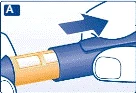
Fig. A. Remove the cap from the pen device.
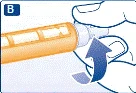
Fig. B. Remove the protective label from a new single-use needle.
Screw the needle tightly onto the NovoRapid® FlexPen® pen device.
Fig. C. Remove the outer large cap from the needle. Do not discard it.
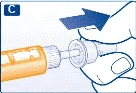
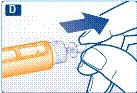
Fig. D. Remove the inner cap from the needle and discard it.
Never attempt to re-cover the inner needle cap once removed, as needle-stick injury may occur.
Always use a new needle for each injection. This reduces the risk of contamination, infection, insulin leakage, needle blockage, and inaccurate dosing.
Do not bend or damage the needle before use.
Checking insulin flow
Air may accumulate in small amounts in the needle and cartridge when using the pen device. To prevent injection of air and ensure delivery of the required dose, do the following:
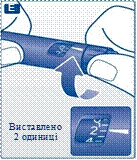
Fig. E. Set the dose selector to 2 units.
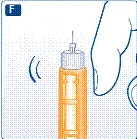
Fig. F. Holding the NovoRapid® FlexPen® vertically with the needle pointing upward, gently tap the cartridge several times with your finger to collect air bubbles in the upper part of the cartridge.
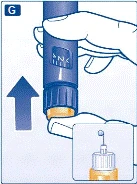
Fig. G. Holding the pen device vertically with the needle pointing upward, press the injection button. The dose selector will return to zero.
A drop of insulin should appear at the needle tip. If this does not occur, replace the needle and repeat this procedure no more than 6 times.
If a drop of insulin still does not appear, this indicates that the pen device is defective and should not be used.
Before each injection, always ensure that a drop appears at the needle tip. This confirms that insulin is flowing through the needle. If no drop appears, you will not be able to inject insulin, even if the dose selector moves. This indicates that the needle is blocked or damaged.
Always check insulin flow through the needle before injection. Failure to do so may result in underdosing or no insulin delivery at all, which could lead to elevated blood sugar levels.
Setting the dose
Ensure that the dose selector is set to "0".
Fig. H. Turn the dose selector to select the required number of units for injection.
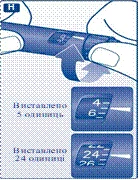
The selected dose can be adjusted upward or downward by rotating the dose selector in the appropriate direction until the required dose aligns with the dose indicator. When rotating the selector to reduce the dose, ensure that the injection button is not accidentally pressed, as this will cause insulin leakage.
It is not possible to set a dose exceeding the number of units remaining in the cartridge.

Always use the dose selector and indicator to verify the number of units drawn up before insulin injection.
Do not count the clicks of the pen device to determine the insulin dose. If an incorrect dose is selected and administered, blood sugar levels may rise or fall. Do not rely on the insulin remaining scale, as it only approximately indicates how much insulin remains in your pen device.
Administering insulin
Insert the needle under the skin. Follow the injection technique taught by your doctor or nurse.
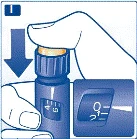
Fig. I. Administer the dose by pressing the injection button fully until "0" aligns with the mark. During injection, press only the injection button.
Rotating the dose selector will not deliver insulin.
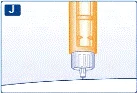
Fig. J. Keep the injection button fully pressed and maintain the needle under the skin for at least 6 seconds. This ensures delivery of the full dose.
Remove the needle from under the skin and release the injection button.
Always ensure that the dose indicator returns to "0" after injection. If the dose indicator does not return to "0", the full dose has not been delivered, which may affect blood sugar levels.
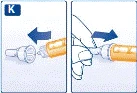
Fig. K. Cover the needle with the large outer cap without touching it. Carefully dispose of the needle and replace the cap on the pen device.
Remove the needle after each injection and store the FlexPen® without the attached needle. This reduces the risk of contamination, infection, insulin leakage, needle blockage, and inaccurate dosing.
Additional important information
Healthcare providers, family members, and others assisting the patient must be extremely careful with used needles to prevent accidental needle-stick injuries and cross-infection.
Dispose of used pen devices without needles.
Never give your pen device or needle to another person. This may lead to cross-infection.
Never give your pen device to another person. Your medication may be harmful to their health.
Store your pen device and needles out of reach of others, especially children.
Children
NovoRapid® FlexPen® is administered to children aged 1 year and older.
Overdose
Although a specific definition of overdose for insulin is not established, administration of doses exceeding the patient's insulin requirement may lead to progressive stages of hypoglycemia.
- Mild hypoglycemia can be treated by oral intake of glucose or sweet foods. Therefore, diabetic patients are advised to always carry sweet foods with them.
- In cases of severe hypoglycemia when the patient is unconscious, individuals who have received appropriate training should administer glucagon subcutaneously or intramuscularly (0.5 to 1 mg). A healthcare professional may administer glucose intravenously. Glucose should also be administered intravenously if the patient does not respond to glucagon within 10–15 minutes. After the patient regains consciousness, oral carbohydrates should be administered to prevent recurrence.
Adverse Reactions
Adverse reactions observed in patients receiving NovoRapid® FlexPen® are mostly manifestations of the pharmacological action of insulin. The most common adverse effect during insulin therapy is hypoglycemia. The frequency of hypoglycemia varies among different patient groups, dosing regimens, and levels of glycemic control, as described below.
At the beginning of insulin therapy, disturbances in refraction, edema, and injection site reactions (pain, redness, urticaria, inflammation, bruising, swelling, and itching at the injection site) may occur; these reactions are usually temporary. Rapid improvement in blood glucose control may cause acute painful neuropathy, which is usually reversible. Rapid improvement in glycemic control due to intensification of insulin therapy may be accompanied by a temporary worsening of diabetic retinopathy, whereas long-term, well-established glycemic control reduces the risk of progression of diabetic retinopathy.
The list of adverse reactions below is based on data from clinical trials; events are classified by system organ classes according to MedDRA. Reactions are categorized by frequency as very common (≥ 1/10); common (≥ 1/100, < 1/10); uncommon (≥ 1/1000, < 1/100); rare (≥ 1/10000, < 1/1000); very rare (< 1/10000); and not known (frequency cannot be estimated from available data).
Immune system disorders
Urticaria, rash, erythema – uncommon.
Anaphylactic reactions* – very rare.
Metabolism and nutrition disorders
Hypoglycemia* – very common.
Nervous system disorders
Peripheral neuropathies (painful neuropathies) – rare.
Eye disorders
Refractive disturbances – uncommon.
Diabetic retinopathy – uncommon.
Skin and subcutaneous tissue disorders
Lipodystrophy* – uncommon.
Skin amyloidosis*† – frequency not known.
General disorders and administration site reactions
Injection site reactions – uncommon.
Edema – uncommon.
*See section "Description of selected adverse reactions".
†See information from post-marketing surveillance.
Description of selected adverse reactions
Anaphylactic reactions
Generalized hypersensitivity reactions (including generalized skin rash, pruritus, sweating, gastrointestinal disturbances, angioedema, dyspnea, tachycardia, and decreased blood pressure) are very rare but may be life-threatening.
Hypoglycemia
Hypoglycemia is the most common adverse event and may occur when the insulin dose greatly exceeds the patient's insulin requirement. Severe hypoglycemia may lead to loss of consciousness and/or seizures, resulting in temporary or permanent impairment of brain function, up to and including fatal outcomes. Symptoms of hypoglycemia usually appear suddenly and may include cold sweat, pallor and cold skin, fatigue, nervousness or tremor, anxiety, unusual weakness or tiredness, disorientation, difficulty concentrating, drowsiness, increased hunger, visual disturbances, headache, nausea, and tachycardia.
According to clinical trial data, the frequency of hypoglycemia varies among different patient groups, dosing regimens, and levels of glycemic control. In clinical studies, the frequency of severe hypoglycemic episodes in patients receiving insulin aspart was similar to that in patients receiving human insulin.
Skin and subcutaneous tissue disorders
Lipodystrophy is an event that occurs occasionally. Lipodystrophy (including lipohypertrophy and lipoatrophy) and skin amyloidosis may develop at injection sites and may delay insulin absorption from the injection site. Regular rotation of injection sites within a given area may reduce or prevent the occurrence of these reactions.
Children
Based on post-marketing surveillance and clinical studies, adverse reactions in children do not differ in frequency, type, or severity from those observed in the general population.
Other special patient groups
Based on post-marketing surveillance and clinical studies, adverse reactions in elderly patients and in patients with impaired renal or hepatic function do not differ in frequency, type, or severity from those observed in the general population.
Shelf life. 2.5 years.
After first opening, the product may be used (if stored at a temperature not exceeding 30 °C) for up to 4 weeks.
Storage conditions.
Before use: store in a refrigerator (at 2–8 °C), not too close to the freezer compartment. Do not freeze.
During use or when carrying the pen as a spare: use within 4 weeks. Store at a temperature not exceeding 30 °C. May be stored in a refrigerator (at 2–8 °C). Do not freeze.
Store the pen with the cap on to protect from light. Keep out of reach of children.
Incompatibilities.
Medicinal products added to insulin may cause its degradation.
This product should not be diluted or mixed with other medicinal products except for infusion solutions specified in the section "Dosage and administration".
Packaging.
3 mL cartridges made of type 1 glass, sealed at one end with a bromobutyl rubber plunger and at the other end with a bromobutyl/polyisoprene rubber stopper. The cartridge is contained in a multidose disposable pen made of plastic. Packaged in cardboard boxes containing 1 or 5 pens.
Prescription category. Prescription only.
Manufacturer.
A/T Novo Nordisk (Denmark).
Novo Nordisk Production SAS (France).
Manufacturer's address and place of business.
Novo Allé, 2880 Bagsværd, Denmark.
45, avenue d'Orléans, 28000 Chartres, France.