Nuvaring
Ukraine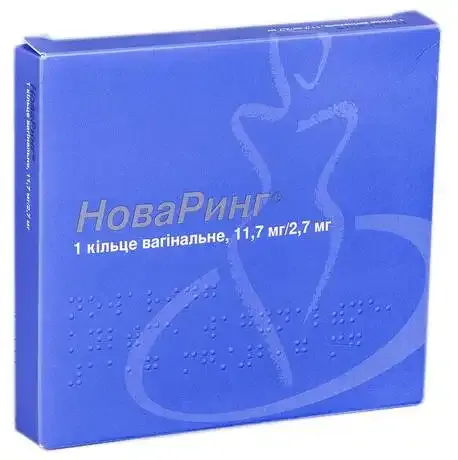
Table of Contents
INSTRUCTIONS FOR MEDICAL USE OF THE MEDICINAL PRODUCT NOVARING® (NUVARING®)
Composition:
Active substances: etonogestrel, ethinylestradiol;
1 ring contains 11.7 mg etonogestrel and 2.7 mg ethinylestradiol;
Excipients: ethylene vinyl acetate copolymer (28 % vinyl acetate), ethylene vinyl acetate copolymer (9 % vinyl acetate), magnesium stearate.
Pharmaceutical form. Vaginal ring.
Main physicochemical properties: smooth, transparent ring without major visible damage, with a transparent to almost transparent section, colorless or nearly colorless.
Pharmacotherapeutic group. Local contraceptives. Vaginal ring containing a progestogen and an estrogen.
ATC code G02BB01.
Pharmacological properties.
Pharmacodynamics.
Mechanism of action.
NuvaRing® contains etonogestrel and ethinyl estradiol.
Etonogestrel is a progestogen, a derivative of 19-nortestosterone, which binds with high affinity to progesterone receptors in target organs.
Ethinyl estradiol is an estrogen widely used in contraceptive preparations. The contraceptive effect of NuvaRing® is based on several mechanisms, the most important of which is the inhibition of ovulation.
Efficacy and safety
Clinical studies were conducted in various countries worldwide (the United States, European Union countries, and Brazil) involving women aged 18 to 40 years. The contraceptive efficacy was at least comparable to that of combined oral contraceptives.
Table 1 shows the Pearl Index (number of pregnancies per 100 woman-years of use) obtained during clinical studies of NuvaRing®.
Table 1
| Analysis method |
Pearl Index |
95% CI |
Number of cycles |
| ITT (users + method failure cases) |
0.96 |
0.64 – 1.39 |
37,977 |
| PP (method failure) |
0.64 |
0.35 – 1.07 |
28,723 |
When higher-dose combined oral contraceptives (COCs) (0.05 mg ethinyl estradiol) are used, the risk of developing endometrial and ovarian cancer is reduced. It remains to be determined whether these benefits also extend to low-dose hormonal contraceptives such as NuvaRing®.
Bleeding pattern
According to data from a comparative clinical study evaluating the effect of NuvaRing® (n=512) on menstrual bleeding patterns over 13 cycles, the frequency of breakthrough bleeding or spotting in the NuvaRing® group (2.0–6.4%) was significantly lower than with the use of combined oral contraceptives (COCs) containing 150/30 µg levonorgestrel/ethinyl estradiol (n=518). In most women (58.8–72.8%), vaginal bleeding was limited to the period when NuvaRing® was not in use.
Effect on bone mineral density
The effect of NuvaRing® (n=76) on bone mineral density was studied in comparison with a non-hormonal intrauterine device (n=31) in women over two years. No adverse effects on bone tissue were observed during the use of NuvaRing®.
Children
The safety and efficacy of NuvaRing® in adolescent girls (under 18 years of age) have not been studied.
Pharmacokinetics
Etonogestrel
Absorption. Etonogestrel released from the NuvaRing**®** is rapidly absorbed through the vaginal mucosa. Maximum plasma concentration of etonogestrel (approximately 1700 pg/mL) is reached about one week after insertion of the ring. This serum concentration fluctuates slightly and gradually decreases to 1600 pg/mL after 1 week, 1500 pg/mL after 2 weeks, and 1400 pg/mL after 3 weeks. Absolute bioavailability is approximately 100%, which is higher than with oral contraceptives. Etonogestrel levels in the cervix and uterine cavity during use of NuvaRing® are similar to etonogestrel levels observed with an oral contraceptive containing 0.150 mg desogestrel and 0.020 mg ethinyl estradiol.
Distribution. Etonogestrel binds to serum albumin and sex hormone-binding globulin. The volume of distribution of etonogestrel is 2.3 L/kg.
Metabolism. Etonogestrel is metabolized via known steroid metabolic pathways. The plasma clearance rate of metabolites is approximately 3.5 L/h. No interaction between etonogestrel and concomitantly administered ethinyl estradiol has been observed.
Elimination. Etonogestrel plasma concentration declines in two phases. The terminal elimination phase is characterized by a half-life of approximately 29 hours. Etonogestrel and its metabolites are excreted in urine and bile in a ratio of approximately 1.7:1. The half-life of metabolites is approximately 6 days.
Ethinyl estradiol
Absorption. Ethinyl estradiol released from the NuvaRing**®** is rapidly absorbed through the vaginal mucosa. Maximum serum concentration (approximately 35 pg/mL) is reached within about 3 days after ring insertion and declines to 19 pg/mL after 1 week, 18 pg/mL after 2 weeks, and 18 pg/mL after 3 weeks of use. Monthly systemic exposure to ethinyl estradiol (AUC0–∞) from NuvaRing® is 10.9 ng·h/mL. Absolute bioavailability is approximately 56%, which corresponds to the bioavailability observed after oral administration of ethinyl estradiol. Ethinyl estradiol levels in the cervix and uterine cavity during use of NuvaRing® are similar to those observed with an oral contraceptive containing 0.150 mg desogestrel and 0.020 mg ethinyl estradiol.
Distribution. Ethinyl estradiol binds non-specifically to serum albumin. The volume of distribution is approximately 15 L/kg.
Metabolism. Ethinyl estradiol is primarily metabolized via aromatic hydroxylation, forming various hydroxylated and methylated metabolites. These metabolites are present both in free form and as glucuronide and sulfate conjugates. Effective clearance is approximately 35 L/h.
Elimination. Ethinyl estradiol plasma levels decline in two phases. The terminal elimination phase shows considerable inter-individual variation in half-life; the mean elimination half-life is approximately 34 hours. Ethinyl estradiol is not excreted unchanged; elimination of ethinyl estradiol metabolites occurs via urine and bile in a ratio of 1.3:1. The half-life of metabolites is approximately 1.5 days.
Special populations
Children
The pharmacokinetics of NuvaRing® in healthy adolescent girls under 18 years of age who have reached menarche have not been studied.
Renal impairment
The effect of renal disease on the pharmacokinetics of NuvaRing® has not been studied.
Hepatic impairment
The effect of liver disease on the pharmacokinetics of NuvaRing® has not been studied. However, it should be noted that steroid hormone metabolism may be altered in hepatic impairment.
Ethnic groups
Formal studies to evaluate pharmacokinetics in different ethnic groups have not been conducted.
Clinical characteristics.
Indications.
Prevention of pregnancy (contraception).
The Novaring® product is indicated for use in women of reproductive age. Safety and efficacy have been established in women aged 18 to 40 years.
When considering the prescription of Novaring® it is important to take into account the individual risks for each woman, especially the risk of venous thromboembolism (VTE), and to weigh the risk of VTE associated with the use of Novaring® and other combined hormonal contraceptives (see sections "Contraindications" and "Special precautions").
Contraindications.
Combined hormonal contraceptives (CHCs) must not be used in the presence of any of the conditions listed below.
Presence of or risk of venous thromboembolism (VTE).
- Venous thromboembolism – current VTE (anticoagulant therapy is being administered) or history of VTE (e.g. deep vein thrombosis (DVT) or pulmonary embolism (PE)).
- Known acquired or hereditary risk factors for venous thromboembolism, such as activated protein C resistance (including factor V Leiden), deficiency of antithrombin III, deficiency of protein C, deficiency of protein S.
- Major surgery with prolonged immobilization (see section "Special precautions").
- High risk of venous thromboembolism due to the presence of multiple risk factors (see section "Special precautions").
Presence of or risk of arterial thromboembolism (ATE).
-
Arterial thromboembolism – current or history of arterial thromboembolism (e.g. myocardial infarction) or prodromal condition (e.g. angina pectoris).
-
Cerebrovascular disease – history of stroke or transient ischaemic attack (TIA).
-
Known hereditary or acquired predisposition to arterial thromboembolism, e.g. hyperhomocysteinaemia and antiphospholipid antibodies (anticardiolipin antibodies, lupus anticoagulant).
-
History of migraine with focal neurological symptoms.
-
High risk of arterial thromboembolism due to the presence of multiple risk factors or one serious risk factor (see section "Special precautions"):
-
diabetes mellitus with vascular complications;
-
severe arterial hypertension;
-
severe dyslipoproteinaemia.
-
Pancreatitis or history of pancreatitis associated with severe hypertriglyceridaemia.
-
Severe liver disease (until liver function tests return to normal values).
-
Current or past history of benign or malignant liver tumours.
-
Known or suspected hormone-dependent malignant tumours of the genital organs or breast.
-
Vaginal bleeding of unknown origin.
-
Hypersensitivity to the active substances or to any of the components of Novaring® (see section "Composition").
Novaring® is contraindicated for use with combination hepatitis C virus (HCV) therapy regimens containing ombitasvir/paritaprevir/ritonavir with or without dasabuvir, or with products containing glecaprevir/pibrentasvir (see sections "Special precautions" and "Interaction with other medicinal products and other forms of interaction").
Interaction with other medicinal products and other forms of interaction.
Note: Carefully read the instructions for medical use of the concomitant drug to identify possible interactions. Interactions between contraceptives and other drugs that induce microsomal enzymes may lead to increased clearance of sex hormones and to breakthrough bleeding and/or contraceptive failure.
Course monitoring
Enzyme induction may occur within a few days of starting treatment. Maximum enzyme induction is usually observed within a few weeks. After discontinuation of the drug, enzyme induction may persist for approximately 4 weeks.
Short-term treatment
Women taking any medicinal or herbal products that induce liver enzymes should be aware that the effectiveness of Novaring® may be reduced. Note: Novaring® should not be used together with a diaphragm, cervical cap or female condom.
A barrier method of contraception should be used in addition to Novaring® during concomitant use of liver enzyme-inducing agents, and for 28 days after discontinuation of such treatment. If the duration of concomitant drug use extends beyond 3 weeks of ring use, the next ring should be inserted without the usual break.
Long-term treatment
In women receiving long-term treatment with liver enzyme-inducing active substances, it is recommended to use another reliable non-hormonal method of contraception.
Data on these interactions are reported in the literature.
Substances that increase the elimination of combined hormonal contraceptives.
Interactions may occur with medicinal products or herbal preparations that induce microsomal enzymes, particularly cytochrome P450 (CYP) enzymes, leading to increased clearance of sex hormones and potentially reducing the effectiveness of combined oral contraceptives, including Novaring®. Such agents include phenytoin, phenobarbital, primidone, bosentan, carbamazepine, rifampicin and possibly oxcarbazepine, topiramate, felbamate, griseofulvin, certain HIV protease inhibitors (e.g. ritonavir) and non-nucleoside reverse transcriptase inhibitors (e.g. efavirenz), as well as herbal preparations containing St. John's wort (Hypericum perforatum).
Substances with variable effects on the elimination of combined hormonal contraceptives.
Concomitant use of hormonal contraceptives with many combinations of HIV protease inhibitors (e.g. nelfinavir) and non-nucleoside reverse transcriptase inhibitors (e.g. nevirapine) and/or combinations with drugs for hepatitis C virus (HCV) (e.g. boceprevir, telaprevir) may increase or decrease plasma concentrations of progestins, including etonogestrel, or estrogens. The effect of these changes may be clinically significant in some cases.
Substances that reduce the elimination of combined hormonal contraceptives
The clinical significance of potential interactions with enzyme inhibitors remains unknown.
Concomitant use with strong (e.g. ketoconazole, itraconazole, clarithromycin) or moderate (e.g. fluconazole, diltiazem, erythromycin) CYP3A4 inhibitors may lead to increased serum concentrations of estrogens and progestins, including etonogestrel.
There have been reports of ring rupture with concomitant use of intravaginal products, including antifungal agents, antibiotics and lubricants (see section "Special precautions").
Based on pharmacokinetic data, intravaginally administered antifungal agents and spermicides are unlikely to affect the contraceptive efficacy and safety of Novaring®.
Hormonal contraceptives may affect the metabolism of other medicinal products. Consequently, plasma and tissue concentrations of such drugs may be increased (e.g. cyclosporine) or decreased (e.g. lamotrigine).
Pharmacodynamic interaction
Concomitant use with medicinal products containing ombitasvir/paritaprevir/ritonavir with or without dasabuvir, or glecaprevir/pibrentasvir, may increase the risk of elevated ALT levels (see sections "Contraindications" and "Special precautions"). Therefore, patients should consider an alternative method of contraception (e.g. progestogen-only contraception or non-hormonal methods) prior to initiating such combination therapy. Resumption of Novaring® use should occur approximately 2 weeks after completion of combination therapy.
Laboratory tests
The use of contraceptive steroids may influence the results of certain laboratory tests, including biochemical parameters of liver, thyroid, adrenal and kidney function, plasma protein levels (e.g. levels of corticosteroid-binding globulin and sex hormone-binding globulin), lipid and lipoprotein fractions, carbohydrate metabolism parameters, and coagulation and fibrinolysis parameters. Such changes are usually within normal laboratory reference ranges.
Interaction with tampons
Pharmacokinetic data indicate that the use of tampons does not affect the systemic absorption of hormones released by Novaring®. In isolated cases, Novaring® may be expelled during tampon removal (see section "Special precautions").
Special precautions.
If any of the conditions/factors listed below are present, the benefits and risks of using NuvaRing® must be carefully weighed for each individual woman before using this medication, and these should be discussed with the patient prior to initiating use. If any of these conditions worsen, intensify, or occur for the first time, the woman should consult her physician. The physician will determine whether NuvaRing® use should be discontinued.
Impaired circulation.
Risk of venous thromboembolism (VTE)
- Use of any combined hormonal contraceptive (CHC) increases the risk of venous thromboembolism (compared to non-use of CHCs). Products containing levonorgestrel, norgestimate, or norethisterone are associated with the lowest risk of VTE. Other products, such as NuvaRing®, may increase the risk by up to two-fold. The decision to use any contraceptive that is not a lowest-risk VTE product should only be made after discussing with the woman and informing her about the risks of VTE associated with NuvaRing®, how her individual risk factors may affect this risk, and that the risk of VTE is highest during the first year of use. The risk is also increased when resuming CHC use after a break of 4 weeks or more.
- Among women who are not using CHCs and are not pregnant, approximately 2 in 10,000 will develop VTE over one year. However, for any individual woman, the risk may be significantly higher depending on underlying risk factors.
- It has been established that among 10,000 women using a low-dose CHC containing levonorgestrel, approximately 6 to 7 women will develop VTE over one year. Conflicting data exist regarding the incidence of VTE with NuvaRing® compared to CHCs containing levonorgestrel (relative risk ranging from no increase, RR = 0.96, to a doubling of risk, RR = 1.90); available data report between 6 and 12 cases of VTE per year per 10,000 women using NuvaRing®.
- In both of the above cases, the annual number of VTE events is lower than the number expected in pregnant women and during the postpartum period.
- VTE can be fatal in 1–2% of cases.
1The average range of 5 to 7 per 10,000 woman-years is based on the relative risk associated with levonorgestrel-containing CHCs, compared to a range of 2.3 to 3.6 when no CHC is used.
Number of VTE cases per 10,000 women per year
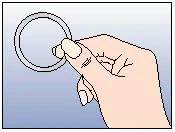
Fig. 1
Remove NuvaRing**®** from the sachet
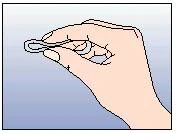
Fig. 2
Squeeze the ring
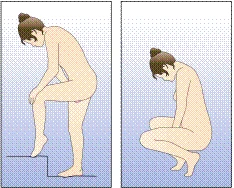
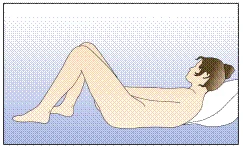
Fig. 3 Choose a comfortable position for ring insertion |
|
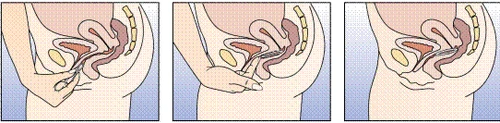
Fig. 4A Fig. 4B Fig. 4C With one hand, insert the ring into the vagina (Fig. 4A); if necessary, use the other hand to separate the labia. Push the ring into the vagina until it is comfortably positioned (Fig. 4B). Leave the ring in the vagina for 3 weeks (Fig. 4C). |
|
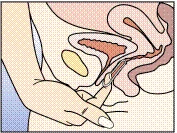
Fig. 5 NuvaRing® can be removed by hooking it with the index finger or by grasping the ring between the index and middle fingers. |
How to Start Using NuvaRing®
If hormonal contraceptives have not been used during the previous menstrual cycle
NuvaRing® should preferably be inserted on the first day of the woman's natural menstrual cycle (i.e., the first day of menstrual bleeding). NuvaRing® may be inserted on day 2–5 of the menstrual cycle. When using NuvaRing® within the first 7 days of the cycle, a barrier method of contraception should be used additionally.
Switching from combined hormonal contraceptives (CHCs)
NuvaRing® should be inserted no later than the next day after the tablet-free interval, patch-free interval, or placebo tablet period of the previous combined hormonal contraceptive.
If the woman has been using the previous contraceptive method correctly and continuously, and if she is certain she is not pregnant, she may switch from the previous combined hormonal contraceptive at any day of the cycle.
The hormone-free interval of the previous contraceptive method must not be extended beyond the recommended duration.
Switching from progestogen-only contraceptives (mini-pills, implant, or injection) or from a progestogen-releasing intrauterine system (IUS)
A woman currently taking mini-pills may switch to NuvaRing® at any time. For an implant or IUS, the switch should occur on the day of removal; for an injection, on the day the next injection would have been due. However, in all these cases, the woman must use an additional barrier method of contraception for the first 7 days.
After first-trimester abortion
A woman may start using the ring immediately after an abortion. In this case, additional contraceptive methods are not required. If immediate use of NuvaRing® after abortion is not desired, the woman should follow the recommendations provided in the instructions (see above, "If hormonal contraceptives have not been used during the previous menstrual cycle"). During this time, an alternative contraceptive method is recommended.
After childbirth or second-trimester abortion
Information for breastfeeding women is provided in the section "Use during pregnancy or breastfeeding". Women are recommended to start using the ring within the fourth week after childbirth or second-trimester abortion. If starting later, a barrier method of contraception should be used additionally for the first 7 days of NuvaRing® use. In any case, if sexual intercourse has occurred during this period, pregnancy must first be ruled out or the first menstruation awaited before inserting NuvaRing®.
It should be remembered that there is an increased risk of VTE in the postpartum period when resuming NuvaRing® use (see sections "Dosage and administration" and "Special precautions").
Deviations from the recommended regimen.
Contraceptive efficacy and menstrual cycle control may be compromised if the woman does not follow the recommended regimen. To prevent a reduction in contraceptive effectiveness in case of regimen deviations, the recommendations below should be followed.
- What to do in case of a prolonged (more than 7 days) break in ring use?
The woman may insert a new ring as soon as she remembers. A barrier method of contraception (e.g., male condom) must be used additionally for the first 7 days. If sexual intercourse occurred during the break in ring use, pregnancy should be considered. The longer the break, the higher the risk of pregnancy.
- What to do if the ring has been temporarily removed from the vagina?
NuvaRing® must remain in the vagina continuously for 3 weeks. If the ring is accidentally expelled, it may be rinsed with cool or lukewarm (not hot) water and reinserted into the vagina immediately.
If the ring has been out of the vagina for less than 3 hours, contraceptive efficacy is not reduced. The woman should reinsert the ring as soon as possible, but no later than 3 hours after removal.
If the ring has been out of the vagina or there is suspicion it was out of the vagina for more than 3 hours during the first or second week of use, its contraceptive efficacy may be reduced. The woman should reinsert the ring as soon as she remembers.
A barrier method of contraception (e.g., male condom) must be used until NuvaRing® has remained in the vagina continuously for 7 days. The longer the ring is out of the vagina and the closer this period is to the ring removal time, the higher the risk of pregnancy.
If the ring has been out of the vagina or there is suspicion it was out of the vagina for more than 3 hours during the third week of the three-week use period, contraceptive efficacy may be reduced. The woman should discard this ring and choose one of the following two options:
- Insert a new ring immediately.
Insertion of a new ring starts the next three-week use period. The woman may not have a withdrawal bleed from her previous cycle. However, spotting or bleeding may occur.
- Allow a withdrawal bleed to occur and insert a new ring no later than 7 days (7×24 hours) after removal of the previous ring.
This option should only be chosen if the ring had been used continuously during the previous 7 days.
If the ring has been out of the vagina for an unknown period of time, pregnancy may have occurred. A pregnancy test should be performed before inserting a new ring.
What to do in case of prolonged ring use?
If NuvaRing® is used for up to 4 weeks maximum, its contraceptive efficacy remains adequate. The woman may then take a one-week break from ring use and insert a new ring afterward. If NuvaRing® remains in the vagina for longer than 4 weeks, contraceptive effectiveness may be reduced, and pregnancy should be ruled out before inserting a new ring.
If the woman does not follow the recommended regimen and does not experience bleeding during the next ring-free interval, pregnancy should be ruled out before inserting a new ring.
How to change the timing of menstruation or delay menstruation
In exceptional cases, to delay menstruation, the woman may insert a new ring without taking a weekly break. The new ring should also be used for 3 weeks. During this time, the woman may experience light or heavy bleeding. Afterwards, the woman resumes regular use of NuvaRing® after the usual one-week ring-free interval.
To change the timing of menstruation—i.e., to shift its onset to a different day of the week than would occur with the usual ring insertion schedule—the woman may be advised to shorten the next ring-free interval by as many days as needed. The shorter the interval, the higher the risk of absence of withdrawal bleeding and the occurrence of heavy or light bleeding during use of the next ring.
Children.
The safety and efficacy of NuvaRing® in individuals under 18 years of age have not been established; therefore, the product is not used in patients of this age group.
Overdose.
No serious or life-threatening complications due to overdose of hormonal contraceptives have been reported. Symptoms of overdose may include nausea, vomiting, and in young women, vaginal bleeding. Treatment of overdose is symptomatic; no antidotes exist.
Adverse reactions
During studies, the most frequently reported adverse reactions were headache, vaginal infections, and vaginal discharge, each observed in 5–6% of women.
Description of selected adverse reactions
Use of COCs has been associated with an increased risk of arterial and venous thromboembolism, including myocardial infarction, stroke, transient ischaemic attack, deep vein thrombosis, and pulmonary embolism; for further information, see section "Special precautions for use".
Other adverse reactions have also been reported with COC use; more detailed information is provided in the section "Special precautions for use".
The adverse reactions listed below have been observed during clinical trials, observational studies, or in the post-marketing period of Novaring® use (see Table 4). Adverse reactions are described using the most appropriate MedDRA terms. All adverse reactions are categorized by system organ class and frequency: common (≥ 1/100, < 1/10), uncommon (≥ 1/1000, < 1/100), rare (≥ 1/10000, < 1/1000), and not known (cannot be estimated from available data).
Table 4
| System organ classes |
Common (≥ 1/100, <1/10) |
Uncommon (≥ 1/1000, <1/100) |
Rare (≥ 1/10000, <1/1000) |
Not known1 |
| Infections and infestations |
Vaginal infection |
Cervicitis, cystitis, urinary tract infection |
||
| Immune system disorders |
hypersensitivity reactions, including angioneurotic edema and anaphylaxis |
|||
| Metabolism and nutrition disorders |
Increased appetite |
|||
| Psychiatric disorders |
Depression, decreased libido |
Mood alteration, mood swings, labile affect |
Anxiety |
|
| Nervous system disorders |
Headache, migraine |
Dizziness, hypoesthesia |
Stroke/cerebrovascular disorders |
|
| Eye disorders |
Visual disturbance |
|||
| Vascular disorders |
Hot flushes |
Venous thromboembolism2 Arterial thromboembolism2 |
Thrombosis of large veins, worsening of varicose veins, myocardial infarction, vascular disorders |
|
| Gastrointestinal disorders |
Abdominal pain, nausea |
Bloating, diarrhoea, vomiting, constipation |
||
| Skin and subcutaneous tissue disorders |
Acne |
Alopecia, eczema, pruritus, rash, urticaria |
Worsening of symptoms of hereditary and acquired angioedema, chloasma |
|
| Musculoskeletal and connective tissue disorders |
Back pain, muscle cramps, limb pain |
|||
| Renal and urinary disorders |
Dysuria, urinary urgency, pollakiuria |
Cholelithiasis |
||
| Reproductive system and breast disorders |
Breast tenderness, genital pruritus in women, dysmenorrhoea, pelvic pain, vaginal discharge |
Amenorrhoea, breast discomfort, breast enlargement, breast mass, cervical polyp, coital bleeding, dyspareunia, cervical ectropion, fibrocystic mastopathy, menorrhagia, metrorrhagia, pelvic discomfort, premenstrual syndrome, uterine muscle contraction, burning sensation in vagina, unpleasant vaginal odour, vaginal pain, vulvovaginal discomfort, vulvovaginal dryness |
Galactorrhoea |
Penile reactions3 |
| General disorders and administration site conditions |
Fatigue, irritability, malaise, swelling, foreign body sensation |
Worsening of hereditary (genetic) angioedema3 |
||
| Other |
Weight increased |
Increased blood pressure |
Liver disease |
|
| Injury, procedural complications |
Discomfort during use of ring, expulsion of vaginal contraceptive ring |
Complications associated with contraceptive ring use, damage to ring |
Vaginal injury as a result of ring rupture |
1Adverse reactions reported based on spontaneous reports.
2Frequency established in cohort studies: ≥ 1/10,000 to < 1/1,000 women-years.
3Data from reports of "Local reaction at the penis".
Adverse reactions reported in women using combined hormonal contraceptives (these events are described in more detail in section "Special precautions for use"): pancreatitis, obstructive jaundice, hemolytic-uremic syndrome, decreased glucose tolerance, Sydenham's chorea, chorea, hearing loss associated with otosclerosis, jaundice and/or pruritus associated with cholestasis, Crohn's disease, ulcerative colitis, herpes gestationis, cervical cancer, changes in appetite, optic neuritis, change in body weight, venous thromboembolic disorders; arterial thromboembolic disorders; arterial hypertension.
Cases of hormone-dependent tumors (e.g., liver tumor, breast cancer) have been reported with the use of combined hormonal contraceptives. For detailed information, see section "Special precautions for use".
Interactions
Interactions with other medicinal products (inducers of microsomal enzymes) may lead to breakthrough bleeding and/or reduced contraceptive efficacy (see section ***"***Interaction with other medicinal products and other forms of interaction").
Reporting of suspected adverse reactions
Reporting suspected adverse reactions after authorization of the medicinal product is important. It allows continuous monitoring of the benefit-risk balance of the medicinal product.
Shelf life.
40 months.
Storage conditions.
Store in the original packaging at 2–8 °C in a place inaccessible to children.
Packaging.
1 vaginal ring Novaring® in a sachet; 1 sachet in a cardboard box.
Prescription status.
Prescription only.
Manufacturer.
N.V. Organon.
Manufacturer's location and address of the place of business.
Registered office: 5349 AB Oss, Kloosterstraat 6, The Netherlands.
Address of the place of business: Molensestraat 110, 5342 SS Oss, The Netherlands.