Normolact forte
Ukraine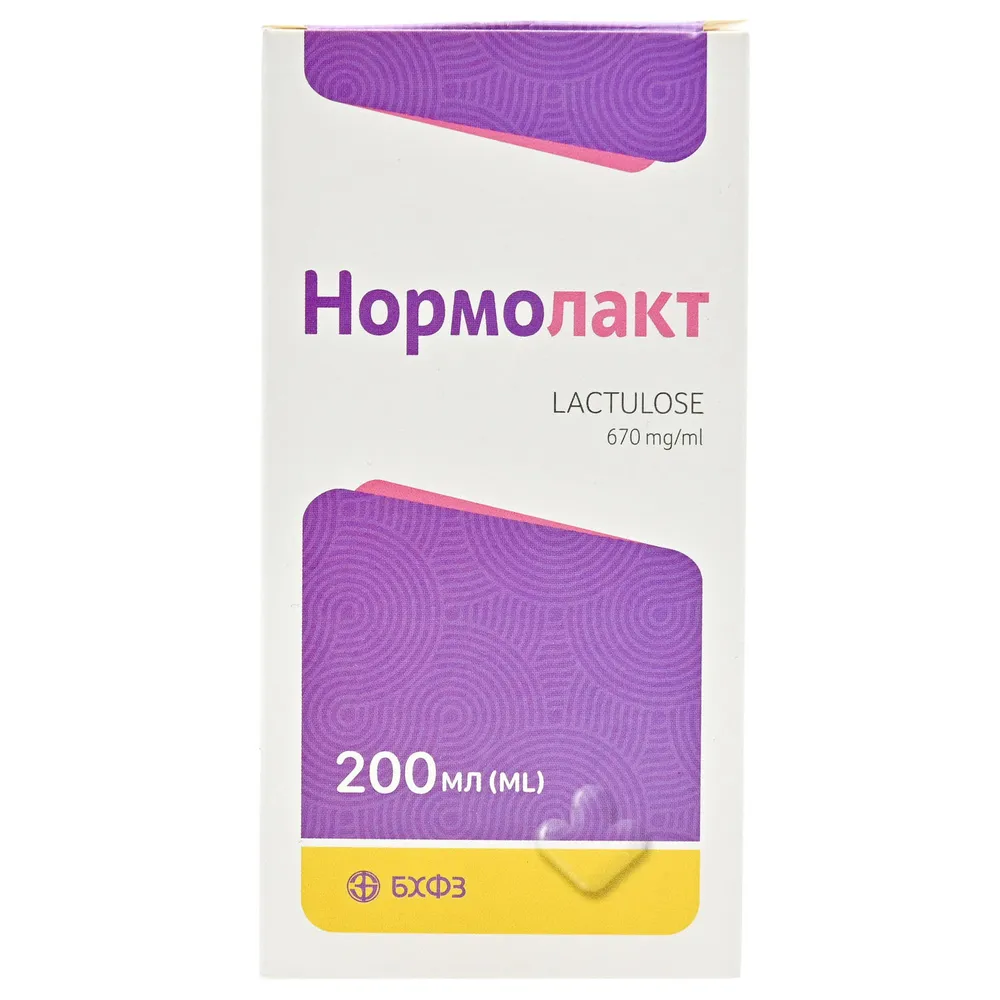
Table of Contents
INSTRUCTIONS FOR MEDICAL USE OF THE MEDICINAL PRODUCT NORMOLACT FORTE (NORMOLACT FORTE)
Composition:
Active substance: lactulose;
1 ml of syrup contains 670 mg of lactulose.
Medicinal form. Syrup.
Main physico-chemical properties: clear, viscous liquid, colorless or slightly brownish-yellow.
Pharmacotherapeutic group. Osmotic laxatives. ATC code A06AD11.
Pharmacological properties.
The active ingredient of Normolact Forte (lactulose) is broken down by intestinal flora in the colon into low-molecular-weight organic acids. These acids reduce the pH level in the lumen of the colon and induce osmotic changes that stimulate colonic peristalsis. At the same time, the volume of fecal matter increases and its consistency normalizes, thereby relieving constipation and restoring the physiological rhythm of digestion.
As a prebiotic, lactulose enhances the growth of bifidobacteria and lactobacilli, while suppressing the growth of potentially pathogenic bacteria such as Escherichia coli and clostridia. This promotes the restoration of normal intestinal microflora balance.
In hepatic encephalopathy or hepatic (pre)coma, the therapeutic effect of the drug is due to increased osmotic pressure and reduced pH in the colonic lumen, resulting in enhanced intestinal peristalsis, as well as migration of ammonia from the blood into the intestine and its conversion into the ammonium ion, which is poorly absorbed and is excreted from the body during the development of a laxative effect. Lactulose increases the number of acidophilic bacteria (e.g., lactobacilli), suppresses the growth of proteolytic bacteria (including Shigella, Salmonella), inhibits the formation and absorption of nitrogen-containing toxins in the proximal colon, reduces blood ammonium ion levels, and decreases the severity of hepatic encephalopathy.
Pharmacokinetics. After oral administration, the active ingredient of Normolact Forte is virtually not absorbed and not hydrolyzed in the stomach and small intestine, reaching the colon unchanged due to the absence of a specific enzyme in the body.
When Normolact Forte is administered at doses of 40–75 mL, lactulose is completely metabolized by bacterial flora. When higher doses are used, part of the lactulose may be excreted unchanged.
Clinical characteristics.
Indications.
- Constipation: regulation of the physiological intestinal rhythm.
- Conditions requiring facilitation of defecation (hemorrhoids, postoperative states following surgery on the large intestine and anorectal region).
- Portosystemic hepatic encephalopathy: treatment and prevention of hepatic coma and precoma.
Contraindications.
Galactosemia, gastrointestinal obstruction, gastrointestinal tract perforation or risk of gastrointestinal tract perforation, hypersensitivity to lactulose or to any of the excipients.
Interaction with other medicinal products and other forms of interaction.
No interaction studies have been conducted.
Special precautions for use.
Consultation with a physician is recommended if:
- the therapeutic effect during several days of treatment is insufficient;
- painful abdominal symptoms of undetermined origin are present prior to initiation of treatment.
The doses of the drug used to treat constipation do not cause problems in patients with diabetes. High doses are usually used to treat hepatic (pre)coma, which should be taken into account when prescribing the drug to patients with diabetes.
Prolonged use of the drug without dose adjustment or incorrect use may lead to the development of diarrhea and electrolyte imbalance.
The drug should not be used in patients with rare hereditary conditions such as galactose intolerance, lactase deficiency, Lapp lactase deficiency, or glucose-galactose malabsorption.
Lactulose should be used in patients with gastroesophageal syndrome (Röhmel's syndrome) only after consultation with a physician. If symptoms such as flatulence occur in these patients, the dose should be reduced or treatment discontinued.
Use during pregnancy or breastfeeding.
Limited data on the use of lactulose in pregnant women do not indicate the development of fetal defects or fetotoxic/neonatal toxicity. Animal studies have not shown any direct or indirect harmful effects on pregnancy, embryonic and fetal development, parturition, or postnatal development.
If necessary, Normolact Forte may be used during pregnancy or breastfeeding.
Fertility
No effects on fertility are expected, as the systemic effects of lactulose are negligible.
Ability to affect reaction speed when driving or operating machinery.
Normolact Forte does not affect the ability to drive a vehicle or operate complex machinery.
Dosage and Administration
The dose should be adjusted according to the clinical response. The daily dose may be taken once daily or divided into two doses. The single dose should be swallowed whole and not held in the mouth for prolonged periods. If the daily dose is taken as a single dose, the medication may be administered, for example, during breakfast. Normolact Forte can be taken diluted with water or other water-containing beverages. During therapy with laxatives, it is recommended to consume an adequate amount of fluid (1.5–2 liters, equivalent to 6–8 glasses) per day.
Dosage of Normolact Forte for constipation or conditions requiring facilitation of defecation
After a few days, the initial dose may be adjusted to a maintenance dose based on the response to treatment. A few days of therapy (2–3 days) may be required before the therapeutic effect becomes evident.
| Age |
Initial dose, per day |
Maintenance dose, per day |
| Adults and children aged 14 years and older |
15–45 ml (1–3 tablespoons or 3–9 teaspoons) |
15–30 ml (1–2 tablespoons or 3–6 teaspoons) |
| 7–14 years |
15 ml (1 tablespoon or 3 teaspoons) |
10–15 ml (1 tablespoon or 2–3 teaspoons) |
| 1–6 years |
5–10 ml (1–2 teaspoons) |
5–10 ml (1–2 teaspoons) |
| Up to 1 year |
Up to 5 ml (1 teaspoon) |
Up to 5 ml (1 teaspoon) |
Dosage of Normolact Forte in hepatic coma and precoma
Initial dose for adults: 30–45 mL 3–4 times daily. The maintenance dose should be adjusted to achieve 2–3 soft bowel movements per day. Normolact Forte may be administered via gastric tube or as an enema in comatose patients.
The safety and efficacy of the drug in children (0–18 years) with portosystemic encephalopathy have not been established. Data are lacking.
Geriatric patients and patients with renal or hepatic impairment
Since the systemic effects of lactulose are negligible, no special dosage recommendations are required for these patient groups.
Children.
Laxatives are recommended for use in children only in exceptional cases and under medical supervision. It should be noted that the defecation reflex may be impaired during treatment.
Overdose.
Symptoms. Abdominal pain and diarrhea may occur following ingestion of a high dose.
Treatment. The dose should be reduced or treatment discontinued. Electrolyte imbalances should be corrected in case of excessive fluid loss due to diarrhea and vomiting.
Side effects.
During the first days of treatment, flatulence may occur, which resolves spontaneously within a few days. When doses exceeding the recommended ones are taken, abdominal pain and diarrhea may occur. In such cases, the daily dose of the drug should be reduced. With prolonged use of high therapeutic doses (only in patients with hepatic insufficiency and encephalopathy), electrolyte imbalance due to diarrhea may be observed.
Gastrointestinal side effects: flatulence, abdominal pain, nausea or vomiting. Diarrhea with hydroelectrolytic losses may occur if the dosage is too high.
Laboratory test abnormalities: electrolyte imbalance due to diarrhea, hypernatremia (during treatment of portal encephalopathy).
Children.
The safety profile in children is expected to be the same as in adults.
Shelf life. 2 years.
Storage conditions.
Store in the original packaging at a temperature not exceeding 25 °C.
Keep out of reach of children. Use only as directed by a physician.
Packaging. 100 ml or 200 ml in a bottle with a cap; one bottle per cardboard box.
Availability. Over-the-counter (without prescription).
Manufacturer. Limited liability company "Kharkiv Pharmaceutical Enterprise "Zdorov'ya Narodu".
Manufacturer's address and place of business.
41, Kulikivska Street, Kharkiv, Kharkiv Oblast, 61002, Ukraine.
Bulk production by Fresenius Kabi Austria GmbH, Austria.