Norfloxacin
Ukraine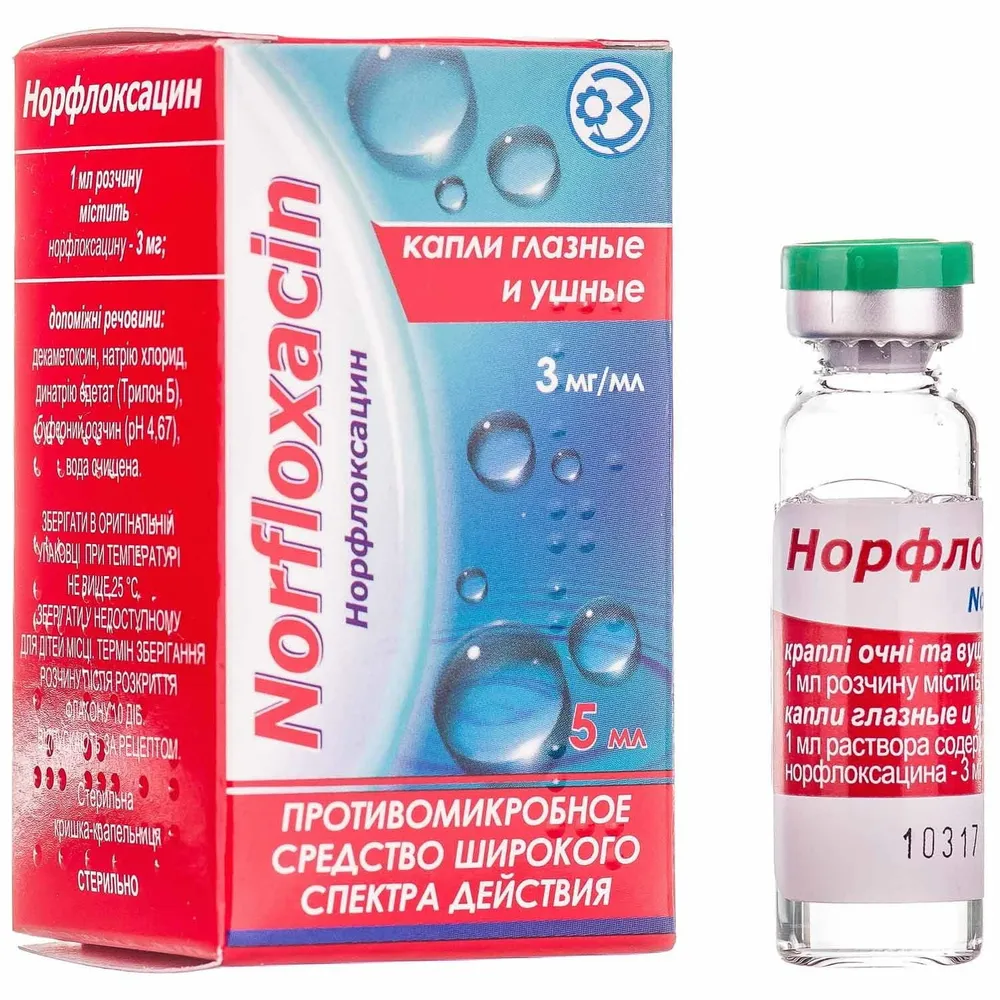
Table of Contents
INSTRUCTION FOR MEDICAL USE OF THE MEDICINAL PRODUCT NORFLOXACIN
Composition:
Active substance: norfloxacin;
1 ml of solution contains 3 mg of norfloxacin;
Excipients: decamethoxine, sodium chloride, disodium edetate (Trilon B), buffer solution (pH 4.67), purified water.
Pharmaceutical form. Eye and ear drops.
Main physicochemical properties: clear, colorless or slightly greenish liquid.
Pharmacotherapeutic group. Agents used in ophthalmology and otology. Antimicrobial agents. ATC code S03A A.
Pharmacological properties.
Pharmacodynamics.
Norfloxacin is an antimicrobial agent of the fluoroquinolone group; it inhibits bacterial cell DNA gyrase activity and bacterial DNA replication. Norfloxacin has a broad spectrum of antimicrobial activity against the majority of gram-negative microorganisms. The minimum inhibitory concentration (MIC) for Escherichia coli, Klebsiella spp., Proteus spp., Citrobacter spp. is 2 mg/L or less. Less sensitive are Acinetobacter spp., Providencia spp., Serratia spp. The MIC for Pseudomonas aeruginosa is less than 1–2 mg/L, for Haemophilus influenzae, Neisseria gonorrhoeae, and Neisseria meningitidis is less than 2 mg/L, for pathogenic strains of Salmonella and Shigella is less than 1 mg/mL, for Campylobacter is less than 4 mg/mL, for staphylococci is 1–4 mg/mL, and for streptococci is 2–16 mg/L. Anaerobic bacteria are not susceptible to the drug's action; Enterococcus and Acinetobacter are poorly susceptible.
Pharmacokinetics.
There is no information available on the distribution of norfloxacin when used in ophthalmology and otology; however, it is known that norfloxacin distributes into most body fluids and tissues, including the eyes and ears. Approximately 10% to 15% of the drug binds to plasma proteins. It begins to act within 1 hour after instillation into the eye. The maximum concentration in blood serum following the daily ophthalmic dose is 10.2 ng/mL.
Norfloxacin is metabolized into 6 active metabolites, each having lower antibacterial activity than the parent compound. Norfloxacin is metabolized in the liver and kidneys. Approximately 30% of the active substance is excreted unchanged in urine. The elimination half-life of the drug is 3–4 hours.
Clinical characteristics.
Indications.
Superficial eye infections (bacterial conjunctivitis, keratitis, blepharitis), infections of the external and middle ear (external otitis, chronic suppurative otitis media).
Contraindications.
Hypersensitivity to norfloxacin or to other drugs of the fluoroquinolone group. Viral and fungal eye and ear diseases.
Interaction with other medicinal products and other forms of interaction.
Interactions with other medicinal products have not been described for topical administration of norfloxacin. However, there are reports that systemic administration of certain quinolones leads to increased plasma theophylline concentrations, affects caffeine metabolism, enhances the effect of oral anticoagulants such as warfarin and its derivatives, and is associated with a transient increase in serum creatinine levels in patients who received cyclosporine concomitantly.
Special precautions for use
Norfloxacin in the form of eye/ear drops is intended for topical use only. To achieve optimal therapeutic effect, the drops should be used in combination with systemic antimicrobial therapy (except in mild cases).
Severe, and sometimes fatal, hypersensitivity reactions (anaphylactic reactions) have been reported in patients receiving systemic quinolones, including cases after the first dose. Some of these reactions were accompanied by cardiovascular collapse, loss of consciousness, paresthesia, throat or facial swelling, dyspnea, urticaria, and pruritus. Only a few of these patients had a history of hypersensitivity reactions. Severe anaphylactic reactions require immediate emergency treatment with epinephrine and other resuscitation measures (including oxygen therapy), intravenous infusions, intravenous antihistamines, corticosteroids, vasoconstrictive amines, and artificial ventilation as clinically indicated.
Prolonged use of norfloxacin, as with any other antibacterial agents, may lead to overgrowth of microorganisms resistant to the drug, including fungi. If superinfection occurs, appropriate therapy should be initiated.
Norfloxacin drops should be prescribed with caution in patients with epilepsy, convulsive disorders of other etiologies, severe hepatic or renal impairment, and in those with cerebral vascular atherosclerosis.
Photosensitivity reactions may occur; patients should wear photoprotective glasses and avoid prolonged exposure to bright light.
The use of norfloxacin should be discontinued at the first signs of skin rash or other manifestations of hypersensitivity.
Regardless of the severity of clinical symptoms, treatment of ophthalmological conditions should be initiated only after thorough eye examination using a slit lamp. When the drug is used to treat otitis, patients should undergo regular medical evaluations to promptly identify any need for additional therapeutic interventions (such as systemic antibiotic therapy or surgical procedures).
Prior to instillation of the drug into the ear, aspiration of pus and irrigation of the external auditory canal with an antiseptic solution should be performed.
Use during pregnancy or breastfeeding
Norfloxacin is not recommended during pregnancy or breastfeeding.
Ability to affect reaction rate when driving or operating machinery
For 30 minutes after instilling the medication into the eyes, patients should refrain from driving and from other potentially hazardous activities requiring heightened attention.
Method of Administration and Dosage.
Ocular Use.
For adults and children aged 15 years and older: in acute infectious eye diseases, administer 1–2 drops every 15–30 minutes, then gradually reduce the instillation frequency according to the decrease in disease symptoms.
In cases of moderate severity, administer 1–2 drops 2–6 times daily.
For acute and chronic trachoma, administer 2 drops into each eye 2–4 times daily for 1–2 months.
After disappearance of symptoms, continue using the medication for an additional 48 hours.
Otic Use.
For adults and children aged 15 years and older: in ear disorders, administer 5 drops into the affected ear 3 times daily.
The drops should be at body temperature. Prior to instillation, the external auditory canal should be cleaned. The patient should lie on their side or tilt their head to facilitate instillation. After instillation, the head should be kept in this position for approximately 2 minutes. A cotton plug may be placed into the external auditory canal.
When symptoms subside, continue using the medication for an additional 48 hours.
Children.
Do not use in children under 15 years of age.
Overdose.
There have been no reported cases of norfloxacin overdose in ophthalmology or otology.
Following accidental oral ingestion of the drops, symptoms may include nausea, vomiting, diarrhea, headache, dizziness, and anxiety.
Treatment: if necessary, symptomatic therapy should be administered; ensure adequate fluid intake and maintain acidic urine pH to prevent crystalluria.
Side effects.
Eye-related disorders: eye discomfort, foreign body sensation, eyelid edema, conjunctival hyperemia and edema, photophobia.
Allergic reactions, including rash, skin hyperemia, itching, Quincke's edema, dermatitis.
Ear-related disorders: ear itching, tinnitus.
Other: unpleasant taste in the mouth.
Shelf life. 2 years.
The solution may be used for up to 10 days after opening the bottle.
Storage conditions. Store in the original packaging at a temperature not exceeding 25 °C.
Keep out of reach of children.
Packaging. 5 ml in a bottle with a dropper cap, in a box.
Prescription status. Prescription only.
Manufacturer.
Limited Liability Company "Experimental Plant 'GNCLS'".
Limited Liability Company "FARMEKS GROUP".
Manufacturer's address and place of business.
8 Vorobiova Street, Kharkiv, Kharkiv Region, Ukraine.
(Limited Liability Company "Experimental Plant 'GNCLS'")
100 Shevchenka Street, Boryspil, Kyiv Region, Ukraine, 08301.
(Limited Liability Company "FARMEKS GROUP")