Nicorette® with fresh mint flavor
Ukraine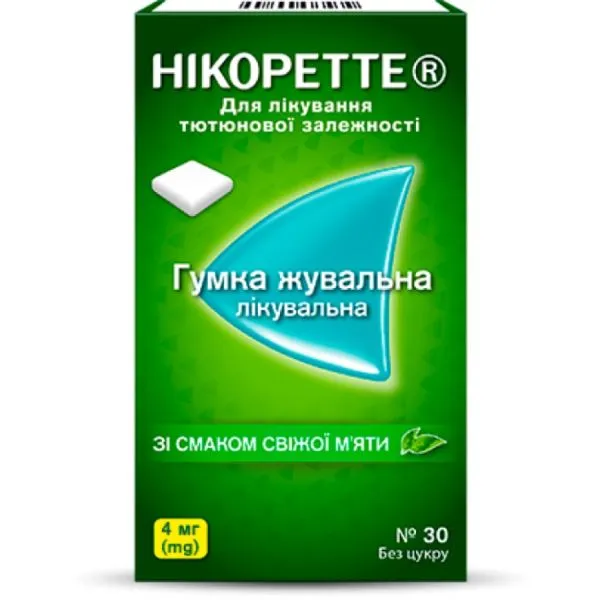
Table of Contents
INSTRUCTION FOR MEDICAL USE OF THE MEDICINAL PRODUCT NICORETTE® FRESHMINT FLAVORED (NICORETTE® FRESHMINT)
Composition:
Active substance: nicotine;
Each therapeutic chewing gum contains a nicotine-polymer complex – 11.0 mg or 22.0 mg, corresponding to 2 mg or 4 mg of nicotine;
Excipients: Core: chewing gum base, xylitol, peppermint oil, anhydrous sodium carbonate, sodium bicarbonate (only in the 2 mg dosage), potassium acesulfame, levomenthol, light magnesium oxide, quinoline yellow (E 104) (only in the 4 mg dosage); Coating: xylitol, peppermint oil, acacia resin, titanium dioxide (E 171), carnauba wax, quinoline yellow (E 104) (only in the 4 mg dosage).
Pharmaceutical form. Therapeutic chewing gum.
Main physicochemical properties: square coated tablets of white color (for 2 mg) or light yellow color (for 4 mg), approximately 15x15x6 mm in size, with a mint odor.
Pharmacotherapeutic group. Medicinal product for treatment of nicotine dependence.
ATC code N07B A01.
Pharmacological properties.
Pharmacodynamics
Sudden cessation of nicotine-containing products after a prolonged period of daily use leads to a characteristic withdrawal syndrome: dysphoria or depression; insomnia; irritability; frustration or aggression; restlessness; difficulty concentrating; impatience; cardiovascular disturbances; increased appetite or weight gain. Nicotine dependence is also a prominent clinical symptom observed during withdrawal syndrome.
Nicorette® with fresh mint flavor prevents the development of withdrawal syndrome in individuals who have stopped smoking; helps prevent the development of nicotine dependence.
Nicorette® with fresh mint flavor, when used at the appropriate dose, helps control body weight after smoking cessation.
Pharmacokinetics
The amount of absorbed nicotine depends on the quantity of nicotine released and lost through swallowing. During chewing, nicotine is slowly released and absorbed through the oral cavity. Systemic bioavailability of swallowed nicotine is low due to its hepatic metabolism via the so-called "first-pass effect." Rapid attainment of high nicotine concentrations, as observed during smoking, is unlikely with the use of Nicorette®.
Typically, 1.4 mg of nicotine is released from the 2 mg chewing gum or 3.4 mg of nicotine from the 4 mg chewing gum.
Maximum blood concentration is reached after 30 minutes of chewing and at that point is comparable to the concentration achieved 20–30 minutes after smoking a cigarette of average strength.
Clinical Characteristics.
Indications.
Treatment of tobacco dependence by reducing the need for nicotine and alleviating withdrawal symptoms; facilitating smoking cessation in motivated individuals; assisting smokers who are unable to completely quit nicotine dependence to reduce the number of cigarettes smoked.
Contraindications.
Nicorette® with fresh mint flavor is contraindicated in:
- Hypersensitivity to nicotine or any component of the product;
- Recent myocardial infarction (within the past 3 months);
- Unstable or progressing angina pectoris;
- Prinzmetal's angina;
- Severe cardiac arrhythmias;
- Acute stroke.
Interaction with other medicinal products and other forms of interactions.
Smoking (but not nicotine itself) is associated with increased CYP1A2 enzyme activity. After smoking cessation, a decrease in the clearance of substrates of this enzyme may occur. This may lead to increased plasma levels of certain drugs; this phenomenon may also be clinically significant for drugs with a narrow therapeutic window, such as theophylline, tacrine, clozapine, and ropinirole.
Plasma concentrations of other drugs metabolized by CYP1A2 may also increase after smoking cessation; for example, this may occur with imipramine, olanzapine, clomipramine, and fluvoxamine, but data confirming this effect are limited and potential clinical consequences have not been studied.
Limited data suggest that the metabolism of flecainide and pentazocine may also be altered by smoking.
Nicotine may enhance the hemodynamic effects of adenosine, such as increased blood pressure and heart rate, and may also intensify the pain response (chest pain resembling angina) caused by adenosine administration.
Special precautions for use
In smokers who wear removable dentures, difficulties may occur when chewing Nicorette® Fresh Mint flavored chewing gum. The chewing gum may adhere to dental prostheses and occasionally damage them.
Nicorette® Fresh Mint flavored chewing gum should be used with caution in patients with severe cardiovascular disorders: peripheral arterial occlusive disease, cerebrovascular disorders, decompensated heart failure, stable angina pectoris, vascular spasm, or uncontrolled hypertension.
The physician should carefully weigh the risks and benefits in patients with the following conditions.
Smokers with recent myocardial infarction (˂ 4 weeks), unstable or progressive angina including Prinzmetal’s angina, severe cardiac arrhythmias, uncontrolled arterial hypertension, or recent stroke should be encouraged to quit smoking without pharmacological treatment (e.g., through counseling). If this approach fails, use of Nicorette® Fresh Mint flavored chewing gum may be considered. Since safety data in these patient groups are limited, the use of Nicorette® Fresh Mint flavored chewing gum should be strictly under close medical supervision.
Nicorette® Fresh Mint flavored chewing gum should be used with caution in patients with moderate or severe hepatic impairment or severe renal impairment, as clearance of nicotine or its metabolites may be reduced, increasing the risk of adverse effects.
Nicotine, whether from chewing gum or smoking, may exacerbate symptoms in patients with esophagitis, gastric or peptic ulcers. Therefore, Nicorette® Fresh Mint flavored chewing gum should be used with caution in such patients. Cases of ulcerative stomatitis have been reported.
Nicotine, whether from chewing gum or from smoking, promotes the release of catecholamines from the adrenal glands. Therefore, Nicorette® Fresh Mint flavored chewing gum should be used with caution in patients with uncontrolled hyperthyroidism or pheochromocytoma.
Patients with diabetes mellitus who stop smoking and start nicotine replacement therapy should be monitored more closely than usual for blood glucose levels, as reduced nicotine-induced catecholamine release may affect carbohydrate metabolism.
Cessation of smoking may necessitate a reduction in insulin dosage in patients with diabetes mellitus.
Some patients continue to use Nicorette® Fresh Mint flavored chewing gum beyond the recommended duration. However, the potential risk of long-term use of the gum is significantly lower than the continued risk of smoking.
Nicorette® Fresh Mint flavored chewing gum contains xylitol, which may have a laxative effect.
Caloric content: 2.4 kcal/g of xylitol, corresponding to 1.5 kcal and 1.4 kcal per piece (Nicorette® Fresh Mint 2 mg and 4 mg, respectively).
Special precautions for the combination of Nicorette® Fresh Mint flavored chewing gum and Nicorette® transdermal patch are the same as for each product individually (see the medical instructions for use of Nicorette® transdermal patch).
Seizures: Caution is advised in patients receiving anticonvulsant therapy or with a history of epilepsy, as seizures have been reported in association with nicotine use.
Potential for dependence. Dependence on nicotine-containing products may occur. However, it is rare, less harmful to health than tobacco-related nicotine dependence, and easier to overcome.
Use during pregnancy or breastfeeding
Nicotine crosses the placenta and affects fetal respiratory activity and circulation. The effect on circulation is dose-dependent. Smoking during pregnancy may lead to reduced birth weight and increase the risk of pregnancy complications and perinatal mortality.
Cessation of nicotine use is the single most effective measure to improve the health of a pregnant smoker and her child, and the earlier this occurs, the better.
Pregnant women should be advised to quit smoking without using nicotine replacement therapy.
However, if a pregnant woman is unable to quit smoking without pharmacological support (or this is considered unlikely), nicotine replacement therapy may be used, as the risk to the fetus is lower than that associated with continued smoking.
For nicotine replacement therapy in pregnant women, intermittent-dose formulations of nicotine are preferred, due to the possibility of reducing nicotine exposure. However, in cases of nausea and/or vomiting, patches may be necessary and should be removed at night, when the fetus is usually not exposed to nicotine, if possible.
Smoking may cause significant harm to the fetus or infant, and therefore should be discontinued. The risk of Nicorette® use during pregnancy has not been fully studied. Continuing to smoke poses a greater threat to the fetus than using nicotine-containing replacement therapies.
Nicorette® chewing gum may be used during pregnancy only in cases of very high nicotine dependence and only on a physician’s recommendation.
Nicotine freely passes into breast milk in amounts that may adversely affect the infant, even when used at therapeutic doses. Therefore, breastfeeding women should be advised to quit smoking without using nicotine replacement therapy. If this is not possible, use of Nicorette® Fresh Mint flavored chewing gum in breastfeeding women may be considered only on a physician’s recommendation after careful risk-benefit assessment. Nicotine use should be avoided during breastfeeding. The relatively small amount of nicotine found in breast milk during nicotine replacement therapy is less dangerous to the infant than passive smoking. Intermittent-dose nicotine formulations may minimize nicotine levels in breast milk and allow breastfeeding when nicotine levels are lowest.
The product should be taken as soon as possible after breastfeeding.
Tobacco smoking in women delays conception and reduces the success rate of in vitro fertilization, significantly increasing the risk of infertility.
In men, tobacco smoking reduces sperm production, increases oxidative stress, damages DNA, and impairs sperm fertilizing capacity.
There are no reliable data on the effects of nicotine on these parameters in humans.
Effects on reproductive function
Unlike the well-known adverse effects of tobacco smoking on conception and pregnancy in humans, the corresponding effects of nicotine used for therapeutic purposes are unknown. Currently, there are no specific recommendations regarding the need for female contraception in such cases. For women trying to conceive, abstaining from both tobacco smoking and nicotine replacement therapy is more appropriate. Although tobacco smoking may negatively affect male fertility, there is no evidence supporting the need for contraceptive use by men during nicotine replacement therapy.
Ability to affect reaction speed when driving or operating machinery
Caution is advised when driving or operating machinery, as use of Nicorette® may occasionally cause dizziness.
Method of Administration and Dosage.
Nicorette® 2 mg chewing gum can be used as monotherapy or in combination with Nicorette® transdermal patch.
Nicorette® 4 mg chewing gum is used as monotherapy.
Do not eat or drink while chewing the gum. Beverages that lower the pH of the oral cavity, such as coffee, juice, or mineral water, may reduce nicotine absorption in the mouth. To achieve maximum nicotine absorption, avoid consuming these beverages within 15 minutes before using the gum.
Adults and elderly patients
Use of Nicorette® Freshmint Flavored Chewing Gum as Monotherapy
Each Nicorette® Freshmint Flavored chewing gum tablet should be slowly chewed for approximately 30 minutes, with pauses. Chew the gum until a strong taste of nicotine or a moderate burning sensation is felt; then stop chewing, place the gum between the gums and cheek until the taste and burning sensation disappear, then slowly chew again and repeat the procedure.
Depending on the intensity of nicotine dependence, chewing gum with different concentrations of active ingredient may be used. For mild dependence, use 2 mg chewing gum. For heavy smokers (Fagerström Test for Nicotine Dependence score ≥ 6 points, or those who smoke more than 20 cigarettes per day or smoke their first cigarette within 30 minutes after waking up), or patients who cannot quit smoking using 2 mg Nicorette® Freshmint Flavored chewing gum, it is recommended to start treatment with the 4 mg dosage form.
At the beginning of treatment, one tablet every two hours may be used. Usually, 8–12 chewing gums per day are sufficient. Do not use more than 24 tablets per day (for the 4 mg dose) or more than 30 tablets per day (for the 2 mg dose).
Complete Smoking Cessation
The duration of treatment is individually determined. In case of complete smoking cessation, use Nicorette® for at least 3 months. Then gradually reduce the number of chewing gums used. Discontinue the product when daily consumption decreases to 1–2 tablets.
Regular use of Nicorette® Freshmint Flavored chewing gum for more than 12 months is not recommended, although some former smokers may require longer treatment to prevent relapse. Keep several chewing gums on hand in case of sudden urge to smoke.
Psychological counseling and support generally help achieve success.
Smoking Reduction
If smoking cessation is being achieved gradually by reducing the number of cigarettes smoked, chew the gum between smoking episodes, immediately when an irresistible urge to smoke arises, in order to maximize the intervals between smoking episodes and thereby reduce daily cigarette consumption. If reduction in the number of smoked cigarettes is not achieved within 6 weeks, therapeutic measures should be reassessed.
An attempt to quit smoking should be made when the patient feels ready, but no later than 6 months after starting treatment. If significant smoking cessation is not achieved within 9 months of starting treatment, the treatment regimen should be reviewed.
Regular use of Nicorette® Freshmint Flavored chewing gum for more than 12 months is not recommended, although some former smokers may require longer treatment to prevent relapse. Keep several chewing gums on hand in case of sudden urge to smoke.
Psychological counseling and support generally help achieve success.
Temporary Abstinence
To prevent symptoms of temporary abstinence, it is recommended to use Nicorette® chewing gum during periods when the patient does not smoke, for example, in areas where smoking is prohibited or in other situations when the patient is unable to smoke and experiences a sudden urge to smoke.
Use of 2 mg Nicorette® Freshmint Flavored Chewing Gum in Combination with Nicorette® Transdermal Patch
Patients who still experience an urge to smoke despite using nicotine-containing products, or who have not achieved success with Nicorette® chewing gum alone, may use Nicorette® transdermal patch together with Nicorette® Freshmint Flavored chewing gum to rapidly relieve sudden cravings.
Initial Combination Therapy
Begin treatment with one 25 mg/16 hours patch per day in combination with 2 mg Nicorette® Freshmint Flavored chewing gum. Use at least 4 chewing gums (2 mg) per day. In most cases, 5–6 tablets per day are sufficient. Do not use more than 24 tablets per day. The usual duration of treatment is 6–12 weeks. Then gradually reduce the nicotine dose.
Apply the patch in the morning and remove it before bedtime. Apply the patch to a dry, clean, hairless, and undamaged area of skin on the trunk, arms, or thighs.
To reduce the risk of local irritation, apply the Nicorette® transdermal patch alternately to different areas of the skin.
After applying the patch, wash hands thoroughly to avoid eye irritation from residual nicotine on fingers.
Discontinuation of Nicotine Products
Two regimens are possible (see table below).
- Regimen with continued use of transdermal patch. Use a lower-strength patch, i.e., 15 mg/16 hours for 3–6 weeks, followed by 10 mg/16 hours for another 3–6 weeks, in combination with the initial dose of 2 mg Nicorette® Freshmint Flavored chewing gum. Then gradually reduce the number of chewing gum tablets over 12 months.
- Regimen without continued use of transdermal patch. Discontinue the transdermal patch and gradually reduce the number of chewing gum tablets over 12 months.
Table of Recommended Doses:
| Time period |
Transdermal patch |
2 mg chewing gum |
| First 6-12 weeks |
1 patch with 25 mg/16 hours per day |
As needed. Recommended 5-6 pieces per day |
| Scheme 1. Scheme with subsequent use of transdermal patch. |
||
| Next 3-6 weeks |
1 patch with 15 mg/16 hours per day |
Continue using chewing gum as needed. |
| Further 3-6 weeks |
1 patch with 10 mg/16 hours per day |
Continue using chewing gum as needed. |
| Up to 12 months |
---- |
Gradually reduce the number of chewing gum pieces. |
| Scheme 2. Scheme without subsequent use of transdermal patch. |
||
| Up to 12 months |
---- |
Gradually reduce the number of chewing gum pieces. |
Children. Experience with the use of Nicorette® in children is lacking. Nicotine chewing gum should not be used in individuals under 18 years of age without medical supervision.
Overdose.
Overdose may occur if the patient has very low tolerance to nicotine at the beginning of treatment or simultaneously receives nicotine from other sources (e.g., prolonged tobacco smoking). It is known that nicotine dependence, such as in smokers, leads to increased tolerance compared to non-smokers. The acute lethal dose of nicotine in children (following ingestion of tobacco from cigarettes into the oral cavity) is 40−60 mg, and 0.8 to 1.0 mg/kg in non-smoking adults.
Excessive use of nicotine through chewing gum and/or smoking may cause symptoms of overdose. The risk of poisoning from swallowing chewing gum is very low, as without chewing, absorption is very slow and incomplete.
Symptoms of overdose are the same as those observed in acute nicotine poisoning, namely: nausea, increased salivation, abdominal pain, diarrhea, sweating, headache, dizziness, hearing disturbances, and pronounced general weakness. With high-dose exposure, in addition to the above symptoms, arterial hypotension, weak and irregular pulse, dyspnea, prostration, vascular collapse, and generalized seizures may occur.
Nicotine doses that are well tolerated by adult smokers during treatment may cause severe poisoning symptoms in young children, potentially leading to fatal outcomes.
Management in case of overdose
Nicotine administration should be immediately discontinued and symptomatic treatment initiated. Activated charcoal reduces nicotine absorption from the gastrointestinal tract.
Adverse Reactions.
Possible consequences of smoking cessation: these include emotional and cognitive effects such as dysphoria or depressed mood, nocturnal awakenings, insomnia, irritability or aggression, frustration or anger, anxiety, restlessness, difficulty concentrating, and agitation. Physical effects of smoking cessation may also occur, such as decreased heart rate, increased appetite or weight gain, dizziness or pre-syncopal symptoms, cough, constipation, bleeding gums or aphthous ulcers, or nasopharyngitis. In addition, clinically significant nicotine craving may lead to frequent urges to smoke.
Nicorette® Fresh Mint Flavour chewing gum may cause adverse reactions similar to those caused by nicotine from other sources.
Excessive use of Nicorette® Fresh Mint Flavour, chewing gum, medicinal, by non-smokers may result in nausea, weakness, or headache. Excessive swallowing of dissolved nicotine may initially cause hiccups.
Nicotine contained in the chewing gum may sometimes cause mild throat irritation at the beginning of treatment; however, most patients adapt to this with continued use.
Increased salivation may occur during use of the product.
Allergic reactions (including symptoms of anaphylactic shock) may rarely occur during use of Nicorette® Fresh Mint Flavour, chewing gum, medicinal.
Individuals prone to gastrointestinal problems may initially experience mild gastrointestinal discomfort or heartburn when using the 4 mg dose of Nicorette® Fresh Mint Flavour chewing gum. These symptoms usually resolve with slower chewing and switching to the 2 mg dose of Nicorette® Fresh Mint Flavour chewing gum (used more frequently, if necessary).
The likelihood and severity of adverse reactions depend on the dose.
Most adverse reactions occur within the first 3–4 weeks after initiation of treatment. Side effects of nicotine chewing gum are mainly due to incorrect chewing technique or dose-dependent pharmacological effects of nicotine.
Adverse events were reported with the following frequencies: very common ≥ 1/10; common ≥ 1/100, < 1/10; uncommon ≥ 1/1,000, < 1/100; rare ≥ 1/10,000, < 1/1,000; very rare < 1/10,000, frequency not known (cannot be estimated based on available data).
Psychiatric disorders:
Uncommon – sleep disturbances, including unusual dreams.
Nervous system disorders:
Common – dizziness, headache, burning sensation at site of application;
Uncommon – paraesthesia, oral paraesthesia, oral hypaesthesia, hot flushes, hyperhidrosis, fatigue, asthenia, malaise, eye disorders, dysphonia, dysgeusia;
Frequency not known – seizures*.
Cardiovascular system disorders:
Uncommon – palpitations, tachycardia, hypertension, dyspnoea, hot flushes;
Very rare – reversible atrial fibrillation.
Respiratory system disorders:
Very common – mouth or throat pain, throat irritation;
Common – cough;
Uncommon – bronchospasm, sneezing, chest pain and discomfort, nasal congestion, dyspnoea, dysphonia, throat tightness, oropharyngeal pain.
Gastrointestinal disorders:
Common – increased salivation, discomfort, hiccups, nausea, vomiting, heartburn, digestive disturbances, abdominal pain, dry mouth sensation, flatulence, increased salivation, stomatitis, dyspepsia, diarrhoea;
Uncommon – dysphagia, belching, vomiting urge, burning sensation, glossitis, blistering and desquamation of oral mucosa, oral paraesthesia;
Rare – oral hypaesthesia, vomiting urge;
Frequency not known – dry throat sensation, gastrointestinal discomfort, lip pain.
Eye disorders:
Frequency not known – blurred vision, increased lacrimation.
Skin and subcutaneous tissue disorders:
Uncommon – erythema, urticaria, hyperhidrosis, skin rash, pruritus.
General disorders and administration site conditions:
Common – oral and pharyngeal mucosal ulcers, jaw muscle pain, fatigue;
Uncommon – chest discomfort and pain, asthenia, malaise;
Rare – allergic reactions, including angioneurotic oedema, oral pain, dry mouth, throat tightness, glossitis, blistering of oral mucosa, stomatitis;
Frequency not known – lip pain.
Immune system disorders:
Anaphylactic reactions, hypersensitivity reactions, including allergic reactions such as rash and pruritus.
Musculoskeletal and connective tissue disorders:
Uncommon – jaw pain;
Frequency not known – muscle tension.
Some of these symptoms, such as dizziness, headache, irritability, aggression, dysphoria, depressed mood, restlessness, poor concentration, intolerance, increased appetite, weight gain, intense craving for smoking, decreased heart rate, and sleep disturbances, may be manifestations of withdrawal syndrome caused by smoking cessation. The frequency of aphthous stomatitis may increase. The relationship of this symptom to the use of chewing gum has not been established.
The chewing gum may adhere to denture bases and bridges and, in rare cases, may damage them.
Adverse effects that may occur during combination therapy (chewing gum and transdermal patch) differ only by local adverse reactions related to the dosage form of the medicinal product. The frequency of adverse effects is provided in the instructions for medical use of the respective medicinal products.
*Seizures have been reported in patients receiving anticonvulsant therapy or with a history of epilepsy.
Reporting of Adverse Reactions
Reporting suspected adverse reactions after medicine authorization is important. It allows continued monitoring of the benefit-risk balance of the medicine. Healthcare professionals and patients, as well as their legal representatives, are encouraged to report any suspected adverse reactions and lack of efficacy via the Automated Pharmacovigilance Information System at: https://aisf.dec.gov.ua.
Shelf life. 3 years.
Storage conditions. Store at temperatures not exceeding 25 °C, in a place inaccessible to children.
Packaging. 15 chewing gums per blister; 2 blisters per cardboard pack.
Prescription status. Over-the-counter.
Manufacturer.
McNeil AB, Sweden.
Manufacturer's address.
Norrbroplatsen 2, Helsingborg, 25442, Sweden.
Marketing Authorization Holder.
McNeil AB, Sweden.
Address of Marketing Authorization Holder.
Box 941, Helsingborg, 25109, Sweden.
Representative of the Marketing Authorization Holder.
LLC "Johnson & Johnson Ukraine", Ukraine.
Address of the Representative.
32/2 Knyaziv Ostrozkykh St., Kyiv, 01010, Ukraine.
In case of adverse reactions, please contact:
+38 (044) 498 0888
+38 (044) 498 7392