Nifedipine
Ukraine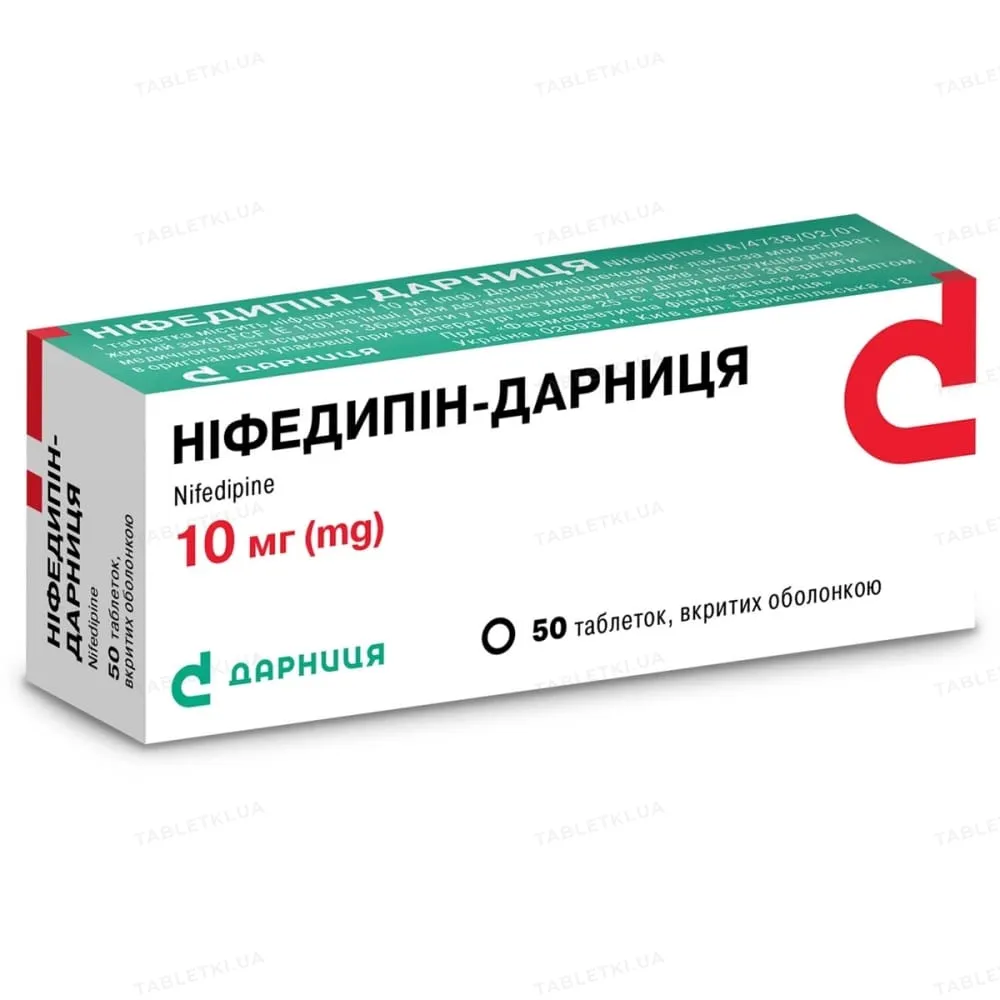
Table of Contents
INSTRUCTIONS FOR MEDICAL USE OF THE MEDICINAL PRODUCT NIFEDIPINE (NIFEDIPINE)
Composition:
Active substance: nifedipine;
1 tablet contains nifedipine 10 mg or 20 mg;
Excipients: lactose monohydrate, potato starch, microcrystalline cellulose, povidone, sodium lauryl sulfate, magnesium stearate, hypromellose (hydroxypropylmethylcellulose), polysorbate 80, titanium dioxide (E 171), polyethylene glycol 6000, talc, quinoline yellow (E 104).
Pharmaceutical form. Coated tablets.
Main physicochemical characteristics: yellow, round, film-coated tablets with convex upper and lower surfaces. When broken and examined under a magnifying glass, the core surrounded by a single continuous layer is visible.
Pharmacotherapeutic group. Selective calcium antagonists with predominant vascular effect. Dihydropyridine derivatives.
ATC code C08CA05.
Pharmacological properties.
Pharmacodynamics.
Nifedipine is a selective calcium channel blocker, a dihydropyridine derivative. It inhibits calcium influx into cardiomyocytes and vascular smooth muscle cells. It has antianginal and antihypertensive effects. It reduces vascular smooth muscle tone. It dilates coronary and peripheral arteries, decreases total peripheral vascular resistance and arterial blood pressure, and slightly reduces myocardial contractility. It decreases afterload and myocardial oxygen demand, thereby improving coronary blood flow. It does not suppress myocardial conduction. With long-term use, nifedipine may prevent the formation of new atherosclerotic plaques in coronary vessels. At the beginning of nifedipine therapy, transient reflex tachycardia and increased cardiac output may occur, which do not counteract the vasodilation caused by the drug. Nifedipine enhances the excretion of sodium and water from the body. In Raynaud's syndrome, the drug may prevent or alleviate vasospasm in the extremities.
Pharmacokinetics.
After oral administration, nifedipine is rapidly and almost completely (more than 90%) absorbed from the gastrointestinal tract. Bioavailability is approximately 50%. Maximum plasma concentration is reached within 1–3 hours after administration. Elimination half-life is 2–5 hours. It is excreted mainly in the urine as inactive metabolites. Time to onset of clinical effect: 20 minutes – after oral administration, 5 minutes – after sublingual administration. Duration of clinical effect – 4–6 hours.
Clinical characteristics.
Indications.
Arterial hypertension; ischemic heart disease: chronic stable angina, vasospastic angina (Prinzmetal's angina).
Contraindications.
- Hypersensitivity to nifedipine or any component of the medicinal product;
- hypersensitivity to other dihydropyridines;
- cardiogenic shock;
- severe aortic stenosis;
- porphyria;
- condition during myocardial infarction or within one month after it;
- secondary prevention of myocardial infarction;
- combination with rifampicin (due to inability to achieve effective plasma levels of nifedipine as a result of enzyme induction);
- unstable angina;
- inflammatory bowel diseases or Crohn’s disease.
Interaction with other medicinal products and other forms of interaction.
When used concomitantly with antihypertensive agents, beta-blockers, diuretics, nitroglycerin, and prolonged-release isosorbide, the possibility of synergistic action of nifedipine should be considered.
Digoxin
Nifedipine may increase digoxin plasma concentrations. Plasma digoxin levels should be monitored and doses adjusted at the beginning of nifedipine therapy, when increasing the dose, and upon discontinuation of nifedipine treatment.
Magnesium sulfate
Nifedipine may enhance the toxic effect of magnesium sulfate, leading to neuromuscular blockade. Concomitant use of nifedipine and magnesium sulfate is dangerous and potentially life-threatening; therefore, co-administration of these medicinal products is not recommended.
Cimetidine
Concomitant use of nifedipine and cimetidine may lead to increased nifedipine serum concentration and enhanced hypotensive effect of nifedipine. Cimetidine inhibits the activity of cytochrome isoenzyme CYP3A4. Nifedipine should be administered cautiously with gradual dose escalation in patients already taking cimetidine.
Quinupristin, dalbopristin may increase the plasma level of nifedipine.
Phenytoin, carbamazepine
Administration of nifedipine may lead to increased serum concentrations of carbamazepine and phenytoin. Patients already receiving nifedipine together with phenytoin or carbamazepine should be under constant medical supervision. If signs of toxicity or increased serum concentrations of carbamazepine and phenytoin occur, the dose of these medicinal products should be reduced.
Quinidine
Nifedipine may cause a decrease in quinidine serum concentration, whereas quinidine may increase patient sensitivity to the effect of nifedipine. If nifedipine therapy is initiated in a patient already taking quinidine, attention should be paid to adverse effects of nifedipine. Quinidine serum levels should be monitored before starting nifedipine therapy and upon its discontinuation; quinidine dosage should also be adjusted accordingly.
Theophylline
During concomitant use of nifedipine and theophylline, theophylline plasma concentration may increase, decrease, or remain unchanged. Monitoring of theophylline plasma concentration is recommended, and its dose should be adjusted if necessary.
Rifampicin
Concomitant use of rifampicin and nifedipine may result in decreased nifedipine plasma concentration and, consequently, reduced therapeutic effect. If angina attacks or elevated blood pressure occur during concomitant use of nifedipine and rifampicin, the nifedipine dose should be increased.
Diltiazem reduces nifedipine dissolution, which may necessitate dose reduction.
Vincristine
Concomitant administration of vincristine is associated with impaired elimination of vincristine.
Cephalosporin
Concomitant use of nifedipine and cephalosporin leads to increased cephalosporin levels in plasma.
Itraconazole, erythromycin, clarithromycin
Concomitant use of nifedipine and itraconazole (as well as other azole antifungals, erythromycin, and clarithromycin, which inhibit cytochrome isoenzyme CYP3A4 activity) may lead to increased nifedipine serum concentration and enhanced effect. If adverse effects of nifedipine occur, its dose should be reduced (if possible) or the antifungal agent discontinued.
Cyclosporine, ritonavir, or saquinavir
Serum concentration and effect of nifedipine may also be enhanced when used concomitantly with cyclosporine, ritonavir, or saquinavir (these medicinal products inhibit the activity of cytochrome isoenzyme CYP3A4). If adverse effects of nifedipine occur, its dose should be reduced.
Tacrolimus
In liver transplant patients receiving tacrolimus and nifedipine concomitantly, increased serum concentrations of tacrolimus have been observed (tacrolimus is metabolized via cytochrome CYP3A4). The significance and clinical consequences of this interaction have not been fully investigated.
Fentanyl
In patients receiving nifedipine, fentanyl may cause arterial hypotension. Nifedipine should be discontinued at least 36 hours prior to elective surgery involving fentanyl anesthesia.
Anticoagulants such as coumarins
Increased prothrombin time has been observed in patients receiving anticoagulants such as coumarins after administration of nifedipine. The significance of this interaction has not been fully studied.
Methacholine
Nifedipine may alter bronchial response to methacholine. Nifedipine treatment should be discontinued prior to performing a non-specific bronchoprovocation test with methacholine (if possible).
Experience with the calcium antagonist nimodipine suggests that the following interactions are possible for nifedipine: carbamazepine, phenobarbital – reduced plasma levels of nifedipine; concomitant use of macrolides (particularly erythromycin), fluoxetine, nefazodone, valproic acid – increased plasma levels of nifedipine.
HIV protease inhibitors
Clinical studies evaluating the potential interaction between nifedipine and certain HIV protease inhibitors (e.g., ritonavir) have not been conducted. Medicinal products of this class are known to inhibit the cytochrome P450 3A4 system. In addition, these agents inhibit in vitro CYP3A4-mediated metabolism of nifedipine. When HIV protease inhibitors are used concomitantly with nifedipine, a significant increase in its plasma concentration cannot be excluded due to reduced first-pass metabolism and decreased elimination.
Azole antifungals
Studies on the interaction between nifedipine and certain azole antifungal agents (e.g., ketoconazole) have not yet been conducted. Medicinal products of this class inhibit the cytochrome P450 3A4 system. When administered orally together with nifedipine, a significant increase in systemic bioavailability of nifedipine cannot be excluded due to reduced first-pass metabolism.
Antihypertensive medicinal products
Concomitant use of nifedipine with the following antihypertensive medicinal products may lead to enhanced antihypertensive effect:
- diuretics;
- β-adrenoblockers (cardiac arrest may also occur in individual cases);
- angiotensin-converting enzyme (ACE) inhibitors;
- angiotensin receptor antagonists;
- other calcium antagonists;
- α-adrenoblockers;
- phosphodiesterase (PDE) type 5 inhibitors;
- α-methyldopa.
Grapefruit juice
Grapefruit juice may increase nifedipine serum concentration and enhance its hypotensive effect and frequency of vasodilatory adverse effects.
Other types of interaction
Administration of nifedipine may lead to falsely elevated results in spectrophotometric determination of vanillylmandelic acid concentration in urine (this effect is not observed when using high-performance liquid chromatography).
Special precautions for use.
Nifedipine should be prescribed with particular caution to patients undergoing hemodialysis, as well as to those with malignant hypertension or hypovolemia (reduced circulating blood volume), since vasodilation may cause a significant drop in arterial pressure in these patients.
In the treatment of coronary vasospasm during the post-infarction period, nifedipine therapy should be initiated approximately 3–4 weeks after myocardial infarction and only after stabilization of coronary circulation.
Grapefruit juice inhibits the metabolism of nifedipine, leading to increased plasma concentrations of the drug and enhanced hypotensive effect. Administration of nifedipine may result in falsely elevated results when measuring vanillylmandelic acid concentration in urine by spectrophotometric methods (however, this effect is not observed when using high-performance liquid chromatography).
Caution is required when administering the drug to patients with significant narrowing of the gastrointestinal tract due to the possible development of obstructive symptoms. Very rarely, bezoars may occur, which might require surgical intervention.
In isolated cases, obstructive symptoms have been reported even in the absence of prior gastrointestinal disorders.
The drug must not be used in patients with an intestinal pouch (ileostomy following proctocolectomy).
Administration of the drug may lead to false-positive findings on X-ray examinations using barium contrast medium (e.g., filling defects interpreted as polyps).
Patients with impaired liver function require careful monitoring, and in severe cases, dose reduction.
Nifedipine is metabolized via the cytochrome P450 3A4 system; therefore, drugs that inhibit or induce this enzyme system may alter the first-pass metabolism or clearance of nifedipine.
Drugs that are weak or moderate inhibitors of the cytochrome P450 3A4 system and may lead to increased plasma concentrations of nifedipine include, for example:
- macrolide antibiotics (e.g., erythromycin);
- HIV protease inhibitors (e.g., ritonavir);
- azole antifungals (e.g., ketoconazole);
- antidepressants nefazodone and fluoxetine;
- quinupristin/dalfopristin;
- valproic acid;
- cimetidine.
When nifedipine is co-administered with these drugs, arterial pressure should be monitored and, if necessary, the dose of nifedipine should be reduced.
Some in vitro experiments have demonstrated an association between the use of calcium antagonists, particularly nifedipine, and reversible biochemical changes in spermatozoa that impair their fertilizing capacity. If attempts at in vitro fertilization are unsuccessful and no other explanations are apparent, calcium antagonists such as nifedipine may be considered a possible contributing factor.
The drug should not be used if there is any suspicion of a causal relationship between prior nifedipine use and ischemic pain. In patients with angina, attacks may occur more frequently, and their duration and intensity may increase, especially at the beginning of treatment.
Nifedipine-containing medications are not used in patients experiencing an acute angina attack.
Administration of nifedipine in diabetic patients may require adjustment of antidiabetic therapy.
The medication contains lactose. If you have been diagnosed with intolerance to certain sugars, consult your physician before taking this medication.
The drug should be administered with caution in patients with very low blood pressure (severe arterial hypotension with systolic blood pressure below 90 mm Hg) and in those with marked cardiac weakness (decompensated heart failure).
Nifedipine may be used in cases of severe arterial hypotension (systolic pressure below 90 mm Hg), severe cerebral circulation disorders, marked heart failure, severe aortic stenosis, diabetes mellitus, and impaired liver or kidney function only under continuous clinical supervision, avoiding high doses of the drug.
Particular caution is required when dosing the drug in elderly patients (over 60 years of age).
Use during pregnancy or breastfeeding.
Nifedipine is contraindicated during pregnancy up to the 20th week.
Use of nifedipine during pregnancy after the 20th week requires careful individual risk-benefit assessment and should only be considered if all other treatment options are impossible or have proven ineffective.
Careful monitoring of blood pressure is required when nifedipine is administered concomitantly with intravenous magnesium sulfate, as there is a risk of a sudden drop in blood pressure, which may endanger both the mother and the fetus.
Nifedipine passes into breast milk. Due to the lack of data on the effects of nifedipine in infants, breastfeeding must be discontinued prior to initiating nifedipine therapy.
Ability to affect reaction speed when driving or operating machinery.
Use of the drug is not recommended when driving vehicles or operating other potentially hazardous machinery.
Method of Administration and Dosage.
The dosage and duration of treatment are determined individually by a physician, taking into account the severity of the disease and the patient's response to therapy.
Depending on the clinical picture, the maintenance dose should be introduced gradually in each individual case. In patients with impaired liver function, careful monitoring may be required, and in severe cases—reduction of the dose.
For the treatment of ischemic heart disease, it is recommended to take 1 tablet (20 mg strength) or 2 tablets (10 mg strength) of the drug twice daily (40 mg/day).
If higher doses of the drug are required, they should be increased gradually up to the maximum dose of 60 mg/day.
For the treatment of hypertension with Nifedipine, it is recommended to take 1 tablet (20 mg strength) or 2 tablets (10 mg strength) twice daily (40 mg/day).
When Nifedipine is used concomitantly with CYP3A4 inhibitors or CYP3A4 inducers, dose adjustment of nifedipine or discontinuation of nifedipine may be necessary.
Due to the pronounced anti-ischemic and antihypertensive effects of the drug, it should be discontinued gradually, especially when high doses are used.
Tablets should be swallowed whole with a small amount of liquid. The drug may be administered independently of food intake.
Consumption of grapefruit juice should be avoided during treatment with this drug.
The recommended interval between tablet administrations is 12 hours (not less than 6 hours).
Children.
The drug is not intended for use in children (under 18 years of age).
Overdose.
Symptoms: headache, facial flushing, prolonged systemic hypotension, absence of pulse in peripheral arteries. In severe cases, tachycardia or bradycardia, sinoatrial node dysfunction, atrioventricular conduction delay, hyperglycemia, metabolic acidosis and hypoxia, collapse with loss of consciousness, cardiogenic shock accompanied by pulmonary edema, and impaired consciousness up to coma may occur.
Treatment. Emergency measures should primarily aim at eliminating the drug from the body and restoring stable hemodynamics. Continuous monitoring of cardiovascular and respiratory functions, blood plasma glucose and electrolyte levels (potassium, calcium), daily diuresis, and circulating blood volume is required in patients. Administration of calcium-containing drugs may be indicated. If calcium administration is insufficiently effective, sympathomimetics such as dopamine or noradrenaline should be used to stabilize arterial pressure. Doses of these drugs should be adjusted according to the therapeutic response achieved. Bradycardia can be corrected with beta-sympathomimetics. In case of life-threatening slowing of heart rate, artificial cardiac pacing is recommended. Additional fluid administration should be approached with extreme caution, as it may increase the risk of cardiac overload.
Since nifedipine is highly bound to plasma proteins and has a relatively small volume of distribution, hemodialysis is ineffective; however, plasmapheresis is recommended.
Side effects.
Side effects are listed by organ systems.
Cardiovascular system: palpitations; tachycardia; at the beginning of therapy in patients with angina pectoris, possible increase in frequency, duration of attacks or worsening of symptoms; cases of asymptomatic myocardial ischemia, exacerbation of existing myocardial ischemia, conduction disorders, chest pain (angina).
Blood and lymphatic system disorders: changes in blood count parameters, thrombocytopenia, anemia, leukopenia, aplastic anemia; agranulocytosis.
Nervous system disorders: headache, dizziness, increased fatigue, weakness; paresthesia, increased excitability, sleep disturbances (insomnia, somnolence, restless sleep), impaired balance, depression; tremor, impaired motor coordination, feeling of uneasiness, dysesthesia, migraine, loss of consciousness.
Eye disorders: transient blindness at maximum serum concentration of nifedipine, transient retinal ischemia, excessive lacrimation; decreased visual acuity, eye pain.
Ear and labyrinth disorders: tinnitus.
Respiratory, thoracic and mediastinal disorders: dyspnea; epistaxis; upper respiratory tract infections, cough and nasal congestion; angioneurotic edema.
Gastrointestinal disorders: constipation; diarrhea, nausea, abdominal pain, dry mouth, flatulence; vomiting, gingival hyperplasia, belching; black-colored stools, heartburn, taste disturbances, dysphagia, intestinal obstruction, intestinal ulcer, gastroesophageal sphincter insufficiency.
Renal and urinary disorders: polyuria, nocturia; hematuria, dysuria.
Skin and subcutaneous tissue disorders: rash, pruritus, redness, facial erythema (flushing); urticaria, excessive sweating, chills, purpura; with prolonged use of nifedipine, gingival hyperplasia may occur, which resolves completely after discontinuation of the drug; toxicoderma necrolysis, Stevens-Johnson syndrome, exfoliative dermatitis, polymorphic erythema, photosensitivity reaction, alopecia.
Immune system disorders: allergic reactions, angioneurotic edema; pruritus, urticaria, rash; anaphylactic/anaphylactoid reaction.
Musculoskeletal and connective tissue disorders: back pain, myalgia, joint swelling; gout, arthralgia, arthritis with presence of positive antinuclear antibodies; muscle cramps.
Metabolism and nutrition disorders: hyperglycemia (especially in patients with diabetes mellitus), weight gain, bezoar.
Vascular disorders: swelling of feet, ankles or lower legs, vasodilation; arterial hypotension, symptomatic hypotension, orthostatic hypotension.
Hepatobiliary disorders: cholestasis; toxic-allergic hepatitis, jaundice, transient increase in liver enzyme activity.
Reproductive system and breast disorders: gynecomastia – reversible process, symptoms resolve after discontinuation of nifedipine; erectile dysfunction.
General disorders: malaise, fever, non-specific pain.
Psychiatric disorders: depression, paranoid syndrome, anxiety, decreased libido.
Shelf life.
3 years.
Storage conditions.
Store in original packaging at a temperature not exceeding 25 °C.
Keep out of reach of children.
Packaging.
10 tablets per blister; 5 blisters per cardboard box.
Prescription category.
Prescription only.
Manufacturer.
JSC "Technolog".
Manufacturer's name and address of place of business.
8 Stara Prorizna Street, Uman, Cherkasy region, 20300, Ukraine.