Neurocord
Ukraine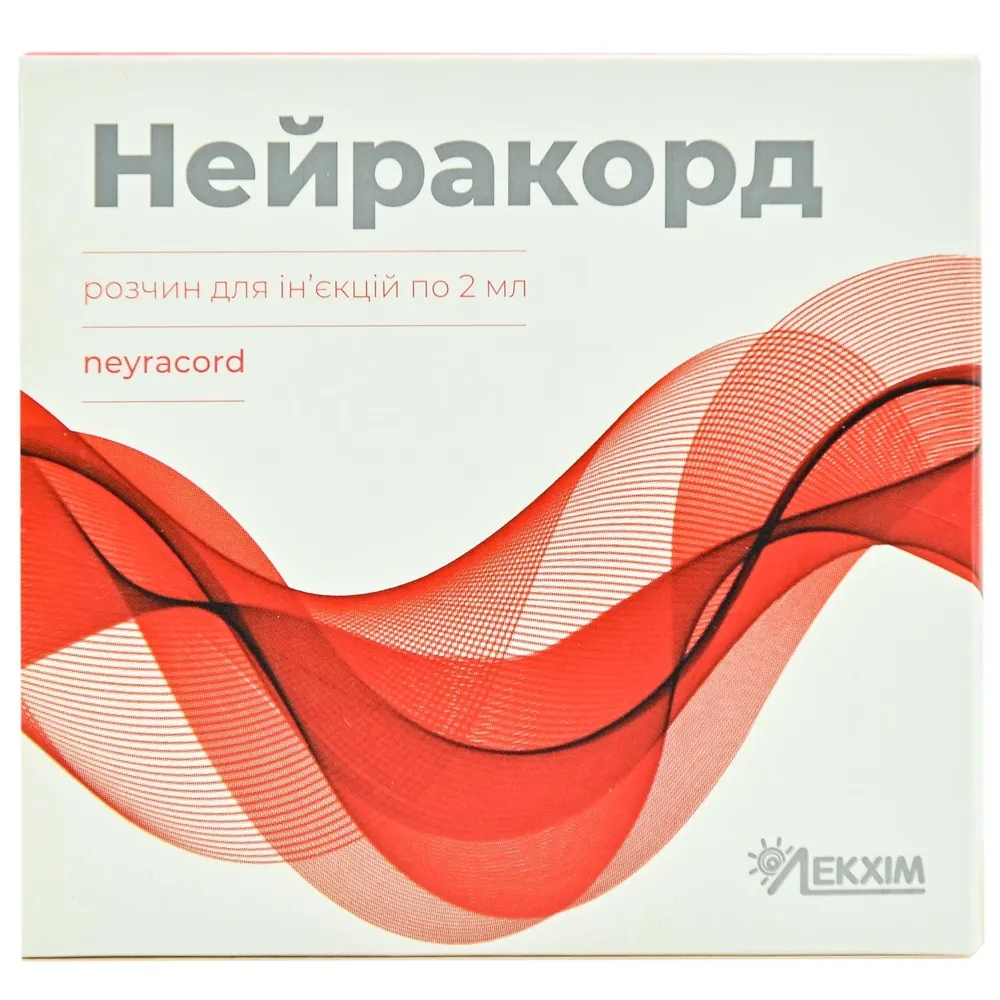
Table of Contents
INSTRUCTIONS for medical use of the medicinal product NEYRACORD (NEYRACORD)
Composition:
Active substances: thiamine hydrochloride, pyridoxine hydrochloride, cyanocobalamin;
1 ml of solution contains thiamine hydrochloride (calculated as 100% substance) 50 mg, pyridoxine hydrochloride (calculated as 100% substance) 50 mg, cyanocobalamin (calculated as 100% substance) 0.5 mg;
Excipients: lidocaine hydrochloride, benzyl alcohol, sodium polyphosphate, potassium ferrocyanide, sodium hydroxide, water for injections.
Pharmaceutical form. Solution for injection.
Main physicochemical properties: clear red-colored liquid.
Pharmacotherapeutic group.
Vitamin B1 preparations in combination with vitamin B6 and/or vitamin B12. ATC code A11D B.
Pharmacological Properties.
Pharmacodynamics.
Neurotropic vitamins of group B exert beneficial effects in inflammatory and degenerative diseases of nerves and the musculoskeletal system. They are used to correct deficiency states, and in high doses possess analgesic properties, improve blood circulation, and normalize the function of the nervous system and hematopoiesis.
Vitamin B1 is a highly important active substance. In the body, vitamin B1 is phosphorylated to form biologically active thiamine diphosphate (cocarboxylase) and thiamine triphosphate (TTP).
Thiamine diphosphate acts as a coenzyme in key carbohydrate metabolism processes, which are crucial for metabolic functions in nervous tissue and influence nerve impulse transmission in synapses. In vitamin B1 deficiency, metabolites accumulate in tissues, primarily lactic and pyruvic acids, leading to various pathological conditions and disorders of nervous system function.
In its phosphorylated form (pyridoxal-5’-phosphate, PALP), vitamin B6 acts as a coenzyme for a number of enzymes involved in general non-oxidative amino acid metabolism. Through decarboxylation, these enzymes participate in the formation of physiologically active amines (adrenaline, histamine, serotonin, dopamine, tyramine); through transamination – in anabolic and catabolic metabolic processes (e.g., glutamate-oxaloacetate transaminase, glutamate-pyruvate transaminase, γ-aminobutyric acid, α-ketoglutarate transaminase), as well as in various processes of amino acid breakdown and synthesis. Vitamin B6 acts at four different sites in tryptophan metabolism. In hemoglobin synthesis, vitamin B6 catalyzes the formation of α-amino-β-keto-adipic acid.
Vitamin B12 is essential for cellular metabolic processes. It influences hematopoietic function (as the extrinsic anti-anemic factor), participates in the formation of choline, methionine, creatinine, and nucleic acids, and exerts analgesic effects.
Pharmacokinetics.
After parenteral administration, thiamine is distributed throughout the body. Approximately 1 mg of thiamine is metabolized daily. Metabolites are excreted in urine. Defosphorylation occurs in the kidneys. The biological half-life of thiamine is 0.35 hours. Thiamine does not accumulate in the body due to its limited lipid solubility.
Vitamin B6 is phosphorylated and oxidized to pyridoxal-5-phosphate. In blood plasma, pyridoxal-5-phosphate and pyridoxal bind to albumin. The transport form is pyridoxal. To cross the cell membrane, pyridoxal-5-phosphate bound to albumin is hydrolyzed by alkaline phosphatase into pyridoxal.
After parenteral administration, vitamin B12 forms transport protein complexes that are rapidly absorbed by the liver, bone marrow, and other proliferative organs. Vitamin B12 enters bile and participates in enterohepatic circulation. Vitamin B12 crosses the placenta.
Clinical characteristics.
Indications.
Systemic neurological disorders caused by a confirmed deficiency of vitamins B1, B6, and B12, which cannot be corrected by dietary means.
Contraindications.
Hypersensitivity to the components of the medicinal product; acute impairment of cardiac conduction; acute decompensated heart failure.
Vitamin B1 is contraindicated in allergic reactions.
Vitamin B6 is contraindicated in peptic ulcer disease of the stomach and duodenum during exacerbation (due to possible increase in gastric juice acidity).
Vitamin B12 is contraindicated in erythremia, erythrocytosis, and thromboembolism.
Lidocaine. Hypersensitivity to lidocaine or to other amide-type local anesthetics, history of epileptiform seizures induced by lidocaine, severe bradycardia, severe arterial hypotension, cardiogenic shock, severe forms of chronic heart failure (Grade II–III), sick sinus syndrome, Wolff-Parkinson-White syndrome, Adams-Stokes syndrome, second- and third-degree atrioventricular (AV) block, hypovolemia, severe hepatic/renal dysfunction, porphyria, myasthenia gravis.
Pregnancy and/or breastfeeding period.
Interaction with other medicinal products and other types of interactions.
Thiamine is completely degraded by sulfite-containing solutions. Other vitamins may be inactivated in the presence of vitamin B1 degradation products. Therapeutic doses of vitamin B6 may reduce the effect of L-dopa. Interactions are also possible with isoniazid, D-penicillamine, and cycloserine.
When lidocaine is administered parenterally, cardiac adverse effects may be potentiated by epinephrine (adrenaline) or norepinephrine (noradrenaline). Interactions with sulfonamides are also possible.
In cases of overdose of local anesthetics, epinephrine and norepinephrine must not be used.
Special precautions for use.
The medicinal product contains lidocaine hydrochloride and therefore should be administered only intramuscularly. Intravenous administration into the bloodstream is not permitted. In case of accidental intravenous injection, depending on the severity of symptoms, medical monitoring or hospital observation may be required. Prolonged use of the medicinal product for more than 6 months may lead to reversible peripheral sensory neuropathy.
The medicinal product contains 23 mg of sodium per 2 ml (1 ampoule) and is therefore considered practically sodium-free.
The medicinal product contains benzyl alcohol.
Benzyl alcohol has been associated with the risk of serious adverse effects ("gasping syndrome") in newborns and young children.
Due to the risk of accumulation and toxicity (metabolic acidosis), large amounts of benzyl alcohol should be used with caution and only when strictly necessary, especially in patients with impaired liver or kidney function, as well as during pregnancy and breastfeeding.
Use during pregnancy or breastfeeding.
The recommended daily intake of vitamin B1 during pregnancy is 1.2 mg in the 2nd trimester and 1.3 mg in the 3rd trimester, and vitamin B6 – 1.9 mg from the 4th month of pregnancy. The medicinal product should be used during pregnancy only if vitamin B1 and B6 deficiency has been confirmed in the patient, as the safety of doses exceeding the recommended levels has not been established.
The recommended daily intake of vitamin B1 during breastfeeding is 1.3 mg, and vitamin B6 – 1.9 mg.
Vitamins B1, B6, and B12 pass into breast milk. High doses of vitamin B6 may reduce milk production.
The medicinal product contains 100 mg of vitamin B6 per 1 ampoule; therefore, it should not be used during pregnancy or breastfeeding.
The decision to use this medicinal product in women during pregnancy or breastfeeding should be made solely by a physician after assessing the benefit/risk ratio.
Ability to affect reaction speed when driving vehicles or operating machinery. The medicinal product does not affect the ability to drive vehicles or operate complex machinery.
Method of Administration and Dosage.
Dosage. In cases of severe and acute pain, to achieve a rapid increase in the drug concentration in the blood, initially administer one injection (2 ml) once daily. After the acute phase has subsided and for mild conditions, administer one injection 2–3 times per week.
During therapy, weekly medical monitoring is recommended.
Every effort should be made to switch to oral therapy as early as possible.
Method of Administration. Injections should be administered deep intramuscularly.
Warning regarding prevention of accidental intravenous injection
Administration is strictly limited to the intramuscular route. Intravenous administration into the circulatory system is not permitted. In case of accidental intravenous injection, depending on the severity of symptoms, medical monitoring or hospital observation is required.
To maintain or continue the therapeutic course of injections or to prevent relapse, oral medications of a similar pharmacotherapeutic group are recommended.
Children. This medicinal product must not be used in children.
Overdose
Vitamin B1 has a wide therapeutic range. Very high doses (more than 10 g) may produce curare-like effects, suppressing nerve impulse conduction.
Vitamin B6 has very low toxicity.
Excessive use of vitamin B6 in doses exceeding 1 g per day over several months may lead to neurotoxic effects.
Administration of more than 2 g per day has been associated with neuropathies accompanied by ataxia and sensory disturbances, cerebral convulsions with changes on electroencephalography, and, in isolated cases, hypochromic anemia and seborrheic dermatitis.
Vitamin B12: following parenteral administration (rarely, after oral administration) of doses higher than recommended, allergic reactions, eczematous skin disorders, and benign forms of acne have been observed.
Prolonged use in high doses may lead to impaired liver enzyme activity, chest pain, and hypercoagulation.
Treatment is symptomatic.
Lidocaine. Symptoms: psychomotor agitation, dizziness, general weakness, decreased arterial pressure, tremor, visual disturbances, tonic-clonic seizures, coma, collapse, possible AV block, central nervous system depression, and respiratory arrest. Initial symptoms of overdose in healthy volunteers occur at a blood lidocaine concentration exceeding 0.006 mg/kg; seizures occur at 0.01 mg/kg.
Treatment: discontinue administration of the drug, oxygen therapy, anticonvulsants, vasoconstrictors (noradrenaline, mesaton), and in case of bradycardia – anticholinergics (0.5–1 mg atropine). Endotracheal intubation, artificial ventilation of the lungs, and resuscitation measures may be required. Dialysis is ineffective.
Adverse Reactions
The frequency of adverse reactions is defined according to the following categories:
Very common: ≥1/10;
Common: ≥1/100 to <1/10;
Uncommon: ≥1/1,000 to <1/100;
Rare: ≥1/10,000 to <1,000;
Very rare: <1/10,000;
Not known: frequency cannot be estimated from the available data.
Immune system disorders: Very rare – hypersensitivity reactions (e.g., exanthema, dyspnea, shock, angioneurotic edema); Not known – benzyl alcohol may cause allergic reactions.
Cardiac disorders: Very rare – tachycardia.
Skin and subcutaneous tissue disorders: Very rare – sweating, acne, skin reactions with pruritus and urticaria.
General disorders and administration site conditions: Not known – systemic reactions due to rapid accumulation (accidental intravenous injection, injection into highly vascularized tissue) or overdose. Dizziness, vomiting, bradycardia, cardiac arrhythmias, seizures. Burning sensation at the injection site.
Reporting of suspected adverse reactions. Reporting suspected adverse reactions after marketing authorization is of great importance. It allows continued monitoring of the benefit-risk balance of the medicinal product. Healthcare professionals and pharmacists, as well as patients or their legal representatives, are encouraged to report all suspected adverse reactions and lack of efficacy through the automated pharmacovigilance information system at the following link: https://aisf.dec.gov.ua.
Shelf life. 2 years.
Storage conditions. Store out of the reach of children. Store in the original packaging at a temperature of 2 to 8 °C.
Incompatibilities.
Thiamine is incompatible with oxidizing and reducing agents: mercury chloride, iodides, carbonates, acetates, tannic acid, iron-ammonium citrate, as well as with sodium phenobarbital, riboflavin, benzylpenicillin, glucose, and metabisulfite, as it becomes inactivated in their presence. Copper accelerates thiamine degradation; in addition, thiamine loses its activity at increased pH values (above 3).
Vitamin B12 is incompatible with oxidizing and reducing agents and with heavy metal salts.
In solutions containing thiamine, vitamin B12, like other B-complex vitamins, is rapidly degraded by thiamine degradation products (low concentrations of iron ions may protect against this). Riboflavin, especially under exposure to light, also exerts a destructive effect; nicotinamide accelerates photolysis, whereas antioxidants exert an inhibitory effect.
Packaging. 2 ml in a vial; 5 vials in a blister pack, 1 blister pack in a carton, or 100 vials in a carton.
Prescription status. Prescription only.
Manufacturer. Private Joint-Stock Company "Lekhym-Kharkiv".
Manufacturer's address and location of manufacturing site.
36 Severina Pototskoho Street, Kharkiv, Kharkiv Oblast, 61115, Ukraine.