Nebutamol®
Ukraine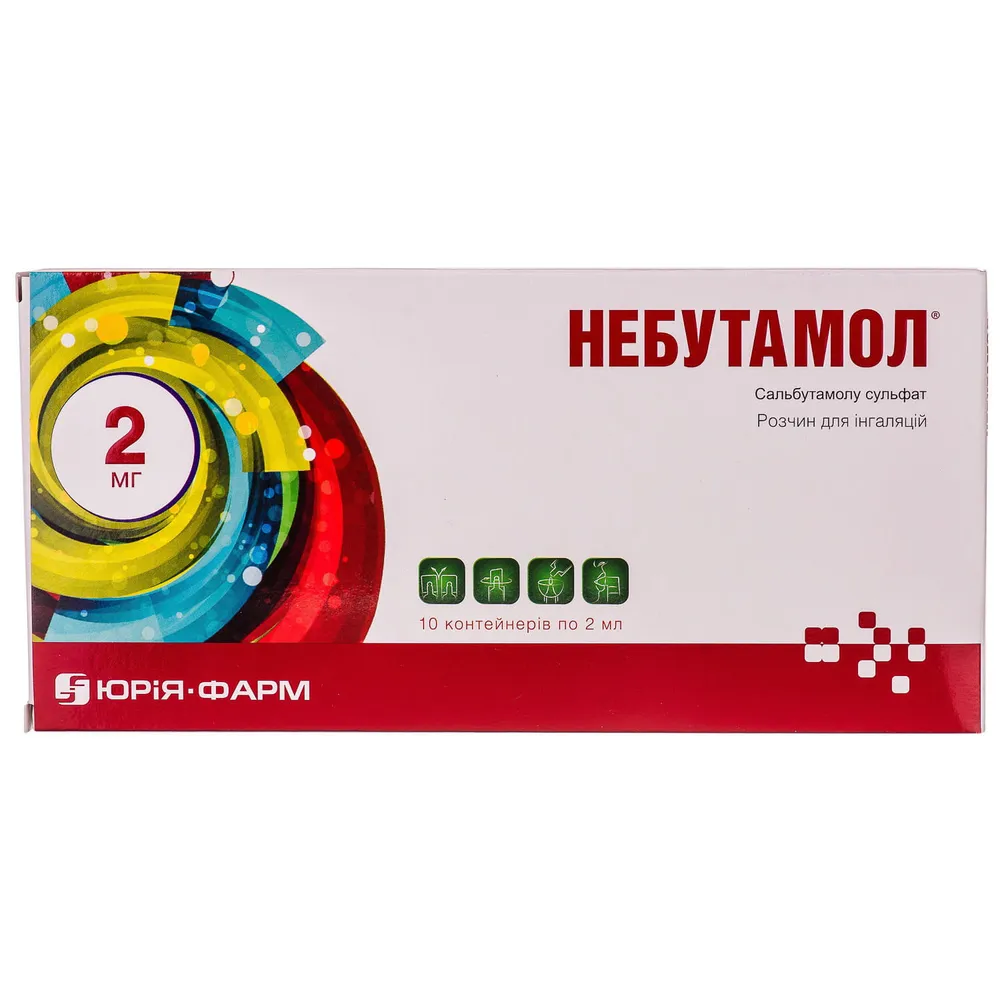
Table of Contents
INSTRUCTIONS for medical use of the medicinal product NEBUTAMOL® (NEBUTAMOL)
Composition:
Active substance: salbutamol;
1 container contains 2 mg or 2.5 mg of salbutamol sulfate calculated as salbutamol;
1 ml contains: 1 mg of salbutamol sulfate calculated as salbutamol;
Excipients: sodium chloride, water for injections.
Pharmaceutical form. Solution for inhalation.
Main physicochemical properties: clear, colorless liquid.
Pharmacotherapeutic group. Anti-asthmatic agents. Selective β2-adrenergic agonists. ATC code R03AC02.
Pharmacological properties.
Pharmacodynamics.
Salbutamol is a selective β2-adrenergic receptor agonist. At therapeutic doses, it acts on β2-adrenergic receptors of bronchial smooth muscle with minimal or no effect on cardiac β1-adrenergic receptors.
Pharmacokinetics.
After inhalation, 10% to 20% of the administered dose reaches the lower respiratory tract. The remainder remains in the oropharynx and is swallowed. Part of the dose that reaches the airways is absorbed into lung tissue and enters the systemic circulation but is not metabolized in the lungs.
The onset of action occurs within 4–5 minutes after inhalation, and the duration of effect lasts 4–6 hours.
After entering the systemic circulation, the drug is metabolized in the liver and is excreted primarily by the kidneys, both unchanged and as a phenolsulfate metabolite.
The portion of the dose that is swallowed from the oropharynx is absorbed from the gastrointestinal tract, undergoes first-pass metabolism in the liver to form the phenolsulfate compound, and is then excreted by the kidneys.
Clinical characteristics.
Indications.
Treatment of adults and children aged 4 years and older. The drug is indicated for rapid relief of acute asthma attacks, as well as for treatment of patients with chronic obstructive bronchitis who do not respond to conventional therapy.
Contraindications.
History of hypersensitivity to any component of the drug.
Although salbutamol in the form of a solution for intravenous injection and sometimes in the form of tablets and suppositories is used in the management of preterm labor, salbutamol in the form of an inhalation aerosol is not used for these indications. Salbutamol should not be used in threatened miscarriage.
Interaction with other medicinal products and other forms of interaction.
Salbutamol should not be prescribed together with non-selective β-adrenergic blockers such as propranolol.
Salbutamol is not contraindicated for use in patients being treated with monoamine oxidase inhibitors.
Special precautions for use.
Nebutamol should be administered by oral inhalation and must not be injected or swallowed.
Treatment of bronchial asthma should be carried out according to a stepwise approach, and the patient's condition should be regularly assessed clinically and with pulmonary function tests.
An increased frequency of use of short-acting inhaled β2-agonists indicates worsening control of bronchial asthma; therefore, patients should be warned to seek medical advice as soon as possible. In such cases, the patient's therapy should be reviewed.
Excessive use of short-acting β-agonists may mask the progression of the underlying disease and lead to worsening control of bronchial asthma, increasing the risk of severe asthma exacerbations and mortality.
Sudden and progressive worsening of bronchial asthma is a life-threatening condition requiring initiation or intensification of corticosteroid therapy. Patients at risk are recommended to perform daily peak expiratory flow monitoring.
Patients receiving regular anti-inflammatory therapy (e.g., inhaled corticosteroids) should be advised to continue taking anti-inflammatory medications even when symptoms subside and Nebutamol is not required.
Patients using Nebutamol at home should be warned that if a previously effective dose fails to provide relief or the duration of relief is reduced, they should consult a physician and not increase the dose or frequency of administration on their own.
Patients using salbutamol more than twice weekly on an as-needed basis (excluding prophylactic use before physical exertion) should undergo reassessment (e.g., evaluation of daytime symptoms, nocturnal awakenings, and activity limitations due to asthma) to ensure appropriate adjustment of therapy, as these patients are at risk of excessive salbutamol use.
Nebutamol should be used with caution in patients receiving high doses of other sympathomimetic agents.
Sympathomimetics, including salbutamol, may affect the cardiovascular system. Post-marketing data and published studies report rare cases of myocardial ischemia associated with salbutamol use. Patients with cardiac disorders (e.g., ischemic heart disease, arrhythmia, or severe heart failure) receiving salbutamol should seek medical attention if chest pain or other symptoms suggestive of cardiac deterioration occur. Symptoms such as dyspnea and chest pain should be carefully evaluated, as they may result from either cardiac or respiratory disease.
Salbutamol should be used with caution in patients with thyrotoxicosis.
Cases of acute angle-closure glaucoma have been occasionally observed when salbutamol in single-dose containers was used in combination with ipratropium bromide. Therefore, the combination of salbutamol in single-dose containers with anticholinergic agents administered via nebulization should be used cautiously. Patients should receive proper instructions on correct use of the medication and be warned to avoid contact of the aerosol spray with the eyes.
Treatment with β2-agonists may result in severe hypokalemia, particularly with parenteral or nebulized administration. Particular attention should be paid to patients with acute severe asthma, as hypokalemia may be potentiated by concomitant use of xanthine derivatives, corticosteroids, diuretics, and hypoxia. In such cases, serum potassium levels should be monitored.
As with other inhaled medications, paradoxical bronchospasm with worsening of dyspnea may occur. In such cases, alternative formulations or other fast-acting inhaled bronchodilators should be initiated immediately. Nebutamol should be discontinued immediately, and, if necessary, other fast-acting bronchodilators should be prescribed on a regular basis.
Like other β-adrenergic agonists, Nebutamol may cause reversible metabolic changes, such as increased blood glucose levels.
Compensation for these changes in diabetic patients is not always possible, and there have been isolated reports of ketoacidosis in such patients. Concomitant use of corticosteroids may exacerbate this condition.
Very rarely, in patients with acute exacerbation of bronchial asthma treated with high doses of intravenous or nebulized salbutamol, cases of lactic acidosis have been reported (see section "Adverse reactions"). Increased blood lactate levels may cause dyspnea and compensatory hyperventilation, which may be mistakenly interpreted as inadequate efficacy of anti-asthma treatment and may lead to inappropriate intensification of therapy with short-acting β2-agonists. Therefore, serum lactate levels and the presence of metabolic acidosis should be monitored in such patients.
Use during pregnancy or breastfeeding.
Salbutamol should be used during pregnancy only if the expected benefit to the mother outweighs the potential risk to the fetus. Post-marketing data include isolated reports of various congenital anomalies, including cleft palate and limb defects, in children whose mothers used salbutamol during pregnancy. Some of these women also used other medications during pregnancy. A definitive causal relationship between salbutamol use and these anomalies has not been established.
Since salbutamol may pass into breast milk, its use during breastfeeding is not recommended, except when the expected benefit to the mother outweighs the potential risk to the infant. It is unknown whether the presence of salbutamol in breast milk has harmful effects on the infant.
Ability to influence reaction speed when driving or operating machinery.
No data are available. If nervous system side effects (e.g., tremor) occur, driving or operating machinery should be avoided.
Method of Administration and Dosage
Nebutamol is intended for inhalation via the mouth using a nebulizer and should be administered under medical supervision.
The solution must not be injected or swallowed.
An increased need for β2-agonists may indicate worsening asthma control. In such cases, the patient's treatment regimen should be reviewed and the need for concomitant glucocorticosteroid therapy should be considered.
Adults (including elderly patients)
The usual starting inhaled dose of salbutamol is 2.5 mg, which may be increased to 5 mg. Inhalations may be repeated up to 4 times daily.
For treatment of adult patients with severe airway obstruction, doses may be increased up to 40 mg per day; however, such therapy should be conducted in a hospital setting under close medical supervision.
Patients aged 12 years and older
Dosage is the same as for adults.
Children aged 4 to 11 years
The usual starting inhaled dose of salbutamol is 2.5 mg, which may be increased to 5 mg. Inhalations may be repeated up to 4 times daily.
Other dosage forms of the drug should be used for children under 4 years of age.
The clinical efficacy of nebulized salbutamol in infants under 18 months of age has not been established.
Since transient hypoxemia may occur, the need for supplemental oxygen therapy should be considered.
Nebutamol is generally administered undiluted. However, if prolonged inhalation (longer than 10 minutes) is required, the contents of a single-dose container may be diluted with sterile physiological saline solution.
Aerosol inhalation can be performed using a face mask or a mouthpiece. The room where inhalation is performed should be ventilated periodically. In case of risk of hypoxia due to hypoventilation of inhaled air, the air should be enriched with oxygen.
Dosage and frequency of administration may be increased only by a physician, considering the potential for adverse effects with overdose.
Instructions for Use of Nebutamol
- Prepare the nebulizer for use.
- Open the pouch and remove a single-dose container. Do not remove the single-dose container from the pouch unless needed.
- Shake the removed single-dose container. Keep other single-dose containers in the polymer pouch and store them in the cardboard box.
- Holding the single-dose container by the top edge, twist the other end to open it.
- Insert the single-dose container into the nebulizer with the open end facing downward and gently squeeze. Ensure that all the medication has transferred into the nebulizer.
- Assemble the nebulizer and use it according to the nebulizer’s instructions for use.
- After use, rinse the nebulizer and dispose of any remaining medication.
Children
Nebutamol is indicated for children aged 4 years and older.
Overdose
The most common symptoms of salbutamol overdose are transient pharmacologically induced effects caused by β2-agonists, such as tachycardia, tremor, hyperactivity, and metabolic disturbances, including hypokalemia (see sections "Special Warnings and Precautions" and "Adverse Reactions").
Salbutamol overdose may lead to hypokalemia; therefore, serum potassium levels should be monitored. Cases of lactic acidosis have been reported following administration of high therapeutic doses or overdose of short-acting β2-agonists, so serum lactate levels should be checked. Metabolic acidosis should therefore be monitored, particularly in cases of persistent or accelerated breathing that worsens despite improvement in bronchospasm symptoms.
Adverse Reactions
The adverse reactions listed below are classified by organ systems and according to frequency of occurrence. Frequency of occurrence is categorized as follows: very common (≥ 1/10), common (≥ 1/100 and < 1/10), uncommon (≥ 1/1000 and < 1/100), rare (≥ 1/10,000 and < 1/1000), very rare (< 1/10,000), including isolated cases. In general, very common and common adverse effects are identified from clinical trial data, whereas rare, very rare, and those with unknown frequency are derived from spontaneous reports.
Immune system disorders
Very rare: hypersensitivity reactions, including angioedema, urticaria, bronchospasm, hypotension, and collapse.
Metabolism and nutritional disorders
Rare: hypokalemia. Potentially severe hypokalemia may occur during treatment with β2-agonists.
Frequency unknown: lactic acidosis (see section "Special precautions for use").
Nervous system disorders
Common: tremor, headache.
Very rare: hyperactivity.
Cardiac disorders
Common: tachycardia.
Uncommon: palpitations.
Very rare: cardiac arrhythmias, including atrial fibrillation, supraventricular tachycardia, and extrasystoles.
Frequency unknown: myocardial ischemia (see section "Special precautions for use").
As these reports are spontaneous, derived from post-marketing surveillance, their frequency cannot be reliably determined.
Vascular disorders
Rare: peripheral vasodilation.
Respiratory, thoracic and mediastinal disorders
Very rare: paradoxical bronchospasm.
Gastrointestinal disorders
Uncommon: irritation of mucous membranes of the mouth and throat.
Musculoskeletal and connective tissue disorders
Uncommon: muscle cramps.
Shelf life: 3 years.
After opening the polymer film pouch – 3 months.
Storage conditions:
Store in a place inaccessible to children, at a temperature not exceeding 25 °C.
Avoid freezing and exposure to direct sunlight.
Packaging:
2 ml or 2.5 ml in single-dose containers. 10 single-dose containers in a polymer film pouch. 1 pouch or 4 pouches in a cardboard box.
Prescription status: Prescription only.
Manufacturer:
LLC "Yuria-Pharm".
Manufacturer's address and location of business activity:
108, Kozbirska St., Cherkasy, Cherkasy region, 18030, Ukraine. Tel.: (044) 281-01-01.