Nayzilat
Ukraine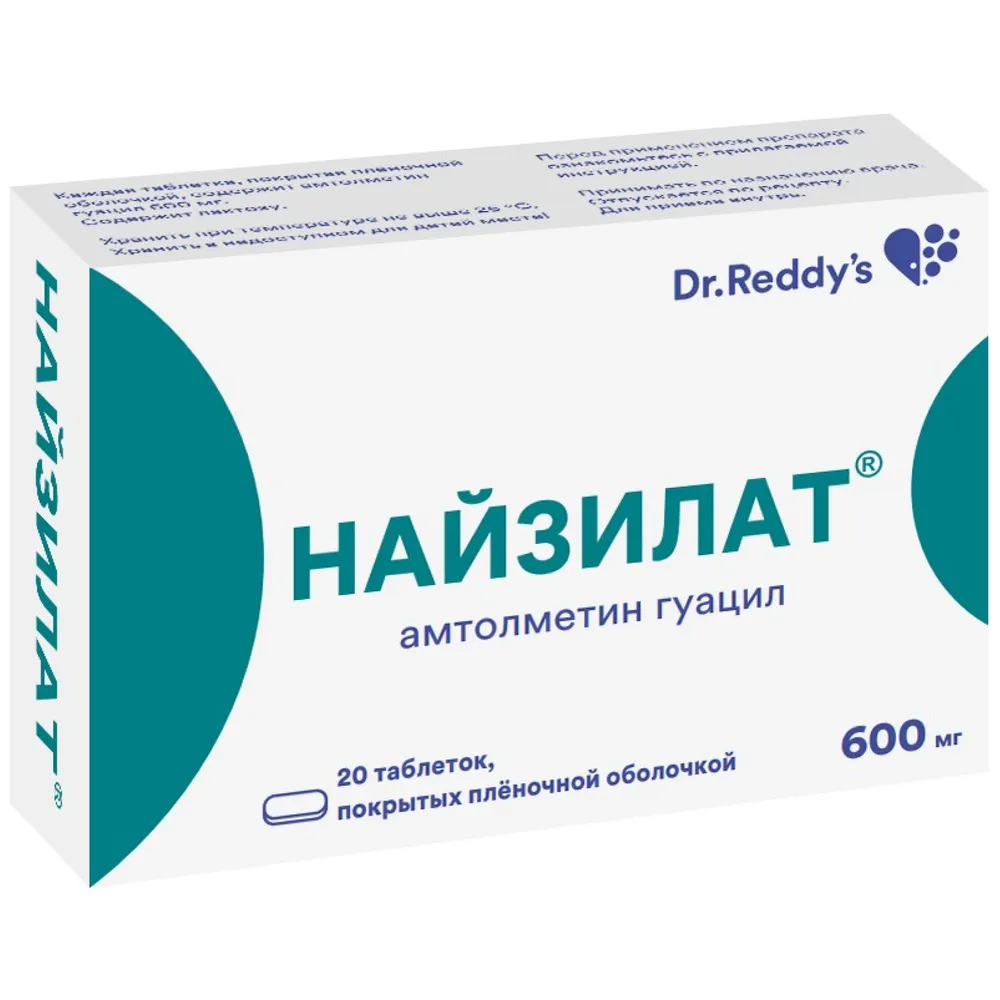
Table of Contents
INSTRUCTION FOR MEDICAL USE OF THE MEDICINAL PRODUCT NISELAT (NISELAT)
Composition:
Active substance: altomethin guacil;
1 tablet contains: altomethin guacil 600 mg;
Excipients: lactose monohydrate; hypromellose; colloidal anhydrous silicon dioxide; sodium starch glycolate (type A); magnesium stearate; titanium dioxide (E 171); macrogol.
Pharmaceutical form. Film-coated tablets.
Main physicochemical properties: white or almost white, capsule-shaped, film-coated tablets with a smooth surface on both sides.
Pharmacotherapeutic group. Non-steroidal anti-inflammatory and anti-rheumatic drugs. ATC code M01A.
Pharmacological Properties
Pharmacodynamics
Amlotmetin guacil is a nonsteroidal anti-inflammatory drug (NSAID) with anti-inflammatory, analgesic, and antipyretic effects, resulting from inhibition of prostaglandin synthesis due to non-selective inhibition of cyclooxygenase (COX) enzymes. However, unlike traditional NSAIDs, due to its chemical structure, amlotmetin guacil provides gastroprotective, antisecretory, and antioxidant effects.
The protective effects are mediated by at least two mechanisms. Due to the structural characteristics of amlotmetin guacil, its oral administration increases the levels of antioxidant enzymes in the gastric mucosa—superoxide dismutase (SOD), catalase, and glutathione—while simultaneously reducing levels of superoxide anions, peroxynitrite or peroxochloride, and malondialdehyde, which are predominantly observed under conditions of lipid peroxidation. One of the metabolites of amlotmetin guacil—guaiacol (2-methoxyphenol)—increases the level of gastric nitric oxide synthase (NO). The significant role of nitric oxide in the protective mechanisms of the gastroduodenal mucosa is well known, particularly important during periods when prostaglandin synthesis is suppressed. Amlotmetin guacil acts on peripheral capsaicin receptors, thereby providing a local analgesic effect.
Pharmacokinetics
Absorption of amlotmetin guacil after oral administration is rapid and complete. It predominantly deposits on the walls of the gastrointestinal tract, where the highest concentration levels are maintained for up to 2 hours after administration. Its transformation into active metabolites begins after the drug enters the bloodstream; therefore, amlotmetin guacil itself is difficult to detect in plasma and tissues. Amlotmetin guacil is hydrolyzed by plasma esterases into the following metabolites: tolmetin-glycinamide (MED5), which predominates in blood plasma, tolmetin, and guaiacol (2-methoxyphenol). Tolmetin-glycinamide (MED5) is subsequently metabolized to tolmetin. The active metabolites reach high concentrations in tissues. The drug is almost completely eliminated within 24 hours, primarily via urine (77% of the administered dose) in the form of glucuronides, with smaller amounts excreted via bile (9.4%) and feces (7.5%).
Clinical characteristics.
Indications.
Pain and inflammatory syndrome in diseases of the musculoskeletal system: in osteoarthritis, rheumatoid arthritis; in post-traumatic pain.
Contraindications.
- Hypersensitivity to amtolmetin guacil, tolmetin; complete or incomplete combination of bronchial asthma, recurrent nasal or paranasal sinus polyposis, and intolerance to acetylsalicylic acid and other nonsteroidal anti-inflammatory drugs (including in medical history);
- erosive-ulcerative lesions of the gastric and duodenal mucosa, active gastrointestinal bleeding; cerebrovascular or other bleeding; inflammatory bowel diseases (Crohn's disease, ulcerative colitis) in the phase of exacerbation;
- severe renal impairment (creatinine clearance less than 30 mL/min), progressive kidney diseases;
- confirmed hyperkalemia;
- decompensated heart failure;
- hepatic insufficiency or active liver disease; hemophilia and other blood coagulation disorders;
- period after aortocoronary bypass surgery; arterial hypertension;
- congenital lactase deficiency, lactose intolerance, glucose-galactose malabsorption; glucose-6-phosphate dehydrogenase deficiency;
- pregnancy, lactation period;
- childhood age.
Interaction with other medicinal products and other forms of interactions.
Diuretics and antihypertensive agents. Amtolmetin guacil, like other NSAIDs, may reduce the antihypertensive effect of diuretics or antihypertensive drugs (e.g., beta-blockers, calcium channel blockers, angiotensin-converting enzyme (ACE) inhibitors) when used concomitantly. Therefore, such combinations should be prescribed with caution, and patients (especially elderly) should have their blood pressure monitored periodically. Adequate hydration should be maintained, and renal function should be monitored at the beginning and throughout combination therapy. Concomitant use of potassium-sparing diuretics may lead to increased serum potassium levels; in such cases, this parameter should be closely monitored.
Anticoagulants and antiplatelet agents. There have been isolated reports of increased risk of bleeding in patients who concurrently used NSAIDs and these agents. Therefore, careful and regular monitoring of patients is recommended when such combination is used.
Other NSAIDs and corticosteroids. Concomitant use of amtolmetin guacil and other systemic NSAIDs may increase the frequency of adverse gastrointestinal reactions. Concurrent use with systemic NSAIDs, including selective cyclooxygenase-2 inhibitors, should be avoided. Amtolmetin guacil enhances the effects of corticosteroids, glucocorticoids, and mineralocorticoids.
In some patients with impaired renal function, concomitant use of NSAIDs and angiotensin-converting enzyme (ACE) inhibitors may lead to further deterioration of kidney function.
Selective serotonin reuptake inhibitors (SSRIs). Concomitant use of systemic NSAIDs and SSRIs may increase the risk of gastrointestinal bleeding.
Amtolmetin guacil enhances the hypoglycemic effect of sulfonylurea derivatives, the action of fibrinolytics, and the adverse effects of estrogens.
Myelotoxic medicinal products enhance the manifestations of hematotoxicity of the drug.
Antacids and cholestyramine reduce the absorption of amtolmetin guacil.
Concomitant use of amtolmetin guacil with lithium and methotrexate increases their blood concentration.
Special precautions for use.
Amtolmetin guacil should be used in patients suffering from hepatic or renal diseases under medical supervision, with periodic laboratory monitoring of kidney and liver function and peripheral blood parameters. If, during prolonged therapy, abnormalities in renal or hepatic function or blood parameters worsen, treatment should be discontinued. It should be noted that hepatitis may occur during NSAID therapy without prodromal symptoms.
Patients with impaired blood coagulation function or those receiving anticoagulant therapy should use the drug under medical supervision.
NSAIDs may temporarily inhibit platelet aggregation. Therefore, patients with coagulation disorders require careful monitoring of relevant laboratory parameters.
If visual disturbances occur during amtolmetin guacil therapy, treatment should be discontinued and an ophthalmological examination should be performed.
Elderly patients (aged 65 years and older), in whom renal and/or hepatic function is usually impaired, should use the drug cautiously with lower daily doses to prevent adverse events.
Although amtolmetin guacil has gastroprotective properties, it should be noted that this drug belongs to the NSAID class (its active metabolite is tolmetin), and thus there is a possibility of developing gastrointestinal bleeding, ulcers, and perforation typical of all NSAIDs, which may occur with or without preceding warning symptoms. These events are particularly dangerous in elderly patients. If such events occur, the drug should be discontinued.
In the above-mentioned patients and in patients requiring concomitant use of medicinal products containing low-dose acetylsalicylic acid (aspirin) or other drugs that may increase the risk of gastrointestinal adverse reactions, the appropriateness of combination therapy with protective agents (e.g. proton pump inhibitors) should be considered.
NSAIDs may increase the risk of serious cardiovascular thrombotic events, myocardial infarction, and stroke, which may be fatal.
Rare cases of severe skin reactions, including exfoliative dermatitis, Stevens-Johnson syndrome, and toxic epidermal necrolysis, have been reported with NSAID use. The highest risk of these reactions occurs early in therapy, and most cases develop within the first month of treatment.
Allergic reactions to NSAIDs occur more frequently in patients with asthma, seasonal allergic rhinitis, nasal mucosal edema, chronic obstructive pulmonary diseases, or chronic respiratory tract infections than in other patients. Therefore, special caution is required when treating such patients.
Since prostaglandins play an important role in maintaining renal blood flow, particular caution is necessary when treating patients with impaired cardiac or renal function, patients with a history of arterial hypertension, elderly patients, patients taking diuretics, and patients with significant reduction in circulating plasma volume of any etiology, such as in the period before and after surgical procedures.
NSAIDs may temporarily inhibit platelet aggregation. Therefore, patients with coagulation disorders require careful monitoring of relevant laboratory parameters.
Special attention should be paid to patients taking other medicinal products that may increase the risk of ulcers and bleeding, particularly oral corticosteroids, anticoagulants, selective serotonin reuptake inhibitors (SSRIs), and antiplatelet agents. If any adverse events occur, the drug should be discontinued.
Due to their pharmacodynamic properties, NSAIDs may mask symptoms typical of infectious-inflammatory diseases.
The drug contains lactose. If a patient has been diagnosed with intolerance to certain sugars, consultation with a physician is recommended before taking this medicinal product.
Treatment should be discontinued in case of any allergic reactions and/or symptoms of adverse effects. Treatment should be discontinued 48 hours before the determination of 17-ketosteroids. During treatment, patients should refrain from activities that require increased attention and rapid psychomotor responses.
Use during pregnancy or breastfeeding.
The safety of amtolmetin use during pregnancy has not been studied; therefore, the drug is contraindicated during pregnancy.
Starting from the 20th week of pregnancy, NSAID use may cause oligohydramnios due to fetal renal dysfunction. This disorder may occur soon after initiation of treatment and is usually reversible after discontinuation of therapy. Additionally, there have been reports of arterial duct constriction following treatment in the second trimester, which in most cases was reversible after stopping treatment. Therefore, the drug should not be prescribed during the first and second trimesters of pregnancy. If the drug is used by a woman trying to conceive, the dose should be as low as possible and the duration of treatment as short as possible.
During the third trimester of pregnancy, all prostaglandin synthesis inhibitors may pose risks:
for the fetus:
- cardiopulmonary toxicity (premature constriction/closure of the arterial duct and pulmonary hypertension);
- renal dysfunction;
for the mother at the end of pregnancy and for the newborn:
- prolonged bleeding time, antiaggregatory effect, which may occur even at very low doses;
- inhibition of uterine contractions, leading to delayed or prolonged labor.
It is unknown whether metabolites of amtolmetin guacil are excreted in breast milk; therefore, the drug is contraindicated in women during breastfeeding.
Ability to affect reaction speed when driving vehicles or operating machinery.
Visual disturbances may occur during amtolmetin use. Therefore, it is recommended to refrain from driving vehicles and/or operating machinery.
Dosage and Administration.
Take orally on an empty stomach.
The recommended dose for adults is 1 tablet 1–2 times daily depending on the intensity of pain and the course of the disease. The recommended daily dose should not be exceeded. The duration of treatment depends on the pharmacological effect and the patient's general condition.
Children. Contraindicated.
Overdose.
Cases of tolmetin overdose are unknown, as are methods of treatment in such cases. There is no specific antidote. In case of overdose, gastric lavage should be performed, an adsorbent (activated charcoal) administered, and symptomatic therapy provided.
Symptoms of overdose: abdominal pain, nausea, vomiting, erosive-ulcerative lesions of the gastrointestinal tract, renal function impairment, metabolic acidosis.
Adverse Reactions
Adverse reactions are classified by frequency of occurrence: common (≤ 1/100, < 1/10); uncommon (≥ 1/1000, < 1/100); rare (≥ 1/10000, < 1/1000); very rare (< 1/10000).
Gastrointestinal system: due to the gastroprotective properties of amtolmetin guacil, the use of this medicinal product ensures minimal risk of gastrointestinal adverse reactions; rare – nausea, vomiting, diarrhea, dyspepsia, abdominal pain, flatulence, anorexia; very rare – gastritis, gastrointestinal bleeding, hematemesis, hemorrhagic diarrhea, melena, gastric or intestinal ulcer (with or without bleeding or perforation), colitis (including hemorrhagic colitis and exacerbation of ulcerative colitis or Crohn’s disease), constipation, stomatitis, glossitis, esophageal disorders, diaphragm-like intestinal strictures, pancreatitis.
Blood and lymphatic system disorders: very rare – thrombocytopenia, leukopenia, anemia, agranulocytosis.
Immune system disorders: rare – hypersensitivity reactions, anaphylactic/anaphylactoid reactions (skin color change of the face, skin rash, urticaria, pruritus, tachypnea or dyspnea, eyelid edema, leg edema, finger edema, periorbital edema, shortness of breath, respiratory depression, chest tightness, wheezing), including arterial hypotension and anaphylactic shock; very rare – angioneurotic edema (including facial edema); common – increased sweating, lymphadenopathy.
Nervous system disorders: common – headache, dizziness; rare – somnolence; very rare – disorientation, depression, insomnia, nightmares, irritability, psychiatric disorders, paresthesia, memory impairment, convulsions, anxiety, tremor, aseptic meningitis, taste disturbances, cerebral circulation disorders.
Sensory organ disorders: rare – tinnitus, visual disturbances; very rare – blurred vision, diplopia, ringing in the ears, hearing disturbances.
Cardiac disorders: very rare – palpitations, chest pain, heart failure, myocardial infarction.
Vascular disorders: very rare – arterial hypertension, vasculitis.
Respiratory, thoracic and mediastinal disorders: rare – asthma (including dyspnea), bronchospasm, rhinitis, laryngeal edema; very rare – pneumonitis.
Hepatobiliary disorders: common – increased transaminase levels; rare – hepatitis, jaundice.
Skin and subcutaneous tissue disorders: common – skin rashes (including maculopapular rash); rare – urticaria; very rare – bullous rashes, eczema, erythema, erythema multiforme, Stevens-Johnson syndrome, toxic epidermal necrolysis (Lyell’s syndrome), exfoliative dermatitis (fever with or without chills, redness, induration or desquamation of the skin, swelling and/or tenderness of the palatine tonsils), alopecia, photosensitivity reactions, purpura, pruritus.
Renal and urinary disorders: very rare – acute renal failure, hematuria, proteinuria, nephrotic syndrome, interstitial nephritis, renal papillary necrosis, increased blood urea nitrogen, urinary tract infections.
Reporting of suspected adverse reactions.
Reporting of suspected adverse reactions after authorization of the medicinal product is important. It allows continuous monitoring of the benefit-risk balance of the medicinal product. Healthcare professionals and patients, as well as their legal representatives, are encouraged to report all suspected adverse reactions and lack of efficacy through the Automated Pharmacovigilance Information System at: https://aisf.dec.gov.ua
Shelf life. 3 years.
Storage conditions. Store in a dry, light-protected place, out of reach of children, at a temperature not exceeding 25 °C.
Packaging. 10 tablets per blister. 1 blister per cardboard box.
Prescription status. Prescription only.
Manufacturer.
Dr. Reddy’s Laboratories Ltd, FTO – II
Manufacturer’s address and location of its business operations.
Survey Nos. 42R, 43, 44R, 45R, 46R, 53, 54, 83, Bachupally Village, Bachupally Mandal, Medchal Malkajgiri District – 500090, Telangana State, India
To report an adverse reaction or lack of efficacy during use of the medicinal product, please call (24/7):
+380 44207 51 97 or +380 50414 39 39; or send an email to:
[email protected]