Naproff
Ukraine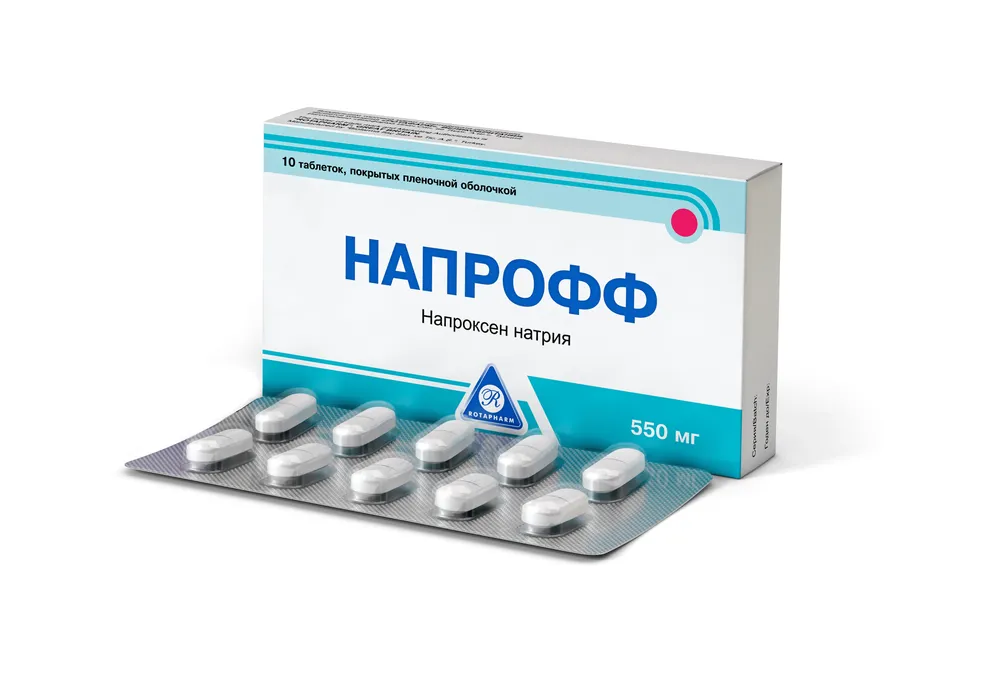
Table of Contents
INSTRUCTIONS FOR MEDICAL USE OF THE MEDICINAL PRODUCT NAPROFF (NAPROFF)
Composition:
Active substance: naproxen;
One film-coated tablet contains 550 mg of sodium naproxen;
Excipients: microcrystalline cellulose, povidone, talc, magnesium stearate;
Coating composition: Opadry White (hypromellose, titanium dioxide (E 171), macrogol).
Pharmaceutical form. Film-coated tablets.
Main physicochemical properties:
550 mg film-coated tablets: oval, biconvex, film-coated tablets, white in color, with a dividing line on both sides.
Pharmacotherapeutic group.
Nonsteroidal anti-inflammatory and antirheumatic agents. ATC code M01A E02.
Pharmacological properties.
Pharmacodynamics.
Naproxen is a non-steroidal anti-inflammatory drug (NSAID), a derivative of arylcarboxylic acid belonging to the propionic acid group. It exerts pronounced anti-inflammatory, analgesic, antipyretic effects and inhibits platelet function. These properties of naproxen are associated with inhibition of prostaglandin synthesis.
Pharmacokinetics.
Absorption.
After oral administration, naproxen is rapidly and almost completely absorbed from the gastrointestinal tract. Maximum plasma concentration is reached within less than 1 hour and amounts to 99.4 mcg/ml after administration of 1 tablet. With doses exceeding 500 mg, the increase in plasma naproxen levels is not proportional to the administered dose.
Distribution.
Approximately 99% of naproxen is bound to plasma proteins.
Metabolism.
Naproxen is metabolized in the liver to desmethylnaproxen.
Elimination.
Approximately 70% of naproxen is excreted in urine as unchanged naproxen, and approximately 28% as desmethylnaproxen. Naproxen clearance is 0.13 ml/min/kg. The elimination half-life of naproxen is 13 hours.
Clinical characteristics.
Indications.
For adults and children aged 15 years and older:
Symptomatic long-term treatment:
- Chronic inflammatory joint diseases (such as rheumatoid arthritis, ankylosing spondylitis, Reiter's syndrome, psoriatic arthritis);
- Severe disabling forms of osteoarthritis.
Symptomatic short-term treatment:
-
Acute attacks of periarticular rheumatism (such as shoulder–arm periarthritis, tendinitis, bursitis);
-
Osteoarthritis;
-
Low back pain;
-
Radiculalgia;
-
Pain syndrome associated with musculoskeletal injuries;
-
Pain syndrome associated with inflammatory processes in dentistry (for this indication, the potential risks, including exacerbation of septic processes caused by NSAIDs, and expected analgesic benefit should be considered).
Symptomatic treatment:
- Dysmenorrhea (after establishing its cause).
For children with body weight ≥25 kg (aged 8 years and older):
- Juvenile rheumatoid arthritis.
Contraindications.
- Hypersensitivity to the active substance or to any of the excipients.
- History of hypersensitivity reactions or asthma induced by acetylsalicylic acid or other nonsteroidal anti-inflammatory drugs (NSAIDs).
- Active peptic ulcer, history of peptic ulcer, or recurrent gastrointestinal bleeding (two or more distinct episodes of ulceration or bleeding).
- History of gastrointestinal bleeding or perforation related to previous NSAID therapy.
- Severe heart failure.
- Severe renal impairment.
- Severe hepatic impairment.
- Use from the beginning of the 6th month of pregnancy (beyond 24 weeks of gestation) (see section "Use during pregnancy or breastfeeding").
- Breastfeeding period.
- Use in children with body weight below 25 kg (under 8 years of age).
Interaction with other medicinal products and other forms of interaction.
Agents increasing the risk of hyperkalemia (potassium salts, diuretics, angiotensin-converting enzyme inhibitors (ACE inhibitors), angiotensin II receptor antagonists (ARBs), NSAIDs, heparins (low molecular weight or unfractionated), immunosuppressants (cyclosporine or tacrolimus), trimethoprim): concomitant use of naproxen with such agents increases the risk of hyperkalemia. This risk is particularly high when potassium-sparing diuretics are used, especially in combination with each other or with potassium salts, whereas the combination of ACE inhibitors and NSAIDs is less hazardous if recommended precautions are observed.
When assessing the risk and stress levels associated with potassium-sparing agents, specific drug interactions characteristic of each agent should be taken into account.
Some agents, such as trimethoprim, are not risk factors in interaction with other medicinal products. However, they may act as contributing factors when used in combination with other agents, including those mentioned above.
Concomitant use of naproxen with these agents is not recommended.
- Other NSAIDs, including acetylsalicylic acid in anti-inflammatory doses (≥ 1 g per dose and/or ≥ 3 g daily) and in analgesic and antipyretic doses (≥ 500 mg per dose and/or ≥ 3 g daily): concomitant use of naproxen with these medicinal products increases the risk of gastrointestinal ulceration and gastrointestinal bleeding.
- Anticoagulants: concomitant use with naproxen enhances the effect of anticoagulants (e.g., warfarin) and increases the risk of bleeding (due to damage to the gastric and duodenal mucosa) (see section "Special precautions for use"). If concomitant use is necessary, careful clinical and biological monitoring is required.
- Unfractionated heparin, low molecular weight heparin, and related compounds (in therapeutic doses and/or in elderly patients): concomitant use of naproxen with these medicinal products increases the risk of bleeding (due to damage to the gastric and duodenal mucosa). If concomitant use is necessary, careful clinical monitoring is required.
- Acetylsalicylic acid: clinical pharmacodynamic data indicate that concomitant use of naproxen for more than one day may suppress the effect of low-dose acetylsalicylic acid on platelet activity. This effect may persist for several days after discontinuation of naproxen. The clinical significance of this interaction is unknown.
- Lithium: concomitant use with naproxen increases plasma lithium levels, potentially leading to toxicity (due to reduced renal clearance). If concomitant use is necessary, plasma lithium levels should be monitored and dosage adjusted during and after discontinuation of naproxen.
- High-dose methotrexate (more than 20 mg weekly): concomitant use with naproxen enhances methotrexate hematological toxicity (due to reduced renal clearance).
- Pemetrexed (in patients with mild to moderate renal impairment (creatinine clearance from 45 to 80 mL/min)): concomitant use with naproxen enhances pemetrexed toxicity (due to reduced renal clearance).
Concomitant use of naproxen with these agents should be performed with caution.
- Cyclosporine, tacrolimus: concomitant use with naproxen enhances the nephrotoxicity of these medicinal products, especially in elderly patients; therefore, renal function should be monitored at the beginning of concomitant therapy.
- Diuretics, ACE inhibitors, ARBs: concomitant use with naproxen reduces antihypertensive efficacy, and in high-risk patients (elderly and/or dehydrated patients), acute renal failure may develop (due to reduced glomerular filtration). When these medicinal products are used concomitantly, patient hydration should be ensured, and renal function should be monitored at the beginning of treatment.
- Low-dose methotrexate (less than 20 mg weekly): concomitant use with naproxen enhances methotrexate hematological toxicity (due to reduced renal clearance). During the first weeks of concomitant use, weekly blood tests should be performed. Careful monitoring is required in patients with even minor renal impairment and in elderly patients.
- Pemetrexed (in patients with normal renal function): concomitant use with naproxen enhances pemetrexed toxicity (due to reduced renal clearance). Monitoring of renal function is required when these medicinal products are used concomitantly.
Potential interactions should be considered when naproxen is used concomitantly with these agents.
- Acetylsalicylic acid in antiplatelet doses of 50–375 mg daily: concomitant use of naproxen with acetylsalicylic acid increases the risk of gastrointestinal ulceration and gastrointestinal bleeding.
- Corticosteroids (except replacement therapy with hydrocortisone): concomitant use of naproxen with these medicinal products increases the risk of gastrointestinal ulceration or gastrointestinal bleeding.
- Antiplatelet agents and selective serotonin reuptake inhibitors (SSRIs): concomitant use of naproxen with these medicinal products increases the risk of gastrointestinal bleeding.
- Unfractionated heparin, low molecular weight heparin, and related compounds (in prophylactic doses): concomitant use of naproxen with these medicinal products increases the risk of bleeding.
- Beta-blockers (except esmolol): concomitant use with naproxen may reduce the antihypertensive effect of beta-blockers (due to inhibition of vasodilatory prostaglandins and water and sodium retention).
- Deferasirox: concomitant use of naproxen with deferasirox increases the risk of gastrointestinal bleeding.
Special precautions for use.
Adverse reactions of the medicinal product can be minimized by using the lowest effective dose for the shortest possible duration required to control symptoms (see section "Dosage and administration" and subsections "Gastrointestinal effects" and "Cardiovascular and cerebrovascular effects" below).
Concomitant use of the medicinal product with other NSAIDs, including selective COX-2 inhibitors, should be avoided.
Hypersensitivity reactions.
Patients suffering from asthma in combination with chronic rhinitis, chronic sinusitis and/or nasal polyps are at higher risk of allergy to acetylsalicylic acid and/or NSAIDs than other patients. Administration of the medicinal product may provoke asthma attacks or bronchospasm, especially in patients with allergy to acetylsalicylic acid or NSAIDs (see section "Contraindications").
Use in elderly patients.
Elderly patients are particularly susceptible to adverse reactions during NSAID therapy, especially gastrointestinal bleeding and perforation, which may be fatal (see section "Dosage and administration" and below).
Gastrointestinal effects.
Gastrointestinal bleeding, ulceration or perforation have been reported with all NSAIDs at various stages of treatment, sometimes fatal, regardless of the presence of warning symptoms or history of serious gastrointestinal disorders.
The risk of gastrointestinal bleeding, ulceration or perforation increases with higher NSAID doses in patients with a history of peptic ulcer, particularly if complicated by bleeding or perforation (see section "Contraindications"), as well as in elderly patients. Treatment in such patients should be initiated with the lowest possible dose of the medicinal product. For these patients and patients taking low-dose acetylsalicylic acid or other agents increasing the risk of gastrointestinal adverse reactions (see section "Interaction with other medicinal products and other forms of interaction"), consideration should be given to concomitant therapy with gastroprotective agents, such as misoprostol or proton pump inhibitors.
Patients, especially elderly ones, with a history of gastrointestinal adverse reactions should be advised to inform their physician about any unusual gastrointestinal symptoms, including gastrointestinal bleeding, particularly during the initial stages of treatment.
The medicinal product should be used with caution in patients concurrently taking agents that may increase the risk of ulceration or bleeding, such as oral corticosteroids, anticoagulants (e.g., warfarin), SSRIs, or antiplatelet agents such as acetylsalicylic acid (see section "Interaction with other medicinal products and other forms of interaction").
If ulceration or gastrointestinal bleeding occurs, the medicinal product should be discontinued.
The medicinal product should be used with caution in patients with gastrointestinal disorders in their medical history (e.g., ulcerative colitis, Crohn’s disease), as there is a risk of exacerbation (see section "Adverse reactions").
Cardiovascular and cerebrovascular effects.
Patients with hypertension and/or mild to moderate congestive heart failure should be closely monitored, as fluid retention and edema have been observed during NSAID therapy.
Clinical trial data and epidemiological evidence suggest that the use of certain NSAIDs (particularly at high doses and during prolonged treatment) may be associated with a small increase in the risk of vascular thrombotic events (such as myocardial infarction or stroke). Available data indicate that the risk with naproxen at a dose of 1000 mg daily is minimal, but it cannot be completely excluded.
The medicinal product should be administered to patients with uncontrolled hypertension, congestive heart failure, established ischemic heart disease, peripheral arterial disease, and/or cerebrovascular disease only after careful evaluation. Such evaluation is also recommended before initiating long-term treatment in patients with cardiovascular risk factors (e.g., hypertension, hyperlipidemia, diabetes mellitus, smokers).
Cutaneous reactions.
During NSAID use, very rare cases of serious skin reactions (some fatal), including exfoliative dermatitis, Stevens–Johnson syndrome, toxic epidermal necrolysis (Lyell’s syndrome), and drug reaction with eosinophilia and systemic symptoms (DRESS), have been reported (see section "Adverse reactions"). The highest risk is likely during the initial stages of treatment, with most cases occurring within the first month of therapy. If skin rashes, signs of mucosal involvement, or other symptoms of hypersensitivity occur, the medicinal product should be discontinued.
Renal functional impairment.
NSAIDs, by inhibiting the vasodilatory effect of renal prostaglandins, may induce functional renal impairment by reducing glomerular filtration. This adverse effect is dose-dependent. Close monitoring of diuresis and renal function is recommended at the beginning of treatment or after dose increase in patients with the following risk factors:
- advanced age;
- concomitant use with ACE inhibitors, angiotensin II antagonists, sartans, or diuretics (see section "Interaction with other medicinal products and other forms of interaction");
- hypovolemia (of any origin);
- congestive heart failure;
- chronic renal failure;
- nephrotic syndrome;
- lupus nephritis;
- decompensated liver cirrhosis.
Since the majority of naproxen and its metabolites (95%) are excreted by the kidneys via glomerular filtration, the medicinal product should be used with caution in patients with impaired renal function. Regular monitoring of creatinine clearance is recommended. The lowest effective dose should be used in such patients.
Effects on water and electrolyte balance.
Fluid retention during naproxen use may lead to edema, arterial hypertension, worsening of pre-existing hypertension, or exacerbation of heart failure. Clinical monitoring of patients with hypertension or heart failure is required during treatment with the medicinal product. Reduced efficacy of antihypertensive agents is also possible (see section "Interaction with other medicinal products and other forms of interaction").
Hyperkalemia risk.
Hyperkalemia may occur in patients with diabetes mellitus or in those concurrently taking medicinal products that increase potassium levels during naproxen use (see section "Interaction with other medicinal products and other forms of interaction"). Regular monitoring of plasma potassium levels is recommended in such patients.
Use in infectious conditions.
The medicinal product should be used with caution in infectious conditions or in patients at risk of infection, as naproxen reduces resistance to infectious agents and may mask symptoms of infection.
Long-term use.
In case of long-term use of the medicinal product, regular blood tests and monitoring of renal and hepatic function are recommended.
Hematological reactions.
Naproxen inhibits platelet aggregation and may prolong bleeding time, which should be considered when assessing bleeding time. Monitoring is required in patients with coagulation disorders or those taking agents affecting hemostasis.
Ocular effects.
Rare cases of ocular disorders have been reported during NSAID use, including naproxen. Patients who develop visual disturbances during treatment should be referred for ophthalmological consultation.
Precautions related to excipients.
The medicinal product contains approximately 50 mg of sodium, which should be taken into account in patients on a sodium-controlled diet.
Use during pregnancy or breastfeeding.
Pregnancy.
Inhibition of prostaglandin synthesis by NSAIDs may adversely affect pregnancy and/or embryonic/fetal development.
Epidemiological studies indicate that use of agents inhibiting prostaglandin synthesis during early pregnancy increases the risk of miscarriage and congenital malformations, including cardiac defects and abdominal wall defects. The absolute risk of cardiovascular malformations increases from <1% to approximately 1.5%. The risk is considered to increase with higher doses and longer duration of therapy. In animal studies, inhibition of prostaglandin synthesis has been associated with increased pre- and post-implantation loss and elevated embryofetal mortality.
From the 20th week of gestation, naproxen use may cause oligohydramnios due to fetal renal dysfunction. This may occur soon after initiation of treatment and is usually reversible upon discontinuation. Additionally, there have been reports of arterial duct constriction after second-trimester treatment, most of which resolved after stopping therapy.
Risks associated with use from the 12th week of gestation until delivery.
From the 12th week of gestation until delivery, NSAIDs, by inhibiting prostaglandin synthesis, may impair fetal renal function:
- during intrauterine development, starting from the 12th week of gestation (establishment of fetal diuresis), oligohydramnios may occur, which is usually reversible upon discontinuation of naproxen, up to complete absence of amniotic fluid (anhydramnios) with prolonged use;
- postnatal renal failure (reversible or irreversible), particularly with prolonged use in late pregnancy (with risk of severe hyperkalemia).
Risks associated with use after the 24th week of gestation until delivery.
After the 24th week of gestation, NSAIDs may cause fetal cardiopulmonary toxicity (premature constriction/closure of the arterial duct and pulmonary hypertension), leading to fetal or neonatal heart failure or even intrauterine fetal death. This risk increases with naproxen use in late pregnancy (low likelihood of reversibility). This adverse effect may occur even after a single dose.
At the end of pregnancy, NSAIDs in the mother and newborn may cause:
- prolonged bleeding time in both mother and child, reduced platelet aggregation capacity, even with very low doses of naproxen;
- inhibition of uterine contractility, potentially leading to delayed or prolonged labor.
The medicinal product should not be used in women planning pregnancy or during the first 5 months of pregnancy (first 24 weeks of gestation), except when absolutely necessary. In such cases, the lowest possible dose and shortest duration of treatment should be used. Long-term use is strictly contraindicated.
Prenatal monitoring for oligohydramnios and arterial duct constriction should be considered after several days of naproxen exposure starting from the 20th gestational week. The medicinal product should be discontinued if oligohydramnios or arterial duct constriction is detected.
From the beginning of the 6th month (beyond 24 weeks of gestation), use of the medicinal product (even short-term) is contraindicated. In case of unintentional (accidental) intake after 24 weeks of gestation, careful monitoring of cardiac and renal function, as well as fetal and/or neonatal status, depending on the duration of exposure, is recommended. The duration of monitoring depends on the elimination half-life.
Breastfeeding period.
NSAIDs can pass into breast milk. The medicinal product is not recommended during breastfeeding.
Effect on fertility.
Naproxen, like other medicinal products that inhibit cyclooxygenase/prostaglandin synthesis, may negatively affect reproductive function and is not recommended for women wishing to become pregnant. For women experiencing fertility problems or undergoing infertility evaluation, discontinuation of the medicinal product should be considered.
Ability to influence reaction rate when driving or operating machinery.
During naproxen use, somnolence, dizziness, vertigo, visual disturbances, insomnia, and depression may occur in some patients. Patients should refrain from driving or operating machinery while taking the medicinal product.
Method of Administration and Dosage.
The medicinal product is intended for oral administration.
Tablets should be taken whole, during meals, with sufficient amount of water. The daily dose should be divided into 1–2 administrations.
Adverse reactions can be minimized by using the lowest effective doses for the shortest duration necessary to relieve symptoms.
Adults and children aged 15 years and older.
Rheumatology, gynecology.
Short-term treatment: the recommended dose is 1100 mg per day (2 tablets of 550 mg).
Long-term treatment: the recommended dose is 550 mg per day (1 tablet of 550 mg).
Dentistry.
The recommended dose is 275–1100 mg per day (½–2 tablets of 550 mg).
Elderly patients.
According to study results, the fraction of unbound naproxen in plasma increases in elderly patients, although the total plasma concentration of naproxen remains unchanged.
When administering high doses of the medicinal product to such patients, clinical and biological monitoring is recommended.
If renal excretion is reduced, dosage reduction is recommended.
Children with body weight of 25 kg and above (aged 8 years and older).
Juvenile rheumatoid arthritis.
The recommended dose is 10 mg/kg per day.
Children.
The medicinal product should be administered to children aged 15 years and older.
In juvenile rheumatoid arthritis, the medicinal product may be administered to children with body weight of 25 kg and above (aged 8 years and older).
Overdose.
Symptoms.
Clinical signs of overdose include drowsiness, dizziness, disorientation, heartburn, digestive disturbances, nausea or vomiting, apnea.
Biological signs of overdose include impaired liver and kidney function, hypoprothrombinemia, metabolic acidosis.
Treatment.
In case of overdose, the patient should be hospitalized, gastric lavage should be performed, adsorbents administered, and symptomatic and supportive treatment provided.
Adverse Reactions.
Clinical studies and epidemiological data have shown that the use of NSAIDs (especially at high doses over a prolonged period) may slightly increase the risk of thromboembolic complications (myocardial infarction, stroke) (see section "Special Warnings and Precautions for Use").
The most commonly observed adverse reactions are those affecting the gastrointestinal tract. Erosions, ulcers, or gastrointestinal bleeding, sometimes fatal, may occur, particularly in elderly patients (see section "Special Warnings and Precautions for Use").
During the use of NSAIDs, cases of nausea, vomiting, diarrhea, dyspepsia, ulcerative stomatitis, abdominal pain, melena, hematemesis, and exacerbation of inflammatory bowel diseases (ulcerative colitis, Crohn's disease) have been reported. Gastritis has been reported rarely.
During the use of NSAIDs, cases of edema, hypertension, and heart failure have also been reported.
Blood and lymphatic system disorders:
hemolytic anemia, leukopenia (mainly granulocytopenia), thrombocytopenia, bone marrow aplasia.
Immune system disorders:
hypersensitivity reactions, including skin rashes, urticaria, exacerbation of chronic urticaria, pruritus, angioneurotic edema, vasculitis, anaphylactoid reactions, asthma.
Asthma symptoms in some patients may be due to allergy to acetylsalicylic acid or other NSAIDs (see section "Contraindications").
Nervous system disorders:
headache, dizziness, somnolence.
Insomnia, impaired concentration, cognitive disturbances, and aseptic meningitis have been reported.
Eye disorders:
visual disturbances, papillitis, retrobulbar optic neuritis, papillary edema.
Ear and labyrinth disorders:
hearing disturbances, including tinnitus.
Cardiovascular system disorders:
peripheral edema in patients with impaired cardiac function, worsening of congestive heart failure, arterial hypertension.
Gastrointestinal disorders:
epigastric pain (often mild to moderate), nausea, vomiting, flatulence, dyspepsia, diarrhea, constipation, ulcerative stomatitis.
Rarely, ulcers, gastrointestinal hemorrhages and/or perforations have been reported (the frequency of gastrointestinal bleeding increases with higher doses). Cases of esophagitis, colitis, and pancreatitis have also been reported.
Hepatobiliary disorders:
transient and reversible changes in liver function tests, jaundice, and isolated cases of severe hepatitis (one of which resulted in a fatal outcome) have been reported.
Skin and subcutaneous tissue disorders:
Pruritus, alopecia, photosensitivity reactions (including rare cases of pseudoporphyria), purpura, erythema multiforme, fixed erythema, nodular erythema, lichen planus have been reported rarely.
Very rare cases of bullous reactions, including Stevens-Johnson syndrome, drug reaction with eosinophilia and systemic symptoms (DRESS syndrome), and Lyell's syndrome (toxic epidermal necrolysis), have been reported.
Cases of fixed drug eruption have been reported with naproxen use (frequency unknown).
Renal and urinary disorders:
fluid retention, hyperkalemia (see sections "Interaction with Other Medicinal Products and Other Forms of Interaction" and "Special Warnings and Precautions for Use"), acute renal failure in patients at risk (see section "Special Warnings and Precautions for Use"), acute kidney injury which may lead to acute renal failure; isolated cases of interstitial nephritis, acute tubular necrosis, nephrotic syndrome have been reported.
Renal papillary necrosis has been reported.
Reporting of suspected adverse reactions.
Reporting suspected adverse reactions after medicine authorization is important. It allows continuous monitoring of the benefit-risk balance of the medicine. Healthcare professionals are urged to report any suspected adverse reactions via the national reporting system.
Shelf life. 4 years.
Storage conditions.
Store at temperatures not exceeding 25°C, in a dry place and out of reach of children.
Packaging.
10 tablets per blister; 1 or 2 blisters per cardboard box.
Prescription status.
Prescription only.
Manufacturer.
UORLД MEDICIN ILAC SAN. VE TİJ. A.Ş., Turkey /
WORLD MEDICINE ILAC SAN. VE TIC. A.S., Turkey.
Manufacturer's address and place of business.
15 Temmuz Mahallesi Cami Yolu Caddesi No:50 Gunesli Bagcilar/Istanbul, Turkey.
Marketing Authorization Holder.
LLC "WORLD MEDICINE", Ukraine /
WORLD MEDICINE, LLC, Ukraine.