Mucotek®
Ukraine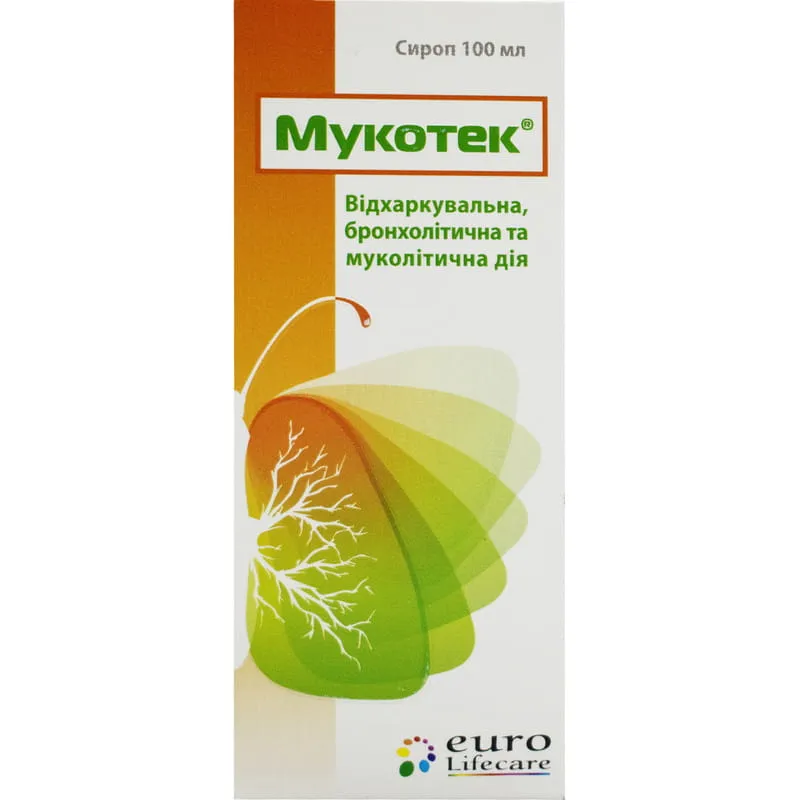
Table of Contents
INSTRUCTIONS for medical use of the medicinal product MUCOTEK® (MUCOTEK®)
Composition:
Active substances: 5 ml of syrup contains salbutamol sulfate equivalent to 1 mg of salbutamol, bromhexine hydrochloride 2 mg, guaifenesin 50 mg, menthol (levomenthol) 0.5 mg;
Excipients: sodium methylparahydroxybenzoate (E 219); sodium propylparahydroxybenzoate (E 217); sucrose; propylene glycol; sodium saccharin; sorbic acid; glycerin; citric acid monohydrate; sorbitol solution, non-crystallizing (E 420); Yellow FCF dye (E 110); purified water.
Pharmaceutical form. Syrup.
Main physicochemical properties: orange-colored syrup-like liquid.
Pharmacotherapeutic group.
Agents used for cough and colds. Expectorants. Combinations.
ATC code R05CA10.
Pharmacological properties.
Pharmacodynamics.
MUCOTEK® is a combination drug with bronchodilating, mucolytic, and expectorant properties. Due to the rational combination of salbutamol, bromhexine hydrochloride, guaifenesin, and menthol, it effectively and rapidly alleviates disorders of bronchopulmonary function.
Salbutamol, a selective β2-adrenergic receptor agonist, effectively dilates bronchi for a prolonged period. At therapeutic doses, it does not cause stimulation of cardiac activity. Bromhexine hydrochloride reduces the viscosity of sputum and promotes its evacuation from the bronchi. Guaifenesin relaxes the bronchi and clears them of mucus, facilitating expectoration. Menthol relieves symptoms of irritation and inflammation in the mucous membranes of the respiratory tract.
Pharmacokinetics.
No specific pharmacokinetic studies of the drug have been conducted.
Clinical characteristics.
Indications.
Mucolytic therapy in respiratory tract diseases accompanied by bronchospasm and formation of viscous, difficult-to-expectorate secretions: in tracheobronchitis, chronic obstructive pulmonary diseases, bronchial asthma, pulmonary emphysema.
Contraindications.
Hypersensitivity to salbutamol, other sympathomimetics, bromhexine, guaifenesin, menthol, or to any of the other components of the drug. Coronary insufficiency, arrhythmia, severe cardiovascular disorders, hyperthyroidism, severe hepatic function impairment, gastric or duodenal ulcer, or history of peptic ulcer disease. Porphyria.
Interaction with other medicinal products and other forms of interactions.
Concomitant use of salbutamol and other oral sympathomimetics is not recommended, as such combination may lead to cardiovascular disturbances.
Concomitant use of monoamine oxidase inhibitors (MAOIs) and indirect sympathomimetics often causes hypertensive crisis. Salbutamol should be prescribed with particular caution to patients receiving treatment with MAOIs or tricyclic antidepressants, as well as for at least 2 weeks after discontinuation of such therapy, since the adverse effects of salbutamol on the cardiovascular system may be potentiated when used concomitantly. Isolated cases have been reported in which adverse effects such as tachycardia and hypomanic state were associated with this interaction.
In healthy volunteers who received digoxin for 10 days, an increase in its serum concentration by 16% to 22% was observed after a single dose of salbutamol.
The clinical significance of these observations in patients with obstructive respiratory diseases receiving long-term treatment with salbutamol and digoxin has not yet been fully elucidated. However, monitoring of serum digoxin levels is advisable in patients receiving concomitant digoxin and salbutamol therapy.
Hypokalemia, which may develop during treatment with drugs containing salbutamol, may be exacerbated by concomitant use of diuretics. As a result, the risk of developing arrhythmias increases when cardiac glycosides are administered during such therapy. The effects of salbutamol may be reduced when used concomitantly with β-blockers, especially non-selective ones (such as propranolol), and may be enhanced when used concomitantly with xanthines (e.g., theophylline).
β-blockers may not only block the bronchodilating effect of β-agonists but also induce bronchospasm in patients with bronchial asthma. Therefore, the use of β-blockers is contraindicated in patients with asthma.
However, under certain circumstances—for example, as prophylaxis after myocardial infarction—the use of β-blockers in patients with asthma may be considered. In such cases, they should be used with caution.
β-agonists may potentiate ECG changes and/or hypokalemia caused by potassium-depleting diuretics (such as loop and thiazide diuretics).
Although the clinical significance of these effects is unknown, caution is recommended when β-agonists are used concomitantly with potassium-depleting diuretics.
Concomitant use of salbutamol with inhaled anesthetic agents, epinephrine, tricyclic antidepressants, and corticosteroids should be avoided.
Bromhexine should not be administered simultaneously with medicinal products containing codeine. Concomitant use of bromhexine and drugs that irritate the gastrointestinal tract (e.g., nonsteroidal anti-inflammatory drugs) may result in mutual potentiation of mucosal irritation in the stomach. Concurrent administration with antibiotics (amoxicillin, erythromycin, cefuroxime, doxycycline) and sulfonamides promotes increased concentrations of these drugs in bronchial secretions. Concomitant use with drugs that suppress the cough center may lead to difficulty in expectorating liquefied mucus (accumulation of bronchial secretions in the airways). Concurrent use with bronchodilators is possible. Bromhexine is incompatible with alkaline solutions.
Guaifenesin enhances the effects of medicinal products that depress the central nervous system, as well as ethanol. It may also cause false-positive results in diagnostic tests for the determination of 5-hydroxyindoleacetic acid and vanillylmandelic acid in urine. Guaifenesin enhances the effects of sedatives and muscle relaxants.
There are no data on negative interactions of menthol with other medicinal products.
Special precautions for use.
The drug should be used with caution in patients with seizure disorders, essential or symptomatic hypertension, ischemic heart disease and other cardiovascular diseases, as well as in patients suffering from subcompensated diabetes mellitus and glaucoma.
Salbutamol may affect the cardiovascular system, manifesting as increased pulse rate, elevated blood pressure, and ECG changes such as flattening of the T wave, QT interval prolongation, and ST segment depression. Therefore, salbutamol should be used with caution in patients with cardiovascular diseases, especially in the presence of arterial hypertension.
In some patients, as with other β-adrenergic agonists, clinically significant changes in systolic and diastolic blood pressure may occur.
Sudden and progressive worsening of bronchial asthma is a life-threatening condition requiring administration of corticosteroids or an increase in their dosage. The need to increase the dose of salbutamol indicates deterioration in asthma control and requires reassessment of therapy, including, if necessary, initiation of corticosteroid treatment.
Salbutamol may cause paradoxical bronchospasm with sudden worsening of breathlessness, which may be life-threatening. In such cases, the drug should be discontinued immediately and medical advice should be sought.
Very rarely, severe skin reactions such as Stevens-Johnson syndrome, toxic epidermal necrolysis (Lyell's syndrome), and acute generalized exanthematous pustulosis have been reported with bromhexine use. If skin or mucous membrane changes occur, medical advice should be sought immediately and the drug should be discontinued.
The drug should be used with particular caution in patients with impaired bronchial motility associated with excessive bronchial secretion (ciliary dyskinesia syndrome) due to the risk of mucus retention.
The drug should be used with particular caution (by reducing the dose or increasing the interval between doses) in patients with renal impairment (including severe renal failure) or liver disease (with mild to moderate hepatic insufficiency).
Periodic monitoring of liver function is recommended, especially during prolonged treatment.
Information on safety of excipients.
The syrup contains sucrose, which should be taken into account in patients with diabetes mellitus or those on a low-calorie diet. Also, due to the presence of sucrose in the formulation, the drug should not be used in patients with rare hereditary conditions such as fructose intolerance or sucrase-isomaltase deficiency. Blood glucose levels should be monitored before and during treatment in such patients.
The drug contains sodium methylparahydroxybenzoate (E 219) and sodium propylparahydroxybenzoate (E 217), which may cause allergic reactions (possibly delayed).
The drug contains sorbitol; therefore, it should not be taken by patients with rare hereditary fructose intolerance. Consult your doctor before taking this medicinal product.
This drug contains the colourant sunset yellow FCF (E 110), which may cause allergic reactions.
The drug also contains propylene glycol, which may cause symptoms similar to those caused by alcohol consumption.
Isolated cases of myocardial ischemia associated with salbutamol use have been reported. Patients with heart disease (e.g., ischemic heart disease) treated with salbutamol sulfate should seek medical help if chest pain or other symptoms indicating cardiac disease exacerbation occur. Symptoms such as dyspnea and chest pain should be carefully evaluated, as they may be due to either cardiac or respiratory disease.
Treatment with β2-agonists may result in severe hypokalemia; serum potassium levels should therefore be monitored. Particular caution is required in severe acute asthma, as this effect may be potentiated by concomitant use of xanthine derivatives, corticosteroids, diuretics, and hypoxia.
Like other β-adrenergic receptor agonists, salbutamol sulfate may cause reversible metabolic changes, such as increased blood glucose levels. As a result, isolated cases of ketoacidosis have been reported in patients with diabetes mellitus. Concomitant use of corticosteroids may exacerbate this condition.
Guaifenesin should be used cautiously in the treatment of cough with excessive sputum production, persistent or chronic cough due to smoking, asthma, chronic bronchitis, or emphysema.
Do not administer to patients prior to anesthesia.
The drug should not be used in patients with hypertrophic cardiomyopathy.
Bromhexine should not be administered to patients with gastric or duodenal ulcers or a history of peptic ulcer disease, as bromhexine may affect the gastrointestinal mucosa.
The syrup should be used under medical supervision in patients with a history of gastrointestinal bleeding. Adequate fluid intake is recommended during treatment to enhance the expectorant effect of bromhexine.
Use during pregnancy or breastfeeding.
Do not use.
Ability to affect reaction speed when driving or operating machinery.
During treatment with this drug, it is advisable to refrain from driving vehicles or operating machinery requiring high precision, fast reaction times, or sustained attention.
Administration method and dosage.
The drug should be used only as prescribed and under medical supervision.
Adults and children aged 12 years and older: 10 mL three times daily. Children aged 6 to 12 years: 5–10 mL three times daily. Children aged 2 to 6 years: 5 mL three times daily. Treatment duration should be determined individually by the physician.
Children.
The drug should not be administered to children under 2 years of age due to lack of experience with its use in this age group.
Overdose.
Symptoms: tachycardia, severe tremor (especially in the hands), seizures, gastrointestinal discomfort, nausea, vomiting, extrasystoles, hypotension up to shock, chest pain, hypokalemia, ataxia, diplopia, drowsiness, mild metabolic acidosis, tachypnea, headache, palpitations, arrhythmia, hyperglycemia, abdominal pain, exacerbation of peptic ulcer disease, restlessness, confusion, and respiratory depression.
The most common signs and symptoms of salbutamol overdose are transient pharmacologically induced β-agonist effects, such as tachycardia, tremor, hyperactivity, and metabolic disturbances including hypokalemia (see sections "Special precautions for use" and "Side effects").
Hypokalemia may occur following salbutamol overdose; therefore, serum potassium levels should be monitored. Cases of lactic acidosis have been reported after high therapeutic doses or overdose of short-acting β2-agonists; thus, serum lactate levels should be checked and metabolic acidosis monitored, especially in cases of persistent or increasing tachypnea despite improvement in bronchospasm symptoms such as stridor.
Mild or moderate guaifenesin overdose may cause dizziness, gastrointestinal disturbances, nausea, vomiting, or decreased muscle tone. Very high doses of guaifenesin may cause symptoms such as restlessness, confusion, and respiratory depression. Rare cases of bladder or kidney stones have been reported in patients who have taken large amounts of guaifenesin over a prolonged period.
Treatment. Symptomatic therapy. Electrocardiographic monitoring is recommended to assess cardiac function.
Adverse Reactions
Immune system disorders: hypersensitivity reactions including rash, pruritus, anaphylactic reactions, including drug hypersensitivity syndrome with eosinophilia and systemic symptoms, anaphylactic shock, angioedema, urticaria, oropharyngeal swelling, facial swelling.
Skin and subcutaneous tissue disorders: severe cutaneous adverse reactions – erythema multiforme, Stevens-Johnson syndrome, toxic epidermal necrolysis (Lyell's syndrome), acute generalized exanthematous pustulosis.
Gastrointestinal disorders: dyspeptic symptoms, nausea, vomiting, diarrhea, abdominal pain, exacerbation of peptic ulcer disease of the stomach/intestinal ulcers, gastralgia, unpleasant taste in the mouth.
Nervous system disorders: tremor, myalgia, headache, hyperactivity, dysgeusia, dizziness, restlessness, insomnia, oropharyngeal paresthesia.
Cardiovascular system disorders: tachycardia; peripheral vasodilation; arrhythmia, including ventricular fibrillation, supraventricular tachycardia, and extrasystoles; palpitations; myocardial ischemia; collapse.
Respiratory system disorders: respiratory disorders, increased cough.
Salbutamol may provoke paradoxical bronchospasm, which is a life-threatening condition. If this occurs, the drug must be discontinued immediately and alternative therapy initiated.
Metabolism and nutritional disorders: hypokalemia. The use of β₂-agonists may potentially lead to marked hypokalemia and increased serum lactate levels/lactic acidosis.
Other: muscle spasm, muscle cramps, sensation of muscle pressure, hyperthermia, chills, mydriasis, urinary bladder atony, increased sweating, thrombocytopenia, hyperglycemia.
In some patients, transient elevation of serum aminotransferase levels may occur due to bromhexine.
Reporting of suspected adverse reactions after drug registration is important. It allows continued monitoring of the benefit-risk balance of the medicinal product. Healthcare professionals and patients, or their legal representatives, should report all suspected adverse reactions and lack of efficacy through the Automated Pharmacovigilance Information System at: https://aisf.dec.gov.ua.
Shelf life.
2 years.
Storage conditions.
Store in the original packaging at a temperature not exceeding 30 °C.
Keep out of reach of children.
After each use, the bottle must be tightly closed with the cap and stored according to the storage conditions indicated on the packaging.
Packaging.
100 or 200 ml in a polyethylene bottle. One bottle with a measuring cup in a cardboard box.
Prescription category.
Prescription only.
Manufacturer.
Unique Pharmaceuticals Laboratories (a division of J.B. Chemicals and Pharmaceuticals Ltd).
Address.
Plot No. 215-216, J.I.D.C., Industrial Area, Panoli - 394 116, Bharuch District, India.