Moxin
Ukraine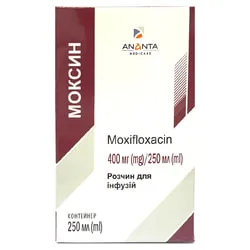
Instructions for Use
INSTRUCTIONS for medical use of the medicinal product MOXIN (MOXIN)
Composition:
Active substance: moxifloxacin;
250 ml of solution contain moxifloxacin hydrochloride equivalent to 400 mg of moxifloxacin;
Excipients: mannitol, disodium edetate, hydrochloric acid, sodium hydroxide, water for injections.
Pharmaceutical form. Infusion solution.
Main physicochemical characteristics: clear, pale yellow to greenish-yellow solution.
Pharmacotherapeutic group. Antimicrobial agents for systemic use. Antibacterial agents of the quinolone group. ATC code J01MA14.
Pharmacological properties.
Pharmacodynamics.
Mechanism of action
Moxifloxacin inhibits bacterial type II topoisomerases (DNA gyrase and topoisomerase IV), which are essential for replication, transcription, and repair of bacterial DNA.
Pharmacokinetics/pharmacodynamics
The ability of fluoroquinolones to kill bacteria is directly concentration-dependent. Pharmacodynamic studies of fluoroquinolones in animal models of infectious-inflammatory diseases and in humans indicate that the primary determinant of efficacy is the ratio between the area under the pharmacokinetic curve (AUC24) and the minimum inhibitory concentration (MIC).
Mechanism of resistance
Resistance to fluoroquinolones may arise due to mutations in DNA gyrase and topoisomerase IV. Other mechanisms include overexpression of efflux pumps, impermeability, and protein-mediated protection of DNA gyrase. Cross-resistance may be expected between moxifloxacin and other fluoroquinolones.
Resistance mechanisms characteristic of antibacterial agents belonging to other classes do not affect the antibacterial efficacy of moxifloxacin.
Breakpoint values
Clinical MICs and disk diffusion test breakpoint values for moxifloxacin according to EUCAST (European Committee on Antimicrobial Susceptibility Testing) (01.01.2012):
| Microorganism |
Susceptible |
Resistant |
| Staphylococcus spp. |
≤ 0.5 mg/l ≥ 24 mm |
> 1 mg/l < 21 mm |
| S. pneumoniae |
≤ 0.5 mg/l ≥ 22 mm |
> 0.5 mg/l < 22 mm |
| Streptococcus groups A, B, C, G |
≤ 0.5 mg/l ≥ 18 mm |
> 1 mg/l < 15 mm |
| H. influenzae |
≤ 0.5 mg/l ≥ 25 mm |
> 0.5 mg/l < 25 mm |
| M. catarrhalis |
≤ 0.5 mg/l ≥ 23 mm |
> 0.5 mg/l < 23 mm |
| Enterobacteriaceae |
≤ 0.5 mg/l ≥ 20 mm |
> 1 mg/l < 17 mm |
| Interpretive criteria, non-species related* |
≤ 0.5 mg/l |
> 1 mg/l |
*Non-species-related breakpoints were primarily established based on the relationship between pharmacokinetic and pharmacodynamic data and do not depend on the MICs of individual species. These data are used for species lacking individually defined breakpoints and do not apply to species for which interpretive criteria require determination.
Microbiological susceptibility
The prevalence of acquired resistance among isolated species may vary geographically and over time; therefore, local information on resistance is required, especially when treating severe infections. If necessary, consultation with specialists should be sought when local resistance prevalence has reached a level at which the benefit of using the agent, at least for certain types of infections, is questionable.
| Typically susceptible microorganisms |
| Aerobic gram-positive microorganisms Staphylococcus aureus *+ Streptococcus agalactiae (group B) Streptococcus milleri group* (S. anginosus, S. constellatus and S. intermedius) Streptococcus pneumoniae * Streptococcus pyogenes * (group A) Streptococcus viridans group (S. viridans, S. mutans, S. mitis, S. sanguinis, S. salivarius, S. thermophilus) |
| Aerobic gram-negative microorganisms Acinetobacter baumannii Haemophilus influenzae * Legionella pneumophila Moraxella (Branhamella) catarrhalis * |
| Anaerobic microorganisms Prevotella spp. |
| Other microorganisms Chlamydophila (Chlamydia) pneumoniae * Coxiella burnetii Mycoplasma pneumoniae * |
| Microorganisms with potential for resistance development |
| Aerobic gram-positive microorganisms Enterococcus faecalis* Enterococcus faecium* |
| Aerobic gram-negative microorganisms Enterobacter cloacae * Escherichia coli *# Klebsiella pneumoniae *# Klebsiella oxytoca Proteus mirabilis * |
| Anaerobic microorganisms Bacteroides fragilis* |
| Resistant microorganisms |
| Aerobic gram-negative microorganisms Pseudomonas aeruginosa |
| *Clinical efficacy has been sufficiently demonstrated in clinical studies. +Methicillin-resistant S. aureus is very often simultaneously resistant to fluoroquinolones. In methicillin-resistant S. aureus, resistance rates to moxifloxacin exceed 50%. #Strains producing extended-spectrum beta-lactamases (ESBL) are also resistant to fluoroquinolones. |
Pharmacokinetics.
Absorption and Bioavailability
After a single 1-hour intravenous infusion of 400 mg, the maximum concentration of the drug is reached at the end of the infusion and is approximately 4.1 mg/L, which is about 26% higher than this parameter after oral administration (3.1 mg/L). The AUC value is approximately 39 mg*h/L after intravenous administration, which slightly exceeds the parameter after oral administration (35 mg*h/L); absolute bioavailability is approximately 91%. There is no need to adjust doses according to age or gender of patients when moxifloxacin is administered intravenously. Pharmacokinetics are linear within the range of 50–200 mg for single oral doses, up to 600 mg for single intravenous doses, and up to 600 mg administered once daily for 10 days.
Distribution
Moxifloxacin rapidly distributes into the extravascular space. The volume of distribution at steady state (Vss) is approximately 2 L/kg. In vitro and ex vivo studies indicate that protein binding is approximately 40–42%, independent of drug concentration. Moxifloxacin binds primarily to serum albumin.
Maximum concentrations of 5.4 mg/kg and 20.7 mg/L (geometric mean values) were observed in bronchial mucosa and epithelial lining fluid, respectively, 2.2 hours after oral administration. The corresponding maximum concentration in alveolar macrophages was 56.7 mg/kg. A concentration of 1.75 mg/L was observed in skin blister fluid 10 hours after intravenous administration. The "free concentration – time" profile for interstitial fluid is similar to that of plasma, with a maximum free concentration of 1.0 mg/L (geometric mean) reached approximately 1.8 hours after intravenous administration.
Metabolism
Moxifloxacin undergoes phase II biotransformation and is excreted via the kidneys (approximately 40%) and feces/bile (approximately 60%) both unchanged and as sulfated (M1) and glucuronide (M2) metabolites. M1 and M2 are metabolites relevant only in humans, and both are microbiologically inactive.
During in vitro studies and phase I clinical trials, no metabolic pharmacokinetic interactions were observed with other drugs involved in phase I biotransformation, including cytochrome P450 enzyme system. There is no evidence of oxidative metabolism.
Elimination
The elimination half-life of moxifloxacin from plasma is approximately 12 hours. The mean steady-state total clearance after administration of 400 mg ranges from 179 to 246 mL/min. After intravenous administration of 400 mg, urinary excretion of unchanged drug was approximately 22%, and fecal excretion was 26%. Cumulative excretion (unchanged drug and metabolites) totaled approximately 98% after intravenous administration. Renal clearance is approximately 24–53 mL/min, indicating partial tubular reabsorption of the drug by the kidneys. Concomitant administration of ranitidine and probenecid does not alter the renal clearance of the parent drug.
Renal Impairment
No significant changes in moxifloxacin pharmacokinetics were observed in patients with renal impairment (including patients with creatinine clearance > 20 mL/min/1.73 m²). With decreasing renal function, the concentration of metabolite M2 (glucuronide) increases by nearly 2.5-fold (with creatinine clearance < 30 mL/min/1.73 m²).
Hepatic Impairment
Pharmacokinetic studies in patients with hepatic impairment (Child-Pugh classes A and B) do not allow definitive conclusions regarding differences in parameters between patients with hepatic impairment and healthy volunteers. Hepatic impairment was associated with higher plasma exposure to metabolite M1, while exposure to the parent drug was similar to that in healthy volunteers. There is insufficient clinical experience with moxifloxacin for treatment of patients with hepatic impairment.
Preclinical Safety Data
In traditional repeated-dose toxicity studies in animals, moxifloxacin caused hematological toxicity and hepatotoxicity. Toxic effects on the central nervous system (CNS) were observed. These effects occurred after administration of high doses of moxifloxacin or prolonged use.
High oral doses in animals (≥ 60 mg/kg), resulting in plasma concentrations ≥ 20 mg/L, caused changes in electroretinogram parameters and, in some cases, retinal atrophy.
After intravenous administration, systemic toxicity was most pronounced when moxifloxacin was administered as bolus injections (45 mg/kg) and was not observed when moxifloxacin (40 mg/kg) was administered via slow infusions over 50 minutes.
After intraarterial administration, inflammatory changes extending into perivascular soft tissues were observed, indicating that intraarterial administration of moxifloxacin should be avoided.
Moxifloxacin was genotoxic in in vitro tests using bacteria or mammalian cells. However, genotoxicity was not observed in vivo, despite administration of very high doses of moxifloxacin. Moxifloxacin showed no carcinogenic effect in animal carcinogenicity studies.
In vitro, moxifloxacin at high concentrations affected cardiac electrophysiological parameters, potentially causing QT interval prolongation.
After intravenous administration of moxifloxacin to animals at a dose of 30 mg/kg via infusions lasting 15, 30, or 60 minutes, a relationship between the degree of QT interval prolongation and infusion rate was observed: the shorter the infusion time, the more pronounced the QT interval prolongation. QT interval prolongation was not observed when the 30 mg/kg dose was administered via a 60-minute infusion.
In studies of the effect of moxifloxacin on animal reproductive function, it was demonstrated that moxifloxacin crosses the placenta. Animal studies did not reveal teratogenic effects of moxifloxacin or impairment of fertility after its administration. Slight increases in the frequency of spinal and rib malformations were observed in animals, but only after administration of a dose (20 mg/kg intravenously) associated with severe maternal toxicity. Increased rates of pregnancy loss were observed in animals at therapeutic plasma concentrations predicted for human use.
It is known that quinolones, including moxifloxacin, cause damage to cartilage in large diarthrodial joints in immature animals.
Clinical characteristics.
Indications.
Community-acquired pneumonia.
Complicated skin and soft tissue infections.
Moxifloxacin should be used only when the use of other antibacterial agents normally recommended for initial treatment of these infections is inappropriate.
Attention should be paid to official guidelines on the appropriate use of antibacterial agents.
Contraindications.
- Hypersensitivity to moxifloxacin, other quinolone antibiotics, or any of the excipients;
- Pregnancy or breastfeeding (see section "Use in pregnancy or breastfeeding");
- Pediatric age (under 18 years);
- History of tendon disorders related to prior quinolone use.
During preclinical and clinical studies, administration of moxifloxacin was associated with changes in cardiac electrophysiological parameters, manifested as QT interval prolongation. For this reason, moxifloxacin is contraindicated in patients with:
- Congenital or acquired QT prolongation;
- Electrolyte imbalance, particularly uncorrected hypokalemia;
- Clinically significant bradycardia;
- Clinically significant heart failure with reduced left ventricular ejection fraction;
- History of symptomatic arrhythmias.
Moxifloxacin must not be co-administered with medicinal products that prolong the QT interval (see also section "Interaction with other medicinal products and other forms of interaction").
Due to insufficient clinical experience, moxifloxacin is contraindicated in patients with hepatic impairment (Child-Pugh class C) and in those with transaminase levels elevated five times or more above the upper limit of normal.
Interaction with other medicinal products and other forms of interaction.
Interaction with medicinal products
An additive effect of moxifloxacin and other medicinal products capable of causing QTc interval prolongation cannot be excluded. This effect may lead to the development of ventricular arrhythmias, including polymorphic ventricular tachycardia of the torsades de pointes type. Therefore, the use of moxifloxacin in combination with any of the following medicinal products is contraindicated (see also section "Contraindications"):
- Class IA antiarrhythmics (e.g. quinidine, hydroquinidine, disopyramide);
- Class III antiarrhythmics (e.g. amiodarone, sotalol, dofetilide, ibutilide);
- Antipsychotic agents (e.g. phenothiazines, pimozide, sertindole, haloperidol, sulpiride);
- Tricyclic antidepressants;
- Certain antimicrobial agents (saquinavir, sparfloxacin, intravenous erythromycin, pentamidine, antimalarials including halofantrine);
- Certain antihistamines (terfenadine, astemizole, mizolastine);
- Other medicinal products (cisapride, intravenous vinca alkaloids, bepridil, difemanil).
Moxifloxacin should be used with caution in patients receiving medicinal products that may reduce potassium levels (e.g. loop and thiazide diuretics, laxatives and enemas (at high doses), corticosteroids, amphotericin B), or medicinal products associated with clinically significant bradycardia.
Repeated administration of moxifloxacin in healthy volunteers was associated with an increase in digoxin Cmax by approximately 30%, without affecting AUC or trough levels.
In studies involving volunteers and patients with diabetes mellitus, concomitant oral administration of moxifloxacin and glyburide resulted in a reduction of glyburide plasma maximum concentration by approximately 21%. The combination of glyburide with moxifloxacin may theoretically provoke mild, short-term hyperglycemia. However, the observed changes in glyburide pharmacokinetics did not result in changes in pharmacodynamic parameters (blood glucose, insulin levels). Therefore, there is no clinically significant interaction between moxifloxacin and glyburide.
Changes in international normalized ratio (INR).
Numerous cases of increased activity of oral anticoagulants have been reported in patients receiving antimicrobial agents, particularly fluoroquinolones, macrolides, tetracyclines, co-trimoxazole, and certain cephalosporins. Risk factors include infectious disease and inflammatory processes, age, and general patient condition. Because of this, it is difficult to determine whether changes in INR are due to the infection itself or to treatment. As a precautionary measure, INR should be monitored more frequently. Dose adjustment of the oral anticoagulant should be performed as needed.
In clinical studies, the following substances were shown not to have clinically significant interactions with moxifloxacin: ranitidine, probenecid, oral contraceptives, calcium supplements, morphine administered parenterally, theophylline, cyclosporine, or itraconazole.
In vitro studies using human cytochrome P450 enzymes confirmed these results. Thus, metabolic interaction via cytochrome P450 enzymes is unlikely.
Interaction with food
Moxifloxacin does not exhibit clinically significant interaction with food, including dairy products.
Special precautions for safety.
Each vial is intended for single use only. Any unused solution must be discarded.
The following solutions have been shown to be compatible with the 400 mg moxifloxacin infusion solution: water for injection; 0.9% sodium chloride solution; 1-molar sodium chloride solution; 5%, 10%, and 40% glucose solutions; 20% xylitol solution; Ringer's solution; compound sodium lactate solutions (Hartmann's solution, lactated Ringer's solution).
Moxifloxacin infusion solution must not be administered simultaneously with other medicinal products.
Do not use the medicinal product if visible particulate matter is present or if the solution is cloudy.
Precipitation may occur during storage at cool temperatures; the precipitate dissolves at room temperature. Therefore, storage of the infusion solution at temperatures below 15°C is not recommended.
Special precautions for use.
Moxifloxacin should be avoided in patients with a history of serious adverse reactions following the use of drugs containing quinolones or fluoroquinolones (see section "Adverse reactions"). Treatment with moxifloxacin in such patients should be initiated only if there are no alternative therapies available and after careful assessment of the benefit-risk ratio (see also section "Contraindications").
The benefits of moxifloxacin treatment, particularly in cases of mild infections, should be evaluated considering the information provided in this section.
QTc interval prolongation and clinical conditions associated with potential QTc interval prolongation
| Moxifloxacin has been shown to prolong the QTc interval on the electrocardiogram in some patients. The degree of QT interval prolongation may increase with rising plasma concentrations of the drug during rapid intravenous infusion. Therefore, the recommended duration of infusion, which should be at least 60 minutes, must be observed, and the intravenous dose should not exceed 400 mg once daily. For more details, see sections "Contraindications" and "Interaction with other medicinal products and other forms of interaction". |
Therapy with moxifloxacin should be discontinued if symptoms that may be associated with cardiac arrhythmia occur, regardless of whether this is confirmed by ECG findings.
Moxifloxacin should be used with caution in patients with conditions predisposing to arrhythmia (e.g., acute myocardial ischemia), as such patients have an increased risk of developing ventricular arrhythmia (including polymorphic ventricular tachycardia of the torsades de pointes type) and cardiac arrest (see also sections "Contraindications" and "Interaction with other medicinal products and other forms of interaction"). Moxifloxacin should be used cautiously in patients taking medicinal products that may reduce potassium levels (see also sections "Contraindications" and "Interaction with other medicinal products and other forms of interaction").
Moxifloxacin should be prescribed with caution to patients receiving medicinal products associated with clinically significant bradycardia (see also section "Contraindications").
Women and elderly patients may exhibit increased sensitivity to the effects of drugs that cause QTc interval prolongation, such as moxifloxacin; therefore, these patients require special attention.
Increased sensitivity/allergic reactions
Cases of hypersensitivity and allergic reactions have been reported following the first administration of fluoroquinolones, including moxifloxacin. Anaphylactic reactions may manifest as life-threatening shock even after the first dose of the drug. In case of clinical manifestations of severe hypersensitivity reactions, moxifloxacin therapy should be discontinued and appropriate treatment initiated (e.g., shock therapy).
Severe hepatic impairment
Cases of fulminant hepatitis have been reported during moxifloxacin therapy, which may lead to liver failure (including fatal cases) (see section "Adverse reactions"). If symptoms of fulminant hepatitis occur, such as rapidly developing asthenia accompanied by jaundice, dark urine, tendency to bleeding, or hepatic encephalopathy, patients are advised to consult a physician before continuing treatment.
Liver function tests should be performed if signs of hepatic dysfunction occur.
Severe skin reactions
Cases of severe skin reactions, including toxic epidermal necrolysis (TEN), also known as Lyell's syndrome, Stevens-Johnson syndrome (SJS), acute generalized exanthematous pustulosis (AGEP), and drug reaction with eosinophilia and systemic symptoms (DRESS), some of which were life-threatening or fatal, have been reported during moxifloxacin therapy (see section "Adverse reactions"). Patients should be warned about signs and symptoms of severe skin reactions and carefully monitored during treatment. Moxifloxacin should be immediately discontinued and alternative therapy considered if signs or symptoms suggestive of such reactions occur. If severe skin reactions such as SJS, TEN, AGEP, or DRESS develop during moxifloxacin therapy, re-administration of moxifloxacin to that patient is absolutely contraindicated.
Patients predisposed to seizures
Quinolones are known to induce seizures. They should be prescribed with caution to patients with CNS disorders or other risk factors that may provoke seizures or lower the seizure threshold. If seizures occur, moxifloxacin therapy should be discontinued and appropriate measures taken.
Prolonged, disabling, and potentially irreversible serious adverse reactions
Rare cases of prolonged (lasting months or years), disabling, and potentially irreversible serious adverse reactions affecting various, sometimes multiple organ systems (musculoskeletal, nervous, psychiatric, and sensory organs) have been reported in patients receiving quinolones and fluoroquinolones, regardless of patient age or existing risk factors. Moxifloxacin therapy should be immediately discontinued at the first signs of any serious adverse reaction, and patients should be advised to consult a physician.
Peripheral neuropathy
Cases of sensory or sensorimotor polyneuropathy leading to paresthesia, hypoesthesia, dysesthesia, or weakness have been reported in patients receiving quinolones and fluoroquinolones. Patients taking moxifloxacin should be advised to inform their physician about the development of neuropathic symptoms such as pain, burning, tingling, numbness, or weakness before continuing treatment to prevent potentially irreversible conditions (see section "Adverse reactions").
Psychiatric reactions
Psychiatric reactions may occur even after the first dose of fluoroquinolones, including moxifloxacin. In rare cases, depression or psychiatric reactions progressed to suicidal ideation and self-harming behaviors such as suicide attempts (see section "Adverse reactions"). If such reactions occur, moxifloxacin therapy should be discontinued and appropriate measures taken. Caution should be exercised when prescribing moxifloxacin to patients with a history of psychiatric disorders or current psychiatric conditions.
Antibiotic-associated diarrhea, including colitis
Cases of antibiotic-associated diarrhea (AAD) and antibiotic-associated colitis (AAC), including pseudomembranous colitis and Clostridium difficile-associated diarrhea, have been observed with broad-spectrum antibiotics, including moxifloxacin. The severity of these events may range from mild diarrhea to fatal colitis. Therefore, it is important to consider this diagnosis in patients who develop severe diarrhea during or after moxifloxacin therapy. If suspected or confirmed AAD or AAC, antimicrobial therapy including moxifloxacin should be discontinued immediately and appropriate therapeutic measures initiated. Additionally, appropriate infection control measures should be implemented to reduce transmission risk. Antiperistaltic agents are contraindicated in patients who develop severe diarrhea.
Patients with severe myasthenia
Moxifloxacin should be used with caution in patients with severe myasthenia gravis, as symptoms may be exacerbated.
Tendon inflammation and tendon rupture
Tendon inflammation and rupture (particularly of the Achilles tendon, but not exclusively) may occur during therapy with quinolones and fluoroquinolones, sometimes bilaterally, developing even within 48 hours of starting treatment and potentially persisting for several months after discontinuation (see sections "Contraindications" and "Adverse reactions"). The risk of tendinitis and tendon rupture is increased in elderly patients, patients with renal impairment, patients with solid organ transplants, and patients receiving concomitant corticosteroid therapy. Therefore, concomitant use with corticosteroids should be avoided.
Moxifloxacin therapy should be discontinued at the first symptoms of tendinitis (e.g., painful swelling or inflammation), and alternative therapy considered. Appropriate treatment (e.g., immobilization) should be initiated for the affected limb(s). Corticosteroids should not be used if symptoms of tendinopathy develop.
Aortic aneurysm and aortic dissection, valvular regurgitation/insufficiency
Epidemiological studies suggest an increased risk of aortic aneurysm and aortic dissection, particularly in elderly patients, and valvular regurgitation at the aortic and mitral valves following fluoroquinolone use. Rare cases of aortic aneurysm and aortic dissection, sometimes complicated by rupture (including fatal cases), as well as regurgitation/insufficiency of any cardiac valve, have been reported in patients receiving fluoroquinolones (see section "Adverse reactions"). Therefore, fluoroquinolones should be used only after careful benefit-risk assessment and consideration of alternative therapeutic options in patients with a history of aortic aneurysm or congenital valvular defect, or in patients diagnosed with aortic aneurysm and/or aortic dissection or valvular heart disease, as well as in the presence of other risk factors or conditions predisposing to aortic aneurysm and dissection and valvular regurgitation/insufficiency (e.g., connective tissue disorders such as Marfan syndrome or vascular Ehlers-Danlos syndrome, Turner syndrome, Behçet's disease, arterial hypertension, rheumatoid arthritis), or also aortic aneurysm and dissection (e.g., vascular disorders such as Takayasu arteritis or giant cell arteritis, known atherosclerosis, or Sjögren's syndrome), or also valvular regurgitation/insufficiency (e.g., infective endocarditis).
The risk of developing aortic aneurysm and dissection, as well as their rupture, may be increased in patients receiving concomitant systemic corticosteroid therapy.
Patients should be advised to seek immediate medical attention at an emergency department if sudden abdominal, chest, or back pain occurs.
Patients should be advised to seek immediate medical attention if acute shortness of breath, new onset of rapid heartbeat, or development of abdominal or lower limb edema occurs.
Patients with renal impairment
Moxifloxacin should be prescribed with caution to elderly patients with renal disorders who are unable to maintain adequate fluid intake, as dehydration increases the risk of renal failure.
Visual disturbances
In case of visual impairment or any effect on the eyes, immediate consultation with an ophthalmologist is required (see sections "Ability to affect reaction rate when driving or operating machinery", "Adverse reactions").
Dysglycemia
As with all fluoroquinolones, cases of blood glucose deviations, both hypoglycemia and hyperglycemia, have been reported during moxifloxacin therapy (see section "Adverse reactions"). Dysglycemia occurred predominantly in elderly patients and diabetic patients receiving concomitant oral hypoglycemic agents (e.g., sulfonylureas) or insulin with moxifloxacin therapy. Cases of hypoglycemic coma have been reported. Diabetic patients are advised to closely monitor blood glucose levels.
Prevention of photosensitization reactions
Photosensitization reactions have been reported in patients receiving quinolones. However, study data indicate that the risk of photosensitization reactions with moxifloxacin is low. Patients should avoid prolonged and/or intense exposure to sunlight or ultraviolet radiation during moxifloxacin therapy (see section "Adverse reactions").
Patients with glucose-6-phosphate dehydrogenase deficiency
Patients with reduced glucose-6-phosphate dehydrogenase activity, as well as those with a family history of this condition, are prone to hemolytic reactions during quinolone therapy. Therefore, moxifloxacin should be used with caution in this patient group.
Periarterial tissue inflammation
Moxifloxacin for infusion is intended for intravenous use only. Intraarterial administration should be avoided, as periarterial tissue inflammation was observed in preclinical studies with this route of administration.
Patients with specific complicated skin and soft tissue infections
The clinical efficacy of moxifloxacin in treating severe infections related to burns, fasciitis, and infected diabetic foot with osteomyelitis has not been established.
Effect on biological tests
Moxifloxacin may affect test results for Mycobacterium spp. by suppressing mycobacterial growth, potentially leading to false-negative results in patients taking moxifloxacin.
Patients with infections caused by methicillin-resistant Staphylococcus aureus (MRSA)
Moxifloxacin is not recommended for the treatment of infections caused by methicillin-resistant Staphylococcus aureus (MRSA). If MRSA infection is suspected or confirmed, appropriate antibacterial therapy should be initiated (see section "Pharmacodynamics").
Information on excipients
This medicinal product contains less than 1 mmol (23 mg)/dose of sodium, i.e., essentially sodium-free.
Use during pregnancy or breastfeeding.
Pregnancy
The safety of moxifloxacin use during pregnancy in humans has not been studied. Animal studies indicate reproductive toxicity (see section "Pharmacological properties"). The potential risk to humans is not established. Due to experimentally demonstrated harmful effects of fluoroquinolones on weight-bearing cartilage in immature animals and considering the development of reversible joint lesions in children treated with certain fluoroquinolones, moxifloxacin should not be administered to pregnant women (see section "Contraindications").
Breastfeeding
There are no data on the use of moxifloxacin in breastfeeding women. Preclinical studies indicate that a small amount of moxifloxacin passes into breast milk. Due to the lack of data on effects in breastfed infants and considering the experimentally demonstrated risk of harmful effects of fluoroquinolones on weight-bearing cartilage in immature animals, breastfeeding is contraindicated during moxifloxacin therapy (see section "Contraindications").
Fertility
Animal studies did not reveal effects on fertility (see section "Pharmacological properties").
Ability to affect reaction rate when driving or operating machinery.
Studies on the effect of moxifloxacin on the ability to drive or operate machinery have not been conducted. However, fluoroquinolones, including moxifloxacin, may affect reaction speed when driving or operating machinery by causing central nervous system reactions (e.g., dizziness, acute transient visual loss) or acute and brief loss of consciousness (syncope) (see section "Adverse reactions"). Patients are advised to assess their individual response to moxifloxacin before driving or operating machinery.
Method of Administration and Dosage
Dosage
The recommended dosage regimen is 400 mg of moxifloxacin administered as an infusion once daily.
Initial intravenous therapy may be continued with oral administration of 400 mg moxifloxacin tablets, provided there are clinical indications to do so.
In clinical trials, most patients switched to oral moxifloxacin within 4 days (for community-acquired pneumonia) or 6 days (for complicated skin and soft tissue infections). The recommended total duration of intravenous and oral treatment is 7–14 days for community-acquired pneumonia and 7–21 days for complicated skin and soft tissue infections.
Method of Administration
The drug should be administered intravenously as a continuous infusion lasting at least 60 minutes (see also section "Special Warnings and Precautions for Use").
If indicated, the infusion solution may be administered via a Y-site catheter together with compatible infusion solutions (see section "Special Precautions for Safety").
Renal or Hepatic Impairment
Patients with mild to severe renal impairment, as well as patients undergoing chronic dialysis (e.g., hemodialysis or long-term ambulatory peritoneal dialysis), do not require dose adjustment (for further details, see section "Pharmacological Properties").
There is insufficient information regarding the use of moxifloxacin in patients with hepatic impairment (see section "Contraindications").
Other Special Patient Groups
Elderly patients and patients with low body weight do not require dose adjustment.
Children
Due to the negative effects on cartilage in young animals (see section "Pharmacological Properties"), moxifloxacin is contraindicated in children (under 18 years of age) (see section "Contraindications").
The efficacy and safety of moxifloxacin in children and adolescents have not been established (see section "Contraindications").
Overdose
No specific interventions are recommended following accidental overdose. In case of overdose, symptomatic treatment should be administered. Since QT interval prolongation may occur, ECG monitoring is required. Concomitant administration of activated charcoal with a 400 mg dose of moxifloxacin given either orally or intravenously reduces systemic bioavailability by more than 80% or 20%, respectively. Administration of activated charcoal in the early phase of absorption may effectively prevent excessive systemic exposure to moxifloxacin in cases of oral overdose.
Adverse reactions.
The adverse reactions listed below were observed during clinical trials and in the post-marketing period of moxifloxacin use at a dose of 400 mg once daily (intravenous therapy only, sequential [intravenous/oral], and oral administration). Adverse reactions are classified according to their frequency.
All adverse reactions, except nausea and diarrhea, occurred with a frequency of less than 3%.
Within each group, adverse events are listed in order of decreasing severity. Frequency is defined as follows: common (≥ 1/100, < 1/10), uncommon (≥ 1/1,000, < 1/100), rare (≥ 1/10,000, < 1/1,000), very rare (< 1/10,000), frequency not known (cannot be estimated from available data).
| System organ classes |
Common |
Uncommon |
Occasional |
Rare |
Frequency unknown |
| Infections and infestations |
superinfections associated with resistant bacteria or fungi, e.g. oral and vaginal candidiasis |
||||
| Blood and lymphatic system disorders |
anaemia, leucopenia, neutropenia, thrombocytopenia, thrombocytosis, eosinophilia, prolonged prothrombin time/increased INR |
increased prothrombin level/decreased INR, agranulocytosis, pancytopenia |
|||
| Immune system disorders |
allergic reactions (see section "Special warnings and precautions for use") |
anaphylaxis, including life-threatening shock in rare cases (see section "Special warnings and precautions for use"), angioedema/ angioneurotic oedema (including potentially life-threatening laryngeal oedema) (see section "Special warnings and precautions for use") |
|||
| Endocrine disorders |
syndrome of inappropriate antidiuretic hormone secretion (SIADH) |
||||
| Metabolism and nutrition disorders |
hyperlipidaemia |
hyperglycaemia, hyperuricaemia |
hypoglycaemia |
||
| Psychiatric disorders* |
anxiety reactions, increased psychomotor activity/agitation |
mood lability, depression (in rare cases with possible self-harm manifested as suicidal thoughts/ideation or suicide attempts) (see section "Special warnings and precautions for use"), hallucinations, delirium |
depersonalisation, psychotic reactions (with possible self-harm manifested as suicidal thoughts/ideation or suicide attempts) (see section "Special warnings and precautions for use") |
||
| Nervous system disorders* |
headache, dizziness |
paraesthesia/dysesthesia, taste disturbances (including ageusia in rare cases), confusion and disorientation, sleep disorders (mainly insomnia), tremor, vertigo, somnolence |
hypoaesthesia, smell disturbances (including loss of smell), pathological dreams, coordination disorders (including gait disturbances due to dizziness or vertigo), seizures (including grand mal seizures) (see section "Special warnings and precautions for use"), attention disturbances, speech disorder, amnesia, peripheral neuropathy and polyneuropathy |
hyperaesthesia |
|
| Eye disorders* |
vision disorders, including diplopia and blurred vision (particularly during CNS reactions) (see section "Special warnings and precautions for use") |
photophobia |
transient vision loss (particularly during CNS reactions) (see sections "Special warnings and precautions for use", "Effect on ability to drive and use machines"), uveitis and bilateral acute transient iris transillumination (see section "Special warnings and precautions for use") |
||
| Ear and labyrinth disorders* |
tinnitus, hearing disturbances, including deafness (usually reversible) |
||||
| Cardiac disorders** |
QT interval prolongation in patients with hypokalaemia (see sections "Contraindications" and "Special warnings and precautions for use") |
QT interval prolongation (see section "Special warnings and precautions for use"), palpitations, tachycardia, atrial fibrillation, angina pectoris |
ventricular tachyarrhythmias, syncope (e.g. acute and short-term loss of consciousness) |
non-specific arrhythmias, torsade de pointes (see section "Special warnings and precautions for use"), cardiac arrest (see section "Special warnings and precautions for use") |
|
| Vascular disorders** |
vasodilation |
arterial hypertension, hypotension |
vasculitis |
||
| Respiratory, thoracic and mediastinal disorders |
dyspnoea (including asthmatic attack) |
||||
| Gastrointestinal disorders |
nausea, vomiting, abdominal pain and discomfort, diarrhoea |
decreased appetite and reduced food intake, constipation, dyspepsia, flatulence, gastritis, increased amylase levels |
dysphagia, stomatitis, antibiotic-associated colitis (including pseudomembranous colitis, which in rare cases may be associated with life-threatening complications) (see section "Special warnings and precautions for use") |
||
| Hepatobiliary disorders |
increased transaminase levels |
liver function abnormalities (including increased LDH (lactate dehydrogenase) levels), increased bilirubin, GGT (gamma-glutamyl transferase), alkaline phosphatase levels |
jaundice, hepatitis (mainly cholestatic) |
fulminant hepatitis, which may lead to life-threatening liver failure (see section "Special warnings and precautions for use") |
|
| Skin and subcutaneous tissue disorders |
itching, rash, urticaria, dry skin |
bullous skin reactions such as Stevens-Johnson syndrome or toxic epidermal necrolysis (potentially life-threatening) (see section "Special warnings and precautions for use") |
acute generalised exanthematous pustulosis (AGEP), drug reaction with eosinophilia and systemic symptoms (DRESS) (see section "Special warnings and precautions for use"), fixed drug eruption, photosensitivity reactions (see section "Special warnings and precautions for use") |
||
| Musculoskeletal and connective tissue disorders* |
arthralgia, myalgia |
tendinitis (see section "Special warnings and precautions for use"), increased muscle tone, muscle cramps, muscle weakness |
tendon rupture (see section "Special warnings and precautions for use"), arthritis, increased muscle rigidity as a symptom of myasthenia gravis (see section "Special warnings and precautions for use") |
rhabdomyolysis |
|
| Renal and urinary disorders |
dehydration |
renal function impairment (including increased blood urea nitrogen and creatinine levels), renal failure (see section "Special warnings and precautions for use") |
|||
| General disorders and administration site conditions* |
reactions at injection and infusion site |
malaise (mainly asthenia or fatigue), pain (including back, chest, pelvic and limb pain), increased sweating, (thrombo-)phlebitis at infusion site |
oedema |
* Rare cases of prolonged (lasting for months or years), disabling and potentially irreversible serious adverse reactions affecting various, sometimes multiple organ systems and sensory organs (including such reactions as tendon inflammation, tendon rupture, arthralgia, limb pain, gait disturbance, neuropathy associated with paresthesia, depression, fatigue, memory impairment, sleep disorders, and disturbances of hearing, vision, taste, and smell) have been reported in patients treated with quinolones and fluoroquinolones, regardless of age and pre-existing risk factors (see section "Special precautions for use").
** Cases of aneurysm and aortic dissection, sometimes complicated by rupture (including fatal cases), and regurgitation/insufficiency of any cardiac valve have been reported in patients receiving fluoroquinolones (see section "Special precautions for use").
The frequency of the following effects is higher with intravenous administration of the drug followed by oral therapy or without such transition.
Common: increased gamma-glutamyl transferase levels.
Uncommon: ventricular tachyarrhythmia, hypotension, edema, antibiotic-associated colitis (including pseudomembranous colitis, which in rare cases may be associated with life-threatening complications; see section "Special precautions for use"), seizures (including grand mal seizures) (see section "Special precautions for use"), hallucinations, renal dysfunction (including increased blood urea nitrogen and creatinine levels), renal failure (see section "Special precautions for use").
Rarely, after treatment with other fluoroquinolones, adverse effects have been reported that are likely to potentially occur also during moxifloxacin treatment: increased intracranial pressure (including idiopathic intracranial hypertension), hypernatremia, hypercalcemia, hemolytic anemia, rhabdomyolysis.
Description of selected adverse reactions
Anxiety, suicidal thoughts, panic attacks, neuralgia, and disturbances in attention concentration have been reported with fluoroquinolone use as potential components of prolonged and disabling adverse reactions that may lead to loss of work capacity.
Reporting of suspected adverse reactions
Reporting of suspected adverse reactions after drug authorization is important. It allows continuous monitoring of the benefit-risk balance of the medicinal product. Healthcare professionals should report any suspected adverse reactions.
Shelf life. 2 years.
Storage conditions.
Store in the original packaging at a temperature not exceeding 25 °C.
Keep out of reach of children.
Do not freeze.
Incompatibility.
Moxifloxacin infusion solution must not be administered simultaneously with other incompatible solutions, including: 10% sodium chloride solution; 20% sodium chloride solution; 4.2% sodium bicarbonate solution; 8.4% sodium bicarbonate solution.
This medicinal product should not be mixed with other medicinal products except those specified in the section "Special precautions for safety".
Packaging. 250 ml of the medicinal product in a container, 1 container in a pouch in a carton.
Prescription status. Prescription only.
Manufacturer.
EuroLife Healthcare Pvt. Ltd.
Manufacturer's address and location of operations.
Plot No. 520, Bhagwanpur, Roorkee, Haridwar, Uttarakhand, India.
Marketing Authorization Holder.
Ananta Medicare Ltd.
Address of Marketing Authorization Holder.
Suite 1, 2 Station Court, Imperial Wharf, Townmead Road, Fulham, London, United Kingdom.
Frequently Asked Questions
What is Moxin prescribed for?
The drug is used to treat community-acquired pneumonia, as well as complicated infections of the skin and subcutaneous tissues.
How should Moxin be taken correctly?
The drug is administered intravenously as a continuous infusion lasting at least 60 minutes. The recommended dose is 400 mg once daily.
Who should not take this drug?
Use is contraindicated in children under 18 years of age, pregnant women, and breastfeeding women. The drug should also not be taken in case of hypersensitivity to the components, a history of tendon diseases, or in patients with certain cardiac rhythm disorders (QT interval prolongation, bradycardia, arrhythmias) and heart failure.
What are the possible side effects of Moxin?
Possible side effects include nausea, diarrhea, headache, dizziness, mood changes (depression, anxiety), seizures, visual or hearing impairment, as well as serious reactions such as tendon inflammation or rupture, liver dysfunction, and allergic reactions.
Can the drug be combined with other medicines?
Moxin should not be taken simultaneously with drugs that prolong the QT interval (for example, certain antiarrhythmics, antipsychotics, antidepressants). Caution should be exercised when using it with drugs that lower potassium levels and with anticoagulants.
How does the drug interact with food?
Food intake, including dairy products, does not affect the action of the drug.
Similar Medications
-
Avelox
Form: solution for infusion
Active substance Dosage moxifloxacin 400 mg/250 ml Manufacturer: Bayer AG (batch release)
-
Avetsin-n
Form: solution for infusion
Active substance Dosage moxifloxacin 400 mg/250 ml Manufacturer: Vioser S.A. Parenteral Solutions Industries (unpacked product, primary packaging, secondary packaging, control)
-
Famox
Form: solution for infusion
Active substance Dosage moxifloxacin 400 mg/250 ml Manufacturer: JSC "Farmak" (full production cycle)
-
Maxicin®
Form: solution for infusion
Active substance Dosage moxifloxacin 1.6 mg/ml Manufacturer: Yuria-Pharm LLC
-
Moficin
Form: solution for infusion
Active substance Dosage moxifloxacin 400 mg/250 ml Manufacturer: ANFARM HELLAS S.A.
-
Moflaxa
Form: solution for infusion
Active substance Dosage moxifloxacin 1.6 mg/ml -
Moxanacin
Form: solution for infusion
Active substance Dosage moxifloxacin 400 mg/250 ml Manufacturer: ANFARM HELLAS S.A.
-
Moxiflox-infusion®
Form: solution for infusion
Active substance Dosage moxifloxacin 400 mg/250 ml Manufacturer: PJSC "Infuziya"
-
Moxifloxacin
Form: solution for infusion
Active substance Dosage moxifloxacin 400 mg/250 ml Manufacturer: Subsidiary Enterprise "Farmatreyd"
-
Moxifloxacin
Form: solution for infusion
Active substance Dosage moxifloxacin 400 mg/250 ml Manufacturer: PJSC "Halychpharm"
-
Moxifloxacin - vista
Form: solution for infusion
Active substance Dosage moxifloxacin 400 mg/250 ml Manufacturer: VEM Ilac San. ve Tik. A.S.
-
Moxifloxacin-darnitsa
Form: solution for infusion
Active substance Dosage moxifloxacin 400 mg/250 ml Manufacturer: PJSC «Pharmaceutical Company «Darnitsa»
This page has been machine-translated and may contain inaccuracies. The original data is available in the manufacturing country's language.
Last data check: July 21, 2026 · Data source: Державний реєстр лікарських засобів України