Mitra
Ukraine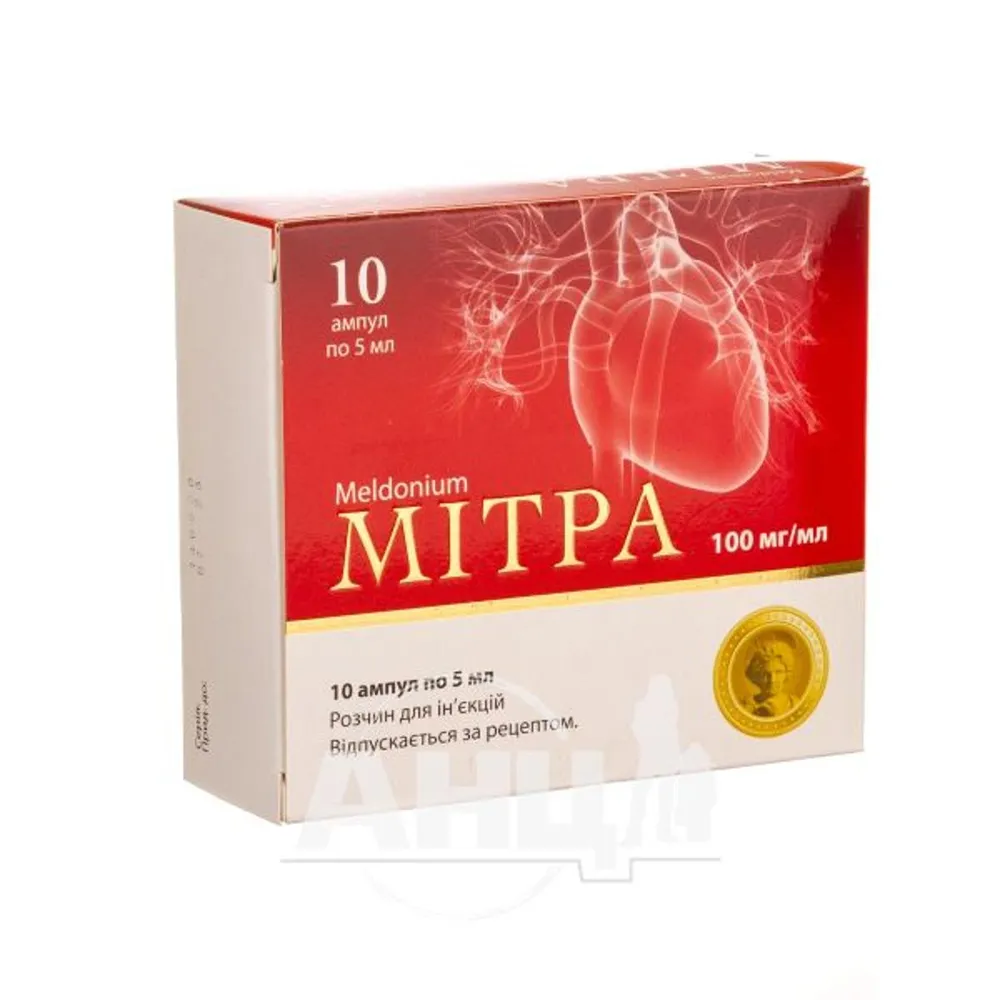
Table of Contents
INSTRUCTIONS FOR MEDICAL USE OF THE MEDICINAL PRODUCT MELDONIUM (MITRA)
Composition:
Active substance: meldonium dihydrate;
5 ml of solution (1 ampoule) contains meldonium dihydrate 0.5 g;
Excipients: water for injections.
Pharmaceutical form. Solution for injection.
Main physicochemical properties: clear, colorless solution, practically free from visible particles.
Pharmacotherapeutic group.
Other cardiac preparations. ATC code C01EB22.
Pharmacological Properties.
Pharmacodynamics.
Meldonium is a precursor of carnitine and a structural analogue of gamma-butyrobetaine (GBB), in which one carbon atom is replaced by a nitrogen atom. Its action on the body can be explained in two ways.
- Effect on carnitine biosynthesis.
Meldonium reversibly inhibits gamma-butyrobetaine hydroxylase, thereby reducing carnitine biosynthesis. As a result, it interferes with the transport of long-chain fatty acids across cell membranes, thus preventing the accumulation of a potent detergent—activated forms of non-oxidized fatty acids—within cells. Consequently, damage to cellular membranes is prevented.
Under ischemic conditions, reduced carnitine concentration leads to inhibition of fatty acid beta-oxidation, optimization of cellular oxygen consumption, stimulation of glucose oxidation, and restoration of adenosine triphosphate (ATP) transport from its site of biosynthesis (mitochondria) to sites of utilization (cytosol). Essentially, cells are supplied with nutrients and oxygen, and utilization of these substances is optimized.
In turn, when biosynthesis of the carnitine precursor—GBB—increases, nitric oxide (NO) synthase is activated, resulting in improved blood rheological properties and reduced peripheral vascular resistance.
When meldonium concentration decreases, carnitine biosynthesis resumes and gradually increases the amount of fatty acids within cells.
It is believed that the basis of meldonium's efficacy lies in enhancing cellular tolerance to metabolic stress (through modulation of fatty acid levels).
- Mediator function in the hypothetical GBB-ergic system.
A hypothesis has been proposed that a neuronal signal transmission system—termed the GBB-ergic system—exists in the body, responsible for transmitting nerve impulses between cells. The mediator of this system is the final precursor of carnitine—GBB ester. Under the action of GBB esterase, the mediator donates an electron to the cell, thereby transferring an electrical impulse, and is converted into GBB. The hydrolyzed form of GBB is then actively transported to the liver, kidneys, and ovaries, where it is transformed into carnitine. In somatic cells, in response to stimulation, new GBB molecules are synthesized, ensuring signal propagation.
When carnitine concentration decreases, GBB synthesis is stimulated, leading to increased concentration of GBB ester.
As previously noted, meldonium is a structural analogue of GBB and can perform the function of a "mediator." In contrast, GBB hydroxylase does not recognize meldonium, so carnitine concentration does not increase but rather decreases. Thus, by replacing the "mediator" and promoting increased GBB concentration, meldonium triggers a corresponding physiological response. As a result, overall metabolic activity increases in other systems as well, including the central nervous system (CNS).
Effect on the cardiovascular system.
Animal studies have demonstrated that meldonium positively influences myocardial contractility and exhibits cardioprotective properties (including protection against catecholamines and alcohol), prevents cardiac arrhythmias, and reduces the size of myocardial infarction.
Ischemic heart disease (stable angina pectoris).
Analysis of clinical data on course treatment with meldonium in patients with stable angina pectoris shows that the drug reduces the frequency and intensity of angina attacks and decreases the need for glyceryl trinitrate. Meldonium demonstrates pronounced antiarrhythmic effects in patients with ischemic heart disease (IHD) and ventricular extrasystoles, while its effect is less pronounced in patients with supraventricular extrasystoles.
Particularly important is the drug's ability to reduce oxygen consumption at rest, which is considered an effective criterion for antianginal therapy in IHD.
Meldonium favorably influences atherosclerotic processes in coronary and peripheral vessels by reducing total serum cholesterol and the atherogenic index.
Chronic heart failure.
Numerous clinical studies have analyzed the role of meldonium in the treatment of chronic heart failure due to IHD, demonstrating its ability to increase tolerance to physical exertion and enhance work capacity in patients with heart failure.
A separate study conducted at cardiology institutes in Latvia and Tomsk evaluated the efficacy of meldonium in heart failure of mild to moderate severity classified as functional classes I–III according to the New York Heart Association (NYHA) classification. Under meldonium therapy, 59–78% of patients initially diagnosed with NYHA class II heart failure were reclassified to NYHA class I. It has been established that meldonium improves myocardial inotropic function and increases tolerance to physical exertion, thereby improving patients' quality of life, without causing severe adverse effects.
In cases of severe heart failure, meldonium should be used in combination with other conventional heart failure therapies.
Effect on the CNS.
Animal experiments have demonstrated meldonium's anti-hypoxic effects and its influence on cerebral circulation. The drug optimizes redistribution of cerebral blood flow in favor of ischemic areas and enhances neuronal resistance under hypoxic conditions.
Meldonium has stimulatory effects on the CNS: increased motor activity and physical endurance, stimulation of behavioral responses, as well as anti-stress effects: activation of the sympathoadrenal system, accumulation of catecholamines in the brain and adrenal glands, and protection of internal organs from stress-induced changes.
Efficacy in neurological disorders.
It has been proven that meldonium is an effective agent in the complex therapy of acute and chronic cerebral circulation disorders (ischemic stroke, chronic cerebral circulatory insufficiency). Meldonium normalizes the tone and resistance of cerebral capillaries and arterioles and restores their reactivity.
The impact of meldonium on the rehabilitation process in patients with neurological deficits (after cerebrovascular diseases, brain surgery, trauma, or tick-borne encephalitis) has been studied.
Results evaluating the therapeutic activity of meldonium indicate its dose-dependent positive effect on physical endurance and restoration of functional independence during recovery.
Analysis of changes in individual and overall intellectual functions after drug administration revealed a positive effect on the recovery of intellectual functions during convalescence.
It has been established that meldonium improves convalescent quality of life (primarily through restoration of physical function) and alleviates psychological disturbances.
Meldonium has a beneficial effect on nervous system function, reducing neurological deficits during recovery.
Overall neurological status improves (reduced brain nerve damage and reflex pathology, regression of paresis, improved motor coordination and autonomic functions).
Pharmacokinetics.
Pharmacokinetics were studied in healthy volunteers after intravenous and oral administration of meldonium.
Absorption
Bioavailability is 100%. Maximum plasma concentration (Cmax) is achieved immediately after administration. After intravenous administration of multiple doses, Cmax reaches 25.5 ± 3.63 μg/mL.
Following intravenous administration, the area under the concentration-time curve (AUC) differs after single and repeated doses, indicating potential accumulation of meldonium in plasma.
Distribution
Meldonium rapidly distributes from the bloodstream into tissues with high cardiac affinity. Meldonium and its metabolites partially cross the placental barrier. Animal studies have shown that meldonium penetrates into maternal milk.
Biotransformation
Metabolism studies in experimental animals have shown that meldonium is primarily metabolized in the liver.
Excretion
Renal excretion plays a significant role in the elimination of meldonium and its metabolites. After single intravenous doses of meldonium (250 mg, 500 mg, and 1000 mg), the initial elimination half-life ranges from 5.56 to 6.55 hours, while the terminal half-life is 15.34 hours.
Special patient groups
Elderly patients
In elderly patients with impaired liver or kidney function, where bioavailability is increased, the dose of meldonium should be reduced.
Renal impairment
In patients with impaired renal function, where bioavailability is increased, the dose of meldonium should be reduced. There is an interaction between renal reabsorption of meldonium or its metabolites (e.g., 3-hydroxymeldonium) and carnitine, resulting in increased renal clearance of carnitine. Meldonium, GBB, and the combination of meldonium/GBB have no direct effect on the renin-angiotensin-aldosterone system.
Hepatic impairment
In patients with impaired liver function, where bioavailability is increased, the dose of meldonium should be reduced. Toxicity studies in rats administered meldonium at doses exceeding 100 mg/kg showed yellow discoloration of the liver and fat denaturation. Histopathological studies in animals after administration of high doses of meldonium (400 mg/kg and 1600 mg/kg) revealed lipid accumulation in liver cells. However, no changes in liver function parameters were observed in humans after administration of high doses (400–800 mg). Nevertheless, fat infiltration into liver cells cannot be ruled out.
Children
There is no data on the safety and efficacy of meldonium in children (under 18 years of age); therefore, the use of this medicinal product in this patient group is contraindicated.
Clinical characteristics.
Indications.
To be used in complex therapy for:
- cardiovascular diseases: stable exertional angina, chronic heart failure (NYHA functional class I–III), cardiomyopathy, functional disorders of the heart and vascular system;
- acute and chronic ischemic disorders of cerebral circulation;
- reduced work capacity, physical and psychoemotional overstrain;
- during convalescence period following cerebrovascular disorders, head injuries, and encephalitis.
Contraindications.
- Hypersensitivity to meldonium or to any of the excipients of the medicinal product;
- increased intracranial pressure (due to impaired venous outflow, intracranial tumors);
- severe hepatic or renal insufficiency (insufficient safety data available);
- pregnancy or breastfeeding;
- pediatric use (under 18 years of age).
Interaction with other medicinal products and other forms of interaction.
Meldonium may be used concomitantly with prolonged-action nitrates and other antianginal agents (in stable exertional angina), cardiac glycosides, and diuretics (in heart failure).
It may also be combined with anticoagulants, antiplatelet agents, antiarrhythmics, and other drugs improving microcirculation.
Meldonium may enhance the effects of drugs containing glyceryl trinitrate, nifedipine, beta-adrenoblockers, and other antihypertensive agents and peripheral vasodilators.
In patients with iron-deficiency anemia, concomitant use of iron-containing preparations and meldonium improved fatty acid composition in erythrocytes.
When used in combination with orotic acid to counteract ischemia/reperfusion-induced damage, an additional pharmacological effect is observed.
Meldonium helps eliminate cardiac alterations caused by zidovudine (AZT) and indirectly affects oxidative stress reactions induced by AZT, which lead to mitochondrial dysfunction. The use of meldonium in combination with zidovudine or other drugs for AIDS treatment has a beneficial effect in managing acquired immunodeficiency syndrome (AIDS).
In the test of ethanol-induced loss of righting reflex, meldonium reduced sleep duration. A pronounced anticonvulsant effect of meldonium was observed in pentetrazole-induced seizures. However, when alpha2-adrenoblocker yohimbine at a dose of 2 mg/kg and nitric oxide synthase (NOS) inhibitor N-(G)-nitro-L-arginine at a dose of 10 mg/kg were administered prior to meldonium therapy, the anticonvulsant effect of meldonium was completely blocked.
Meldonium overdose may enhance cardiotoxicity caused by cyclophosphamide.
Carnitine deficiency induced by meldonium may enhance cardiotoxicity caused by ifosfamide.
Meldonium exerts protective effects against cardiotoxicity caused by indinavir and neurotoxic effects caused by efavirenz.
Do not use in combination with other products containing meldonium, as this increases the risk of adverse reactions.
Special precautions for use.
Caution should be exercised when administering the drug to patients with mild to moderate hepatic impairment or with a history of renal dysfunction (monitoring of liver and/or kidney function is recommended). Long-term experience in treating acute myocardial infarction and unstable angina in cardiology departments shows that meldonium is not a first-line drug for acute coronary syndrome.
Use during pregnancy or breastfeeding.
Pregnancy. Animal studies are insufficient to assess the effects of meldonium on pregnancy, embryonic/fetal development, parturition, and postnatal development. The potential risk to humans is unknown; therefore, meldonium is contraindicated during pregnancy.
Breastfeeding. Available animal study data indicate that meldonium passes into maternal milk. It is unknown whether meldonium is excreted in human breast milk. Risk to newborns/infants cannot be ruled out; therefore, meldonium is contraindicated during breastfeeding.
Ability to affect reaction speed when driving or operating machinery.
No studies have been conducted to assess the effect on the ability to drive or operate machinery.
Method of Administration and Dosage
Intravenous use. The medicinal product does not require any special preparation prior to administration.
Due to the possible stimulating effect, the drug is recommended to be administered in the first half of the day.
Adults
The dose is 500–1000 mg (5–10 ml), administered intravenously as a single dose or divided into two doses. The treatment duration is usually 10–14 days, after which therapy should be continued with the oral dosage form.
The total course of treatment lasts 4–6 weeks. The course may be repeated 2–3 times per year.
Elderly Patients
Elderly patients with impaired liver or kidney function may require a reduced dose of meldonium.
Patients with Renal Impairment
Since the drug is eliminated via the kidneys, patients with mild to moderate renal impairment should receive a lower dose of meldonium.
Patients with Hepatic Impairment
Patients with mild to moderate hepatic impairment should receive a reduced dose of meldonium.
Children
There is a lack of data on the safety and efficacy of meldonium in children (under 18 years of age); therefore, the use of meldonium in this patient group is contraindicated.
Overdose
Cases of meldonium overdose have not been reported. The drug is low in toxicity and does not cause life-threatening adverse effects.
In cases of low arterial pressure, headache, dizziness, tachycardia, and general weakness may occur. Treatment is symptomatic.
In the event of severe overdose, liver and kidney functions should be monitored.
Hemodialysis is not significantly effective in meldonium overdose due to the drug's pronounced binding to blood proteins.
Adverse reactions
Adverse effects are classified by organ systems and frequency of occurrence according to MedDRA [Medical Dictionary for Regulatory Activities]: common (≥ 1/100 — < 1/10), rare (≥ 1/10000 — < 1/1000).
Adverse effects observed in clinical studies and during the post-marketing period:
| Immune system disorders |
|
| Common Uncommon |
Allergic reactions* Hypersensitivity, including allergic dermatitis, urticaria, angioedema, anaphylactic reactions up to shock |
| Psychiatric disorders |
|
| Uncommon |
Excitement, fear, obsessive thoughts, sleep disturbances |
| Nervous system disorders |
|
| Common Uncommon |
Headache* Paresthesia, tremor, hypoesthesia, tinnitus, vertigo, dizziness, gait disturbance, pre-syncope, syncope |
| Cardiac disorders |
|
| Uncommon |
Change in heart rhythm, palpitations, tachycardia/sinus tachycardia, atrial fibrillation, arrhythmia, chest discomfort/pain |
| Blood and lymphatic system disorders |
|
| Uncommon |
Increased/decreased blood pressure, hypertensive crisis, hyperemia, pallor |
| Respiratory, thoracic and mediastinal disorders |
|
| Common Uncommon |
Respiratory tract infections Pharyngitis, cough, dyspnea, apnea |
| Gastrointestinal disorders |
|
| Common Uncommon |
Dyspepsia* Dysgeusia (metallic taste in mouth), loss of appetite, nausea, vomiting, flatulence, diarrhea, abdominal pain, dry mouth or hypersalivation |
| Skin and subcutaneous tissue disorders |
|
| Uncommon |
Rash, generalized/maculopapular/papular rash, pruritus |
| Musculoskeletal and connective tissue disorders |
|
| Uncommon |
Back pain, muscle weakness, muscle spasms |
| Renal and urinary disorders |
|
| Uncommon |
Frequency of urination (polyuria) |
| General disorders and administration site conditions |
|
| Uncommon |
General weakness, chills, asthenia, edema, facial swelling, leg swelling, feeling of warmth, feeling of cold, cold sweat, injection site reactions including pain at injection site |
| Investigations |
|
| Common Uncommon |
Dyslipidemia, increased C-reactive protein level Electrocardiogram (ECG) abnormalities, increased heart rate, eosinophilia* |
* Adverse reactions observed in previously conducted uncontrolled clinical trials.
Reporting of adverse reactions after marketing authorization of the medicinal product is of great importance. It enables ongoing monitoring of the benefit-risk balance of the medicinal product. Healthcare and pharmaceutical professionals, as well as patients or their legal representatives, should report all suspected adverse reactions and lack of efficacy via the Automated Information System for Pharmacovigilance at the following link: https://aisf.dec.gov.ua.
Shelf life.
3 years.
Storage conditions.
Store at a temperature not exceeding 25 °C. Keep out of reach of children. Do not freeze.
Incompatibilities.
Not known. The medicinal product must not be mixed in the same syringe with other medicinal products.
Packaging.
5 ampoules in a blister pack, 2 blister packs in a cardboard box.
Prescription status.
Prescription only.
Manufacturer.
K.T. Rompharm Company S.R.L.
Manufacturer's address and place of business.
Strada Eroilor No. 1A, Otopeni, 075100, Ilfov County, Romania – Rompharm 1 and Rompharm 2 buildings.
Marketing Authorization Holder.
FORC-PHARMA DISTRIBUTION LLC.
Address of the Marketing Authorization Holder.
132, Hryhorieva Avenue, Kyiv, Ukraine, 03127.