Milistan sinus
Ukraine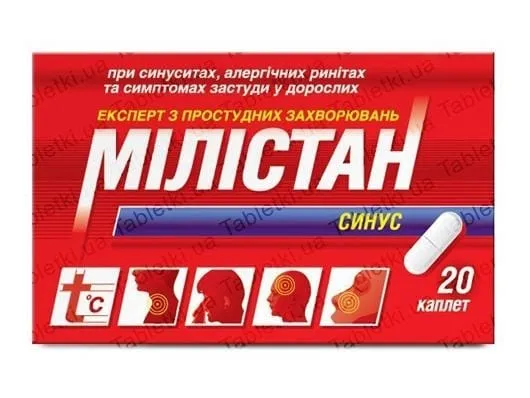
Table of Contents
INSTRUCTIONS FOR MEDICAL USE OF THE MEDICINAL PRODUCT MILISTAN SINUS (MILISTAN SINUS)
Composition:
Active substances: 1 tablet contains paracetamol 500 mg and cetirizine hydrochloride 10 mg;
Excipients: microcrystalline cellulose, maize starch, gelatin, methylparaben (E 218), propylparaben (E 216), magnesium stearate, talc, colloidal anhydrous silicon dioxide, sodium lauryl sulfate, sodium starch glycolate (type A), hypromellose, ethylcellulose, propylene glycol, titanium dioxide (E 171).
Pharmaceutical form. Film-coated tablets.
Main physico-chemical properties: white or almost white, oval, biconvex film-coated tablets.
Pharmacotherapeutic group. Analgesics and antipyretics. Paracetamol in combination with other drugs (excluding psycholeptics). ATC code N02BE51.
Pharmacological properties.
Pharmacodynamics.
Paracetamol has analgesic, antipyretic, and anti-inflammatory properties. The mechanism of paracetamol's analgesic effect is associated with inhibition of prostaglandin biosynthesis. By inhibiting cyclooxygenase, it prevents the formation of prostaglandins E2 and F2, which play an important role in the perception of painful stimuli by nociceptors and transmission of excitation to the central nervous system (CNS). Paracetamol effectively inhibits cyclooxygenase in CNS cells and much less so in peripheral tissues. The antipyretic effect of paracetamol is explained by inhibition of prostaglandin biosynthesis directly in the hypothalamus, particularly of E1 and E2, which are mediators of the thermoregulatory center.
Cetirizine hydrochloride is a selective antagonist of peripheral H1-histamine receptors and a metabolite of hydroxyzine. It has antiallergic properties due to inhibition of the late phase of migration of cells involved in the inflammatory response (mainly eosinophils); it also reduces expression of adhesion molecules such as ICAM-1 and VCAM-1, which are markers of allergic inflammation. It suppresses the action of other mediators and inducers of histamine secretion, such as PAF (platelet-activating factor) and substance P. It practically does not cause anticholinergic or anti-serotonergic effects. At therapeutic doses, it does not have sedative effects.
Pharmacokinetics.
After oral administration, the drug is rapidly and almost completely absorbed from the gastrointestinal tract. Administration of the drug together with food does not affect the extent or completeness of absorption, but prolongs the absorption process by 1 hour. The drug is well distributed in tissues (except adipose tissue) and cerebrospinal fluid.
The elimination half-life of paracetamol is 1–4 hours. In patients with liver cirrhosis, the elimination half-life is prolonged. It is evenly distributed throughout all body fluids. Plasma protein binding is variable. It is excreted predominantly by the kidneys in the form of conjugated metabolites.
After single oral administration, the elimination half-life of cetirizine hydrochloride is approximately 10 hours; about 2/3 of the drug is excreted unchanged by the kidneys and about 10% in feces.
The active substances of the drug penetrate through the placenta and into breast milk.
Clinical characteristics.
Indications.
As part of complex therapy for inflammatory diseases of the ear, nose, and throat (ENT organs) accompanied by fever, pain, rhinitis, hyperthermia, and allergy.
Contraindications.
Hypersensitivity to cetirizine or any other component of the drug, hydroxyzine or any piperazine derivative in medical history, severe hepatic and/or renal function impairment, patients with severe renal function impairment with creatinine clearance <10 mL/min, congenital hyperbilirubinemia, glucose-6-phosphate dehydrogenase deficiency, alcoholism, blood disorders, Gilbert's syndrome, pronounced anemia, leukopenia.
Interaction with other medicinal products and other types of interactions.
The absorption rate of paracetamol may be increased when used with metoclopramide and domperidone, and decreased when used with cholestyramine. The anticoagulant effect of warfarin and other coumarins may be enhanced by prolonged, regular daily use of paracetamol, increasing the risk of bleeding. Occasional use does not have a significant effect.
Barbiturates reduce the antipyretic effect of paracetamol.
Anticonvulsants (including phenytoin, barbiturates, carbamazepine), rifampicin, which stimulate the activity of hepatic microsomal enzymes, may enhance the hepatotoxic effect of paracetamol due to increased conversion of the drug into hepatotoxic metabolites.
Concomitant use of paracetamol with hepatotoxic agents increases the hepatotoxic effects of the drugs. Concurrent use of high doses of paracetamol with isoniazid increases the risk of hepatotoxic syndrome.
Paracetamol reduces the effectiveness of diuretics.
Do not use simultaneously with alcohol.
Caffeine may potentiate the analgesic effect of paracetamol.
Caution is advised when using paracetamol concomitantly with floxacillin, as such concomitant use has been associated with metabolic acidosis with a high anion gap due to pyroglutamic acidosis, especially in patients with risk factors (see section "Special precautions for use").
Food intake does not reduce the extent of cetirizine absorption, but decreases the rate of its absorption.
Special precautions for use.
Consult a physician regarding the possibility of using the drug in patients with impaired kidney or liver function.
Consult a physician before using the drug if the patient is taking warfarin or similar agents with anticoagulant effects.
Note that in patients with alcoholic non-cirrhotic liver disease, the risk of hepatotoxic effects of paracetamol is increased; the drug may affect laboratory test results for blood glucose and uric acid levels.
Cases of high anion gap metabolic acidosis due to 5-oxoproline (pyroglutamic) acidosis have been reported in patients with severe conditions such as severe renal insufficiency and sepsis, or in patients with malnutrition or other causes of glutathione deficiency (e.g., chronic alcoholism), who received prolonged treatment with therapeutic doses of paracetamol or a combination of paracetamol and flucloxacillin. If high anion gap metabolic acidosis due to pyroglutamic acidosis is suspected, immediate discontinuation of paracetamol is recommended, along with careful monitoring of the patient's condition. Measurement of 5-oxoproline levels in urine may be useful in identifying pyroglutamic acidosis as the underlying cause of high anion gap metabolic acidosis in patients with multiple risk factors.
Patients who take analgesics daily for mild forms of arthritis should consult a physician. In patients with severe infections such as sepsis, which are associated with reduced glutathione levels, the use of paracetamol increases the risk of developing metabolic acidosis. Symptoms of metabolic acidosis include deep, rapid, or labored breathing, nausea, vomiting, and loss of appetite. Seek immediate medical attention if these symptoms occur.
Use with caution in patients predisposed to urinary retention (e.g., spinal cord injury, prostate hyperplasia), as cetirizine may increase the risk of urinary retention.
Use with caution in elderly patients, patients with epilepsy, and patients at risk of seizures.
Antihistamines suppress skin allergic reactions; therefore, the drug should be discontinued at least 3 days before conducting skin allergy tests (elimination period).
Do not exceed the recommended doses.
Do not take the drug simultaneously with other products containing paracetamol.
If headache becomes persistent, consult a physician.
Alcohol consumption should be avoided during treatment with this drug.
If symptoms do not resolve, consult a physician.
Keep the drug out of sight and reach of children.
Use during pregnancy or breastfeeding.
The drug should be prescribed to pregnant women only when the expected benefit outweighs the potential risk to the fetus. The drug may pass into breast milk; therefore, it should be prescribed with caution to breastfeeding women.
Paracetamol data:
Standard studies using currently accepted standards for assessing reproductive and ontogenetic toxicity are not available.
Extensive data from pregnant women do not indicate teratogenic or fetal/neonatal toxicity. Epidemiological studies on the neurodevelopmental outcomes in children exposed to paracetamol in utero have yielded inconclusive results.
Ability to influence reaction speed when driving or operating machinery.
If neurological disorders occur (e.g., drowsiness, dizziness, visual disturbances), refrain from driving or operating machinery.
Method of Administration and Dosage.
The dose is determined individually. For adults and children aged 12 years and older, the recommended dose is 1 tablet once daily. The maximum duration of treatment is 5–7 days.
The maximum duration of use in children without prior medical consultation is 3 days.
For patients with moderate renal impairment, half the recommended dose should be administered.
Dose adjustment is not required for elderly patients with normal kidney function.
Children.
Contraindicated in children under 12 years of age.
Overdose.
Hepatic injury is possible in adults who have ingested 10 g or more of paracetamol, and in children who have ingested more than 150 mg/kg body weight.
In patients with risk factors (chronic use of carbamazepine, phenobarbital, phenytoin, primidone, rifampicin, St. John's wort, or other drugs that induce liver enzymes; chronic alcohol abuse; glutathione system deficiency, e.g., gastrointestinal disorders, cystic fibrosis, HIV infection, fasting, cachexia), ingestion of 5 g or more of paracetamol may lead to liver damage.
Symptoms within the first 24 hours include pallor, nausea, vomiting, loss of appetite, and abdominal pain. Hepatic injury may become evident 12–48 hours after overdose. Glucose metabolism disturbances and metabolic acidosis may occur.
In severe poisoning, liver failure may progress to encephalopathy, hemorrhage, hypoglycemia, coma, and may be fatal. Acute kidney injury with acute tubular necrosis may present as severe lumbar pain, hematuria, proteinuria, and may develop even in the absence of severe liver damage.
Other symptoms of overdose may include renal colic, interstitial nephritis, capillary necrosis; urinary retention, cardiac arrhythmia, tachycardia, pancreatitis, dizziness, headache, sleep disturbances, drowsiness, tremor, psychomotor agitation, disorientation; rash, pruritus, confusion, increased fatigue, malaise, mydriasis, restlessness, sedative effect, stupor.
With prolonged use of the drug in high doses, blood disorders such as aplastic anemia, pancytopenia, agranulocytosis, neutropenia, leukopenia, and thrombocytopenia may develop.
Treatment. In case of overdose, prompt medical assistance is required. The patient should be immediately transported to a hospital, even if early symptoms of overdose are absent. Symptoms may be limited to nausea and vomiting or may not reflect the severity of overdose or risk of organ damage.
If an excessive dose was ingested within the past hour, treatment with activated charcoal should be considered. Plasma paracetamol concentration should be measured at least 4 hours after ingestion (earlier concentrations are unreliable). Treatment with N-acetylcysteine may be administered within 24 hours after paracetamol intake, but the maximum protective effect is achieved when administered within 8 hours after ingestion. The efficacy of the antidote decreases significantly after this time. If necessary, intravenous N-acetylcysteine should be administered according to the established dosing regimen. In the absence of vomiting, oral methionine may be used as an appropriate alternative in remote areas outside the hospital setting.
In addition to the above, symptomatic or supportive therapy is recommended.
Adverse Reactions
Skin and subcutaneous tissue disorders: skin itching, skin and mucous membrane rashes (usually generalized, erythematous, urticarial), angioneurotic edema, exudative multiform erythema, Stevens-Johnson syndrome, toxic epidermal necrolysis (Lyell's syndrome), persistent drug-induced erythema, angioedema.
Immune system disorders: hypersensitivity reactions including anaphylaxis, anaphylactic shock.
Gastrointestinal disorders: increased appetite, nausea, epigastric pain, abdominal pain, dry mouth, diarrhea, gastritis.
Hepatobiliary disorders: liver function abnormalities, increased activity of liver enzymes (transaminases, alkaline phosphatase, GGT), usually without development of jaundice, hyperbilirubinemia. Hepatotoxic effects cannot be excluded with prolonged use, especially at high doses.
Endocrine system disorders: hypoglycemia, up to hypoglycemic coma.
Blood and lymphatic system disorders: anemia, sulfhemoglobinemia and methemoglobinemia (cyanosis, dyspnea, chest pain), hemolytic anemia; agranulocytosis, thrombocytopenia, bruising or bleeding.
Respiratory system disorders: pharyngitis, bronchospasm in patients sensitive to acetylsalicylic acid and other NSAIDs, rhinitis.
Nervous system disorders: drowsiness, dizziness, headache, possible paradoxical CNS stimulation, paresthesia, seizures, movement disorders, dysgeusia, loss of consciousness, tremor, disturbances of muscle tone (dystonia), dyskinesia, amnesia, memory impairment.
Renal and urinary disorders: difficulty and delay in urination, dysuria, enuresis.
Eye disorders: impaired accommodation, blurred vision, involuntary eye movements.
Psychiatric disorders: nervous excitement, anxiety, aggression, confusion, depression, hallucinations, insomnia, somnolence, nervous tic, suicidal thoughts.
Cardiac disorders: tachycardia.
General disorders: asthenia, increased fatigue, malaise, edema.
Metabolism and nutrition disorders: metabolic acidosis with high anion gap (frequency unknown).
Investigations: increased body weight.
The product contains methylparaben (E 218) and propylparaben (E 216), which may cause allergic reactions (possibly delayed).
Description of selected adverse reactions
Metabolic acidosis with high anion gap. Cases of metabolic acidosis with high anion gap due to pyroglutamic acidosis have been observed in patients with risk factors taking paracetamol (see section "Special precautions for use"). Pyroglutamic acidosis may occur due to low glutathione levels in these patients.
Shelf life. 3 years.
Storage conditions. Store at temperatures not exceeding 25°C in the original packaging, in a place inaccessible to children.
Packaging. 10 caplets in a blister, 2 blisters per cardboard pack.
Prescription status. Over-the-counter.
Manufacturer.
Windlas Healthcare Private Limited.
Manufacturer's address.
Plot No. 183 and 192, Mohabevala Industrial Area, Dehradun, Uttarakhand 248110, India.
Marketing Authorization Holder.
Mili Healthcare Limited.
Address of Marketing Authorization Holder.
Fairfax House 15, Fallow Place, London, WC1V 6AY, United Kingdom.