Micafungin-vista
Ukraine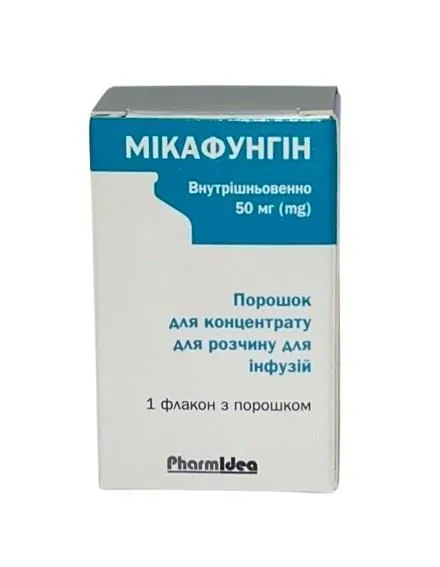
Table of Contents
INSTRUCTIONS FOR MEDICAL USE OF THE MEDICINAL PRODUCT MICA FUNGIN-VISTA (MIKAFUNGIN-VISTA)
Composition:
Active substance: micafungin;
1 vial contains micafungin sodium equivalent to micafungin 50 mg or 100 mg;
Excipients: lactose monohydrate, citric acid, sodium hydroxide.
Pharmaceutical form. Powder for concentrate for solution for infusion.
Main physico-chemical characteristics: lyophilized mass of white to almost white color.
Pharmacotherapeutic group. Antifungal agents for systemic use.
ATC code J02A X05.
Pharmacological Properties.
Pharmacodynamics.
Micafungin non-competitively inhibits the synthesis of 1,3-β-D-glucan, an essential component of the fungal cell wall. 1,3-β-D-glucan is not present in mammalian cells.
Micafungin exhibits fungicidal activity against Candida species and has pronounced fungistatic activity against Aspergillus spp.
Micafungin is active in vitro against various Candida spp., including Candida albicans, Candida glabrata, Candida tropicalis, Candida krusei, Candida kefyr, Candida parapsilosis, Candida guilliermondii, Candida lusitaniae, and Aspergillus spp., including Aspergillus fumigatus, Aspergillus flavus, Aspergillus niger, Aspergillus terreus, Aspergillus nidulans, Aspergillus versicolor, as well as dimorphic fungi (Histoplasma capsulatum, Blastomyces dermatitidis, Coccidioides immitis). The drug is not active in vitro against Cryptococcus spp., Pseudallescheria spp., Scedosporium spp., Fusarium spp., Trichosporon spp., or Zygomycetes.
The likelihood of developing secondary resistance to the drug is very low.
Pharmacokinetics.
Absorption. Micafungin-Vista is a medicinal product administered intravenously.
The pharmacokinetics are linear within the daily dose range of 12.5 mg to 200 mg and from 3 mg/kg to 8 mg/kg. There are no data on systemic accumulation of the drug after multiple doses; steady-state concentration is achieved within 4–5 days of treatment initiation.
Distribution. After intravenous administration, micafungin plasma concentrations decline in a biexponential manner. The drug rapidly distributes into tissues. In systemic circulation, micafungin is highly bound to plasma proteins (> 99%), primarily to albumin. Binding to albumin is stable within the concentration range of 10–100 µg/mL. The volume of distribution at steady state (Vss) is 18–19 liters.
Metabolism. Micafungin circulates in the systemic blood predominantly in unchanged form. It undergoes metabolism to form several compounds; among them, M-1 (catechol derivative), M-2 (methoxy derivative of M-1), and M-5 (formed by hydroxylation of the side chain) are micafungin metabolites detected in systemic circulation. Exposure to these metabolites is low, and they do not influence the overall efficacy of micafungin.
Although in vitro micafungin may be metabolized by CYP3A isoenzymes, CYP3A-mediated hydroxylation is not the primary pathway of metabolic transformation of the drug in vitro.
Elimination and Excretion. The elimination half-life is approximately 10–17 hours and remains constant across the dose range up to 8 mg/kg after both single and multiple drug administrations. Total clearance is 0.15–0.3 mL/min/kg in healthy volunteers and adult patients and is independent of dose after both single and multiple administrations. Twenty-eight days after a single intravenous dose of 14C-micafungin (25 mg) administered to healthy volunteers, 11.6% of the radioactive label was recovered in urine and 71.0% in feces. Metabolites M-1 and M-2 were detected only in trace amounts in plasma, while metabolite M-5, formed in greater amounts, accounted for 6.5% of the parent compound.
Pharmacokinetics in Specific Patient Populations.
Pediatric Patients. In children, AUC was dose-proportional within the dose range of 0.5–4 mg/kg. Clearance was body weight-dependent. Mean body weight-adjusted clearance values were 1.35 times higher in younger children (4 months–5 years) and 1.14 times higher in children aged 6–11 years compared to adults. In older children (12–16 years), clearance values were similar to those in adult patients. Mean body weight-adjusted clearance in infants under 4 months of age was approximately 2.6 times higher than in older children (12–16 years) and 2.3 times higher than in adults. Pharmacokinetic/pharmacodynamic studies demonstrated that micafungin penetrates into the central nervous system (CNS), achieving a minimum AUC of 170 µg*h/L, which is sufficient for maximal eradication of fungal infection in CNS tissues. Population pharmacokinetic modeling indicates that a dose of 10 mg/kg in children under 4 months of age is adequate to achieve the target exposure for treatment of Candida-related CNS infections.
Elderly Patients. After a single 50 mg infusion, the pharmacokinetics of micafungin in elderly patients (66–78 years) were similar to those in younger patients (20–24 years). Dose adjustment is not required for elderly patients.
Patients with Hepatic Impairment. In a study involving patients with moderate hepatic impairment (Child-Pugh class 7–9), the pharmacokinetics of micafungin were slightly different from those in healthy volunteers. Therefore, dose adjustment is not necessary for patients with mild to moderate hepatic dysfunction. The pharmacokinetics of micafungin have not been studied in patients with severe hepatic impairment.
Patients with Renal Impairment. Severe renal impairment (glomerular filtration rate [GFR] < 30 mL/min) did not significantly affect the pharmacokinetics of micafungin. Dose adjustment is not required for patients with renal impairment.
Sex/Race. Sex and race do not influence the pharmacokinetic parameters of micafungin.
Clinical characteristics.
Indications.
Adults and children aged 16 years and older:
- treatment of invasive candidiasis;
- treatment of Candida esophagitis in patients requiring intravenous antifungal therapy;
- prophylaxis of candidiasis in patients undergoing allogeneic hematopoietic stem cell transplantation or in whom neutropenia (neutrophil count < 500 cells per 1 μL) is anticipated for 10 or more days.
Children (including infants) under 16 years of age:
- treatment of invasive candidiasis;
- prophylaxis of Candida infection in patients undergoing allogeneic hematopoietic stem cell transplantation or in whom neutropenia (neutrophil count < 500 cells per 1 μL) is anticipated for 10 or more days.
When deciding on the use of Mikafungin-Vista, the potential risk of liver tumors should be taken into account (see section "Special precautions"). Therefore, Mikafungin-Vista should be used only when other antifungal agents cannot be used.
Contraindications.
Hypersensitivity to the active substance or to any of the excipients, or to other echinocandins.
Interaction with other medicinal products and other forms of interaction.
Mikafungin has a low potential for interaction with medicinal products metabolized via CYP3A.
There is no evidence of changes in mikafungin pharmacokinetics when administered concomitantly with mycophenolate, cyclosporine, tacrolimus, prednisolone, sirolimus, nifedipine, fluconazole, ritonavir, rifampicin, itraconazole, voriconazole, or amphotericin B. Dose adjustment of mikafungin is not required in such cases.
When mikafungin is administered, the AUC of itraconazole, sirolimus, and nifedipine is slightly increased (by 22%, 21%, and 18%, respectively). Patients receiving sirolimus, nifedipine, or itraconazole in combination with mikafungin require monitoring for toxic effects of sirolimus, nifedipine, or itraconazole. If necessary, the dose of these medicinal products should be reduced.
Concomitant use of mikafungin and amphotericin B deoxycholate increases the effect of amphotericin B deoxycholate by 30%. Since this may be clinically significant, concomitant administration of these medicinal products should be prescribed only if the benefit clearly outweighs the risk and with careful monitoring of amphotericin B deoxycholate toxicity (see section "Special precautions").
In patients receiving sirolimus, nifedipine, or itraconazole concomitantly with mikafungin, monitoring for toxicity of sirolimus, nifedipine, or itraconazole should be performed, and the dose of sirolimus, nifedipine, or itraconazole should be reduced if necessary (see section "Special precautions").
Special precautions for use.
Effect on the liver
In rats, treatment lasting 3 months or longer was associated with the development of foci of altered hepatocytes (FAH) and hepatocellular tumors. The threshold for tumor formation in rats is approximately within the range of clinical exposure. The significance of this finding in human therapy cannot be excluded. Careful monitoring of liver function is required during micafungin treatment. To minimize the risk of adaptive regeneration and considering the potential for liver tumor formation, discontinuation of the medicinal product is recommended upon detection of significant, persistent elevations in ALT/AST levels.
Micafungin therapy should be administered with careful consideration of the risk-benefit ratio, especially in patients with severe hepatic impairment or chronic liver diseases representing premalignant conditions, such as marked liver fibrosis, cirrhosis, viral hepatitis, liver diseases in infants, or inherited enzyme deficiencies, as well as when used concomitantly with medicinal products exhibiting hepatotoxic and/or genotoxic effects.
Micafungin treatment may be associated with significant worsening of liver function (elevation of ALT, AST, or total bilirubin more than 3 times the upper limit of normal) in both healthy volunteers and patients. In isolated cases, more severe liver dysfunction, hepatitis, or hepatic failure with fatal outcome have been observed. Children under 1 year of age are more susceptible to liver injury (see section "Adverse reactions").
Anaphylactic reactions
Anaphylactic/anaphylactoid reactions, including shock, may occur during micafungin administration. If such reactions occur, micafungin infusion must be discontinued and appropriate treatment initiated.
Skin reactions
Severe exfoliative skin reactions, such as Stevens-Johnson syndrome and toxic epidermal necrolysis, have been reported. Patients who develop skin rashes should be closely monitored, and micafungin should be discontinued if the condition progresses.
Hemolysis
Rare cases of hemolysis, including acute intravascular hemolysis and hemolytic anemia, have been observed in patients receiving micafungin. Patients who develop clinical or laboratory signs of hemolysis during micafungin therapy should be closely monitored for worsening condition, and the risk-benefit ratio should be reassessed before considering continuation of treatment.
Effect on the kidneys
Micafungin may cause renal complications, renal failure, and abnormal laboratory parameters of kidney function; therefore, careful monitoring of renal function is required.
Interaction with other medicinal products.
Concomitant use of micafungin and deoxycholate amphotericin B should only be considered if the therapeutic benefit clearly outweighs the risk, and with careful monitoring of deoxycholate amphotericin B toxicity (see section "Interaction with other medicinal products and other forms of interaction").
In patients receiving sirolimus, nifedipine, or itraconazole concomitantly with micafungin, toxicity of sirolimus, nifedipine, or itraconazole should be monitored, and the dose of sirolimus, nifedipine, or itraconazole should be reduced if necessary (see section "Interaction with other medicinal products and other forms of interaction").
Children.
The frequency of certain adverse reactions is higher in children compared to adults (see section "Adverse reactions").
The intravenous medicinal product contains lactose. It should not be administered to patients with congenital galactose intolerance, Lapp lactase deficiency, or glucose-galactose malabsorption.
Use during pregnancy or breastfeeding.
Pregnancy.
There are no data on the use of micafungin in pregnant women. In animal studies, micafungin crossed the placental barrier and reproductive toxicity was observed. The potential risk for humans is unknown. Micafungin-Vistu should not be used during pregnancy unless clearly necessary.
Breastfeeding.
It is unknown whether micafungin is excreted in human breast milk. Animal studies have shown that micafungin is excreted in milk. The decision to continue or discontinue breastfeeding or to continue or discontinue micafungin-Vistu therapy should be made considering the benefit to the mother and the risk to the infant.
Fertility.
Testicular toxicity was observed in animal studies. Micafungin may affect male fertility in humans.
Ability to affect reaction speed when driving or operating machinery.
Micafungin has no effect or a negligible effect on the ability to drive or operate machinery. However, patients should be informed that dizziness has been reported during micafungin treatment (see section "Adverse reactions").
Method of administration and dosage.
Official guidelines for the use of antifungal agents should be followed.
Micafungin-Vistu should be prescribed by a physician experienced in the management of fungal infections.
Specimens for fungal culture and other relevant laboratory tests (including histopathological) should be obtained prior to initiating therapy.
Treatment may be initiated before laboratory results are available. However, antifungal therapy should be appropriately adjusted once these results are obtained.
The dosing regimen of Micafungin-Vistu depends on the patient's body weight (see Tables 1 and 2).
Table 1
Dosing regimen of Micafungin-Vistu for adults and children aged 16 years and older, and elderly patients
| Indications |
Body weight > 40 kg |
Body weight < 40 kg |
| Treatment of invasive candidiasis |
100 mg/day* |
2 mg/kg/day * |
| Treatment of esophageal candidiasis |
150 mg/day |
3 mg/kg/day |
| Prophylaxis of Candida infection |
50 mg/day |
1 mg/kg/day |
*If the patient's response to treatment is inadequate, for example, in case of pathogen persistence or lack of positive clinical progress, the dose may be increased to 200 mg/day for patients with body weight > 40 kg or to 4 mg/kg/day for patients with body weight < 40 kg.
Duration of treatment.
Invasive candidiasis. Treatment of candidiasis should be continued for at least 14 days. Antifungal therapy should be continued for at least one week after obtaining two consecutive negative blood culture results and after the disappearance of clinical symptoms of candidiasis.
Esophageal candidiasis. When treating esophageal candidiasis, Micafungin-Vistu should be administered for at least one week after the resolution of clinical symptoms.
Prophylaxis of Candida infection. For prophylaxis of fungal infections caused by Candida species, Micafungin-Vistu should be administered for at least one week after recovery of normal neutrophil counts.
Table 2
Dosage regimen of Micafungin-Vistu for children aged ≥4 months and adolescents <16 years
| Indications |
Body weight > 40 kg |
Body weight < 40 kg |
| Treatment of invasive candidiasis |
100 mg/day * |
2 mg/kg/day * |
| Prophylaxis of candidiasis |
50 mg/day |
1 mg/kg/day |
*If there is an inadequate response to treatment, for example, persistence of the pathogen or lack of positive clinical progress, the dose may be increased to 200 mg/day for patients with body weight > 40 kg or to 4 mg/kg/day for patients with body weight < 40 kg.
Use in children (including newborns) under 4 months of age
| Indications |
Doses |
| Treatment of invasive candidiasis |
4–10 mg/kg/day* |
| Prophylaxis of candidiasis |
2 mg/kg/day |
*Micafungin, when administered at a dose of 4 mg/kg in children under 4 months of age, approaches drug exposure levels observed in adult patients receiving 100 mg/day for the treatment of invasive candidiasis. If central nervous system (CNS) infection is suspected, higher doses (e.g., 10 mg/kg) should be used, as micafungin penetration into the CNS (see section "Pharmacokinetics") is dose-dependent.
The safety and efficacy of micafungin use in children (including neonates) under 4 months of age at doses ranging from 4 to 10 mg/kg/day for the treatment of CNS-involved invasive candidiasis have not been sufficiently studied in controlled clinical trials.
Duration of treatment.
Invasive candidiasis. Treatment for candidiasis should continue for at least 14 days. Antifungal therapy should continue for at least one week after obtaining two consecutive negative blood culture results and after resolution of clinical signs and symptoms of candidiasis.
Prophylaxis against Candida infection. For prophylaxis of fungal infections caused by Candida species, Micafungin-Vistu should be administered for at least one week after recovery of normal neutrophil counts. Experience with micafungin treatment in patients under 2 years of age is limited.
Gender/Race.
Dose adjustment based on patient gender or race is not necessary (see "Pharmacokinetic properties").
Treatment of patients with hepatic impairment.
Dose adjustment is not required for patients with mild or moderate hepatic impairment (see "Pharmacokinetics").
There are currently no data on the use of micafungin in patients with severe hepatic impairment; therefore, the drug is not recommended for use in this patient population (see sections "Special precautions" and "Pharmacokinetics").
Treatment of patients with renal impairment.
Dose adjustment is not required for patients with renal impairment (see section "Pharmacokinetic properties").
Children
The safety and efficacy of micafungin in children (including neonates) under 4 months of age at doses of 4 and 10 mg/kg for the treatment of CNS-involved invasive candidiasis have not been adequately established. Available data are described in sections "Pharmacological properties" and "Adverse reactions."
Method of administration.
After reconstitution and dilution, the medicinal product must be administered intravenously by infusion over 1 hour. More rapid administration may cause histamine-mediated allergic reactions.
Any unused medicinal product or waste material must be disposed of in accordance with local requirements.
Micafungin-Vistu must not be mixed or co-administered with other medicinal products except as specified below. Micafungin-Vistu, powder for solution for infusion, should be reconstituted and diluted at room temperature under aseptic conditions:
- Remove the plastic cap from the vial and disinfect the stopper with alcohol.
- Aseptically and slowly inject 5 mL of 0.9% sodium chloride solution for injection or 5% glucose solution for injection (withdrawn from a 100 mL vial/bag) into each vial along the inner wall. Foaming should be minimized during reconstitution. Reconstitute sufficient vials of Micafungin-Vistu to obtain the required total dose of the medicinal product (see Table 3).
- Gently rotate the vial. DO NOT SHAKE. The powder should dissolve completely. The reconstituted solution should be used immediately. The vial is intended for single use only; therefore, any unused concentrate should be immediately discarded.
- Withdraw all reconstituted concentrate from each vial and transfer it into the infusion vial/bag containing the diluent from which it was originally withdrawn (see step 2). The diluted solution should be used immediately. Chemical and physical stability of the solution is maintained for up to 96 hours at 25°C, provided the solution is protected from light and dilution has been performed as described.
- Gently invert the infusion vial/bag, but do not shake, to avoid foaming. Do not use the solution if it is cloudy or contains particulate matter.
- The infusion vial/bag containing the diluted infusion solution should be placed in an opaque bag to protect it from light.
Table 3
Preparation of infusion solution
| Dose (mg) |
Micafungin-VISTI vial intended for use (mg/vial) |
Volume of sodium chloride (0.9%) or glucose (5%) solution added to the vial |
Volume of the prepared solution and concentration of the active substance |
Standard infusion (added to 100 ml) Concentration of the final solution |
| 50 |
1 × 50 |
5 ml |
approximately 5 ml (10 mg/ml) |
0.5 mg/ml |
| 100 |
1 × 100 |
5 ml |
approximately 5 ml (20 mg/ml) |
1 mg/ml |
| 150 |
1 × 100 + 1 × 50 |
5 ml |
approximately 10 ml |
1.5 mg/ml |
| 200 |
2 × 100 |
5 ml |
approximately 10 ml |
2 mg/ml |
After reconstitution and dilution, the solution should be administered by intravenous infusion over 1 hour.
Children. The medicinal product is used in pediatric practice (see section "Indications").
Overdose.
In clinical studies, adult patients received daily doses up to 8 mg/kg (maximum cumulative dose – 896 mg), and there were no reports of dose-limiting toxicity. There was one spontaneous case reported in which a newborn received a dose of 16 mg/kg/day. This high dose did not cause any adverse reactions.
There are no data on micafungin overdose. In the event of a possible overdose, general supportive measures should be taken and symptomatic treatment administered. Micafungin is highly protein-bound and is not dialyzable.
Adverse reactions.
The safety profile of micafungin was evaluated in 3028 patients who received this medicinal product during clinical studies: 2002 patients had Candida infection, including candidemia, invasive candidiasis, and esophageal candidiasis; 375 had invasive aspergillosis (predominantly refractory infection); and 651 patients received micafungin for prophylaxis of systemic fungal infection.
Patients who received micafungin in clinical studies represent a population of severely ill patients with underlying conditions requiring concomitant use of multiple medicinal products, including anticancer therapy, potent systemic immunosuppressants, and broad-spectrum antibiotics. These patients had numerous underlying diseases, such as hematologic malignancies and HIV infection, or were transplant recipients and/or received treatment in intensive care units. Patients undergoing hematopoietic stem cell transplantation and at high risk of fungal infections received micafungin prophylactically.
Overall, adverse reactions were reported in 32.2% of patients. The most frequently reported adverse reactions were nausea (2.8%), increased alkaline phosphatase (2.7%), phlebitis (2.5%), predominantly in HIV-infected patients with peripheral catheters, vomiting (2.5%), and increased aspartate aminotransferase (2.3%). There were no clinically significant differences in the safety data analysis based on patient sex or race.
In Table 4, adverse reactions are presented according to MedDRA classification and categorized by frequency in descending order of severity.
Table 4
| Systems and organs |
Common (> 1/100, < 1/10) |
Uncommon (> 1/1000, < 1/100) |
Rare (> 1/10 000, <1/1000) |
Frequency unknown (available data do not allow to determine frequency) |
| Blood |
leukopenia, neutropenia, anemia |
pancytopenia, thrombocytopenia, eosinophilia, hypoalbuminemia |
hemolytic anemia, hemolysis (see section "Special precautions") |
disseminated intravascular coagulation |
| Immune system |
anaphylactic/ anaphylactoid reactions (see section "Special precautions"), hypersensitivity |
anaphylactic/anaphylactoid shock (see section "Special precautions") |
||
| Endocrine system |
hyperhidrosis |
|||
| Metabolism |
hypokalemia, hypomagnesemia, hypocalcemia |
hyponatremia, hyperkalemia, hypophosphatemia, anorexia |
||
| Psychiatric |
insomnia, anxiety, confusion |
|||
| Nervous system |
headache |
drowsiness, tremor, dizziness, dysgeusia |
||
| Cardiac |
tachycardia, palpitations, bradycardia |
|||
| Vascular disorders |
phlebitis |
arterial hypotension, arterial hypertension, flushing |
shock |
|
| Respiratory system |
dyspnea |
|||
| Gastrointestinal tract |
nausea, vomiting, diarrhea, abdominal pain |
dyspepsia, constipation |
||
| Liver and biliary system |
increased levels of alkaline phosphatase, AST, ALT, bilirubin in serum (including hyperbilirubinemia), changes in liver function tests |
liver failure (see section "Special precautions"), increased levels of gamma-glutamyl transferase, jaundice, cholestasis, hepatomegaly, hepatitis |
hepatocellular injury, including fatal cases (see section "Special precautions") |
|
| Skin and subcutaneous tissue |
rash |
urticaria, pruritus, erythema |
toxic skin eruptions, Stevens-Johnson syndrome, toxic epidermal necrolysis (see section "Special precautions") |
|
| Renal and urinary system |
increased creatinine, blood urea nitrogen levels in serum, exacerbation of renal insufficiency |
renal function impairment, acute renal failure |
||
| General disorders and administration site conditions |
fever, chills |
thrombosis at injection site, infusion site inflammation, injection site pain, peripheral edema |
||
| Investigations |
elevated serum lactate dehydrogenase level |
Description of selected adverse reactions
Allergy-like symptoms possible.
During clinical trials, symptoms such as rash and chills were reported. Most symptoms were mild to moderate in severity and did not require discontinuation of treatment. Serious reactions during micafungin therapy were infrequent (e.g., anaphylactoid reaction in 0.2%, or 6/3028), and occurred only in patients with severe underlying conditions (e.g., advanced AIDS, malignancy) requiring concomitant administration of multiple medications.
Hepatic function-related adverse effects.
During clinical trials, the overall incidence of adverse effects related to liver function in patients treated with micafungin was 8.6% (260/3028). Most of these adverse effects were mild or moderate in severity. The most common adverse reactions were increased levels of alkaline phosphatase (ALP) (2.7%), AST (2.3%), ALT (2.0%), blood bilirubin (1.6%), and abnormal liver function test results (1.5%). A small number of patients discontinued treatment due to adverse effects (1.1%; 0.4% – serious adverse reactions). Cases of severe liver dysfunction were rare (see section "Special precautions").
Injection site reactions.
None of the adverse reactions at the injection site limited treatment.
Children.
The frequency of some of the adverse reactions listed below was higher in children than in adults. In addition, in children under 1 year of age, elevations in ALT, AST, and alkaline phosphatase levels occurred twice as frequently as in older children (see section "Special precautions"). The most likely reason for these differences was the distinct underlying diseases observed in pediatric patients compared to those seen in clinical trials in adult and older pediatric patients. For example, neutropenia was observed several times more frequently in pediatric patients than in adults (40.2% vs. 7.3% in children and adults, respectively). This also applies to allogeneic HSCT indications (29.4% vs. 13.4%, respectively) and hematological malignancies (29.1% vs. 8.7%, respectively).
Blood: common – thrombocytopenia.
Cardiac: common – tachycardia.
Vascular disorders: common – arterial hypertension and hypotension.
Hepatobiliary and biliary tract: common – hyperbilirubinemia, hepatomegaly.
Renal and urinary disorders: common – acute renal failure, increased blood urea levels.
Reporting of suspected adverse reactions.
Reporting of suspected adverse reactions after marketing authorization is important. It allows ongoing monitoring of the benefit-risk balance of the medicinal product. Healthcare professionals, pharmacists, as well as patients or their legal representatives, should report all suspected adverse reactions and lack of efficacy of the medicinal product to the State Expert Center of the Ministry of Health of Ukraine via the following link: https://aisf.dec.gov.ua/
Shelf life. 30 months.
Storage conditions. No special storage conditions are required for this medicinal product. Keep out of reach of children.
Reconstituted solution in vial.
Chemical and physical stability is maintained for up to 48 hours at a temperature not exceeding 25 °C, when 0.9% sodium chloride solution or 5% glucose solution is used as the solvent.
Infusion solution (diluted solution).
Chemical and physical stability is maintained for up to 96 hours at 25 °C, provided the solution is protected from light and 0.9% sodium chloride solution or 5% glucose solution is used as the solvent.
Micafungin-Vista does not contain preservatives. From a microbiological standpoint, the solution should be used immediately. If not used immediately, responsibility for storage duration and conditions lies with the user. Under normal circumstances, storage in a glass vial should not exceed 24 hours at a temperature of 2 to 8 °C, unless the solution was prepared under controlled and verified aseptic conditions.
Packaging. 50 mg or 100 mg in a vial, 1 vial in a carton.
Prescription status. Prescription only.
Manufacturer. Rompharm Company S.R.L.
Manufacturer's address and place of business.
Strada Eroilor No. 1A, Rompharm 1 and Rompharm 2 buildings, Orășeni Otopeni, Ilfov County, postal code 075100, Romania