Methylprednisolone-fs
Ukraine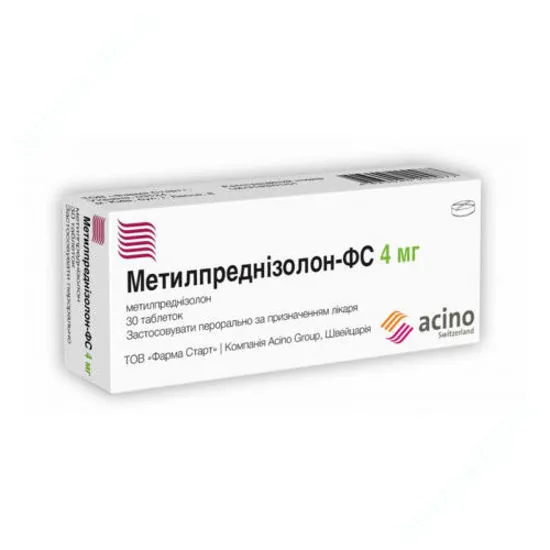
Table of Contents
INSTRUCTION FOR MEDICAL USE OF THE MEDICINAL PRODUCT Methylprednisolone-PS (Methylprednisolone-PS)
Composition:
Active substance: methylprednisolone;
1 tablet contains: methylprednisolone 4 mg or 8 mg;
Excipients: lactose monohydrate; potato starch; sodium starch glycolate (type A); magnesium stearate.
Pharmaceutical form. Tablets.
Main physico-chemical properties: white or almost white, round, flat-surfaced tablets with beveled edges, marked with a cross on one side.
Pharmacotherapeutic group. Systemic corticosteroids. Glucocorticoids. Methylprednisolone. ATC code H02AB04.
Pharmacological Properties
Methylprednisolone is a potent anti-inflammatory steroid. It has greater anti-inflammatory activity and less tendency to cause sodium and water retention compared to prednisolone. The relative potency of methylprednisolone compared to hydrocortisone is at least four to one.
Pharmacodynamics.
Methylprednisolone belongs to the group of synthetic glucocorticoids. Glucocorticoids penetrate cell membranes and form complexes with specific cytoplasmic receptors. These complexes enter the cell nucleus, bind to DNA (chromatin), stimulate mRNA transcription, and subsequently promote the synthesis of various enzymes, which explains the systemic effects of glucocorticoids.
Glucocorticoids not only exert significant effects on the inflammatory process and immune response, but also influence carbohydrate, protein, and fat metabolism, the cardiovascular system, skeletal muscles, and the central nervous system.
Effects on inflammation and immune response.
Most indications for glucocorticoid use are due to their anti-inflammatory, immunosuppressive, and anti-allergic properties. These properties lead to the following therapeutic effects:
- reduction in the number of immunocompetent cells near the site of inflammation;
- reduction in vasodilation;
- stabilization of lysosomal membranes;
- inhibition of phagocytosis;
- reduction in the production of prostaglandins and related compounds.
A dose of 4.4 mg of methylprednisolone acetate (4 mg of methylprednisolone) produces the same glucocorticosteroid (anti-inflammatory) effect as 20 mg of hydrocortisone.
Methylprednisolone exerts only minimal mineralocorticoid activity (200 mg of methylprednisolone is equivalent to 1 mg of desoxycorticosterone).
Effects on carbohydrate and protein metabolism.
Glucocorticoids exhibit catabolic effects on proteins.
The released amino acids are converted via gluconeogenesis in the liver into glucose and glycogen.
Glucose uptake in peripheral tissues is reduced, which may lead to hyperglycemia and glucosuria, particularly in patients predisposed to diabetes mellitus.
Effects on fat metabolism.
Glucocorticoids exert lipolytic effects, primarily affecting the tissues of the extremities. They also exhibit lipogenic effects, most pronounced in the chest, neck, and head areas, leading to redistribution of fat deposits.
The maximum pharmacological activity of corticosteroids occurs after peak plasma concentrations have already passed. Therefore, it is believed that the majority of therapeutic effects are primarily due to modification of enzyme activity rather than the direct action of the drug.
Pharmacokinetics.
The pharmacokinetics of methylprednisolone are linear, regardless of the route of administration.
Absorption.
The absolute bioavailability of methylprednisolone in healthy individuals after oral administration is generally high (82**−**89%).
After oral intake, methylprednisolone is rapidly absorbed, and peak plasma concentrations are reached approximately 1.5**−**2.3 hours (depending on the dose) after administration in healthy individuals.
Distribution.
Methylprednisolone is widely distributed into tissues, crosses the blood-brain barrier, and enters breast milk.
Plasma protein binding of methylprednisolone in humans is approximately 77%.
The apparent volume of distribution of methylprednisolone is approximately 1.4 L/kg.
Metabolism.
Methylprednisolone is primarily metabolized in the liver into inactive metabolites.
The main metabolites are 20-α-hydroxymethylprednisolone and 20-β-hydroxymethylprednisolone.
Its hepatic metabolism occurs predominantly via the CYP3A4 isoenzyme (for a list of drug interactions based on CYP3A-mediated metabolism, see section "Interaction with other medicinal products and other types of interactions").
Like many CYP3A4 substrates, methylprednisolone may also be a substrate for the P-glycoprotein transporter of the ATP-binding cassette (ABC) family, which influences its tissue distribution and interactions with other medicinal products.
Elimination.
The mean elimination half-life of methylprednisolone ranges from 1.8 to 5.2 hours. Total clearance is approximately 5**−**6 mL/min/kg.
Dose adjustment is not required in patients with renal insufficiency.
Methylprednisolone is removed by hemodialysis.
Clinical Characteristics.
Indications.
Endocrine disorders.
Primary and secondary insufficiency of the adrenal cortex (in these cases, hydrocortisone or cortisone are first-line agents; synthetic analogs may be used in combination with mineralocorticoids if necessary; concomitant use of mineralocorticoids is particularly important in the treatment of young children); congenital adrenal hyperplasia; nonpurulent thyroiditis; hypercalcemia associated with malignant tumors.
Non-endocrine disorders.
Rheumatic diseases.
As adjunctive therapy for short-term use (to manage acute episodes or acute exacerbations) in the following conditions:
- psoriatic arthritis;
- rheumatoid arthritis, including juvenile rheumatoid arthritis (in some cases, maintenance therapy with low doses may be required);
- ankylosing spondylitis;
- acute and subacute bursitis;
- acute nonspecific tenosynovitis;
- acute gouty arthritis;
- post-traumatic osteoarthritis;
- synovitis associated with osteoarthritis;
- epicondylitis.
Collagen diseases.
During exacerbation or, in selected cases, as maintenance therapy in the following conditions:
- systemic lupus erythematosus;
- acute rheumatic carditis;
- systemic dermatomyositis (polymyositis);
- polymyalgia rheumatica associated with giant cell arteritis.
Skin diseases.
- Pemphigus;
- bullous dermatitis herpetiformis;
- severe forms of erythema multiforme (Stevens–Johnson syndrome);
- mycosis fungoides;
- severe forms of psoriasis;
- exfoliative dermatitis;
- severe seborrheic dermatitis.
Allergic conditions.
For the treatment of the following severe and incapacitating allergic conditions when standard therapy is ineffective:
- bronchial asthma;
- contact dermatitis;
- atopic dermatitis;
- drug hypersensitivity reactions;
- serum sickness;
- seasonal or perennial allergic rhinitis.
Ocular diseases.
Severe acute, chronic allergic, and inflammatory conditions affecting the eye and its adnexa, such as:
- allergic marginal corneal ulcers;
- ocular complications caused by Herpes zoster;
- anterior segment inflammation;
- diffuse posterior uveitis and choroiditis;
- sympathetic ophthalmia;
- allergic conjunctivitis;
- keratitis;
- chorioretinitis;
- iritis and iridocyclitis;
- optic neuritis.
Respiratory diseases.
- Symptomatic sarcoidosis;
- Löffler’s syndrome unresponsive to other treatments;
- berylliosis;
- fulminant or disseminated pulmonary tuberculosis (to be used in combination with appropriate antituberculosis chemotherapy);
- aspiration pneumonitis.
Hematological disorders.
- Idiopathic thrombocytopenic purpura in adults;
- secondary thrombocytopenia in adults;
- acquired (autoimmune) hemolytic anemia;
- erythroblastopenia (erythroid anemia);
- congenital (erythroid) hypoplastic anemia.
Oncological disorders.
As palliative therapy in the following conditions:
- leukemias and lymphomas in adults;
- acute leukemia in children.
Edema syndrome.
For induction of diuresis or treatment of proteinuria in nephrotic syndrome without uremia, either idiopathic or secondary to systemic lupus erythematosus.
Gastrointestinal disorders.
For management of critical conditions in the following diseases:
- ulcerative colitis;
- Crohn’s disease.
Disorders of the nervous system.
- Exacerbation of multiple sclerosis;
- cerebral edema associated with brain tumors.
Diseases of other organs and systems.
- Tuberculous meningitis with subarachnoid block or risk of block development, in combination with appropriate antituberculosis chemotherapy;
- trichinellosis with involvement of the nervous system or myocardium.
Organ transplantation.
Contraindications.
- Hypersensitivity to methylprednisolone or to any of the excipients;
- systemic infections when specific antimicrobial therapy has not been initiated;
- systemic fungal infections.
Administration of live or live attenuated vaccines is contraindicated in patients receiving immunosuppressive doses of corticosteroids.
Interaction with other medicinal products and other forms of interaction.
Methylprednisolone is a substrate of the cytochrome P450 (CYP) enzyme system and is metabolized primarily by the CYP3A4 isoenzyme, the predominant CYP subtype in the liver of adult humans.
This enzyme catalyzes 6-β-hydroxylation of steroids, a key phase I metabolic step for both endogenous and synthetic corticosteroids.
Many other compounds are also substrates of CYP3A4, and some (as well as other drugs) alter the metabolism of glucocorticoids by either inducing (increasing activity) or inhibiting the CYP3A4 isoenzyme.
Inhibitors of CYP3A4 – medicinal products that inhibit CYP3A4 activity generally reduce hepatic clearance and increase plasma concentrations of CYP3A4 substrate drugs, such as methylprednisolone. In the presence of a CYP3A4 inhibitor, dose titration of methylprednisolone may be necessary to avoid steroid toxicity. CYP3A4 inhibitors include: grapefruit juice, macrolide antibiotics (troleandomycin), and the pharmacokinetic booster cobicistat.
Inducers of CYP3A4 – medicinal products that enhance CYP3A4 activity generally increase hepatic clearance and reduce plasma concentrations of CYP3A4 substrate drugs. When co-administered with these drugs, an increased dose of methylprednisolone may be required to achieve the desired therapeutic effect.
Such medicinal products include the antibacterial and antituberculosis agent rifampicin, and the anticonvulsants phenytoin and phenobarbital.
Substrates of CYP3A4 – the presence of another CYP3A4 substrate may affect the hepatic clearance of methylprednisolone, necessitating appropriate dose adjustment. Adverse reactions associated with monotherapy of either agent may be more likely when used concomitantly. These include immunosuppressants: cyclophosphamide, tacrolimus.
Interactions with other medicinal products (not CYP3A4 isoenzymes).
Antibacterial agent: isoniazid.
CYP3A4 inhibitor. In addition, methylprednisolone potentiates the increased rate of acetylation and clearance of isoniazid.
Oral anticoagulants: the effect of methylprednisolone on oral anticoagulants is variable. Reports have described both increased and decreased anticoagulant effects when used concomitantly with corticosteroids. Therefore, coagulation parameters must be closely monitored to maintain the desired level of anticoagulant effect.
Anticonvulsant: carbamazepine. Inducer and substrate of CYP3A4.
Anticholinergic agents (neuromuscular blocking agents).
Corticosteroids may affect the action of anticholinergic agents:
- cases of acute myopathy have been reported with concomitant use of high-dose corticosteroids and neuromuscular blocking anticholinergic agents (see section "Special precautions for use");
- antagonism to the neuromuscular blocking effects of pancuronium and vecuronium has been reported in patients receiving corticosteroids. This interaction may be expected with all competitive neuromuscular blocking agents.
Anticholinesterase agents.
Corticosteroids may reduce the therapeutic effect of anticholinesterase agents in the treatment of myasthenia gravis.
Antidiabetic medicinal products.
Since corticosteroids may increase blood glucose concentration, dosage adjustment of antidiabetic agents may be required.
Antiemetic agents: aprepitant, fosaprepitant. Inhibitors and substrates of CYP3A4.
Antifungal agents: itraconazole, ketoconazole. Inhibitors and substrates of CYP3A4.
Calcium channel blockers: diltiazem. Inhibitors and substrates of CYP3A4.
Macrolide antibiotics: clarithromycin, erythromycin. Inhibitors and substrates of CYP3A4.
Oral contraceptives: ethinylestradiol/norethindrone. Inhibitors and substrates of CYP3A4.
Antiviral agents – HIV protease inhibitors. Inhibitors and substrates of CYP3A4:
- protease inhibitors such as indinavir and ritonavir may increase plasma concentrations of corticosteroids;
- corticosteroids may induce the metabolism of HIV protease inhibitors, resulting in decreased plasma concentrations.
Aromatase inhibitors – aminoglutethimide.
Adrenal suppression caused by aminoglutethimide may exacerbate endocrine changes induced by prolonged glucocorticoid therapy.
Immunosuppressants: cyclosporine.
Inhibitors and substrates of CYP3A4:
- seizures have been reported with concomitant use of methylprednisolone and cyclosporine;
- concomitant use of these medicinal products results in mutual inhibition of metabolism, potentially increasing plasma concentrations of one or both agents. Therefore, adverse reactions associated with monotherapy of either agent may be more likely when used together.
Nonsteroidal anti-inflammatory drug aspirin (acetylsalicylic acid) at high doses.
Concomitant use of methylprednisolone with nonsteroidal anti-inflammatory drugs may increase the risk of gastric mucosal ulceration and gastrointestinal bleeding.
Methylprednisolone may increase the clearance of high-dose aspirin, potentially reducing serum salicylate levels. Discontinuation of methylprednisolone may lead to increased serum salicylate levels, increasing the risk of salicylate toxicity.
Medicinal products that deplete potassium.
When corticosteroids are used concomitantly with potassium-depleting agents (such as diuretics), patients should be closely monitored for possible development of hypokalemia. There is also an increased risk of hypokalemia when corticosteroids are used with amphotericin B, xanthines, or β2-antagonists.
Special precautions for use.
Immunosuppressive effects/increased susceptibility to infections.
Corticosteroids may increase susceptibility to infections; they may mask some symptoms of infection, and new infections may develop during corticosteroid therapy. Administration of corticosteroids may reduce resistance to infections and impair the body's ability to localize infection.
Infections caused by any pathogen, including bacteria, fungi, viruses, protozoa, or helminths, at any site in the body, may occur during corticosteroid therapy used either as monotherapy or in combination with other immunosuppressive agents affecting cellular and humoral immunity and neutrophil function.
Infections may be mild but can also be severe and, in some cases, fatal.
The frequency of infectious complications increases with higher corticosteroid doses.
Patients receiving drugs that suppress the immune system are more susceptible to infections than healthy individuals.
Varicella (chickenpox) and measles, for example, may have more serious or even fatal outcomes in non-immunized children or adults receiving corticosteroids.
Administration of live or live attenuated vaccines to patients receiving corticosteroids in immunosuppressive doses is contraindicated.
Patients receiving corticosteroids in immunosuppressive doses may be vaccinated with inactivated or killed vaccines; however, their response to such vaccines may be diminished. Immunization procedures may be performed in patients receiving corticosteroids at non-immunosuppressive doses.
Corticosteroids should be used in active tuberculosis only in cases of fulminant or disseminated disease, when corticosteroids must be administered in conjunction with appropriate antituberculosis therapy.
If corticosteroids are indicated for patients with latent tuberculosis or during conversion of tuberculin skin tests, treatment should be conducted under close medical supervision due to the risk of reactivation. During prolonged corticosteroid therapy, such patients should receive chemoprophylactic drugs.
Cases of Kaposi’s sarcoma have been reported in patients receiving corticosteroid therapy. In such cases, discontinuation of corticosteroid therapy may lead to clinical remission.
There is no consensus regarding the role of corticosteroids in the treatment of patients with septic shock.
Earlier studies reported both beneficial and adverse outcomes of corticosteroid use in this clinical setting. Later studies indicated that corticosteroids as adjunctive therapy had favorable effects in patients with established septic shock and adrenal insufficiency.
However, routine use of these drugs in patients with septic shock is not recommended. Systematic review data following short courses of high-dose corticosteroids in such patients showed no evidence supporting such use.
Nevertheless, meta-analysis and one review indicated that longer courses (5–11 days) of low-dose corticosteroid therapy may reduce mortality, particularly in patients with vasopressor-dependent septic shock.
Effects on the immune system.
Allergic reactions (e.g., angioedema) may occur.
Rarely, skin reactions and anaphylactic/anaphylactoid reactions have been reported in patients receiving corticosteroid therapy. Appropriate precautions should be taken before administration, especially if the patient has a history of allergy to any drug.
The medicinal product contains lactose derived from bovine milk. Patients with known or suspected hypersensitivity to bovine milk protein, its components, or other dairy products should exercise caution, as the medicinal product may contain trace amounts of milk components.
Effects on the endocrine system.
Patients undergoing corticosteroid therapy who experience an unusual stress situation should receive increased doses of fast-acting corticosteroids before, during, and after the stressful event.
Prolonged use of glucocorticoids at pharmacological doses may suppress the hypothalamic-pituitary-adrenal (HPA) axis (secondary adrenocortical insufficiency). The degree and duration of adrenocortical insufficiency vary among patients and depend on the dose, frequency, timing, and duration of glucocorticoid therapy.
This effect may be minimized by using alternate-day therapy (see section "Dosage and administration"). Acute adrenal insufficiency may develop after abrupt discontinuation of glucocorticoids, which may be fatal.
Adrenocortical insufficiency caused by drug administration may be minimized by gradual dose reduction.
This type of relative insufficiency may persist for several months after therapy discontinuation; therefore, if any stress situation occurs during this period, hormone therapy should be reinstated.
Since mineralocorticoid secretion may be impaired, mineralocorticoids should be administered concomitantly and/or salt intake increased.
After abrupt discontinuation of glucocorticoids, a steroid withdrawal syndrome unrelated to adrenal insufficiency may also occur.
Symptoms of this syndrome include anorexia, nausea, vomiting, lethargy, headache, fever, joint pain, desquamation, myalgia, weight loss, and/or arterial hypotension. These effects are believed to result from a sudden change in glucocorticoid concentration rather than low corticosteroid levels.
Since glucocorticosteroids may cause or exacerbate Cushing's syndrome, their use should be avoided in patients with Cushing's disease.
Corticosteroids have a more pronounced effect in patients with hypothyroidism.
Periodic paralysis (PP).
PP may occur in patients with hyperthyroidism and hypokalemia induced by methylprednisolone.
PP should be suspected in patients receiving methylprednisolone who present signs or symptoms of muscle weakness, particularly in patients with hyperthyroidism.
If PP is suspected, immediate monitoring of serum potassium levels and appropriate therapy to restore normal potassium levels are required.
Metabolic and nutritional disorders.
Corticosteroids, including methylprednisolone, may increase blood glucose levels, worsen the condition of patients with pre-existing diabetes mellitus, and predispose patients receiving long-term corticosteroid therapy to develop diabetes mellitus.
Psychiatric disorders.
Various psychiatric disorders may occur during corticosteroid therapy, ranging from euphoria, insomnia, mood changes, and personality changes to severe depression with psychotic manifestations.
Additionally, pre-existing emotional instability or a predisposition to psychotic reactions may be exacerbated during corticosteroid therapy.
Potentially severe psychiatric disorders may develop during systemic steroid use (see section "Adverse reactions").
Symptoms typically appear within days or weeks after starting therapy.
Most reactions resolve after dose reduction or discontinuation of the drug, although specific treatment may be required.
Psychiatric reactions have been reported during corticosteroid withdrawal; their frequency is unknown.
Patients and caregivers should be advised to consult a physician if any psychiatric disorders develop, especially if depressive mood or suicidal thoughts are suspected.
Patients and caregivers should remain vigilant for possible psychiatric disorders that may occur during therapy or immediately after gradual dose reduction or discontinuation of systemic steroids.
If a patient receiving steroid therapy experiences an unusual stress situation, the dose of fast-acting steroids should be increased before, during, and after the stressful event.
Nervous system disorders.
Corticosteroids should be used with caution in patients with seizures or myasthenia gravis (see information on myopathy in the "Musculoskeletal disorders" subsection of this section).
Although controlled clinical trials have demonstrated the efficacy of corticosteroids in accelerating the resolution of relapses in multiple sclerosis, they have not shown an effect on the final outcome or natural course of the disease.
According to these studies, relatively high doses of corticosteroids are required to demonstrate a significant effect (see section "Dosage and administration").
Cases of epidural lipomatosis have been reported in patients receiving corticosteroids, usually after prolonged use of high doses.
Eye disorders.
Visual disturbances have been reported with systemic and local corticosteroid use. If symptoms such as blurred vision or other visual disturbances occur, referral to an ophthalmologist should be considered to identify possible causes, including cataract, glaucoma, or rare conditions such as central serous chorioretinopathy, which has been reported after systemic and local corticosteroid use. Central serous chorioretinopathy may lead to retinal detachment.
Corticosteroids should be used with caution in eyes affected by herpes simplex virus, as corneal perforation may occur. Prolonged corticosteroid use may lead to posterior subcapsular cataract and nuclear cataract (especially in children), exophthalmos, or increased intraocular pressure, which may result in glaucoma with possible optic nerve damage. Patients receiving glucocorticoids have an increased risk of developing secondary fungal and viral eye infections. Corticosteroid use has been associated with central serous choriopathy, which may lead to retinal detachment.
Cardiac disorders.
Adverse cardiovascular effects, such as dyslipidemia and arterial hypertension associated with glucocorticoid use, may predispose patients with pre-existing cardiovascular risk factors to additional cardiovascular effects when high doses are used for prolonged periods. Therefore, corticosteroids should be used cautiously in such patients, and risk factor modification and additional cardiac monitoring should be considered when necessary. Low doses and alternate-day therapy may reduce the frequency of complications during corticosteroid therapy.
Systemic corticosteroids should be used with caution and only if urgently needed in patients with congestive heart failure.
Vascular disorders.
Thrombosis, including venous thromboembolism, has been reported during corticosteroid therapy. Therefore, caution should be exercised when prescribing corticosteroids to patients with thromboembolic disorders or those predisposed to them.
Corticosteroids should be used with caution in patients with arterial hypertension.
Gastrointestinal disorders.
High doses of corticosteroids may cause acute pancreatitis.
There is no consensus on whether corticosteroids directly cause peptic ulceration during therapy.
Corticosteroids may mask symptoms of peptic ulceration, so perforation or hemorrhage may occur without significant pain. Glucocorticoid therapy may mask peritonitis or other signs and symptoms associated with gastrointestinal disorders such as perforation, obstruction, or pancreatitis.
The risk of gastrointestinal ulcers is increased when corticosteroids are used in combination with NSAIDs.
Corticosteroids should be used with caution in patients with ulcerative colitis if there is a risk of perforation, abscess formation, or other pyogenic infection; in diverticulitis; after recent intestinal anastomoses; or in active or latent peptic ulcer disease.
Hepatobiliary disorders.
Isolated hepatobiliary disorders have been reported, most of which were reversible after drug discontinuation. Therefore, appropriate monitoring is necessary.
Musculoskeletal disorders.
Cases of acute myopathy have been reported with high-dose corticosteroid therapy, most frequently in patients with neuromuscular transmission disorders (e.g., myasthenia gravis) or those receiving concomitant therapy with anticholinergic agents such as neuromuscular blocking agents (e.g., pancuronium).
This acute myopathy is generalized, may affect eye and respiratory muscles, and may lead to tetraparesis. Elevated creatine kinase levels may be observed. Clinical improvement or recovery after discontinuation of corticosteroids may take from several weeks to several years.
Osteoporosis is a frequently observed but rarely diagnosed adverse reaction that develops during prolonged use of high-dose glucocorticoids.
Renal and urinary disorders.
Use with caution in patients with systemic sclerosis, as an increased incidence of scleroderma renal crisis has been observed during corticosteroid therapy, including methylprednisolone. Corticosteroids should be used with caution in patients with renal insufficiency.
Laboratory tests.
Administration of hydrocortisone or cortisone in moderate to high doses may cause elevated blood pressure, salt and water retention, and increased potassium excretion.
These effects are less common with synthetic derivatives, except when high doses are used.
During prolonged methylprednisolone therapy, appropriate dietary measures to prevent hypokalemia include salt restriction and potassium supplementation. All corticosteroids increase calcium excretion.
Injuries, poisoning, and procedural complications.
Systemic corticosteroids are not indicated and should not be used for the treatment of traumatic brain injury. A multicenter study found increased mortality at 2 weeks and 6 months after injury in patients who received methylprednisolone compared to those who received placebo. A causal relationship with methylprednisolone treatment has not been established.
Other.
Since complications of glucocorticoid therapy depend on drug dose and treatment duration, the benefit-risk ratio should always be evaluated with regard to both dose and duration of therapy, as well as the choice of administration regimen—daily or intermittent.
When treating with corticosteroids, the lowest effective dose should be prescribed, and when dose reduction becomes possible, it should be done gradually.
Concomitant use with CYP3A inhibitors, including drugs containing cobicistat, is believed to increase the risk of systemic adverse effects. Such combinations should be avoided unless the benefit outweighs the increased risk of systemic adverse reactions; in such cases, patients should be monitored for systemic adverse reactions associated with corticosteroid use.
Aspirin and nonsteroidal anti-inflammatory drugs should be used cautiously in combination with corticosteroids.
After administration of systemic corticosteroids, cases of pheochromocytoma crisis have been reported, which may be fatal.
Corticosteroids should be prescribed to patients with suspected or confirmed pheochromocytoma only after appropriate risk-benefit assessment.
During post-marketing surveillance, tumor lysis syndrome (TLS) has been reported in patients with malignant neoplasms, including hematological malignancies and solid tumors, after administration of systemic corticosteroids alone or in combination with other chemotherapeutic agents. Patients at high risk of TLS, such as those with tumors exhibiting high proliferation rates, high tumor burden, and high sensitivity to cytotoxic agents, should be closely monitored, and appropriate preventive measures should be taken.
This medicinal product contains 5.3 or 1.3 mg of sodium starch glycolate (according to the dosage form of Methylprednisolone-FS 4 mg or 8 mg). Caution is advised when administering to patients on a sodium-controlled diet.
The medicinal product contains lactose; therefore, methylprednisolone is not recommended for patients with hereditary galactose intolerance, lactase deficiency, or glucose-galactose malabsorption syndrome.
Use during pregnancy or breastfeeding.
Pregnancy.
Animal studies have shown that administration of corticosteroids to pregnant females at high doses may cause fetal developmental abnormalities. Although there is no evidence that corticosteroids cause congenital malformations when used in pregnant women, study results in treated pregnant women do not fully exclude fetal damage.
Since adequate studies on the effects of methylprednisolone on human reproductive function have not been conducted, this medicinal product should be prescribed during pregnancy only after careful evaluation of the risk-benefit ratio for mother and fetus.
Some corticosteroids readily cross the placental barrier.
In one retrospective study, mothers receiving corticosteroids had an increased incidence of low birth weight infants. In humans, the risk of low birth weight has been shown to be dose-dependent and may be minimized by using lower corticosteroid doses. Newborns whose mothers received sufficiently high corticosteroid doses during pregnancy should be closely monitored for signs of adrenal insufficiency, although adrenal insufficiency in neonates exposed to corticosteroids in utero is rare.
The effect of corticosteroids on the course and outcome of labor is unknown.
Cataracts have been observed in infants whose mothers received prolonged corticosteroid therapy during pregnancy.
Breastfeeding period.
Corticosteroids pass into breast milk and may suppress growth and affect endogenous glucocorticoid production in breastfed infants. This medicinal product should be used in breastfeeding women only after careful evaluation of the risk-benefit ratio for mother and infant.
Fertility.
Corticosteroids have been shown to reduce fertility in rats, although data from these studies are insufficient.
Ability to affect reaction speed when driving or operating machinery.
The effect of corticosteroids on reaction speed during driving and/or operating machinery has not been systematically evaluated. However, during corticosteroid therapy, there is a risk of adverse reactions such as dizziness, vertigo, visual disturbances, and fatigue. In such cases, patients should not drive or operate machinery.
Method of Administration and Dosage
The cross-shaped score on the tablets is not functional and is not intended for dividing the tablet.
The initial dose of the medicinal product for adults may vary depending on the indication.
For less severe conditions, lower doses are usually sufficient, although some patients may require higher starting doses.
High doses may be used in conditions such as multiple sclerosis (200 mg per day), cerebral edema (200–1000 mg per day), organ transplantation (up to 7 mg/kg per day), and multiple sclerosis. In the treatment of acute exacerbations of multiple sclerosis, oral administration of methylprednisolone at 500 mg/day for 5 days or 1000 mg/day for 3 days is effective. If a satisfactory clinical response is not achieved within an appropriate period of time, therapy with methylprednisolone tablets should be discontinued and alternative therapy initiated. If discontinuation of the drug is required after prolonged therapy, it is recommended to taper the dose gradually rather than abruptly. When a satisfactory therapeutic effect has been achieved, the individual maintenance dose should be established by gradually reducing the initial dose at regular intervals until the lowest dose that maintains the clinical response is identified.
It should be remembered that continuous monitoring of drug dosage is necessary. Situations that may require dose adjustment include: changes in clinical status due to remission or exacerbation of the disease; individual patient response to the drug; and the impact of stressful situations unrelated to the primary condition being treated. In the latter case, a temporary increase in the dose of methylprednisolone may be necessary, depending on the patient's condition. It should be emphasized that the required dose may vary and must be individually adjusted according to the nature of the disease and the patient's response to therapy.
ALTERNATE-DAY THERAPY (ADT)
Alternate-day therapy is a corticosteroid dosing regimen in which a double daily dose of the corticosteroid is administered every other morning. The goal of this therapy is to achieve maximum benefits of corticosteroid use in patients requiring long-term treatment while minimizing certain adverse effects, such as suppression of the hypothalamic-pituitary-adrenal (HPA) axis, Cushingoid state, corticosteroid withdrawal syndrome, and growth suppression in children.
Children
The medicinal product may be used in pediatric practice.
Careful monitoring of the development and growth of infants and children is required during long-term corticosteroid therapy.
Prolonged daily multiple-dose administration of the drug in children may result in growth retardation.
Therefore, such a dosing regimen should be used only when absolutely necessary.
Alternate-day therapy generally allows avoidance or minimization of this adverse effect (see section "Method of Administration and Dosage. Alternate-Day Therapy").
Infants and children receiving long-term corticosteroid therapy are at particular risk of increased intracranial pressure.
High doses of corticosteroids may cause pancreatitis in children.
Overdose
There is no recognized clinical syndrome of acute corticosteroid overdose. Reports of acute toxicity and/or fatal outcomes following corticosteroid overdose are rare.
In case of overdose, there is no specific antidote; supportive and symptomatic treatment should be administered. Methylprednisolone is dialyzable.
Adverse Reactions
The adverse reactions listed below are treatment-related and are presented by System Organ Class (MedDRA) and frequency. Within each frequency group, adverse reactions are listed in decreasing order of occurrence. The frequency of adverse reactions is defined as follows: common (≥ 1/100 to < 1/10); uncommon (≥ 1/1000 to < 1/100); rare (≥ 1/10000 to < 1/1000); unknown (frequency cannot be estimated from available data).
Infections and parasitic infestations: common – infections (including increased susceptibility to infections and severity of infections, with masking of signs and symptoms); unknown – peritonitis+, relapse of latent tuberculosis, opportunistic infections.
Benign, malignant and unspecified neoplasms (including cysts and polyps): unknown – Kaposi's sarcoma.
Blood and lymphatic system disorders: unknown – leukocytosis.
Immune system disorders: unknown – hypersensitivity to the medicinal product (including anaphylactic and anaphylactoid reactions).
Endocrine disorders: common – Cushingoid syndrome; unknown – suppression of the hypothalamic-pituitary-adrenal (HPA) axis.
Metabolism and nutrition disorders: common – sodium retention, fluid retention; unknown – hypokalemic alkalosis, metabolic acidosis, dyslipidemia, impaired glucose tolerance, increased insulin requirement and increased need for oral antidiabetic agents in patients with diabetes mellitus, lipomatosis, increased appetite (which may lead to weight gain), epidural lipomatosis.
Psychiatric disorders: common – affective disorders (including depressive mood and euphoric mood); unknown – psychosis (including mania, delusions, hallucinations, schizophrenia), psychotic behavior, affective disorders (including affective lability, psychological dependence, suicidal tendencies), mental disorder, personality changes, mood swings, confusion, behavioral disturbances, anxiety, insomnia, irritability.
Nervous system disorders: unknown – seizures, increased intracranial pressure (with papilledema [benign intracranial hypertension]), cognitive dysfunction (including amnesia), dizziness, headache.
Eye disorders: common – cataract; rare – blurred vision (see section "Special Instructions"); unknown – glaucoma, exophthalmos, thinning of cornea and sclera, chorioretinopathy.
Ear and labyrinth disorders: unknown – vertigo.
Cardiac disorders: unknown – congestive heart failure (in patients predisposed to this condition), myocardial rupture at the site of previous myocardial infarction.
Vascular disorders: common – arterial hypertension; unknown – arterial hypotension, arterial embolism, thrombotic events, flushing.
Respiratory, thoracic and mediastinal disorders: unknown – pulmonary embolism, hiccups.
Gastrointestinal disorders: common – peptic ulcers (with possible perforation and hemorrhage); unknown – intestinal perforation, gastrointestinal bleeding, pancreatitis, ulcerative esophagitis, abdominal distension, esophagitis, abdominal pain, diarrhea, dyspepsia, nausea, vomiting.
Hepatobiliary disorders: unknown – increased levels of liver enzymes (e.g., alanine aminotransferase, aspartate aminotransferase).
Skin and subcutaneous tissue disorders: common – skin atrophy, acne; unknown – erythema, angioneurotic edema, pruritus, urticaria, ecchymosis, petechiae, rash, hirsutism, hyperhidrosis, telangiectasia, delayed wound healing, striae.
Musculoskeletal and connective tissue disorders: common – muscle weakness, growth retardation; unknown – pathological fractures, osteonecrosis, muscle atrophy, neuropathic arthropathy, myopathy, osteoporosis, arthralgia, myalgia.
Reproductive system and breast disorders: unknown – menstrual irregularities.
General disorders and administration site conditions: common – impaired wound healing; unknown – peripheral edema, fatigue, malaise, steroid withdrawal syndrome symptoms (too rapid dose reduction after prolonged corticosteroid therapy may result in acute adrenal insufficiency, hypotension, and fatal outcome) (see section "Special Instructions").
Investigations: common – hypokalemia; unknown – increased intraocular pressure, decreased carbohydrate tolerance, increased urinary calcium excretion, elevated serum alkaline phosphatase, elevated blood urea nitrogen, suppression of skin test reactions*.
Injury, poisoning and procedural complications: unknown – tendon rupture (especially Achilles tendon), vertebral compression fracture.
The frequency of expected adverse reactions associated with corticosteroid use, including hypothalamic-pituitary-adrenal (HPA) axis suppression, correlates with the relative potency of the medicinal product, dosage, duration of therapy, and route of administration (see section "Special Instructions").
- Peritonitis may be the primary presenting sign or symptom of gastrointestinal disorders such as perforation, obstruction, or pancreatitis (see section "Special Instructions").
* The term name does not belong to the MedDRA classification.
Reporting suspected adverse reactions.
Reporting of suspected adverse reactions after marketing authorization is important. It allows continued monitoring of the benefit-risk balance of the medicinal product. Healthcare professionals, pharmacists, patients, and their legal representatives are encouraged to report all suspected adverse reactions and lack of efficacy through the Automated Pharmacovigilance Information System at: https://aisf.dec.gov.ua.
Shelf life. 3 years.
Storage conditions. Store in a place inaccessible to children, in the original packaging at a temperature not exceeding 25 ºC.
Packaging. 10 tablets in a blister; 3 blisters in a cardboard carton.
Prescription status. Prescription only.
Manufacturer. LLC "Pharma Start", Ukraine.
Manufacturer's address and place of business.
Ukraine, 03124, Kyiv, Vatslava Havela Boulevard, 8.