Methojekt
Ukraine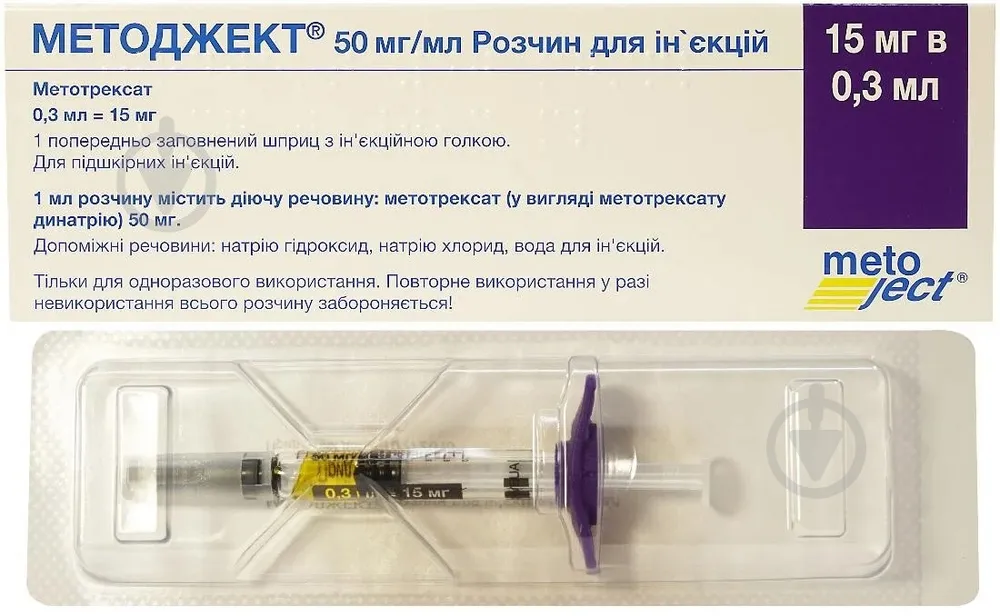
Table of Contents
INSTRUCTIONS for medical use of the medicinal product MЕТОDЖЕКТ® (METOJECT®)
Composition:
Active substance: methotrexate;
1 ml of solution contains methotrexate 50 mg (as methotrexate disodium 54.84 mg);
Excipients: sodium hydroxide, sodium chloride, water for injections.
Pharmaceutical form. Solution for injection.
Main physicochemical characteristics: yellow-brown transparent solution free from cloudiness.
Pharmacotherapeutic group.
Antineoplastic and immunomodulating agents. Immunosuppressants. Other immunosuppressants.
ATC code L04A X03.
Pharmacological properties.
Pharmacodynamics.
Antirheumatic medicinal product for the treatment of chronic inflammatory rheumatic diseases and polyarticular forms of juvenile idiopathic arthritis. Immunomodulatory and anti-inflammatory agent for the treatment of Crohn's disease.
Mechanism of action.
Methotrexate is a folic acid antagonist belonging to the class of cytotoxic agents known as antimetabolites. It acts by competitively inhibiting the enzyme dihydrofolate reductase, thereby suppressing DNA synthesis. The extent to which the anti-inflammatory or immunosuppressive effect contributes to methotrexate's efficacy in the treatment of psoriasis, psoriatic arthritis, chronic polyarthritis, and Crohn's disease, as well as the role of methotrexate-induced elevation of extracellular adenosine concentration in this effect, has not yet been fully elucidated.
International clinical guidelines reflect the use of methotrexate as a second-line agent in patients with Crohn's disease who are intolerant of or have failed to respond to first-line immunomodulators such as azathioprine (AZA) or 6-mercaptopurine (6-MP).
Adverse events observed in studies using high-dose methotrexate for the treatment of Crohn's disease did not reveal a safety profile different from that already known. Therefore, when using methotrexate for the treatment of Crohn's disease, the same recommendations should be followed as for other rheumatic and non-rheumatic conditions for which methotrexate is indicated.
Pharmacokinetics.
Absorption. Methotrexate is absorbed from the gastrointestinal tract following oral administration. When low doses are administered (7.5–80 mg/m² body surface area), the mean bioavailability is approximately 70%, although considerable inter- and intra-subject variability (25–100%) may occur. Maximum serum concentrations of methotrexate are reached within 1–2 hours.
The bioavailability of methotrexate following subcutaneous administration is approximately 100%.
Distribution. Approximately 50% of methotrexate is bound to serum proteins. High tissue concentrations of polyglutamates are observed, particularly in the liver, kidneys, and spleen, which may persist for weeks or months. After low-dose administration, methotrexate penetrates into the fluid in minimal amounts. The terminal half-life averages 6–7 hours and shows considerable variability (3–17 hours). The elimination half-life may be prolonged up to fourfold in patients with an existing third space of distribution (pleural effusion, ascites) compared to normal duration.
Biological transformation. Approximately 10% of the administered dose of methotrexate is metabolized in the liver. The main metabolite is 7-hydroxymethotrexate.
Excretion. Methotrexate is excreted primarily in unchanged form, mainly via the kidneys through glomerular filtration and active secretion in the proximal tubules. Approximately 5–20% of methotrexate and 1–5% of 7-hydroxymethotrexate are excreted in bile.
In renal impairment, elimination of methotrexate is significantly slowed. Regarding hepatic impairment, there are no data indicating reduced elimination rate.
Safety preclinical findings
Animal studies have shown that methotrexate impairs fertility and exerts embryotoxic and teratogenic effects on the fetus. Methotrexate demonstrates mutagenicity in vivo and in vitro. Since traditional carcinogenicity studies have not been conducted and chronic toxicity studies in rodents yielded insufficient data for comparison, the potential carcinogenicity of methotrexate in humans cannot be determined.
Clinical characteristics.
Indications.
- Active form of rheumatoid arthritis in adults;
- severe polyarticular form of juvenile (idiopathic) arthritis, in cases of inadequate response to nonsteroidal anti-inflammatory drugs;
- severe plaque psoriasis, when appropriate therapy (e.g., phototherapy, PUVA therapy, or retinoids) has been ineffective, as well as severe forms of psoriatic arthritis in adults;
- mild to moderate Crohn's disease (as monotherapy or in combination with corticosteroids) in adults, in cases of resistance or intolerance to thiopurines.
Contraindications.
- Hypersensitivity to methotrexate or to any component of the medicinal product;
- impairment of liver function (liver disease due to alcohol or other chronic liver diseases);
- alcohol abuse;
- history of blood disorders, such as bone marrow hypoplasia, leukopenia, thrombocytopenia, or severe anemia;
- severe acute or chronic infections, such as tuberculosis or HIV, or other immunodeficiency syndromes;
- oral ulcers and active peptic ulcer disease of the stomach or intestine;
- renal impairment (creatinine clearance less than 30 mL/min);
- concomitant vaccination with live vaccines;
- pregnancy and breastfeeding.
Special safety precautions.
Special precautions during handling and disposal of the medicinal product must comply with requirements for cytotoxic agents. Pregnant women must not handle cytotoxic medicinal products or take Methojekt®.
Precautions should be taken to avoid accidental contact of methotrexate with skin or mucous membranes. In case of skin contact, the affected area should be thoroughly rinsed with large amounts of water.
Unused medicinal product or waste must be disposed of in accordance with requirements for cytotoxic agents.
Interaction with other medicinal products and other types of interactions.
Animal studies have shown that nonsteroidal anti-inflammatory drugs (NSAIDs), including salicylic acid, reduce tubular secretion of methotrexate and thereby enhance its toxic effects. However, in clinical studies where NSAIDs and salicylic acid were used as concomitant therapy in patients with rheumatoid arthritis, no increase in the frequency of adverse reactions was observed. These drugs may be continued as part of combination therapy for rheumatoid arthritis together with methotrexate, but only under careful medical supervision.
Nitrous oxide. Nitrous oxide use potentiates methotrexate's effect on folic acid, increasing toxicity manifested as severe, unpredictable myelosuppression and stomatitis. Although this effect can be reduced by administration of calcium folinate, concomitant use should be avoided.
Alcohol, hepatotoxic medicinal products, hematotoxic medicinal products. The likelihood of developing hepatotoxic effects of methotrexate increases with alcohol abuse and with concomitant use of other hepatotoxic medicinal products. Therefore, patients who are receiving hepatotoxic drugs (e.g., leflunomide, azathioprine, sulfasalazine, retinoids) during methotrexate therapy require close monitoring due to the potential for enhanced hepatotoxicity. Alcohol consumption should be avoided during methotrexate treatment.
Similar monitoring is also necessary when hematotoxic medicinal products are used concomitantly. Combination of leflunomide with methotrexate may increase the frequency of pancytopenia and hepatotoxicity.
Combined treatment with methotrexate and retinoids, such as acitretin or etretinate, increases the risk of hepatotoxicity.
Oral antibiotics. Oral antibiotics such as tetracycline, chloramphenicol, and non-absorbable broad-spectrum antibiotics may interfere with enterohepatic circulation by inhibiting intestinal flora or suppressing bacterial metabolism.
Antibiotics. Antibiotics similar to penicillins, glycopeptides, sulfonamides, ciprofloxacin, and cephalothin may in individual cases reduce renal clearance of methotrexate, thereby increasing methotrexate concentration in serum and its hematological and gastrointestinal toxicity.
Medicinal products with high plasma protein binding. Methotrexate binds to plasma proteins and may be displaced by other drugs that bind to proteins, such as salicylates, hypoglycemic agents, diuretics, sulfonamides, phenytoin, tetracyclines, barbiturates, chloramphenicol, and para-aminobenzoic acid, as well as acidic anti-inflammatory agents, which may cause increased toxicity when used concomitantly.
Salicylates, phenylbutazone, phenytoin, barbiturates, tranquilizers, oral contraceptives, tetracycline, derivatives of amidopyrine, sulfonamides, and para-aminobenzoic acid displace methotrexate from plasma proteins and thus increase its bioavailability (indirect dose increase).
Probenecid, weak organic acids, pyrazoles, and nonsteroidal anti-inflammatory agents. Probenecid, weak organic acids such as loop diuretics, and pyrazoles (phenylbutazone) may reduce elimination of methotrexate, and higher serum concentrations may lead to increased hematological toxicity. There is also a potential for increased toxicity when low-dose methotrexate is combined with nonsteroidal anti-inflammatory drugs or salicylates.
Medicinal products that may cause adverse effects on bone marrow. When methotrexate is used concomitantly with medicinal products that may cause bone marrow suppression (sulfonamides, trimethoprim/sulfamethoxazole, chloramphenicol, pyrimethamine), attention should be paid to the risk of pronounced hematological disorders.
Concomitant use of metamizole and methotrexate may enhance the hematotoxic effect of methotrexate, especially in elderly patients. Therefore, combined administration should be avoided.
Agents causing folate deficiency. Concomitant use of agents causing folate deficiency (e.g., sulfonamides, trimethoprim/sulfamethoxazole) may lead to increased adverse effects of methotrexate. Therefore, special attention should be paid to existing folic acid deficiency.
Agents containing folic or folinic acid. Vitamin preparations or other medicinal products containing folic acid, folinic acid, or their derivatives may reduce the efficacy of methotrexate.
Other antirheumatic medicinal products. An increase in toxic effects of methotrexate is generally not expected when Methojekt® is used concomitantly with other antirheumatic medicinal products (e.g., gold compounds, penicillamine, hydroxychloroquine, sulfasalazine, azathioprine).
Cyclosporine. Cyclosporine may potentiate the efficacy and toxicity of methotrexate. There is an increased risk of renal dysfunction. In addition, there is biological plausibility for excessive immunosuppression and associated complications.
Sulfasalazine. Although the combination of methotrexate and sulfasalazine may increase the efficacy of methotrexate and consequently lead to increased adverse effects due to sulfasalazine's inhibition of folic acid synthesis, such adverse effects have been observed only in isolated cases during several studies.
Mercaptopurine. Methotrexate increases mercaptopurine levels in plasma. Therefore, dose adjustment may be necessary when combining methotrexate with mercaptopurine.
Proton pump inhibitors. Concomitant use of proton pump inhibitors (omeprazole, pantoprazole, lanzoprazole) may lead to delayed or impaired renal excretion of methotrexate, thereby increasing plasma levels of the drug and resulting in clinical signs and symptoms of methotrexate toxicity. Caution should be exercised in patients with impaired renal function when using methotrexate. One case has been reported where methotrexate in combination with pantoprazole inhibited renal excretion of the metabolite 7-hydroxymethotrexate, causing myalgia and tremor.
Theophylline. Methotrexate may reduce the clearance of theophylline; theophylline levels should be monitored when used concomitantly with methotrexate.
Beverages containing caffeine or theophylline. During methotrexate therapy, excessive consumption of beverages containing caffeine or theophylline (coffee, caffeinated soft drinks, tea) should be avoided, as this may reduce methotrexate efficacy due to interaction between methotrexate and adenosine receptors via metixanthine.
Live vaccines should not be administered during methotrexate therapy.
Special precautions for use
Patients should be clearly informed that the medicinal product should be administered once a week, not daily. Also, doses exceeding 20 mg/week may be associated with a significant increase in toxicity, particularly bone marrow suppression.
If symptoms of gastrointestinal toxicity occur (typically stomatitis develops first), methotrexate treatment should be discontinued, since continuing therapy may lead to the development of hemorrhagic enteritis and intestinal perforation, which may be life-threatening.
Patients undergoing treatment should be under close medical supervision to detect signs of toxic effects or adverse reactions and, if possible, to assess them promptly. Therefore, methotrexate should be used only under the supervision of a physician experienced in the use of antimetabolites. Due to the risk of severe or even fatal toxic reactions, the physician must inform the patient about all risks associated with the use of Methojekt® and the recommended safety measures.
Recommended medical monitoring and safety measures
Before starting therapy or resuming methotrexate treatment after a break
Complete and biochemical blood tests with differential analysis of platelet count, liver enzymes, bilirubin, serum albumin levels, chest X-ray, and kidney function tests should be performed. Tuberculosis and hepatitis should be investigated clinically to exclude these conditions.
During treatment
The following investigations should be performed weekly for the first 2 weeks, then every 2 weeks during the following month; thereafter, depending on the leukocyte count and patient's clinical stability, at least once a month for the next 6 months and at least every 3 months thereafter.
When increasing the dose, increased monitoring frequency should also be considered. Elderly patients, in particular, should be examined frequently for early signs of toxicity.
- Examination of the oral cavity and throat to detect mucosal changes.
- Complete blood count with differential analysis of platelet count. Methotrexate-induced bone marrow suppression may occur suddenly even with apparently safe doses. Any significant decrease in leukocyte or platelet counts requires immediate discontinuation of the drug and appropriate supportive treatment. Patients should be strongly advised to report any symptoms suggesting infection. Careful monitoring of platelet count is required in patients concurrently receiving hematotoxic drugs (e.g., leflunomide).
- Liver function tests: treatment should not be initiated or should be discontinued if persistent or significant abnormalities in liver function tests, non-invasive tests for liver fibrosis, or liver biopsy are observed.
Transient elevations of transaminases to 2–3 times the upper limit of normal have been reported in 13–20% of patients. Persistent elevation of liver enzymes and/or decreased serum albumin levels may indicate severe hepatotoxicity. In case of persistent elevation of liver enzymes, dose reduction or discontinuation of treatment should be considered.
Histological changes, fibrosis, and rarely cirrhosis may occur without abnormal liver function tests. Cases of cirrhosis have been reported even when transaminase levels were within normal limits. Therefore, non-invasive diagnostic methods for monitoring liver status should be considered in addition to liver function tests. The need for liver biopsy should be evaluated on a case-by-case basis, taking into account comorbidities, patient history, and risks associated with biopsy. Risk factors for hepatotoxicity include: history of alcohol abuse, persistent elevation of liver enzymes, history of liver disease, familial liver disorders, diabetes, obesity, prior exposure to hepatotoxic drugs or chemicals, and long-term methotrexate therapy.
The concomitant use of other hepatotoxic drugs during methotrexate treatment should be avoided, except when absolutely necessary.
Alcohol consumption should be avoided (see sections "Contraindications" and "Ability to influence reaction rate when driving or operating machinery"). More frequent monitoring of liver enzyme levels is required in patients receiving other hepatotoxic drugs concomitantly.
Particular caution is required in patients with insulin-dependent diabetes mellitus, as cirrhosis of the liver without elevated transaminases has been reported in isolated cases during methotrexate therapy.
- Kidney function should be monitored by urine analysis and testing (see section "Special precautions for use" and "Interaction with other medicinal products and other forms of interaction").
Since methotrexate is primarily excreted by the kidneys, reduced renal function may lead to increased serum concentrations, potentially causing severe adverse effects, including renal impairment up to acute renal failure.
When kidney function may be impaired (e.g., in elderly patients), monitoring should be performed more frequently. This is particularly important when methotrexate is used concomitantly with drugs affecting its elimination (e.g., nonsteroidal anti-inflammatory drugs), causing kidney damage, or leading to hematological disorders. Severe adverse reactions, including fatal outcomes, have been reported with concomitant use of nonsteroidal anti-inflammatory drugs.
During methotrexate therapy, worsening of kidney function with elevated levels of certain laboratory parameters (creatinine, urea, and uric acid) in serum may occur.
Dehydration may also enhance methotrexate toxicity.
- Respiratory system assessment: symptoms of lung dysfunction should be closely monitored, and, if necessary, pulmonary function tests should be performed. Lung disease requires prompt diagnosis and discontinuation of methotrexate therapy. Symptoms of lung disease (e.g., dry non-productive cough) or nonspecific pneumonitis occurring during methotrexate therapy may indicate potentially dangerous lung injury and require treatment discontinuation and thorough evaluation. Acute or chronic interstitial pneumonitis, often associated with blood eosinophilia, may develop; fatal cases have also been reported. Despite clinical variability, typical symptoms of methotrexate-induced lung disease include fever, cough, dyspnea, hypoxemia, and infiltrates on chest X-ray; infection should be ruled out. Potentially fatal opportunistic infections, including Pneumocystis jirovecii pneumonia, may occur during methotrexate therapy. Methotrexate-induced lung injury may develop at any stage of therapy, even with low doses of 7.5 mg/week. Lung injury requires prompt diagnosis and discontinuation of methotrexate therapy. Methotrexate-induced lung disease is not always fully reversible. This type of injury may occur with any dose.
Additionally, pulmonary alveolar hemorrhage has been reported during methotrexate therapy in rheumatological and related indications. This phenomenon may also be associated with vasculitis and other comorbidities. Rapid diagnostic tests should be considered in suspected cases of pulmonary alveolar hemorrhage to confirm diagnosis.
- Due to its effect on the immune system, methotrexate may reduce response to vaccination and affect immunological test results. Particular caution is required in cases of latent chronic infections (e.g., herpes zoster, tuberculosis, hepatitis B or C), as reactivation of infection may occur. Concomitant vaccination with live vaccines should not be performed during methotrexate therapy. Cases of disseminated vaccinia after smallpox vaccination in patients receiving methotrexate have been reported.
Particular caution is required when treating patients with insulin-dependent diabetes mellitus.
Methotrexate use may cause reactivation of hepatitis B or exacerbation of hepatitis C, which in some cases led to fatal outcomes. Cases of hepatitis B reactivation have been reported even after discontinuation of methotrexate therapy. Therefore, clinical and laboratory monitoring is required in patients with a history of hepatitis B or C to determine the appropriateness of methotrexate therapy.
In patients receiving low-dose methotrexate, malignant lymphoma may occur. In such cases, treatment should be discontinued. If there are no signs of spontaneous lymphoma regression, cytotoxic therapy should be initiated.
There have been several reports of acute megaloblastic pancytopenia associated with concomitant administration of folate antagonists, such as trimethoprim/sulfamethoxazole.
Photosensitivity. Photosensitivity, manifesting as increased sensitivity to sunlight, has been observed in some patients receiving methotrexate (see section "Adverse reactions"). Exposure to intense sunlight or ultraviolet radiation should be avoided, except when medically indicated. Patients should use appropriate protective measures against intense sunlight.
Radiation-induced dermatitis and sunburn may recur during methotrexate therapy (an anamnestic reaction). Psoriasis symptoms may worsen during ultraviolet radiation combined with methotrexate administration.
Conditions leading to dehydration (vomiting, diarrhea, stomatitis) may increase methotrexate toxicity due to elevated drug levels in the body. In such cases, methotrexate should be discontinued until symptoms resolve.
Diarrhea and ulcerative stomatitis may be signs of toxic effects requiring treatment discontinuation to prevent potentially fatal hemorrhagic enteritis caused by intestinal perforation.
In patients with pathological fluid accumulation in body cavities ("third space"), such as ascites or pleural effusion, the plasma half-life of methotrexate is prolonged, which may lead to unexpectedly increased toxicity. Drainage of pleural effusion or ascites should be performed before starting methotrexate therapy.
Vitamin preparations or other substances containing folic acid, folinic acid, or their derivatives may reduce the efficacy of methotrexate.
Severe, sometimes fatal, allergic skin reactions, such as Stevens-Johnson syndrome and toxic epidermal necrolysis (Lyell's syndrome), have been reported.
When treating psoriasis, methotrexate use should be limited to severe cases when other treatments are ineffective, and only after biopsy confirmation and/or dermatological consultation.
Cases of encephalopathy and leukoencephalopathy have been reported in oncology patients receiving methotrexate therapy. This should be considered when using methotrexate for non-oncological indications.
Intravenous administration of methotrexate may lead to acute encephalitis (inflammation of the brain meninges) and acute encephalopathy (pathological brain changes) with fatal outcomes.
Progressive multifocal leukoencephalopathy
Cases of progressive multifocal leukoencephalopathy (PML) have been reported in patients receiving methotrexate, mostly in combination with other immunosuppressive agents. PML may have fatal outcomes. This should be considered in differential diagnosis in immunocompromised patients with worsening or new neurological symptoms.
Sodium
The medicinal product contains less than 1 mmol sodium (23 mg) per dose, i.e., it is practically sodium-free.
Fertility
Oligospermia, menstrual disorders, amenorrhea, and impaired fertility due to effects on spermatogenesis and oogenesis have been reported in humans during and shortly after methotrexate therapy. These effects are considered reversible after treatment discontinuation.
Teratogenicity
Methotrexate causes embryotoxicity, miscarriages, and congenital abnormalities in humans. Therefore, risks related to reproductive function, pregnancy loss, and congenital malformations should be discussed with women of reproductive age (see section "Use during pregnancy or breastfeeding"). Pregnancy should be excluded before starting treatment, for example, by a pregnancy test. Women of reproductive age must use effective contraception during treatment and for at least six months after methotrexate therapy ends.
Since methotrexate may be genotoxic, women planning pregnancy should consult a genetic center before starting therapy regarding risks to reproductive function, and men should consider sperm cryopreservation before treatment initiation (see section "Use during pregnancy or breastfeeding").
Elderly patients. Since liver and kidney function decline with age and folate reserves decrease, dose reduction may be appropriate in elderly patients.
Use during pregnancy or breastfeeding.
Women of reproductive age / contraception in women. Women should not become pregnant during methotrexate therapy. Effective contraception must be used during treatment and for at least 6 months after methotrexate therapy ends. Women of reproductive age must be informed about the risk of methotrexate's adverse effects on the fetus before starting treatment, and pregnancy must be excluded by appropriate methods, such as a pregnancy test. Pregnancy tests should be performed during treatment as clinically needed (e.g., after a break in contraceptive use). Women of reproductive age should receive counseling on pregnancy prevention and planning.
Contraception in men. There are no data on methotrexate levels in semen. Genotoxicity of methotrexate has been demonstrated in animal studies; therefore, genotoxic effects on sperm cannot be completely ruled out. Limited clinical data do not indicate an increased risk of congenital malformations or miscarriage after paternal exposure to low methotrexate doses (less than 30 mg per week). Data are insufficient to assess the risk of congenital malformations or miscarriage after paternal exposure to higher doses.
Sexually active male patients or their partners are advised to use reliable contraception during treatment and for at least 3 months after methotrexate therapy ends. Men should not be sperm donors during treatment or for 3 months after discontinuation of methotrexate.
Pregnancy. Methotrexate is contraindicated during pregnancy (see section "Contraindications"). If pregnancy occurs during methotrexate therapy or within 6 months after treatment ends, the woman should be informed about the risks of harmful effects on the child and undergo fetal ultrasound examinations.
Reproductive toxicity of methotrexate has been demonstrated in animal studies, particularly in the first trimester. Methotrexate has teratogenic effects, causing fetal death, miscarriages, and congenital abnormalities (e.g., craniofacial, cardiovascular, central nervous system, and limb malformations).
Methotrexate is a potent human teratogen. Exposure during pregnancy increases the risk of spontaneous miscarriages, intrauterine growth retardation, and congenital malformations.
Spontaneous miscarriages occurred in 42.5% of pregnant women using low-dose methotrexate (less than 30 mg per week) versus 22.5% in patients using other drugs.
Significant congenital defects occurred in 6.6% of live-born children whose mothers used low-dose methotrexate (less than 30 mg per week) during pregnancy, versus approximately 4% in children whose mothers used other drugs. Data on methotrexate use during pregnancy at doses exceeding 30 mg per week are insufficient, but a higher rate of spontaneous miscarriages and congenital malformations is expected.
Normal pregnancies have been reported after discontinuation of methotrexate before conception.
Breastfeeding. Methotrexate passes into breast milk at concentrations posing a risk to the infant; therefore, breastfeeding must be discontinued before and during treatment.
Thus, methotrexate is contraindicated during pregnancy and breastfeeding.
Fertility. See section "Special precautions for use."
Ability to influence reaction rate when driving or operating machinery.
During treatment with Methojekt®, patients should refrain from driving or operating machinery, as adverse effects on the nervous system (e.g., fatigue and dizziness) may occur.
Method of administration and dosage.
| Important Warnings Regarding the Dosage of the Medicinal Product Methojekt® (Methotrexate) For the treatment of rheumatoid arthritis, active juvenile idiopathic arthritis, psoriasis, psoriatic arthritis, and Crohn's disease, methotrexate should be administered once weekly. Incorrect dosing of the medicinal product Methojekt® may lead to serious adverse reactions, including fatal outcomes. Read this section carefully before using the medicinal product. |
Methotrex® must be prescribed by physicians experienced in the use of this medicinal product and familiar with its specific characteristics and mechanism of action.
General patient care should be provided by medical personnel. However, in certain cases, the physician may determine that the patient is capable of self-administering the medicinal product. In such cases, the physician must provide thorough training to the patient on the use of the drug. The first injection of Methotrex® should be administered under direct medical supervision. Methotrex® should be administered subcutaneously once weekly. The patient must be clearly informed that the drug must be administered once weekly. It is advisable to establish a fixed day of the week for injection. The duration of treatment is determined by the physician.
Methotrexate elimination is reduced in patients with pathological fluid accumulation (third-space fluid), such as ascites or pleural effusion. Such patients require particularly careful monitoring for toxicity, and dose reduction or, in some cases, discontinuation of methotrexate may be necessary.
The contents of a single pre-filled syringe are intended for single use only.
Note: when switching from oral to parenteral administration, a dose reduction of methotrexate may be required due to differences in bioavailability between administration routes. It may be beneficial to add folic acid to the current treatment regimen.
Adult patients with rheumatoid arthritis.
The recommended initial dose is 7.5 mg of methotrexate administered subcutaneously once weekly. Depending on disease course and drug tolerance, the initial dose may be gradually increased by 2.5 mg weekly. The maximum weekly dose of 25 mg should not be exceeded. Doses exceeding 20 mg/week may be associated with a significant increase in toxicity, particularly bone marrow suppression. A response to treatment is usually expected within approximately 4–8 weeks. After achieving the desired therapeutic effect, the dose should be gradually reduced to the lowest effective maintenance dose.
Children under 16 years of age with polyarticular juvenile (idiopathic) arthritis.
The recommended dose is 10–15 mg/m² body surface area once weekly. If the therapeutic effect is insufficient, the weekly dose may be increased to 20 mg/m² body surface area once weekly. Increased monitoring frequency may be required when the dose is increased.
This patient group should be treated under the supervision of a rheumatologist experienced in managing children and adolescents.
The use of Methotrex® is not recommended in children under 3 years of age due to lack of data on efficacy and safety in this patient group.
Methotrex® 50 mg/mL is not recommended for the treatment of Crohn’s disease in children due to insufficient experience with its use in this patient population.
Patients with psoriasis vulgaris and psoriatic arthritis.
A parenteral test dose of 5–10 mg is recommended one week before starting treatment to detect idiosyncratic adverse reactions. The recommended initial dose is 7.5 mg of methotrexate administered subcutaneously once weekly. The dose should be increased gradually, but the maximum weekly dose of methotrexate (25 mg) should not be exceeded. Doses exceeding 20 mg/week may be associated with a significant increase in toxicity, particularly bone marrow suppression. A response to treatment is usually expected within approximately 2–6 weeks. After achieving the desired therapeutic effect, the dose should be gradually reduced to the lowest possible effective maintenance dose.
Patients with Crohn’s disease.
- Induction therapy.
The recommended dose is 25 mg of the drug administered subcutaneously once weekly. A response to treatment may be expected within approximately 8–12 weeks.
- Maintenance therapy.
The recommended dose is 15 mg of the drug administered subcutaneously once weekly.
Maximum weekly dose. The dose may be increased if necessary, but generally should not exceed the maximum recommended weekly dose of 25 mg. In some cases, a higher dose may be clinically justified, but should not exceed 30 mg of methotrexate weekly, as this increases toxicity.
Patients with renal impairment.
Methotrex® should be used with caution in patients with impaired renal function. Dose adjustments should be as follows:
Creatinine clearance (mL/min) Dosing (%)
≥ 60 100% of standard dose
30–59 50% of standard dose
< 30 Methotrex® is contraindicated (see section "Contraindications")
Patients with hepatic impairment.
Methotrexate should be used with particular caution or not used at all in patients with existing severe liver disease or a history of liver disease, especially if associated with alcohol abuse.
Methotrexate is contraindicated if bilirubin levels exceed 5 mg/dL (85.5 µmol/L).
Elderly patients.
Dose reduction should be considered in elderly patients due to decreased hepatic and renal function, as well as reduced folate stores commonly observed in this age group.
Patients with third-space fluid accumulation (pleural effusion, ascites).
In patients with third-space fluid accumulation, the elimination half-life may be prolonged up to four times compared to normal. Dose reduction or, in some cases, discontinuation of methotrexate may be necessary (careful monitoring of toxicity is required in these patients).
Children.
Methotrexate is not recommended for use in children under 3 years of age due to insufficient information on efficacy and safety.
Methotrex® 50 mg/mL is not recommended for the treatment of Crohn’s disease in children due to insufficient experience with its use in this patient population.
Overdose.
Symptoms of overdose.
Cases of overdose have been reported following both oral and intravenous or intramuscular administration. Overdose has also been reported following accidental daily oral intake of methotrexate instead of once weekly (either as a total dose or as several separate doses). Symptoms observed in such cases were mostly hematological and gastrointestinal, including leukopenia, thrombocytopenia, anemia, pancytopenia, neutropenia, bone marrow suppression, mucositis, stomatitis, oral ulceration, nausea, vomiting, gastrointestinal ulcers, and bleeding. In some cases, symptoms of intoxication were absent. Fatal cases have been reported due to sepsis, septic shock, renal failure, and aplastic anemia.
Treatment. Calcium folinate is a specific antidote for neutralizing the toxic side effects of methotrexate.
In cases of accidental methotrexate overdose, the dose of calcium folinate should be equivalent to or higher than the dose of methotrexate causing the overdose. Calcium folinate should be administered intravenously over one hour, and administration should continue until serum methotrexate levels decrease to 10⁻⁷ mol/L. In cases of leukopenia following low-dose methotrexate (e.g., 6–12 mg), intravenous or intramuscular calcium folinate therapy should be initiated as soon as possible, followed by repeated administration (at least 4 times) at 3–6 hour intervals in equivalent doses.
In cases of severe overdose, hydration and urinary alkalinization may be necessary to prevent precipitation of methotrexate and/or its metabolites in the renal tubules. Hemodialysis and peritoneal dialysis have not been shown to improve methotrexate elimination. Reports indicate effective methotrexate clearance with emergency intermittent hemodialysis using a high-flux dialyzer.
In patients with rheumatoid arthritis, juvenile idiopathic arthritis, psoriatic arthritis, or psoriasis, administration of folic acid or folinic acid reduces methotrexate toxicity (gastrointestinal symptoms, oral mucositis, hair loss, and elevated liver enzymes).
Before administering folic acid supplements, vitamin B12 levels should be checked, as folate administration, particularly in individuals over 50 years of age, may mask vitamin B12 deficiency.
Adverse Reactions
The most serious adverse reactions associated with methotrexate include bone marrow suppression, pulmonary toxicity, hepatotoxicity, nephrotoxicity, neurotoxicity, thromboembolism, anaphylactic shock, and Stevens-Johnson syndrome. The most commonly observed adverse reactions are gastrointestinal disorders such as stomatitis, dyspepsia, abdominal pain, nausea, loss of appetite, and abnormalities in liver function tests (elevated levels of alanine aminotransferase, aspartate aminotransferase, bilirubin, and alkaline phosphatase). Other common adverse reactions include leukopenia, anemia, thrombocytopenia, headache, fatigue, somnolence, pneumonia, interstitial alveolitis/pneumonitis—often associated with eosinophilia—as well as oral lesions, diarrhea, exanthema, erythema, and pruritus.
In most cases, adverse reactions are reversible if detected early. If adverse reactions occur, the dose should be reduced or therapy discontinued, and appropriate measures should be taken. Reinitiation of methotrexate therapy should be done cautiously, only after careful assessment of the necessity for continued treatment and with intensified monitoring due to the potential for recurrence of toxicity.
Adverse reactions are classified by frequency of occurrence: very common (≥1/10), common (≥1/100, <1/10), uncommon (≥1/1,000, <1/100), rare (≥1/10,000, <1/1,000), very rare (<1/10,000), and frequency not known (cannot be estimated from available data).
Infections and infestations
Uncommon – Herpes zoster, pharyngitis.
Very rare – Herpes simplex hepatitis.
Rare – Opportunistic infections (including chronic infections), sepsis (in some cases may be fatal), conjunctivitis.
Frequency not known – Nocardiosis, histoplasmosis, cryptococcal mycosis, disseminated Herpes simplex, cytomegalovirus infections including pneumonitis, reactivation of hepatitis B, and exacerbation of hepatitis C.
Benign, malignant and unspecified neoplasms (including cysts and polyps)
Very rare – Lymphoma (see "Description of selected adverse reactions" below).
Blood and lymphatic system disorders
Common – Leukopenia, anemia, thrombocytopenia.
Uncommon – Pancytopenia.
Rare – Megaloblastic anemia.
Very rare – Agranulocytosis, severe bone marrow suppression, aplastic anemia, lymphoproliferative disorders (see "Description of selected adverse reactions" below).
Frequency not known – Lymphadenopathy, eosinophilia, and neutropenia. Initial signs of life-threatening complications may include sore throat, oral mucosal ulcers, influenza-like symptoms, severe fatigue, epistaxis, and skin hemorrhages.
Methotrexate administration should be discontinued immediately in case of significant reduction in red blood cell count.
Immune system disorders
Rare – Hypogammaglobulinemia, severe allergic reactions, anaphylactic shock.
Metabolism and nutrition disorders
Uncommon – Early stage of diabetes.
Psychiatric disorders
Uncommon – Depression, confusion.
Rare – Mood alterations.
Nervous system disorders
Common – Headache, fatigue, somnolence.
Uncommon – Hemiparesis, dizziness, seizures, depression.
Rare – Paralysis, speech disorders including dysarthria and aphasia, confusion, transient perception disturbances.
Very rare – Pain, muscle weakness, or paresthesia/hypoesthesia, taste alterations (metallic taste in mouth), seizures, meningeal signs, acute aseptic meningitis, paralysis.
Frequency not known – Leukoencephalopathy/encephalopathy.
Eye disorders
Rare – Visual disturbances (blurred vision, visual clouding), severe visual disturbances of unknown etiology.
Very rare – Blurred vision, retinopathy.
Cardiac and vascular disorders
Uncommon – Vasculitis.
Rare – Pericarditis, cardiac tamponade, exudative pericarditis, arterial hypotension, thromboembolism (including arterial thrombosis, cerebral thrombosis, deep vein thrombosis, retinal vein thrombosis, thrombophlebitis, and pulmonary embolism).
Respiratory system disorders
Common – Pneumonia, interstitial alveolitis/pneumonitis, often associated with eosinophilia. Symptoms indicating potentially severe lung injury include dry non-productive cough, dyspnea, and fever.
Uncommon – Pulmonary fibrosis, pleural effusion.
Rare – Respiratory failure, pleuritis, pharyngitis, apnea, fibrosis, Pneumocystis jirovecii pneumonia, bronchial asthma, chronic obstructive pulmonary disease, pleural effusion.
Frequency not known – Epistaxis, pulmonary alveolar hemorrhage.
Gastrointestinal disorders
Very common – Stomatitis, dyspepsia, nausea, loss of appetite, abdominal pain; inflammation and ulceration of the oral cavity and throat (particularly within the first 24–48 hours after methotrexate administration).
Common – Diarrhea (particularly within the first 24–48 hours after methotrexate administration).
Uncommon – Gastrointestinal ulcers and bleeding, enteritis, vomiting, pancreatitis.
Rare – Melena, gingivitis.
Very rare – Hematemesis, hemorrhage, toxic megacolon.
If diarrhea or oral/pharyngeal ulcers occur, treatment should be discontinued due to the risk of gastrointestinal perforation or hemorrhagic enteritis.
Hepatobiliary disorders
Very common – Elevated levels of transaminases, alkaline phosphatase, and bilirubin.
Uncommon – Fatty liver degeneration, chronic hepatic fibrosis, cirrhosis (often occurring despite normal liver enzyme levels), decreased serum albumin levels.
Rare – Acute hepatitis, hepatotoxicity.
Very rare – Liver failure, acute hepatic necrosis.
Skin and subcutaneous tissue disorders
Common – Rash, erythema, pruritus.
Uncommon – Photosensitivity reactions, alopecia, increased rheumatoid nodules, skin ulcers, painful psoriatic lesions, herpes zoster, herpes-like skin eruptions, urticaria.
Rare – Increased skin pigmentation, acne, skin hemorrhages, ecchymosis, allergic vasculitis.
Very rare – Stevens-Johnson syndrome, toxic epidermal necrolysis (Lyell's syndrome), hyperpigmentation, acute paronychia, skin necrosis, furunculosis, telangiectasias.
Frequency not known – Skin desquamation/exfoliative dermatitis.
Musculoskeletal and connective tissue disorders
Uncommon – Arthralgia, myalgia, osteoporosis.
Rare – Stress fractures.
Frequency not known – Osteonecrosis of the jaw (secondary to lymphoproliferative disorders).
Renal and urinary disorders
Uncommon – Inflammation and ulceration of the bladder, renal dysfunction, impaired urination.
Rare – Renal failure, oliguria, anuria, electrolyte imbalance, azotemia.
Frequency not known – Proteinuria.
Reproductive system and breast disorders
Uncommon – Vaginal inflammation and ulceration, congenital malformations in the fetus.
Rare – Abortion, oligospermia, menstrual cycle disturbances.
Very rare – Loss of libido, impotence, gynecomastia, oligospermia, menstrual cycle disturbances, vaginal discharge, disturbances in oogenesis and spermatogenesis, infertility, vaginal discharge, gynecomastia, amenorrhea, intrauterine fetal death.
General disorders and administration site conditions
Rare – Feeling of warmth, delayed wound healing.
Very rare – Local tissue damage (sterile abscess, lipodystrophy) at the injection site following subcutaneous injection.
Frequency not known – Asthenia, necrosis at injection site, swelling.
Description of selected adverse reactions
The frequency and severity of adverse reactions depend on the dose and frequency of methotrexate administration. However, even at low doses, serious adverse reactions may occur; therefore, regular and frequent monitoring by a physician is essential.
Lymphoma or lymphoproliferative disorders:
Isolated cases of lymphoma and other lymphoproliferative disorders have been reported, which sometimes resolved after discontinuation of methotrexate therapy.
Subcutaneous administration of methotrexate is generally well tolerated. Only minor local skin reactions have been observed, which typically resolve during continued treatment.
Reporting of adverse reactions
Reporting suspected adverse reactions after drug authorization is important. It allows continued monitoring of the benefit-risk balance of the medicinal product. Healthcare professionals, pharmacists, patients, and their legal representatives should report all suspected adverse reactions and lack of efficacy through the Automated Information System for Pharmacovigilance at: https://aisf.dec.gov.ua.
Shelf life
2 years.
Storage conditions
Pre-filled syringes should be stored at a temperature not exceeding 25°C, protected from light, and kept out of the reach of children in the original packaging.
Incompatibilities
Methotrexat® should not be mixed with other medicinal products or solvents.
Packaging
Pre-filled syringes containing 0.15 ml (7.5 mg); 0.20 ml (10 mg); 0.25 ml (12.5 mg); 0.30 ml (15 mg); 0.35 ml (17.5 mg); 0.40 ml (20 mg); 0.45 ml (22.5 mg); 0.50 ml (25 mg); 0.55 ml (27.5 mg); 0.60 ml (30 mg) of solution. Each syringe contains an integrated injection needle made of colorless glass (Type I). One syringe with the instruction for medical use is placed in a blister pack and then into a cardboard carton.
All syringes are graduated.
Prescription status
Prescription only.
Manufacturer
Medac Gesellschaft für klinische Spezialpräparate mbH /
Medac Gesellschaft fur klinische Spezialpraparate m.b.H.
Manufacturer's address
Theaterstrasse 6, 22880 Wedel, Germany /
Theaterstrasse 6, 22880 Wedel, Germany.