Metamax
Ukraine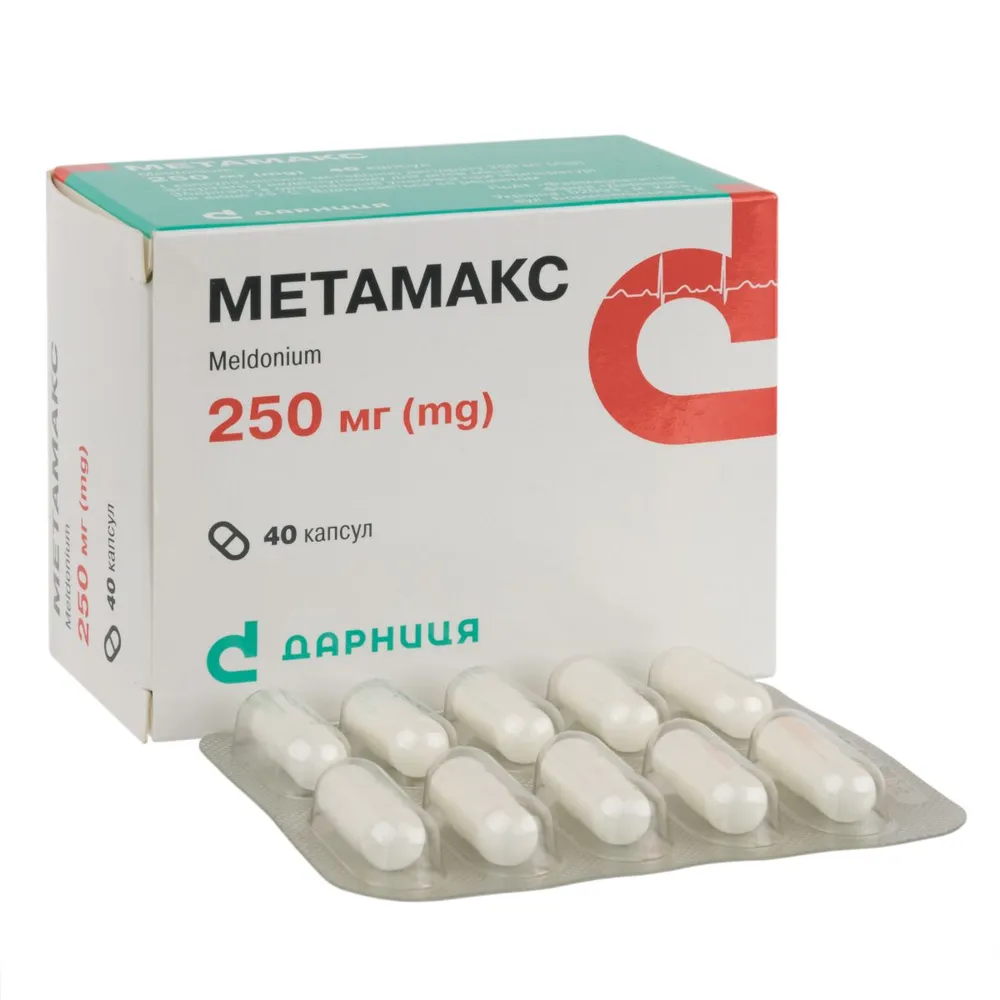
Table of Contents
INSTRUCTIONS FOR MEDICAL USE OF THE MEDICINAL PRODUCT METAMAX (METAMAX)
Composition:
Active substance: meldonium dihydrate;
1 capsule contains meldonium dihydrate 250 mg;
Excipients: potato starch, colloidal anhydrous silicon dioxide, magnesium stearate;
hard gelatin capsules: gelatin, titanium dioxide (E 171).
Medicinal form. Capsules.
Main physicochemical properties: hard gelatin capsules with white cap and body, containing white powder or white powder with a yellowish tint, with a weak odor.
Pharmacotherapeutic group.
Other cardiac preparations. Meldonium. ATC code C01EB22.
Pharmacological Properties.
Pharmacodynamics.
Meldonium dihydrate is a structural analogue of γ-butyrobetaine that improves cellular metabolism and energy supply.
The medicinal product inhibits the activity of γ-butyrobetaine hydroxylase, reduces the content of free carnitine, and decreases carnitine-dependent fatty acid oxidation. Under ischemic conditions, it restores the balance between oxygen delivery and consumption in cells, prevents disturbances in adenosine triphosphate (ATP) transport, and simultaneously activates glycolysis, which proceeds without additional oxygen consumption. As a result of reduced carnitine concentration, γ-butyrobetaine synthesis is enhanced, which exhibits vasodilatory properties.
The mechanism of meldonium action determines its broad spectrum of pharmacological effects. It increases work capacity and reduces symptoms of mental and physical overload. In heart failure, it enhances myocardial contractility, improves tolerance to physical exertion, and reduces the frequency of angina attacks.
In acute and chronic ischemic disturbances of cerebral circulation, meldonium improves blood flow in the ischemic focus, promoting redistribution of cerebral blood flow in favor of the ischemic area.
Meldonium also exerts a tonic effect on the central nervous system, eliminates functional disorders of the somatic and autonomic nervous systems, including during withdrawal syndrome in patients with chronic alcoholism. The drug also has a beneficial effect on dystrophic changes in retinal vessels and on cellular immunity.
Pharmacokinetics.
After oral administration, the drug is rapidly absorbed from the gastrointestinal tract. Its bioavailability is 78%. Maximum plasma concentration is reached within 1–2 hours after administration. The drug is metabolized in the body, forming two main metabolites, which are excreted by the kidneys. Elimination half-life ranges from 3 to 6 hours.
Clinical characteristics.
Indications.
As part of combination therapy in the following conditions:
− cardiovascular diseases: stable exertional angina, chronic heart failure (NYHA functional class I–III), cardiomyopathy, functional disorders of the heart and vascular system;
− acute and chronic ischemic cerebrovascular disorders;
− reduced work capacity, physical and psycho-emotional overstrain;
− during convalescence period after cerebrovascular disorders, head injuries, and encephalitis.
Contraindications.
− Hypersensitivity to any component of the medicinal product.
− Increased intracranial pressure (due to impaired venous outflow, intracranial tumors).
− Organic lesions of the central nervous system.
− Severe hepatic and/or renal dysfunction, severe hepatic and/or renal insufficiency (insufficient safety data available).
− Pregnancy or breastfeeding period.
− Pediatric age (under 18 years).
Interaction with other medicinal products and other types of interactions.
The medicinal product can be combined with antianginal agents, anticoagulants and antiplatelet agents, antiarrhythmic drugs, cardiac glycosides, diuretics, and other medications.
Methamax may potentiate the effects of nitroglycerin, nifedipine, β-adrenoblockers, antihypertensive agents, and peripheral vasodilators, potentially causing moderate tachycardia and arterial hypotension (caution is advised when using this combination).
Concomitant use of Methamax enhances the effects of antianginal drugs, certain antihypertensive agents, and cardiac glycosides.
Do not use simultaneously with other medicinal products containing meldonium (risk of adverse reactions).
When iron-containing drugs and meldonium are used concomitantly in patients with iron-deficiency anemia, improvement in fatty acid composition of red blood cells has been observed.
When meldonium is used in combination with orotic acid to counteract ischemia/reperfusion-induced damage, an additional pharmacological effect is observed.
Meldonium helps eliminate cardiac abnormalities caused by zidovudine (AZT) and indirectly affects oxidative stress reactions induced by AZT, which lead to mitochondrial dysfunction. The use of meldonium in combination with AZT or other drugs for AIDS treatment has a beneficial effect in the treatment of acquired immunodeficiency syndrome.
Marked anticonvulsant action of meldonium has been demonstrated in pentetrazole-induced seizures. This anticonvulsant effect of meldonium is completely blocked by pretreatment with the α2-adrenoblocker yohimbine at a dose of 2 mg/kg and the nitric oxide synthase (NOS) inhibitor N-(G)-nitro-L-arginine at a dose of 10 mg/kg.
Overdose of meldonium may enhance cardiotoxicity caused by cyclophosphamide.
Carnitine deficiency induced by meldonium may enhance cardiotoxicity caused by ifosfamide.
Meldonium exerts a protective effect against cardiotoxicity caused by indinavir and neurotoxicity caused by efavirenz.
Special precautions.
Metamax is not a first-line medicinal product for the treatment of acute coronary syndrome. If the patient has a history of mild or moderate hepatic and/or renal impairment, caution should be exercised when using the medicinal product (monitoring of liver and/or kidney function is recommended). The medicinal product should be administered in the first half of the day.
Use during pregnancy or breastfeeding.
Pregnancy. The safety of using the medicinal product during pregnancy has not been established. To avoid potential adverse effects on the fetus, Metamax should not be prescribed during pregnancy.
Breastfeeding. Available animal study data indicate that meldonium passes into maternal milk. It is unknown whether meldonium passes into human breast milk. A risk to newborns/infants cannot be ruled out; therefore, meldonium is contraindicated during breastfeeding.
Ability to influence reaction rate while driving or operating machinery.
Given the possibility of adverse reactions (such as decreased blood pressure, tachycardia), patients should avoid driving or operating machinery requiring heightened attention and rapid reaction times while taking this medicinal product.
Dosage and Administration.
Administer orally to adults. Swallow capsules whole with water. The medicinal product can be taken independently of food intake. Due to the possible stimulating effect, the medicinal product should be administered during the first half of the day.
Adults.
Cardiovascular diseases, cerebral circulation disorders.
The dose is 500 – 1000 mg per day. The daily dose may be taken all at once or divided into two doses. The maximum daily dose is 1000 mg.
Reduced work capacity, overexertion, and recovery period.
The dose is 500 mg per day. The daily dose may be taken all at once or divided into two individual doses. The maximum daily dose is 500 mg.
The duration of treatment course is 4 – 6 weeks. The treatment course may be repeated 2 – 3 times per year.
Elderly patients.
In elderly patients with impaired liver and/or kidney function, a reduced dose of meldonium may be required.
Patients with renal impairment.
Since the medicinal product is eliminated via the kidneys, patients with mild to moderate renal impairment should receive a lower dose of meldonium.
Patients with hepatic impairment.
Patients with mild to moderate hepatic impairment should receive a lower dose of meldonium.
Children.
There is no data on the safety and efficacy of meldonium use in children and adolescents under 18 years of age; therefore, the use of this medicinal product in children and adolescents is contraindicated.
Overdose.
Cases of overdose are unknown. The medicinal product is low-toxic and does not cause life-threatening adverse effects. In cases of reduced blood pressure, headache, dizziness, tachycardia, and general weakness may occur.
Treatment: symptomatic. In cases of severe overdose, renal and hepatic functions should be monitored. Hemodialysis is not significantly effective in meldonium overdose due to extensive protein binding.
Side effects
Adverse effects are classified by organ systems and frequency of occurrence according to MedDRA: common (≥ 1/100, < 1/10), uncommon (≥ 1/1000, ≤ 1/100), rare (≥ 1/10000, ≤ 1/1000), very rare (≤ 1/10000).
Respiratory system, thoracic organs and mediastinum: common − respiratory tract infections; rare − pharyngitis, cough, dyspnea, apnea.
Gastrointestinal system: common – dyspepsia*; rare − dysgeusia (metallic taste in mouth), loss of appetite, nausea, vomiting, flatulence, diarrhea, abdominal pain, dry mouth or hypersalivation.
Renal and urinary system: rare − polyuria.
Nervous system: common − headache*; rare − paresthesia, tremor, hypoesthesia, tinnitus, dizziness, gait disturbance, pre-syncope, syncope.
Psychiatric disorders: rare − restlessness, fear sensation, obsessive thoughts, sleep disturbances.
Cardiovascular system: rare − palpitations, tachycardia/sinus tachycardia, atrial fibrillation, arrhythmia, chest discomfort/chest pain, increased/decreased blood pressure, hypertensive crisis, hyperemia, pallor.
Immune system: common – allergic reactions*; rare – hypersensitivity, including allergic dermatitis, urticaria, angioedema, anaphylactic shock.
Skin and subcutaneous tissue: rare − rash, generalized maculopapular rash, pruritus.
Musculoskeletal and connective tissue system: rare − back pain, muscle weakness, muscle spasms.
General disorders and administration site conditions: rare − general weakness, chills, asthenia, facial swelling, leg swelling, feeling of warmth, feeling of cold, cold sweat.
Laboratory findings: common − dyslipidemia, increased C-reactive protein level;
rare − electrocardiogram (ECG) abnormalities, eosinophilia*.
*Adverse effects observed in previously conducted non-controlled clinical trials.
Reporting of suspected adverse reactions.
Reporting suspected adverse reactions after drug registration is an important procedure. It enables ongoing monitoring of the benefit-risk balance of the medicinal product. Healthcare professionals are required to report any suspected adverse reactions via the national reporting system.
Shelf life. 2 years.
Storage conditions.
Store in the original packaging at a temperature not exceeding 25 ºC.
Keep out of reach of children.
Packaging.
10 capsules in a blister pack; 4 blisters per carton.
Prescription category. Prescription only.
Manufacturer. JSC "Pharmaceutical Company "Darnitsya".
Manufacturer's address and location of business activity.
13, Boryspylska Street, Kyiv, 02093, Ukraine.