Mefenamic acid-darnitsa
Ukraine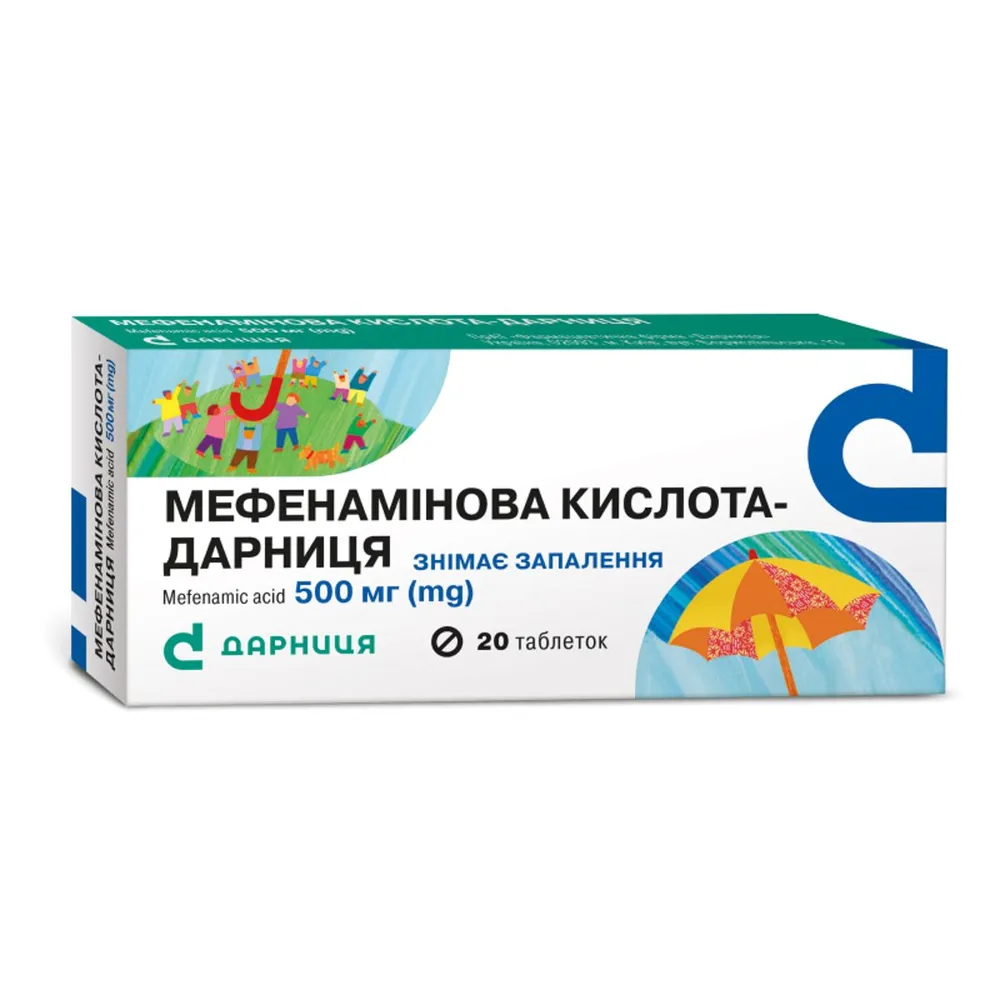
Table of Contents
INSTRUCTION FOR MEDICAL USE OF THE MEDICINAL PRODUCT MEFENAMIC ACID-DARNITSA (MEFENAMIC ACID - DARNITSA)
Composition:
Active substance: mefenamic acid;
One tablet contains 500 mg of mefenamic acid;
Excipients: potato starch, methylcellulose, sodium croscarmellose, stearic acid, magnesium stearate.
Pharmaceutical form. Tablets.
Main physico-chemical properties: greyish-white tablets with a slightly yellowish or greenish tint, flat cylindrical shape, bevelled edge and a score line; marbling is permissible.
Pharmacotherapeutic group. Non-steroidal anti-inflammatory and anti-rheumatic agents. Fenamates. ATC code M01A G01.
Pharmacological Properties.
Pharmacodynamics.
Mefenamic acid is a non-steroidal anti-inflammatory agent. Its anti-inflammatory action is due to the ability to inhibit the synthesis of inflammatory mediators (prostaglandins, serotonin, kinins, etc.), reduce the activity of lysosomal enzymes involved in the inflammatory reaction. Mefenamic acid stabilizes cellular protein ultrastructures and membranes, decreases vascular permeability, disrupts oxidative phosphorylation processes, inhibits mucopolysaccharide synthesis, suppresses cell proliferation at the site of inflammation, enhances cellular resistance, and stimulates wound healing. Antipyretic properties are associated with the ability to inhibit prostaglandin synthesis and affect the thermoregulatory center.
Mefenamic acid stimulates interferon production.
In the mechanism of analgesic action, besides the influence on central pain sensitivity mechanisms, local action on the inflammatory focus and the ability to inhibit the formation of algogenic substances (kinins, histamine, serotonin) play an essential role.
Pharmacokinetics.
After oral administration, mefenamic acid is rapidly and almost completely absorbed from the gastrointestinal tract. Maximum blood concentration is reached within 2–4 hours after intake. Blood levels are dose-proportional. Steady-state concentration (20 μg/mL) is achieved by the second day of treatment (1 g four times daily). It is 90% bound to blood albumins. In the liver, it is metabolized via oxidation, hydrolysis, and glucuronidation pathways. The elimination half-life (T1/2) is 2–4 hours. It is excreted from the body unchanged and as metabolites, mainly by the kidneys (67% of the dose), and with feces (20–25%).
Clinical characteristics.
Indications.
Acute viral respiratory infections and influenza.
Low to moderate intensity pain: muscular, joint, traumatic, dental, headache of various etiologies, postoperative and postpartum pain.
Primary dysmenorrhea. Dysfunctional menorrhagia, including that caused by intrauterine contraceptives, in the absence of pelvic organ pathology.
Inflammatory disorders of the musculoskeletal system: rheumatoid arthritis, rheumatism, Bechterew's disease (ankylosing spondylitis).
Contraindications.
Hypersensitivity to the components of the drug. Bronchospasm, Quincke's edema, rhinitis, bronchial asthma, or urticaria in medical history following the use of acetylsalicylic acid or other nonsteroidal anti-inflammatory drugs (NSAIDs). Concurrent use of specific COX-2 inhibitors. Peptic ulcer of the stomach or duodenum, including in medical history, inflammatory bowel diseases, blood disorders, severe heart failure, severe impairment of liver or kidney function, gastrointestinal bleeding or perforation caused by the use of nonsteroidal anti-inflammatory drugs.
Interaction with other medicinal products and other types of interactions.
Thiamine, pyridoxine hydrochloride, barbiturates, phenothiazine derivatives, narcotic analgesics, caffeine, dimedrol enhance the analgesic effect of the drug.
Concomitant use of mefenamic acid and methotrexate increases methotrexate toxicity.
Antihypertensive agents (ACE inhibitors and angiotensin II receptor antagonists): reduced antihypertensive effect, increased risk of renal failure, especially in elderly patients. Patients should consume sufficient amounts of fluid. Renal function should also be assessed at the beginning of treatment and during concomitant therapy.
Diuretics: reduced diuretic effect. Diuretics may increase nephrotoxicity of NSAIDs.
Cardiac glycosides: NSAIDs may exacerbate heart failure, reduce glomerular filtration rate, and increase plasma levels of cardiac glycosides.
Cyclosporines: increased risk of nephrotoxicity.
Mifepristone: NSAIDs should not be taken within 8–12 days after mifepristone administration—NSAIDs may reduce the efficacy of mifepristone.
Corticosteroids: increased risk of gastrointestinal ulcers and bleeding.
Antiplatelet agents and selective serotonin reuptake inhibitors (SSRIs): increased risk of gastrointestinal bleeding.
Fluoroquinolones: NSAIDs increase the risk of seizures.
Aminoglycosides: NSAIDs increase the risk of nephrotoxic effects.
Tacrolimus: possible increased risk of nephrotoxic effects.
Zidovudine: NSAIDs increase the risk of hematological toxicity. Increased risk of joint hemorrhage and hematoma in HIV-positive hemophilia patients receiving zidovudine therapy.
Lithium preparations: reduced lithium excretion and increased risk of lithium toxicity.
Mefenamic acid enhances the activity of oral anticoagulants, thus increasing the risk of bleeding when used concomitantly. Concurrent use of mefenamic acid with oral anticoagulants requires careful monitoring of prothrombin time. NSAIDs should be used with particular caution in combination with warfarin or heparin—medical supervision is required.
Concomitant use with other nonsteroidal anti-inflammatory drugs increases anti-inflammatory effect and the likelihood of gastrointestinal adverse reactions.
Special precautions for use
The medicinal product should be prescribed with caution to patients with acute cardiovascular insufficiency, arterial hypertension, or ischemic heart disease.
The medicinal product should be prescribed with caution to patients with epilepsy.
Mefenamic acid should not be used in patients who previously experienced hypersensitivity reactions, such as asthma, bronchospasm, rhinitis, angioedema, or urticaria.
The medicinal product should not be administered to dehydrated patients who have lost fluids due to vomiting, diarrhea, or increased urination.
Long-term treatment of headache requires consultation with a physician.
There are no special recommendations regarding the use of the medicinal product in patients with mild impairment of liver or kidney function.
NSAIDs should be used with caution in patients with a history of gastrointestinal disorders (ulcerative colitis, Crohn's disease), as disease exacerbation may occur. If mefenamic acid use leads to gastrointestinal bleeding or perforation, treatment with the drug must be discontinued.
Elderly patients generally have an increased risk of gastrointestinal adverse effects, particularly gastrointestinal bleeding and perforation, which may be fatal; therefore, treatment should be initiated with the lowest possible dose.
Patients with systemic lupus erythematosus and mixed connective tissue diseases have an increased risk of developing aseptic meningitis.
Mefenamic acid should be prescribed with caution to patients at high risk of serious skin reactions, including exfoliative dermatitis, Stevens-Johnson syndrome, and toxic epidermal necrolysis. Mefenamic acid therapy must be discontinued at the first appearance of a skin rash, mucosal lesions, or any other sign of hypersensitivity.
Long-term use of the medicinal product requires monitoring of blood parameters, as mefenamic acid may cause pathological changes in the blood. If any signs of blood dyscrasia occur, therapy with the medicinal product must be discontinued.
Mefenamic acid may cause gastrointestinal disturbances (e.g., diarrhea), which may occur either immediately after administration or after prolonged use. If such symptoms occur, the use of the medicinal product must be discontinued.
Caution is required when administering mefenamic acid to patients receiving concomitant therapy with drugs that increase the risk of bleeding: corticosteroids, anticoagulants (warfarin), and aspirin.
Mefenamic acid may impair female fertility and is not recommended for women attempting to conceive. Women using the drug for symptoms of dysmenorrhea or menorrhagia who experience no therapeutic effect should consult a physician.
Use during pregnancy or breastfeeding
The medicinal product should not be used in women during pregnancy or breastfeeding.
Starting from the 20th week of pregnancy, the use of mefenamic acid may cause oligohydramnios due to fetal renal dysfunction. This adverse effect may occur soon after initiation of treatment and is usually reversible upon discontinuation of therapy.
Ability to affect reaction speed when driving or operating machinery
Caution should be exercised when driving or operating machinery requiring high attention, as the use of the medicinal product may occasionally cause drowsiness, blurred vision, or convulsions.
Method of Administration and Dosage.
The medicinal product should be used under the supervision of a physician who determines the dose and duration of treatment. Administer orally. The medicinal product should be taken after meals, with milk.
For adults and children aged 12 years and older, the recommended dose is 250–500 mg 3–4 times daily. Depending on indications and good tolerability, the daily dose may be increased up to the maximum of 3000 mg. After achieving the therapeutic effect, the dose should be reduced to 1000 mg/day.
For children aged 5 to 12 years: 250 mg 3–4 times daily.
The treatment course for joint diseases may last from 20 days to 2 months or longer. For pain syndrome management, the treatment course lasts up to 7 days.
Children.
The medicinal product is contraindicated in children under 5 years of age.
Overdose.
Symptoms: epigastric pain, nausea, vomiting, drowsiness. In severe cases: gastrointestinal bleeding, respiratory depression, arterial hypertension, muscle twitching, coma.
Treatment. There is no specific antidote. Gastric lavage with activated charcoal suspension. Urine alkalization, forced diuresis. Symptomatic therapy. Hemoadsorption and hemodialysis are poorly effective due to the strong binding of mefenamic acid to blood proteins.
Adverse reactions.
Eye disorders: visual disturbances, reversible loss of color vision, eye irritation.
Ear and labyrinth disorders: tinnitus, otalgia.
Respiratory, thoracic and mediastinal disorders: dyspnea, bronchospasm.
Gastrointestinal disorders: epigastric pain, anorexia, heartburn, nausea, flatulence, vomiting, enterocolitis, colitis, exacerbation of colitis and Crohn's disease, gastritis, hepatotoxicity, steatorrhea, cholestatic jaundice, hepatitis, pancreatitis, hepatorenal syndrome, hemorrhagic gastritis, peptic ulcer with or without bleeding. Gastrointestinal bleeding, perforation or gastrointestinal hemorrhage, sometimes fatal, especially in elderly patients, dyspepsia, constipation, diarrhea.
Renal and urinary disorders: dysuria, cystitis. Renal function abnormalities, albuminuria, hematuria, oliguria or polyuria, renal failure, including papillary necrosis, acute interstitial nephritis, nephrotic syndrome, allergic glomerulonephritis, hyponatremia, hyperkalemia.
Nervous system disorders: drowsiness or insomnia, weakness, irritability, excitement, headache, blurred vision, convulsions, optic neuritis, paresthesia, dizziness, nuchal rigidity, fever, disorientation.
Psychiatric disorders: confusion, depression, hallucinations.
Cardiovascular disorders: arterial hypertension, arrhythmia, rarely – congestive heart failure, peripheral edema, syncope, arterial hypotension, palpitations, shortness of breath, thrombotic complications (e.g. myocardial infarction or stroke).
Blood and lymphatic system disorders: aplastic anemia, autoimmune hemolytic anemia, prolonged bleeding time, eosinophilia, leukopenia, thrombocytopenia, decreased hematocrit, thrombocytopenic purpura, agranulocytosis, neutropenia, pancytopenia, bone marrow hypoplasia.
Immune system disorders: hypersensitivity reactions, including skin rash, pruritus, facial swelling, allergic rhinitis, angioedema, laryngeal edema, Stevens-Johnson syndrome, toxic epidermal necrolysis, erythema multiforme, urticaria, bullous pemphigoid, photosensitivity, asthma, anaphylaxis.
Skin and subcutaneous tissue disorders: purpura, skin rash, pruritus, erythema multiforme, urticaria, bullous pemphigoid.
Laboratory findings: impaired glucose tolerance in patients with diabetes mellitus, positive reaction in certain tests for mefenamic acid and its metabolites in bile and urine. Increased levels of liver enzymes in blood plasma.
Other: aseptic meningitis, sweating, increased fatigue, malaise, multiple organ failure, hyperthermia.
Shelf life. 2 years.
Storage conditions.
Store in a place inaccessible to children, in the original packaging at a temperature not exceeding 25 °C.
Packaging.
10 tablets in a blister pack; 2 blisters per carton.
Availability.
Over-the-counter.
Manufacturer: JSC "Pharmaceutical Company "Darnytsia".
Manufacturer's address and place of business.
13, Boryspilska Street, Kyiv, 02093, Ukraine.