Meditan
Ukraine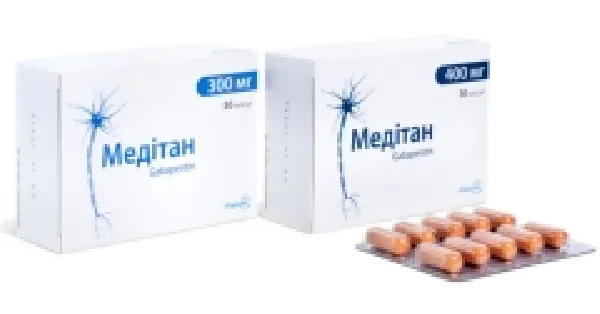
Table of Contents
INSTRUCTIONS FOR MEDICAL USE OF THE MEDICINAL PRODUCT MEDITAN (MEDYTAN)
Composition:
Active ingredient: gabapentin;
1 capsule contains gabapentin, calculated as 100% anhydrous substance, 300 mg;
Excipients: anhydrous lactose, maize starch, talc.
Pharmaceutical form. Capsules.
Main physicochemical properties:
300 mg capsules: hard gelatin capsules size № 1 or № 0; capsule body and cap are matte yellow; capsule contents – a powder mixture white or almost white in color.
Pharmacotherapeutic group.
Other antiepileptic drugs. ATC code N03A X12.
Pharmacological properties.
Pharmacodynamics.
The exact mechanism of action of gabapentin is unknown.
Structurally, gabapentin is similar to the neurotransmitter GABA (gamma-aminobutyric acid); however, its mechanism of action differs from that of other agents acting at GABA receptors, such as valproate, barbiturates, benzodiazepines, GABA-transaminase inhibitors, GABA uptake inhibitors, GABA agonists, and GABA precursors. In vitro studies using radiolabeled gabapentin in rat brain tissue, including neocortex and hippocampus, have identified a novel peptide-binding site that may be related to the anticonvulsant and analgesic activity of gabapentin and its structural analogs. The binding site for gabapentin is the alpha-2-delta subunit of voltage-dependent calcium channels.
Gabapentin, at therapeutic concentrations, does not bind to receptors of other commonly used drugs or to major neurotransmitter receptors in the brain, including GABAA, GABAB, benzodiazepine, glutamate, glycine, or N-methyl-D-aspartate (NMDA) receptors.
In vitro, gabapentin did not interact with sodium channels, thus differing from phenytoin and carbamazepine. In some in vitro test systems, gabapentin partially reduced the effects of the glutamate agonist N-methyl-D-aspartate (NMDA), but this occurred only at drug concentrations exceeding 100 μmol, which is unachievable under in vivo conditions. Gabapentin slightly reduces the release of monoamine neurotransmitters in vitro. Gabapentin increases GABA turnover in certain areas of the rat brain; a similar effect has been described for sodium valproate, but in other brain regions. The significance of these effects of gabapentin with respect to its anticonvulsant activity has not yet been established. In animals, gabapentin crossed the blood-brain barrier and prevented maximal electroshock-induced seizures as well as seizures induced by chemical convulsants, including inhibitors of GABA synthesis, and seizures caused by genetic factors.
Clinical trials of adjunctive therapy for partial seizures in children aged 3 to 12 years showed numerically greater, but statistically insignificant, differences in the responder rate of 50% in favor of gabapentin compared to placebo. A post-hoc analysis of responder rates by age did not reveal a significant age effect when using either continuous or binary variables (age groups 3–5 years and 6–12 years). The results of this analysis are presented in Table 1.
Table 1
| Response rate to treatment (≥ 50 % improvement) by treatment categories and age groups. MITT population*. |
|||
| Age group |
Placebo |
Gabapentin |
P-value |
| < 6 years |
4/21 (19.0 %) |
4/17 (23.5 %) |
0.7362 |
| 6–12 years |
17/99 (17.2 %) |
20/96 (20.8 %) |
0.5144 |
* MITT (modified intent-to-treat population—patients who received at least one dose of either treatment) includes all randomized patients who were able to adequately complete seizure diaries for assessment during the 28-day period of the baseline and double-blind phases.
Pharmacokinetics.
Absorption.
After oral administration of gabapentin, maximum plasma concentration is reached within 2–3 hours. There is a tendency toward decreased bioavailability (fraction of drug absorbed) of gabapentin with increasing dose. The absolute bioavailability of gabapentin following administration of 300 mg capsules is approximately 60%. Food intake, including high-fat meals, does not have a clinically significant effect on the pharmacokinetics of gabapentin.
Repeated administration does not affect the pharmacokinetics of gabapentin. Although plasma concentrations of the drug varied between 2 mcg/mL and 20 mcg/mL in clinical trials, this parameter did not determine the efficacy and safety of the drug. Pharmacokinetic parameters are presented in Table 2.
Table 2
Summary of mean (% CV) steady-state pharmacokinetic parameters after dosing every 8 hours
| Pharmacokinetic parameter |
300 mg (N = 7) |
400 mg (N = 14) |
800 mg (N=14) |
|||
| Mean |
% CV |
Mean |
% CV |
Mean |
% CV |
|
| Cmax (μg/mL) |
4.02 |
(24) |
5.74 |
(38) |
8.71 |
(29) |
| tmax (h) |
2.7 |
(18) |
2.1 |
(54) |
1.6 |
(76) |
| T1/2 (h) |
5.2 |
(12) |
10.8 |
(89) |
10.6 |
(41) |
| AUC (0–8) (μg•h/mL) |
24.8 |
(24) |
34.5 |
(34) |
51.4 |
(27) |
| Ae% (%) |
ND |
ND |
47.2 |
(25) |
34.4 |
(37) |
Cmax – maximum steady-state plasma concentration
tmax – time to reach Cmax
T1/2 – elimination half-life
AUC (0–8) – steady-state area under the pharmacokinetic concentration-time curve from time 0 to 8 hours after drug administration
Ae% – percentage of the administered dose excreted unchanged in urine from time 0 to 8 hours after drug administration
ND – not available
Distribution.
Gabapentin does not bind to plasma proteins. The volume of distribution of the drug is 57.7 L. The concentration of gabapentin in cerebrospinal fluid of patients with epilepsy is approximately 20% of the steady-state minimum plasma concentration. Gabapentin passes into breast milk.
Metabolism.
No data on gabapentin metabolism in humans are available. The drug does not induce liver oxidative enzymes involved in drug metabolism.
Elimination.
Gabapentin is excreted exclusively by the kidneys in unchanged form. The elimination half-life of gabapentin is independent of dose and averages 5–7 hours.
In adult patients and patients with impaired renal function, plasma clearance of gabapentin is reduced. The elimination rate constant, plasma clearance, and renal clearance are directly proportional to creatinine clearance.
Gabapentin is removed from plasma by hemodialysis. Dose adjustment is recommended for patients with impaired renal function or those undergoing hemodialysis (see section "Dosage and administration").
Gabapentin pharmacokinetics in children were evaluated in 50 healthy subjects aged 1 month to 12 years. Overall, when dosing was calculated per kg of body weight (mg/kg), plasma concentrations of gabapentin in children aged 5 years and older did not differ from those in adults.
Linearity/Non-linearity.
The bioavailability of gabapentin (fraction of drug absorbed) decreases with increasing dose, indicating non-linearity of the drug's pharmacokinetics, specifically bioavailability parameters (F): Ae%, CL/F, Vd/F. Elimination pharmacokinetics (pharmacokinetic parameters not including F, such as CLr and T1/2) follows a linear pattern. The steady-state plasma concentration of gabapentin is predictable based on data from single-dose administration.
Clinical characteristics.
Indications.
Epilepsy.
Gabapentin is used as an adjunctive therapy in the treatment of partial seizures with or without secondary generalization in adults and children aged 6 years and older (see section "Pharmacodynamics").
Gabapentin is used as monotherapy in the treatment of partial seizures with or without secondary generalization in adults and children aged 12 years and older.
Neuropathic pain.
Gabapentin is indicated for the treatment of peripheral neuropathic pain, such as painful diabetic neuropathy and postherpetic neuralgia in adults.
Contraindications.
Hypersensitivity to the active substance or to any of the excipients.
Interaction with other medicinal products and other forms of interaction.
Antiepileptic drugs. Pharmacokinetic studies have shown no clinically significant changes in plasma concentrations of phenytoin, carbamazepine, valproic acid, or phenobarbital when administered concomitantly with gabapentin as background therapy. In these same studies, no changes in the pharmacokinetics of gabapentin were observed.
Oral contraceptives. Concomitant administration of gabapentin and oral contraceptives containing norethindrone and/or ethinylestradiol does not affect the steady-state concentrations of these agents.
Antacids. Concomitant administration of gabapentin with antacids containing aluminium or magnesium reduces the bioavailability of gabapentin by up to 24%. Gabapentin should be administered no earlier than 2 hours after taking antacids.
Cimetidine. A slight decrease in renal clearance of gabapentin has been observed when administered concomitantly with cimetidine; however, this effect is not expected to be of clinical significance.
Morphine. In a study involving healthy volunteers (N = 12) who received 60 mg controlled-release morphine capsules 2 hours prior to gabapentin (600 mg capsule), an average increase of 44% in the AUC of gabapentin was observed compared to when morphine was not administered. Therefore, careful monitoring of patients is required when gabapentin and morphine are used concomitantly to promptly identify symptoms of CNS depression such as somnolence, and appropriate dose reductions of gabapentin or morphine should be considered.
Administration of probenecid does not affect renal excretion of gabapentin.
Alcohol and misuse of other CNS-active drugs. Potential for enhanced CNS-related adverse effects of gabapentin (such as somnolence, ataxia, etc.).
Myelotoxic medicinal products. Enhanced hematotoxicity (leukopenia).
Special precautions for use.
In case of acute pancreatitis developing during gabapentin treatment, discontinuation of gabapentin is indicated (see section "Adverse reactions").
Despite the lack of evidence for reactive seizures with gabapentin use, abrupt withdrawal of anticonvulsant drugs in patients with epilepsy may promote the development of status epilepticus (see section "Dosage and administration").
Dose reduction, discontinuation of the drug, or its substitution with another (alternative) agent should be performed gradually over at least 1 week.
As with other antiepileptic drugs, in some patients, gabapentin may increase the frequency of seizures or cause new types of seizures.
Suicidal thoughts and behavior have been observed in patients treated with antiepileptic drugs for various indications. A meta-analysis of randomized placebo-controlled trials of antiepileptic drugs also showed a small increased risk of suicidal thoughts and behavior; the mechanism of this effect is unknown. Available data do not exclude an increased risk for gabapentin.
Therefore, patients should be monitored for signs of suicidal thoughts and behavior, and appropriate treatment should be considered. Patients (and caregivers) should be advised to seek medical help if symptoms of suicidal thoughts or behavior occur.
As with other antiepileptic drugs, attempts to discontinue concomitant antiepileptic drugs in refractory patients receiving multiple antiepileptic agents in order to achieve monotherapy with Meditan have a low success rate.
Gabapentin is not considered an effective treatment for primary generalized seizures such as absence seizures, and it may exacerbate these seizures in some patients. Therefore, gabapentin should be used with caution in patients with mixed seizure types, including absence seizures.
The long-term (more than 36 weeks) impact of gabapentin on learning ability, intelligence, and development in children and adolescents has not been adequately studied. Therefore, potential risks should be considered when deciding on the need for prolonged therapy. Misuse, abuse, and dependence
Gabapentin may cause drug dependence, which may occur even when the drug is used at therapeutic doses. Cases of abuse have been reported. Patients with a history of substance abuse may have an increased risk of misuse, abuse, and dependence on gabapentin; therefore, gabapentin should be used with caution in such patients. Prior to prescribing gabapentin, the patient's risk of misuse, abuse, or dependence should be carefully assessed.
Patients receiving gabapentin treatment should be monitored for symptoms of misuse, abuse, or dependence, such as development of tolerance, dose escalation, and drug-seeking behavior.
Withdrawal symptoms
Withdrawal symptoms have been observed after discontinuation of both short- and long-term gabapentin treatment. Withdrawal symptoms may occur shortly after stopping treatment, usually within 48 hours. The most commonly reported symptoms include anxiety, insomnia, nausea, pain, sweating, tremor, headache, depression, abnormal feelings, dizziness, and malaise. The occurrence of withdrawal symptoms after stopping gabapentin may indicate drug dependence (see section "Adverse reactions"). Patients should be informed about this at the beginning of treatment. If gabapentin needs to be discontinued, it is recommended to do so gradually over at least 1 week, regardless of the indication (see section "Dosage and administration").
Use in elderly patients. Systematic studies of gabapentin use in patients aged 65 years and older have not been conducted. In one double-blind study involving patients with neuropathic pain, somnolence, peripheral edema, and weakness occurred more frequently in patients over 65 years of age than in younger patients. Except for these findings, clinical trials in this age group have not provided evidence of differences in the adverse event profile compared to younger patients.
Gabapentin treatment has been associated with dizziness and somnolence, which may potentially increase the risk of accidental injuries in elderly patients.
Post-marketing reports have also included loss of consciousness, confusion, and development of psychiatric disorders during gabapentin use.
Therefore, patients should be advised to exercise caution until their individual response to gabapentin is known.
Patients concurrently using opioids and gabapentin require careful monitoring for timely detection of symptoms of central nervous system (CNS) depression, such as somnolence and respiratory depression.
Concomitant use of morphine and gabapentin may increase gabapentin concentration. The dose of gabapentin or opioids should be reduced.
Severe skin adverse reactions
Severe skin adverse reactions (SSARs), including Stevens–Johnson syndrome (SJS), toxic epidermal necrolysis (TEN), and drug reaction with eosinophilia and systemic symptoms (DRESS), which may be life-threatening or fatal, have been reported in association with gabapentin treatment. Patients should be informed about these signs and symptoms when the drug is prescribed, and they should be closely monitored for the development of skin reactions. If signs or symptoms suggestive of these reactions occur, gabapentin should be discontinued immediately, and alternative treatment should be considered (if necessary).
If a patient develops a serious reaction such as SJS, TEN, or DRESS syndrome while taking gabapentin, gabapentin treatment must never be resumed.
Gabapentin may cause anaphylactic shock or angioedema, which may occur immediately after the first dose or at any time during treatment. Symptoms reported in documented cases include difficulty breathing, swelling of lips, throat, and tongue, hypotension requiring emergency intervention. Patients should stop taking gabapentin immediately and seek medical help if they experience any signs of anaphylaxis or angioedema.
Laboratory tests.
False-positive results may be obtained when measuring total protein in urine using semi-quantitative rapid tests. Therefore, such test results should be confirmed using methods based on a different analytical principle, such as the biuret test, turbidimetric method, or dye-binding method, or these methods should be used initially.
Caution is recommended when treating patients with a history of psychotic disorders.
This medication contains lactose and therefore is not recommended for patients with lactose intolerance, Lapp lactase deficiency, or glucose-galactose malabsorption.
Use during pregnancy or breastfeeding.
General risks of epilepsy and antiepileptic therapy.
The risk of congenital abnormalities in children whose mothers took antiepileptic drugs during pregnancy is increased 2–3 times. The most commonly reported abnormalities include cleft lip, cardiovascular malformations, and neural tube defects. Combination antiepileptic therapy, compared to monotherapy, may be associated with a higher risk of developmental abnormalities; therefore, monotherapy is recommended whenever possible. All pregnant women and women of childbearing potential requiring antiepileptic therapy should consult a specialist before starting treatment. The necessity of antiepileptic therapy should be re-evaluated when planning pregnancy. Sudden discontinuation of antiepileptic drugs is unacceptable, as it may lead to seizures and significantly worsen the condition of both mother and child. Developmental delay in children of mothers with epilepsy is rare. It is not possible to differentiate whether developmental delay is due to genetic disorders, social factors, maternal epilepsy, or the use of antiepileptic drugs.
Risk associated with gabapentin therapy.
Adequate data on the use of gabapentin in pregnant women are lacking. Animal studies have shown reproductive toxicity. The potential risk to humans is unknown. Gabapentin should not be used during pregnancy unless the potential benefit to the mother clearly outweighs the possible risk to the fetus.
No conclusion has been made regarding the ability of gabapentin, used during pregnancy, to increase the risk of congenital abnormalities in children due to maternal epilepsy itself, gabapentin use, or concomitant use of other antiepileptic drugs.
Neonatal withdrawal syndrome has been reported in newborns exposed to gabapentin in utero.
Concomitant use of gabapentin and opioids during pregnancy may increase the risk of neonatal withdrawal syndrome in newborns. Newborns should be closely monitored.
Gabapentin passes into breast milk. Since the effect of the drug on infants has not been studied, gabapentin should be used with caution during breastfeeding. The use of gabapentin during breastfeeding is justified only when the benefit to the mother outweighs the potential risk to the infant.
Fertility.
In animal studies, gabapentin did not affect fertility.
Ability to affect reaction speed when driving or operating machinery.
Gabapentin affects the central nervous system and may cause somnolence, dizziness, or other similar symptoms. These side effects, even if mild or moderate, may be potentially hazardous when driving vehicles or operating machinery, especially at the beginning of therapy and after dose increases.
Dosage and Administration.
For oral use.
Gabapentin can be taken independently of food intake. The medicine should be taken with sufficient amount of liquid (e.g., a glass of water).
Table 3
| Dosing regimen for initial dose titration in adults and children aged 12 years and older |
||
| Day 1 |
Day 2 |
Day 3 |
| 300 mg once daily |
300 mg twice daily |
300 mg three times daily |
Discontinuation of gabapentin.
According to current clinical guidelines, gabapentin should be discontinued gradually over a minimum of 1 week, regardless of the indication.
Epilepsy.
Long-term therapy is usually required in epilepsy. The dose is determined by the physician according to individual tolerability and efficacy.
Adults and children aged 12 years and older: effective doses in epilepsy range from 900 to 3600 mg/day. Treatment should begin with dose titration as described in Table 3, or with a starting dose of 300 mg three times daily on Day 1. Then, depending on individual tolerability and efficacy, the dose may be increased by 300 mg/day every 2–3 days up to the maximum dose of 3600 mg/day. For some patients, a slower titration of gabapentin may be necessary. The shortest time to reach a dose of 1800 mg/day is 1 week, 2400 mg/day – 2 weeks, and 3600 mg/day – 3 weeks.
In long-term open-label clinical studies, a daily dose of 4800 mg was well tolerated by patients. The total daily dose should be divided into three doses. The maximum interval between doses should not exceed 12 hours to avoid interruption of anticonvulsant therapy and to prevent the occurrence of seizures.
Children aged 6 to 12 years.
The initial dose should be 10–15 mg/kg body weight/day. The effective dose should be achieved by titration over approximately 3 days. The effective dose of gabapentin in children aged 6 years and older is 25–35 mg/kg body weight/day. A dose of 50 mg/kg body weight/day has been shown to be well tolerated in long-term clinical studies. The total daily dose should be divided into equal parts (administered three times daily); the maximum interval between doses should not exceed 12 hours.
There is no need for monitoring serum gabapentin levels. Furthermore, gabapentin can be used in combination with other antiepileptic drugs, as it does not alter the plasma concentration of gabapentin or serum concentrations of other antiepileptic drugs.
Peripheral neuropathic pain.
Adults.
Treatment should begin with dose titration as described in Table 3, or with an initial dose of 900 mg/day divided into three doses. Then, depending on individual tolerability and efficacy, the dose may be increased by 300 mg/day every 2–3 days up to the maximum of 3600 mg/day. For some patients, a slower titration of gabapentin may be necessary. The shortest time to reach a dose of 1800 mg/day is 1 week, 2400 mg/day – 2 weeks, and 3600 mg/day – 3 weeks.
The efficacy and safety of gabapentin in the treatment of peripheral neuropathic pain (e.g., painful diabetic neuropathy or postherpetic neuralgia) have not been studied in long-term clinical trials lasting more than 5 months. If a patient requires longer-term treatment (more than 5 months) with gabapentin for neuropathic pain, the physician should evaluate the patient's clinical status and determine the need for continued therapy before proceeding.
Patients with poor general health or specific complicating factors, such as low body weight or post-transplant status, should undergo slower titration, either by reducing the stepwise dose increments or by extending the intervals between dose increases.
Elderly patients (over 65 years of age).
Elderly patients may require individual dose adjustment due to possible reduced renal function (see Table 4). Somnolence, peripheral edema, and weakness are more frequently observed in elderly patients.
Patients with renal impairment.
Patients with marked renal impairment and/or patients on hemodialysis require individual dose adjustment (see Table 4). These patients are recommended to use 100 mg gabapentin capsules.
Table 4
Gabapentin dosing in renal impairment.
| Creatinine clearance (mL/min) |
Total daily dose of gabapentin* (mg/day) |
| >80 (normal creatinine clearance) |
900–3600 |
| 50–79 |
600–1800 |
| 30–49 |
300–900 |
| 15–29 |
150**–600 |
| <15*** |
150**–300 |
* The total daily dose should be divided into 3 doses. Reduced doses should be used in patients with renal impairment (creatinine clearance < 79 mL/min).
** Administer 100 mg three times daily on alternate days.
*** For patients with creatinine clearance < 15 mL/min, the daily dose should be reduced proportionally according to creatinine clearance (e.g., patients with creatinine clearance of 7.5 mL/min should receive half the daily dose of patients with creatinine clearance of 15 mL/min).
Dosing for patients undergoing hemodialysis.
For anuric patients undergoing hemodialysis who have never previously received gabapentin, the recommended loading dose is 300–400 mg, followed by 200–300 mg of gabapentin after every 4 hours of hemodialysis. Gabapentin should not be administered on days without hemodialysis.
The maintenance dose of gabapentin for patients on hemodialysis should be determined according to the recommendations provided in Table 4. In addition to the maintenance dose, patients on hemodialysis are recommended to take 200–300 mg of the drug after every 4 hours of hemodialysis.
Children.
Gabapentin is indicated for the treatment of epilepsy in children: as adjunctive therapy in children aged 6 years and older, and as monotherapy in children aged 12 years and older.
Overdose.
Even when the drug was taken at doses up to 49 g/day, no acute life-threatening toxic reactions were observed.
Symptoms of overdose included dizziness, double vision, slurred speech, somnolence, loss of consciousness, lethargy, and mild diarrhea. All patients fully recovered after receiving supportive treatment. Reduced absorption of gabapentin at high doses may limit drug absorption and reduce toxicity from overdose.
With supportive therapy, patients' condition fully recovered.
Although gabapentin can be removed by hemodialysis, based on previous experience, this is usually not necessary. However, hemodialysis may be indicated in patients with severe renal impairment.
In studies conducted in mice and rats, the lethal dose of gabapentin could not be determined, despite using doses up to 8000 mg/kg. Symptoms of acute toxicity in animals included ataxia, labored breathing, ptosis, decreased activity, or conversely, increased excitability.
Gabapentin overdose, especially when combined with other CNS depressants, may lead to coma.
Adverse Reactions
During clinical studies of medicinal products containing the active substance gabapentin in epilepsy (adjunctive therapy or monotherapy) and neuropathic pain, the following adverse reactions have been reported, listed according to their frequency: very common (> 1/10), common (> 1/100 to < 1/10), uncommon (> 1/1,000 to < 1/100), and rare (> 1/10,000 to < 1/1,000). If the frequency of adverse effects varied between different studies, the highest reported frequency was included in the report.
Additional adverse reactions identified from post-marketing experience are included in the list under the category "not known" (cannot be estimated from available data).
Within each frequency group, adverse reactions are listed in order of decreasing severity.
Infectious and parasitic diseases
Very common: viral infection
Common: pneumonia, respiratory infection, urinary tract infection, otitis media, infection
Blood and lymphatic system disorders
Common: leucopenia
Rare: thrombocytopenia
Immune system disorders
Rare: allergic reactions (e.g., urticaria)
Not known: hypersensitivity syndrome (DRESS syndrome), systemic reactions with various manifestations including fever, rash, hepatitis, lymphadenopathy, eosinophilia, and other signs and symptoms
Metabolism and nutrition disorders
Common: increased appetite, anorexia
Uncommon: hyperglycaemia (most frequently observed in patients with diabetes)
Rare: hypoglycaemia (most frequently observed in patients with diabetes)
Not known: hyponatraemia
Psychiatric disorders
Common: hostility, confusion and emotional lability, depression, anxiety, nervousness, abnormal thinking
Rare: hallucinations
Not known: drug dependence
Nervous system disorders
Very common: dizziness, somnolence, ataxia
Common: seizures, hyperkinesia, dysarthria, tremor, insomnia, headache, sensory disturbances (paraesthesia, hypaesthesia), coordination difficulties, nystagmus, increased, decreased or absent reflexes, amnesia, memory impairment
Rare: movement disorders (including choreoathetosis, dyskinesia, dystonia), loss of consciousness
Uncommon: hypokinesia, cognitive disturbance
Eye disorders
Common: visual disturbances (e.g., amblyopia, diplopia)
Ear and labyrinth disorders
Common: vertigo
Rare: tinnitus
Cardiac disorders
Rare: palpitations
Vascular disorders
Common: hypertension, vasodilation
Respiratory, thoracic and mediastinal disorders
Common: dyspnoea, bronchitis, pharyngitis, cough, rhinitis
Gastrointestinal disorders
Common: vomiting, nausea, dental disorders, gingivitis, diarrhoea, abdominal pain, dyspepsia, constipation, dry mouth or throat, abdominal distension
Uncommon: dysphagia
Rare: pancreatitis
Hepatobiliary disorders
Rare: hepatitis, jaundice
Skin and subcutaneous tissue disorders
Common: facial oedema, purpura (most often described as bruises after trauma), rash, pruritus, acne
Not known: Stevens-Johnson syndrome, toxic epidermal necrolysis, eosinophilia with systemic symptoms (see section "Special warnings and precautions for use"), erythema multiforme, angioneurotic oedema, alopecia
Musculoskeletal and connective tissue disorders
Common: arthralgia, myalgia, back pain, muscle twitching
Not known: rhabdomyolysis, myoclonic seizures
Renal and urinary disorders
Common: urinary incontinence
Rare: acute renal failure
Reproductive system and breast disorders
Common: impotence
Not known: breast enlargement, gynaecomastia, sexual dysfunction (including changes in libido, ejaculation disorders, anorgasmia)
General disorders and administration site conditions
Very common: fatigue, fever
Common: peripheral oedema, gait disturbance, asthenia, pain, malaise, influenza-like illness
Uncommon: generalized oedema
Not known: withdrawal reactions
Investigations
Common: decreased white blood cell count, weight gain
Uncommon: increased liver function tests (AST, ALT) and bilirubin
Not known: increased creatine phosphokinase levels, fluctuations in blood glucose levels in patients with diabetes
Injury and poisoning
Common: accidental injury, fractures, contusion
Cases of acute pancreatitis have been reported during gabapentin therapy. A causal relationship with gabapentin has not been established (see section "Special warnings and precautions for use").
Cases of myopathy with elevated CPK levels have been reported in patients with end-stage renal disease on haemodialysis.
Respiratory infections, otitis media, seizures, and bronchitis have been reported only in clinical studies involving children. In addition, aggressive behaviour and hyperkinesia have been frequently observed in paediatric studies.
Withdrawal symptoms have been observed after discontinuation of both short- and long-term gabapentin treatment. Withdrawal symptoms may occur shortly after stopping treatment, usually within 48 hours. The most commonly reported symptoms include anxiety, insomnia, nausea, pain, sweating, tremor, headache, depression, abnormal feelings, dizziness, and malaise (see section "Special warnings and precautions for use"). The occurrence of withdrawal symptoms after discontinuation of gabapentin may indicate drug dependence (see section "Adverse Reactions"). Patients should be informed about this at the beginning of treatment. If gabapentin needs to be discontinued, it is recommended to do so gradually over a minimum of 1 week, regardless of the indication (see section "Dosage and administration").
Shelf life
2 years
Do not use the medicinal product after the expiry date stated on the packaging.
Storage conditions
Store at a temperature not exceeding 25 °C.
Keep out of reach and sight of children.
Packaging
10 capsules in a blister. 3 or 6 blisters packed in a carton.
Prescription status
Prescription only.
Manufacturer
JSC "Farmak"
Manufacturer's name and address
74, Kyrylivska Street, Kyiv, 04080, Ukraine