Maxitrol
Ukraine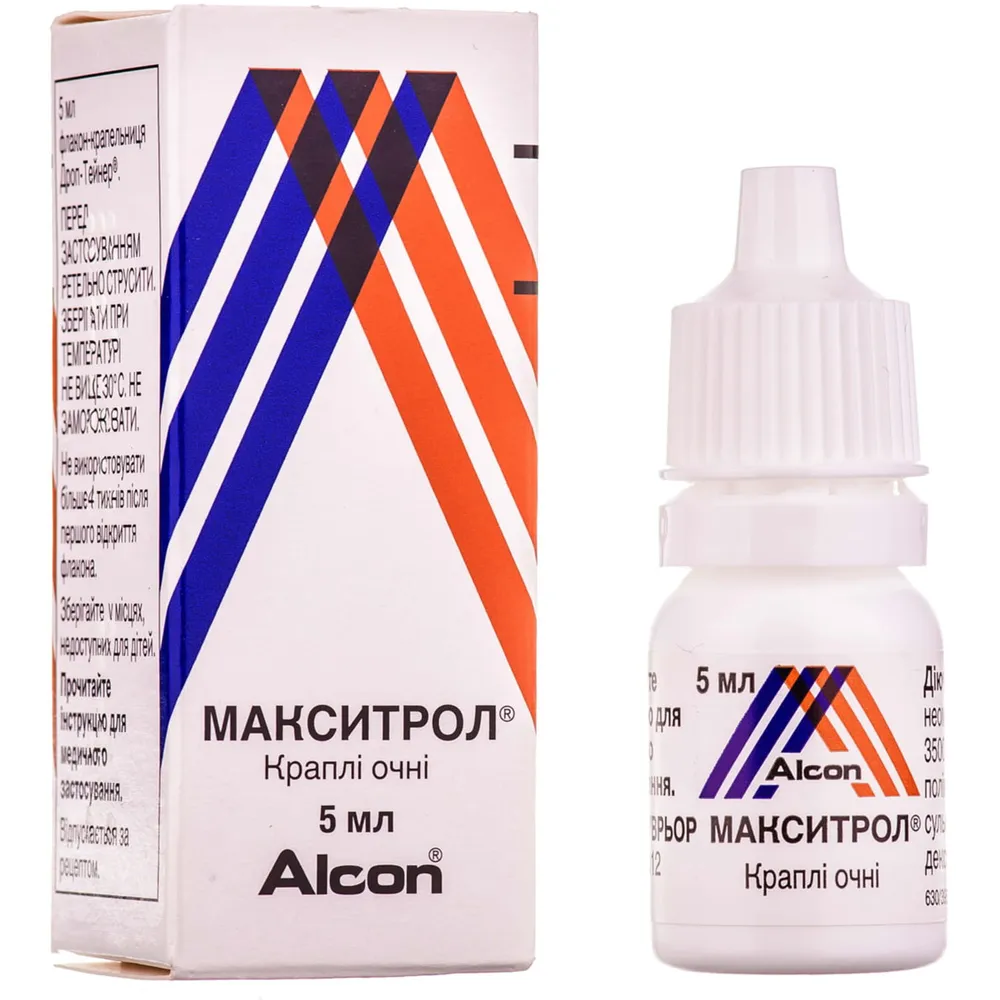
Table of Contents
INSTRUCTIONS FOR MEDICAL USE OF THE MEDICINAL PRODUCT MAXITROL® (MAXITROL®)
Composition:
Active substances: dexamethasone, neomycin sulfate, polymyxin B sulfate;
1 ml of suspension contains dexamethasone 1 mg, neomycin sulfate 3500 IU, polymyxin B sulfate 6000 IU;
Excipients: polysorbate 20, sodium chloride, hydrochloric acid concentrated and/or sodium hydroxide (for pH adjustment), hypromellose, benzalkonium chloride, purified water.
Pharmaceutical form. Eye drops.
Main physicochemical characteristics: opaque suspension without aggregates, white to pale yellow in color.
Pharmacotherapeutic group. Agents used in ophthalmology. Combined preparations containing corticosteroids and antibacterial agents. ATC code S01CA01.
Pharmacological properties.
Pharmacodynamics.
Mechanism of action
Maxitrol® ophthalmic drops exert a dual action: suppression of inflammatory symptoms due to the corticosteroid component dexamethasone, and antimicrobial activity due to the presence of two antibiotics, polymyxin B and neomycin, in its formulation.
Dexamethasone is a synthetic glucocorticoid with potent anti-inflammatory activity. Polymyxin B is a cyclic lipopeptide that penetrates the cell wall of gram-negative bacteria and destabilizes the cytoplasmic membrane. It is less active against gram-positive bacteria.
Neomycin is an aminoglycoside antibiotic whose primary action targets bacterial cells by inhibiting polypeptide linkage and protein synthesis in ribosomes.
Mechanism of resistance
Bacterial resistance to polymyxin B occurs chromosomally and develops rarely. Modification of cytoplasmic membrane phospholipids appears to play an important role in this process.
Resistance to neomycin arises through several different mechanisms, including alterations in ribosomal subunits within the bacterial cell; impaired transport of neomycin into the cell; and enzymatic inactivation via adenylation, phosphorylation, and acetylation. The genetic information responsible for production of inactivating enzymes may be transferred via bacterial chromosomes or plasmids.
Breakpoints
1 ml of Maxitrol® contains 6000 IU of polymyxin B sulfate and 3500 IU of neomycin sulfate. The breakpoints and in vitro spectrum, as listed below, are based on the combined activity of both polymyxin B and neomycin. The stated breakpoints are derived from acquired resistance observed in specific bacterial species causing ocular infections, and the ratio of international units of polymyxin B to neomycin in Maxitrol® ophthalmic drops:
resistance breakpoints – >5:2.5 to >40:20, depending on the bacterial species.
Susceptibility
The information provided below offers approximate data regarding potential microbial susceptibility to polymyxin B or neomycin in Maxitrol® formulation. Only bacterial species causing external eye infections are listed in this instruction.
The prevalence of acquired resistance may vary geographically and over time for relevant microbial species; therefore, local data on microbial resistance patterns are desirable, particularly when treating severe infections.
When necessary, expert advice should be sought if local resistance prevalence renders the activity of polymyxin B or neomycin, at least against certain infectious agents, questionable.
| SUSCEPTIBLE ORGANISMS Aerobic Gram-positive microorganisms Bacillus cereus Bacillus megaterium Bacillus pumilus Bacillus simplex Corynebacterium accolens Corynebacterium bovis Corynebacterium macginleyi Corynebacterium propinquum Corynebacterium pseudodiphtheriticum Staphylococcus aureus (methicillin-susceptible) Staphylococcus capitis Staphylococcus epidermidis (methicillin-susceptible) Staphylococcus pasteuri Staphylococcus warneri Streptococcus mutans Aerobic Gram-negative microorganisms Haemophilus influenzae Klebsiella pneumoniae Moraxella catarrhalis Moraxella lacunata Pseudomonas aeruginosa |
| INTERMEDIATELY RESISTANT ORGANISMS Staphylococcus epidermidis (methicillin-resistant) Staphylococcus hominis Staphylococcus lugdunensis |
| RESISTANT MICROORGANISMS Aerobic Gram-positive microorganisms Enterococcus faecalis Staphylococcus aureus (methicillin-resistant) Streptococcus mitis Streptococcus pneumoniae Aerobic Gram-negative microorganisms Serratia species Anaerobic bacteria Propionibacterium acnes |
Dexamethasone is a corticosteroid of intermediate potency that penetrates well into ocular tissues. Corticosteroids exert anti-inflammatory and vasoconstrictive effects. They suppress inflammatory reactions and symptoms associated with various disorders, but do not primarily treat the underlying conditions.
Preclinical safety data
Long-term animal studies to evaluate the carcinogenic potential or effects on fertility of Maxitrol® eye drops have not been conducted.
It has been reported that neomycin showed no carcinogenic effect in a 2-year oral study in rats. No studies have been performed to evaluate the carcinogenic potential of the other active substances in Maxitrol®. Studies on dexamethasone and polymyxin B have not been conducted.
Systemic effects of aminoglycosides at toxic doses, which greatly exceed the dose used in topical ocular application, may be associated with nephrotoxicity and ototoxicity. Systemic effects of dexamethasone may be related to glucocorticoid imbalance.
Repeated-dose toxicity studies of ophthalmic dexamethasone suspension in rabbits revealed systemic corticosteroid-related effects; however, even at doses significantly exceeding the human dose, these effects had minimal clinical significance. The occurrence of such effects with Maxitrol® eye drops administered at recommended doses is unlikely.
Mutagenicity
In vitro and in vivo studies of dexamethasone showed no mutagenic effects.
Standardized in vitro and in vivo studies have shown that neomycin is not genotoxic. Information regarding the mutagenicity of polymyxin B sulfate is lacking.
Teratogenicity
Corticosteroids have been shown to have teratogenic effects in animal studies. Ocular administration of 0.1% dexamethasone to pregnant rabbits resulted in an increased incidence of fetal developmental abnormalities and intrauterine growth retardation. Fetal growth retardation and increased mortality were observed in rats following prolonged dexamethasone therapy. Animal studies with neomycin did not reveal any adverse effects on the fetus. No studies have been conducted with polymyxin B.
Pharmacokinetics.
The presence of dexamethasone in the eye following topical ocular administration of a 0.1% dexamethasone suspension was studied in patients undergoing cataract surgery. The maximum mean concentration in intraocular fluid, approximately 30 ng/mL, was reached within 2 hours. Thereafter, the concentration decreased with a half-life of 3 hours.
Dexamethasone is eliminated from the body via metabolism. Approximately 60% of the dose is excreted in urine as 6-β-hydroxydexamethasone. Unchanged dexamethasone was not detected in urine. The plasma half-life is relatively short—3–4 hours. Dexamethasone is approximately 77–84% bound to serum albumin. Clearance ranges from 0.111 to 0.225 L/h/kg, and volume of distribution ranges from 0.576 to 1.15 L/kg. Oral bioavailability of dexamethasone is approximately 70%.
The pharmacokinetic properties of neomycin are similar to those of other aminoglycoside antibiotics.
No measurable amounts of neomycin were detected in serum or urine after application of up to 47.4 g of 0.5% neomycin sulfate ointment to intact skin of healthy volunteers, where the preparation remained for 6 hours.
Absorption of polymyxin B through mucous membranes varies from low and inconsistent to completely absent.
Polymyxin was not detected in serum or urine after application to large burn areas, conjunctiva, or maxillary sinuses.
Clinical characteristics.
Indications.
Inflammation of ocular tissues in which corticosteroids are indicated and where there is a superficial bacterial infection or a risk of its development (inflammation of bulbar conjunctiva and palpebral conjunctiva, cornea and anterior segment of the eyeball, chronic anterior uveitis, and corneal lesions caused by chemical, radiation, or thermal burns, or foreign body penetration).
Contraindications.
- Hypersensitivity to the active substances or to any of the excipients of the medicinal product.
- Keratitis caused by the herpes simplex virus.
- Smallpox and varicella (chickenpox), and other viral infections of the cornea and conjunctiva.
- Fungal diseases of ocular structures or untreated parasitic infections of the eye.
- Mycobacterial infections of the eye.
Interaction with other medicinal products and other forms of interaction.
Concomitant use of locally applied corticosteroids and locally applied non-steroidal anti-inflammatory drugs (NSAIDs) may increase the risk of corneal wound healing complications. In patients receiving ritonavir, an increase in plasma concentration of dexamethasone is possible (see section "Special precautions"). If more than one ophthalmic agent is being used, the interval between applications should be at least 5 minutes. Ophthalmic ointments should be administered last.
CYP3A4 inhibitors (including ritonavir and cobicistat) may reduce the clearance of dexamethasone, leading to more severe adverse effects and suppression of adrenal cortex function/Cushing's syndrome. Such combinations should be avoided unless the benefit outweighs the increased risk of systemic side effects of corticosteroids; in such cases, systemic adverse effects of corticosteroids should be monitored in patients.
Special precautions for use
For ophthalmic use only.
After the first opening of the bottle, remove the tamper-evident ring.
- Some patients may develop sensitivity to topical aminoglycosides, specifically neomycin. The severity of hypersensitivity reactions may vary from local manifestations to generalized reactions such as erythema, pruritus, urticaria, skin rash, anaphylaxis, anaphylactoid reactions, or bullous-type reactions. If hypersensitivity occurs during treatment with this medication, its use should be discontinued.
- In addition, topical application of neomycin may lead to skin sensitization.
- Cross-sensitivity to other aminoglycosides may occur. Patients who become sensitized to topical neomycin may also become sensitive to other aminoglycosides administered topically and/or systemically.
- Serious adverse reactions, including neurotoxicity, ototoxicity, and nephrotoxicity, have been reported in patients receiving systemic neomycin therapy or when neomycin was applied topically to open wounds or damaged skin. Nephrotoxic and neurotoxic reactions have also been observed with systemic use of polymyxin B. Although such reactions have not been reported following topical ocular administration of this product, caution is advised when concomitantly using systemic aminoglycoside therapy or polymyxin B.
- Prolonged topical ocular use of corticosteroids may lead to elevated intraocular pressure and/or glaucoma, with subsequent optic nerve damage, decreased visual acuity, visual field defects, and posterior subcapsular cataract formation. Patients receiving long-term topical corticosteroid therapy should have intraocular pressure monitored regularly and frequently. This is particularly important in children, as the risk of corticosteroid-induced elevated intraocular pressure may be higher and manifest earlier in children than in adults. The risk of corticosteroid-induced elevated intraocular pressure and/or cataract formation increases in patients with predisposing factors (e.g., patients with diabetes mellitus).
- Corticosteroids may decrease resistance to bacterial, fungal, parasitic, or viral infections that are not sensitive to these agents, and may mask clinical signs of infection.
- Following intensive or prolonged continuous therapy, Cushing’s syndrome and/or adrenal suppression due to systemic absorption of dexamethasone after topical ophthalmic administration may occur in predisposed patients, including children and patients receiving ritonavir (see section "Interaction with other medicinal products and other forms of interaction"). In such cases, treatment should not be stopped abruptly; the dose should be tapered gradually.
- In patients with persistent corneal ulceration, fungal infection should be considered. If fungal infection occurs, corticosteroid treatment should be discontinued.
- As with other antibiotics, prolonged use of neomycin and polymyxin may result in overgrowth of non-susceptible microorganisms, including fungi. If superinfection occurs, treatment should be discontinued and alternative therapy initiated.
- It is known that in conditions causing thinning of the cornea or sclera, topical corticosteroid use may lead to perforation. Topically applied corticosteroids may also delay corneal wound healing. Topical NSAIDs are also known to delay or impair corneal wound healing. Concomitant topical use of NSAIDs and corticosteroids may increase the risk of wound healing complications (see section "Interaction with other medicinal products and other forms of interaction").
- Contact lenses should not be worn during treatment of ocular inflammation or infection.
- Maxitrol® ophthalmic drops contain benzalkonium chloride, which may cause eye irritation and is known to discolor soft contact lenses. Contact with soft contact lenses should be avoided. However, if, in the physician’s opinion, contact lens use is acceptable, patients should be advised to remove contact lenses before instilling Maxitrol® ophthalmic drops and to wait at least 15 minutes before reinserting the lenses.
- Cushing’s syndrome and/or adrenal suppression associated with systemic absorption of ophthalmic dexamethasone formulations may occur after intensive or long-term continuous therapy in predisposed patients, including children and patients receiving CYP3A4 inhibitors (including ritonavir and cobicistat). In such cases, treatment should be tapered gradually.
Use during pregnancy or breastfeeding
Reproductive function
There are no data on the effects of neomycin or polymyxin B on reproductive function in men or women.
There is limited clinical data on the effects of dexamethasone on reproductive function in men and women. Dexamethasone did not show adverse effects on reproductive function in rats treated with chorionic gonadotropin.
Pregnancy
There are only limited data on the use of dexamethasone, neomycin, or polymyxin B in pregnant women. Aminoglycoside antibiotics such as neomycin cross the placenta after intravenous administration to pregnant women. Preclinical and clinical systemic exposure to aminoglycosides can cause ototoxicity and nephrotoxicity. When this medication is used topically in low doses, neomycin is not expected to cause ototoxicity or nephrotoxicity following fetal exposure. In a rat study, oral administration of neomycin at doses up to 25 mg/kg body weight per day did not result in maternal toxicity, fetotoxicity, or teratogenicity. Prolonged or repeated use of corticosteroids during pregnancy is associated with an increased risk of intrauterine growth retardation. Infants born to mothers who received significant doses of corticosteroids during pregnancy should be carefully monitored for signs of adrenal insufficiency (see section "Special precautions for use").
Animal studies indicate reproductive toxicity following systemic and ophthalmic administration of dexamethasone (see section "Pharmacological properties"). There are no safety data on polymyxin B in pregnant animals. The use of Maxitrol® ophthalmic drops is not recommended during pregnancy.
Breastfeeding
It is unknown whether dexamethasone, neomycin, or polymyxin B, when administered topically to the eye, are excreted in human breast milk. Aminoglycosides are excreted in breast milk following systemic administration. There are no data on the passage of dexamethasone and polymyxin B into breast milk. It is highly likely that dexamethasone, neomycin, and polymyxin B will not be present in significant amounts in breast milk or cause clinical effects in the nursing infant when the medication is used appropriately for topical ophthalmic application. However, the risk to the breastfed infant cannot be completely ruled out. The possibility of temporarily discontinuing breastfeeding during treatment with Maxitrol® or of discontinuing or withholding therapy should be considered, taking into account the benefits of breastfeeding for the child and the benefits of the medication for the mother.
Effects on ability to drive and use machines
Maxitrol® ophthalmic drops have no or negligible effect on the ability to drive or operate machinery. Transient blurred vision or other visual disturbances may affect the ability to drive or operate machinery. If blurred vision occurs after instillation, patients should wait until vision clears before driving or operating machinery.
Method of Administration and Dosage
For ophthalmic use.
The bottle should be shaken well before use.
To prevent contamination of the dropper tip and the suspension, care must be taken not to touch the eyelids, adjacent areas, or other surfaces with the dropper tip.
Use in adults, including elderly patients
In mild cases, instill 1–2 drops into the conjunctival sac of the affected eye(s) up to 4–6 times daily. The frequency of administration should be gradually reduced as the patient's condition improves. Care should be taken not to discontinue therapy prematurely.
In severe cases, instill 1–2 drops every hour, gradually reducing the frequency until treatment is completely discontinued as inflammation subsides.
After instillation, it is recommended to close the eyelids tightly or perform nasolacrimal occlusion. This reduces systemic absorption of drugs administered into the eye, thereby decreasing the likelihood of systemic adverse effects.
When using concomitant topical ophthalmic medications, an interval of at least 5 minutes should be maintained between applications. Ophthalmic ointments should be administered last.
Use in patients with hepatic or renal impairment.
Maxitrol® has not been studied in these patient populations. However, due to the low systemic absorption of the active ingredients following topical ophthalmic administration, dosage adjustment is not required.
Children.
Safety and efficacy of the drug in children have not been established.
Overdose.
Given the characteristics of this drug intended for topical use, no additional toxic effects are expected either with ophthalmic use at recommended doses or following accidental ingestion of the bottle's contents.
In case of overdose with Maxitrol® during topical application, flush the excess drug from the eye(s) with warm water.
Adverse reactions.
The most commonly observed adverse effects during clinical studies of Maxitrol® were eye discomfort, keratitis, and eye irritation, which occurred in 0.7–0.9% of patients.
Adverse effects were classified by frequency as follows: very common (≥ 1/10), common (≥ 1/100 to < 1/10), uncommon (≥ 1/1000 to < 1/100), rare (≥ 1/10,000 to < 1/1000), and very rare (< 1/10,000). Within each frequency group, adverse effects are listed in order of decreasing severity. Data on adverse effects were obtained from clinical studies of Maxitrol® ophthalmic drops.
| System organ class |
Adverse reactions according to MedDRA classification |
| Eye disorders |
Uncommon: keratitis, increased intraocular pressure, eye pruritus, eye discomfort, eye irritation |
Additional adverse reactions identified during post-marketing surveillance include the following. The frequency cannot be estimated based on available data. Within each organ system class, adverse reactions are listed in order of decreasing severity.
| System organ classification |
Adverse reactions according to MedDRA classification |
| Immune system disorders |
Hypersensitivity |
| Nervous system disorders |
Headache |
| Ophthalmic disorders |
Ulcerative keratitis, blurred vision, photophobia, mydriasis, eyelid ptosis, eye pain, eye swelling, foreign body sensation in eyes, eye hyperemia, increased lacrimation |
| Skin and subcutaneous tissue disorders |
Stevens-Johnson syndrome |
| Endocrine disorders |
Cushing's syndrome, adrenal gland suppression |
Additional adverse reactions observed with the use of dexamethasone and potentially may occur with the use of Maxitrol®: dysgeusia, dizziness, conjunctivitis, dry eye syndrome, scaling along the eyelid margins, decreased visual acuity, corneal erosion.
Skin hypersensitivity may occur in some patients due to topical use of aminoglycosides. In addition, topical ocular application of neomycin may cause skin sensitization (see section "Special precautions for use").
Prolonged topical ocular use of corticosteroids may lead to increased intraocular pressure, resulting in optic nerve damage, decreased visual acuity, visual field defects, and development of posterior subcapsular cataract (see section "Special precautions for use").
The development of secondary infections may be caused by the use of combinations containing corticosteroids and antimicrobial agents (see section "Special precautions for use").
Since the product contains corticosteroids, prolonged use increases the risk of perforation in patients with diseases leading to thinning of the cornea or sclera (see section "Special precautions for use").
Shelf life. 2 years.
Storage period after first opening of the bottle – 4 weeks.
Storage conditions.
Store the bottle in an upright position at a temperature not exceeding 30 °C, in places inaccessible to children. Do not freeze. Keep the bottle tightly closed.
Packaging.
5 ml in a dropper bottle; 1 dropper bottle per cardboard box.
Prescription status. Prescription only.
Manufacturer.
Alcon Cuvreur.
Alcon Couvreur.
Manufacturer's address and place of business.
Rijksweg 14, Puurs-Sint-Amands, 2870, Belgium.
Rijksweg 14, Puurs-Sint-Amands, 2870, Belgium.