Lomflox
Ukraine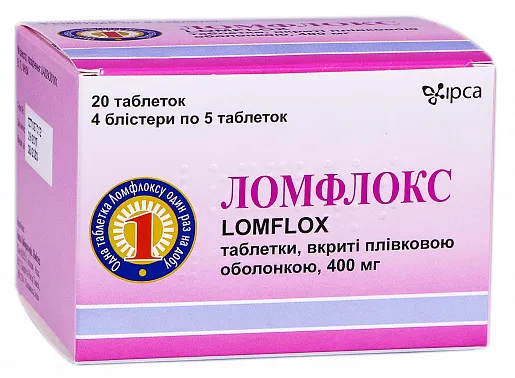
Table of Contents
INSTRUCTIONS FOR MEDICAL USE OF THE MEDICINAL PRODUCT LOMFLOK (LOMFLOX)
Composition:
Active substance: lomefloxacin;
One tablet contains lomefloxacin hydrochloride equivalent to 400 mg of lomefloxacin;
Excipients: anhydrous lactose, corn starch, povidone, sodium starch glycolate (type A), crospovidone, talc, sodium lauryl sulfate, magnesium stearate, propylene glycol, colloidal anhydrous silicon dioxide, hypromellose, titanium dioxide (E 171).
Pharmaceutical form. Film-coated tablets.
Main physicochemical properties: white or almost white, capsule-shaped film-coated tablets with a score line on one side and the monogram “LOMFLOX 400” on the other side.
Pharmacotherapeutic group.
Antibacterials for systemic use. ATC code J01MA07.
Pharmacological Properties
Pharmacodynamics
The bactericidal activity of lomefloxacin, as with other fluoroquinolones, is based on its ability to inhibit the bacterial enzyme DNA gyrase. The antimicrobial spectrum of the drug includes organisms resistant to penicillins, aminoglycosides, cephalosporins, as well as multidrug-resistant microorganisms.
Lomflox is active against aerobic Gram-negative and Gram-positive microorganisms: Escherichia coli, Enterobacter spp., Citrobacter spp., Klebsiella spp., Staphylococcus spp., Neisseria gonorrhoeae, Neisseria meningitidis, Streptococcus pneumoniae, Salmonella spp., Proteus spp., Shigella spp., Yersinia spp., Morganella morganii, Providencia spp., Vibrio spp., Serratia spp., Campylobacter spp., Pseudomonas aeruginosa, Haemophilus influenzae, Haemophilus ducreyi, Acinetobacter spp., Moraxella catarrhalis, Gardnerella vaginalis, Pasteurella multocida, Helicobacter pylori.
Lomflox exhibits antituberculosis activity. The drug acts on both extracellular and intracellular Mycobacterium tuberculosis, shortens the duration of organism excretion, and promotes faster resolution of infiltrates.
Pharmacokinetics
Lomefloxacin is almost completely absorbed (95–98%) from the stomach. After a 400 mg dose, maximum plasma concentration (Cmax) is reached within 1–1.4 hours and amounts to 3–3.5 μg/mL. Lomefloxacin penetrates well into tissues and body fluids, where drug concentrations higher than those in plasma are achieved: maximum lomefloxacin concentrations in urine are 100 times higher than in plasma, and in tissues—2 to 7 times higher. After a single 400 mg dose, sustained urinary concentrations are at least 35 μg/mL, which significantly exceeds the maximum inhibitory concentration for most pathogens. The elimination half-life of lomefloxacin in patients with normal renal function is 8–9 hours, providing prolonged action and 24-hour efficacy with once-daily dosing. Approximately 65% of the administered dose is excreted unchanged in urine.
Clinical Characteristics.
Indications.
Lomefloxacin is indicated for the treatment of adults with mild to moderate bacterial infections caused by microorganisms sensitive to lomefloxacin in the following conditions:
- Lower respiratory tract infections.
Acute exacerbation of chronic obstructive pulmonary disease, including chronic bronchitis*, caused by Haemophilus influenzae or Moraxella catarrhalis. Lomefloxacin is not indicated for empirical treatment of bacterial exacerbations of chronic bronchitis when Streptococcus pneumoniae is suspected as the causative pathogen.
- Urinary tract infections.
Uncomplicated urinary tract infections (simple uncomplicated cystitis*, acute uncomplicated pyelonephritis, prostatitis, urethritis) caused by Escherichia coli, Klebsiella pneumoniae, Proteus mirabilis, or Staphylococcus saprophyticus.
Complicated infections caused by Escherichia coli, Klebsiella pneumoniae, Proteus mirabilis, Pseudomonas aeruginosa, Citrobacter diversus, or Enterobacter cloacae.
- Acute and chronic gonorrhea.
- Acute and recurrent chlamydia (including mixed bacterial-chlamydial infection).
- Acute and chronic purulent skin and soft tissue infections, infected wounds*.
Official guidelines on appropriate use of antibacterial agents should be taken into account.
*Only if other antibacterial agents commonly used for treatment of this infection are considered ineffective or inappropriate.
Contraindications.
Hypersensitivity to lomefloxacin, to other quinolones (quinolonecarboxylic acid derivatives), or to any component of the drug; epilepsy; central nervous system (CNS) disorders with lowered seizure threshold (e.g., following head trauma, stroke, or CNS inflammatory conditions) in medical history.
Interaction with other medicinal products and other forms of interaction.
Concomitant administration of lomefloxacin with agents that reduce gastric acidity (mineral antacids), including sucralfate, and with iron-containing preparations results in reduced antimicrobial efficacy due to decreased bioavailability. Therefore, lomefloxacin should be taken at least 2 hours before these agents.
Concomitant intake of magnesium- and aluminum-containing antacids with lomefloxacin significantly reduces its bioavailability. Dose separation of the antacid and lomefloxacin allows minimization of impaired bioavailability. These agents should be taken either 4 hours before or at least 2 hours after lomefloxacin administration.
Cimetidine affects the elimination of other quinolones by significantly increasing the half-life and area under the plasma concentration-time curve (AUC). No clinically significant changes in the pharmacokinetics of lomefloxacin (AUC, Cmax, or Tmax) were observed when administered concomitantly with omeprazole after a single dose of lomefloxacin. Lomefloxacin enhances the effect of oral anticoagulants and increases the toxicity of nonsteroidal anti-inflammatory drugs (NSAIDs). Concomitant use of NSAIDs with quinolones may increase the risk of seizures.
Probenecid slows renal excretion of lomefloxacin. Concomitant use with theophylline may increase the risk of convulsions and elevate plasma theophylline concentrations, leading to adverse effects; therefore, theophylline dosage should be appropriately reduced. The addition of lomefloxacin does not significantly alter theophylline plasma concentrations. When used concomitantly with cyclosporine, serum creatinine levels may increase in individual cases; therefore, frequent monitoring (twice weekly) of this parameter is required in such patients. Elevated serum levels of cyclosporine have been reported when cyclosporine was coadministered with other quinolone-class agents. When used concomitantly with phenytoin, a significant decrease in seizure threshold has been observed, without any significant changes in mean AUC, Cmax, Cmin, or Tmax (although Cmax increased by 11%). When used concomitantly with caffeine, increased plasma and CNS concentrations may occur, increasing the risk of seizures, but no statistically or clinically significant changes in pharmacokinetic parameters have been observed. Warfarin – fluoroquinolones may potentiate the effects of anticoagulants, including warfarin and its derivatives. Close monitoring of prothrombin time and other coagulation tests is required when these drugs are used concomitantly.
However, in patients receiving warfarin and lomefloxacin in a stable condition, no clinically or statistically significant differences in prothrombin time ratio or pharmacokinetics of warfarin enantiomers were observed.
Lomefloxacin should not be used concomitantly with alcohol consumption.
Special precautions for use.
Avoid using lomefloxacin in patients with a history of serious adverse reactions associated with quinolone- and fluoroquinolone-containing medicinal products (see section "Adverse reactions"). Treatment of such patients with lomefloxacin should be initiated only if no alternative treatment options are available and after careful benefit/risk assessment (see also section "Contraindications").
Epidemiological studies have reported an increased risk of aortic aneurysm and aortic dissection following fluoroquinolone use, particularly in elderly patients. Therefore, fluoroquinolones should be used only after careful benefit-risk assessment and consideration of other possible therapeutic options in patients with a positive family history of aneurysm disease, those with existing aneurysm and/or aortic dissection, and those with other risk factors or conditions predisposing to aneurysm and aortic dissection (e.g., Marfan syndrome, vascular type Ehlers-Danlos syndrome, Takayasu arteritis, giant cell arteritis, Behçet’s disease, arterial hypertension, atherosclerosis). If sudden abdominal, chest, or back pain occurs, patients should immediately seek medical attention at an emergency department.
Long-term, disabling, and potentially irreversible serious adverse reactions
Rare, long-lasting (up to several months or years), disabling, and potentially irreversible serious adverse reactions affecting various body systems (musculoskeletal, nervous and mental systems, sensory organs) have been reported in patients receiving quinolones or fluoroquinolones, regardless of age or presence of risk factors. If any signs or symptoms of a serious adverse reaction occur, lomefloxacin should be discontinued immediately and the patient should consult a physician.
Tendinitis and tendon rupture
Tendinitis and tendon rupture (particularly of the Achilles tendon), sometimes bilateral, may occur within the first 48 hours of starting quinolone or fluoroquinolone therapy, and occasionally even several months after completion of lomefloxacin treatment. The risk of tendinitis and tendon rupture is increased in elderly patients, patients with renal impairment, patients after solid organ transplantation, and patients receiving concomitant corticosteroids. Concomitant use of corticosteroids and fluoroquinolones should be avoided. If early signs of tendinitis (e.g., painful swelling or joint inflammation) occur, lomefloxacin therapy should be discontinued immediately and alternative treatment considered. The affected limb should be managed appropriately (e.g., immobilization). Corticosteroids should not be used if signs of tendinopathy appear.
The above-mentioned risk factors apply to patients receiving the daily dose of 1000 mg lomefloxacin.
Peripheral neuropathy
Cases of peripheral sensory or sensorimotor polyneuropathy have been reported in patients taking quinolones or fluoroquinolones, leading to paresthesia, hyposthesia, dysesthesia, or weakness. Patients receiving lomefloxacin should be advised to inform their physician before continuing treatment if symptoms of neuropathy occur, including pain, burning, tingling, numbness, and/or weakness, to prevent development of irreversible conditions (see section "Adverse reactions"). If signs of neuropathy occur, lomefloxacin should be discontinued immediately.
Patients taking the drug and for several days after completion of therapy should avoid exposure to sunlight and artificial ultraviolet radiation. If early signs of photosensitization (increased skin sensitivity, sunburn, erythema, edema, blistering, rash, itching, dermatitis) or hypersensitivity occur, treatment must be discontinued. The risk of phototoxicity may be reduced by taking lomefloxacin in the evening.
Seizures have been reported in patients taking lomefloxacin. It is currently unknown whether there is a direct link between these seizures and lomefloxacin use. However, seizures, increased intracranial pressure, and toxic psychoses have also been reported in patients taking other quinolones.
Fluoroquinolones may also cause central nervous system stimulation, leading to tremor, restlessness, agitation, photophobia, seizures, dizziness, confusion, hallucinations, and toxic psychoses. If such neurotoxic reactions occur, the drug should be discontinued.
The use of lomefloxacin increases the risk of development of resistant bacteria. To prevent dysbiosis, enzyme preparations and bifidumbacterin should be prescribed concomitantly with lomefloxacin; to prevent candidiasis, antifungal agents (nystatin, levorin) should be used.
Pseudomembranous colitis, with severity ranging from mild to life-threatening, has been reported with the use of nearly all antibacterial agents, including lomefloxacin. Antimicrobial therapy alters the normal flora of the colon and may promote overgrowth of Clostridium difficile. Evidence suggests that the toxin produced by C. difficile is the primary cause of antibiotic-associated colitis. Therapeutic measures should be initiated once the diagnosis of pseudomembranous colitis is established. Mild cases usually resolve after discontinuation of therapy without additional treatment. In moderate to severe cases, fluid and electrolyte replacement, protein supplementation, and administration of antibiotics effective against C. difficile should be considered.
If severe and prolonged diarrhea occurs during or after treatment, pseudomembranous colitis should be ruled out, which requires immediate discontinuation of the drug and initiation of appropriate therapy.
Severe hypersensitivity reactions may occur after the first dose of lomefloxacin.
Some reactions were accompanied by cardiovascular collapse, loss of consciousness, tinnitus, throat or facial swelling, dyspnea, urticaria, or pruritus. Serious hypersensitivity reactions have also been reported after completion of lomefloxacin therapy. In very rare cases, life-threatening anaphylactic reactions may occur. In such cases, lomefloxacin should be discontinued immediately and appropriate medical treatment initiated. Severe acute hypersensitivity reactions may require emergency treatment with epinephrine. Oxygen, intravenous fluids, antihistamines, corticosteroids, pressor amines, and airway ventilation, including intubation, should be administered as indicated.
Rare cases of torsade de pointes ventricular tachycardia have been spontaneously reported in patients receiving quinolone therapy, including lomefloxacin. These rare events have been associated with one or more of the following factors: age over 60 years, female gender, underlying cardiac disease, and/or concomitant use of multiple medications.
Lomefloxacin should be used with caution in patients receiving concomitant drugs that may prolong the QT interval (e.g., class Ia or III antiarrhythmics) and in patients with a history of conditions associated with QT interval prolongation.
The duration of treatment should be determined by pathogen susceptibility and clinical response, but not less than 3 days.
Dosage adjustment is required in patients with renal impairment, as lomefloxacin is primarily excreted via the kidneys. For example, in patients with creatinine clearance greater than 10 ml/min but less than 40 ml/min, the initial dose is 400 mg as a single dose, followed by a maintenance dose of 200 mg once daily.
The safety and efficacy of lomefloxacin have not been established in children and adolescents (under 18 years of age), pregnant women, or breastfeeding women.
The drug should be administered with caution to patients with cerebral atherosclerosis and CNS disorders such as severe cerebral vascular atherosclerosis, epilepsy, or other factors predisposing to seizures. Psychiatric disorders, agitation, anxiety, and sleep disturbances have been reported more frequently with lomefloxacin than with other quinolone agents.
Since the medicinal product contains lactose, patients with hereditary conditions such as galactose intolerance, Lapp lactase deficiency, or glucose-galactose malabsorption should not take this product.
The drug should be prescribed only for life-threatening indications in elderly patients with vascular diseases and organic brain lesions due to the risk of CNS-related adverse reactions.
The safety and efficacy of lomefloxacin in the treatment of patients with Pseudomonas bacteremia have not been established.
Use during pregnancy or breastfeeding.
The drug is contraindicated during pregnancy. Breastfeeding should be discontinued during treatment with this drug.
Ability to affect reaction speed when driving or operating machinery.
Patients should be advised to refrain from driving or operating machinery during treatment, as the drug may affect concentration and psychomotor reaction speed.
Dosage and Administration
Take orally (do not chew, swallow with water) with or without food. The dosage and duration of treatment depend on the type and severity of infection and the clinical response to therapy. Generally, 1 tablet (400 mg) is taken once daily for 7–10 days. Specific indications and severity levels include:
- Uncomplicated urinary tract infections – 400 mg once daily for 3–5 days;
- Uncomplicated cystitis caused by Klebsiella pneumoniae, Proteus mirabilis, or Staphylococcus saprophyticus – 400 mg once daily for 10 days;
- Uncomplicated cystitis in women caused by Escherichia coli – 400 mg once daily for 3 days;
- Complicated urinary tract infections – 400 mg once daily for 14 days;
- Acute gonorrhea – single dose of 600 mg; chronic gonorrhea – 600 mg daily for 5 days in combination with specific immunotherapy;
- Urogenital chlamydiosis, including mixed bacterial-chlamydial infections (e.g., gonococcal-chlamydial) – 400–600 mg once daily for up to 28 days;
- Chlamydial infection in patients with rheumatism – 400 mg daily for 20 days; chlamydial conjunctivitis – 400 mg daily, treatment course up to 10 days;
- Mycoplasma infection – 400–800 mg daily, treatment course up to 10 days;
- Acute and chronic purulent soft tissue infections, infected wounds, and burns – 400 mg once daily for 5–14 days;
- Complicated lower respiratory tract infections, including pneumococcal pneumonia and acute exacerbation of chronic bronchitis – 400–800 mg once or twice daily for 14 days;
- Acute bacterial exacerbation of chronic bronchitis – 400 mg once daily for 10 days.
Dosage adjustment is required in patients with renal impairment, as lomefloxacin is primarily eliminated via the kidneys. For example, in patients with creatinine clearance greater than 10 ml/min but less than 40 ml/min, the initial dose is 400 mg as a single dose, followed by a maintenance dose of 200 mg once daily. Hemodialysis removes only a small amount of lomefloxacin (3% over 4 hours). Patients undergoing hemodialysis should receive an initial loading dose of 400 mg, followed by a daily maintenance dose of 200 mg (1/2 tablet) once daily throughout the treatment period.
No dosage adjustment is necessary in elderly patients with normal renal function (creatinine clearance ≥40 ml/min/1.73 m²).
Since lomefloxacin is eliminated by the kidneys and elderly patients may have impaired renal function, the risk of toxic reactions may be increased in this population. Dose selection should be cautious, and renal function should be monitored.
Liver cirrhosis does not reduce extrarenal clearance of lomefloxacin. Dose reduction in such patients should be based on the degree of renal impairment and observed plasma concentrations.
Avoid taking sucralfate, antacids containing magnesium or aluminum, or chewable/buffered tablets and pediatric powder for oral solution of didanosine within 4 hours before or 2 hours after administration of lomefloxacin. The risk of phototoxic reactions to solar UV light can be reduced by taking lomefloxacin at least 12 hours before sun exposure (e.g., in the evening).
Children
The drug is contraindicated in children.
Overdose
Symptoms of overdose include intensified adverse effects such as tremor, loss of consciousness, hypersalivation, nausea, vomiting, decreased activity, dyspnea, and seizures. In cases of accidental or intentional overdose, gastric decontamination should be performed by inducing vomiting and/or gastric lavage, and adequate hydration should be maintained. Symptomatic treatment should be administered if necessary. Hemodialysis and peritoneal dialysis are ineffective.
Adverse reactions.
With prolonged use, the following may occur:
General disorders: increased sweating, hot flushes, weakness, increased fatigue, reduced tolerance to high temperature, back pain, asthenia, facial swelling, chills, flu-like symptoms, increased susceptibility to respiratory infections, joint, tendon and muscle pain.
Gastrointestinal tract: abdominal pain, heartburn, dry mouth, thirst, loss of appetite, increased appetite, nausea, vomiting, diarrhea, dyspepsia, flatulence, constipation, gastrointestinal bleeding, inflammation of the gastrointestinal tract, oral mucosal discomfort, dysgeusia, duodenal perforation, dysphagia, stomatitis, tongue discoloration, altered taste, pseudomembranous colitis.
Ear disorders *: ear pain, tinnitus.
Central nervous system (CNS) *: headache, dizziness, loss and confusion of consciousness, agitation, anxiety, sleep disturbances, insomnia, drowsiness, psychoemotional excitement, hallucinations, impaired motor coordination, depression, depersonalization, paranoid reactions, impaired thinking, difficulty concentrating, chills, tremor, paresthesia, muscle twitching, muscle cramps, possible exacerbation of myasthenia gravis, vertigo, convulsions, back pain and leg cramps, hyperkinesia, cerebrovascular disorders, ataxia, coma, hypertension. These reactions usually occur after the first dose.
In such cases, lomefloxacin should be discontinued immediately and a physician informed.
Psychiatric disorders *: insomnia, nervousness, drowsiness, anorexia, depression, confusion, excitement, increased appetite, depersonalization, paranoid reactions, anxiety, nightmares, pathological thinking, hallucinations, phobias, and difficulty concentrating.
Hypersensitivity reactions: skin reactions such as rash, urticaria, pruritus; rarely, photosensitivity reactions, erythema multiforme, hyperemia, petechiae.
Blood and lymphatic system disorders: purpura, lymphadenopathy, increased fibrinolysis; very rarely, decreased numbers of leukocytes, erythrocytes and/or platelets (leukopenia, agranulocytosis, anemia, thrombocytopenia, pancytopenia), e.g., due to suppressed formation of new blood cells in the bone marrow (bone marrow suppression, which resolves after discontinuation of lomefloxacin), and decreased erythrocyte count due to increased destruction (hemolytic anemia).
Metabolic and nutritional disorders: thirst, hyperglycemia, hypoglycemia, hypokalemia, gout.
Eye disorders *: visual disturbances, diplopia, conjunctivitis, photophobia, eye pain, lacrimation.
Reproductive system and breast disorders: in women – vaginal candidiasis, vaginitis, leukorrhea, menstrual cycle disturbances, perineal pain, intermenstrual bleeding; in men – epididymitis, orchitis.
Infections and infestations: viral infections, candidiasis, flu-like symptoms, fungal infections.
Hepatobiliary system: very rarely, mild transient liver function abnormalities, increased serum levels of liver enzymes and bilirubin associated with jaundice due to reduced bilirubin excretion (cholestatic jaundice), liver inflammation (hepatitis).
Renal and urinary system: very rarely, impaired kidney function, e.g., increased blood levels of substances normally excreted by the kidneys (such as creatinine), or acute kidney inflammation (interstitial nephritis) progressing to acute renal failure, hematuria, dysuric disorders, anuria, edema, polyuria, urinary retention, painful and difficult urination, increased blood urea nitrogen.
Respiratory system: rhinitis, pharyngitis, dyspnea, cough, epistaxis, bronchospasm, respiratory disorders, increased sputum production, bronchospasm, stridor, respiratory depression, chest pain, pulmonary artery embolism.
Musculoskeletal system *: arthralgia, tendinitis, myalgia, back pain and leg cramps.
Immune system disorders: hypersensitivity reactions leading to rashes and pruritus, photosensitivity reactions, anaphylactoid reactions, allergic reactions, anaphylactic shock, angioedema, exfoliative dermatitis, Stevens-Johnson syndrome, toxic epidermal necrolysis.
Skin and subcutaneous tissue disorders: photosensitivity, pruritus, urticaria, angioedema, exfoliative dermatitis, exfoliative skin changes, various rashes, eczema, acne, skin discoloration, Stevens-Johnson syndrome, toxic epidermal necrolysis, skin ulcers, hyperpigmentation.
Cardiovascular system: in isolated cases, tachycardia, arterial hypertension/hypotension, myocardial infarction, angina attacks, heart failure, bradycardia, pulmonary artery embolism, arrhythmia, extrasystoles, cerebrovascular disorders, cyanosis, cardiomyopathy, cardiopulmonary shock, cerebral vessel thrombosis, torsades de pointes, vasculitis, phlebitis.
Laboratory findings: monocytosis, eosinophilia, leukocytosis, leukopenia, elevated ALT, AST, bilirubin, alkaline phosphatase, increased gamma-glutamyltransferase levels, hypoproteinemia, decreased hemoglobin levels, increased ESR, abnormal urine specific gravity, decreased total protein or albumin levels, prolonged prothrombin time, thrombocytopenia, thrombocytosis, changes in blood electrolyte levels, albuminuria, macrocytosis, increased blood urea nitrogen, decreased potassium levels, increased creatinine levels.
Except for extremely rare cases, all adverse effects observed during lomefloxacin use resolve after discontinuation of the drug.
* There have been reports of very rare, prolonged (several months or years), disabling and potentially irreversible serious adverse reactions affecting various organ systems (including such reactions as tendinitis, tendon rupture, arthralgia, limb pain, gait disturbances, neuropathies associated with paresthesia, depression, fatigue, memory impairment, sleep disturbances, hearing impairment, visual disturbances, taste and smell disturbances) associated with the use of quinolones and fluoroquinolones, regardless of the presence of risk factors (see section "Special precautions").
Shelf life.
3 years.
Storage conditions.
Store in the original packaging at a temperature not exceeding 25 °C.
Keep out of reach of children.
Packaging.
5 tablets in a blister, 1 blister in a cardboard package;
5 tablets in a blister, 1 blister in a cardboard package, 4 packages in a cardboard box.
Prescription status.
Prescription only.
Manufacturer.
Ipca Laboratories Limited.
Manufacturer's address and place of business.
Plot No. 255/1, Village – Atal, U.T. Dadra & Nagar Haveli, 396230 Silvassa, India.