Linessa
Ukraine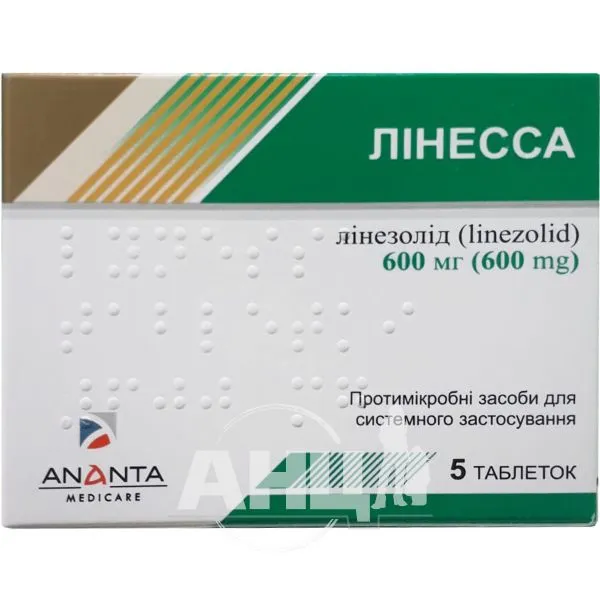
Table of Contents
INSTRUCTIONS FOR MEDICAL USE OF THE MEDICINAL PRODUCT LINESSA (LINESSA)
Composition:
Active substance: linezolid;
One film-coated tablet contains 600 mg of linezolid;
Excipients: microcrystalline cellulose; lactose monohydrate; povidone; talc; sodium croscarmellose; magnesium stearate; colloidal anhydrous silicon dioxide; sodium starch glycolate (type A); hypromellose E-15; titanium dioxide E 171; polyethylene glycol-6000; propylene glycol.
Pharmaceutical form. Film-coated tablets.
Main physicochemical characteristics: film-coated tablets, white or almost white, elongated (caplet-shaped), with a score on one side.
Pharmacotherapeutic group.
Antibacterials for systemic use.
ATC code J01X X08.
Pharmacological properties.
Pharmacodynamics.
Linezza is an antibacterial agent.
When the drug was administered at doses of 600 mg and 1200 mg, no significant effect on the QTc interval was observed at the maximum plasma concentration of the drug or at any other time.
Pharmacokinetics.
Mean pharmacokinetic parameters of linezolid in adults after single and multiple oral and intravenous administrations of the drug are presented in Table 1.
Table 1. Mean (standard deviation) pharmacokinetic parameters of linezolid in adults
| Linezolid dose |
Cmax mcg/mL |
Cmin mcg/mL |
Tmax hr |
AUC * mcg•hr/mL |
t1/2 hr |
CL mL/min |
| 400 mg tablets single dose every 12 hours |
8.1 (1.83) 11 (4.37) |
--- 3.08 (2.25) |
1.52 (1.01) 1.12 (0.47) |
55.1 (25) 73.4 (33.5) |
5.2 (1.5) 4.69 (1.7) |
146 (67) 110 (49) |
| 600 mg tablets single dose every 12 hours |
12.7 (3.96) 21.2 (5.78) |
--- 6.15 (2.94) |
1.28 (0.66) 1.03 (0.62) |
91.4 (39.3) 138 (42.1) |
4.26 (1.65) 5.4 (2.06) |
127 (48) 80 (29) |
| 600 mg, IV injection‡ single dose every 12 hours |
12.9 (1.6) 15.1 (2.52) |
--- 3.68 (2.36) |
0.5 (0.1) 0.51 (0.03) |
80.2 (33.3) 89.7 (31) |
4.4 (2.4) 4.8 (1.7) |
138 (39) 123 (40) |
| 600 mg, oral suspension single dose |
11 (2.76) |
--- |
0.97 (0.88) |
80.8 (35.1) |
4.6 (1.71) |
141 (45) |
* AUC for single dose = AUC0-∞; for multiple dose = AUC0-τ
† Data normalized to a dose of 375 mg
‡ Data normalized to a dose of 625 mg; intravenous dose administered by infusion over 0.5 hour
Cmax = maximum plasma concentration of the drug; Cmin = minimum plasma concentration of the drug; Tmax = time to reach Cmax; AUC = area under the plasma concentration-time curve; t1/2 = elimination half-life; CL = systemic clearance.
Absorption
Linezolid is extensively absorbed after oral administration. Maximum plasma concentrations are achieved within 1–2 hours after dosing, and absolute bioavailability is approximately 100%. Therefore, linezolid can be administered orally or intravenously without dose adjustment.
Linezolid may be administered regardless of food intake. The time to reach maximum concentration increases from 1.5 to 2.2 hours, and Cmax is reduced by approximately 17% when linezolid is taken with a high-fat meal. However, total exposure, as measured by AUC0–∞, is similar in both cases.
Distribution
Linezolid rapidly distributes into well-perfused tissues. Approximately 31% of linezolid binds to plasma proteins, and this binding is independent of drug concentration. The volume of distribution at steady state in healthy adult volunteers averages 40–50 L.
Linezolid concentrations have been measured in various fluids following multiple doses. The ratio of linezolid concentration in saliva to plasma concentration is 1.2:1, and the ratio of linezolid concentration in sweat to plasma concentration is 0.55:1.
Metabolism
Linezolid is primarily metabolized by oxidation of the morpholine ring, forming two inactive ring-opened carboxylic acid metabolites: the aminoethoxyacetic acid metabolite (A) and the hydroxyethylglycine metabolite (B). Formation of metabolite A is thought to occur via an enzymatic pathway, whereas formation of metabolite B is mediated by a non-enzymatic mechanism involving chemical oxidation, as observed in vitro. In vitro studies have shown that linezolid undergoes minimal metabolism, with no significant involvement of the human cytochrome P450 enzyme system. However, the metabolic pathways of linezolid have not been fully characterized.
Elimination
Non-renal clearance accounts for approximately 65% of the total clearance of linezolid. At steady state, approximately 30% of the dose is recovered in urine as unchanged linezolid, 40% as metabolite B, and 10% as metabolite A. The mean renal clearance of linezolid is 40 mL/min, indicating active tubular reabsorption. Linezolid is not significantly excreted in feces; however, approximately 6% of the dose is recovered in feces as metabolite B and 3% as metabolite A.
Slight nonlinearity in clearance was observed with increasing linezolid doses, likely due to reduced renal and non-renal clearance at higher drug concentrations. However, this difference in clearance was minor and did not affect the apparent elimination half-life.
Clinical characteristics.
Indications.
Treatment of infections caused by susceptible strains of anaerobic or aerobic gram-positive microorganisms, including infections associated with bacteremia, such as:
- nosocomial pneumonia;
- community-acquired pneumonia;
- complicated skin and skin structure infections, including infections associated with diabetic foot without concomitant osteomyelitis, caused by Staphylococcus aureus (methicillin-susceptible and methicillin-resistant isolates), Streptococcus pyogenes, or Streptococcus agalactiae;
- uncomplicated skin and skin structure infections caused by Staphylococcus aureus (methicillin-susceptible isolates only) or Streptococcus pyogenes;
- infections caused by enterococci, including vancomycin-resistant strains of Enterococcus faecium and faecalis.
If the infecting pathogens include gram-negative microorganisms, combination therapy is clinically indicated.
Contraindications.
Known hypersensitivity to linezolid or any other component of the medicinal product.
The medicinal product must not be administered to patients receiving or who have recently received any medicinal products that inhibit monoamine oxidase A and B (e.g., phenelzine, isocarboxazid, selegiline, moclobemide), or within 2 weeks after discontinuation of such agents.
Except in cases where close monitoring and blood pressure surveillance are possible, the medicinal product must not be administered to patients with the following concomitant clinical conditions or concomitant use of the following medicinal products:
- uncontrolled arterial hypertension, thyrotoxicosis, pheochromocytoma, carcinoid, bipolar depression, schizoaffective disorder, acute episodes of dizziness;
- serotonin reuptake inhibitors, tricyclic antidepressants, 5-HT1 serotonin receptor agonists (triptans), direct and indirect sympathomimetics (including adrenergic bronchodilators, pseudoephedrine, phenylpropanolamine), vasopressors (epinephrine, norepinephrine), dopaminergic compounds (dopamine, dobutamine), meperidine, or buspirone.
Interaction with other medicinal products and other forms of interaction.
Monoamine oxidase inhibitors
Linezolid is a non-selective, reversible inhibitor of monoamine oxidase (MAO). In drug interaction and safety studies, very limited data are available on the use of linezolid in patients receiving concomitant therapy with agents that pose certain risks due to MAO inhibition. Therefore, the use of linezolid under such circumstances is not recommended unless close observation and patient monitoring are possible (see sections "Contraindications" and "Special precautions").
Potential interactions leading to increased blood pressure
In healthy volunteers with normal blood pressure, linezolid potentiates the blood pressure increase caused by pseudoephedrine and phenylpropanolamine hydrochloride. Combined administration of linezolid with pseudoephedrine or phenylpropanolamine hydrochloride results in an average increase in systolic blood pressure of 30–40 mm Hg, compared to an increase of 11–15 mm Hg with linezolid alone, 14–18 mm Hg with pseudoephedrine or phenylpropanolamine alone, and 8–11 mm Hg with placebo. Similar studies have not been conducted in the hypertensive patient population. Careful dose titration of vasopressor agents, including dopaminergic agents, is recommended to achieve the desired effect when linezolid is used concomitantly with these agents.
Potential serotonergic interactions
Potential drug interactions were studied in a trial involving healthy volunteers. Participants received dextromethorphan (two 20 mg doses administered 4 hours apart) with or without linezolid. In healthy subjects receiving linezolid and dextromethorphan, no symptoms of serotonin syndrome (confusion, hallucinations, agitation, tremor, pathological flushing, diaphoresis, hyperpyrexia) were observed.
During clinical use of linezolid and serotonergic agents, including antidepressants such as selective serotonin reuptake inhibitors (SSRIs), cases of serotonin syndrome have been reported. Therefore, although concomitant use of these agents is contraindicated (see section "Contraindications"), treatment of patients for whom therapy with both linezolid and serotonergic agents is essential is described in the section "Special precautions."
Use in combination with tyramine-rich foods
In patients receiving linezolid and tyramine in amounts less than 100 mg, no significant pressor effect has been observed. This indicates that only excessive consumption of foods and beverages high in tyramine (such as aged cheeses, yeast extracts, non-distilled alcoholic beverages, and fermented soy products such as soy sauce) should be avoided.
Drugs metabolized by cytochrome P450
Linezolid is not an inducer of cytochrome P450 (CYP450). In addition, linezolid does not inhibit the activity of clinically significant CYP isoforms (e.g., 1A2, 2C9, 2C19, 2D6, 2E1, 3A4) in humans. Therefore, no effect of linezolid on the pharmacokinetics of other medicinal products metabolized by these major enzymes is expected.
Concomitant administration of linezolid does not significantly affect the pharmacokinetic characteristics of (S)-warfarin, which is actively metabolized by CYP2C9. Medicinal products such as warfarin and phenytoin, which are substrates of CYP2C9, may be used concomitantly with linezolid without dosage adjustment.
Strong CYP3A4 inducers
Rifampicin: concomitant administration of rifampicin and linezolid resulted in a 21% decrease in linezolid Cmax and a 32% decrease in linezolid AUC0–12. The clinical significance of this interaction has not been established. The mechanism of this interaction is not fully understood and may be related to induction of hepatic enzymes. Other strong inducers of hepatic enzymes (e.g., carbamazepine, phenytoin, phenobarbital) may cause a similar or less pronounced reduction in linezolid exposure.
Antibiotics
Aztreonam. The pharmacokinetics of linezolid or aztreonam are not altered when these agents are administered concomitantly.
Gentamicin. The pharmacokinetics of linezolid or gentamicin are not altered when these agents are administered concomitantly.
Antioxidants
No dose adjustment of linezolid is recommended when administered concomitantly with vitamin C or vitamin E.
Special precautions for use.
Myelosuppression
Myelosuppression has been reported in some patients receiving linezolid (including anemia, thrombocytopenia, leukopenia, pancytopenia). In cases with known outcomes, hematological parameters returned to pre-treatment levels after discontinuation of linezolid. In elderly patients, use of linezolid may be associated with a higher risk of hematological abnormalities compared to younger patients. In patients with severe renal insufficiency (regardless of whether they are undergoing dialysis procedures), there may be an increased frequency of thrombocytopenia. Therefore, careful monitoring of blood parameters is necessary in the following patient groups: patients with pre-existing anemia, granulocytopenia, or thrombocytopenia; patients receiving concomitant medications capable of reducing hemoglobin levels, decreasing blood cell counts, or negatively affecting platelet count or functional activity; patients with severe renal impairment; patients undergoing treatment for more than 10–14 days. Linezolid should be used to treat such patients only in combination with careful monitoring of hemoglobin levels, complete blood count, and, if possible, platelet count.
If significant myelosuppression develops during treatment with linezolid, therapy should be discontinued. The exception is when continuation of treatment is considered absolutely necessary. In such cases, careful monitoring of complete blood count parameters and implementation of appropriate treatment strategies are required.
Furthermore, it is recommended to monitor complete blood count parameters (including hemoglobin levels, platelet count, total white blood cell count, and differential leukocyte count) weekly in patients receiving linezolid, regardless of initial blood test results.
In compassionate use studies involving patients who received linezolid for more than 28 days (the maximum recommended treatment duration), an increased incidence of severe anemia was observed. Such patients more frequently required blood transfusions. Cases of anemia requiring blood transfusion have also been reported in the post-marketing period. This type of anemia occurred more frequently in patients who received linezolid for more than 28 days.
Additionally, cases of sideroblastic anemia have been reported in the post-marketing period. Among cases with known onset times, most patients had received linezolid for more than 28 days. After discontinuation of linezolid, most patients recovered fully or partially with treatment for anemia or even without treatment.
Antibiotic-associated diarrhea and colitis
Cases of pseudomembranous colitis have been described with the use of nearly all antibacterial agents, including linezolid. Therefore, it is important to consider this diagnosis in patients who develop diarrhea after administration of any antibacterial agent. If antibiotic-associated colitis is suspected or confirmed, discontinuation of linezolid therapy may be warranted. Appropriate therapeutic measures should be initiated.
Diarrhea and colitis associated with antibiotic use, including pseudomembranous colitis and Clostridium difficile-associated diarrhea (CDAD), have been reported with the use of nearly all antibiotics, including linezolid, with severity ranging from mild diarrhea to fatal colitis. Therefore, it is important to consider this diagnosis in patients who develop diarrhea during or after treatment with linezolid. If antibiotic-associated diarrhea or colitis is suspected or confirmed, current antibacterial therapy (including linezolid) should be discontinued and appropriate therapeutic measures should be initiated immediately. In such situations, the use of agents that inhibit peristalsis is contraindicated.
Potential interactions causing increased blood pressure
Except in cases where patients can be closely monitored for possible increases in blood pressure, linezolid should not be administered to patients with uncontrolled hypertension, pheochromocytoma, thyrotoxicosis, and/or concomitant use of the following types of medicinal products: direct and indirect sympathomimetics (e.g., pseudoephedrine), vasopressors (e.g., epinephrine, norepinephrine), dopaminergic agents (e.g., dopamine, dobutamine).
Lactic acidosis
Lactic acidosis has been reported during treatment with linezolid. Patients who experience symptoms and signs of metabolic acidosis during treatment with linezolid, including recurrent nausea or vomiting, abdominal pain, low bicarbonate levels, or hyperventilation, should seek immediate medical attention. If lactic acidosis develops, the benefit of continuing treatment with linezolid versus potential risks should be carefully considered.
Mitochondrial dysfunction
Linezolid inhibits mitochondrial protein synthesis. As a result of this inhibition, adverse reactions such as lactic acidosis, anemia, and neuropathy (peripheral and optic nerve) may develop. These effects are more common when the drug is used for more than 28 days.
Serotonin syndrome
Cases of serotonin syndrome associated with concomitant use of linezolid and serotonergic agents, including antidepressants such as selective serotonin reuptake inhibitors (SSRIs), have been documented. Concomitant use of linezolid and serotonergic drugs is contraindicated, except in cases where the use of both linezolid and serotonergic agents is deemed essential.
If concomitant use of linezolid and serotonergic agents is necessary, the patient should be under close medical supervision for timely detection of signs and symptoms of serotonin syndrome, such as cognitive disturbances, hyperpyrexia, hyperreflexia, and motor incoordination. If these signs and symptoms occur, the physician should consider discontinuing one or both of these drugs. The symptoms usually resolve after discontinuation of the serotonergic agent.
Peripheral neuropathy and optic nerve neuropathy
Peripheral neuropathy and optic nerve neuropathy, sometimes progressing to vision loss, have been reported in patients receiving linezolid treatment. These reports primarily involved patients treated for more than 28 days (the maximum recommended treatment duration).
All patients should be advised to report symptoms of visual disturbances, such as changes in visual acuity, color vision changes, blurred vision, or visual field defects. In such cases, prompt ophthalmological evaluation is recommended, if necessary. Patients receiving linezolid for longer than the recommended 28 days should have regular vision examinations.
If peripheral neuropathy or optic nerve neuropathy develops, the benefit of continuing linezolid therapy versus potential risks should be carefully evaluated.
The risk of neuropathies may increase when linezolid is used to treat patients who are currently or recently undergoing antibacterial treatment for tuberculosis.
Seizures
Seizures have been rarely reported in patients taking linezolid. In most cases, patients had a history of seizures or risk factors for seizures.
Patients should inform their physicians if they have previously experienced seizures.
Monoamine oxidase inhibitors
Linezolid is a reversible, non-selective inhibitor of monoamine oxidase (MAO). However, at doses used for antibacterial therapy, it does not produce significant MAO inhibition. Very limited data on the use of linezolid in patients with underlying conditions and/or concomitant medications associated with risks due to MAO inhibition have been obtained from drug interaction and safety studies. Therefore, use of linezolid under such circumstances is not recommended unless close patient observation and monitoring are possible (see sections "Contraindications" and "Interaction with other medicinal products and other forms of interaction").
Use in combination with tyramine-rich foods
Patients should be advised to avoid consuming foods high in tyramine.
Superinfection
The effect of linezolid on normal flora has not been studied in clinical trials.
Antibiotic use may sometimes lead to overgrowth of non-susceptible organisms. For example, approximately 3% of patients receiving linezolid at recommended doses in clinical trials developed candidiasis associated with the drug. Appropriate measures should be taken if superinfection occurs during treatment.
Linezolid should be used with caution in patients with severe renal impairment and only when the expected benefit outweighs the theoretical risk (see section "Method of administration and dosage").
Linezolid is recommended for use in patients with severe hepatic impairment only when the expected benefit outweighs the theoretical risk (see section "Method of administration and dosage").
Gender
No dose adjustment of the drug is necessary based on gender.
Fertility impairment
The potential effects of linezolid on male reproductive function are unknown.
Clinical trials
The safety and efficacy of linezolid use for longer than 28 days have not been established.
Patients with diabetic foot infections, pressure ulcers, ischemic lesions, severe burns, or gangrene were not included in controlled clinical trials. Therefore, experience with the use of linezolid for the treatment of such conditions is limited.
Emergence of drug-resistant bacteria
It is unlikely that prescribing linezolid in the absence of diagnosed bacterial infection or for prophylactic purposes will harm the patient or increase the risk of emergence of drug-resistant bacteria.
Since the drug contains lactose, it should not be used in patients with rare hereditary forms of galactose intolerance, lactase deficiency, or glucose-galactose malabsorption syndrome.
Use during pregnancy or breastfeeding.
Use during pregnancy. There are no adequate data on the use of linezolid in pregnant women. Animal studies have demonstrated reproductive toxicity. Potential risk to humans exists. The drug should not be used during pregnancy except when the expected benefit outweighs the potential risk.
Use during breastfeeding. Animal studies have shown that linezolid and its metabolites can pass into breast milk. Therefore, breastfeeding should be discontinued during treatment with the drug.
Ability to affect reaction speed when driving or operating machinery.
Patients should be warned about the possibility of developing dizziness or visual disturbances (see sections "Special precautions for safety" and "Adverse reactions") during treatment with linezolid and advised not to drive or operate machinery if these symptoms occur.
Administration and Dosage.
Patients who have been initiated on intravenous linezolid treatment may be switched to oral linezolid therapy. In such cases, dose adjustment is not required, as the bioavailability of linezolid after oral administration is nearly 100%.
| Indications |
Dosage and route of administration |
Recommended duration of treatment (number of days) |
| Hospital-acquired pneumonia |
600 mg (adults and children aged 12 years and older) intravenously or orally every 12 hours |
10-14 |
| Community-acquired pneumonia (including forms associated with bacteremia) |
||
| Complicated skin and soft tissue infections |
||
| Infections caused by vancomycin-resistant Enterococcus faecium, including infections associated with bacteremia |
600 mg intravenously or orally every 12 hours |
14-28 |
| Uncomplicated skin and soft tissue infections |
Adults: 400 mg orally every 12 hours* Children aged 12 years and older: 600 mg orally every 12 hours |
10-14 |
*- Use the drug in another pharmaceutical form allowing appropriate dosing
The duration of treatment depends on the causative agent, site and severity of infection, as well as the clinical response.
The maximum dose for adults and children should not exceed 600 mg twice daily.
Use in elderly patients: no dose adjustment is required.
Use in patients with renal impairment (particularly with creatinine clearance < 30 mL/min): the pharmacokinetics of linezolid are not altered in patients with any degree of renal impairment; however, two primary metabolites of linezolid accumulate in patients with renal impairment, with increased accumulation observed in those with more severe renal dysfunction. Plasma concentrations of linezolid are comparable regardless of renal function; therefore, dose adjustment is not recommended for patients with renal impairment. However, due to the lack of information regarding the clinical significance of accumulation of these primary metabolites, consideration should be given to this accumulation and the potential risks when administering linezolid to patients with renal impairment. Both linezolid and its two metabolites are eliminated by hemodialysis. There is no information on the effect of peritoneal dialysis on the pharmacokinetics of linezolid. Since approximately 30% of the administered dose is removed during a 3-hour hemodialysis session, linezolid should be administered after hemodialysis in patients undergoing this procedure.
Use in patients with hepatic impairment: clinical data are limited; therefore, linezolid should be administered only if the expected benefit outweighs the potential risk.
Children.
The drug in this pharmaceutical form is indicated for children aged 12 years and older.
Overdose.
No specific antidote is known.
No cases of overdose have been reported.
In cases of overdose, symptomatic therapy and maintenance of adequate glomerular filtration should be provided. Approximately 30% of the administered dose is removed during a 3-hour hemodialysis session, but there are no data on the elimination of linezolid during peritoneal dialysis or hemoperfusion. The two primary metabolites of linezolid are also eliminated by hemodialysis.
Adverse Reactions
Adverse reactions occurred in approximately 22% of patients; the most frequently reported were headache (2.1%), diarrhea (4.2%), nausea (3.3%), and candidiasis (mainly oral 0.8% and vaginal 1.1%, see list below). The most common adverse reactions leading to discontinuation of the drug were headache, diarrhea, nausea, and vomiting. Approximately 3% of patients discontinued treatment due to drug-related adverse reactions.
The following adverse reactions have been reported during treatment with linezolid at the following frequencies: very common (≥ 1/10), common (≥1/100, < 1/10), uncommon (≥1/1000, < 1/100), rare (≥1/10000, < 1/1000), very rare (< 1/10000), and frequency not known (cannot be estimated from available data).
Infections and infestations
Common: candidiasis (including oral and vaginal candidiasis) or fungal infections.
Uncommon: vaginitis.
Frequency not known: antibiotic-associated colitis, including pseudomembranous colitis.
Blood and lymphatic system disorders
Uncommon: eosinophilia, leukopenia, neutropenia, thrombocytopenia.
Frequency not known: myelosuppression, pancytopenia, anemia, sideroblastic anemia.
Immune system disorders
Frequency not known: anaphylaxis.
Metabolism and nutrition disorders
Frequency not known: lactic acidosis, hyponatremia.
Psychiatric disorders
Uncommon: insomnia.
Nervous system disorders
Common: headache, taste perversion (metallic taste).
Uncommon: dizziness, hypoaesthesia, paraesthesia.
Frequency not known: serotonin syndrome, seizures, peripheral neuropathy.
Eye disorders
Uncommon: blurred vision.
Frequency not known: optic neuropathy, optic neuritis, vision loss, color vision changes, visual field defect.
Ear and labyrinth disorders
Uncommon: tinnitus.
Cardiac disorders
Rare: arrhythmia (tachycardia).
Vascular disorders
Uncommon: hypertension, phlebitis, thrombophlebitis.
Rare: transient ischaemic attack.
Gastrointestinal disorders
Common: diarrhea, nausea, vomiting.
Uncommon: localized or general abdominal pain, constipation, dry mouth, dyspepsia, gastritis, glossitis, loose stools, pancreatitis, stomatitis, disorders or color changes of the tongue.
Frequency not known: discoloration of tooth surface.
Hepatobiliary disorders
Common: abnormal liver function tests, increased levels of ALT, AST, or alkaline phosphatase.
Uncommon: increased total bilirubin.
Skin and subcutaneous tissue disorders
Uncommon: dermatitis, excessive sweating, pruritus, rash, urticaria.
Frequency not known: bullous skin lesions as seen in Stevens-Johnson syndrome and toxic epidermal necrolysis, angioedema, alopecia.
Renal and urinary disorders
Common: increased blood urea nitrogen.
Uncommon: polyuria, increased creatinine.
Rare: renal failure.
Reproductive system and breast disorders
Uncommon: vulvovaginal disorders.
General disorders and administration site conditions
Uncommon: fatigue, fever, thirst, local pain.
Investigations
Biochemistry
Common: increased LDH, creatine kinase, lipase, amylase, or non-fasting glucose levels. Decreased total protein, albumin, sodium, and calcium levels. Increased or decreased potassium or bicarbonate levels.
Uncommon: increased total sodium or calcium levels. Decreased non-fasting glucose levels. Increased or decreased chloride levels.
Hematology
Common: increased neutrophils and eosinophils. Decreased hemoglobin, hematocrit, or erythrocyte count. Increased or decreased platelet or leukocyte count.
Uncommon: increased reticulocyte count. Decreased neutrophil count.
Shelf life. 3 years.
Storage conditions. Store in a place protected from light and moisture, out of reach of children, at a temperature not exceeding 25 °C.
Packaging. 5 tablets per blister, 1 blister per cardboard box.
Prescription category. Prescription only.
Manufacturer. Bafna Pharmaceuticals Ltd., India.
Manufacturer's address and place of business.
147, Madhavaram Red Hills Road, Guindy Village, Vadakarai, Chennai, Tamil Nadu IN 600052, India.