Lidocaine-zdorovya
Ukraine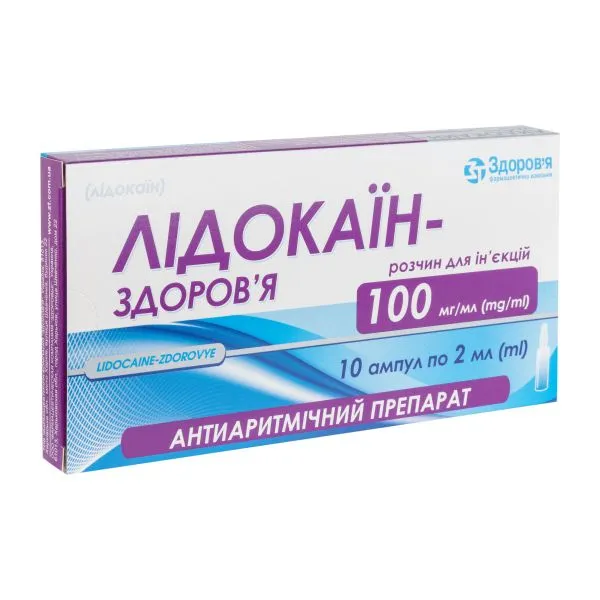
Table of Contents
INSTRUCTIONS FOR MEDICAL USE OF THE MEDICINAL PRODUCT LIDOCAINE-ZDOROVIYA
Composition:
Active substance: lidocaine;
1 ml| of solution contains| lidocaine hydrochloride | 100 mg;
Excipients: sodium hydroxide, water for injections.
Pharmaceutical form. Solution for injection.
Main physico-chemical|physico-chemical| properties: clear, colorless| or slightly colored solution.
Pharmacotherapeutic group. Agents for the treatment of cardiovascular diseases. Antiarrhythmic agents of class Ib. Lidocaine. ATC code C01BB01.
Pharmacological Properties
Pharmacodynamics. The antiarrhythmic activity of the drug is due to suppression of phase 4 (diastolic depolarization) in Purkinje fibers, reduction of automaticity, and inhibition of ectopic foci of excitation. Lidocaine suppresses electrical activity in depolarized, arrhythmogenic areas, but has minimal effect on electrical conduction in normal tissues. It either does not affect or slightly reduces the rate of rapid depolarization (phase 0). Lidocaine increases membrane permeability to potassium ions, accelerates the repolarization process of cell membranes, and shortens the duration of the action potential and effective refractory period. When administered in medium therapeutic doses, it practically does not alter myocardial contractility, does not significantly slow AV conduction, and does not markedly reduce arterial pressure. When used as an antiarrhythmic agent, intravenous administration results in onset of action within 45–90 seconds, lasting 10–20 minutes; intramuscular administration results in onset within 5–15 minutes and duration of 60–90 minutes.
Lidocaine possesses local anesthetic activity, due to neuronal membrane stabilization and decreased membrane permeability to sodium ions, thereby preventing the generation of action potentials and impulse conduction.
Pharmacokinetics. After intravenous administration, Cmax is reached within 45–90 seconds; after intramuscular administration, within 5–15 minutes. Plasma protein binding is 60–80% (depending on dose). Steady-state plasma concentration is achieved within 3–4 hours during continuous intravenous infusion (in patients with acute myocardial infarction – within 8–10 hours). The drug readily crosses histohematogenous barriers, including the blood-brain barrier. Initially, it distributes into well-perfused tissues (heart, lungs, brain, liver, spleen), followed by distribution into fat and muscle tissues. Lidocaine crosses the placenta; in newborns, concentrations reach 40–55% of those in the mother. The therapeutic plasma concentration averages 0.0035 mg/mL.
Approximately 90% of lidocaine is metabolized in the liver via oxidative N-dealkylation, forming active metabolites: monoethylglycinexylidide and glycinexylidide, with half-lives (T½) of 2 hours and 10 hours, respectively. The drug undergoes a significant first-pass effect.
The elimination half-life (T½) after intravenous bolus administration is 1.5–2 hours; during prolonged intravenous infusions, it may extend to 3 hours or more. In patients with impaired liver function, T½ may increase by more than two-fold. 5–20% of the drug is excreted unchanged in urine.
Clinical characteristics.
Indications. Ventricular arrhythmias (extrasystoles, tachycardia, flutter, fibrillation), including during the acute phase of myocardial infarction, during implantation of an artificial pacemaker, in glycoside intoxication, and under anesthesia.
Contraindications. Hypersensitivity to components of the drug or to other amide-type local anesthetics, history of epileptiform seizures or convulsions associated with lidocaine, severe bradycardia, severe or pronounced arterial hypotension, cardiogenic shock, severe forms of chronic heart failure (Class II–III), sick sinus syndrome, Wolff-Parkinson-White syndrome, Adams-Stokes syndrome, second- or third-degree atrioventricular (AV) block, hypovolemia, severe impairment of liver or kidney function, porphyria, myasthenia gravis.
Interaction with other medicinal products and other forms of interaction. When lidocaine is used concomitantly with chlorpromazine, meperidine, bupivacaine, quinidine, disopyramide, amitriptyline, imipramine, nortriptyline, the plasma concentration of lidocaine decreases.
Antiarrhythmic agents (including amiodarone, verapamil, quinidine, disopyramide, ajmaline) – enhanced cardiodepressant effect (prolongation of the QT interval may occur; in very rare cases, development of AV block or ventricular fibrillation is possible); concurrent use with amiodarone may lead to seizures.
Procaine, procainamide – possible central nervous system (CNS) excitation, delirium, hallucinations.
Curare-like agents – enhanced muscle relaxation (possible paralysis of respiratory muscles).
Ethanol potentiates the respiratory depressant effect of lidocaine.
Cimetidine reduces hepatic clearance of lidocaine (due to inhibition of microsomal oxidation), thereby decreasing its metabolism, increasing its plasma concentration, and increasing the risk of toxic effects.
β-Adrenergic blockers slow down hepatic metabolism of lidocaine, enhance its effects (including toxic effects), and increase the risk of bradycardia and arterial hypotension. When β-blockers are used concomitantly with lidocaine, the dose of lidocaine should be reduced.
Cardiac glycosides – reduced cardiotonic effect of cardiac glycosides.
Digitalis glycosides – in the setting of intoxication, lidocaine may exacerbate the severity of AV block.
Hypnotics or sedatives – possible potentiation of CNS depressant effects of hypnotics and sedatives.
Narcotic analgesics (morphine, etc.) – enhanced analgesic effect of narcotic analgesics and respiratory depression.
MAO inhibitors (furazolidone, procarbazine, selegiline) – increased risk of arterial hypotension.
Anticoagulants (including ardeparin, dalteparin, danaparoid, enoxaparin, heparin, warfarin, etc.) – increased risk of bleeding.
Anesthetic agents – enhanced respiratory depressant effect of anesthetic agents (e.g., hexobarbital, intravenous sodium thiopental).
Polymyxin B – respiratory function monitoring is required.
Rifampicin – possible reduction in rifampicin blood concentration.
Propafenone – possible increase in duration and severity of CNS-related adverse effects.
Prenylamine – increased risk of ventricular arrhythmias of the "torsades de pointes" type.
Anticonvulsants, barbiturates (phenobarbital) – possible acceleration of lidocaine metabolism in the liver, reduced blood concentration, and enhanced cardiodepressant effect.
Isadrine (isoprenaline), glucagon – increased lidocaine clearance.
Norepinephrine, mexiletine – reduced lidocaine clearance (increased toxicity); decreased hepatic blood flow.
Acetazolamide, thiazide and loop diuretics – reduced efficacy of lidocaine due to development of hypokalemia.
Midazolam – increased plasma concentration of lidocaine.
Agents causing neuromuscular blockade – enhanced effect of these agents, as they reduce nerve impulse conduction.
Special precautions for use. Lidocaine administration must be performed only by healthcare professionals.
When injection sites are disinfected with solutions containing heavy metals, the risk of local reactions such as pain and swelling increases.
ECG monitoring is required during treatment. If sinus dysfunction, prolonged PQ interval, widened QRS complex, or new arrhythmia occurs, the dose should be reduced or treatment discontinued.
Before administering lidocaine in patients with heart disease, serum potassium levels should be normalized (hypokalemia reduces lidocaine efficacy).
Use with caution and at reduced doses in patients with moderate heart failure, moderate arterial hypotension, incomplete AV block, intraventricular conduction disturbances, moderate liver or kidney dysfunction (creatinine clearance not less than 10 mL/min), respiratory impairment, epilepsy, after cardiac surgery, in patients with genetic predisposition to malignant hyperthermia, debilitated patients, and elderly patients.
Parenteral administration of lidocaine is contraindicated during treatment with MAO inhibitors.
Intramuscular administration of lidocaine may increase creatinine concentration, potentially leading to misdiagnosis of acute myocardial infarction.
This medicinal product contains less than 1 mmol (23 mg) of sodium per dose, i.e., it is practically sodium-free.
Use during pregnancy or breastfeeding. The drug is contraindicated during pregnancy. If use is necessary, breastfeeding should be discontinued.
Ability to affect reaction speed when driving or operating machinery. After administration of lidocaine, activities requiring rapid psychomotor responses should not be performed.
Administration and dosage. Administered intramuscularly, intravenously by bolus, or intravenously by infusion.
Lidocaine 10% solution is administered intramuscularly into the gluteal or deltoid muscle. Adults receive 10% solution intramuscularly at a dose of 2–4 mg/kg (maximum single dose – not more than 200 mg (2 mL)), repeated every 4–6 hours. Intramuscular administration is not recommended for children.
For intravenous bolus administration, 10% lidocaine solution diluted to a concentration of 20 mg/mL with sterile 0.9% sodium chloride solution or 5% glucose solution is used.
For intravenous infusion, a solution containing 2 mg lidocaine per 1 mL is used, prepared by diluting 2 mL (1 ampoule) of the drug in 100 mL of sterile 0.9% sodium chloride solution or 5% glucose solution. The total volume of solution administered intravenously by infusion to adults should not exceed 1200 mL per day. Intravenous infusion must be performed under continuous ECG monitoring.
Adults: For loading dose (bolus) administration, 0.5–2 mg/kg is administered intravenously over 3–4 minutes; average single dose is 80 mg, maximum single dose is 100 mg. Immediately thereafter, continuous infusion is initiated at a rate of 0.02–0.055 mg/kg/min (maximum rate – 2 mg/min) in 0.9% sodium chloride solution or 5% glucose solution (infusion is initiated only after bolus administration). Infusion may continue for 24–36 hours (until patient condition improves); duration depends on patient status and response to treatment. If infusion lasts longer than 24 hours, the infusion rate should be reduced. If necessary, during ongoing infusion, a repeat intravenous bolus of lidocaine 40 mg may be administered 10 minutes after the initial loading dose.
Maximum dose for adults: 100 mg for intravenous bolus loading dose; 300 mg (4.5 mg/kg) per hour during subsequent continuous infusion.
For elderly patients, reduce dose by 1/3.
In myocardial infarction, a single prophylactic dose before hospitalization is typically administered as 4 mg/kg body weight intramuscularly (maximum – 200–300 mg (2–3 mL of 10% solution)).
Children aged 12 years and older: Administer only in acute emergencies and with special caution; the drug is diluted as for adults. Intravenous bolus loading dose: 1 mg/kg over 5–10 minutes; repeat administration may be given after 5 minutes if needed (total dose must not exceed 3 mg/kg). For continuous intravenous infusion (usually after loading dose) – 0.02–0.03 mg/kg/min. Maximum dose for children: 3 mg/kg for repeated loading doses given at 5-minute intervals; 0.05 mg/kg/min for continuous intravenous infusion (usually after loading dose). Maximum daily dose for children – 4 mg/kg.
Children. The drug is indicated for children aged 12 years and older.
Overdose. Possible intensification of adverse reactions.
Symptoms: psychomotor agitation, dizziness, general weakness, decreased blood pressure, tremor, visual disturbances, tonic-clonic seizures, coma, collapse, AV block, asphyxia, apnea. Initial symptoms of overdose in healthy volunteers occur at blood lidocaine concentrations above 0.006 mg/kg; seizures occur at 0.01 mg/kg.
Treatment: discontinue drug administration, oxygen therapy, anticonvulsants, vasoconstrictors (norepinephrine, methoxamine), anticholinergics. The patient should be placed in a horizontal position; ensure access to fresh air, oxygen supply, and/or artificial ventilation. CNS symptoms are managed with benzodiazepines or short-acting barbiturates. If overdose occurs during anesthesia, a short-acting muscle relaxant should be used. For bradycardia and conduction disturbances, atropine (0.5–1 mg intravenously) is indicated; for arterial hypotension, sympathomimetics in combination with β-adrenergic agonists are used. In cardiac arrest, immediate resuscitation is required. Endotracheal intubation and artificial ventilation of the lungs may be necessary. Dialysis is ineffective in the acute phase of overdose. There is no specific antidote.
Adverse Reactions.
Central nervous system: CNS excitation (when used in high doses), anxiety, headache, dizziness, sleep disturbances, confusion, drowsiness, loss of consciousness, coma, sensory disturbances, motor block; in patients with increased sensitivity – euphoria, tremor, trismus, motor restlessness, paresthesia, seizures.
Eye disorders: nystagmus, reversible blindness, diplopia, flickering "floaters" before the eyes, photophobia, conjunctivitis.
Ear disorders: hearing disturbances, tinnitus, hyperacusis.
Cardiovascular system: when used in high doses – arrhythmia, bradycardia, slowed cardiac conduction, atrioventricular block, cardiac arrest, peripheral vasodilation, collapse; very rarely – tachycardia, increased/decreased arterial pressure, chest pain.
Gastrointestinal disorders: nausea, vomiting.
Respiratory system: dyspnea, rhinitis, respiratory depression or respiratory arrest.
Allergic reactions: very rarely – skin rashes, urticaria, pruritus, generalized or exfoliative dermatitis, angioedema, anaphylactic reactions (including anaphylactic shock).
Other: sensation of heat, cold or numbness in the extremities, edema, weakness, malignant hyperthermia.
Local reactions: mild burning sensation which disappears as the anesthetic effect increases (within 1 minute), hyperemia.
Shelf life. 3 years.
Storage conditions. Store in the original packaging at a temperature not exceeding 25 **○**C. Keep out of reach of children.
Incompatibility. The drug should not be mixed with other medicinal products in the same container, except for solvents specified in the section "Instructions for use and dosage". Lidocaine precipitates when mixed with amphotericin, methohexital or sulfadiazine. Depending on the pH of the solution, lidocaine may be incompatible with ampicillin.
Packaging. 2 ml in vials, 10 vials per box; 5x2, 10 in blister packs per box.
Prescription category. Prescription only.
Manufacturer. LIMITED LIABILITY COMPANY "CORPORATION "ZDOROV'YA".
Manufacturer's address and place of business. Ukraine, 61013, Kharkiv region, city of Kharkiv, Shevchenko street, building 22.