Levomekol
Ukraine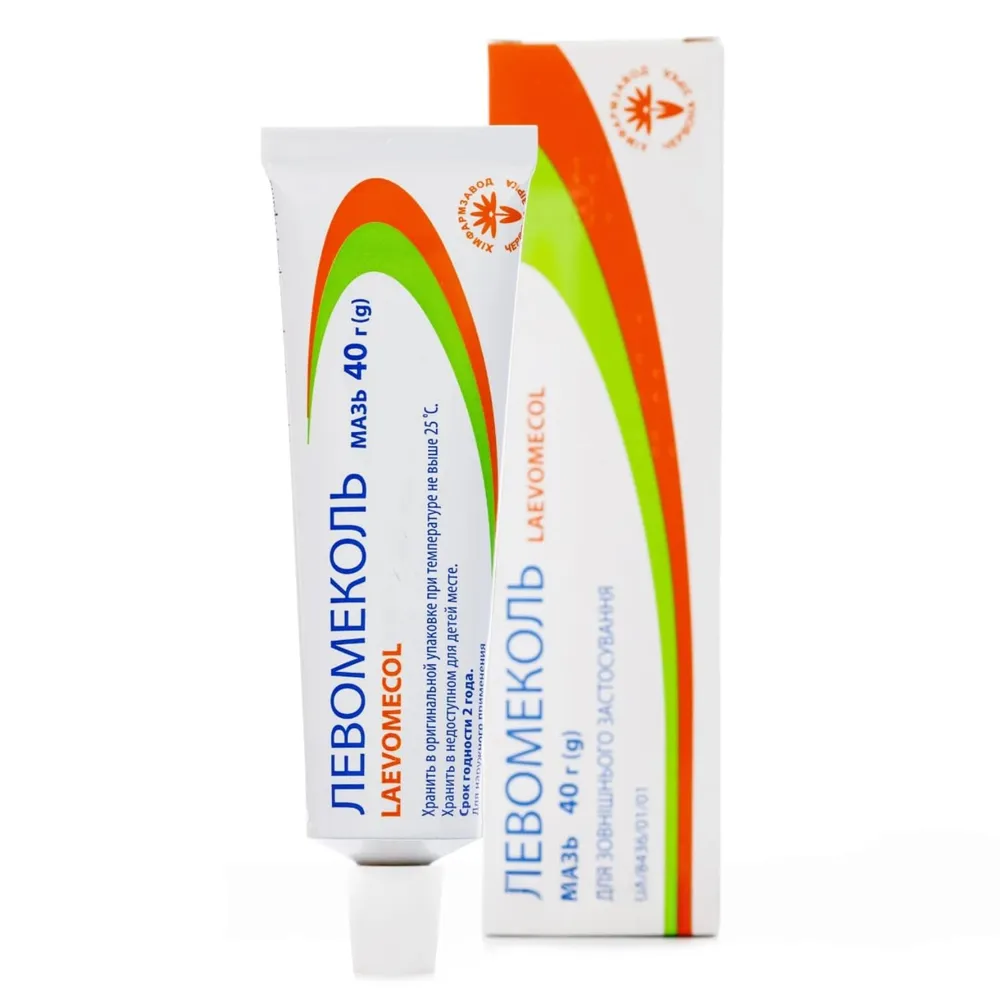
Table of Contents
INSTRUCTIONS for medical use of the medicinal product LEVOMEKOL (Laevomekol)
Composition:
Active substances: chloramphenicol, methyluracil;
1 g of ointment contains chloramphenicol, calculated as 100% dry substance – 7.5 mg; methyluracil, calculated as 100% dry substance – 40 mg;
Excipients: polyethylene glycol 1500, polyethylene glycol 400.
Pharmaceutical form. Ointment.
Main physicochemical properties: suspension ointment of white or white with a yellowish tint color.
Pharmaco-therapeutic group.
Agents for treatment of wounds and ulcerative lesions.
ATC code D03A X.
Pharmacological Properties
Pharmacodynamics
A combined medication for topical use with antimicrobial, regenerative, and anti-inflammatory effects.
Chloramphenicol (chloromycetin) included in the formulation exerts antimicrobial action, the mechanism of which is associated with inhibition of microbial protein synthesis. It acts bacteriostatically and is active against both gram-positive and gram-negative microorganisms (staphylococci, streptococci, Pseudomonas aeruginosa, and Escherichia coli).
Methyluracil accelerates cellular regeneration processes, promotes wound healing, and exerts anti-inflammatory effects.
The polyethylene oxide base absorbs wound exudate and enhances the activity of active pharmaceutical ingredients.
Pharmacokinetics
The medication readily penetrates tissues without damaging biological membranes; however, the extent of systemic absorption following application to the skin, wounds, or mucous membranes is unknown.
Clinical characteristics.
Indications.
Treatment of purulent wounds (including those infected with mixed microflora) in the first phase of the wound process, trophic ulcers, pressure sores, infected burns, furuncles, carbuncles.
Contraindications.
Hypersensitivity to the components of the medicinal product; psoriasis, eczema, fungal lesions.
Interaction with other medicinal products and other types of interactions.
Concomitant use with hematopoiesis-suppressing agents (sulfonamides, cytostatics, pyrazoline derivatives), diphenyl, barbiturates, and ethanol is not recommended.
Simultaneous use of the product with erythromycin, oleandomycin, nystatin, and levorin enhances the antibacterial activity of the liniment, whereas concomitant use with benzylpenicillin salts reduces it.
Special precautions for use.
The use of topical antibacterial agents may lead to skin sensitization, accompanied by the development of hypersensitivity reactions upon subsequent use of this drug either topically or in systemically acting dosage forms.
Antibacterial activity of the drug is preserved in the presence of purulent or necrotic material.
When the drug is used long-term (longer than 1 month), monitoring of peripheral blood parameters is necessary.
Do not violate the recommended rules for using the medicinal product. Avoid getting the ointment into the eyes.
Use during pregnancy or breastfeeding.
The use of the medicinal product during pregnancy or breastfeeding is justified only if the expected benefit to the mother outweighs the potential risk to the fetus or infant.
Ability to influence reaction rate when driving or operating machinery.
The drug does not affect the ability to drive or operate machinery.
Method of administration and dosage.
Levomekol ointment is intended for topical use in adults and children aged 3 years and older.
Soak sterile gauze pads with the ointment and apply them to the wound. The ointment may also be introduced into purulent cavities through a catheter (drainage tube) using a syringe. In such cases, Levomekol ointment should be pre-warmed to 35–36 °C. Dressings should be changed daily until wounds are completely cleared of purulent-necrotic material and begin to granulate. When treating large wound surfaces, the daily dose of ointment, calculated as chloramphenicol (chloromycetin), must not exceed 3 g.
Apply the ointment starting from the first day of injury for up to 4 days. Hyperosmolar Levomekol ointment should not be used for prolonged periods, as it may cause osmotic shock in healthy, non-damaged cells. On days 5–7 of treatment, it is recommended to switch to medications that promote restoration of damaged tissue integrity.
Children.
Do not use in children under 3 years of age.
Overdose.
Cases of overdose are unknown. When Levomekol ointment is used according to the provided recommendations, overdose is not possible. However, prolonged (more than 5–7 days) topical use often leads to contact sensitization, which may result in hypersensitivity reactions upon subsequent external application or systemic use of the drug. Treatment is symptomatic.
Side effects.
General weakness and allergic reactions may occur, including skin rashes, itching, dermatitis, local swelling, urticaria, burning sensation, hyperemia, angioneurotic edema, and other signs not observed prior to treatment. In such cases, application of the ointment should be discontinued.
Shelf life.
3 years.
Do not use the medicinal product after the expiry date stated on the package.
Storage conditions.
Store in the original packaging at a temperature not exceeding 25 ºC.
Keep out of reach of children.
Packaging.
40 g in a tube. 1 tube in a carton.
Supply category.
Over-the-counter.
Manufacturer: JSC "Farmak".
Manufacturer's address and place of business.
74, Kyrylivska Street, Kyiv, 04080, Ukraine.