Levofloxacin euro
Ukraine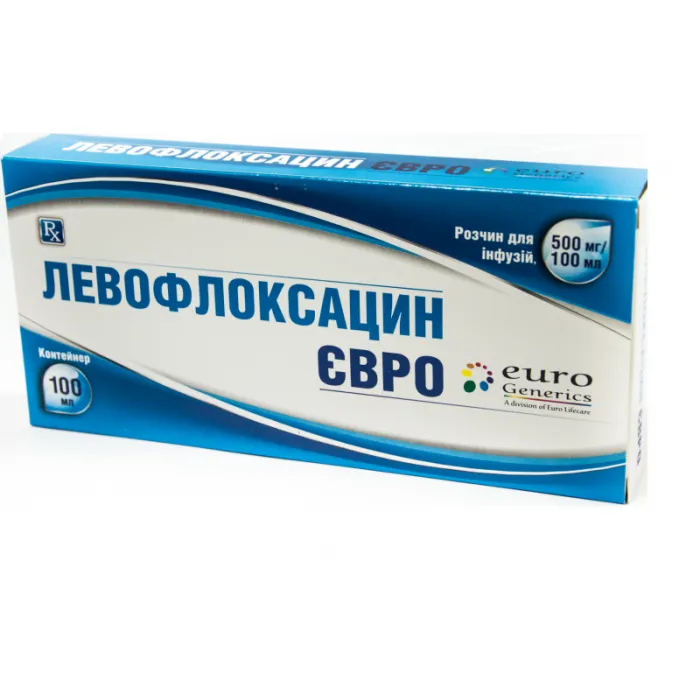
Table of Contents
INSTRUCTION FOR MEDICAL USE OF THE MEDICINAL PRODUCT LEVOFLOXACIN EURO (LEVOFLOXACIN EURO)
Composition:
Active substance: levofloxacin;
100 ml of solution contains levofloxacin hemihydrate equivalent to 500 mg of levofloxacin;
Excipients: sodium chloride, disodium edetate, hydrochloric acid diluted, sodium hydroxide, water for injections.
Pharmaceutical form. Infusion solution.
Main physicochemical properties: clear solution, yellow to greenish-yellow in color.
Pharmacotherapeutic group.
Antibacterial agents of the quinolone group. Fluoroquinolones.
ATC code J01MA12.
Pharmacological properties.
Pharmacodynamics.
Levofloxacin is a synthetic antibacterial agent from the fluoroquinolone group, the S(-) enantiomer of the racemic mixture of the drug ofloxacin.
Mechanism of action. Levofloxacin, as a fluoroquinolone antibacterial agent, acts on the DNA gyrase and topoisomerase IV complex.
Pharmacokinetic/pharmacodynamic relationship. The degree of antibacterial activity of levofloxacin depends on the ratio of the maximum serum concentration (Cmax) or the area under the concentration-time curve (AUC) to the minimum inhibitory (suppressive) concentration (MIC).
Mechanism of resistance. The primary mechanism of resistance results from mutations in the gyr-A genes. In vitro, cross-resistance exists between levofloxacin and other fluoroquinolones. Due to its mechanism of action, cross-resistance between levofloxacin and other classes of antibacterial agents is generally not observed.
Clinical breakpoints. The recommended breakpoints for levofloxacin MIC values, as defined by the European Committee on Antimicrobial Susceptibility Testing (EUCAST), which distinguish susceptible microorganisms from moderately susceptible (intermediate) and resistant organisms, are listed in Table 1.
Table 1
Clinical breakpoints for levofloxacin MIC (version 10.0, 01-01-2020)
| Pathogen |
Susceptible |
Resistant |
| Enterobacteriaceae |
≤ 0.5 mg/L |
> 1 mg/L |
| Pseudomonas spp. |
≤ 0.001 mg/L |
> 1 mg/L |
| Acinetobacter spp. |
≤ 0.5 mg/L |
> 1 mg/L |
| Staphylococcus spp. coagulase-negative |
≤ 0.001 mg/L |
> 1 mg/L |
| Enterococcus spp.1 |
≤ 4 mg/L |
> 4 mg/L |
| S. pneumoniae |
≤ 0.001 mg/L |
> 2 mg/L |
| Streptococcus A, B, C, G |
≤ 0.001 mg/L |
> 2 mg/L |
| H. influenzae |
≤ 0.06 mg/L |
> 0.06 mg/L |
| M. catarrhalis |
≤ 0.125 mg/L |
> 0.125 mg/L |
| Helicobacter pylori |
≤ 1 mg/L |
> 1 mg/L |
| Aerococcus sanguinicola and urinae2 |
≤ 2 mg/L |
> 2 mg/L |
| Aeromonas spp. |
≤ 0.5 mg/L |
> 1 mg/L |
| Pharmacokinetic/pharmacodynamic breakpoints (non-species related) |
≤ 0.5 mg/L |
> 1 mg/L |
1 Only uncomplicated urinary tract infections.
2 Susceptibility depends on sensitivity to ciprofloxacin.
Resistance prevalence may vary geographically and over time for individual species. Local information on resistance should be obtained, especially when treating severe infections. Advice from a specialist should be sought when local resistance prevalence is such that the benefit of the agent is at least questionable for certain types of infections.
Typically sensitive species
Aerobic Gram-positive bacteria:
Bacillus anthracis, Staphylococcus aureus methicillin-sensitive*, Staphylococcus saprophyticus, Streptococci,* groups C and G, Streptococcus agalactiae, Streptococcus pneumoniae, Streptococcus pyogenes.
Aerobic Gram-negative bacteria:
Eikenella corrodens, Haemophilus influenzae, Haemophilus para-influenzae, Klebsiella oxytoca, Moraxella catarrhalis, Pasteurella multocida, Proteus vulgaris, Providencia rettgeri.
Anaerobic bacteria:
Peptostreptococcus.
Others:
Chlamydophila pneumoniae, Chlamydophila psittaci, Chlamydia trachomatis, Legionella pneumophila, Mycoplasma pneumoniae, Mycoplasma hominis, Ureaplasma urealyticum.
Species capable of developing resistance
Aerobic Gram-positive bacteria:
Enterococcus faecalis, Staphylococcus aureus methicillin-resistant*, coagulase-negative Staphylococcus spp.
Aerobic Gram-negative bacteria:
Acinetobacter baumannii, Citrobacter freundii, Enterobacter aerogenes, Enterobacter cloacae, Escherichia coli, Klebsiella pneumoniae, Morganella morganii, Proteus mirabilis, Providencia stuartii, Pseudomonas aeruginosa, Serratia marcescens.
Anaerobic bacteria:
Bacteroides fragilis.
Naturally resistant strains
Aerobic Gram-positive bacteria:
Enterococcus faecium
* Methicillin-resistant Staphylococcus aureus is likely to be cross-resistant to fluoroquinolones, including levofloxacin.
Pharmacokinetics.
Absorption
Levofloxacin is rapidly and almost completely absorbed after oral administration, with peak plasma concentrations reached within 1–2 hours. Absolute bioavailability is approximately 99–100%.
Food has minimal effect on levofloxacin absorption.
Steady-state concentrations are achieved within 48 hours with a dosing regimen of 500 mg once or twice daily.
Distribution
Approximately 30–40% of levofloxacin is protein-bound in plasma. The mean volume of distribution of levofloxacin is approximately 100 L after single and repeated 500 mg doses, indicating extensive tissue distribution throughout the body.
Penetration into tissues and body fluids
Levofloxacin penetrates well into bronchial mucosa, epithelial lining fluid, alveolar macrophages, lung tissue, skin (vesicle content), prostate tissue, and urine. However, levofloxacin penetrates poorly into cerebrospinal fluid.
Biotransformation
Levofloxacin undergoes minimal metabolism, with metabolites being desmethyl-levofloxacin and levofloxacin N-oxide. These metabolites account for less than 5% of the administered dose excreted in urine. Levofloxacin is stereochemically stable and does not undergo chiral inversion.
Elimination
After both oral and intravenous administration, levofloxacin is eliminated from plasma relatively slowly (elimination half-life of 6–8 hours). Elimination occurs primarily via the kidneys (over 85% of the administered dose). Total clearance of levofloxacin after a single 500 mg dose was 175±29.2 mL/min. There is no significant difference in the pharmacokinetics of levofloxacin after intravenous and oral administration, indicating interchangeability of these routes (oral and intravenous).
Linearity
Levofloxacin exhibits linear pharmacokinetics over the dose range of 50–1000 mg.
Special patient groups
Patients with renal impairment
Renal function impairment affects the pharmacokinetics of levofloxacin. With decreased renal function, renal elimination and clearance are reduced, and elimination half-life is prolonged, as shown in the table below (Table 2).
Table 2
Pharmacokinetics in renal impairment after a single oral 500 mg dose
| Creatinine clearance (mL/min) |
< 20 |
20–49 |
50–80 |
| Renal clearance (mL/min) |
13 |
26 |
57 |
| Elimination half-life (hours) |
35 |
27 |
9 |
Geriatric Patients
There are no significant differences in the pharmacokinetics of levofloxacin in younger and elderly patients, except for differences related to creatinine clearance.
Gender Differences
Separate analysis of male and female patients demonstrated minor differences in levofloxacin pharmacokinetics depending on gender. There is no evidence that these gender differences are clinically significant.
Clinical characteristics.
Indications.
Infections caused by microorganisms sensitive to the drug:
- Community-acquired pneumonia*;
- Complicated skin and soft tissue infections*;
- Acute pyelonephritis and complicated urinary tract infections;
- Chronic bacterial prostatitis;
- Pulmonary form of anthrax: post-exposure prophylaxis and treatment.
*For the above-mentioned infections, levofloxacin should be used only when other antibacterial agents, typically recommended for initial treatment of these infections, are inappropriate or not feasible.
Official guidelines on the proper use of antibacterial agents should be taken into account.
Contraindications.
- Hypersensitivity to levofloxacin, other fluoroquinolones, or to any other component of the drug;
- Epilepsy;
- Tendon damage associated with prior use of fluoroquinolones;
- Pregnancy or breastfeeding;
- Pediatric age (under 18 years).
Interaction with other medicinal products and other forms of interaction.
Effect of other medicinal products on levofloxacin
Theophylline, fenbufen, or similar nonsteroidal anti-inflammatory drugs
No pharmacokinetic interaction between levofloxacin and theophylline has been observed. However, a significant reduction in seizure threshold may occur with concomitant administration of quinolones and theophylline, nonsteroidal anti-inflammatory drugs, and other substances that lower the seizure threshold. The concentration of levofloxacin is approximately 13% higher when administered with fenbufen than when levofloxacin is administered alone.
Probenecid and cimetidine
Probenecid and cimetidine have a statistically significant effect on the elimination of levofloxacin. Renal clearance of levofloxacin is reduced by 24% with cimetidine and by 34% with probenecid. This is because both drugs can block the tubular secretion of levofloxacin. However, at the doses tested in clinical studies, statistically significant kinetic differences are unlikely to have clinical relevance. Concomitant administration of levofloxacin with medicinal products affecting tubular secretion, such as probenecid and cimetidine, should be approached with caution, especially in patients with renal impairment.
Other information
The following medicinal products do not cause any clinically significant effect on the pharmacokinetics of levofloxacin when administered concomitantly: calcium carbonate, digoxin, glyburide, ranitidine.
Effect of levofloxacin on other medicinal products
Cyclosporine
The elimination half-life of cyclosporine increases by 33% when administered concomitantly with levofloxacin.
Vitamin K antagonists
When used concomitantly with vitamin K antagonists (e.g., warfarin), increases in coagulation parameters (prothrombin time/international normalized ratio) and/or bleeding events, which may be severe, have been reported. Therefore, in patients receiving concomitant vitamin K antagonists, coagulation parameters should be monitored (see section "Special precautions for use").
MEDICINAL PRODUCTS THAT PROLONG THE QТ INTERVAL
Levofloxacin, like other fluoroquinolones, should be used with caution in patients receiving medicinal products known to prolong the QT interval (e.g., class IA and III antiarrhythmics, tricyclic antidepressants, macrolides, and antipsychotic agents) (see section "Special precautions for use" (QT interval prolongation)).
Other significant information
No effect of levofloxacin on the pharmacokinetics of theophylline (a substrate of CYP1A2 enzyme) has been observed, indicating that levofloxacin is not an inhibitor of CYP1A2.
Concomitant use of levofloxacin with alcohol is not recommended.
Special precautions for use.
The use of the medicinal product should be avoided in patients who have previously experienced serious adverse reactions to quinolones or fluoroquinolones. Treatment of these patients with levofloxacin should only be initiated if there are no alternative treatment options and after careful benefit/risk assessment.
Aneurysm and dissection of the aorta, and valvular regurgitation/insufficiency.
Epidemiological studies have reported an increased risk of aortic aneurysm and dissection, particularly in elderly patients, as well as regurgitation of the aortic and mitral valves following fluoroquinolone use.
Cases of aortic aneurysm and dissection, sometimes complicated by rupture (including fatal cases), and regurgitation/insufficiency of any cardiac valve have been reported in patients receiving fluoroquinolones (see section "Adverse reactions").
Therefore, fluoroquinolones should only be used after careful benefit/risk assessment and consideration of alternative therapeutic options in patients with a family history of aneurysm or congenital heart valve defects, in patients with a confirmed diagnosis of aneurysm and/or aortic dissection or with heart valve disease, and in patients with other risk factors, such as:
- Risk factors for both aortic aneurysm/dissection and valvular regurgitation/insufficiency: connective tissue disorders such as Marfan syndrome or Ehlers-Danlos syndrome, Turner syndrome, Behçet’s disease, hypertension, rheumatoid arthritis;
- Risk factors for aortic aneurysm and dissection: vascular disorders such as Takayasu arteritis or giant cell arteritis, atherosclerosis, Sjögren’s syndrome;
- Risk factors for valvular regurgitation/insufficiency: infective endocarditis.
The risk of aortic aneurysm, dissection, and rupture is increased in patients receiving systemic corticosteroids concomitantly.
In case of sudden abdominal, chest, or back pain, patients should seek immediate medical attention at an emergency department.
Patients should be advised to seek immediate medical help if they experience acute shortness of breath, new onset palpitations, or develop abdominal or lower limb swelling.
Resistance risks
Methicillin-resistant Staphylococcus aureus (MRSA) is often also resistant to fluoroquinolones, including levofloxacin. Therefore, levofloxacin is not recommended for treatment of infections where MRSA is known or suspected, except when laboratory test results confirm susceptibility of the pathogen to levofloxacin.
Resistance to fluoroquinolones in Escherichia coli, the most common cause of urinary tract infections, varies across different countries. Local prevalence of fluoroquinolone resistance in E. coli should be considered when prescribing fluoroquinolones.
Pulmonary anthrax
Clinical experience is based on in vitro susceptibility studies of Bacillus anthracis, as well as experimental animal data together with limited human data. Physicians should refer to established national and/or international guidelines for the treatment of anthrax.
Infusion duration
The recommended infusion duration should be at least 30 minutes for 250 mg or 60 minutes for 500 mg of levofloxacin infusion solution. Tachycardia and transient decrease in blood pressure may occur during levofloxacin infusion. Rarely, severe hypotension may lead to cardiovascular failure. If a significant drop in blood pressure occurs during infusion of levofloxacin (L-isomer of ofloxacin), administration of the drug must be immediately discontinued.
Tendinitis and tendon rupture
Tendinitis may occur in individual patients. Development of tendinitis and tendon rupture (particularly, but not limited to, Achilles tendon), sometimes bilateral, may occur within the first 48 hours of initiating quinolone or fluoroquinolone therapy, and cases have also been reported several months after discontinuation of the drug. The risk of tendinitis and tendon rupture is increased in elderly patients, patients with renal impairment, patients who have undergone solid organ transplantation, patients receiving a daily dose of 1000 mg levofloxacin, and patients receiving concomitant corticosteroid therapy. Therefore, concomitant use of corticosteroids should be avoided.
At the first signs of tendinitis (e.g., painful swelling, inflammation), levofloxacin therapy should be discontinued immediately and alternative treatment options considered. Affected limbs should be appropriately managed (e.g., immobilization). Corticosteroids are not recommended in cases of tendonopathy.
Myoclonus
Cases of myoclonus have been reported in patients treated with levofloxacin (see section "Adverse reactions"). The risk of myoclonus is increased in elderly patients and in patients with renal impairment if the levofloxacin dose is not adjusted according to creatinine clearance. Levofloxacin should be discontinued immediately at the first sign of myoclonus, and appropriate treatment initiated.
Clostridium difficile-associated disease
Diarrhea, especially severe, persistent, or with blood, during or after levofloxacin treatment (including several weeks after treatment) may be a symptom of Clostridium difficile-associated disease (CDAD), which may range in severity from mild to life-threatening. The most severe form is pseudomembranous colitis. If pseudomembranous colitis is suspected, levofloxacin should be immediately discontinued and symptomatic and specific treatment (e.g., vancomycin) initiated without delay. In such cases, drugs that inhibit intestinal motility are contraindicated.
Patients predisposed to seizures
Quinolones may lower the seizure threshold and provoke seizures. Levofloxacin is contraindicated in patients with a history of epilepsy (see section "Contraindications"). As with other quinolones, it should be used with extreme caution in patients predisposed to seizures, such as those with pre-existing central nervous system disorders, or those receiving concomitant therapy with fenbufen or similar nonsteroidal anti-inflammatory drugs, or drugs that increase seizure susceptibility (lower seizure threshold), such as theophylline (see section "Interaction with other medicinal products and other forms of interaction"). If a seizure occurs (see section "Adverse reactions"), levofloxacin should be discontinued.
Patients with glucose-6-phosphate dehydrogenase deficiency
Patients with latent or manifest deficiency in glucose-6-phosphate dehydrogenase activity may be predisposed to hemolytic reactions when treated with quinolone antibiotics. Therefore, if levofloxacin must be used in such patients, monitoring for possible hemolysis is required.
Patients with renal impairment
Since levofloxacin is primarily excreted by the kidneys, dose adjustment is necessary in patients with impaired renal function (renal insufficiency) (see section "Method of administration and dosage").
Hypersensitivity reactions
Levofloxacin may cause serious, potentially fatal hypersensitivity reactions (e.g., from angioneurotic edema to anaphylactic shock), sometimes after the first dose (see section "Adverse reactions"). If hypersensitivity reactions occur, levofloxacin should be immediately discontinued, medical advice sought, and appropriate treatment initiated.
Severe bullous reactions
Severe skin adverse reactions have been reported with levofloxacin, including toxic epidermal necrolysis (TEN, also known as Lyell’s syndrome), Stevens-Johnson syndrome (SJS), and drug reaction with eosinophilia and systemic symptoms (DRESS syndrome), which may be life-threatening or fatal (see section "Adverse reactions").
Patients should be informed about the signs and symptoms of severe skin reactions that may occur after administration of the medicinal product and should be closely monitored. If signs or symptoms suggestive of these reactions appear, levofloxacin should be immediately discontinued and alternative therapy considered.
If a patient develops a serious reaction such as SJS, TEN, or DRESS syndrome after levofloxacin administration, levofloxacin therapy should never be prescribed to this patient again.
Disturbances in blood glucose
As with other quinolones, cases of blood glucose disturbances, including both hypoglycemia and hyperglycemia, have been reported, usually in diabetic patients receiving concomitant therapy with oral hypoglycemic agents (e.g., glyburide) or insulin. Cases of hypoglycemic coma have been reported. In diabetic patients, careful monitoring of blood glucose levels is recommended (see section "Adverse reactions").
If a patient reports abnormal blood glucose levels, treatment should be immediately discontinued and alternative antibacterial therapy with non-fluoroquinolone agents considered.
Phototoxicity prevention
Cases of photosensitivity have been reported with levofloxacin (see section "Adverse reactions"). To prevent photosensitivity, patients should avoid unnecessary exposure to strong sunlight or artificial UV radiation (e.g., UV lamps, sunbeds) during treatment and for 48 hours after discontinuation of levofloxacin.
Patients receiving vitamin K antagonists
Due to possible increases in coagulation parameters (prothrombin time/international normalized ratio) and/or increased frequency of hemorrhagic complications in patients receiving levofloxacin in combination with vitamin K antagonists (e.g., warfarin), coagulation parameters should be monitored when these medicinal products are used concomitantly (see section "Interaction with other medicinal products and other forms of interaction").
Psychotic reactions
Psychotic reactions have been reported in patients taking quinolones, including levofloxacin. Very rarely, these progressed to suicidal thoughts and self-harming behavior, sometimes after only a single dose of levofloxacin (see section "Adverse reactions"). If such reactions occur, levofloxacin should be discontinued and appropriate measures taken. Caution is recommended when prescribing levofloxacin to patients with psychotic disorders or a history of psychiatric illness.
QT interval prolongation
Fluoroquinolones, including levofloxacin, should be used with caution in patients with known risk factors for QT interval prolongation, such as:
- Congenital or acquired long QT syndrome;
- Concomitant use of medicinal products known to prolong the QT interval (e.g., class IA and III antiarrhythmics, tricyclic antidepressants, macrolides, antipsychotics);
- Electrolyte imbalances (e.g., hypokalemia, hypomagnesemia);
- Cardiac diseases (e.g., heart failure, myocardial infarction, bradycardia) (see sections "Interaction with other medicinal products and other forms of interaction", "Method of administration and dosage (Elderly patients)", "Overdose", "Adverse reactions");
- Elderly patients and younger women may be more sensitive to drugs that prolong the QT interval. Therefore, fluoroquinolones, including levofloxacin, should be used with caution in these patient groups.
Peripheral neuropathy
Cases of sensory or sensorimotor peripheral neuropathy, leading to paresthesia, hypoesthesia, dysesthesia, or weakness, have been reported in patients receiving fluoroquinolones, including levofloxacin. Levofloxacin should be discontinued if symptoms of neuropathy such as pain, burning, tingling, numbness, or weakness occur, to prevent irreversible damage.
Hepatobiliary disorders
Cases of necrotizing hepatitis up to hepatic failure with fatal outcome have been reported with levofloxacin (mainly in patients with severe underlying conditions such as sepsis) (see section "Adverse reactions"). Patients should be advised to discontinue treatment and consult a physician if symptoms of liver disease occur, such as anorexia, jaundice, dark urine, pruritus, or abdominal pain.
Acute pancreatitis
Acute pancreatitis may occur in patients taking levofloxacin. Patients should be informed about the typical symptoms of acute pancreatitis. Patients who develop nausea, malaise, abdominal discomfort, severe abdominal pain, or vomiting should be examined immediately by a physician. If acute pancreatitis is suspected, levofloxacin should be discontinued, and if confirmed, treatment with levofloxacin should not be resumed. Caution is required when treating patients with a history of pancreatitis (see section "Adverse reactions").
Blood system disorders
Bone marrow suppression, including leukopenia, neutropenia, pancytopenia, hemolytic anemia, thrombocytopenia, aplastic anemia, or agranulocytosis, may occur during levofloxacin treatment (see section "Adverse reactions").
If any of these blood disorders are suspected, blood parameters should be monitored. If abnormalities are detected, discontinuation of levofloxacin therapy should be considered.
Prolonged, disabling, and potentially irreversible serious adverse reactions
In very rare cases, prolonged (lasting months or years), disabling, and potentially irreversible serious adverse reactions affecting various systems, sometimes multiple systems simultaneously (e.g., musculoskeletal, nervous, psychiatric, and sensory organs), have been reported in patients receiving quinolones and fluoroquinolones, regardless of age or risk factors. The drug should be immediately discontinued at the first sign or symptom of any serious adverse reaction, and medical advice sought.
Exacerbation of myasthenia gravis
Fluoroquinolones, including levofloxacin, have neuromuscular blocking effects and may exacerbate muscle weakness in patients with myasthenia gravis. In the post-marketing period, serious adverse reactions, including fatalities and cases requiring respiratory support, have been associated with fluoroquinolone use in patients with myasthenia gravis. Levofloxacin is not recommended for use in patients with a history of myasthenia gravis.
Visual disturbances
If any visual disturbances or ocular adverse reactions occur during levofloxacin therapy, patients should immediately consult an ophthalmologist (see sections "Ability to influence reaction rate when driving or operating machinery", "Adverse reactions").
Superinfection
The use of levofloxacin, especially prolonged use, may lead to overgrowth of microorganisms resistant to the drug. If superinfection develops during therapy, appropriate measures should be taken.
Effect on laboratory test results
In patients receiving levofloxacin, urine opiate screening may yield false-positive results. Confirmation of positive opiate test results obtained by screening tests may be necessary using more specific methods.
Levofloxacin may inhibit the growth of Mycobacterium tuberculosis, potentially leading to false-negative results in bacteriological diagnosis of tuberculosis.
Excipients
This medicinal product contains 15.4 mmol (355 mg) of sodium per 100 ml of solution. Caution is advised when administering to patients on a sodium-restricted diet.
Use during pregnancy or breastfeeding.
Pregnancy.
Data on the use of levofloxacin in pregnant women are limited.
Due to the lack of human studies and the potential for quinolones to damage growing cartilage, levofloxacin is contraindicated in pregnant women. If pregnancy occurs during treatment, the patient should inform her physician.
Breastfeeding.
Levofloxacin is contraindicated during breastfeeding. Information on the excretion of levofloxacin into breast milk is insufficient, although other fluoroquinolones are excreted in breast milk. Due to the lack of human studies and the potential for fluoroquinolones to damage growing cartilage, levofloxacin should not be administered to breastfeeding women.
Fertility. Levofloxacin did not impair fertility or reproductive function in animal studies.
Ability to influence reaction rate when driving or operating machinery.
The medicinal product has a negligible or moderate effect on the ability to drive or operate machinery. Some adverse reactions (e.g., dizziness/vertigo, somnolence, visual disturbances) may impair the patient’s ability to concentrate and reaction speed, thereby increasing the risk in situations where these abilities are particularly important (e.g., driving or operating machinery).
Dosage and Administration
Levofloxacin for infusion solution should be administered slowly by intravenous infusion once or twice daily. The dosage depends on the type and severity of infection, as well as on the susceptibility of the likely causative organism. The initial intravenous administration of levofloxacin may be switched to appropriate oral administration according to the instructions for medical use of the medicinal product in the form of film-coated tablets, depending on the patient's condition. Due to the bioequivalence of oral and parenteral forms, the dosage may be the same.
Administration method
The following dosage regimens are recommended for administration of levofloxacin:
Dosage for patients with normal renal function (creatinine clearance > 50 mL/min)
Table 3
| Indications |
Daily dosage (according to severity) |
Total duration of treatment1 |
| Community-acquired pneumonia |
500 mg once or twice daily |
7–14 days |
| Pyelonephritis |
500 mg once daily |
7–10 days |
| Complicated urinary tract infections |
500 mg once daily |
7–14 days |
| Chronic bacterial prostatitis |
500 mg once daily |
28 days |
| Complicated skin and soft tissue infections |
500 mg once or twice daily |
7–14 days |
| Pulmonary form of anthrax |
500 mg once daily |
8 weeks |
1The duration of treatment includes both intravenous and oral administration. The time to switch from intravenous to oral administration depends on the clinical condition, but usually takes from 2 to 4 days.
Dosing for adult patients with renal function impairment,
in whom creatinine clearance < 50 mL/min
Table 4
| Dosing regimen |
|||
| 250 mg/24 hours |
500 mg/24 hours |
500 mg/12 hours |
|
| Creatinine clearance |
first dose: 250 mg |
first dose: 500 mg |
first dose: 500 mg |
| 50–20 mL/min |
then: 125 mg/ 24 hours |
then: 250 mg/ 24 hours |
then: 250 mg/ 12 hours |
| 19–10 mL/min |
then: 125 mg/ 48 hours |
then: 125 mg/ 24 hours |
then: 125 mg/ 12 hours |
| < 10 mL/min (including hemodialysis and CAPD)1 |
then: 125 mg/ 48 hours |
then: 125 mg/ 24 hours |
then: 125 mg/ 24 hours |
1 After hemodialysis or chronic ambulatory peritoneal dialysis (CAPD), additional doses are not required.
Dosage in patients with hepatic impairment
Dose adjustment is not necessary, since levofloxacin is minimally metabolized in the liver and is primarily excreted by the kidneys.
Dosage in elderly patients
If renal function is not impaired, dose adjustment is not required.
Method of administration
Levofloxacin, solution for infusion, is intended only for slow intravenous infusion. The solution should be administered once or twice daily. The infusion time for levofloxacin should be at least 30 minutes for the 250 mg dose or 60 minutes for the 500 mg dose (see section "Special precautions for use***"***).
The medicinal product should be used immediately (within 3 hours) after perforation of the rubber stopper to prevent bacterial contamination. Protection from light during infusion is not required. The medicinal product is intended for single use only.
The solution should be inspected visually before use. Only clear, particle-free solutions should be used.
Any unused medicinal product should be disposed of in accordance with current requirements.
Mixing with other infusion solutions
The medicinal product is compatible with the following infusion solutions:
- 0.9% sodium chloride solution;
- 5% glucose solution for injection;
- 2.5% glucose in Ringer's solution;
- combined parenteral nutrition solutions (amino acids, glucose, electrolytes).
For incompatibilities, see section "Incompatibilities".
Children.
Levofloxacin is contraindicated in children and adolescents.
Overdose.
According to toxicity studies in animals and clinical or pharmacological studies conducted with doses higher than therapeutic, the most serious signs expected after acute overdose of levofloxacin solution for infusion are CNS symptoms such as confusion, dizziness, disturbances of consciousness, convulsive seizures, and QT interval prolongation.
During post-marketing surveillance, the following CNS adverse effects have been observed: confusion, convulsions, myoclonus, hallucinations, and tremor.
Treatment. In cases of overdose, symptomatic treatment should be administered. ECG monitoring should be performed due to the potential for QT interval prolongation. Hemodialysis, including peritoneal dialysis and chronic ambulatory peritoneal dialysis (CAPD), is not effective in removing levofloxacin from the body. There are no specific antidotes.
Adverse reactions.
The adverse reactions listed below are classified by organ systems and frequency: very common (≥1/10), common (≥1/100, <1/10), uncommon (≥1/1000, <1/100), rare (≥1/10000, <1/1000), frequency not known (frequency cannot be estimated based on available data). Within each frequency group, adverse events are listed in decreasing order of frequency.
Table 5
| Classes and Systems |
Common |
Uncommon |
Rare |
Frequency not known |
| Infections and infestations |
fungal infections, including infections caused by Candida species; resistance of pathogenic microorganisms |
|||
| Blood and lymphatic system disorders |
leukopenia, eosinophilia |
thrombocytopenia, neutropenia |
bone marrow dysfunction (including aplastic anemia), pancytopenia, agranulocytosis, hemolytic anemia |
|
| Immune system disorders |
angioneurotic edema, hypersensitivity |
anaphylactic shock1 anaphylactoid shock1 |
||
| Metabolism and nutrition disorders |
anorexia |
hypoglycemia, especially in patients with diabetes mellitus |
hyperglycemia, hypoglycemic coma |
|
| Psychiatric disorders* |
insomnia |
anxiety, confusion, nervousness |
psychotic reactions (e.g., with hallucinations, paranoia), depression, agitation, sleep disturbances, nightmares |
psychotic disorders with behavior dangerous to the patient, including suicidal thoughts or suicide attempts, mania |
| Nervous system disorders* |
headache, dizziness |
drowsiness, tremor, dysgeusia |
seizures, paraesthesia |
peripheral sensory neuropathy, peripheral sensory-motor neuropathy, parosmia, including anosmia, dyskinesia, extrapyramidal disorders, ageusia, loss of consciousness, benign intracranial hypertension, myoclonus |
| Eye disorders* |
vision disorders, such as blurred vision |
transient loss of vision, uveitis |
||
| Ear and labyrinth disorders* |
vertigo |
tinnitus |
hearing loss, worsening of hearing |
|
| Cardiac disorders** |
phlebitis |
tachycardia, palpitations, hypotension |
ventricular tachycardia, which may lead to cardiac arrest, ventricular arrhythmia and torsades de pointes (mainly observed in patients with risk factors for QT interval prolongation), QT interval prolongation as recorded on ECG |
|
| Respiratory, thoracic and mediastinal disorders |
dyspnea |
bronchospasm, allergic pneumonitis |
||
| Gastrointestinal disorders |
diarrhea, vomiting, nausea |
abdominal pain, dyspepsia, flatulence, constipation |
hemorrhagic diarrhea, rarely may be a sign of enterocolitis, including pseudomembranous colitis, pancreatitis |
|
| Hepatobiliary disorders |
elevation of liver enzymes (ALT/AST, alkaline phosphatase, GGT) |
elevated blood bilirubin levels |
jaundice and severe liver damage, including cases of fatal acute liver failure, primarily in patients with severe underlying diseases, hepatitis |
|
| Skin and subcutaneous tissue disorders2 |
rash, pruritus, urticaria, hyperhidrosis |
drug reaction with eosinophilia and systemic symptoms (DRESS syndrome) (see section "Special precautions"); persistent drug eruptions |
toxic epidermal necrolysis, Stevens-Johnson syndrome, polymorphic erythema, photosensitization reactions, leukocytoclastic vasculitis, stomatitis, skin hyperpigmentation |
|
| Musculoskeletal and connective tissue disorders* |
arthralgia, myalgia |
tendon disorders, including tendinitis (e.g., Achilles tendon); muscle weakness, which may be significant in patients with myasthenia gravis |
rhabdomyolysis, tendon rupture (e.g., Achilles tendon), ligament rupture, muscle rupture, arthritis |
|
| Renal and urinary disorders |
increased blood creatinine levels |
acute renal failure (e.g., due to interstitial nephritis) |
||
| General disorders and administration site conditions* |
infusion site reaction (pain, redness) |
asthenia |
fever |
pain (including back, chest, limb pain) |
| Endocrine disorders |
syndrome of inappropriate antidiuretic hormone secretion (SIADH) |
1Anaphylactic and anaphylactoid reactions may sometimes occur even after administration of the first dose of the drug.
2Mucous membrane reactions may sometimes occur even after administration of the first dose of the drug.
*In very rare cases, in patients receiving quinolones and fluoroquinolones, regardless of the presence of risk factors, there have been reports of prolonged (lasting for months or years), disabling and potentially irreversible serious adverse reactions affecting various, and sometimes multiple simultaneously, body systems and sensory organs (including reactions such as tendinitis, tendon rupture, arthralgia, limb pain, difficulty walking, neuropathies associated with paresthesia, depression, fatigue, memory impairment, sleep disturbances, hearing, vision, taste and smell disturbances) (see section "Special precautions for use"); anxiety, suicidal thoughts, panic attacks, neuralgia and difficulty concentrating have also been reported as potential aspects of prolonged and disabling adverse reactions caused by fluoroquinolones.
**In patients receiving fluoroquinolones, cases of aneurysms and aortic dissection, sometimes complicated by rupture (including fatal cases), and regurgitation/insufficiency of any cardiac valve have been reported (see section "Special precautions for use").
Other adverse effects associated with fluoroquinolone use:
- Porphyria attacks in patients with existing porphyria.
Shelf life. 2 years.
Storage conditions.
Store at a temperature not exceeding 25 °C in the original packaging in a place protected from light. Do not freeze.
Keep out of reach of children.
Incompatibility.
The medicinal product should not be mixed with infusion solutions and injections that have physical and chemical instability at pH 3–4 (such as sodium bicarbonate, penicillin, heparin).
It should not be mixed with other medicinal products in the same container, except as specified in the section "Dosage and administration".
Packaging.
100 ml in a polyvinyl chloride container, 1 container in a polymer film, in a cardboard package.
Prescription status. Prescription only.
Manufacturer.
Subsidiary enterprise "Farmatreyd".
Manufacturer's address and location of its business operations.
85 Sambirska Street, Drohobych, Lviv region, Ukraine.