Levicitam 250
Ukraine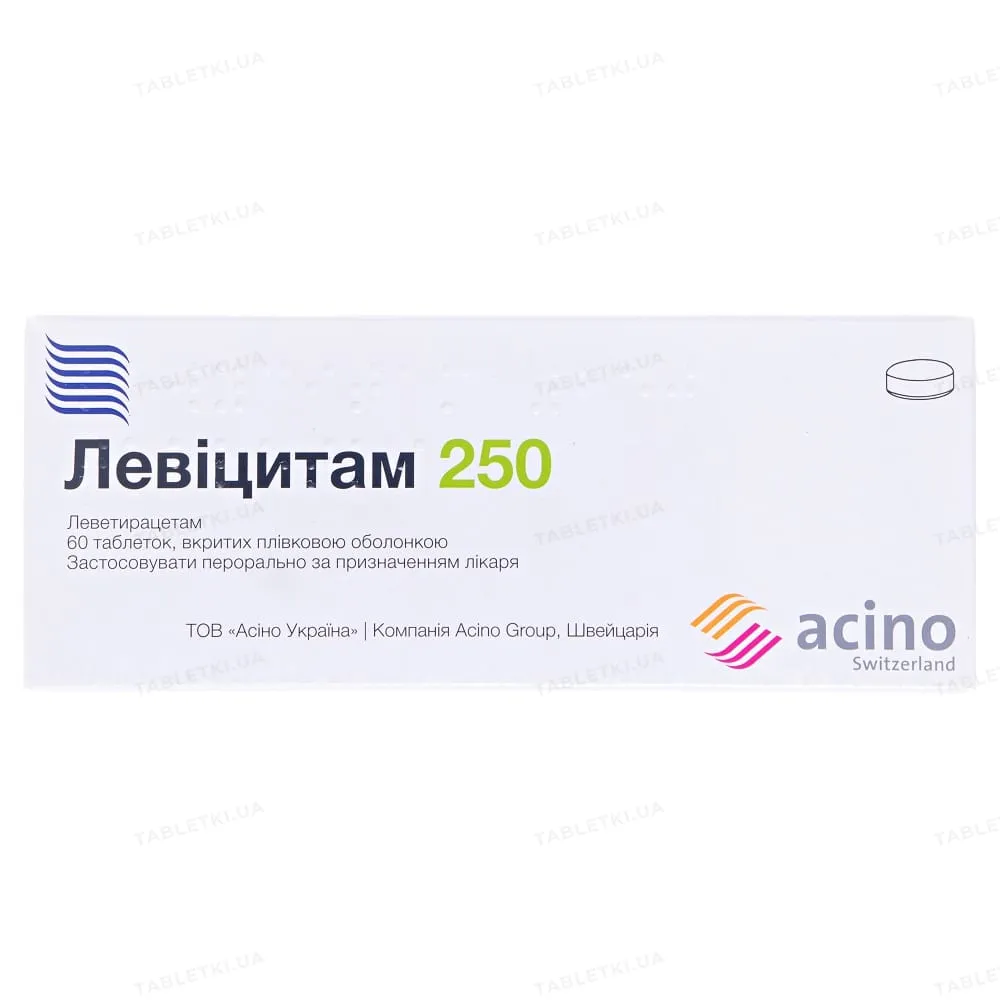
Table of Contents
INSTRUCTIONS FOR MEDICAL USE OF THE MEDICINAL PRODUCT Levecitam 250 (Levicitam 250) Levecitam 500 (Levicitam 500)
Composition:
Active substance: levetiracetam;
1 tablet contains 250 mg or 500 mg of levetiracetam;
Excipients: microcrystalline cellulose, copovidone, crospovidone, pregelatinized corn starch, magnesium stearate, film coating Opadry II White (polyethylene glycol, polyvinyl alcohol, talc, titanium dioxide (E 171)).
Pharmaceutical form. Film-coated tablets.
Main physico-chemical properties: white, film-coated, round, biconvex tablets.
Pharmacotherapeutic group. Antiepileptic drugs. Levetiracetam. ATC code N03AX14.
Pharmacological Properties.
Pharmacodynamics.
Levetiracetam is a pyrrolidone derivative (S-enantiomer of alpha-ethyl-2-oxo-1-pyrrolidine-acetamide) and differs chemically from known antiepileptic medicinal products.
Mechanism of action.
The mechanism of action of levetiracetam is not fully understood. Based on in vitro and in vivo studies, it is assumed that levetiracetam does not alter the basic characteristics of nerve cells or normal neurotransmission. In vitro studies have shown that levetiracetam affects intraneuronal Ca2+ levels by partially inhibiting the current through N-type Ca2+ channels and reducing Ca2+ release from intraneuronal stores. It also partially counteracts the inhibition of GABA- and glycine-regulated currents induced by zinc and β-carbolines. Furthermore, in vitro studies demonstrated that levetiracetam binds to specific sites in brain tissues of rodents. The binding site is synaptic vesicle protein 2A (SV2A), which is involved in vesicle fusion and neurotransmitter release. The affinity (in rank order) of levetiracetam and its corresponding analogs for synaptic vesicle protein 2A correlated with the potency of their anticonvulsant effects in models of audiogenic epilepsy in mice. These findings suggest that the interaction between levetiracetam and synaptic vesicle protein 2A may partially explain the antiepileptic mechanism of the drug.
Pharmacodynamic effects.
Levetiracetam prevents the occurrence of seizures in a broad range of animal models of partial and primarily generalized seizures, without causing proconvulsant effects. The main metabolite is inactive.
In humans, the drug's activity has been confirmed for both partial and generalized epileptic seizures (epileptiform discharges/photoparoxysmal response), indicating a broad pharmacological profile of levetiracetam.
Pharmacokinetics.
Levetiracetam is characterized by high solubility and permeability. Its pharmacokinetics are linear, time-independent, and exhibit low inter- and intra-subject variability. After repeated administration, clearance does not change. No significant influence of gender, race, or circadian rhythm on pharmacokinetics has been observed. The pharmacokinetic profile was similar in healthy volunteers and patients with epilepsy.
Due to complete and linear absorption, plasma concentrations of the drug can be predicted based on the oral dose of levetiracetam expressed in mg/kg body weight. Therefore, monitoring plasma levels of levetiracetam is not necessary.
In adults and children, a significant correlation was observed between drug concentrations in saliva and plasma (the saliva/plasma concentration ratio ranged from 1 to 1.7 after tablet administration and 4 hours after oral solution intake).
Adults and adolescents.
Absorption.
Levetiracetam is rapidly absorbed after oral administration. Absolute oral bioavailability is close to 100%. Peak plasma concentrations (Cmax) are reached within 1.3 hours after drug intake. Steady-state levels are achieved within 2 days of twice-daily dosing. Peak concentrations (Cmax) typically reach 31 and 43 µg/mL after a single 1000 mg dose and repeated 1000 mg twice-daily dosing, respectively. The extent of absorption is independent of dose and is not altered by food intake.
Distribution.
Data on tissue distribution in humans are limited. Neither levetiracetam nor its main metabolite binds significantly to plasma proteins (< 10%). The volume of distribution of levetiracetam ranges from 0.5 to 0.7 L/kg, approximately equal to total body water.
Metabolism.
Metabolism of levetiracetam in humans is minimal. The primary metabolic pathway (24% of the dose) is enzymatic hydrolysis of the acetamide group. Hepatic cytochrome P450 isoenzymes are not involved in the formation of the main metabolite – ucb L057. Hydrolysis of the acetamide group occurs in many tissues, including blood cells. The metabolite ucb L057 is pharmacologically inactive.
Two minor metabolites have also been identified: one formed by hydroxylation of the pyrrolidone ring (1.6% of the dose), and the other by opening of the pyrrolidone ring (0.9% of the dose).
Other undefined components accounted for only 0.6% of the dose.
No interconversion of enantiomers of levetiracetam or its main metabolite was observed under in vivo conditions.
In vitro studies showed that levetiracetam and its main metabolite do not inhibit the activity of major human hepatic cytochrome P450 isoenzymes (CYP3A4, 2A6, 2C9, 2C19, 2D6, 2E1, and 1A2), glucuronosyltransferases (UGT1A1 and UGT1A6), or epoxide hydrolase. Levetiracetam also does not inhibit glucuronidation of valproic acid in vitro.
In human hepatocyte cultures, levetiracetam showed weak or no effect on conjugation of CYP1A1/2, SULT1E1, or UGT1A1. Levetiracetam caused weak induction of CYP2B6 and CYP3A4. In vitro and in vivo data on interactions with oral contraceptives, digoxin, and warfarin suggest that clinically significant enzyme induction is not expected in vivo. Therefore, interactions between levetiracetam and other substances are unlikely.
Elimination.
The elimination half-life of the drug from plasma in adults is 7±1 hours and does not depend on dose, route of administration, or repeated dosing. Mean total clearance is 0.96 mL/min/kg.
Approximately 95% of the dose is excreted renally (about 93% of the dose within 48 hours). Only 0.3% of the dose is excreted in feces.
Cumulative urinary excretion of levetiracetam and its main metabolite within the first 48 hours is 66% and 24% of the dose, respectively. Renal clearance of levetiracetam and ucb L057 is 0.6 and 4.2 mL/min/kg, respectively, indicating that levetiracetam is eliminated by glomerular filtration with subsequent tubular reabsorption, while the main metabolite is also eliminated via active tubular secretion in addition to glomerular filtration. Levetiracetam elimination correlates with creatinine clearance.
Elderly patients.
In elderly patients, the elimination half-life increases by approximately 40% (10–11 hours). This is associated with impaired renal function in this population (see section "Dosage and administration").
Renal impairment.
The apparent total clearance of levetiracetam and its main metabolite correlates with creatinine clearance. Therefore, dose adjustment of the maintenance daily dose of levetiracetam is recommended for patients with moderate to severe renal impairment based on creatinine clearance (see section "Dosage and administration").
In patients with end-stage renal disease and anuria, the elimination half-life is approximately 25 hours between dialysis sessions and 3.1 hours during dialysis. During a 4-hour fractionated dialysis session, 51% of levetiracetam is removed.
Hepatic impairment.
No significant changes in levetiracetam clearance were observed in patients with mild to moderate hepatic impairment. In most patients with severe hepatic impairment, levetiracetam clearance was reduced by more than 50%, due to concomitant renal impairment (see section "Dosage and administration").
Pediatric population.
Children aged 4–12 years.
After a single dose (20 mg/kg) administered to children with epilepsy (6–12 years), the elimination half-life of levetiracetam was 6 hours. Apparent clearance, corrected for body weight, was approximately 30% higher than in adult epilepsy patients. After repeated oral administration (20–60 mg/kg/day) in children with epilepsy (4–12 years), levetiracetam was rapidly absorbed. Peak plasma concentrations were reached within 0.5–1 hour after dosing. Peak concentrations and area under the concentration-time curve increased linearly and were dose-dependent. The elimination half-life was approximately 5 hours; apparent total clearance was 1.1 mL/min/kg.
Clinical characteristics.
Indications.
Monotherapy (first-line agent) in the treatment of:
- Partial-onset seizures with or without secondary generalization in adults and adolescents aged 16 years and older with newly diagnosed epilepsy.
As adjunctive therapy in the treatment of:
- Partial-onset seizures with or without secondary generalization in adults, adolescents, and children aged 6 years and older with epilepsy;
- Myoclonic seizures in adults and adolescents aged 12 years and older with juvenile myoclonic epilepsy;
- Primary generalized tonic-clonic seizures in adults and adolescents aged 12 years and older with idiopathic generalized epilepsy.
Contraindications.
Hypersensitivity to levetiracetam or to other pyrrolidone derivatives, as well as to any component of the medicinal product.
Interaction with other medicinal products and other forms of interactions.
Antiepileptic drugs.
Pre-registration clinical trial data in adult patients indicate that levetiracetam has no effect on serum concentrations of other antiepileptic drugs (phenytoin, carbamazepine, valproic acid, phenobarbital, lamotrigine, gabapentin, and primidone), and these drugs in turn do not affect the pharmacokinetics of levetiracetam.
There are no data on clinically significant interactions of the medicinal product in pediatric patients, as well as in adults receiving up to 60 mg/kg/day of levetiracetam.
A retrospective assessment of pharmacokinetic interactions in children and adolescents with epilepsy (aged 4 to 17 years) confirmed that adjunctive therapy with oral levetiracetam did not affect the steady-state serum concentrations of concomitantly administered carbamazepine and valproate. However, data indicate that the clearance of levetiracetam is 20% higher in children receiving enzyme-inducing antiepileptic drugs. Dose adjustment is not required.
Probenecid.
Probenecid (500 mg four times daily)—a drug that blocks tubular secretion—reduces renal clearance of the main metabolite, but not of levetiracetam itself. However, concentrations of this metabolite remain low.
Methotrexate.
There have been reports that concomitant administration of levetiracetam and methotrexate reduces methotrexate clearance, leading to increased/prolonged methotrexate blood concentrations to potentially toxic levels. Methotrexate and levetiracetam blood levels should be closely monitored in patients receiving both drugs simultaneously.
Oral contraceptives and pharmacokinetic interactions with other drugs.
Levetiracetam at a daily dose of 1000 mg does not alter the pharmacokinetics of oral contraceptives (ethinylestradiol and levonorgestrel); endocrine parameters (LH and progesterone levels) were unchanged. Levetiracetam at a daily dose of 2000 mg does not alter the pharmacokinetics of digoxin and warfarin; prothrombin time values remained unchanged. Conversely, digoxin, oral contraceptives, and warfarin do not affect the pharmacokinetics of levetiracetam when administered concomitantly.
Laxatives.
In isolated cases, reduced efficacy of levetiracetam has been reported when administered concomitantly with the osmotic laxative macrogol and oral levetiracetam. Therefore, macrogol should not be taken orally within 1 hour before or 1 hour after taking levetiracetam.
Food and alcohol.
The extent of absorption of levetiracetam is not affected by food intake, although the rate of absorption is slightly reduced when taken with food. There are no data on interactions between levetiracetam and alcohol.
Special precautions for use.
Renal impairment.
Patients with renal impairment may require dose adjustment of levetiracetam. Patients with severe hepatic dysfunction should have renal function assessed prior to determining the dose of the drug (see section "Dosage and administration").
Acute kidney injury.
Very rare cases of acute kidney injury have been reported with levetiracetam use, with onset ranging from several days to several months.
Complete blood count.
Rare cases of blood cell count reduction (neutropenia, agranulocytosis, leukopenia, thrombocytopenia, and pancytopenia) have been reported in association with levetiracetam use, typically at the beginning of treatment. A complete blood count is recommended in patients presenting with significant weakness, fever, recurrent infections, or bleeding disorders (see section "Adverse reactions").
Suicidal behaviour.
Suicidal behaviour, suicide attempts, suicidal ideation, and suicidal tendencies have been observed in patients treated with antiepileptic drugs (including levetiracetam). A meta-analysis of randomized, placebo-controlled trials of antiepileptic drugs showed a small but increased risk of suicidal thoughts and behaviour. The mechanism of this risk is not understood. Due to this risk, patients should be monitored for signs of depression, suicidal ideation, and behavioural changes, and treatment should be adjusted as necessary. Patients (or their caregivers) should be advised to report any symptoms of depression, suicidal thoughts, or behavioural changes to their physician.
Abnormal and aggressive behaviour.
Levetiracetam may cause psychiatric symptoms and behavioural disturbances, including irritability and aggression. Patients receiving levetiracetam should be monitored for the emergence of psychiatric signs indicating significant mood and/or personality changes. If such behaviour occurs, consideration should be given to adjusting or gradually discontinuing treatment. For discontinuation guidance, see section "Dosage and administration".
Exacerbation of seizures.
As with other antiepileptic drugs, levetiracetam may rarely increase the frequency or severity of seizures. This paradoxical effect has mostly been reported within the first month after starting levetiracetam or during dose escalation, and is usually reversible upon discontinuation or dose reduction. Patients should be advised to seek immediate medical advice if seizure control worsens. For example, inadequate seizure control or seizure exacerbation has been reported in patients with epilepsy associated with mutations in the alpha subunit of voltage-gated sodium channels.
QT interval prolongation on ECG.
Rare cases of QT interval prolongation on ECG have been reported during post-marketing surveillance. Levetiracetam should be used with caution in patients with known QTc prolongation, in patients taking concomitant medications that affect the QTc interval, or in patients with pre-existing cardiac conditions or electrolyte imbalances.
Children.
The tablet formulation is not suitable for use in infants and children under 6 years of age.
Available data in children do not indicate effects on development or sexual maturation. However, the long-term impact of levetiracetam on learning ability, intelligence, development, endocrine function, sexual maturation, and reproductive function in children remains unknown.
Use during pregnancy or breastfeeding.
Women of childbearing potential.
Specific recommendations should be provided to women of childbearing potential. Treatment with levetiracetam should be reviewed if a woman is planning pregnancy. As with all antiepileptic drugs, abrupt discontinuation of levetiracetam should be avoided, as this may provoke seizures, which could have serious consequences for both the woman and the unborn child. Whenever possible, monotherapy is preferred, as treatment with multiple antiepileptic drugs may be associated with a higher risk of congenital malformations compared to monotherapy, depending on the drug combination.
Pregnancy.
Large post-marketing data from pregnant women treated with levetiracetam (more than 1800 women, including over 1500 exposed during the first trimester) do not indicate an increased risk of major congenital malformations. There is only limited information on the neurodevelopmental outcomes of children exposed in utero to levetiracetam monotherapy. Data from two observational population-based registry studies, primarily conducted in the same cohort from Northern European countries and including over 1000 children born to women with epilepsy who were exposed to levetiracetam monotherapy during pregnancy, do not indicate an increased risk of autism spectrum disorders or intellectual disability compared to children born to women with epilepsy who were not exposed to any antiepileptic drugs in utero. The mean follow-up period for children in the levetiracetam group was shorter than in the unexposed group (e.g., 4.4 years vs. 6.8 years in one study).
Levetiracetam may be used during pregnancy if, after careful evaluation, it is considered clinically necessary. In such cases, the lowest effective dose is recommended.
Physiological changes during pregnancy may alter levetiracetam concentrations. Decreased plasma concentrations of levetiracetam have been observed during pregnancy, most pronounced in the third trimester (reaching up to 60% of pre-pregnancy levels). Appropriate clinical monitoring of pregnant women receiving levetiracetam is essential.
Breastfeeding.
Levetiracetam is excreted in breast milk; therefore, breastfeeding is not recommended. However, if levetiracetam treatment is necessary during breastfeeding, the benefits and risks of treatment should be carefully weighed against the importance of breastfeeding.
Effect on fertility.
No effects on fertility were observed in animal studies.
The potential risk in humans is unknown due to the lack of available clinical data.
Ability to affect reaction speed when driving or operating machinery.
Levetiracetam has a minor to moderate effect on the ability to drive or operate machinery. Due to possible individual sensitivity, some patients may experience somnolence, dizziness, and other central nervous system-related symptoms, particularly at the beginning of treatment or during dose escalation. Therefore, such patients should exercise caution when performing tasks requiring high concentration, such as driving or operating machinery. Patients are advised to refrain from driving vehicles or operating other machinery until it is established that their ability to perform such activities is not impaired.
Dosage and Administration
The tablets should be taken orally with sufficient liquid, regardless of food intake. The daily dose should be divided into 2 equal administrations.
Partial seizures
The recommended dose for monotherapy (patients aged 16 years and older) and adjunctive therapy is the same and is specified below.
All indications
Adults (≥ 18 years) and adolescents (aged 12 to 17 years) with body weight ≥ 50 kg.
The initial therapeutic dose is 500 mg twice daily. This is the starting dose to be administered on the first day of treatment. However, a lower initial dose of 250 mg twice daily may be used at the physician’s discretion based on an assessment of seizure frequency reduction versus potential adverse effects. This dose may be increased to 500 mg twice daily after 2 weeks.
Depending on the clinical response and tolerability, the daily dose may be increased up to a maximum of 1500 mg twice daily. Dose adjustments of 250 mg or 500 mg twice daily may be made every 2–4 weeks.
Children aged 6 years and older and adolescents (aged 12 to 17 years) with body weight < 50 kg.
The physician should select the most appropriate dosage form, strength, and formulation based on body weight, age, and required dose. For dosage adjustment according to body weight, see the section «Children».
Discontinuation of treatment.
If discontinuation of the medication is necessary, it is recommended to taper gradually (e.g., for adults and adolescents with body weight ≥ 50 kg: reduce the dose by 500 mg twice daily every 2–4 weeks; for children and adolescents with body weight < 50 kg: reduce the dose by no more than 10 mg/kg twice daily every 2 weeks).
Special patient groups.
Elderly patients (aged 65 years and older).
Dose adjustment is recommended for elderly patients with impaired renal function (see section «Renal impairment»).
Renal impairment.
The daily dose should be individually adjusted according to renal function.
Use the table below to adjust the dose for adults.
To adjust the dose using the table, determine the creatinine clearance (CrCl) in mL/min.
CrCl in adults and adolescents with body weight > 50 kg can be calculated from serum creatinine concentration using the following formula:
[140 ─ age (years)] × body weight (kg)
CrCl (mL/min) = ________________________________________________________ × 0.85 (for females)
72 × serum creatinine (mg/dL)
Then correct CrCl for body surface area (BSA) as follows:
CrCl (mL/min)
CrCl (mL/min/1.73 m²) = ___________________________ × 1.73
BSA of patient (m²)
Table 1
Dosage regimen for adults and adolescents with renal impairment and body weight > 50 kg.
| Renal impairment severity |
Creatinine clearance (mL/min/1.73 m²) |
Dosing regimen |
| Normal renal function |
≥80 |
500 to 1,500 mg twice daily |
| Mild impairment |
50–79 |
500 to 1,000 mg twice daily |
| Moderate impairment |
30–49 |
250 to 750 mg twice daily |
| Severe impairment |
<30 |
250 to 500 mg twice daily |
| End-stage (patients on dialysis*) |
- |
500 to 1,000 mg once daily** |
* On the first day of treatment, a loading dose of 750 mg is recommended.
** An additional dose of 250–500 mg is recommended after dialysis.
For children with renal impairment, the dose of levetiracetam should be adjusted according to renal function, since levetiracetam clearance is related to renal function. This recommendation is based on a study conducted in adult patients with impaired renal function.
For adolescents, children, and infants, creatinine clearance (CC) in ml/min/1.73 m² can be calculated from serum creatinine concentration (mg/dl) using the following formula (Schwartz formula):
Height (cm) × ks
CC (ml/min/1.73 m²) = ------------------------------------------
Serum creatinine (mg/dl)
For children under 13 years of age and adolescent girls, ks = 0.55; for adolescent boys, ks = 0.7.
Table 2
Dosage adjustment recommendations for children and adolescents with impaired renal function and body weight less than 50 kg
| Renal impairment severity |
Creatinine clearance (ml/min/1.73 m²) |
Children aged 6 years and older and adolescents with body weight less than 50 kg(1) |
| Normal renal function |
≥ 80 |
10-30 mg/kg (0.10-0.30 ml/kg) twice daily |
| Mild impairment |
50-79 |
10-20 mg/kg (0.10-0.20 ml/kg) twice daily |
| Moderate impairment |
30-49 |
5-15 mg/kg (0.05-0.15 ml/kg) twice daily |
| Severe impairment |
< 30 |
5-10 mg/kg (0.05-0.10 ml/kg) twice daily |
| End-stage (patients on dialysis) |
|
10-20 mg/kg (0.10-0.20 ml/kg) once daily (2)(3) |
(1) For doses up to 250 mg, for doses not divisible by 250 mg, when the recommended dosage cannot be achieved by taking several tablets, and for patients unable to swallow tablets, Leviceptam oral solution should be used.
(2) On the first day of treatment, a loading dose of levetiracetam 15 mg/kg (0.15 mL/kg) is recommended.
(3) After dialysis, an additional dose of 5–10 mg/kg (0.05–0.10 mL/kg) is recommended.
Hepatic impairment.
Dose adjustment is not required in patients with mild to moderate hepatic impairment. In patients with severe hepatic impairment, creatinine clearance may not fully reflect the degree of renal impairment. Therefore, in patients with creatinine clearance < 60 mL/min/1.73 m², the daily maintenance dose should be reduced by 50%.
Children.
The physician should select the most appropriate dosage form, strength, and formulation based on age, body weight, and required dose.
The tablet formulation is not recommended for children under 6 years of age. This patient group should preferably be treated with Leviceptam oral solution. Furthermore, the available tablet strengths are not suitable for initial treatment of children weighing less than 25 kg, for patients unable to swallow tablets, or for doses below 250 mg. In all the above cases, treatment should be initiated with Leviceptam oral solution.
Monotherapy.
The safety and efficacy of Leviceptam as monotherapy in children and adolescents under 16 years of age have not been established.
Data are lacking.
Adolescents (16–17 years of age) weighing ≥ 50 kg with partial seizures with or without secondary generalization, with newly diagnosed epilepsy
See section above «Adults (≥ 18 years) and adolescents (12–17 years) weighing ≥ 50 kg».
Adjunctive therapy in children aged 6 years and older and adolescents (12–17 years) weighing less than 50 kg.
Infants and children under 6 years of age should preferably be treated with Leviceptam oral solution.
For children aged 6 years and older, Leviceptam oral solution should be used for dosing up to 250 mg, for doses not divisible by 250 mg when the recommended dosage cannot be achieved by taking several tablets, and for patients unable to swallow tablets.
For all indications, the lowest effective dose should be used. The initial dose for a child or adolescent weighing 25 kg should be 250 mg twice daily, with a maximum dose of 750 mg twice daily.
Children weighing more than 50 kg should receive dosing according to the regimen described for adults.
See section above «Adults (≥ 18 years) and adolescents (12–17 years) weighing ≥ 50 kg» for all indications.
Adjunctive therapy in infants aged 1 to 6 months.
Infants should be treated with the oral solution formulation.
Children.
The tablet formulation is not recommended for children under 6 years of age. Leviceptam oral solution should be used in infants from 1 month of age and in children under 6 years of age.
Overdose.
Symptoms.
Symptoms observed in overdose include somnolence, agitation, aggression, respiratory depression, confusion, and coma.
Treatment.
In cases of acute overdose, gastric lavage or induction of emesis should be performed. There is no specific antidote. Symptomatic treatment should be administered as needed,
including hemodialysis (up to 60% of levetiracetam and 74% of the primary metabolite are removed).
Adverse Reactions
The most commonly reported adverse reactions were nasopharyngitis, somnolence, headache, fatigue, and dizziness. The adverse reaction profile described below is based on pooled data from placebo-controlled clinical trials involving a total of 3416 patients treated with levetiracetam. These data are supplemented by the use of levetiracetam in relevant long-term open-label studies and post-marketing experience. The safety profile of levetiracetam is generally similar across different age groups (adults and children) when used for the approved indications.
Adverse reactions reported in clinical studies (in adults, adolescents, children, and infants from 1 month of age) and during the post-marketing period are listed in the following table by system organ class, with frequencies categorized as follows: very common (≥ 1/10); common (≥ 1/100 to < 1/10); uncommon (≥ 1/1000 to < 1/100); rare (≥ 1/10,000 to < 1/1000); and very rare (< 1/10,000).
Table 3
| MedDRA System Organ Classes |
Frequency groupings |
||||
| Very common |
Common |
Uncommon |
Rare |
Very rare |
|
| Infections and infestations |
Nasopharyngitis |
Infection |
|||
| Blood and lymphatic system disorders |
Thrombocytopenia, leukopenia |
Pancytopenia, neutropenia, agranulocytosis |
|||
| Immune system disorders |
Drug reaction with eosinophilia and systemic symptoms (DRESS)*, |
||||
| Metabolism and nutrition disorders |
Anorexia |
Decreased weight, increased weight |
Hyponatremia |
||
| Psychiatric disorders |
Depression, hostility/aggression, anxiety, insomnia, nervousness/irritability |
Suicide attempt, suicidal thoughts, psychotic disorders, abnormal behavior, hallucinations, anger, confusion, panic attacks, affective lability/mood changes, agitation |
Suicide, personality disorder, thought disorder, delirium |
Obsessive-compulsive disorder** |
|
| Nervous system disorders |
Somnolence, headache |
Seizures, impaired balance, dizziness, lethargy, tremor |
Amnesia, memory impairment, coordination disorder/ataxia, paresthesia, attention disturbance |
Choreoathetosis, dyskinesia, hyperkinesia, |
|
| Eye disorders |
Diplopia, blurred vision |
||||
| Ear and labyrinth disorders |
Vertigo |
||||
| Cardiac disorders |
QT interval prolongation on ECG |
||||
| Respiratory, thoracic and mediastinal disorders |
Cough |
||||
| Gastrointestinal disorders |
Abdominal pain, diarrhea, dyspepsia, vomiting, nausea |
Pancreatitis |
|||
| Hepatobiliary disorders |
Abnormal liver function test results |
Liver failure, hepatitis |
|||
| Renal and urinary disorders |
Acute kidney injury |
||||
| Skin and subcutaneous tissue disorders |
Rash |
Alopecia, eczema, pruritus |
Toxic epidermal necrolysis, Stevens-Johnson syndrome, erythema multiforme |
||
| Musculoskeletal and connective tissue disorders |
Muscle weakness, myalgia |
Rhabdomyolysis and elevated creatine phosphokinase in blood* |
|||
| General disorders and administration site conditions |
Asthenia/fatigue |
||||
| Injury, poisoning and procedural complications |
Injury |
||||
* See below "Description of selected adverse reactions".
** During post-marketing surveillance, very rare cases of development of obsessive-compulsive disorders (OCD) have been observed in patients with OCD or psychiatric disorders in medical history.
*** Prevalence is significantly higher in Japanese patients compared to non-Japanese patients.
Description of selected adverse reactions.
Multiorgan hypersensitivity reactions
Multiorgan hypersensitivity reactions (also known as drug reaction with eosinophilia and systemic symptoms (DRESS syndrome)) have been reported rarely in patients receiving levetiracetam. Clinical manifestations may develop 2–8 weeks after initiation of treatment. These reactions are variable in presentation but typically include fever, rash, facial swelling, lymphadenopathy, hematological abnormalities, and may be associated with involvement of various organ systems, predominantly the liver. Levetiracetam should be discontinued if multiorgan hypersensitivity reaction is suspected.
The risk of anorexia increases with concomitant use of levetiracetam and topiramate. In cases of alopecia, hair regrowth has been observed in some cases after discontinuation of levetiracetam.
In cases of pancytopenia, bone marrow suppression has been observed in some instances.
Cases of encephalopathy were usually observed at the beginning of treatment (from several days to several months) and were reversible upon discontinuation of treatment.
Children.
A total of 190 patients aged 1 month to 4 years received levetiracetam treatment in placebo-controlled and open-label add-on studies, of which 60 patients were treated with levetiracetam in placebo-controlled studies. Among patients aged 4–16 years, a total of 645 patients received levetiracetam in placebo-controlled and open-label add-on studies, of which 233 patients received levetiracetam in placebo-controlled studies. In both age groups, these data are supplemented by post-marketing experience with levetiracetam use.
Additionally, 101 infants under 12 months of age received levetiracetam in a post-marketing safety study. No new safety data on levetiracetam use in infants with epilepsy under 12 months of age have been obtained.
The adverse reaction profile of levetiracetam is generally similar across different age groups and all approved epilepsy indications. Safety results from placebo-controlled clinical trials in children were consistent with the safety profile of levetiracetam in adults, except for behavioral and psychiatric adverse reactions, which occurred more frequently in children than in adults. In children and adolescents aged 4 to 16 years, vomiting (very common, 11.2%), irritability (common, 3.4%), mood alteration (common, 2.1%), affective lability (common, 1.7%), aggression (common, 8.2%), abnormal behavior (common, 5.6%), and lethargy (common, 3.9%) were observed more frequently than in other age groups or in the overall safety profile. In infants and children aged 1 month to 4 years, irritability (very common, 11.7%) and coordination disorder (common, 3.3%) were observed more frequently than in other age groups or in the overall safety profile.
It is known that in a pediatric safety study designed to demonstrate non-inferiority compared to active control, the impact of levetiracetam on cognitive and neuropsychological parameters was evaluated in children aged 4 to 16 years with partial seizures. Levetiracetam did not differ (was not less effective) from placebo regarding change from baseline in attention and memory on the Leiter-R scale, total memory score in the per-protocol population. Results related to behavioral and emotional functions indicated increased aggressive behavior in patients treated with levetiracetam, as determined systematically and standardized using validated instruments (CBCL – Achenbach Child Behavior Checklist). In patients receiving levetiracetam in a follow-up observational study, no worsening of behavioral and emotional functions was observed on average; specifically, aggressive behavior scores did not worsen compared to baseline.
Reporting of suspected adverse reactions
Reporting of suspected adverse reactions after medicinal product authorization is important. It allows continued monitoring of the benefit-risk balance of the medicinal product. Healthcare professionals are asked to report any suspected adverse reactions via the national reporting system.
Shelf life. 3 years.
Storage conditions. Store out of reach of children, in the original packaging at a temperature not exceeding 25 °C.
Packaging. 10 tablets in a blister; 3 or 6 blisters in a cardboard box.
Prescription category. Prescription only.
Manufacturer. Pharma Start LLC.
Manufacturer's address and location of its operations.
8, Vatslava Havela Boulevard, Kyiv, 03124, Ukraine.