Lamotrigine 25
Ukraine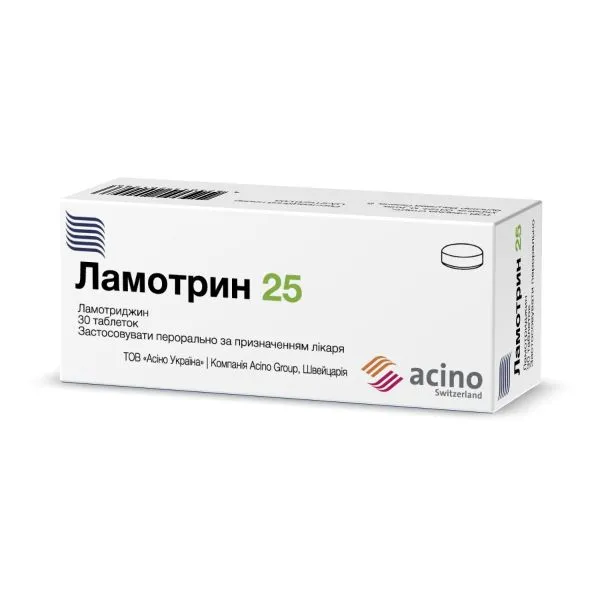
Table of Contents
INSTRUCTIONS FOR MEDICAL USE OF THE MEDICINAL PRODUCT LAMOTRIN 25 (LAMOTRIN 25) LAMOTRIN 50 (LAMOTRIN 50) LAMOTRIN 100 (LAMOTRIN 100)
Composition:
Active ingredient: lamotrigine;
One tablet contains lamotrigine 25 mg or 50 mg or 100 mg;
Excipients: microcrystalline cellulose, colloidal anhydrous silicon dioxide, povidone, sodium starch glycolate (type A), lactose monohydrate, magnesium stearate.
Pharmaceutical form. Tablets.
Main physicochemical properties: tablets, white or almost white, biconvex, round-shaped (Lamotrin 25), with a score line on one side (Lamotrin 50 and Lamotrin 100).
Pharmacotherapeutic group.
Antiepileptic agents. Lamotrigine. ATC code N03A X09.
Pharmacological properties.
Pharmacodynamics.
Mechanism of action
Pharmacological studies have shown that lamotrigine is a use-dependent and voltage-dependent blocker of voltage-gated sodium channels. It suppresses sustained repetitive neuronal firing and inhibits the release of glutamate (a neurotransmitter that plays a key role in the initiation of epileptic seizures). This effect is likely responsible for the anticonvulsant properties of lamotrigine.
In contrast, the mechanisms underlying the therapeutic effect of lamotrigine in bipolar disorder remain to be fully elucidated, although interaction with voltage-gated sodium channels is considered to play an important role.
Pharmacodynamic effects
Studies assessing the effects of drugs on the central nervous system found no difference between healthy volunteers receiving 240 mg lamotrigine and those receiving placebo, whereas both 1000 mg phenytoin and 10 mg diazepam significantly impaired fine visuomotor coordination, eye movements, and body balance, and also caused a subjective sedative effect.
In another study, single oral doses of 600 mg carbamazepine significantly impaired fine visuomotor coordination, eye movements, and body balance, and increased heart rate. In contrast, the effects of lamotrigine at doses of 150 mg and 300 mg did not differ from placebo.
Effect of lamotrigine on cardiac conduction
In a study involving healthy adult volunteers, the effect of repeated doses of lamotrigine (up to 400 mg/day) on cardiac conduction was assessed using 12-lead ECG. Compared to placebo, lamotrigine did not show any clinically significant effect on the QT interval.
Clinical efficacy and safety
Prevention of mood episodes in patients with bipolar disorder
The efficacy of lamotrigine in the prevention of mood episodes in patients with bipolar disorder type I was evaluated in two studies.
Study SCAB2003 was a multicenter, double-blind, double-dummy, placebo- and lithium-controlled, randomized, fixed-dose study designed to assess long-term prevention of recurrent depressive and/or manic episodes in patients with bipolar disorder type I who had a current or recent major depressive episode. After stabilization with lamotrigine monotherapy or adjunctive therapy, patients were randomly assigned to one of five treatment groups for up to 76 weeks (18 months): lamotrigine (50, 200, or 400 mg/day), lithium (serum level 0.8–1.1 mmol/L), or placebo. The primary endpoint was "time to intervention for a mood episode (TIME)," where interventions included additional pharmacotherapy or electroconvulsive therapy (ECT). Study SCAB2006 was conducted with a design similar to SCAB2003, but used a more flexible dosing regimen of lamotrigine (100–400 mg/day) and included patients with bipolar disorder type I who had a current or recent manic episode. Results are presented in Table 1.
Table 1
Summary of results from efficacy studies of lamotrigine in the prevention of mood episodes in patients with bipolar disorder type I
| Proportion of patients free from events at week 76 |
||||||
| Study SCAB2003 Type I Bipolar Disorder |
Study SCAB2006 Type I Bipolar Disorder |
|||||
| Inclusion criterion |
Major depressive episode |
Major manic episode |
||||
| Lamotrigine |
Lithium |
Placebo |
Lamotrigine |
Lithium |
Placebo |
|
| Intervention-free |
0.22 |
0.21 |
0.12 |
0.17 |
0.24 |
0.04 |
| log-rank test p-value |
0.004 |
0.006 |
- |
0.023 |
0.006 |
- |
| Depression-free |
0.51 |
0.46 |
0.41 |
0.82 |
0.71 |
0.40 |
| log-rank test p-value |
0.047 |
0.209 |
- |
0.015 |
0.167 |
- |
| Mania-free |
0.70 |
0.86 |
0.67 |
0.53 |
0.64 |
0.37 |
| log-rank test p-value |
0.339 |
0.026 |
- |
0.280 |
0.006 |
- |
Additional analysis of time to first depressive episode and time to first manic/hypomanic or mixed episode showed that the first depressive episode occurred statistically later in patients receiving lamotrigine than in patients in the placebo group. No statistically significant difference was observed in time to first manic/hypomanic or mixed episode.
The efficacy of lamotrigine in combination with mood stabilizers has not been adequately studied.
Children
Children aged 1 to 24 months
Efficacy and safety of adjunctive therapy for partial seizures in children aged 1 to 24 months were evaluated in a small, double-blind, placebo-controlled withdrawal trial. Treatment was initiated in 177 patients using a dosing regimen recommended for children aged 2 to 12 years. The lowest available lamotrigine dose is contained in 2 mg tablets. Therefore, in some cases, the standard dosing regimen during the titration phase was appropriately modified (e.g., by administering a 2 mg tablet every other day when the calculated dose was less than 2 mg). Serum concentrations were measured at the end of week 2 of the titration phase and the subsequent dose phase, reduced or not increased due to achieving concentrations exceeding 0.41 µg/mL – predicted concentrations in adult patients at this time point of therapy. By the end of week 2, some patients required a dose reduction of up to 90%. Thirty-eight patients with therapeutic response (reduction in seizure frequency > 40%) were randomized into two groups: placebo or continued lamotrigine treatment. Treatment failure was observed in 84% of patients in the placebo group (16 out of 19) and in 54% of patients in the lamotrigine group (11 out of 19). The difference was not statistically significant: 26.3%, 95% CI –2.6% < > 50.2%, p = 0.07.
Overall, up to 72 weeks, 256 patients aged 1 to 24 months received lamotrigine at doses ranging from 1 to 15 mg/kg/day. The safety profile of lamotrigine in children of this age group was similar to that in older children, except for seizure progression (≥ 50%), which occurred statistically more frequently in children under 2 years of age (26%) compared to older children (14%).
Lennox–Gastaut syndrome
Data on monotherapy for seizures associated with Lennox–Gastaut syndrome are lacking.
Prevention of mood episodes in children (10–12 years) and adolescents (13–17 years)
In a multicenter, parallel-group, placebo-controlled, double-blind, randomized withdrawal trial, the safety and efficacy of immediate-release (IR) lamotrigine tablets as adjunctive maintenance therapy in delaying mood episodes were evaluated in children and adolescents (10–17 years of both sexes) diagnosed with bipolar I disorder who had achieved remission or improvement with prior lamotrigine treatment in combination with antipsychotic medications or other antidepressants. The primary efficacy analysis (time to occurrence of a bipolar event) did not show a statistically significant result (p = 0.0717), indicating lack of efficacy. Additionally, safety analysis revealed a higher incidence of suicidal behavior in the lamotrigine group: 5% (4 patients) compared to 0 in the placebo group.
Pharmacokinetics
Absorption
In the absence of significant first-pass metabolism, the drug is rapidly and completely absorbed from the gastrointestinal tract. After oral administration, maximum plasma concentration is reached approximately within 2.5 hours. Time to maximum concentration is slightly prolonged when the drug is taken after food, but this does not affect the extent of absorption. There are substantial inter-individual variations in steady-state maximum concentrations, although intra-individual values in a single patient are usually consistent.
Distribution
Approximately 55% of the drug dose is bound to plasma proteins. Toxic effects due to displacement from plasma proteins are unlikely.
Volume of distribution ranges from 0.92 to 1.22 L/kg.
Biotransformation
UDP-glucuronosyltransferase has been identified as the primary enzyme responsible for lamotrigine metabolism.
Lamotrigine induces its own metabolism to a minor, dose-dependent extent. However, the effect of lamotrigine on the pharmacokinetics of other anticonvulsants has not been established, and available data suggest that interactions between lamotrigine and other drugs metabolized by cytochrome P450 are unlikely.
Elimination
Theoretical plasma clearance in healthy volunteers is approximately 30 mL/min. Lamotrigine clearance occurs predominantly via metabolite formation, followed by urinary excretion of glucuronide-conjugated material. Less than 10% of the dose is excreted unchanged in urine. Only 2% of metabolized lamotrigine is excreted via the intestine. Clearance and elimination half-life are dose-dependent. The theoretical half-life in plasma of healthy volunteers is approximately 33 hours (range 14 to 103 hours). In a study involving patients with Gilbert’s syndrome, the mean theoretical clearance in these subjects was 32% lower than in the control group, but within the range defined for the general patient population.
The elimination half-life of lamotrigine is significantly influenced by concomitant medications. The average half-life may be reduced by approximately 14 hours when co-administered with glucuronidation inducers such as carbamazepine and phenytoin, or increased by approximately 70 hours when co-administered solely with valproate (see section "Interaction with other medicinal products and other forms of interaction").
Linearity
Up to the highest studied dose of 450 mg, lamotrigine pharmacokinetics showed linear behavior.
Special patient populations.
Children.
Body weight-adjusted clearance is higher in children than in adults, with the highest values observed in children under 5 years of age. The elimination half-life of lamotrigine in children is generally shorter than in adults, with a mean of approximately 7 hours when co-administered with enzyme inducers such as carbamazepine and phenytoin, and increasing to a mean of 45–50 hours when co-administered exclusively with valproate.
Children aged 2 to 26 months
In 143 patients aged 2 to 26 months with body weights ranging from 3 to 16 kg, oral administration of equivalent doses per kilogram of body weight resulted in lower clearance compared to children over 2 years of age with similar body weight. The mean elimination half-life in children up to 26 months of age was 23 hours when receiving enzyme-inducing therapy, 136 hours when co-administered with valproate, and 38 hours without concomitant use of enzyme inhibitors or induitors. Inter-individual variability in clearance following oral dosing in patients aged 2 to 26 months was high (47%). Predicted serum concentrations in this age group were within the range observed in older patients, although patients with body weight less than 10 kg had higher maximum concentration values in some cases.
Elderly patients.
Pharmacokinetic analysis results from a study including both elderly and younger epilepsy patients showed that lamotrigine clearance did not change to a clinically significant extent. After single doses, apparent clearance decreased by 12%, from 35 mL/min/kg in 20-year-old patients to 31 mL/min/kg in 70-year-old patients. The reduction after 48 weeks of treatment was 10%, from 41 mL/min in younger patients to 37 mL/min in elderly patients. Pharmacokinetics of lamotrigine were studied in 12 healthy elderly volunteers who received a single 150 mg dose. The mean clearance value in elderly patients (0.39 mL/min/kg) falls within the range of mean clearance values (0.31 to 0.65 mL/min/kg) obtained in 9 studies conducted in non-elderly adult patients receiving single doses of 30 to 450 mg.
Patients with renal impairment.
Twelve volunteers with chronic renal impairment and six patients on hemodialysis received a single 100 mg dose of lamotrigine. Mean CL/F values were 0.42 mL/min/kg (chronic renal impairment), 0.33 mL/min/kg (interdialytic period), and 1.57 mL/min/kg (during hemodialysis), compared to 0.58 mL/min/kg in healthy subjects. Mean plasma elimination half-life was 42.9 hours (chronic renal impairment), 57.4 hours (interdialytic period), and 13.0 hours (during hemodialysis), compared to 26.2 hours in healthy subjects. During a four-hour hemodialysis session, lamotrigine levels decreased by approximately 20% (range 5.6 to 35.1%). For this patient group, initial lamotrigine dosing should be based on the patient's antiepileptic medication regimen; reduction of maintenance dose may be effective in patients with significant functional renal impairment.
Patients with hepatic impairment.
A single-dose pharmacokinetic study was conducted in patients with varying degrees of hepatic impairment and healthy volunteers. Mean apparent clearance of lamotrigine was 0.31 mL/min/kg, 0.24 mL/min/kg, and 0.10 mL/min/kg in patients with Child-Pugh class A, B, and C hepatic impairment, respectively, compared to 0.34 mL/min/kg in healthy subjects. Initial, escalation, and maintenance doses should typically be reduced by approximately 50% in patients with moderate hepatic impairment (Child-Pugh class B) and by 75% in patients with severe hepatic impairment (Child-Pugh class C). Escalation and maintenance doses should be adjusted according to treatment response.
Preclinical safety data
In vitro studies showed that lamotrigine, at concentrations corresponding to therapeutic doses, exhibits class IB antiarrhythmic activity. It inhibits human cardiac sodium channels, demonstrating rapid onset and offset kinetics and strong voltage dependence, consistent with the action of other class IB antiarrhythmics. At therapeutic doses, lamotrigine did not slow ventricular conduction (QRS widening) in healthy volunteers in a thorough QT study. However, in patients with clinically significant structural or functional heart disease, lamotrigine may potentially slow ventricular conduction (QRS widening) and cause proarrhythmia (see section "Special precautions for use").
Clinical characteristics.
Indications.
Epilepsy.
Adults and children aged 13 years and older: monotherapy and adjunctive therapy of partial and generalized seizures, including tonic-clonic seizures, as well as seizures associated with Lennox-Gastaut syndrome. Lamotrigine may be initiated as adjunctive therapy, but in Lennox-Gastaut syndrome it may be used as initial antiepileptic drug (AED).
Children aged 2 to 12 years: adjunctive therapy in epilepsy, particularly for partial and generalized seizures, including tonic-clonic seizures, and seizures associated with Lennox-Gastaut syndrome.
Monotherapy for typical absence seizures.
Bipolar disorders in adults.
Adults (aged 18 years and older).
For prevention of depressive episodes in patients with bipolar I disorder who are predominantly affected by depressive episodes.
Lamotrigine is not indicated for urgent treatment of manic or depressive episodes.
Contraindications.
Hypersensitivity to lamotrigine or to any of the excipients of the medicinal product.
Interaction with other medicinal products and other forms of interactions.
Interaction studies have been conducted only in adult patients. It has been established that uridine 5’-diphosphate (UDP)-glucuronosyltransferase (UGT) is the enzyme responsible for lamotrigine metabolism. Therefore, drugs that induce or inhibit glucuronidation may affect the theoretical clearance of lamotrigine. Enzyme inducers of cytochrome P450 3A4 (CYP3A4) of strong or moderate potency, which are known to induce UGT, may also enhance lamotrigine metabolism. There is no evidence that lamotrigine may cause clinically significant induction or inhibition of cytochrome P450 oxidative enzymes. Lamotrigine may induce its own metabolism, but this effect is moderate and has no significant clinical consequences.
Medicinal products that have been shown to have a relevant clinical impact on lamotrigine concentrations are listed in Table 2. Specific dosage recommendations for these medicinal products are provided in the section "Method of administration and dosage." Table 1 lists medicinal products that have been shown to have little or no effect on lamotrigine concentrations. Generally, concomitant use of such products is not expected to cause any clinical effect. However, patients with epilepsy, whose condition is particularly sensitive to fluctuations in lamotrigine concentrations, should be cautioned.
Table 2
Effect of other drugs on lamotrigine concentration
| Drugs that increase lamotrigine concentration |
Drugs that decrease lamotrigine concentration |
Drugs with little or no effect on lamotrigine concentration |
| Valproate |
Atazanavir/ritonavir Carbamazepine Ethinylestradiol/levonorgestrel combination Lopinavir/ritonavir Phenobarbital Phenytoin Primidone Rifampicin |
Aripiprazole Bupropion Felbamate Gabapentin Lacosamide Levetiracetam Lithium Olanzapine Oxcarbazepine Paracetamol Perampanel Pregabalin Topiramate Zonisamide |
For detailed dosing information, see the section "General Dosing Recommendations for Special Patient Populations" in the "Dosage and Administration" section. For dosing recommendations in women taking hormonal contraceptives, see the section "Hormonal Contraceptives" in the "Special Warnings and Precautions for Use" section.
Interaction with antiepileptic drugs (AEDs)
Valproate, which inhibits glucuronidation of lamotrigine, slows the metabolism of lamotrigine and approximately doubles its mean elimination half-life. Patients receiving valproate concomitantly should follow an appropriate dosing regimen (see section "Dosage and Administration").
Some AEDs (such as phenytoin, carbamazepine, phenobarbital, and primidone), which induce cytochrome P450 microsomal enzymes, also induce UGT and accelerate lamotrigine metabolism. Patients receiving phenytoin, carbamazepine, phenobarbital, or primidone concomitantly should follow an appropriate dosing regimen (see section "Dosage and Administration").
There have been reports of central nervous system adverse reactions, including dizziness, ataxia, diplopia, blurred vision, and nausea, in patients receiving carbamazepine concomitantly with lamotrigine. These effects usually resolve upon reduction of the carbamazepine dose. Similar effects were observed during a study of lamotrigine and oxcarbazepine in adult volunteers, although dose reduction was not studied. It is known that in a study in healthy adult volunteers receiving 200 mg lamotrigine and 1200 mg oxcarbazepine, oxcarbazepine did not alter the metabolism of lamotrigine, and lamotrigine did not alter the metabolism of oxcarbazepine. Patients receiving oxcarbazepine concomitantly should follow the dosing regimen for lamotrigine as adjunctive therapy without valproate and without inducers of glucuronidation (see section "Dosage and Administration").
It has been reported that in a study involving volunteers, concomitant administration of felbamate at a dose of 1200 mg twice daily and lamotrigine at a dose of 100 mg twice daily for 10 days had no clinically significant effect on the pharmacokinetics of lamotrigine.
According to data from a retrospective analysis of plasma levels in patients taking lamotrigine with or without gabapentin, gabapentin does not alter the theoretical clearance of lamotrigine.
The potential drug interaction between levetiracetam and lamotrigine has been studied by assessing serum concentrations of both drugs during placebo-controlled clinical trials. According to these data, the two substances do not alter each other's pharmacokinetics.
The steady-state plasma concentration of lamotrigine is not altered when administered concomitantly with pregabalin (200 mg three times daily). There is no pharmacokinetic interaction between lamotrigine and pregabalin.
Topiramate does not affect the plasma concentration of lamotrigine. Administration of lamotrigine increases the concentration of topiramate by 15%.
It is known that, according to study data, administration of zonisamide (200–400 mg/day) together with lamotrigine (150–500 mg/day) for 35 days in the treatment of epilepsy had no significant effect on the pharmacokinetics of lamotrigine.
The plasma concentration of lamotrigine was not affected by its concomitant administration with lacosamide (200, 400, or 600 mg/day) in placebo-controlled clinical trials in patients with partial seizures. Data from three placebo-controlled clinical trials showed that additional concomitant administration of perampanel with lamotrigine in patients with partial and primary generalized tonic-clonic seizures resulted in the highest studied dose of perampanel (12 mg/day) increasing lamotrigine clearance by less than 10%.
Although cases of altered plasma concentrations of other antiepileptic drugs have been described, available study data indicate that lamotrigine does not affect the plasma concentrations of concomitant antiepileptic agents. In vitro study results showed that lamotrigine does not affect the protein binding of other antiepileptic drugs to serum proteins.
Interaction with other psychotropic agents
It is known that in a study of 20 healthy volunteers receiving 100 mg/day lamotrigine and 2 g anhydrous lithium gluconate twice daily for 6 days, the pharmacokinetics of lithium were unchanged. In a study involving 12 patients, multiple oral doses of bupropion had no statistically significant effect on the pharmacokinetics of a single dose of lamotrigine and resulted only in a slight increase in the area under the concentration-time curve (AUC) of lamotrigine glucuronide. It is known that in a study involving adult volunteers, 15 mg olanzapine reduced the AUC and maximum concentration (Cmax) of lamotrigine by 24% and 20%, respectively, on average. Lamotrigine at a dose of 200 mg does not affect the pharmacokinetics of olanzapine.
Multiple oral doses of lamotrigine 400 mg/day have no clinically significant effect on the pharmacokinetics of a single 2 mg dose of risperidone. When 2 mg risperidone was administered concomitantly with lamotrigine, 12 out of 14 volunteers reported somnolence, compared to 1 out of 20 volunteers receiving risperidone alone. No cases of somnolence were reported with lamotrigine alone.
It is known that in a clinical study involving 18 adult patients with bipolar disorder receiving lamotrigine (100–400 mg/day) and gradually increasing doses of aripiprazole from 10 mg/kg to 30 mg/kg over 7 days, followed by another 7 days, there was approximately a 10% reduction in Cmax and AUC of lamotrigine.
In vitro experimental results showed that the presence of amitriptyline, bupropion, clonazepam, haloperidol, or lorazepam may minimally slow the formation of the primary metabolite of lamotrigine, 2-N-glucuronide. These experiments also demonstrated that the metabolism of lamotrigine is not inhibited by clozapine, fluoxetine, phenelzine, risperidone, sertraline, or trazodone. Data from studies on bufuralol metabolism in human liver microsomes indicate that lamotrigine does not reduce the clearance of drugs metabolized primarily by CYP2D6.
Interaction with hormonal contraceptives
Effect of hormonal contraceptives on lamotrigine pharmacokinetics
Data show that the combination "ethinylestradiol 30 µg / levonorgestrel 150 µg" increases lamotrigine clearance approximately twofold, resulting in a reduction of lamotrigine AUC and Cmax by 52% and 39%, respectively, on average. During the weekly break from contraceptive use (the so-called "pill-free week"), lamotrigine serum concentration gradually increases, reaching levels approximately twice as high as during concomitant use (see section "Special Warnings and Precautions for Use"). Dose adjustments of lamotrigine during the titration phase are not required when hormonal contraceptives are used concomitantly. However, maintenance doses of lamotrigine should be increased or decreased each time a patient starts or stops taking hormonal contraceptives (see section "Dosage and Administration").
Effect of lamotrigine on hormonal contraceptive pharmacokinetics
Study data in 16 female volunteers showed that lamotrigine at steady-state concentrations achieved with a 300 mg dose did not affect the pharmacokinetics of ethinylestradiol, a component of combined oral contraceptive tablets. A consistent slight increase in the elimination of levonorgestrel was observed, resulting in a reduction of levonorgestrel AUC and Cmax by 19% and 12%, respectively, on average. Measurements of serum levels of follicle-stimulating hormone, luteinizing hormone, and estradiol during the study showed suppression of ovarian hormonal activity in some women, although serum progesterone measurements indicated no hormonal signs of ovulation in any of the women. The impact of changes in serum follicle-stimulating and luteinizing hormone levels and the slight increase in levonorgestrel elimination on ovarian ovulatory activity is unknown (see the section "General Dosing Recommendations for Special Patient Populations" in "Dosage and Administration" for dosing in women taking hormonal contraceptives, and the section "Hormonal Contraceptives" in "Special Warnings and Precautions for Use"). It is known that the effect of lamotrigine at daily doses exceeding 300 mg has not been studied. It has been reported that studies of other hormonal contraceptives have also not been conducted.
Interaction with other medicinal products
It is known that in a study involving 10 male volunteers, rifampicin accelerated the clearance and shortened the elimination half-life of lamotrigine due to induction of hepatic enzymes responsible for glucuronidation.
For patients receiving concomitant therapy with rifampicin, the treatment regimen recommended for lamotrigine with concomitant inducers of glucuronidation should be followed (see section "Dosage and Administration").
According to study data in healthy volunteers, lopinavir/ritonavir reduced the plasma concentration of lamotrigine by approximately half through induction of glucuronidation.
For patients receiving concomitant therapy with lopinavir/ritonavir, the treatment regimen recommended for concomitant use of lamotrigine with inducers of glucuronidation should be followed (see section "Dosage and Administration").
Administration of atazanavir/ritonavir (300 mg / 100 mg) reduces the AUC and Cmax of lamotrigine (100 mg dose) in plasma by 32% and 6%, respectively, on average. Patients already taking lopinavir/ritonavir should follow the appropriate lamotrigine dosing regimen (see section "Dosage and Administration").
According to study data in healthy volunteers, administration of paracetamol at a dose of 1 g (four times daily) reduced the AUC and Cmin of lamotrigine in plasma by 20% and 25%, respectively, on average.
In vitro studies on the effect of lamotrigine on organic cation transporter 2 (OCT2) demonstrated that lamotrigine, but not its N(2)-glucuronide metabolite, is an inhibitor of OCT2 at potentially clinically relevant concentrations. These data indicate that lamotrigine is an OCT2 inhibitor with an IC50 value of 53.8 µM. Concomitant administration of lamotrigine with medicinal products that are OCT2 substrates and renally excreted (e.g., metformin, gabapentin, varenicline) may lead to increased plasma concentrations of these drugs. The clinical significance of this effect remains unclear, but lamotrigine should be used with caution in patients taking such medicinal products concomitantly.
Special precautions
Skin rashes
Skin rash may occur within the first 8 weeks of initiating lamotrigine treatment. In most cases, rashes are mild and resolve without treatment; however, severe skin reactions requiring hospitalization and discontinuation of the drug have been reported. These include potentially life-threatening rashes such as Stevens−Johnson syndrome and toxic epidermal necrolysis, as well as drug reaction with eosinophilia and systemic symptoms (DRESS), also known as hypersensitivity syndrome (HSS) (see section "Adverse reactions").
In adult patients participating in clinical trials conducted according to current dosing recommendations, the incidence of severe skin rashes was approximately 1 in 500 patients with epilepsy. Approximately half of these cases were diagnosed as Stevens−Johnson syndrome (1 in 1000). In patients with bipolar disorder, the incidence of severe skin rashes was 1 in 1000.
The risk of serious skin rashes is higher in children than in adults. Clinical trial data indicate that the incidence of rashes leading to hospitalization in children ranges from 1 in 300 to 1 in 100 patients.
In children, the initial signs of skin rash may be mistaken for infection; therefore, physicians should consider the possibility of an adverse drug reaction in any child developing rash and fever during the first 8 weeks of therapy.
The overall risk of skin rash appears to be closely related to high initial doses of lamotrigine, exceeding the recommended dose escalation regimen (see section "Dosage and administration"), and concomitant use of valproate (see section "Dosage and administration").
Lamotrigine should be prescribed with caution in patients with a history of allergy or skin rash to other antiepileptic drugs, as the frequency of mild rashes following lamotrigine treatment in this patient group was three times higher than in those without such history.
The HLA-B*1502 allele in individuals of Asian (particularly Chinese and Thai) ancestry is associated with an increased risk of Stevens-Johnson syndrome/toxic epidermal necrolysis when taking lamotrigine. If a patient tests positive for the HLA-B*1502 allele, the decision to use lamotrigine should be carefully considered.
All patients (adults and children) who develop a rash should be immediately evaluated by a physician and lamotrigine treatment should be discontinued immediately, unless the rash is clearly unrelated to lamotrigine. Reinitiation of lamotrigine is not recommended in cases where prior treatment was discontinued due to skin reactions. In such cases, the decision to re-prescribe the drug should carefully weigh the expected benefits against potential risks.
Lamotrigine must not be re-administered to patients who previously experienced Stevens-Johnson syndrome, toxic epidermal necrolysis, or drug reaction with eosinophilia and systemic symptoms (DRESS) following lamotrigine use.
Skin rashes have been reported as manifestations of DRESS syndrome, also known as hypersensitivity syndrome. This condition is associated with various systemic symptoms, including fever, lymphadenopathy, facial swelling, hematological abnormalities, liver and kidney dysfunction, and aseptic meningitis (see section "Adverse reactions"). The syndrome may vary in severity and rarely may lead to disseminated intravascular coagulation and multiorgan failure. Early signs of hypersensitivity (e.g., fever and lymphadenopathy) may occur even in the absence of skin rashes. If such symptoms occur, the patient should be immediately evaluated and lamotrigine discontinued unless another cause is identified.
In most cases, aseptic meningitis resolves after discontinuation of the drug, but in some cases it may recur upon re-challenge with lamotrigine. Re-administration of lamotrigine often leads to rapid recurrence of symptoms, which may be more severe. Lamotrigine must not be re-administered to patients in whom aseptic meningitis occurred during prior treatment.
Photosensitivity reactions associated with lamotrigine use have also been reported (see section "Adverse reactions"). In several cases, the reaction occurred with high doses (400 mg or more), dose increases, or rapid titration. If a patient presents with signs of photosensitivity (e.g., severe sunburn), lamotrigine-related photosensitivity should be suspected, and discontinuation of treatment should be considered. If continuation of lamotrigine therapy is clinically justified, patients should be advised to avoid exposure to sunlight and artificial ultraviolet light and to take protective measures (e.g., wearing protective clothing and using sunscreen).
Hemophagocytic lymphohistiocytosis (HLH)
Cases of HLH have been reported in patients taking lamotrigine (see section "Adverse reactions"). HLH is characterized by symptoms such as fever, rash, neurological symptoms, hepatosplenomegaly, lymphadenopathy, cytopenia, elevated serum ferritin, hypertriglyceridemia, and liver dysfunction and coagulopathy. Symptoms typically develop within 4 weeks of starting treatment.
Patients should be informed about symptoms associated with HLH and advised to seek immediate medical attention if these symptoms occur during lamotrigine therapy.
Patients developing these signs and symptoms should be evaluated immediately, and a diagnosis of HLH should be considered. Lamotrigine therapy should be discontinued immediately if no other cause for the symptoms can be established.
Clinical worsening and suicide risk
Suicidal thoughts and behavior have been reported in patients treated with antiepileptic drugs for various indications, including epilepsy. A meta-analysis of antiepileptic drugs, including lamotrigine, demonstrated a small increased risk of suicidal thoughts and behavior. The mechanism of this risk is unknown, but available data do not exclude the possibility that lamotrigine may contribute to this risk. Therefore, patients should be closely monitored for suicidal thoughts and behavior. If such signs occur, patients and caregivers should seek immediate medical help.
In patients with bipolar disorders, worsening of depressive symptoms and/or suicidal behavior may occur regardless of whether they are receiving treatment for bipolar disorder, including lamotrigine. Close monitoring is required for clinical worsening (including emergence of new symptoms) or suicidal behavior, particularly at the beginning of treatment or during dose adjustments.
Patients with a history of suicidal behavior or ideation, or those who demonstrated significant suicidal intent prior to treatment initiation, are at higher risk of developing suicidal thoughts or attempts and require careful monitoring during treatment.
If clinical worsening (including new symptoms) and/or emergence of suicidal thoughts/behavior occurs, especially if symptoms are severe, sudden in onset, or not part of the patient's pre-existing condition, consideration should be given to modifying the therapeutic regimen, including discontinuation of the drug.
Hormonal contraceptives
Effect of hormonal contraceptives on lamotrigine efficacy
The combination of ethinylestradiol 30 mcg/levonorgestrel 150 mcg increases lamotrigine clearance approximately two-fold, thereby reducing lamotrigine levels (see section "Interaction with other medicinal products and other forms of interaction"). Reduced lamotrigine levels may lead to loss of seizure control. To achieve optimal therapeutic effect, in most cases the maintenance dose of lamotrigine needs to be increased (via titration), typically by a factor of two. After discontinuation of hormonal contraceptives, lamotrigine clearance may double again. Increased lamotrigine concentrations may provoke dose-dependent adverse reactions; therefore, patients should be closely monitored. In women not already taking lamotrigine-inducing glucuronidation agents who are using hormonal contraceptives with a weekly break (so-called "pill-free week"), a gradual temporary increase in lamotrigine levels may occur during the pill-free week. This increase may provoke dose-dependent adverse reactions; therefore, consideration should be given to using contraceptives without a weekly break (e.g., continuous hormonal contraception or non-hormonal methods).
The interaction between lamotrigine and other oral contraceptives or hormone replacement therapies has not been studied, but they may similarly affect lamotrigine pharmacokinetics.
Effect of lamotrigine on hormonal contraceptive efficacy
A drug interaction study in 16 healthy volunteers receiving lamotrigine and the hormonal contraceptive combination ethinylestradiol 30 mcg/levonorgestrel 150 mcg showed a slight increase in levonorgestrel clearance and changes in serum levels of follicle-stimulating hormone and luteinizing hormone (see section "Interaction with other medicinal products and other forms of interaction"). The impact of these changes on ovulation is unknown. However, it cannot be excluded that in some patients receiving lamotrigine and hormonal contraceptives simultaneously, these changes may lead to reduced contraceptive efficacy. Therefore, patients should promptly report any changes in their menstrual cycle, such as sudden breakthrough bleeding.
Dihydrofolate reductase
Lamotrigine is a weak inhibitor of dihydrofolate reductase; therefore, long-term use of lamotrigine may potentially affect folate metabolism. However, during long-term lamotrigine therapy, no significant changes have been observed in hemoglobin levels, mean corpuscular volume, serum and erythrocyte folate concentrations over 1 year, or erythrocyte folate concentrations over 5 years.
Renal impairment
In single-dose studies in patients with end-stage renal disease, plasma concentrations of lamotrigine were not significantly altered. However, accumulation of the glucuronide metabolite may occur. The drug should be used with caution in patients with renal impairment.
Patients taking other lamotrigine-containing medications
Lamotrigine should not be taken by patients who are already being treated with any other medication containing lamotrigine without prior consultation with a physician.
Brugada-type ECG
Arrhythmogenic ST-T abnormalities and Brugada-type ECG patterns have been observed in patients receiving lamotrigine. In vitro studies have shown that lamotrigine at concentrations corresponding to therapeutic doses may slow ventricular conduction (QRS complex widening) and induce proarrhythmia in patients with heart disease. Lamotrigine acts as a weak class IB antiarrhythmic agent, which poses potential risks of severe or fatal cardiac events. Concomitant use of other sodium channel blockers may increase these risks. In a thorough QT study in healthy volunteers, lamotrigine at therapeutic doses up to 400 mg/day did not slow ventricular conduction (QRS widening) or prolong the QT interval. The use of lamotrigine in patients with clinically significant structural or functional heart disease, such as Brugada syndrome or other cardiac channelopathies, heart failure, ischemic heart disease, heart block, or ventricular arrhythmias, should be carefully considered. If lamotrigine use is clinically justified in such patients, consultation with a cardiologist should be obtained before initiating treatment.
Development in children
There is no information available on the effects of lamotrigine on growth, sexual maturation, or cognitive, emotional, and behavioral development in children.
Epilepsy
Abrupt discontinuation of lamotrigine, as with other antiepileptic drugs, may provoke increased seizure frequency. Except in cases where the patient's condition requires abrupt discontinuation (e.g., in case of rash), the lamotrigine dose should be tapered gradually over at least 2 weeks.
Published data indicate that severe epileptic seizures, including status epilepticus, may lead to rhabdomyolysis, multiorgan failure, and disseminated intravascular coagulation, sometimes with fatal outcomes. Similar events may occur during lamotrigine therapy. A significant clinical worsening in seizure frequency rather than improvement may occur. In patients with more than one seizure type, improvement in control of one seizure type should be carefully weighed against worsening of control of another seizure type. Lamotrigine treatment may exacerbate myoclonic seizures.
Evidence suggests that response to combination therapy with enzyme-inducing antiepileptic drugs is weaker than with combinations of non-enzyme-inducing antiepileptic drugs. The reason for this is unknown.
In the treatment of children with typical absence seizures, efficacy is not achieved in all patients.
Bipolar disorders
Children and adolescents (under 18 years of age)
Antidepressant treatment is associated with an increased risk of suicidal thoughts and behavior in children and adolescents with major depressive disorder and other psychiatric disorders.
The medicinal product contains lactose; therefore, patients with rare hereditary forms of galactose intolerance, lactase deficiency, or glucose-galactose malabsorption should not take this medicine.
The medicinal product contains less than 1 mmol sodium (23 mg) per tablet, i.e., essentially "sodium-free".
Use during pregnancy or breastfeeding.
Risk associated with use of antiepileptic drugs in general.
Women of childbearing potential require specialist consultation. When a woman plans pregnancy, antiepileptic therapy should be appropriately reviewed. If a patient is already receiving antiepileptic drugs, abrupt discontinuation should be avoided, as this may lead to recurrence of epileptic seizures, which may have serious consequences for both the woman and the fetus. Monotherapy should be preferred whenever possible, as combined antiepileptic drug therapy increases the risk of congenital malformations compared to monotherapy, depending on the antiepileptic drugs used.
Risk associated with use of lamotrigine.
Pregnancy.
A large amount of data from pregnant women receiving lamotrigine monotherapy during the first trimester of pregnancy (over 8700 cases) does not indicate a significant increase in the risk of serious congenital malformations, including cleft lip and palate. Animal studies have shown embryofetal toxicity.
If lamotrigine therapy is considered necessary during pregnancy, it is recommended to use the lowest possible therapeutic dose.
Lamotrigine has a weak inhibitory effect on dihydrofolate reductase and therefore, theoretically, may increase the risk of embryonic developmental abnormalities by reducing folate levels (see section "Special precautions"). Therefore, the need for folic acid supplementation should be considered during planning and early pregnancy.
Physiological changes during pregnancy may affect lamotrigine levels and/or its therapeutic effect. Cases of decreased lamotrigine levels during pregnancy have been reported, potentially increasing the risk of loss of seizure control. After delivery, lamotrigine levels may rapidly increase, with a potential risk of dose-dependent adverse reactions. Therefore, serum lamotrigine levels should be monitored before, during, and after pregnancy. If necessary, the lamotrigine dose should be adjusted to maintain serum concentrations at pre-pregnancy levels or adapted according to clinical status. Additionally, postpartum monitoring for dose-dependent adverse effects is required.
Breastfeeding period.
Lamotrigine is excreted into breast milk in variable concentrations. Infant lamotrigine levels may reach up to 50% of maternal levels. Therefore, in some breastfed infants, serum lamotrigine levels may reach concentrations at which a pharmacological effect is possible. Consequently, the benefit of breastfeeding should be weighed against the potential risk of adverse reactions in the infant. If a woman receiving lamotrigine treatment decides to breastfeed, the infant should be closely monitored for adverse effects such as sedation, rash, and poor weight gain.
Fertility.
Animal studies did not reveal any effect of lamotrigine on fertility.
Ability to affect reaction speed when driving or operating machinery.
Available data indicate that the effects of lamotrigine on visual coordination, eye movement, body control, and subjective sedation do not differ from those of placebo. However, neurological adverse reactions such as dizziness and diplopia have been reported in clinical trials with lamotrigine. Therefore, patients should first assess their individual response to lamotrigine before driving or operating machinery. Since individual responses to antiepileptic drugs vary, patients should consult their physician regarding specific recommendations for driving in such cases.
Method of Administration and Dosage
Lamotrin tablets should be swallowed whole, without chewing or breaking.
If the calculated dose of lamotrigine (e.g., for treatment of children with epilepsy or patients with impaired liver function) is not a multiple of the available tablet strengths, the administered dose should correspond to the nearest lower number of whole tablets.
When dosing with Lamotrin tablets is not feasible for children, lamotrigine in another pharmaceutical form and appropriate dosage strength should be used.
Reinitiation of Treatment
Physicians should assess the need to increase the dose to maintenance levels when restarting lamotrigine in patients who have discontinued lamotrigine for any reason, as the risk of developing severe rashes is associated with high initial doses and exceeding the recommended dose escalation regimen (see section "Special Warnings and Precautions for Use"). The longer the interval since the last dose, the more carefully the dose escalation regimen to maintenance dose should be considered. When the interval since discontinuation of lamotrigine exceeds five times the elimination half-life (see section "Pharmacokinetics"), lamotrigine should be reinitiated and titrated to the maintenance dose according to the established regimen.
Reinitiating treatment with lamotrigine is not recommended if prior treatment was discontinued due to the development of rash. In such cases, the decision to re-administer the drug should carefully weigh the expected benefits against the potential risks of treatment.
Epilepsy
Recommended dose escalation regimens and maintenance doses for adults and children aged 13 years and older (Table 3), as well as for children aged 2 to 12 years (Table 4), are provided below. To minimize the risk of rash, the initial dose and the rate of subsequent dose escalation should not be exceeded (see section "Special Warnings and Precautions for Use").
If concomitant antiepileptic drugs (AEDs) are discontinued or other AEDs/lamotrigine-containing medicinal products are added to the treatment regimen, the potential impact on the pharmacokinetics of lamotrigine should be taken into account (see section "Interaction with Other Medicinal Products and Other Forms of Interaction").
Table 3
Recommended treatment regimen for epilepsy in adults and children aged 13 years and older
| Treatment regimen |
Weeks 1 + 2 |
Weeks 3 + 4 |
Usual maintenance dose |
| Monotherapy: |
25 mg/day (single dose) |
50 mg/day (single dose) |
100 – 200 mg/day (one or two doses). To reach the maintenance dose, it should be increased by no more than 50 – 100 mg every one or two weeks until the optimal response is achieved. Some patients required a dose of 500 mg/day to achieve the desired response. |
| Adjunctive therapy with valproate (an inhibitor of lamotrigine glucuronidation, see section "Interaction with other medicinal products and other forms of interactions") |
|||
| This treatment regimen involves the use of valproate, regardless of the use of other concomitant medicinal products |
12.5 mg/day (take 25 mg every other day) |
25 mg/day (single dose) |
100 – 200 mg/day (one or two doses). To reach the maintenance dose, it should be increased by no more than 25 – 50 mg every one or two weeks until the optimal response is achieved. |
| Adjunctive therapy without valproate but with inducers of lamotrigine glucuronidation (see section "Interaction with other medicinal products and other forms of interactions") |
|||
| This treatment regimen does not involve the use of valproate, but includes the use of: phenytoin, carbamazepine, phenobarbital, primidone, rifampicin, lopinavir/ritonavir |
50 mg/day (single dose) |
100 mg/day (two doses) |
200 – 400 mg/day (two doses). To reach the maintenance dose, it should be increased by no more than 100 mg every one or two weeks until the optimal response is achieved. Some patients required a dose of 700 mg/day to achieve the desired response. |
| Adjunctive therapy without valproate and without inducers of lamotrigine glucuronidation (see section "Interaction with other medicinal products and other forms of interactions") |
|||
| This treatment regimen involves the use of other medicinal products that do not exhibit significant inhibitory or inductive effects on lamotrigine glucuronidation |
25 mg/day (single dose) |
50 mg/day (single dose) |
100 – 200 mg/day (one or two doses). To reach the maintenance dose, it should be increased by no more than 50 – 100 mg every one or two weeks until the optimal response is achieved. |
| Patients taking medicinal products with unknown effects on the pharmacokinetics of lamotrigine (see section "Interaction with other medicinal products and other forms of interactions") should follow the dosing regimen recommended for concomitant use of lamotrigine and valproate. |
|||
Table 4
Children aged 2 to 12 years: recommended epilepsy treatment regimen (total daily dose in mg/kg body weight/day)**.
| Treatment regimen |
Weeks 1 + 2 |
Weeks 3 + 4 |
Usual maintenance dose |
||||
| Monotherapy of typical absence seizures |
0.3 mg/kg/day (once or twice daily) |
0.6 mg/kg/day (once or twice daily) |
1 – 15 mg/kg/day (once or twice daily). To reach the maintenance dose, increase by no more than 0.6 mg/kg/day every one or two weeks until optimal response is achieved; maximum maintenance dose is 200 mg/day. |
||||
| Adjunctive therapy with valproate (an inhibitor of lamotrigine glucuronidation; see section «Interaction with other medicinal products and other forms of interaction») |
|||||||
| This treatment regimen applies when valproate is used, regardless of other concomitant medicinal products |
0.15 mg/kg/day* (once daily) |
0.3 mg/kg/day (once daily) |
1 – 5 mg/kg/day (once or twice daily). To reach the maintenance dose, increase by no more than 0.3 mg/kg/day every one or two weeks until optimal response is achieved; maximum maintenance dose is 200 mg/day. |
||||
| Adjunctive therapy without valproate and with inducers of lamotrigine glucuronidation (see section «Interaction with other medicinal products and other forms of interaction») |
|||||||
| This treatment regimen does not include valproate, but includes phenytoin, carbamazepine, phenobarbital, primidone, rifampicin, lopinavir/ritonavir |
0.6 mg/kg/day (twice daily) |
1.2 mg/kg/day (twice daily) |
5 – 15 mg/kg/day (once or twice daily). To reach the maintenance dose, increase by no more than 1.2 mg/kg/day every one or two weeks until optimal response is achieved; maximum maintenance dose is 400 mg/day. |
||||
| Adjunctive therapy without valproate and inducers of lamotrigine glucuronidation (see section «Interaction with other medicinal products and other forms of interaction») |
|||||||
| This treatment regimen includes other medicinal products that do not significantly inhibit or induce lamotrigine glucuronidation |
0.3 mg/kg/day (once or twice daily) |
0.6 mg/kg/day (once or twice daily) |
1 – 10 mg/kg/day (once or twice daily) To reach the maintenance dose, increase by no more than 0.6 mg/kg/day every one or two weeks until optimal response is achieved; maximum maintenance dose is 200 mg/day. |
||||
| For patients taking medicinal products with unknown effects on lamotrigine pharmacokinetics (see section «Interaction with other medicinal products and other forms of interaction»), the dosing regimen recommended for concomitant use of lamotrigine and valproate should be applied. |
|||||||
| *If the calculated dose for patients taking valproate is less than 1 mg, lamotrigine is not recommended. |
|||||||
**If the calculated lamotrigine dose cannot be achieved with whole tablets, the dose should be rounded to the nearest whole tablet.
To maintain the therapeutic dose, the child's body weight should be monitored, and the dose adjusted accordingly if body weight changes. Patients aged between two and six years are likely to require a maintenance dose approaching the upper end of the recommended range.
If seizure control is achieved with adjunctive therapy, concomitant antiepileptic drugs (AEDs) may be discontinued, and lamotrigine monotherapy continued.
Children under 2 years of age.
There is insufficient information on the efficacy and safety of lamotrigine as adjunctive therapy for partial seizures in children aged 1 month to 2 years; therefore, the medicinal product is not recommended for use in this age group. Data on the use of lamotrigine in children under 1 month of age are lacking. Lamotrigine is not recommended for use in children under 2 years of age. If a clinical decision to initiate lamotrigine therapy is made, refer to the sections "Special precautions" and "Pharmacological properties."
Bipolar disorder.
Recommended dose escalation and maintenance doses for adults aged 18 years and older are provided in the tables below. The dosing regimen includes increasing the lamotrigine dose to a maintenance stabilizing dose over six weeks (Table 5), after which other psychotropic and/or antiepileptic drugs may be discontinued if clinically appropriate (Table 6). Dose adjustment regimens when adding other psychotropic medications and/or AEDs are provided in Table 7. Due to the risk of rash, the initial dose and rate of subsequent dose escalation must not be exceeded (see section "Special precautions").
Table 5
Adults (aged 18 years and older): recommended dose escalation regimen to reach the maintenance stabilizing daily dose in the treatment of bipolar disorder
| Treatment regimen |
Weeks 1 + 2 |
Weeks 3 + 4 |
Week 5 |
Target maintenance dose (week 6)* |
| Lamotrigine monotherapy or adjunctive therapy without valproate and without inducers of lamotrigine glucuronidation (see section "Interaction with other medicinal products and other forms of interaction") |
||||
| This treatment regimen involves the use of other medicinal products that do not exert significant inhibitory or inductive effects on lamotrigine glucuronidation. |
25 mg/day (once daily) |
50 mg/day (once or twice daily) |
100 mg/day (once or twice daily) |
200 mg/day – usual target dose to achieve optimal response (once or twice daily). Doses ranging from 100–400 mg/day have been used in clinical studies |
| Adjunctive therapy with valproate (inhibitor of lamotrigine glucuronidation – see section "Interaction with other medicinal products and other forms of interaction") |
||||
| This treatment regimen involves the use of valproate, regardless of other concomitant medicinal products |
12.5 mg/day (25 mg every other day) |
25 mg/day (once daily) |
50 mg/day (once or twice daily) |
100 mg/day – usual target dose to achieve optimal response (once or twice daily). Maximum dose of 200 mg/day may be used depending on clinical response. |
| Adjunctive therapy without valproate and with inducers of lamotrigine glucuronidation (see section "Interaction with other medicinal products and other forms of interaction") |
||||
| This treatment regimen does not involve the use of valproate, but includes the use of phenytoin, carbamazepine, phenobarbital, primidone, rifampicin, lopinavir/ritonavir |
50 mg/day (once daily) |
100 mg/day (twice daily) |
200 mg/day (twice daily) |
300 mg/day in week 6; if necessary, the usual target dose of 400 mg/day may be increased in week 7 to achieve optimal response (twice daily) |
| Patients taking medicinal products with unknown effects on lamotrigine pharmacokinetics (see section "Interaction with other medicinal products and other forms of interaction") should follow the dose escalation regimen recommended for concomitant use of lamotrigine with valproate. |
||||
* The maintenance dose may be adjusted depending on the clinical response.
Table 6
Adults (aged 18 years and older): maintenance stabilizing daily dose after discontinuation of concomitant medicinal products used for the treatment of bipolar disorders.
After achieving the required maintenance stabilizing dose, other psychotropic medications may be discontinued according to the schemes outlined below.
| Treatment regimen |
Current maintenance dose of lamotrigine (prior to discontinuation) |
Week 1 (starting with discontinuation) |
Week 2 |
Week 3 and onwards* |
|
| Discontinuation of valproate (inhibitor of lamotrigine glucuronidation, see section "Interaction with other medicinal products and other forms of interaction") depending on initial lamotrigine dose |
|||||
| When discontinuing valproate, the maintenance dose is doubled, not exceeding an increase of more than 100 mg/week |
100 mg/day |
200 mg/day |
Maintain dose of 200 mg/day (two doses) |
||
| 200 mg/day |
300 mg/day |
400 mg/day |
Maintain dose of 400 mg/day |
||
| Discontinuation of inducers of lamotrigine glucuronidation (see section "Interaction with other medicinal products and other forms of interaction") depending on initial lamotrigine dose |
|||||
| This treatment regimen applies when discontinuing phenytoin, carbamazepine, phenobarbital, primidone, rifampicin, lopinavir/ritonavir |
400 mg/day |
400 mg/day |
300 mg/day |
200 mg/day |
|
| 300 mg/day |
300 mg/day |
225 mg/day |
150 mg/day |
||
| 200 mg/day |
200 mg/day |
150 mg/day |
100 mg/day |
||
| Discontinuation of medicinal products that do not significantly inhibit or induce lamotrigine glucuronidation (see section "Interaction with other medicinal products and other forms of interaction") |
|||||
| This treatment regimen applies when discontinuing other medicinal products that do not significantly inhibit or induce lamotrigine glucuronidation |
Maintain the target dose achieved during titration (200 mg/day in two doses) (dose range 100 – 400 mg/day) |
||||
| For patients taking medicinal products with unknown effect on lamotrigine pharmacokinetics (see section "Interaction with other medicinal products and other forms of interaction"), the recommended lamotrigine treatment regimen involves initially maintaining the current dose, followed by dose adjustment based on clinical response. |
|||||
* The dose may be increased if necessary up to 400 mg/day.
Table 7
Adults (aged 18 years and older): adjustment of the daily dose when co-administered with other drugs in patients with bipolar disorders.
There is no clinical experience regarding dose adjustment of lamotrigine when other drugs are co-administered.
However, based on data concerning drug interactions, the following regimens may be recommended.
| Treatment regimen |
Current maintenance dose (prior to add-on therapy) |
Week 1 (start of add-on therapy) |
Week 2 |
Week 3 and onwards |
|
| Add-on valproate (inhibitor of lamotrigine glucuronidation; see section "Interaction with other medicinal products and other forms of interaction") depending on initial lamotrigine dose |
|||||
| This treatment regimen should be used when adding valproate regardless of concomitant use of any other medicinal products |
200 mg/day |
100 mg/day |
Maintain dose of 100 mg/day |
||
| 300 mg/day |
150 mg/day |
Maintain dose of 150 mg/day |
|||
| 400 mg/day |
200 mg/day |
Maintain dose of 200 mg/day |
|||
| Add-on therapy with inducers of lamotrigine glucuronidation in patients not taking valproate (see section "Interaction with other medicinal products and other forms of interaction"), depending on initial lamotrigine dose: |
|||||
| This treatment regimen should be used when adding the following medications without concomitant valproate: phenytoin, carbamazepine, phenobarbital, primidone, rifampicin, lopinavir/ritonavir |
200 mg/day |
200 mg/day |
300 mg/day |
400 mg/day |
|
| 150 mg/day |
150 mg/day |
225 mg/day |
300 mg/day |
||
| 100 mg/day |
100 mg/day |
150 mg/day |
200 mg/day |
||
| Add-on therapy with medicinal products that do not have a significant inhibitory or inductive effect on lamotrigine glucuronidation (see section "Interaction with other medicinal products and other forms of interaction") |
|||||
| This treatment regimen should be used when adding other medicinal products that do not significantly inhibit or induce lamotrigine glucuronidation |
Maintain the target dose achieved during titration (200 mg/day; dose range 100–400 mg/day) |
||||
| In patients taking medicinal products with unknown effects on lamotrigine pharmacokinetics (see section "Interaction with other medicinal products and other forms of interaction"), the treatment regimen recommended for concomitant use of lamotrigine and valproate should be used. |
|||||
Discontinuation of lamotrigine in patients with bipolar disorders.
Clinical trial data showed no increase in the frequency, severity, or type of adverse reactions following abrupt discontinuation of the drug compared to placebo. Therefore, the medication may be discontinued immediately without gradual dose reduction.
Children (under 18 years of age).
Lamotrigine is not recommended for use in children with bipolar disorders (under 18 years of age), as randomized discontinuation trials did not demonstrate significant efficacy and showed an increased rate of suicidality (see section "Special precautions for use").
General dosing recommendations for special patient groups.
Women using hormonal contraceptives.
It is known that the use of the combination ethinylestradiol/levonorgestrel (30 mcg/150 mcg) increases lamotrigine clearance approximately twofold, leading to reduced lamotrigine levels. After titration, higher maintenance doses of lamotrigine (almost twice as high) may be required to achieve optimal therapeutic response. During the week when the contraceptive is not taken, a twofold increase in lamotrigine levels has been observed. Dose-dependent adverse reactions cannot be excluded. Therefore, consideration should be given to using contraceptives that do not include a pill-free week as first-line therapy (e.g., continuous hormonal contraceptives or non-hormonal methods; see sections "Special precautions for use" and "Interaction with other medicinal products and other forms of interaction").
Initiation of hormonal contraceptives in patients already receiving maintenance doses of lamotrigine who are NOT taking inducers of lamotrigine glucuronidation. The maintenance dose of lamotrigine will generally need to be doubled. It is recommended that the lamotrigine dose be increased by 50 to 100 mg/day each week from the start of hormonal contraceptive therapy, according to individual clinical response. Dose increases should not exceed this rate unless clinically indicated.
Measurement of lamotrigine serum concentrations before and after starting hormonal contraceptives can confirm that baseline lamotrigine levels are maintained. Dose adjustments should be made as necessary. In women using hormonal contraceptives that include one week of inactive treatment (tablet-free week), monitoring of lamotrigine serum levels should be performed during the third week of active treatment, i.e., from day 15 to day 21 of the tablet cycle. Consideration should be given to using contraceptive products that do not include a tablet-free week as first-line therapy (e.g., continuous hormonal contraceptives or non-hormonal methods; see sections "Special precautions for use" and "Interaction with other medicinal products and other forms of interaction").
Discontinuation of hormonal contraceptives in patients already receiving maintenance doses of lamotrigine who are NOT taking inducers of lamotrigine glucuronidation. The maintenance dose of lamotrigine will generally need to be reduced by 50% (see sections "Special precautions for use" and "Interaction with other medicinal products and other forms of interaction"). It is recommended that the daily dose of lamotrigine be gradually reduced by 50 to 100 mg per week (not exceeding 25% of the total dose per week) over 3 weeks, unless otherwise indicated by individual clinical response.
Measurement of lamotrigine serum concentrations before and after starting hormonal contraceptives can confirm that baseline lamotrigine levels are maintained. Dose adjustments should be made as necessary. In women using hormonal contraceptives that include one week of inactive treatment (tablet-free week), monitoring of lamotrigine serum levels should be performed during the third week of active treatment, i.e., from day 15 to day 21 of the tablet cycle. Samples for assessing lamotrigine levels after permanent discontinuation of the contraceptive should not be collected during the first week after stopping the contraceptive.
Initiation of lamotrigine therapy in women already using hormonal contraceptives.
Dose escalation should follow the standard dosing recommendations provided in the tables.
Initiation and discontinuation of hormonal contraceptives in patients already receiving maintenance doses of lamotrigine and also taking inducers of lamotrigine glucuronidation.
Adjustment of the recommended maintenance dose of lamotrigine is not required.
Use in combination with atazanavir/ritonavir.
Dose adjustment of lamotrigine when added to atazanavir/ritonavir therapy is not required.
In patients already receiving maintenance doses of Lamotrigine and not taking inducers of lamotrigine glucuronidation, the dose of Lamotrigine may need to be increased when atazanavir/ritonavir therapy is initiated, or decreased when atazanavir/ritonavir therapy is discontinued. Monitoring of lamotrigine plasma levels should be performed before and within 2 weeks after starting or stopping atazanavir/ritonavir to determine the need for dose adjustment of lamotrigine (see section "Interaction with other medicinal products and other forms of interaction").
Concomitant use with lopinavir/ritonavir.
Dose adjustment of lamotrigine when added to lopinavir/ritonavir therapy is not required.
In patients already receiving maintenance doses of lamotrigine and not taking inducers of lamotrigine glucuronidation, dose increases of lamotrigine may be needed when lopinavir/ritonavir is added, or dose reductions when lopinavir/ritonavir is discontinued. Monitoring of lamotrigine plasma levels should be performed before and within 2 weeks after starting or stopping lopinavir/ritonavir to determine the need for dose adjustment of lamotrigine (see section "Interaction with other medicinal products and other forms of interaction").
Elderly patients (aged 65 years and older).
Dose adjustment according to the recommended regimen is not required. The pharmacokinetics of lamotrigine in this age group do not differ from those in patients under 65 years of age (see section "Pharmacokinetics").
Hepatic impairment.
Initial dose, dose escalation, and maintenance dose should be reduced by 50% in patients with moderate (Child-Pugh class B) and by 75% in patients with severe (Child-Pugh class C) hepatic impairment. Dose escalation and maintenance dose should be adjusted according to clinical response (see section "Pharmacokinetics").
Renal impairment.
Caution should be exercised when prescribing lamotrigine to patients with renal impairment. In patients with end-stage renal disease, the initial dose of lamotrigine should be based on concomitant medications; dose reduction of the maintenance dose may be effective in patients with significant renal dysfunction (see section "Special precautions for use").
Children.
The use of lamotrigine as monotherapy for the treatment of children under 2 years of age or as adjunctive therapy for children under 1 month of age has not been studied. The efficacy and safety of lamotrigine as adjunctive therapy for partial seizures in children aged 1 month to 2 years have not been established. Therefore, the drug is not recommended for use in this age group.
Lamotrigine is not indicated for use in children and adolescents (under 18 years) with bipolar disorders due to lack of demonstrated efficacy and an increased risk of suicidal ideation (see section "Special precautions for use").
Overdose.
Symptoms and signs
Cases of acute overdose (with doses 10–20 times higher than the maximum therapeutic doses) have been reported, including fatal cases. Symptoms of overdose included ataxia, nystagmus, impaired consciousness, generalized epileptic seizures, and coma. Overdose has also been associated with QRS complex widening (intraventricular conduction delay) and QT interval prolongation. QRS widening exceeding 100 msec may be associated with more severe toxicity.
Treatment: The patient should be hospitalized in an intensive care unit for appropriate symptomatic and supportive therapy. Therapy aimed at reducing absorption (activated charcoal) should be administered if necessary. Further treatment should be guided by clinical indications, considering the potential effects on cardiac conduction (see section "Special precautions for use"). Intravenous lipid therapy may be considered for cardiotoxicity that is refractory to sodium bicarbonate. There is no experience with hemodialysis for the treatment of overdose. In six volunteers with renal impairment, 20% of lamotrigine was eliminated during a 4-hour hemodialysis session.
Adverse Reactions
Adverse reactions for indications in epilepsy and bipolar disorder, based on available data from controlled clinical trials and other clinical experience, are listed in the table below. Frequency categories were derived from controlled clinical trials (epilepsy monotherapy (denoted by †) and bipolar disorder (denoted by §)). If frequency categories differ between epilepsy and bipolar disorder clinical data, the lowest frequency is applied. In the absence of controlled clinical trial data, frequency categories were derived from other clinical experience.
The following classification was used to assess the frequency of adverse reactions: very common (≥ 1/10), common (≥ 1/100 to < 1/10), uncommon (≥ 1/1,000 to < 1/100), rare (≥ 1/10,000 to < 1/1,000), very rare (< 1/10,000); frequency not known (cannot be estimated from available data).
Skin and subcutaneous tissue disorders: very common – skin rash5†§; uncommon – alopecia, photosensitivity reaction; rare – Stevens-Johnson syndrome§; very rare – toxic epidermal necrolysis, drug reaction with eosinophilia and systemic symptoms (DRESS)2.
Blood and lymphatic system disorders: very rare – hematological abnormalities1 (including neutropenia, leukopenia, anemia, thrombocytopenia, pancytopenia, aplastic anemia, and agranulocytosis), hemophagocytic lymphohistiocytosis (see section "Special Warnings and Precautions for Use"); frequency not known – lymphadenopathy1, cutaneous pseudolymphoma.
Immune system disorders: very rare – hypersensitivity syndrome2; frequency not known – hypogammaglobulinemia.
Psychiatric disorders: common – aggression, irritability; very rare – tics (motor and/or vocal tics), hallucinations and confusion; frequency not known – nightmares.
Nervous system disorders: very common – headache§; common – somnolence†§, insomnia†, dizziness†§, tremor†, anxiety§; uncommon – ataxia†; rare – nystagmus†, aseptic meningitis (see section "Special Warnings and Precautions for Use"); very rare – unsteadiness, movement disorders, exacerbation of Parkinson’s disease3, extrapyramidal effects, choreoathetosis†, increased seizure frequency.
Eye disorders: uncommon – diplopia†, blurred vision†; rare – conjunctivitis.
Gastrointestinal disorders: common – nausea†, vomiting†, and diarrhea†, dry mouth§.
Hepatobiliary disorders: very rare – elevated liver function test parameters, hepatic dysfunction4, liver failure.
Musculoskeletal and connective tissue disorders: common – arthralgia§; very rare – lupus-like reactions.
Renal and urinary disorders: frequency not known – tubulointerstitial nephritis, tubulointerstitial nephritis and uveitis syndrome.
General disorders: common – fatigue†, pain, back pain§.
Description of selected adverse reactions
1 Hematological abnormalities and lymphadenopathy may be associated with drug reaction with eosinophilia and systemic symptoms (DRESS)/hypersensitivity syndrome (see sections "Special Warnings and Precautions for Use" and "Immune system disorders").
2 Skin rash has also been reported as part of a syndrome also known as DRESS. This condition is associated with various systemic symptoms, including fever, lymphadenopathy, facial swelling, hematological abnormalities, and hepatic and renal dysfunction. The syndrome may vary in severity and, in rare cases, may lead to disseminated intravascular coagulation and multiorgan failure. It is important to note that early signs of hypersensitivity (e.g., fever and lymphadenopathy) may occur even in the absence of skin rash. If such symptoms occur, the patient should be evaluated immediately and, in the absence of other causes, lamotrigine should be discontinued.
3 These reactions have been observed in clinical practice in other clinical conditions.
It has been noted that lamotrigine may worsen symptoms of parkinsonism in patients with Parkinson’s disease, and there have been isolated reports of extrapyramidal effects and choreoathetosis in patients without this condition.
4 Hepatic dysfunction is usually associated with hypersensitivity reactions, but isolated cases without prominent signs of hypersensitivity have been reported.
5 In clinical trials in adults, skin rash was observed in 8–12% of patients receiving lamotrigine and in 5–6% of patients receiving placebo. Rash led to drug discontinuation in 2% of patients. The rash was typically maculopapular, most often occurring within eight weeks of starting treatment, and resolved after discontinuation of lamotrigine (see section "Special Warnings and Precautions for Use"). Serious, potentially life-threatening skin reactions have been reported, including Stevens-Johnson syndrome, toxic epidermal necrolysis (Lyell’s syndrome), and drug reaction with eosinophilia and systemic symptoms (DRESS). Although most patients recover after discontinuation of lamotrigine, some patients may have permanent scarring; in rare cases, these syndromes have been fatal (see section "Special Warnings and Precautions for Use").
The overall risk of developing skin rash appears to be closely related to:
- high initial doses of lamotrigine and exceeding the recommended dose escalation regimen during lamotrigine therapy (see section "Dosage and Administration");
- concomitant use of valproate (see section "Dosage and Administration").
There have been reports of decreased bone mineral density, osteopenia, osteoporosis, and fractures in patients on long-term lamotrigine therapy. The mechanism by which lamotrigine affects bone metabolism has not been established.
Shelf life.
3 years.
Storage conditions.
Store in a place inaccessible to children, in the original packaging at a temperature not exceeding 25 °C.
Packaging.
10 tablets per blister; 1, 3, or 6 blisters per cardboard pack.
Prescription status.
Prescription only.
Manufacturer.
LLC "Pharma Start".
Manufacturer's address and location of its business activity.
8 Vatslava Havela Boulevard, Kyiv, 03124, Ukraine.