L-thyroxine 125 berlin-chemi
Ukraine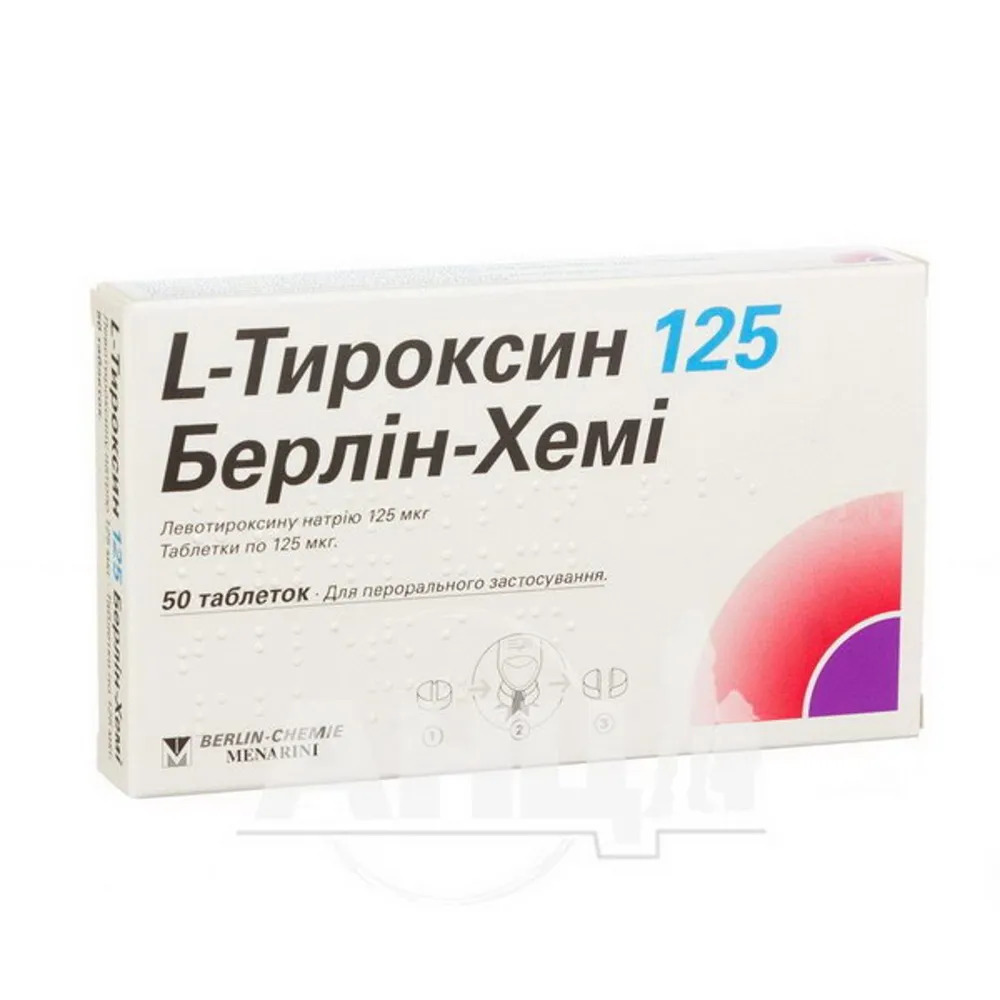
Table of Contents
INSTRUCTIONS for medical use of the medicinal product L-THYROXIN 125 BERLIN-CHEMIE (L-THYROXIN 125 BERLIN-CHEMIE)
Composition:
Active substance: levothyroxine sodium;
1 tablet contains 125 mcg of sodium levothyroxine;
Excipients: cysteine hydrochloride monohydrate (present in tablets partly as cystine); microcrystalline cellulose; pregelatinized starch; maize starch; light magnesium oxide; talc.
Pharmaceutical form. Tablets.
Main physicochemical properties: round, slightly convex tablets, white to beige in colour, with a score line on one side.
The tablet can be divided into equal doses.
Pharmacotherapeutic group. Thyroid therapy, thyroid hormones. ATC code H03A A01.
Pharmacological properties.
Pharmacodynamics.
Mechanism of action.
The synthetic levothyroxine contained in the L-Thyroxine 125 Berlin-Chemie preparation is identical in action to the natural thyroid hormone primarily produced by the thyroid gland. There are no differences between endogenously produced and exogenous levothyroxine in the organism.
Pharmacodynamic effects.
Following partial conversion into liothyronine (T3), primarily in the liver and kidneys, and subsequent entry into body cells, the characteristic effects of thyroid hormones on development, growth, and metabolism are observed via activation of T3 receptors.
Clinical efficacy and safety.
Replacement therapy with thyroid hormones leads to normalization of metabolic processes. For example, levothyroxine administration results in a significant reduction of elevated cholesterol levels caused by hypothyroidism.
Pharmacokinetics.
Absorption.
Orally administered levothyroxine is predominantly absorbed in the upper segment of the small intestine. The extent of absorption depends primarily on the pharmaceutical formulation and may reach up to 80% when administered on an empty stomach. Absorption is significantly reduced when the drug is taken with food.
Maximum plasma concentration is reached approximately 2–3 hours after administration.
Therapeutic effects become apparent 3–5 days after initiation of oral therapy.
Distribution.
The volume of distribution is approximately 10–12 L. Levothyroxine is approximately 99.97% bound to specific plasma transport proteins. The binding of hormones to proteins is non-covalent, allowing for continuous and very rapid exchange between free and bound hormone.
Elimination.
Metabolic clearance of levothyroxine is approximately 1.2 L of plasma per day. Metabolism occurs primarily in the liver, kidneys, brain, and muscles. Metabolites are excreted in urine and feces. The elimination half-life is approximately 7 days; in hyperthyroidism, this period is shortened (to 3–4 days), whereas in hypothyroidism it is prolonged (approximately 9–10 days).
Pregnancy and breastfeeding.
Levothyroxine crosses the placenta only in negligible amounts. When administered at usual doses, levothyroxine is excreted in breast milk only in negligible quantities.
Renal impairment.
Due to the high degree of protein binding, neither hemodialysis nor hemoperfusion significantly affects levothyroxine levels.
Clinical characteristics.
Indications.
- Replacement therapy in hypothyroidism of various etiologies;
- prevention of goiter recurrence after thyroid resection in patients with euthyroid thyroid function;
- benign goiter with euthyroid thyroid function;
- suppressive and replacement therapy in malignant thyroid tumors, primarily following thyroidectomy.
Contraindications.
Hypersensitivity to the active substance or to any of the excipients. Untreated hyperthyroidism of any origin. Untreated adrenal insufficiency. Untreated pituitary insufficiency (which leads to adrenal insufficiency requiring treatment). Acute myocardial infarction. Acute myocarditis. Acute pancarditis.
Concomitant use of levothyroxine and any antithyroid agent during pregnancy is contraindicated (more detailed information regarding use during pregnancy or breastfeeding is provided in the section «Use during pregnancy or breastfeeding»).
Interaction with other medicinal products and other types of interactions.
Antidiabetic agents
Levothyroxine may reduce the blood glucose-lowering effect of antidiabetic drugs (e.g., metformin, glimepiride, glyburide, and insulin). More frequent monitoring of blood glucose levels is recommended in diabetic patients, especially at the beginning and end of thyroid hormone therapy. Dose adjustment of the antidiabetic drug may be necessary.
Coumarin derivatives
Levothyroxine may potentiate the effect of coumarin derivatives by displacing them from plasma protein binding sites. Therefore, when used concomitantly, regular monitoring of coagulation parameters is required, and the dose of anticoagulant drugs may need to be adjusted (reduced) if necessary.
Ion-exchange resins
Ion-exchange resins such as cholestyramine, colestipol, or calcium and sodium salts of polystyrene sulfonate inhibit the absorption of levothyroxine by binding thyroid hormones in the gastrointestinal tract; therefore, they should be administered at least 4–5 hours after taking the medicinal product L-Thyroxine 125 Berlin-Chemie.
Proton pump inhibitors (PPIs):
Concomitant use with PPIs may lead to reduced absorption of thyroid hormones due to increased gastric pH caused by PPIs. During concomitant treatment, regular monitoring of thyroid function and clinical observation are recommended. An increase in thyroid hormone dosage may be required. Caution should also be exercised when PPI treatment is discontinued.
Drugs that bind bile acids
Colesevelam binds levothyroxine and thereby reduces its absorption in the gastrointestinal tract. No interaction was observed when levothyroxine was administered at least 4 hours before colesevelam. Therefore, L-Thyroxine 125 Berlin-Chemie should be administered at least 4 hours before colesevelam.
Aluminum-containing antacids, iron-containing, and calcium-containing drugs
Absorption of levothyroxine may be reduced when co-administered with aluminum-containing antacids (antacids, sucralfate), iron-containing, and calcium-containing medicinal products. L-Thyroxine 125 Berlin-Chemie should be administered at least 2 hours before these agents.
Sevelamer and lanthanum carbonate
Sevelamer and lanthanum carbonate may reduce the bioavailability of levothyroxine (see also section «Special precautions for use»).
Propylthiouracil, glucocorticoids, and beta-blockers (especially propranolol)
These substances inhibit the conversion of thyroxine (T4) to T3 and may lead to decreased plasma T3 concentration.
Amiodarone and iodinated contrast agents
Due to their high iodine content, amiodarone and iodinated contrast agents may cause both hyperthyroidism and hypothyroidism. Particular caution is required in nodular goiter with possible undefined autonomy. Amiodarone inhibits the conversion of T4 to T3, resulting in decreased T3 concentration and increased levels of thyroid-stimulating hormone (TSH) in plasma. Due to the effect of amiodarone on thyroid function, dose adjustment of L-Thyroxine 125 Berlin-Chemie may be necessary.
Salicylates, dicoumarol, furosemide, clofibrate
Salicylates (especially at doses above 2 g daily), dicoumarol, high-dose furosemide (250 mg), clofibrate, and other substances may displace levothyroxine from plasma protein binding sites. This may lead to an initial transient increase in free thyroid hormone levels, resulting in a decrease in total thyroid hormone levels.
Estrogen-containing contraceptives, postmenopausal hormone replacement therapy
The requirement for levothyroxine may increase during use of estrogen-containing contraceptives or postmenopausal hormone replacement therapy. Increased binding of levothyroxine may occur, potentially leading to diagnostic and therapeutic errors.
Sertraline, chloroquine/proguanil
These substances reduce the efficacy of levothyroxine and increase serum TSH levels.
Cytochrome P450 inducers
Medicinal products that induce enzymes, such as rifampicin, carbamazepine, phenytoin, barbiturates, and products containing St. John's wort (Hypericum perforatum L.), may increase hepatic clearance of levothyroxine, leading to decreased serum thyroid hormone concentration. Thus, patients receiving thyroid replacement therapy may require an increased dose of thyroid hormones when these drugs are administered concomitantly.
Protease inhibitors
There have been reports of loss of therapeutic effect of levothyroxine when co-administered with lopinavir/ritonavir. Therefore, patients receiving levothyroxine concomitantly with protease inhibitors require careful monitoring of clinical symptoms and thyroid function. In patients taking levothyroxine, TSH levels should be monitored at least during the first month after initiation and/or discontinuation of ritonavir therapy.
Tyrosine kinase inhibitors
Tyrosine kinase inhibitors (e.g., imatinib, sunitinib, sorafenib, motesanib) may reduce the efficacy of levothyroxine. Therefore, careful monitoring of clinical symptoms and thyroid function parameters is required in patients receiving concomitant levothyroxine and tyrosine kinase inhibitors. Levothyroxine dosage may need to be adjusted if necessary.
Products containing soy
Soy-containing products may inhibit intestinal absorption of levothyroxine. Reports have described increased serum TSH levels in children on soy-based diets treated with levothyroxine for congenital hypothyroidism. High doses of levothyroxine are recommended to achieve normal serum T4 and TSH levels. Careful monitoring of serum T4 and TSH levels is required during and after discontinuation of a soy-based diet; dose adjustment of levothyroxine may be necessary.
Orlistat
Hypothyroidism and/or reduced control of hypothyroidism may occur when levothyroxine and orlistat are used concomitantly. This may be due to reduced absorption of levothyroxine.
Coffee
Concomitant intake of levothyroxine with coffee should be avoided, as it may reduce levothyroxine absorption from the gastrointestinal tract. Therefore, an interval of half an hour to one hour between levothyroxine intake and coffee consumption is recommended to minimize the risk of interaction. Patients already receiving levothyroxine therapy are advised not to change their coffee consumption habits without medical evaluation and monitoring of levothyroxine levels.
Semaglutide
Concomitant use of semaglutide may affect levothyroxine exposure. The area under the concentration-time curve (AUC) of levothyroxine (adjusted for endogenous levels) increased by 33% after a single oral dose of semaglutide, while the maximum concentration (Cmax) remained unchanged. When treating patients with levothyroxine concomitantly with semaglutide, monitoring of thyroid function parameters and dose adjustment should be considered.
Impact on laboratory test results
Biotin may interfere with immunoassays of thyroid function based on biotin-streptavidin interaction, leading to falsely decreased or falsely increased test results (see section «Special precautions for use»).
Special precautions for use.
Before initiating thyroid hormone therapy, the presence of, or treatment for, the following diseases or conditions must be excluded:
- Ischemic heart disease
- Angina pectoris
- Hypertension
- Pituitary insufficiency and/or adrenal cortical insufficiency
- Autonomous thyroid function.
In patients with ischemic heart disease, heart failure, tachyarrhythmia, myocarditis outside the acute phase, chronic hypothyroidism, or those who have had a myocardial infarction, pharmacologically induced hyperthyroidism—even in mild form—must be strictly avoided. When treating such patients with thyroid hormones, more frequent monitoring of thyroid hormone levels is required (see section "Dosage and administration").
In cases of secondary hypothyroidism, concomitant adrenal cortical insufficiency must be ruled out. If present, replacement therapy (with hydrocortisone) should be initiated first. Thyroid hormone therapy in patients with adrenal or pituitary insufficiency, without adequate corticosteroid replacement, may precipitate an Addisonian crisis.
During initiation of levothyroxine therapy, hemodynamic parameters should be monitored in preterm infants with very low birth weight, due to the risk of circulatory disturbances arising from immature adrenal function.
In suspected autonomous thyroid dysfunction, TSH levels should be measured or thyroid scintigraphy performed prior to starting treatment.
Postmenopausal women are at increased risk of developing osteoporosis; therefore, levothyroxine sodium dosage should be carefully titrated to achieve the lowest effective dose. To avoid exceeding physiological levothyroxine concentrations in blood, thyroid function should be monitored more frequently in these patients (see section "Adverse reactions").
Thyroid hormones must not be used for weight reduction. Administration of physiological doses does not lead to weight loss in euthyroid patients. Higher doses may cause serious or even life-threatening adverse reactions, particularly when combined with certain weight-loss agents.
Serious hypersensitivity reactions (including angioedema) have been reported with levothyroxine use. If signs or symptoms of allergic reactions occur, levothyroxine therapy should be discontinued and appropriate symptomatic treatment initiated (see sections "Contraindications" and "Adverse reactions").
Once a levothyroxine treatment regimen has been established, switching to another thyroid hormone-containing medicinal product should only be done under laboratory and clinical monitoring.
In patients concurrently taking levothyroxine and other medicinal products that may affect thyroid function (e.g., amiodarone, tyrosine kinase inhibitors, salicylates, and high-dose furosemide), monitoring of thyroid function is required (see also section "Interaction with other medicinal products and other forms of interaction").
Caution should be exercised when prescribing levothyroxine to patients with a history of epilepsy, as these patients are at increased risk of seizures.
For information on patients with diabetes mellitus or those receiving anticoagulants, see section "Interaction with other medicinal products and other forms of interaction".
Cases of hypothyroidism have been reported in patients receiving concomitant sevelamer and levothyroxine. Therefore, TSH levels should be closely monitored in patients receiving both agents (see also section "Interaction with other medicinal products and other forms of interaction").
Effect on laboratory test results:
Biotin may interfere with thyroid function assays based on the biotin-streptavidin principle, leading to falsely low or falsely high test results. The risk of interference increases with higher biotin doses. When interpreting laboratory test results, potential biotin interference should be considered, especially if results are inconsistent with the clinical picture. Laboratory personnel should be informed about biotin-containing product use, and the optimal timing for thyroid function testing should be determined. Alternative assays insensitive to biotin should be used if available (see section "Interaction with other medicinal products and other forms of interaction").
This medicinal product contains less than 1 mmol (23 mg)/tablet of sodium, i.e., essentially "sodium-free".
Use during pregnancy or breastfeeding.
Thyroid hormone therapy should be continued throughout pregnancy and breastfeeding.
The thyroid suppression test should not be performed during pregnancy or breastfeeding.
Pregnancy
Maintaining thyroid hormone levels within the normal range is critically important during pregnancy to ensure optimal maternal and fetal health. To date, despite widespread use during pregnancy, no adverse effects of levothyroxine on pregnancy or fetal/neonatal health have been identified.
During pregnancy, levothyroxine requirements may increase under estrogen influence. Therefore, thyroid function should be monitored both during and after pregnancy, and thyroid hormone dosage adjusted as necessary.
Since elevated serum TSH levels may occur as early as week 4 of pregnancy, pregnant women taking levothyroxine should have TSH levels measured during each trimester to ensure values remain within the reference range appropriate for that trimester. Elevated serum TSH levels should be corrected by increasing levothyroxine dosage. As postpartum TSH levels are similar to preconception levels, levothyroxine dosage should be returned to the pre-pregnancy dose immediately after delivery. Serum TSH levels should be measured 6–8 weeks postpartum.
During pregnancy, the use of sodium levothyroxine as an adjunct to antithyroid drugs in the treatment of hyperthyroidism is contraindicated. Additional levothyroxine may necessitate higher antithyroid drug doses. Unlike levothyroxine, antithyroid drugs cross the placental barrier in significant amounts and may induce fetal hypothyroidism. Therefore, antithyroid drugs should always be used as monotherapy and at the lowest effective dose in pregnant women with hyperthyroidism.
Breastfeeding
Levothyroxine passes into human breast milk; however, concentrations achieved with recommended therapeutic doses are not sufficient to cause hyperthyroidism or suppress TSH secretion in the infant.
Fertility
Hypothyroidism or hyperthyroidism may affect fertility. During levothyroxine treatment for hypothyroidism, dosage should be adjusted based on laboratory monitoring, as inadequate dosing will not produce a beneficial effect, while overdosing may lead to hyperthyroidism.
Ability to affect reaction speed when driving or operating machinery.
No specific studies have been conducted to evaluate the effect on the ability to drive or operate machinery.
Method of Administration and Dosage.
The dosage information provided should be considered as recommendations. The individual daily dose of the drug should be determined based on laboratory test results and clinical evaluation. In cases of residual thyroid function, the lowest replacement dose should be used.
In elderly patients, in patients with ischemic heart disease, and in patients with severe or chronic hypothyroidism, treatment with thyroid hormones should be initiated with particular caution—for example, it is recommended to start therapy with a low dose, gradually increasing it at long intervals, with frequent monitoring of thyroid hormone levels. According to clinical experience, lower doses of the drug are sufficient both in patients with low body weight and in patients with large nodular goiter.
Since serum T4 or free thyroxine (fT4) levels may be elevated in some patients, serum TSH concentration is a more appropriate parameter for monitoring therapy.
Adult Patients.
Hypothyroidism. Initial dose: 25–50 mcg/day; maintenance dose: 00–200 mcg/day (dose increases of 25–50 mcg should be made at intervals of 2–4 weeks).
Prevention of goiter recurrence. 75–200 mcg/day.
Benign goiter with euthyroid function. 75–200 mcg/day.
After thyroidectomy for malignant tumor. 150–300 mcg/day.
If dose adjustment of this medication is not feasible, alternative dosage strengths are available. Consult a physician for advice.
Children with congenital and acquired hypothyroidism.
The maintenance dose in congenital and acquired hypothyroidism is usually 100–150 mcg of levothyroxine per 1 m² of body surface area per day.
For infants and children with congenital hypothyroidism requiring immediate levothyroxine replacement therapy, the recommended initial dose during the first 3 months of life is 10–15 mcg of levothyroxine per kilogram of body weight per day. Subsequent dose adjustments should be made individually based on clinical findings and laboratory parameters, including thyroid hormone and TSH levels.
For children with acquired hypothyroidism, the recommended initial dose is 12.5–50 mcg/day. A formulation with appropriate dosage strength should be used. The dose should also be increased gradually every 2–4 weeks, based on clinical evaluation and laboratory parameters, including thyroid hormone and thyroid-stimulating hormone (TSH) levels, until a fully effective replacement dose is achieved.
The full daily dose should be administered at least 30 minutes before the first feeding of the day. Tablets may also be given as a suspension. The tablet should first be dissolved in a small amount of water (10–15 mL), and the freshly prepared suspension should be administered to the child, adding a small additional amount of water (5–10 mL).
Elderly Patients.
In certain cases, such as elderly patients with heart disease, a gradual reduction in the dose of sodium levothyroxine is recommended, with continuous monitoring of TSH levels.
The entire daily dose should be swallowed whole, without chewing the tablets, with a small amount of liquid. The drug should be taken on an empty stomach, at least 30 minutes before breakfast.
Due to the special design of the tablet, it can be divided as follows: place the tablet on a hard surface with the score line facing upward and press down perpendicularly with a finger (see Figure 1).
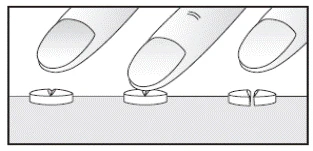
Figure 1
Treatment Duration.
The drug is usually administered for life in cases of hypothyroidism and after thyroidectomy due to malignant thyroid tumors; for euthyroid goiter and for prevention of goiter recurrence, treatment may last from several months or years to lifelong therapy.
The duration of treatment for euthyroid goiter should be from 6 months to 2 years. If the patient's condition does not improve after treatment with L-Thyroxine 125 Berlin-Chemie, alternative therapeutic approaches should be considered.
Children.
The drug can be used in pediatric practice. Detailed information on recommended doses and method of administration is provided in the section «Method of Administration and Dosage».
Overdose.
In case of overdose, symptoms may include rapid pulse, tachycardia, anxiety, sensation of heat, elevated body temperature, increased sweating, arrhythmia, insomnia, tremor, increased frequency of angina attacks, restlessness, weight loss, vomiting, diarrhea, headache, weakness, muscle cramps, menstrual cycle disturbances, and pseudotumor cerebri. It is recommended to discontinue the drug and undergo follow-up examinations.
Elevated T3 levels are a more reliable indicator of overdose than elevated T4 or fT4 levels.
In cases of overdose and intoxication, symptoms typical of moderate or severe metabolic acceleration occur (see section «Adverse Reactions»). Depending on the degree of overdose, it is recommended to discontinue the drug and undergo follow-up evaluation.
In human cases of intoxication (suicide attempts), levothyroxine doses up to 10 mg have been tolerated without complications. The development of serious complications such as life-threatening disturbances in vital functions (respiration and circulation) is unlikely unless there is a history of ischemic heart disease. Nevertheless, there have been reports of thyrotoxic crisis, seizures, cardiac failure, and coma. Isolated cases of sudden fatal outcome associated with cardiac dysfunction have been reported in patients who have been taking high doses of levothyroxine for a prolonged period.
In cases of acute overdose, gastrointestinal absorption of the drug can be reduced by administering activated charcoal. Treatment is generally symptomatic and supportive. In cases of severe beta-sympathomimetic symptoms such as tachycardia, restlessness, agitation, or hyperkinesis, these can be alleviated with beta-adrenergic receptor blockers. Antithyroid drugs should not be used, as thyroid gland function is already fully suppressed.
In cases of extreme overdosage (suicide attempts), plasmapheresis may be beneficial.
Prolonged observation is necessary after levothyroxine overdose. Due to the gradual conversion of levothyroxine into liothyronine, symptom onset may be delayed up to 6 days.
Side effects
If the patient does not tolerate the dose, which is very rare, or in case of overdose, especially due to too rapid dose escalation at the beginning of treatment, typical symptoms of hyperthyroidism may occur.
In such cases, the daily dose should be reduced or administration of the drug should be discontinued for several days. After the side effects have subsided, treatment should be resumed, carefully adjusting the dose of the drug.
Allergic reactions may occur in patients hypersensitive to levothyroxine or to any of the excipients of the medicinal product L-Thyroxine 125 Berlin-Chemie, affecting the skin (e.g. angioneurotic edema, skin rash, urticaria) and the respiratory tract. There have been isolated reports of anaphylactic shock. In such cases, the drug must be discontinued.
Adverse reactions are classified by frequency of occurrence as follows:
| Very common (≥ 1/10) Common (≥ 1/100 — < 1/10) Uncommon (≥ 1/1,000 — < 1/100) Rare (≥ 1/10,000 — < 1/1,000) Very rare (< 1/10,000) Not known (cannot be estimated from the available data) |
Immune system
Unknown: hypersensitivity
Endocrine system
Frequent: hyperthyroidism
Cardiac
Very common: palpitations
Frequent: tachycardia
Unknown: arrhythmia, angina pectoris
Skin and subcutaneous tissue
Unknown: angioneurotic edema, rash, urticaria, hyperhidrosis
Psychiatric disorders
Very common: insomnia
Frequent: nervousness
Unknown: inner restlessness
Musculoskeletal and connective tissue
Unknown: muscle weakness, muscle cramps, osteoporosis due to suppressive doses of levothyroxine, especially in postmenopausal women, predominantly during long-term treatment
Vascular
Unknown: hot flushes, collapse (acute circulatory failure) in premature infants with very low birth weight (see section “Special precautions for use”)
Reproductive system and breast
Unknown: menstrual disorders
Gastrointestinal
Unknown: diarrhea, vomiting, nausea
Investigations
Unknown: weight loss
Nervous system
Very common: headache
Rare: pseudotumor cerebri (mainly in children)
Unknown: tremor
General disorders and administration site conditions
Unknown: heat intolerance, fever
Reporting suspected adverse reactions.
Reporting of suspected adverse reactions after marketing authorization of the medicinal product is important. It allows continuous monitoring of the benefit-risk balance of the medicinal product. Healthcare and pharmaceutical professionals, as well as patients or their legal representatives, should report all suspected adverse reactions and
lack of effectiveness of the medicinal product via the Automated Pharmacovigilance Information System at the following link: https://aisf.dec.gov.ua.
Shelf life.
3 years. Do not use after the expiry date stated on the packaging.
Storage conditions.
Store at temperatures not exceeding 30 °C. Keep in the original blister pack to protect from light. Keep the medicinal product out of the reach of children.
Packaging.
Blister pack containing 25 tablets; 1, 2, or 4 blisters per cardboard box.
Prescription status.
Prescription only.
Manufacturer.
BERLIN-CHEMIE AG
Manufacturer's name and address of the place of business.
Glienicker Weg 125, 12489 Berlin, Germany