Cotellik
Ukraine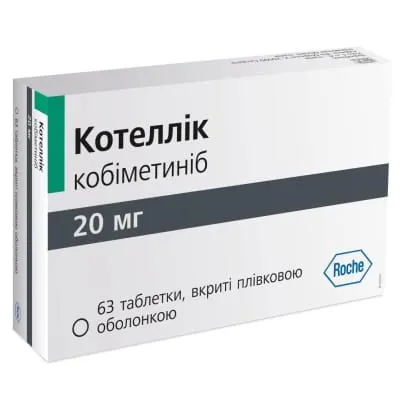
Table of Contents
INSTRUCTIONS FOR MEDICAL USE OF THE MEDICINAL PRODUCT Cotellic® (Cotellic®)
Composition:
Active substance: cobimetinib;
One film-coated tablet contains cobimetinib 20 mg in the form of cobimetinib hemifumarate 22.20 mg;
Excipients: microcrystalline cellulose PH-101; lactose monohydrate; sodium croscarmellose; magnesium stearate;
Film-coating mixture: polyvinyl alcohol, titanium dioxide (E 171), macrogol/PEG 3350, talc.
Pharmaceutical form. Film-coated tablets.
Main physicochemical characteristics: white, round, film-coated tablets, approximately 6.6 mm in diameter, with "COV" embossed on one side.
Pharmacotherapeutic group. Antineoplastic agents. Protein kinase inhibitors. Mitogen-activated protein kinase (MEK) inhibitors.
ATC Code: L01E E02
Pharmacological Properties
Pharmacodynamics
Mechanism of Action
Cobimetinib is a reversible, selective, allosteric oral inhibitor that blocks the mitogen-activated protein kinase (MAPK) pathway by selectively targeting mitogen-activated extracellular signal-regulated kinase (MEK) 1 and MEK 2. This results in inhibition of phosphorylation of extracellular signal-regulated kinases ERK 1 and ERK 2. Thus, cobimetinib blocks MAPK pathway-mediated cell proliferation by inhibiting the MEK1/2 signaling node.
In preclinical models, the combination of cobimetinib and vemurafenib demonstrated that dual targeted inhibition of mutant BRAF V600 and MEK proteins in melanoma cells suppresses reactivation of the MAPK-mediated pathway through MEK1/2, leading to more pronounced inhibition of intracellular signal transduction and reduced tumor cell proliferation.
Limited safety data and no efficacy data are available for Kotellic® in combination with vemurafenib in patients with central nervous system metastases. No data are available for patients with non-cutaneous malignant melanoma.
Pharmacokinetics
Absorption
Following oral administration of 60 mg in patients with malignant tumors, cobimetinib showed moderate absorption rate with a median Tmax of 2.4 hours. The mean steady-state Cmax and AUC0–24 were 273 ng/mL and 4340 ng*h/mL, respectively. The mean accumulation ratio at steady state was approximately 2.4-fold.
Cobimetinib exhibits linear pharmacokinetics over the dose range of ~3.5 mg to 100 mg.
The absolute bioavailability of cobimetinib was 45.9% (90% confidence interval: 39.7%, 53.1%) in healthy subjects. A mass balance study conducted in healthy subjects demonstrated extensive metabolism and fecal excretion of cobimetinib. The amount of drug absorbed was approximately 88%, indicating high absorption and significant presystemic metabolism.
Concomitant administration with food (high-fat meal) does not affect the pharmacokinetics of cobimetinib compared to fasting conditions in healthy subjects. Since food does not influence cobimetinib pharmacokinetics, the drug may be administered with or without food.
Distribution
Cobimetinib is 94.8% bound to plasma proteins in vitro. No significant binding to erythrocytes was observed in humans (blood-to-plasma ratio of 0.93).
The volume of distribution was 1050 L in healthy subjects receiving intravenous administration of 2 mg. The apparent volume of distribution based on population pharmacokinetic analysis was 806 L in patients with malignant tumors.
Cobimetinib is a substrate of P-gp in vitro. It is unknown whether cobimetinib crosses the blood-brain barrier.
Biotransformation
Oxidation via CYP3A and glucuronidation via UGT2B7 appear to be the major metabolic pathways of cobimetinib. Cobimetinib is the predominant component in plasma. Oxidative metabolites exceeding 10% of total circulating radioactivity or human-specific metabolites were not observed in plasma. Unchanged drug in feces and urine accounted for 6.6% and 1.6% of the administered dose, respectively, indicating that cobimetinib is primarily metabolized with minimal renal elimination. In vitro data indicate that cobimetinib is not an inhibitor of OAT1, OAT3, or OCT2.
Elimination
Cobimetinib and its metabolites were characterized in a mass balance study in healthy subjects. On average, 94% of the dose was recovered within 17 days. Cobimetinib undergoes extensive metabolism and is primarily excreted in feces.
After intravenous administration of cobimetinib at 2 mg, the mean plasma clearance was 10.7 L/h. The mean apparent clearance after oral administration of 60 mg in patients with malignant tumors was 13.8 L/h.
The mean elimination half-life of cobimetinib after oral administration was 43.6 hours (range: 23.1 to 69.6 hours). Therefore, complete elimination of cobimetinib from systemic circulation may take up to 2 weeks after discontinuation of treatment.
Special Patient Populations
Based on population pharmacokinetic analysis, sex, race, ethnicity, baseline ECOG performance status, and mild to moderate renal impairment did not influence the pharmacokinetics of cobimetinib. Baseline age and body weight were identified as statistically significant covariates for cobimetinib clearance and volume of distribution, respectively. However, sensitivity analyses indicate that none of these covariates had a clinically meaningful impact on steady-state exposure.
Sex
Sex does not affect cobimetinib exposure, based on population pharmacokinetic analysis involving 210 women and 277 men.
Elderly Patients
Age does not affect cobimetinib exposure, based on population pharmacokinetic analysis involving 133 patients aged ≥65 years.
Renal Impairment
Based on preclinical data and human mass balance studies, cobimetinib is primarily metabolized with minimal renal excretion. Formal pharmacokinetic studies have not been conducted in patients with renal impairment. Population pharmacokinetic analysis using data from 151 patients with mild renal impairment (creatinine clearance 60 to <90 mL/min), 48 patients with moderate renal impairment (creatinine clearance 30 to <60 mL/min), and 286 patients with normal renal function (creatinine clearance ≥90 mL/min) showed that creatinine clearance had no significant effect on cobimetinib exposure. Mild or moderate renal impairment does not affect cobimetinib exposure based on population pharmacokinetic analysis. Data on the use of Kotellic® in patients with severe renal impairment are very limited.
Hepatic Impairment
The pharmacokinetics of cobimetinib were evaluated in 6 subjects with mild hepatic impairment (Child-Pugh class A), 6 with moderate hepatic impairment (Child-Pugh class B), 6 with severe hepatic impairment (Child-Pugh class C), and 10 healthy subjects. Systemic total exposure to cobimetinib after a single dose was similar in subjects with mild or moderate hepatic impairment compared to healthy subjects, whereas lower total exposure was observed in subjects with severe hepatic impairment (geometric mean ratio of AUC0–∞ 0.69 compared to healthy subjects), which was not considered clinically significant. Unbound cobimetinib exposure was similar in subjects with mild and moderate hepatic impairment compared to those with normal hepatic function, while in subjects with severe hepatic impairment, unbound exposure was twice as high (see section "Dosage and Administration").
Pediatric Population
In children with malignant tumors, the maximum tolerated dose (MTD) of cobimetinib in tablet and suspension formulations was established at 0.8 mg/kg/day and 1 mg/kg/day, respectively. The geometric mean (CV%) of steady-state exposure in children at the recommended MTD of 1 mg/kg/day (suspension) was Cmax,ss 142 ng/mL (79.5%) and AUC0–24,ss 1862 ng*h/mL (87%), which is approximately 50% lower than that observed in adults receiving 60 mg once daily.
Clinical characteristics.
Indications.
Cotellic® is indicated for use in combination with vemurafenib for the treatment of adult patients with unresectable or metastatic melanoma with BRAF V600 mutation (see sections "Special precautions" and "Pharmacodynamics").
Contraindications.
Hypersensitivity to cobimetinib or to any excipient of the medicinal product.
Interaction with other medicinal products and other forms of interaction.
Effect of other medicinal products on cobimetinib
Inhibitors of CYP3A
Cobimetinib is metabolized by CYP3A, and the AUC of cobimetinib increased approximately 7-fold in the presence of a strong CYP3A inhibitor (itraconazole) in healthy subjects. The magnitude of interaction may potentially be lower in patients.
Strong CYP3A4 inhibitors (see section "Special precautions")
Concomitant use of strong CYP3A inhibitors should be avoided during treatment with cobimetinib. Strong CYP3A4 inhibitors include (but are not limited to) ritonavir, cobicistat, telaprevir, lopinavir, itraconazole, voriconazole, clarithromycin, telithromycin, posaconazole, nefazodone, and grapefruit juice. If concomitant use with a strong CYP3A inhibitor cannot be avoided, patients should be closely monitored for safety. If strong CYP3A inhibitors are used short-term (up to 7 days), interruption of cobimetinib therapy during the period of inhibitor use should be considered.
Moderate CYP3A4 inhibitors (see section "Special precautions")
Caution should be exercised when co-administering cobimetinib with moderate CYP3A inhibitors. Moderate CYP3A4 inhibitors include (but are not limited to) amiodarone, erythromycin, fluconazole, miconazole, diltiazem, verapamil, delavirdine, amprenavir, fosamprenavir, and imatinib. If cobimetinib is administered concomitantly with a moderate CYP3A inhibitor, patients should be closely monitored for safety.
Weak CYP3A4 inhibitors
Cobimetinib may be administered concomitantly with weak CYP3A inhibitors without dose adjustment.
Inducers of CYP3A
Concomitant administration of cobimetinib with a strong CYP3A inducer has not been studied in clinical trials, but a reduced exposure of cobimetinib is possible. Therefore, concomitant use with moderate and strong CYP3A inducers (e.g., carbamazepine, rifampicin, phenytoin, and St. John's wort) should be avoided. Alternative agents with no or minimal CYP3A inductive activity should be considered. Since cobimetinib concentrations may be substantially reduced when administered concomitantly with moderate and strong CYP3A inducers, efficacy in patients may be diminished.
Inhibitors of P-glycoprotein
Cobimetinib is a substrate of P-glycoprotein (P-gp). Concomitant administration of P-gp inhibitors such as cyclosporine and verapamil may potentially increase cobimetinib plasma concentrations.
Effect of cobimetinib on other medicinal products
Substrates of CYP3A and CYP2D6
A clinical drug interaction study in patients with malignancies showed that plasma concentrations of midazolam (a sensitive CYP3A substrate) and dextromethorphan (a sensitive CYP2D6 substrate) were not altered in the presence of cobimetinib.
Substrates of CYP1A2
In vitro, cobimetinib is a potential inducer of CYP1A2 and thus may reduce exposure to substrates of this enzyme, such as theophylline. A clinical drug interaction study has not been conducted to evaluate the clinical significance of this finding.
Substrates of BCRP
In vitro, cobimetinib is a moderate inhibitor of BCRP (breast cancer resistance protein). A clinical drug interaction study has not been conducted to evaluate this finding, and clinically significant inhibition of BCRP in the intestine cannot be excluded.
Other antineoplastic agents
Vemurafenib
There are no data on any clinically significant drug-drug interaction between cobimetinib and vemurafenib in patients with unresectable or metastatic melanoma, and therefore dose adjustment is not recommended.
Effect of cobimetinib on drug transport systems
In vitro studies have shown that cobimetinib is not a substrate of hepatic uptake transporters OATP1B1, OATP1B3, and OCT1, although cobimetinib weakly inhibits these transporters. The clinical significance of these findings has not been investigated.
Paediatric population
Interaction studies have been conducted only in adults.
Special precautions for use.
Prior to initiating treatment with Cotellic® in combination with vemurafenib, confirmation of the positive BRAF V600 mutation status in melanoma patients should be performed using a validated test.
Use of Cotellic® in combination with vemurafenib in patients who have experienced disease progression on a BRAF inhibitor
Limited data are available in patients receiving the combination of Cotellic® with vemurafenib who have experienced disease progression during prior BRAF inhibitor therapy. These data indicate that the efficacy of this combination may be reduced in such patients (see section "Pharmacodynamics"). Therefore, alternative treatment options should be considered before prescribing combination therapy to patients previously treated with a BRAF inhibitor. The optimal sequence of treatment after progression on a BRAF inhibitor has not been established.
Use of Cotellic® in combination with vemurafenib in patients with brain metastases
Limited data suggest that the safety profile of combination treatment with Cotellic® and vemurafenib in patients with BRAF V600-mutated melanoma with brain metastases is consistent with the known safety profile of Cotellic® in combination with vemurafenib. The efficacy of combination treatment with Cotellic® and vemurafenib has not been studied in these patients. The intracranial activity of Cotellic® is unknown (see sections "Pharmacodynamics" and "Pharmacokinetics").
Bleeding
Bleeding events, including major bleeding, may occur (see section "Undesirable effects").
Cotellic® should be used with caution in patients who have additional risk factors for bleeding, such as brain metastases and/or those receiving concomitant medications that increase the risk of bleeding (including antiplatelet or anticoagulant therapy). For information on the management of bleeding, see section "Dosage and administration".
Serous retinopathy
Serous retinopathy (fluid accumulation in retinal layers) has been observed in patients receiving MEK inhibitors, including Cotellic® (see section "Undesirable effects"). Most events were reported as chorioretinopathy or retinal detachment.
The median time to first occurrence of serous retinopathy was 1 month (range: 0–9 months). Most cases observed in clinical studies resolved or decreased in severity to asymptomatic Grade 1 following treatment interruption or dose reduction.
At each visit, patients should be evaluated for new visual disturbances or worsening of existing visual symptoms. Ophthalmological examination is recommended if new visual disturbances occur or existing disturbances worsen. Upon diagnosis of serous retinopathy, treatment with Cotellic® should be withheld until the severity of visual symptoms decreases to Grade ≤1. Serous retinopathy can be managed by treatment interruption, dose reduction, or discontinuation (see Table 1 in section "Dosage and administration").
Left ventricular dysfunction
Decreased left ventricular ejection fraction from baseline has been reported in patients receiving Cotellic® (see section "Undesirable effects"). The median time to first occurrence was 4 months (range: 1–13 months).
Left ventricular ejection fraction should be assessed prior to starting treatment to establish a baseline value, then one month after initiation of treatment, and subsequently at least every 3 months or as clinically indicated until treatment discontinuation. Decreases in left ventricular ejection fraction from baseline can be managed by treatment interruption, dose reduction, or discontinuation (see section "Dosage and administration").
All patients in whom treatment is resumed at a reduced dose of Cotellic® should have left ventricular ejection fraction assessed approximately 2, 4, 10, and 16 weeks after dose reduction, and thereafter as clinically indicated.
Patients with a baseline left ventricular ejection fraction below the lower limit of normal or below 50% have not been studied.
Hepatic laboratory abnormalities
Hepatic laboratory abnormalities may occur with Cotellic® in combination with vemurafenib, as well as with vemurafenib monotherapy (see the prescribing information for vemurafenib).
Hepatic laboratory abnormalities, particularly elevations in alanine aminotransferase (ALT), aspartate aminotransferase (AST), and alkaline phosphatase (ALP), have been observed in patients receiving Cotellic® and vemurafenib (see section "Undesirable effects").
Liver function tests should be performed prior to starting combination therapy and monthly during treatment, or more frequently if clinically indicated (see section "Dosage and administration").
For Grade III hepatic laboratory abnormalities, treatment with vemurafenib should be interrupted or the dose reduced. For Grade IV hepatic laboratory abnormalities, treatment with both Cotellic® and vemurafenib should be interrupted, dose reduced, or discontinued (see section "Dosage and administration").
Rhabdomyolysis and elevated creatine phosphokinase (CPK)
Cases of rhabdomyolysis have been reported in patients receiving Cotellic® (see section "Undesirable effects").
Upon diagnosis of rhabdomyolysis, treatment with Cotellic® should be interrupted, and CPK levels and other symptoms should be monitored until clinical manifestations normalize. Depending on the severity of rhabdomyolysis, dose reduction or discontinuation of treatment may be required (see section "Dosage and administration").
In clinical studies, Grade III and IV elevations in CPK, including asymptomatic increases from baseline, were also observed in patients receiving Cotellic® with vemurafenib (see section "Undesirable effects"). The median time to first occurrence of Grade III or IV CPK elevation was 16 days (range: 11 days to 10 months); the median time to complete resolution of symptoms was 16 days (range: 2 days to 15 months).
Serum CPK and creatinine levels should be measured before starting treatment to establish baseline values, and then monitored monthly during treatment or as clinically indicated. If serum CPK levels are elevated, patients should be evaluated for signs and symptoms of rhabdomyolysis or other potential causes. Depending on the severity of symptoms or CPK elevation, treatment interruption, dose reduction, or discontinuation may be necessary (see section "Dosage and administration").
Diarrhea
Cases of diarrhea ≥ Grade III and severe diarrhea have been reported in patients receiving Cotellic®.
Diarrhea should be managed with antidiarrheal agents and supportive care. If diarrhea ≥ Grade III occurs despite supportive care, treatment with Cotellic® and vemurafenib should be withheld until diarrhea severity decreases to Grade ≤ I. Upon recurrence of diarrhea ≥ Grade III, the doses of Cotellic® and vemurafenib should be reduced (see section "Dosage and administration").
Interaction with other medicinal products: CYP3A4 inhibitors
Concomitant use of strong CYP3A inhibitors should be avoided during treatment with Cotellic®. Caution should be exercised when using moderate CYP3A4 inhibitors concomitantly with Cotellic®. If concomitant use with a strong or moderate CYP3A inhibitor cannot be avoided, patients should be closely monitored for safety and dose adjustments should be considered as clinically indicated (see Table 1 in section "Dosage and administration").
QT prolongation
If QTc exceeds 500 ms during treatment, refer to the prescribing information for vemurafenib (sections "Dosage and administration" and "Special precautions for use").
Excipients
The medicine contains lactose. Patients with rare hereditary problems of galactose intolerance, total lactase deficiency, or glucose-galactose malabsorption should not take this medicine.
This medicine contains less than 1 mmol (23 mg) of sodium per tablet, i.e., essentially "sodium-free".
Disposal of unused medicine and waste: Medicinal waste should be minimized. The medicine should not be disposed of via wastewater or household waste. Disposal should be performed via a designated "waste collection system" where available.
Use during pregnancy or breastfeeding.
Women of childbearing potential/contraception
Women of childbearing potential should be advised to use two effective methods of contraception, such as condoms or other barrier methods (with spermicide, if available), during treatment with Cotellic® and for at least three months after discontinuation of treatment.
Pregnancy
There are no data on the use of Cotellic® in pregnant women. Animal studies have shown embryolethality and major vascular and skull malformations. Cotellic® should not be used during pregnancy unless absolutely necessary and only after careful assessment of benefit to the mother and risk to the fetus.
Breastfeeding
It is unknown whether cobimetinib is excreted in human breast milk. A risk to newborns/infants cannot be excluded. The decision to discontinue breastfeeding or to discontinue therapy with Cotellic® should be made, taking into account the benefit of breastfeeding for the child and the benefit of therapy for the woman.
Fertility
There are no data on the effect of cobimetinib on human fertility. Fertility studies in animals have not been conducted; however, adverse effects on reproductive organs in female animals have been observed. The clinical significance of these findings is unknown.
Effect on ability to drive and use machines.
Cotellic® has a minor influence on the ability to drive or operate machinery. Visual disturbances have been reported in some patients receiving cobimetinib in clinical studies (see sections "Special precautions for use" and "Undesirable effects").
Patients should be advised not to drive or operate machinery if visual disturbances or any other adverse effects affecting their abilities occur.
Dosage and Administration
Treatment with Cotellic® in combination with vemurafenib should be initiated and administered under the supervision of a qualified physician experienced in prescribing anticancer medicinal products.
Prior to initiating this treatment, a positive BRAF V600 mutation status in melanoma should be confirmed in patients using a validated test (see sections "Special Warnings" and "Pharmacodynamics").
Dosage
The recommended dose of Cotellic® is 60 mg (3 tablets of 20 mg) once daily.
Cotellic® should be administered in 28-day treatment cycles. Each dose consists of three 20 mg tablets (60 mg), taken once daily for 21 consecutive days (from Day 1 to Day 21 – treatment period), followed by a 7-day treatment interruption (from Day 22 to Day 28 – treatment break). Each subsequent cycle of Cotellic® treatment should be started within 7 days after the end of the treatment break.
For dosing information on vemurafenib, refer to the prescribing information for that medicinal product.
Duration of Treatment
Treatment with Cotellic® should be continued as long as clinical benefit is observed or until unacceptable toxicity occurs (see Table 1 below).
Missed Dose
If a dose is missed, it should be taken as soon as possible, but not later than 12 hours before the next scheduled dose, to maintain the once-daily dosing regimen.
Vomiting
If vomiting occurs after administration of Cotellic®, the patient should not take an additional dose on the same day. Treatment should be continued the next day according to the prescribed schedule.
General Recommendations for Dose Modification
Decisions regarding dose reduction of Cotellic® or both medicinal products should be based on the physician’s assessment of individual patient safety and tolerability. Dose modifications of Cotellic® should be performed independently of dose adjustments of vemurafenib.
If doses are missed due to toxicity, these should not be compensated for. Once a dose has been reduced, it should not be increased subsequently.
General recommendations for dose adjustment of Cotellic® are provided in Table 1 below.
Dose Modification Recommendations for Cotellic®
Table 1.
| Grade (CTC-AE)* |
Recommended dose of Cozaar® |
| Grade I or Grade II (tolerable) |
No dose reduction required. Continue Cozaar® 60 mg once daily (3 tablets). |
| Grade II (intolerable) or Grade III/IV |
|
| First occurrence |
Withhold treatment until toxicity resolves to ≤ Grade I, then resume treatment at 40 mg once daily (2 tablets) |
| Second occurrence |
Withhold treatment until toxicity resolves to ≤ Grade I, then resume treatment at 20 mg once daily (1 tablet) |
| Third occurrence |
Consider permanent discontinuation |
* The intensity of clinical adverse events was assessed according to the Common Terminology Criteria for Adverse Events, version 4.0 (CTC-AE)
Dose modification recommendations due to bleeding
Grade IV events or hemorrhagic stroke: treatment with Kotellic® should be discontinued. Treatment with Kotellic® should be permanently discontinued in cases of bleeding related to Kotellic® use.
Grade III events: treatment with Kotellic® should be temporarily suspended pending assessment of the adverse event to avoid potential worsening. There are no data on the effectiveness of dose modification of Kotellic® in the setting of bleeding. A clinical evaluation of the patient should be performed when considering resumption of treatment with Kotellic®. If clinically indicated, vemurafenib may be continued during interruption of Kotellic® treatment.
Dose adjustment recommendations due to left ventricular dysfunction
Permanent discontinuation of Kotellic® treatment should be considered if cardiac symptoms related to Kotellic® use do not improve after temporary discontinuation.
Dose modification recommendations for Kotellic® in patients with decreased left ventricular ejection fraction from baseline
Table 2.
| Patient status |
Left ventricular ejection fraction value |
Recommended dose modification of Cotellique® |
Left ventricular ejection fraction value after treatment interruption |
Recommended daily dose of Cotellique® |
| Asymptomatic |
≥ 50 % (or 40–49 % and absolute decrease from baseline < 10 %) |
Continue treatment at the current dose |
Not applicable |
Not applicable |
| ˂ 40 % (or 40–49 % and ≥ 10 % absolute decrease from baseline) |
Discontinue treatment for 2 weeks |
Absolute decrease of ˂ 10 % from baseline |
first occurrence: 40 mg |
|
| second occurrence: 20 mg |
||||
| third occurrence: permanent discontinuation |
||||
| ˂ 40 % (or absolute decrease ≥ 10 % from baseline) |
Permanent discontinuation |
|||
| Symptomatic |
Not applicable |
Discontinue treatment for 4 weeks |
Asymptomatic, and absolute decrease ˂ 10 % from baseline |
first occurrence: 40 mg |
| second occurrence: 20 mg |
||||
| third occurrence: permanent discontinuation |
||||
| Asymptomatic, and ˂ 40 % (or absolute decrease ≥ 10 % from baseline) |
Permanent discontinuation |
|||
| Symptoms present regardless of left ventricular ejection fraction |
Permanent discontinuation |
Treatment with vemurafenib may be continued during dose modification of Cotellic® if clinically indicated.
Dose modification recommendations for rhabdomyolysis and elevated creatine phosphokinase (CPK) levels
Rhabdomyolysis or symptomatic elevation of CPK levels
Treatment with Cotellic® should be interrupted. If symptoms of rhabdomyolysis or CPK levels do not decrease within 4 weeks, treatment with Cotellic® should be permanently discontinued.
If disease severity decreases by at least one grade within 4 weeks, treatment with Cotellic® may be resumed at a reduced dose of 20 mg, if clinically indicated. Patients should be closely monitored. Vemurafenib administration may be continued during dose modification of Cotellic®.
Asymptomatic elevation of CPK levels
Grade IV: Treatment with Cotellic® should be interrupted. If CPK levels do not decrease to ≤ Grade III within 4 weeks after treatment interruption, treatment with Cotellic® should be permanently discontinued. If CPK levels decrease to ≤ Grade III within 4 weeks after interruption of Cotellic®, treatment with Cotellic® may be resumed at a reduced dose of 20 mg, with close monitoring of the patient, if clinically indicated. Vemurafenib administration may be continued during dose modification of Cotellic®.
Grade ≤ III: After exclusion of rhabdomyolysis, dose modification of Cotellic® is not required.
Dose modification recommendations for Cotellic® when used in combination with vemurafenib
Liver function test abnormalities
Grade I and II: Treatment with Cotellic® and vemurafenib should continue at the prescribed dose.
Grade III: Treatment with Cotellic® should continue at the prescribed dose. The dose of vemurafenib may be reduced if clinically acceptable. For dosing information on vemurafenib, see the prescribing information for this medicinal product.
Grade IV: Treatment with Cotellic® and vemurafenib should be interrupted. If liver function test abnormalities improve to ≤ Grade I within 4 weeks, treatment with Cotellic® should be resumed at a reduced dose of 20 mg, and vemurafenib should be administered at a clinically acceptable dose according to its prescribing information. Treatment with Cotellic® and vemurafenib should be permanently discontinued if liver function test abnormalities do not improve to ≤ Grade I within 4 weeks, or if Grade IV liver function test abnormalities recur after initial improvement.
Photosensitivity
For Grade ≤ II (tolerable) photosensitivity, supportive therapy should be administered.
For Grade II (intolerable) or Grade ≥ III photosensitivity: Cotellic® and vemurafenib should be withheld until photosensitivity improves to ≤ Grade I. Treatment may be restarted without dose modification of Cotellic®. The dose of vemurafenib should be reduced if clinically acceptable; see the prescribing information for this medicinal product for further details.
Rash
Rash may occur during treatment with either Cotellic® or vemurafenib. Cotellic® and/or vemurafenib may be temporarily withheld and/or their doses reduced, as clinically indicated.
For Grade ≤ II (tolerable) rash, supportive therapy should be administered. Dosing of Cotellic® may continue without dose modification.
Acneiform rash of Grade II (intolerable) or Grade ≥ III: Follow general dose modification recommendations for Cotellic® (Table 1). Vemurafenib dosing may continue during dose modification of Cotellic® (if clinically indicated).
Non-acneiform or maculopapular rash of Grade II (intolerable) or Grade ≥ III: Administration of Cotellic® may continue without dose modification, if clinically indicated. Vemurafenib administration may be temporarily interrupted and/or the dose reduced; see the prescribing information for this medicinal product for further details.
QT prolongation
If QTc exceeds 500 ms during treatment, refer to the vemurafenib prescribing information (see section "Dosage and administration") for vemurafenib dose adjustment. Dose modification of Cotellic® is not required when used in combination with vemurafenib.
Special patient populations
Elderly patients
Dose adjustment is not required for patients aged ≥ 65 years.
Renal impairment
Based on population pharmacokinetic analysis, dose adjustment is not recommended for patients with mild or moderate renal impairment (see section "Pharmacokinetics"). Data on the use of Cotellic® in patients with severe renal impairment are limited, and therefore an effect cannot be excluded. Cotellic® should be used with caution in patients with severe renal impairment.
Hepatic impairment
Dose adjustment is not recommended for patients with hepatic impairment. Increased plasma concentrations of unbound cobimetinib may occur in patients with severe hepatic impairment compared to patients with normal liver function (see section "Pharmacokinetics"). Liver function test abnormalities may occur during treatment with Cotellic®; therefore, caution should be exercised in patients with any degree of hepatic impairment (see section "Special precautions").
Non-Caucasian race
The safety and efficacy of Cotellic® in non-Caucasian patients have not been established.
Children
The safety and efficacy of Cotellic® in pediatric patients (under 18 years of age) have not been established. Available data are described in sections "Pharmacokinetics", "Pediatric use", and "Adverse reactions". However, no dosing recommendations can be provided.
Administration
Cotellic® is for oral use. Tablets should be swallowed whole with water. The medicinal product may be taken with or without food.
Children.
The safety and efficacy of Cotellic® in pediatric patients (under 18 years of age) have not been established. Available data are described in sections "Pharmacokinetics", "Dosage and administration", and "Adverse reactions".
Overdose.
There is no clinical experience with overdose in humans. In case of suspected overdose, cobimetinib treatment should be withheld and supportive therapy administered. There is no specific antidote for cobimetinib overdose.
Adverse Reactions
Safety Profile Summary
The safety of Cotellic® in combination with vemurafenib was evaluated in 247 patients with metastatic melanoma harboring a BRAF V600 mutation in the GO28141 study. The median time to first occurrence of adverse events ≥ Grade III was 0.6 months in the Cotellic® + vemurafenib treatment group compared to 0.8 months in the placebo + vemurafenib group.
The safety of Cotellic® in combination with vemurafenib was also evaluated in 129 patients with metastatic melanoma with a BRAF V600 mutation in study NO25395. The safety profile in study NO25395 was comparable to that observed in study GO28141.
In study GO28141, the most common adverse reactions (> 20%) observed at higher frequency in the Cotellic® + vemurafenib group compared to placebo + vemurafenib were diarrhea, rash, nausea, pyrexia, photosensitivity reaction, increased levels of ALT and AST, increased creatine phosphokinase (CPK) in blood, and vomiting. The most common adverse reactions (> 20%) observed at higher frequency in the placebo + vemurafenib group were arthralgia, alopecia, and hyperkeratosis. Fatigue was observed at a similar frequency in both groups.
For a complete description of all adverse reactions associated with vemurafenib treatment, refer to the Summary of Product Characteristics for vemurafenib.
List of Adverse Reactions
Adverse reactions were identified from results of a multicenter, randomized, double-blind, placebo-controlled Phase III study (GO28141), which evaluated the safety and efficacy of Cotellic® in combination with vemurafenib versus vemurafenib alone in previously untreated patients with unresectable locally advanced (Stage III) or metastatic (Stage IV) melanoma with BRAF V600 mutation.
The frequency of adverse reactions was determined based on a safety analysis in patients treated with cobimetinib in combination with vemurafenib, with a median follow-up of 11.2 months (data cutoff date: September 19, 2014).
Adverse reactions observed in patients with melanoma are listed below by MedDRA System Organ Class, frequency, and severity. Frequency categories are defined as follows: very common (≥ 1/10), common (≥ 1/100 and < 1/10), uncommon (≥ 1/1,000 and < 1/100), rare (≥ 1/10,000 and < 1/1,000), very rare (< 1/10,000).
The adverse reactions listed below are considered related to the use of Cotellic®. Within each frequency group, adverse reactions are listed in order of decreasing severity and were reported according to NCI CTCAE v4.0 (National Cancer Institute Common Terminology Criteria for Adverse Events) for toxicity assessment in study GO28141.
Adverse Reactions in Patients Receiving Cotellic® in Combination with Vemurafenib in Study GO28141^
Benign, malignant and unspecified neoplasms (including cysts and polyps): common – basal cell carcinoma, cutaneous squamous cell carcinoma**, keratoacanthoma**.
Blood and lymphatic system disorders: very common – anemia.
Metabolism and nutrition disorders: common – dehydration, hypophosphatemia, hyponatremia, hyperglycemia.
Eye disorders: very common – serous retinopathya, blurred vision; common – visual disturbance.
Vascular disorders: very common – hypertension, hemorrhage*.
Respiratory, thoracic and mediastinal disorders: common – pneumonitis.
Gastrointestinal disorders: very common – diarrhea, nausea, vomiting, stomatitis.
Skin and subcutaneous tissue disorders: very common – photosensitivityb, rash, maculopapular rash, acneiform dermatitis, hyperkeratosis**, dry skinc, pruritusc.
Musculoskeletal and connective tissue disorders: uncommon – rhabdomyolysis***.
General disorders and administration site conditions: very common – pyrexia, fever, peripheral edemac.
Investigations: very common – increased creatine phosphokinase, ALT, AST, gamma-glutamyl transferase (GGT), alkaline phosphatase in blood; common – decreased ejection fraction, increased blood bilirubin.
^ Data cutoff date: September 19, 2014.
* See subsection Hemorrhage in section «Description of Selected Adverse Reactions»
** See subsection Cutaneous Squamous Cell Carcinoma, Keratoacanthoma and Hyperkeratosis in section «Description of Selected Adverse Reactions»
*** See subsection Rhabdomyolysis in section «Description of Selected Adverse Reactions»
a Includes choroiditis and retinal detachment indicative of serous retinopathy (see section «Special Warnings and Precautions for Use»).
b Combined data include reports of photosensitivity reactions, sunburn, solar dermatitis, and actinic elastosis.
c Adverse reactions identified in the cobimetinib monotherapy study (ML29733; a study conducted in the USA). However, these adverse reactions have also been reported in clinical studies of cobimetinib in combination with vemurafenib in patients with unresectable or metastatic melanoma.
Description of Selected Adverse Reactions
Hemorrhage
Hemorrhagic events occurred more frequently in the Cotellic® + vemurafenib combination group compared to the placebo + vemurafenib group (all types and grades: 13% vs. 7%). The median time to first occurrence was 6.1 months in the Cotellic® + vemurafenib group.
Most events were Grade I or II and were not considered serious. The majority of adverse reactions resolved without dose modification of Cotellic®. In the post-marketing period, major hemorrhages (including intracranial hemorrhage and gastrointestinal bleeding) have been reported. The risk of hemorrhage may be increased when antithrombotic or anticoagulant therapy is used concomitantly. In case of hemorrhage, management should be based on clinical judgment (see sections «Dosage and Administration» and «Special Warnings and Precautions for Use»).
Rhabdomyolysis
Cases of rhabdomyolysis have been reported in the post-marketing period. Symptoms suggestive of rhabdomyolysis require appropriate clinical evaluation and management, along with dose modification or discontinuation of Cotellic®, depending on the severity of the adverse reaction (see sections «Dosage and Administration» and «Special Warnings and Precautions for Use»).
Photosensitivity
Photosensitivity occurred at a higher frequency in the Cotellic® + vemurafenib group compared to placebo + vemurafenib (47% vs. 35%). Most events were Grade I or II, with Grade ≥ III events occurring in 4% of patients in the Cotellic® + vemurafenib group compared to 0% in the placebo + vemurafenib group.
There was no clear trend regarding the time to onset of Grade ≥ III events. Grade ≥ III photosensitivity reactions in the Cotellic® + vemurafenib group were primarily managed with topical medications in combination with temporary interruption of both cobimetinib and vemurafenib (see section «Dosage and Administration»).
No photosensitivity toxicity events were observed with Cotellic® when administered as monotherapy.
Cutaneous Squamous Cell Carcinoma, Keratoacanthoma and Hyperkeratosis
Cutaneous squamous cell carcinoma occurred less frequently in the Cotellic® + vemurafenib group compared to the placebo + vemurafenib group (all grades: 3% vs. 13%). Keratoacanthoma was reported less frequently in the Cotellic® + vemurafenib group compared to placebo + vemurafenib (all grades: 2% vs. 9%). Hyperkeratosis occurred less frequently in the Cotellic® + vemurafenib group compared to placebo + vemurafenib (all grades: 11% vs. 30%).
Serous Retinopathy
Cases of serous retinopathy were observed in patients treated with Cotellic® (see section «Special Warnings and Precautions for Use»). Patients reporting new or worsening visual disturbances should undergo an ophthalmological examination. Serous retinopathy can be managed by interruption, dose reduction, or discontinuation of treatment (see Table 1 in section «Dosage and Administration»).
Left Ventricular Dysfunction
Decreased left ventricular ejection fraction from baseline was observed in patients receiving Cotellic® (see section «Special Warnings and Precautions for Use»). Left ventricular ejection fraction should be assessed prior to initiation of treatment to establish baseline values, then one month after starting treatment, and subsequently at least every 3 months or as clinically indicated until treatment discontinuation. Decreases in left ventricular ejection fraction from baseline can be managed by interruption, dose reduction, or discontinuation of treatment (see section «Dosage and Administration»).
Laboratory Abnormalities
Liver Function Laboratory Abnormalities
Abnormalities in liver function laboratory parameters, including ALT, AST, and alkaline phosphatase, were observed in patients treated with Cotellic® in combination with vemurafenib (see section «Special Warnings and Precautions for Use»).
Liver function tests should be performed prior to initiation of combination therapy and monthly during treatment, or more frequently if clinically indicated (see section «Dosage and Administration»).
Elevated Blood Creatine Phosphokinase
Asymptomatic elevations in blood creatine phosphokinase occurred more frequently in the Cotellic® + vemurafenib group compared to placebo + vemurafenib in study GO28141 (see sections «Dosage and Administration» and «Special Warnings and Precautions for Use»). One case of rhabdomyolysis with concomitant elevation of blood creatine phosphokinase was reported in each treatment group of this study.
Table 3 presents the frequency of measured laboratory abnormalities in liver function parameters and elevated creatine phosphokinase levels of all grades and Grades III–IV.
Laboratory Parameters of Liver Function and Other Laboratory Parameters in Phase III Study GO28141
Table 3.
| Changes in reported laboratory parameters |
Cobimetinib + vemurafenib (n = 247) (%) |
Placebo + vemurafenib (n = 246) (%) |
||
| All grades |
Grades III–IV |
All grades |
Grades III–IV |
|
| Liver function tests |
||||
| Increased alkaline phosphatase levels |
69 |
7 |
55 |
3 |
| Increased ALT levels |
67 |
11 |
54 |
5 |
| Increased AST levels |
71 |
7 |
43 |
2 |
| Increased gamma-glutamyl transferase levels |
62 |
20 |
59 |
17 |
| Increased blood bilirubin levels |
33 |
2 |
43 |
1 |
| Abnormalities in other laboratory parameters |
||||
| Increased blood creatine phosphokinase levels |
65 |
12 |
14 |
< 1 |
Special patient populations
Elderly patients
In a phase III study of Cotellic® in combination with vemurafenib in patients with unresectable or metastatic melanoma (n = 247), 183 patients (74%) were under 65 years of age, 44 patients (18%) were aged 65–74 years, 16 (6%) were aged 75–84 years, and 4 patients (2%) were aged ≥ 85 years. The incidence of adverse reactions was similar between patients under 65 years of age and those aged ≥ 65 years. However, serious adverse reactions and adverse reactions leading to discontinuation of cobimetinib occurred more frequently in patients aged ≥ 65 years compared to those under 65 years of age.
Children
The safety of Cotellic® in pediatric patients has not been fully established. The safety of Cotellic® was evaluated in a multicenter, open-label dose-escalation study in 55 patients with solid tumors aged 2 to 18 years. The safety profile of Cotellic® in these patients was consistent with that observed in the adult population (see section "Pharmacokinetics").
Renal impairment
Pharmacokinetic studies in individuals with impaired renal function have not been conducted. Dose adjustment is not recommended for patients with mild or moderate renal impairment based on results from population pharmacokinetic analysis. Data on the use of Cotellic® in patients with severe renal impairment are limited. Cotellic® should be used with caution in patients with severe renal impairment.
Hepatic impairment
Dose adjustment is not recommended for patients with hepatic impairment (see section "Pharmacokinetics").
Reporting suspected adverse reactions after marketing authorization is important. It allows continued monitoring of the benefit-risk balance of the medicinal product. Healthcare professionals and patients, as well as their legal representatives, should report all suspected adverse reactions and lack of efficacy through the automated pharmacovigilance information system at the following link: https://aisf.dec.gov.ua.
Shelf life.
5 years
Storage conditions.
Store at temperatures not exceeding 30 °C. Keep out of reach of children.
Packaging.
21 tablets in a transparent, double-layered blister made of polyvinyl chloride (PVC)/
polyvinylidene chloride (PVDC) [contact material], with a lidding foil.
3 blisters in a cardboard box.
Prescription status.
Prescription only.
Manufacturer.
F. Hoffmann-La Roche Ltd
Manufacturer's location and address of its business site.
Grenzacherstrasse 124, 4058 Basel, Switzerland