Corvitol® 100
Ukraine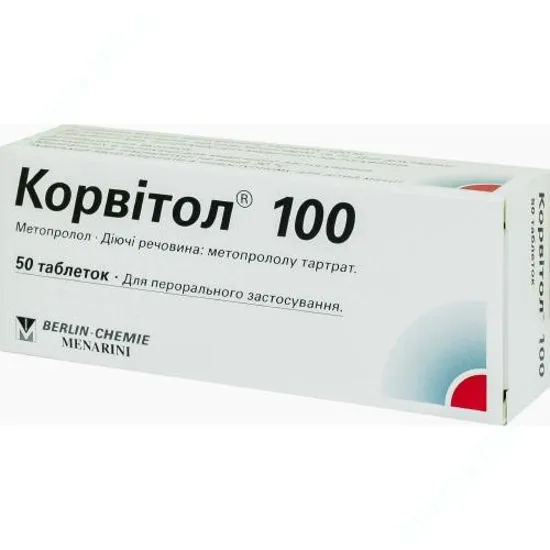
Table of Contents
INSTRUCTIONS FOR MEDICAL USE OF THE MEDICINAL PRODUCT CORVITOL® 50, CORVITOL® 100
Composition:
Active substance: metoprolol;
1 tablet contains 50 mg or 100 mg of metoprolol tartrate;
Excipients: lactose monohydrate, povidone (K-30), sodium croscarmellose, magnesium stearate, talc, colloidal anhydrous silicon dioxide.
Pharmaceutical form. Tablets.
Main physicochemical properties: white-colored, round, flat parallel tablets with bevelled edges and a score line on one side for division.
Pharmacotherapeutic group.
Selective β-adrenoreceptor blockers. ATC code C07AB02.
Pharmacological properties.
Pharmacodynamics.
Metoprolol is a β-adrenergic receptor blocker with relative β1-selectivity ("cardioselectivity") and no intrinsic sympathomimetic activity. It specifically blocks the effects of catecholamines at β1-adrenergic receptors. It reduces myocardial oxygen demand during exertion, which has a beneficial effect in long-term treatment of angina pectoris (reducing the frequency of anginal attacks). It lowers systolic blood pressure, especially after physical stress, and prevents the development of reflex orthostatic hypotension. Reduction in diastolic blood pressure occurs after several weeks of regular use – metoprolol decreases plasma renin activity. By inhibiting β2-receptors, metoprolol may cause increased smooth muscle tone.
Pharmacokinetics.
Absorption and distribution.
After oral administration, metoprolol is almost completely absorbed from the gastrointestinal tract. The plasma concentration of metoprolol is linearly dependent on the administered dose within the therapeutic range. Maximum plasma concentration (Cmax) is reached approximately 1.5–2 hours after administration (Tmax). Although plasma concentrations vary between individuals, intra-individual reproducibility is good. Due to significant first-pass metabolism in the liver, the systemic bioavailability of metoprolol after a single oral dose is approximately 50%. With repeated administration, bioavailability increases to about 70%. Administration with food may increase bioavailability by 30–40%. The protein binding of metoprolol to plasma proteins is low (approximately 5–10%).
Biotransformation.
Metoprolol undergoes almost complete oxidative metabolism in the liver by cytochrome P450 enzymes (primarily the CYP2D6 isoenzyme). The proportion of individuals with slow metabolism is about 7% in Caucasians and less than 1% in Mongoloids. In patients with slow metabolism via the CYP2D6 system, plasma concentrations of metoprolol may be several times higher than in individuals with normal CYP2D6 metabolic rate. However, metabolism of metoprolol via the CYP2D6 system may have little or no effect on the safety and tolerability of metoprolol. In patients with liver cirrhosis, increased plasma levels of unmetabolized metoprolol are expected due to reduced metabolic rate.
Metabolism and elimination.
Metoprolol is metabolized in the liver, forming three metabolites. Two of the three metabolites have weak β-blocking properties, but this is not clinically significant. Usually, more than 95% of an oral dose is excreted in the urine. Approximately 5% of the dose is excreted unchanged in the urine; in individual cases, this amount may reach up to 30%.
The elimination half-life is 3.5 hours (range 1–9 hours). Total plasma clearance is approximately 1000 mL/min.
In elderly patients, there are no significant changes in the pharmacokinetics of metoprolol compared to younger patients.
Systemic bioavailability and elimination of metoprolol are not altered in patients with renal impairment. However, excretion of metabolites is reduced in these patients. In patients with glomerular filtration rate less than 5 mL/min, significant accumulation of metabolites occurs. This accumulation of metabolites does not contribute to the overall β-blocking effect.
In patients with impaired liver function, the pharmacokinetics of metoprolol (due to its low protein binding) is only slightly altered. However, in patients with liver cirrhosis, the bioavailability of metoprolol may increase and total clearance may decrease.
Clinical characteristics.
Indications.
- Arterial hypertension.
- Angina pectoris (including post-infarction).
- Arrhythmia (including supraventricular tachycardia).
- Emergency treatment of myocardial infarction and prevention of recurrent infarction.
- Hyperkinetic cardiac syndrome.
- Migraine prophylaxis.
Corvitol® is indicated for adults.
Contraindications.
- Hypersensitivity to the active substance, to other β-adrenoceptor blockers, or to any of the excipients;
- shock;
- second- or third-degree atrioventricular block;
- sick sinus syndrome;
- decompensated heart failure (pulmonary edema, hypoperfusion syndrome, or arterial hypotension);
- sinoatrial block;
- severe bradycardia (resting heart rate less than 50 beats per minute prior to treatment initiation);
- arterial hypotension (systolic blood pressure less than 100 mm Hg);
- acidosis;
- untreated pheochromocytoma;
- concurrent therapy with inotropic β-receptor agonists;
- bronchial hyperreactivity (e.g., bronchial asthma), severe forms of chronic obstructive bronchopulmonary diseases;
- severe peripheral circulatory disorders with pain or trophic changes;
- concomitant therapy with monoamine oxidase inhibitors A (MAO-A inhibitors).
Intravenous administration of calcium channel antagonists of the verapamil and diltiazem types or other antiarrhythmic agents (e.g., disopyramide) is contraindicated in patients treated with Corvitol® (except in intensive care settings).
Metoprolol should not be administered to patients with suspected acute myocardial infarction if heart rate is less than 50 beats/min, P–Q interval > 0.24 sec, or systolic blood pressure < 100 mm Hg.
Note. In patients with decompensated heart failure who tolerate other medications well, metoprolol may be used with individual dose titration.
Interaction with other medicinal products and other forms of interactions.
The following interactions between metoprolol and other medicinal products should be considered.
Metoprolol is almost completely metabolized in the liver by cytochrome P450 enzymes (primarily by the CYP2D6 isoenzyme) (see section "Pharmacokinetics"). Therefore, plasma concentrations of metoprolol may increase when co-administered with substrates that inhibit CYP2D6 and may decrease when taken with substances that induce CYP2D6. Thus, CYP2D6 inhibitors and inducers should be used with caution together with metoprolol.
Clinically significant CYP2D6 inhibitors include:
- antidepressants such as fluoxetine, paroxetine, sertraline, or bupropion;
- antipsychotics such as thioridazine;
- antiarrhythmic agents such as quinidine, propafenone, or amiodarone;
- antiviral agents such as ritonavir;
- antihistamines such as diphenhydramine;
- antimalarial agents such as hydroxychloroquine, quinine;
- antifungal agents such as terbinafine;
- H2-receptor antagonists such as cimetidine;
- celecoxib.
At the beginning of treatment with these agents, a reduction in metoprolol dosage may be necessary.
CYP2D6 inducers include:
- rifampicin;
- dexamethasone.
Patients should be closely monitored if they are concurrently taking ganglionic blockers or other β-blockers (e.g., eye drops) with Corvitol®.
Concomitant administration of Corvitol® with insulin or oral antidiabetic agents may potentiate or prolong their effects. In such cases, symptoms predictive of hypoglycemia (especially tachycardia and tremor) may be masked or attenuated. Therefore, blood glucose levels should be monitored regularly, and the dosage of antihyperglycemic agents should be adjusted as necessary.
Concomitant use with barbiturates should be avoided, as barbiturates (tested with pentobarbital) stimulate metoprolol metabolism via enzyme induction.
Caution should be exercised when administering Corvitol® concomitantly with tricyclic antidepressants, phenothiazines, nitroglycerin, and also with diuretics, vasodilators, and other antihypertensive agents due to the risk of arterial hypotension.
Concomitant use of Corvitol® with dihydropyridine calcium channel blockers (e.g., nifedipine) increases the risk of hypotension and, in individual cases, the risk of heart failure in patients with latent heart failure.
Metoprolol should be prescribed with caution in patients receiving β2-receptor and β1-receptor stimulants, as well as dihydropyridines.
Caution is recommended when co-administering certain antiarrhythmic agents such as quinidine, amiodarone, or propafenone, since β-blockers may enhance negative inotropic, dromotropic, and chronotropic effects. Concomitant administration with propafenone should be avoided. It has been reported that in 4 patients treated with metoprolol, plasma concentrations of metoprolol increased 2–5 times after administration of propafenone, and adverse effects typical of metoprolol occurred in 2 patients. This interaction was confirmed in 8 healthy volunteers. This interaction may be explained by the fact that propafenone, like quinidine, inhibits metoprolol metabolism via cytochrome CYP2D6. The outcome of using this combination is unpredictable because propafenone also has β-blocking properties. The cardiodepressive effects of Corvitol® and antiarrhythmic agents (e.g., amiodarone, propafenone, and other antiarrhythmics) may be additive. The effect of amiodarone when used concomitantly with metoprolol (marked sinus bradycardia) may persist for a prolonged period after discontinuation of the drug due to the extremely long elimination half-life of amiodarone (approximately 50 days).
Class I antiarrhythmic agents and β-blockers have additive negative inotropic effects, which may lead to serious hemodynamic adverse effects in patients with impaired left ventricular function. The use of this combination should also be avoided in sick sinus syndrome and atrioventricular (AV) conduction disturbances. This interaction is best documented with disopyramide.
Diphenhydramine reduces (by 2.5 times) the clearance of metoprolol to α-hydroxymetoprolol via the CYP2D6 system in individuals with rapid hydroxylation. The effects of metoprolol are enhanced. Diphenhydramine may also inhibit the metabolism of other CYP2D6 substrates.
In patients who are concurrently taking Corvitol® with calcium channel antagonists of the verapamil or diltiazem types or other antiarrhythmic agents (e.g., disopyramide), negative inotropic and chronotropic effects, including hypotension, bradycardia, or other arrhythmias, are possible; therefore, careful monitoring of such patients is indicated. Intravenous verapamil should not be administered to patients taking β-blockers due to the risk of cardiac arrest. Diltiazem and β-receptor blockers have additive inhibitory effects on AV conduction and sinus node function, which may result in marked bradycardia.
Concomitant use of Corvitol® with cardiac glycosides, reserpine, α-methyldopa, guanfacine, or clonidine may lead to a significant reduction in heart rate or slowed conduction.
Sudden withdrawal of clonidine during concurrent therapy with Corvitol® may cause a significant increase in blood pressure. Therefore, clonidine should be discontinued only several days after stopping Corvitol®. Clonidine may then be gradually withdrawn.
Concomitant use of digitalis glycosides and β-receptor blockers may increase atrioventricular conduction time and may cause bradycardia.
Metoprolol antagonizes the β1-effects of sympathomimetic agents but has minimal effect on the bronchodilatory action of β2-agonists when used at normal therapeutic doses.
Concomitant use of Corvitol® with norepinephrine, epinephrine, or other sympathomimetic agents (e.g., those contained in cough medicines, nasal and eye drops) may lead to a significant increase in arterial pressure.
During therapy with Corvitol®, the response to usual doses of adrenaline used to treat allergic reactions may be reduced.
After administration of epinephrine (adrenaline) to patients who had been taking non-selective β-receptor blockers (including pindolol and propranolol), marked arterial hypertension and bradycardia developed (approximately 10 cases reported). Additionally, epinephrine contained in local anesthetics is suspected to provoke such reactions if administered intravascularly. The risk is likely lower when cardioselective β-receptor blockers are used.
Since β-blockers may affect peripheral circulation, caution should be exercised when co-administering drugs with similar effects, e.g., ergotamine.
β-receptor blockers may provoke paradoxical hypertensive reactions in patients taking high doses of phenylpropanolamine. Two cases of hypertensive crisis during treatment with phenylpropanolamine alone have been described.
Due to the possibility of severe hypertension, monoamine oxidase inhibitors (MAO inhibitors) should not be taken concomitantly with Corvitol®.
Indomethacin and rifampicin may reduce the effect of Corvitol®. This interaction is unlikely with sulindac. A negative interaction study has been conducted with diclofenac.
The effect of Corvitol® may be enhanced by concomitant use of cimetidine, phenytoin, alcohol, or hydralazine.
In patients receiving treatment with β-blockers, inhalational anesthetics enhance the cardiodepressive effect.
Corvitol® may reduce lidocaine elimination.
Intravenous iodinated radiographic contrast agents increase the risk of anaphylactic reactions.
Concomitant use of Corvitol® with narcotic analgesics may lead to a significant reduction in arterial pressure. The negative inotropic effects of both agents may be additive.
Neuromuscular blockade caused by peripherally acting muscle relaxants (e.g., succinylcholine, tubocurarine) may be enhanced by β-receptor blockade with Corvitol®.
Metoprolol should be combined with other antihypertensive agents with caution.
Special precautions for use.
Particular medical supervision is required:
- in patients with first-degree AV block; very rarely, pre-existing mild forms of AV conduction disturbances may worsen and lead to higher-degree AV block;
- in patients with diabetes mellitus who experience significant fluctuations in blood glucose levels (due to the risk of developing severe hypoglycemia);
- during prolonged, strict fasting or with intense physical exertion (due to the risk of developing severe hypoglycemia);
- in patients with pheochromocytoma (a tumor of the adrenal medulla), metoprolol should be administered concomitantly with an alpha-adrenolytic agent;
- in patients with impaired liver function (see section "Dosage and administration").
When taking metoprolol tartrate, as with other β-blockers, heart rate (HR) and blood pressure (BP) should be monitored (initially daily, then once a month).
Intravenous calcium antagonists of the verapamil type should not be administered to patients receiving β-blockers.
In general, β₂-agonists (in tablet or aerosol form) are co-prescribed when treating patients with asthma. During the period when such patients start taking the drug, an increased dose of β₂-agonists may be required. The risk that the drug will affect β₂-receptors is lower than with conventional non-selective β₁-blockers in tablet form.
In individual cases, β-adrenoreceptor blockers may provoke the onset of psoriasis, exacerbation of symptoms of this disease, or the appearance of exanthems resembling psoriasis. β-adrenoreceptor blockers should be prescribed to patients with personal or family history of psoriasis only after careful benefit/risk assessment.
Treatment with metoprolol should be prescribed to patients with a history of depressive disorders only after careful evaluation of benefit versus risk.
β-adrenoreceptor blockers may increase sensitivity to allergens and intensify the severity of anaphylactic reactions. Therefore, patients with a history of severe hypersensitivity reactions, as well as patients undergoing vaccine therapy or desensitization therapy, should be treated very cautiously (due to the risk of excessive allergic reactions). The effect of standard doses of adrenaline may be absent.
Corvitol® may mask some symptoms of thyrotoxicosis (e.g., tachycardia). Abrupt discontinuation of the drug is contraindicated in patients with thyrotoxicosis due to the possible worsening of symptoms.
Patients undergoing treatment for heart failure should be stabilized before initiating metoprolol therapy and during such treatment.
Metoprolol should be used with caution in patients with myasthenia gravis.
Metoprolol may exacerbate pre-existing bradycardia. If bradycardia develops during treatment (heart rate less than 50–55 beats/min), the dose should be reduced and/or the drug should be gradually discontinued.
Due to its hypotensive effect, the drug may exacerbate symptoms of peripheral circulatory disorders, such as intermittent claudication.
If Corvitol® cannot be discontinued prior to general anesthesia or administration of peripherally acting muscle relaxants, the anesthesiologist must be informed about the patient's treatment with Corvitol®. Discontinuation of therapy during surgical procedures is not recommended.
In case of surgery, the anesthesiologist must be informed that the patient is taking metoprolol. Discontinuation of β-blocker therapy in patients undergoing surgical procedures is not recommended. If discontinuation of metoprolol is considered necessary, it should be carried out, if possible, at least 48 hours before general anesthesia. Emergency use of high-dose metoprolol in patients who have undergone non-cardiac surgery should be avoided, as it is associated with the development of bradycardia, arterial hypotension, and stroke, including fatal outcomes in patients with cardiovascular risk factors.
However, for some patients, the use of β-blockers as premedication may be desirable. In such cases, an anesthetic with minimal negative inotropic effect should be selected to minimize the risk of myocardial depression.
Metoprolol may cause a slight increase in triglyceride levels and a decrease in free fatty acid levels in blood. In some cases, a slight reduction in high-density lipoprotein (HDL) levels has been observed, which was significantly less pronounced than with non-selective β₂-blockers. However, in one long-term study, a significant reduction in total cholesterol levels was observed after several years of metoprolol treatment.
Data on the efficacy and safety of the drug in patients with severe stable heart failure (NYHA IV (New York Heart Association classification)) are limited. Treatment of such patients should be managed by physicians with specialized skills and experience.
Patients with unstable heart failure (NYHA IV), acute myocardial infarction, or unstable angina within the previous 28 days, patients aged 80 years or older or under 40 years, patients with hemodynamically significant valvular disease, hypertrophic obstructive cardiomyopathy, or those within 4 months after cardiac surgery should be treated only under the supervision of physicians with specialized expertise and experience.
If discontinuation of therapy is necessary, it should be carried out over 10–14 days, with a daily reduction of 25 mg during the last 6 days. During this period, special attention should be paid to patients with ischemic heart disease. The risk of cardiac events, including sudden death, increases during discontinuation of β-blocker therapy. Therapy should not be stopped abruptly due to the risk of withdrawal syndrome (increased angina attacks, elevated blood pressure).
In patients with Prinzmetal's angina, the frequency and severity of angina attacks may increase due to α-receptor-mediated coronary vasoconstriction. Therefore, non-selective β-blockers should not be prescribed to such patients, and selective β₁-blockers should be used with caution.
Symptoms predictive of hypoglycemia (particularly tachycardia and tremor) may be masked.
Special attention should be paid to patients with severe renal impairment, serious acute conditions (accompanied by metabolic acidosis), and patients receiving combined therapy with cardiac glycosides. In cases of severe renal impairment, Corvitol® should be used only with appropriate monitoring of renal function.
Bioavailability of metoprolol may be increased in liver cirrhosis.
Patients using contact lenses should be aware of the possible reduction in tear secretion.
Use of the medicinal product Corvitol® may result in positive doping test results.
Health effects cannot be predicted in case of improper use of the medicinal product Corvitol® as a doping agent — health risks cannot be excluded.
This product contains lactose. Patients with rare hereditary galactose intolerance, lactase deficiency, or glucose-galactose malabsorption should not take this medicinal product.
This medicinal product contains less than 1 mmol sodium (23 mg) per tablet, i.e., it is practically sodium-free.
Use during pregnancy or breastfeeding.
Pregnancy.
Metoprolol, like other medicinal products, should not be used during pregnancy or breastfeeding unless absolutely necessary.
Animal experiments have not revealed teratogenic properties of metoprolol.
Like other β-adrenoblockers, metoprolol crosses the placenta and may cause adverse effects such as bradycardia, hypotension, and hypoglycemia in the fetus and newborn or infant during breastfeeding.
Generally, β-blockers suppress placental blood flow, which may lead to preterm delivery, intrauterine growth retardation, and fetal death. The risk of cardiac and pulmonary complications in newborns whose mothers received metoprolol during pregnancy is increased in the postnatal period.
Metoprolol may cause bradycardia, arterial hypotension, hypoglycemia, and respiratory depression in newborns; therefore, it should be discontinued 48–72 hours before the expected onset of labor. If this is not possible, the newborn should be closely monitored for signs of β-blockade for 48–72 hours after birth.
Breastfeeding.
Metoprolol passes into breast milk. The concentration of metoprolol in breast milk is approximately three times higher than in maternal plasma. Although adverse reactions are not expected after therapeutic doses (except in slow metabolizers), infants who are breastfed should be carefully monitored for signs of potential β-blockade. To minimize the amount of active substance transferred through breast milk, breastfeeding should be avoided for 3–4 hours after taking the drug.
Fertility.
Reproduction studies in rats using metoprolol tartrate at doses 55.5 times higher than the maximum recommended human dose showed no evidence of impaired fertility. However, metoprolol rarely causes Peyronie's disease in men.
Ability to affect reaction speed when driving or operating machinery.
Due to the development of individual reactions (such as fatigue and dizziness, see section "Adverse reactions"), the ability to drive or operate machinery may be impaired. The likelihood of such effects is increased at the beginning of treatment, when increasing the dose or changing the drug, and when consuming alcohol. Therefore, during treatment, patients should refrain from driving vehicles, operating machines and mechanisms, and working at heights.
Dosage and Administration.
Metoprolol is intended for daily use. When a single daily dose is administered, it should be taken in the morning; if a twice-daily regimen is prescribed, doses should be taken in the morning and evening. Tablets should be taken after meals, without chewing, and swallowed with sufficient amount of drinking water.
The tablet may be divided into equal doses. To split the tablet, hold it between the thumb and index finger of both hands with the score mark facing upwards, press with the thumbs, and break the tablet into two halves along the break line.
The maximum daily dose is 200 mg. During dose titration, heart rate should be monitored to prevent bradycardia. Dosage should be individualized, primarily based on therapeutic response. The following dosage guidelines are recommended:
Arterial Hypertension.
Corvitol® 50: 1 tablet once or twice daily, or 1–2 tablets once daily (corresponds to 50–100 mg of metoprolol tartrate).
If necessary, the daily dose may be increased to 2 tablets twice daily (corresponds to 200 mg of metoprolol tartrate).
Corvitol® 100: ½ tablet once or twice daily, or ½–1 tablet once daily (corresponds to 50–100 mg of metoprolol tartrate).
If necessary, the daily dose may be increased to 1 tablet twice daily (corresponds to 200 mg of metoprolol tartrate), or the drug may be combined with other antihypertensive agents.
Angina Pectoris (including post-myocardial infarction).
The recommended dose is 50–100 mg daily (once daily in the morning or divided into two doses in the morning and evening). If this dose does not provide the desired therapeutic effect, it may be increased to 200 mg, divided into two doses (morning and evening). Blood pressure should be monitored. If necessary, the drug may be combined with other antianginal agents.
Hyperkinetic Cardiac Syndrome.
Corvitol® 50: 1 tablet once or twice daily, or 1–2 tablets once daily (corresponds to 50–100 mg of metoprolol tartrate).
If necessary, the daily dose may be increased to 2 tablets twice daily (corresponds to 200 mg of metoprolol tartrate), with monitoring of blood pressure.
Corvitol® 100: ½ tablet once or twice daily, or ½–1 tablet once daily (corresponds to 50–100 mg of metoprolol tartrate).
If necessary, the daily dose may be increased to 1 tablet twice daily (corresponds to 200 mg of metoprolol tartrate), with monitoring of blood pressure. The dose should be reduced once the therapeutic effect is achieved.
Arrhythmia (including supraventricular tachycardia).
Corvitol® 50: 2 tablets once or twice daily (corresponds to 100–200 mg of metoprolol tartrate).
Corvitol® 100: 1 tablet once or twice daily (corresponds to 100–200 mg of metoprolol tartrate).
Emergency Treatment of Myocardial Infarction and Prevention of Recurrent Infarction.
Treatment of the Acute Phase.
In acute myocardial infarction, treatment should be initiated as soon as possible after hospitalization, with continuous monitoring of cardiac activity via ECG and blood pressure. Treatment is initiated with 5 mg of metoprolol tartrate administered intravenously. Depending on tolerability, subsequent doses of 5 mg of metoprolol tartrate may be administered intravenously at 2-minute intervals until a maximum total dose of 15 mg of metoprolol tartrate is reached.
If the total intravenous dose of 15 mg is well tolerated, 15 minutes after the last intravenous dose, administer 1 tablet of Corvitol® 50 or ½ tablet of Corvitol® 100 (corresponds to 50 mg of metoprolol tartrate) orally once.
Over the next 48 hours, administer 1 tablet of Corvitol® 50 or ½ tablet of Corvitol® 100 (corresponds to 50 mg of metoprolol tartrate) every 6 hours. For patients who did not tolerate more than 15 mg of metoprolol tartrate intravenously, subsequent oral therapy should be initiated cautiously with ½ tablet of Corvitol® 50 once (corresponds to 25 mg of metoprolol tartrate).
Maintenance Dose.
The recommended dose is 200 mg in two divided doses in the morning and evening (2 tablets of Corvitol® 50 twice daily or 1 tablet of Corvitol® 100 twice daily).
If bradycardia and/or hypotension or other complications requiring treatment occur, Corvitol® should be discontinued immediately.
Prophylaxis of Migraine.
Corvitol® 50: 2 tablets once or twice daily (corresponds to 100–200 mg of metoprolol tartrate).
Corvitol® 100: 1 tablet once or twice daily (corresponds to 100–200 mg of metoprolol tartrate).
Patients with Renal Impairment.
Dose adjustment is not required.
Patients with Hepatic Impairment.
Elimination of metoprolol tartrate is reduced in severe hepatic impairment (e.g., in patients with cirrhosis), which may necessitate dose reduction.
Elderly Patients.
Dose adjustment is not required.
Duration of Treatment.
Duration of treatment depends on the severity and course of the disease and is determined individually by the physician.
If treatment with Corvitol® needs to be interrupted or discontinued after prolonged use, this should be done gradually and slowly, as abrupt withdrawal may lead to cardiac ischemia with exacerbation of angina, myocardial infarction, or sudden increase in blood pressure.
Children.
Treatment with Corvitol® is contraindicated in children, as the safety and efficacy of Corvitol® in this population have not been established. Data are lacking.
Overdose.
Toxicity.
In adults, ingestion of a 7.5 g dose has caused fatal intoxication. In a 5-year-old child, ingestion of 100 mg did not result in symptoms of intoxication after gastric lavage. A dose of 450 mg caused moderate intoxication in a 12-year-old child, and a dose of 1.4 g caused moderate intoxication in an adult; a dose of 2.5 g caused severe intoxication in an adult, and 7.5 g caused very severe intoxication.
Symptoms of Overdose.
Depending on the degree of intoxication, the clinical picture is primarily characterized by symptoms affecting the cardiovascular and central nervous systems. Overdose may lead to severe hypotension, sinus bradycardia, first- to third-degree atrioventricular block, QT interval prolongation, asystole, inadequate peripheral perfusion, cardiac arrest, heart failure, and cardiogenic shock. Other possible symptoms include respiratory distress, bronchospasm, respiratory depression or arrest, increased fatigue, vomiting, impaired consciousness or loss of consciousness, tremor, generalized seizures, excessive sweating, paresthesia, coma, nausea, esophageal spasms, hypoglycemia (especially in children), hyperglycemia, hyperkalemia, cyanosis, renal effects, and transient myasthenic syndrome.
Concomitant alcohol consumption, use of antihypertensive drugs, quinidine, or barbiturates may worsen the patient's condition. Initial signs of overdose may appear 20 minutes to 2 hours after ingestion.
Therapeutic Measures in Overdose.
In case of overdose or critical reduction in heart rate and/or blood pressure, treatment with Corvitol® must be discontinued.
Treatment should be conducted in an intensive care unit with monitoring of vital functions (circulatory and respiratory parameters, renal function, blood glucose, serum electrolytes). Activated charcoal should be administered; emesis should be stimulated; if necessary, gastric lavage should be performed. In cases of severe hypotension, bradycardia, or risk of heart failure, intravenous administration of a β1-agonist (e.g., prenalterol) every 2–5 minutes or by infusion until therapeutic effect is achieved is indicated. If a selective β1-agonist is unavailable, intravenous dopamine or atropine sulfate for vagal blockade may be administered. Atropine (0.25–0.5 mg for adults, 10–20 μg/kg body weight for children) should be administered prior to gastric lavage due to the risk of vagal stimulation. Intubation and mechanical ventilation may be required; adequate restoration of circulating blood volume; glucose infusion; ECG monitoring; repeated intravenous administration of atropine 1–2 mg (especially in vagal symptoms) may be necessary. If no therapeutic effect is achieved, other sympathomimetics may be used according to body weight and effect, such as dobutamine, isoprenaline, orciprenaline, epinephrine, or norepinephrine. In case of myocardial depression: infusion of dobutamine or dopamine and calcium gluconate (9 mg/mL, 10–20 mL).
Glucagon (initially 1–10 mg intravenously, followed by continuous infusion of 2–2.5 mg/hour) and amrinone may be administered.
Infusion of sodium (chloride or bicarbonate) may be used in case of QRS complex widening and arrhythmia. In case of significant bradycardia unresponsive to medical therapy, temporary cardiac pacing should be applied. In case of circulatory arrest, resuscitation measures may be required for several hours.
In case of bronchospasm, inhaled β2-sympathomimetics (e.g., terbutaline) may be administered (and intravenously if the effect is insufficient), or intravenous aminophylline. It should be noted that antidote doses required to counteract β-blocker overdose symptoms are much higher than therapeutic doses, as β-receptors are occupied by β-blockers.
In case of generalized seizures, slow intravenous administration of diazepam is recommended.
Side effects
The frequency of occurrence of side effects is defined as follows: very common (≥ 1/10); common (≥ 1/100 to < 1/10); uncommon (≥ 1/1000 to < 1/100); rare (≥ 1/10,000 to < 1/1000); very rare (< 1/10,000); not known (cannot be estimated from the available data).
| Very common |
Common |
Uncommon |
Rare |
Very rare |
Not known |
|
| Blood and lymphatic system disorders |
Thrombocytopenia, leukopenia |
|||||
| Immune system disorders |
Allergic rhinitis |
|||||
| Metabolism and nutrition disorders |
Diabetes mellitus, worsening of diabetes mellitus |
Hypoglycemia1 |
||||
| Psychiatric disorders |
Depression, nightmares, sleep disturbances, hallucinations |
Personality changes, mood swings, transient memory problems |
||||
| Nervous system disorders |
Dizziness, headache, confusion, vivid dreams, paresthesia |
Taste disturbances |
||||
| Eye disorders |
Conjunctivitis, dry eyes |
Vision disorders |
||||
| Ear and labyrinth disorders |
Hearing impairment, tinnitus |
|||||
| Cardiac disorders |
Palpitations, bradycardia, conduction disorders, worsening of heart failure, peripheral edema |
Worsening of angina |
||||
| Vascular disorders |
Cold extremities |
Arterial hypotension, syncope |
Worsening of Raynaud's syndrome2 |
|||
| Respiratory, thoracic and mediastinal disorders |
Dyspnea on exertion |
Respiratory distress syndrome3 |
||||
| Gastrointestinal disorders |
Nausea, vomiting, abdominal pain, constipation, diarrhea |
Dry mouth |
||||
| Hepatobiliary disorders |
Hepatitis |
|||||
| Skin and subcutaneous tissue disorders |
Increased sweating, skin allergic reactions |
Psoriasis, worsening of psoriasis, psoriasiform rash, hair loss |
Disorders of fat metabolism |
|||
| Musculoskeletal and connective tissue disorders |
Muscle weakness, muscle spasms |
Monarthritis, polyarthritis |
||||
| Renal and urinary disorders |
Worsening of renal failure |
|||||
| Reproductive system and breast disorders |
Libido disorders, erectile dysfunction, Peyronie's disease |
|||||
| General disorders and administration site conditions |
Increased fatigue |
|||||
| Investigations |
Weight gain, increased aspartate aminotransferase, increased alanine aminotransferase |
Decreased high-density lipoprotein levels, increased triglyceride levels with normal total cholesterol levels |
1 Hypoglycemic states may occur following prolonged, strict fasting or strenuous physical exertion, particularly when combined with therapy using Corvitolum®.
2 This also applies to other forms of peripheral perfusion disorders.
3 Due to the possible increase in airway resistance, respiratory distress may occur in patients prone to bronchospastic reactions, especially in the presence of obstructive respiratory diseases.
Other adverse reactions: agranulocytosis, somnolence, insomnia, difficulty concentrating, nervousness, anxiety, postural disturbances (very rarely with dizziness), first-, second-, or third-degree atrioventricular block, pericardial pain, chest pain, arrhythmias, arterial hypotension, cardiogenic shock in patients with acute myocardial infarction, gangrene in patients with pre-existing severe peripheral circulatory disorders, rhinitis, heartburn, bloating, exacerbation of urticaria, skin dystrophic changes, photosensitization, arthralgia, worsening of intermittent claudication symptoms, appearance of antinuclear antibodies (not associated with systemic lupus erythematosus), metoprolol may mask symptoms of thyrotoxicosis, manifestation of latent diabetes mellitus.
Reporting of suspected adverse reactions.
Reporting of suspected adverse reactions after registration of the medicinal product is important. It allows continued monitoring of the benefit-risk balance of the medicinal product. Healthcare professionals should report any suspected adverse reactions.
Shelf life. 3 years.
Do not use the medicinal product after the expiry date stated on the packaging.
Storage conditions.
Store at a temperature not exceeding 25 °C. Keep the medicinal product out of reach and sight of children.
Packaging.
10 tablets per blister; 3 or 5 blisters per cardboard box.
Prescription status.
Prescription only.
Manufacturer.
BERLIN-CHEMIE AG.
Manufacturer's address and location of its operations.
Glienicker Weg 125, 12489 Berlin, Germany.