Corvaltab extra
Ukraine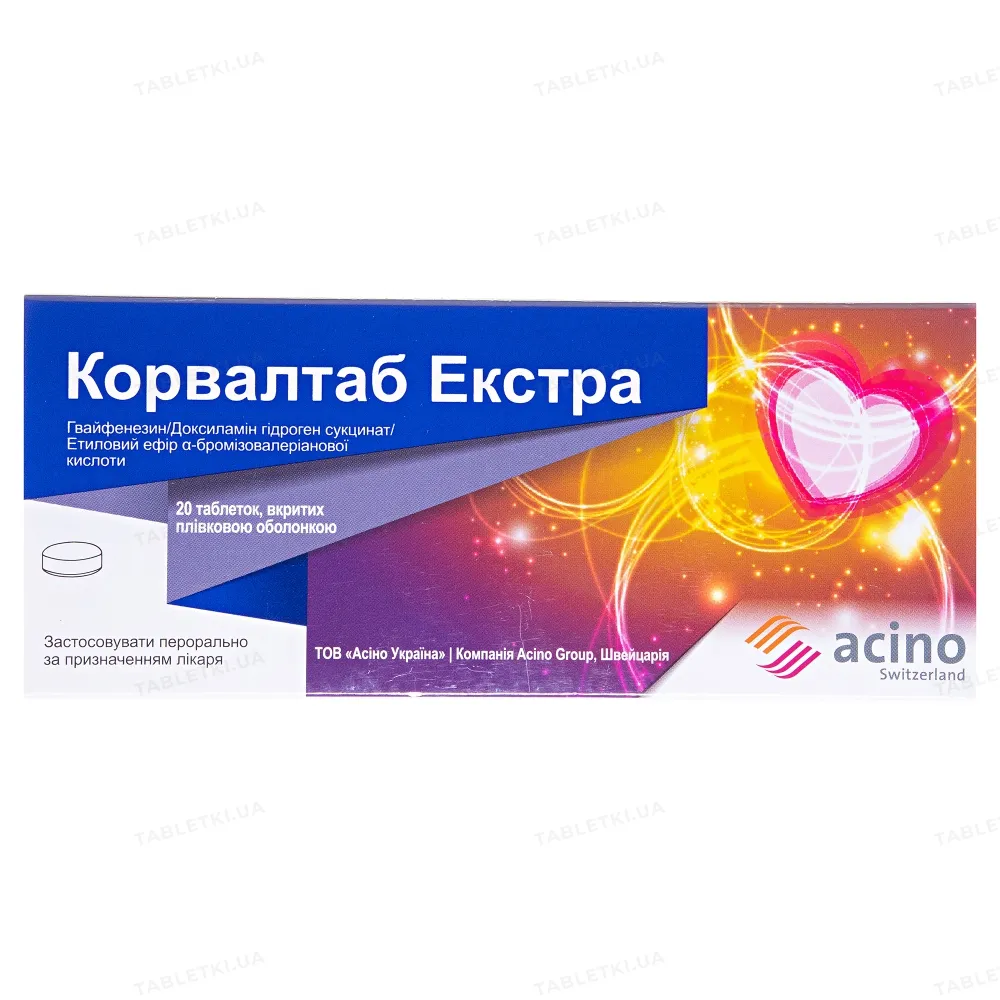
Table of Contents
INSTRUCTION FOR MEDICAL USE OF THE MEDICINAL PRODUCT KOPVALTAB EXTRA (CORVALTAB EXTRA)
Composition:
Active substances: guaifenesin, doxylamine hydrogen succinate, ethyl ether of α-bromoisovaleric acid;
1 tablet contains guaifenesin 100 mg, doxylamine hydrogen succinate 3.5 mg, ethyl ether of α-bromoisovaleric acid 8.2 mg;
Excipients: peppermint oil, β-cyclodextrin, maltodextrin, copovidone, crospovidone, silicon dioxide (colloidal hydrophobic), colloidal aqueous silicon dioxide, magnesium stearate; coating mixture Opadry II White: polyethylene glycol, polyvinyl alcohol, talc, titanium dioxide (E 171).
Pharmaceutical form.
Film-coated tablets.
Main physicochemical properties: white film-coated tablets, round-shaped with a biconvex surface, with a characteristic odor.
Pharmacotherapeutic group. Hypnotics and sedatives. ATC code N05CM.
Pharmacological properties.
Pharmacodynamics. A vasodilating (coronarolytic), sedative, and hypnotic agent. Exerts a mild antianginal effect. Promotes reduction of excitability of the central nervous system, produces a calming effect, and facilitates the onset of natural sleep.
The ethyl ether of α-bromoisovaleric acid contained in the drug exhibits spasmolytic, coronarolytic, and sedative effects; in large doses, it also causes a mild hypnotic effect.
Guaifenesin exerts an anxiolytic (anti-anxiety) effect.
Doxylamine hydrogen succinate is an H1-histamine receptor blocker of the ethanolamine class, which produces sedative and atropine-like effects. It has been observed to reduce the time required to fall asleep, as well as improve the duration and quality of sleep.
Pharmacokinetics. Guaifenesin is rapidly absorbed (within 30 minutes) from the gastrointestinal tract. It predominantly penetrates tissues containing acidic mucopolysaccharides. After oral administration, maximum concentration is reached within 1–2 hours, and therapeutic concentration is maintained for 6 hours. The elimination half-life of guaifenesin is approximately 1 hour. It is excreted with sputum and eliminated by the kidneys as metabolites and also in unchanged form. Maximum plasma concentration (Cmax) of doxylamine hydrogen succinate is reached on average within 2 hours (Tmax) after drug administration.
The mean elimination half-life (T½) of doxylamine from plasma is on average 10 hours.
Doxylamine hydrogen succinate is partially metabolized in the liver via demethylation and N-acetylation. The elimination half-life may be significantly prolonged in elderly individuals and in patients with renal or hepatic impairment. Various metabolites formed during molecular breakdown are not quantitatively significant, as 60% of the administered dose is found in urine in the unchanged form of doxylamine.
Clinical characteristics.
Indications.
Mild coronary vessel spasms; neurocirculatory dystonia – as part of combination therapy; neuroses with increased irritability; hyperexcitability; mild form of insomnia; dermatoses accompanied by itching.
Contraindications.
Hypersensitivity to the components of the medicinal product or to antihistamines. Severe impairment of kidney or liver function, hepatic porphyria.
Acute angle-closure glaucoma in personal or family history.
Urethroprostatic disorders with risk of urinary retention.
Severe heart failure.
Depression and other disorders associated with suppression of central nervous system (CNS) activity.
Interaction with other medicinal products and other types of interactions.
Combinations not recommended
Alcohol (beverage and excipient)
Alcohol enhances the sedative effect of most H1-antihistamines. Reduced alertness may render driving and operating machinery hazardous. Consumption of alcoholic beverages and use of medicinal products containing ethanol should be avoided.
Sodium oxybate causes central nervous system (CNS) depression. Slowed reaction time may be dangerous when driving or operating machinery.
Combinations requiring caution
Anticholinesterase agents
Risk of reduced efficacy of anticholinesterase drugs due to antagonistic effects on M-cholinoreceptors.
Other anticholinergic medicinal products (tricyclic antidepressants, most anticholinergic H1-antihistamines, anticholinergic anti-Parkinson drugs, atropine-like spasmolytics, disopyramide, phenothiazine neuroleptics, as well as clozapine) — possible occurrence of adverse effects such as urinary retention, constipation, dry mouth;
Other CNS-acting antidepressants
Morphine derivatives (analgesics used for cough treatment and replacement therapy), neuroleptics; barbiturates, benzodiazepines; anxiolytics other than benzodiazepines (e.g., meprobamate); sedative antidepressants (amitriptyline, doxepin, mianserin, mirtazapine, trimipramine); hypnotics, sedative H1-antihistamines; centrally acting antihypertensives; baclofen, thalidomide — possible enhancement of central nervous system depression. Slowed reaction time may be dangerous when driving and operating machinery.
Other hypnotics cause CNS depression.
Morphine-like substances/opioids
Significant risk of colonic akinesia with severe constipation.
Effect on laboratory test results
Guaifenesin may cause false-positive results in diagnostic tests measuring 5-hydroxyindoleacetic acid (photometric method using nitrosonaphthol as reagent) and vanillylmandelic acid in urine. Therefore, treatment with Corvaltab Extra should be discontinued 48 hours before urine collection for these tests.
Special precautions for use
During administration of the medicinal product, consumption of alcoholic beverages should be avoided.
Treatment with the drug may exacerbate sleep apnea syndrome (increased frequency and duration of breathing pauses).
The risk of abuse and development of drug dependence is low. However, cases of abuse leading to drug dependence have been reported. Signs of abuse or dependence on the medicinal product must therefore be carefully monitored, and the recommended duration of treatment should not exceed 5 days. The medicinal product is not recommended for patients with a history of disorders caused by psychoactive substance use.
Risk of accumulation
Doxylamine succinate remains in the body for approximately 5 half-lives. The half-life may be significantly prolonged in elderly individuals and in patients with renal or hepatic impairment. With repeated administration, the drug or its metabolites reach steady-state concentrations much later and at higher levels. The efficacy and safety of the medicinal product can be assessed only after steady-state concentrations have been achieved.
Dosage adjustment may be required (see section "Administration and dosage").
Elderly patients
H₁-antihistamines should be used with caution in elderly patients due to the risk of cognitive disorders, sedative effects, slowed reaction time, and/or dizziness, which increases the risk of falls (e.g., when getting up at night), potentially leading to serious consequences in this patient group.
Safety precautions
Elderly patients, patients with renal or hepatic impairment
Elevated plasma concentrations and reduced plasma clearance of the drug have been observed in elderly patients with renal or hepatic impairment. A reduced dose of the medicinal product is recommended.
To prevent daytime drowsiness, it is important to ensure that sleep duration after taking the drug is at least 7 hours.
The drug should not be used in patients with productive cough and/or chronic or persistent cough due to asthma, smoking, chronic bronchitis, or emphysema.
The medicinal product should be used with caution in patients with asthma, tuberculosis, or pneumoconiosis.
Use during pregnancy or breastfeeding
The medicinal product is contraindicated in pregnant women and women who are breastfeeding.
Effect on ability to drive or operate machinery
During treatment, patients should refrain from driving or operating machinery requiring rapid psychomotor reactions. The risk of daytime drowsiness should be considered, especially in individuals who drive or operate machinery. The risk of impaired reaction time is increased if sleep duration is insufficient. See also section "Interaction with other medicinal products and other forms of interaction."
Dosage and Administration.
The dosage and duration of treatment are determined individually by a physician for each patient. Usually, 1 tablet is administered 2–3 times daily before meals. In mild forms of insomnia, 1–2 tablets are prescribed 30 minutes before bedtime.
Children. There is no experience with use in pediatric patients; therefore, the drug is not used in pediatric practice.
Overdose.
Possible symptoms include drowsiness, weakness, dizziness, gastrointestinal disturbances, arterial hypotension, and signs of anticholinergic effects: excitation, mydriasis, accommodation paralysis, dry mouth, facial and neck flushing, hyperthermia, and sinus tachycardia. Delirium, hallucinations, and athetoid movements are more commonly observed in children and may sometimes precede seizures—rare complications of severe poisoning or even coma. Even in the absence of seizures, acute doxylamine poisoning may occasionally cause rhabdomyolysis, which can lead to acute kidney injury. This muscular disorder is relatively common and requires systematic screening by measuring creatine phosphokinase (CPK) activity.
Very high doses may cause symptoms such as excitation, confusion, and respiratory depression.
Prolonged use of drugs containing bromide may lead to bromism, characterized by symptoms including mental confusion, ataxia, apathy, depressive mood, conjunctivitis, rhinitis, acne, or purpura. If untreated, bromism may result in death due to circulatory failure, respiratory paralysis, or pulmonary edema.
Treatment: Discontinue the drug, perform gastric lavage, and provide symptomatic therapy aimed at maintaining cardiovascular and respiratory functions and preserving electrolyte balance. Elimination of bromide ions from the body can be accelerated by administering a large amount of sodium chloride solution along with saluretic agents. There is no specific antidote.
Adverse Reactions
In individual cases, the following adverse effects may occur:
Nervous system disorders: asthenia, weakness, ataxia, impaired motor coordination, headache, somnolence, mild dizziness, confusion, paradoxical excitation, fatigue, slowed reaction time, insomnia (in elderly patients), decreased attention concentration.
Gastrointestinal disorders: discomfort in the gastrointestinal tract, stomach pain, nausea, vomiting, diarrhea, constipation, dry mouth; with prolonged use – liver function disturbances.
Immune system disorders: hypersensitivity reactions such as difficulty swallowing, swelling of the face, lips, tongue or throat, rhinitis, skin rash, pruritus, urticaria, fever, coma, granulocytopenia, and anaphylactic shock.
Blood and lymphatic system disorders: anemia, megaloblastic anemia, thrombocytopenia, agranulocytosis.
Respiratory system disorders: dyspnea, bronchospasm, shortness of breath.
Renal and urinary disorders: urolithiasis, urinary retention, elevated blood CK levels.
Cardiovascular disorders: palpitations, bradycardia, arterial hypotension.
Eye disorders: conjunctivitis, lacrimation, nystagmus, visual disturbances (accommodation disorders, blurred vision, hallucinations, visual field defects).
Musculoskeletal and connective tissue disorders: rhabdomyolysis.
Cases of drug abuse and development of drug dependence have been reported. In addition, it is known that H1-antihistamine medicinal products may cause sedative effects, cognitive disorders, and psychomotor impairment.
These phenomena usually resolve upon dose reduction or discontinuation of the drug.
Prolonged use of high doses of the drug may lead to bromism.
If any adverse reactions occur, consult a physician.
Reporting of suspected adverse reactions
Reporting suspected adverse reactions after medicine registration is important. It allows continuous monitoring of the benefit-risk balance of the medicinal product. Healthcare professionals, pharmacists, patients, or their legal representatives are encouraged to report all suspected adverse reactions and lack of efficacy through the Automated Pharmacovigilance Information System at: https://aisf.dec.gov.ua.
If adverse reactions occur or if you have any questions regarding the safety and efficacy of the medicinal product, please contact the Pharmacovigilance Department of LLC "ASINO UKRAINE" at: 8 Vatslava Havela Boulevard, Kyiv, 03124, Ukraine, Tel./Fax: +38 044 281 2333.
Shelf life. 2 years.
Storage conditions. Store in the original packaging, out of reach of children, at a temperature not exceeding 25 °C.
Packaging. 10 tablets per blister; 1 or 2 blisters per cardboard box.
Supply category. Over-the-counter.
Manufacturer. LLC "Pharma Start", Ukraine.
Manufacturer's address and location of business activity.
8 Vatslava Havela Boulevard, Kyiv, 03124, Ukraine.