Cortiment
Ukraine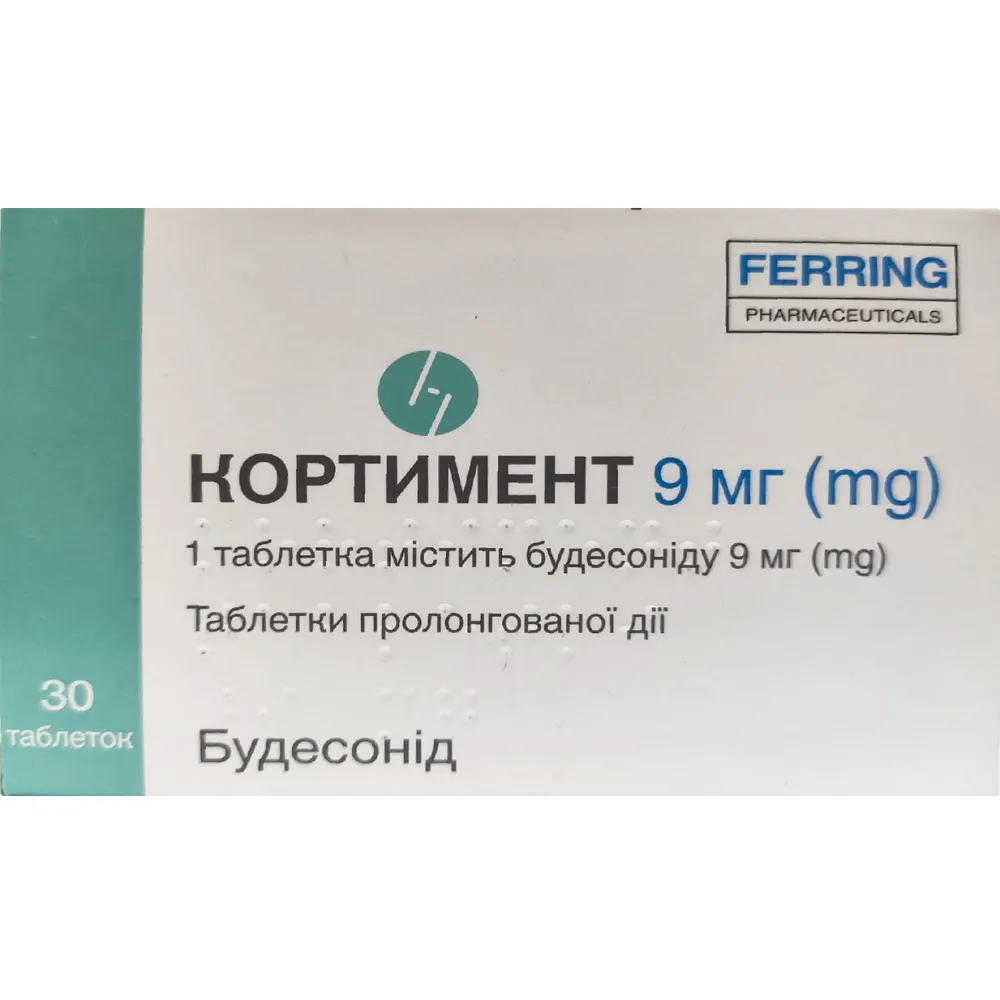
Table of Contents
INSTRUCTIONS FOR MEDICAL USE OF THE MEDICINAL PRODUCT CORTIMENT (CORTIMENT)
Composition:
Active substance: budesonide;
1 tablet contains 9 mg of budesonide;
Excipients: stearic acid; lecithin (soy); microcrystalline cellulose; hydroxypropylcellulose; lactose monohydrate; colloidal anhydrous silicon dioxide; magnesium stearate;
Film coating: methacrylate copolymer (type A), methacrylate copolymer (type B), talc, titanium dioxide (E 171), triethyl citrate.
Pharmaceutical form. Prolonged-release tablets.
Main physicochemical properties: round, biconvex tablets with a film coating, white to almost white in color, with "MX9" engraved on one side.
Pharmacotherapeutic group.
Anti-inflammatory agents used in gastrointestinal disorders. Locally acting corticosteroids. Budesonide. ATC code A07EA06.
Pharmacological properties.
Pharmacodynamics.
Mechanism of action
The precise mechanism of action of budesonide in the treatment of ulcerative colitis (UC) and microscopic colitis (MC) has not been fully elucidated. In general, budesonide suppresses numerous inflammatory processes, including cytokine production, activation of inflammatory cells, and expression of adhesion molecules on endothelial and epithelial cells. At doses clinically equivalent to prednisolone, budesonide causes significantly less suppression of the hypothalamic-pituitary-adrenal (HPA) axis and has a reduced effect on inflammatory markers.
Clinical pharmacological and pharmacokinetic data indicate that the mechanism of action of the medicinal product Cortiment, tablets, is based on local action within the intestine.
Pharmacodynamic effects
Multimatrix (MMX) budesonide tablets with prolonged release are characterized by a multimatrix structure and coated with a gastro-resistant film that dissolves in intestinal fluids at a pH greater than 7.
The protective coating safeguards the dosage form during its passage through the stomach and duodenum to the lower part of the intestine. When the protective layer dissolves, intestinal fluids come into contact with the matrix of hydrophilic polymers, which begin to swell and form a viscous gel matrix. Solvent penetrating the gel matrix releases the active ingredient from the lipophilic matrices. Budesonide is then released in a controlled manner along the entire length of the colon as the formulation passes through the large intestine.
Budesonide is a glucocorticoid used in the treatment of inflammatory bowel diseases. It exerts a local anti-inflammatory effect but does not reduce cortisol levels to the same extent as systemic glucocorticoids.
Clinical efficacy
Ulcerative colitis
Two randomized, controlled phase III clinical trials were conducted, involving 1022 adult patients with mild to moderate active UC. Of these, 255 patients received Cortiment at a dose of 9 mg/day for 8 weeks. Patients included in the studies were either treatment-naïve (42% of the total study population) or had previously received 5-aminosalicylic acid therapy that had proven ineffective (58% of the total study population). Both studies included a comparator drug—mesalazine and budesonide, respectively—to demonstrate assay sensitivity. In both trials, remission was defined as follows: UCDAI (Ulcerative Colitis Disease Activity Index) ≤ 1, rectal bleeding and stool frequency = 0, normal mucosa (no contact bleeding), and endoscopic activity index reduction ≥ 1.
Table 1
Effect of Cortiment 9 mg tablets on the primary endpoint
| Study |
Cortiment 9 mg Remission (%) |
Placebo Remission (%) |
P = |
| Study CB-01-02/01 |
17.9 |
7.4 |
0.0143 |
| Study CB-01-02/02 |
17.4 |
4.5 |
0.0047 |
In both studies, a statistically significant difference in favor of Cortiment 9 mg tablets compared to placebo was observed, amounting to 10.4% and 12.9%, respectively.
5-Aminosalicylic acid is the standard treatment for mild to moderate ulcerative colitis. Direct comparative data between Cortiment and 5-aminosalicylic acid are not available. Therefore, the therapeutic significance of this medicinal product has yet to be established. For some patients, the use of Cortiment as initial therapy may yield a positive outcome.
Data on use in microscopic colitis (collagenous colitis and lymphocytic colitis) are presented below. Systemic bioavailability in these conditions is similar to that described for the budenoside in Cortiment in the section "Pharmacokinetics".
Collagenous colitis
Two randomized, double-blind, placebo-controlled induction studies evaluated the clinical and histological effects of budesonide 9 mg/day in collagenous colitis, with study durations of six and eight weeks. In the first study, 23 patients were randomized to receive budesonide 9 mg/day and 22 patients to receive placebo for 6 weeks. The rate of clinical remission was significantly higher (p < 0.001) in the budesonide group compared to the placebo group (86.9% vs. 13.6%). Histological improvement was observed in 14 patients in the budesonide group (60.9%) and in one patient in the placebo group (4.5%; p < 0.001). In the second study, 10 patients were randomized to receive budesonide for 8 weeks (9 mg/day for 4 weeks, 6 mg/day for 2 weeks, and 3 mg/day for 2 weeks) and 10 patients to receive placebo. All 10 patients receiving budesonide achieved clinical response compared to two patients in the placebo group (p < 0.001). In two open-label studies (initial phase of randomized, double-blind, placebo-controlled maintenance trials), the efficacy of budesonide 9 mg/day for 6 weeks was evaluated. In the first study, 46 patients (96%) achieved clinical remission within 2–30 days (mean 6.4 days), with significant improvement in stool consistency. In the second study, of the 42 patients included, 34 (81%) achieved clinical remission (mean defecation frequency of three or fewer per day) at week 6.
Lymphocytic colitis
Data in this indication are limited. One randomized, double-blind, placebo-controlled study included 15 patients with lymphocytic colitis. Eleven patients received budesonide 9 mg/day and four patients received placebo for 8 weeks. Clinical response (defined as at least a 50% reduction in bowel movement frequency) was observed in 25% of the placebo group compared to 91% of the budesonide group (p = 0.03).
Children
The use of Cortiment in children has not been studied.
Pharmacokinetics
Absorption
After oral administration of conventional micronized budesonide, absorption appears to be complete. A significant portion of the active substance is absorbed from the ileum and ascending colon.
Systemic availability of budesonide after a single dose of Cortiment 9 mg tablets, compared to the existing formulation of budesonide 3 mg prolonged-release capsules, in healthy volunteers was similar and amounted to approximately 10% on first-pass through the liver. Maximum plasma concentration of budesonide is approximately 1.3–1.8 ng/mL, reached 13–14 hours after administration. Concomitant administration of Cortiment tablets with food had no clinically significant effect on absorption. Lack of drug accumulation potential with repeated administration has been demonstrated.
Distribution
Budesonide has a high volume of distribution (approximately 3 L/kg). Plasma protein binding averages 85–90%.
Biotransformation
Budesonide undergoes extensive biotransformation in the liver, forming metabolites with low glucocorticoid activity. The glucocorticoid activity of the main metabolites, 6-beta-hydroxybudesonide and 16-alpha-hydroxyprednisolone, does not exceed 1% of that of budesonide. Budesonide metabolism is primarily mediated by the CYP3A enzyme of the cytochrome P450 system.
Elimination
The elimination rate of budesonide is limited by the rate of absorption. Budesonide has a high systemic clearance (approximately 1.2 L/min).
Children
There are no data or experience regarding the pharmacokinetics of Cortiment tablets in children.
Preclinical safety data
Comparative preclinical toxicological and toxicokinetic studies comparing Cortiment delayed-release tablets with the existing prolonged-release formulation of budesonide in Cynomolgus monkeys confirmed that Cortiment tablets have a delayed peak effect and weaker overall systemic effect compared to the existing budesonide formulation, while the toxicological profiles of the two formulations are comparable.
According to preclinical data, adverse reactions to budesonide such as increased body weight, adrenal and thymic atrophy, and changes in blood leukocyte count are less severe or similar to those observed with other glucocorticoids. As with other glucocorticosteroids, depending on dose, duration of treatment, and underlying conditions, these reactions may also occur in humans.
Budesonide does not affect fertility in rats. In pregnant rats and rabbits, budesonide, like other glucocorticosteroids, caused fetal death and developmental abnormalities (smaller placenta, intrauterine growth retardation, and skeletal abnormalities). Some glucocorticoids have been found to cause cleft palate in animals. The relevance of these findings to humans has not been established (see also section "Use during pregnancy or breastfeeding").
In a number of in vitro and in vivo studies, budesonide showed no mutagenic effect. A slight increase in the number of basophilic inclusions in the liver was observed in long-term rat studies with budesonide, and in carcinogenicity studies, an increased incidence of primary hepatocellular neoplasms, astrocytomas (in male rats), and mammary gland tumors (in female rats) was observed. These tumors are likely caused by the action of specific steroid receptors, increased metabolic load, and anabolic effects on the liver; these effects have also been observed in studies of other glucocorticosteroids in rats and are therefore considered class-specific effects in this animal species.
Clinical characteristics.
Indications.
Cortiment is indicated for the induction of remission in adult patients with mild to moderate active ulcerative colitis (UC) when treatment with 5-aminosalicylic acid is insufficient, and for the induction of remission in patients with active microscopic colitis (MC).
Contraindications.
Hypersensitivity to budesonide, soy, peanuts, or to any of the excipients of the medicinal product.
Interaction with other medicinal products and other forms of interaction.
Interaction studies have not been conducted.
Budesonide is primarily metabolized by cytochrome P450 3A4 (CYP3A4). Inhibitors of this enzyme, such as ketoconazole, itraconazole, HIV protease inhibitors (including products containing cobicistat), and grapefruit juice, may increase systemic exposure to budesonide several-fold and increase the risk of systemic corticosteroid side effects (see section "Special warnings and precautions for use"). This combination should be avoided, except when the benefit outweighs the increased risk of systemic corticosteroid side effects; in such cases, patients should be monitored for systemic corticosteroid side effects. If combination therapy is used, the interval between administration of the combined drugs should be as long as possible; also, consideration should be given to reducing the dose of budesonide. The likelihood that budesonide will inhibit other drugs metabolized by CYP3A4 is low, as budesonide has low affinity for this enzyme.
Concomitant treatment with CYP3A4 inducers, such as carbamazepine, may reduce the effect of budesonide; therefore, dose escalation may be necessary.
Medicinal products that, when used concomitantly with corticosteroids, may pose a significant risk for individual patients include cardiac glycosides (increased effect due to decreased potassium levels) and diuretics (increased potassium excretion).
Increased plasma concentration and enhanced effect of corticosteroids have been observed when estrogens or oral contraceptives are used concomitantly in women; however, this effect has not been observed with concomitant use of budesonide and combined low-dose oral contraceptives.
Although studies are lacking, concomitant use with cholestyramine or antacids may reduce the absorption of budesonide, as with other drugs. Therefore, these agents should not be taken simultaneously, but at least with a two-hour interval.
At recommended doses, omeprazole does not affect the pharmacokinetics of orally administered budesonide, whereas cimetidine shows a minor effect that is not clinically significant.
Due to the potential for adrenal suppression, adrenocorticotropic hormone (ACTH) stimulation tests for the diagnosis of pituitary insufficiency may yield false results (low levels).
Special precautions for use.
Cortiment should be prescribed with caution to patients with infections, arterial hypertension, diabetes mellitus, osteoporosis, peptic ulcer disease, glaucoma or cataract, with diabetes or glaucoma in family history, or with any other condition where glucocorticoid therapy may lead to undesirable effects.
Visual disturbances may occur during treatment with systemic and topical corticosteroids. If a patient experiences symptoms such as blurred vision or other visual disturbances, referral to an ophthalmologist is recommended to evaluate possible causes, which may include cataract, glaucoma, or rarer conditions such as central serous chorioretinopathy, which has been reported with both systemic and topical corticosteroid use.
Impaired liver function may affect the elimination of glucocorticoids, including budesonide, resulting in increased systemic exposure. The possibility of systemic adverse reactions should therefore be considered. Potential systemic adverse reactions include glaucoma.
When discontinuing treatment, gradual dose reduction under medical supervision may be recommended.
Treatment with Cortiment leads to a greater reduction in systemic steroid levels compared to conventional oral glucocorticoids. Transitioning from therapy with other steroids may result in symptoms related to changes in systemic steroid levels. During the withdrawal period, some patients may experience non-specific symptoms such as muscle and joint pain. If, rarely, symptoms such as fatigue, headache, nausea, and vomiting occur, inadequate corticosteroid effect should be suspected. In such cases, temporary increase in systemic corticosteroid dosage may sometimes be necessary.
Since corticosteroids are known to have immunological effects, concomitant use of Cortiment may reduce immune response to vaccines.
Concomitant use of Cortiment with ketoconazole or other potent CYP3A4 inhibitors should be avoided. If co-administration is unavoidable, the interval between administration of these drugs should be as long as possible; dose reduction of Cortiment should also be considered (see also section "Interaction with other medicinal products and other forms of interaction"). After consumption of a large amount of grapefruit juice (which inhibits CYP3A4 activity primarily in the intestinal mucosa), systemic exposure to orally administered budesonide approximately doubles. As with other drugs primarily metabolized by CYP3A4, regular consumption of grapefruit or grapefruit juice together with budesonide should be avoided (other juices, such as orange or apple juice, do not inhibit CYP3A4 activity) (see also section "Interaction with other medicinal products and other forms of interaction").
Use of the medicinal product Cortiment may lead to positive doping test results. Use of this drug for doping purposes may be hazardous to health.
Cortiment contains lecithin (from soybean oil). If a patient has hypersensitivity to peanut or soy, this drug should not be used.
Cortiment tablets contain lactose monohydrate and therefore should not be administered to patients with rare hereditary conditions such as galactose intolerance, lactase deficiency, or glucose-galactose malabsorption syndrome.
General warnings and precautions for corticosteroid use:
- Adrenocortical suppression may occur when switching patients from systemic corticosteroid therapy with stronger systemic effects.
- Suppression of inflammatory and immune responses increases susceptibility to infections.
- Corticosteroids may suppress the hypothalamic-pituitary-adrenal (HPA) axis and reduce stress response. If patients undergo surgery or other stress, additional systemic corticosteroid therapy is recommended.
- Patients receiving oral glucocorticoids may experience more severe courses of varicella and measles. Special attention should be given to prophylaxis in patients who have not previously had these diseases. If infection occurs or is suspected, discontinuation or dose reduction of glucocorticoids should be considered at the physician’s discretion.
- Systemic steroid-related adverse reactions may occur, especially with high doses and prolonged use. These may include Cushing's syndrome, adrenal suppression, growth retardation, decreased bone mineral density, cataract, glaucoma, and very rarely, a broad spectrum of psychiatric/behavioral disorders (see section "Adverse reactions").
- Particular caution is required when considering systemic corticosteroid use in patients with current or past history (in the patient or any first-degree relatives) of severe affective disorders.
- Replacing treatment with highly effective systemic corticosteroids may sometimes unmask allergic reactions such as rhinitis and eczema previously controlled by systemic therapy.
Use during pregnancy or breastfeeding.
Pregnancy
Data from use of inhaled budesonide in a large number of pregnant women indicate no adverse effects. Although there are no data on pregnancy outcomes following oral administration, bioavailability after oral administration is low. In animal studies, corticosteroids have shown adverse effects at high doses (see section "Preclinical safety data"). Cortiment should be used during pregnancy only if the expected benefit to the mother outweighs the potential risk to the fetus.
Breastfeeding period
Budesonide is excreted in breast milk.
Maintenance treatment with inhaled budesonide (200 to 400 mcg twice daily) in asthmatic women who are breastfeeding results in negligible systemic exposure of budesonide in breastfed infants.
In a pharmacokinetic study, the daily infant dose was estimated at 0.3% of the mother's daily dose for both dose levels, and the average plasma concentration in infants was estimated to be 1/600 of the concentration observed in maternal plasma, assuming complete oral bioavailability in the infant.
Budesonide concentrations in infant plasma were below the limit of quantification. Based on data obtained for inhaled budesonide and considering the linear pharmacokinetics within therapeutic dose ranges, low exposure in breastfed children is expected following oral and rectal administration of therapeutic doses of budesonide. These data support continuing oral and rectal budesonide use during breastfeeding.
Fertility
There are no data on the effect of Cortiment on human fertility. No effect of budesonide on fertility was observed in rats.
Ability to influence reaction speed when driving or operating machinery.
Studies on the ability of Cortiment to affect reaction speed during driving or operating machinery have not been conducted. When driving or operating machinery, it should be considered that dizziness or increased fatigue may occasionally occur (see section "Adverse reactions").
Method of Administration and Dosage
Dosage
Adults
The recommended daily dose for induction of remission in ulcerative colitis and microscopic colitis is 1 tablet of 9 mg taken in the morning, with treatment duration of up to 8 weeks.
If treatment is discontinued, gradual dose reduction may be beneficial (further information on discontinuation of treatment is provided in the section "Special Instructions").
Children
Safety and efficacy of Cortiment in children under 18 years of age have not been studied. Due to lack of data, use of the drug in pediatric practice is not recommended until additional information becomes available.
Elderly patients
Dose adjustment is not required; however, experience with the use of Cortiment in elderly patients is limited.
Patients with hepatic or renal impairment
The use of Cortiment 9 mg has not been studied in patients with hepatic or renal impairment; therefore, the drug should be prescribed with caution and patients in this group should be closely monitored.
Method of Administration
Take 1 tablet of Cortiment 9 mg orally once daily in the morning, either on an empty stomach or with food. The tablet should be swallowed with a glass of water; it must not be broken, crushed, or chewed, as the film coating ensures prolonged release.
Children
Safety and efficacy of Cortiment in children (under 18 years of age) have not been established; therefore, the drug is not used in pediatric practice.
Overdose
Due to the low systemic bioavailability of Cortiment tablets, there is no reason to expect that even a very high acute overdose would lead to an acute clinical crisis.
There is no specific antidote in case of acute overdose.
Treatment consists of supportive and symptomatic therapy.
Adverse reactions
Information on adverse reactions during clinical trials is presented in Table 2. Information on adverse effects associated with the drug's therapeutic class is presented in Table 3. In Phase II and III clinical trials, the frequency of adverse effects with Cortiment tablets administered at the recommended dose of 9 mg/day was comparable to that of placebo. Most adverse effects were mild or moderate in intensity.
Classification of adverse reaction frequencies: very common (≥ 1/10); common (≥ 1/100, < 1/10); uncommon (≥ 1/1000, < 1/100); rare (≥ 1/10,000, < 1/1000); very rare (< 1/10,000).
Table 2
Information on adverse effects of Cortiment observed during clinical trials more than once (n = 255)
| MedDRA System Organ Class |
Common |
Uncommon |
| Infections and infestations |
Influenza |
|
| Blood and lymphatic system disorders |
Leukocytosis |
|
| Psychiatric disorders |
Insomnia |
Mood lability |
| Nervous system disorders |
Headache |
Dizziness |
| Gastrointestinal disorders |
Nausea, epigastric pain, abdominal distension, abdominal pain, dry mouth, dyspepsia |
Abdominal bloating |
| Skin and subcutaneous tissue disorders |
Acne |
|
| Musculoskeletal and connective tissue disorders |
Myalgia |
Back pain, muscle spasm |
| General disorders |
Increased fatigue |
Peripheral edema |
| Investigations |
Decreased blood cortisol levels |
Table 3
Adverse reactions associated with the therapeutic class of the drug (anti-inflammatory intestinal medicinal products, local corticosteroids, budesonide)
| MedDRA System Organ Classes |
Most frequent occurrence of adverse reactions |
|||
| Common |
Uncommon |
Rare |
Very rare |
|
| Immune system disorders |
Anaphylactic reaction |
|||
| Endocrine disorders |
Signs of Cushing's syndrome |
Impaired growth in children* |
||
| Metabolism and nutrition disorders |
Hypokalemia |
|||
| Psychiatric disorders |
Behavioral changes, namely: nervousness, insomnia, and mood changes; depression |
Psychomotor hyperactivity, anxiety |
Aggression |
|
| Nervous system disorders |
Tremor |
|||
| Eye disorders |
Cataract, including subcapsular cataract; glaucoma; blurred vision (see also section "Special precautions") |
|||
| Cardiac disorders |
Palpitations |
|||
| Gastrointestinal disorders |
Dyspepsia |
|||
| Skin and subcutaneous tissue disorders |
Skin reactions (urticaria, exanthema) |
Ecchymosis |
||
| Musculoskeletal and connective tissue disorders |
Muscle cramps |
|||
| Reproductive system and breast disorders |
Menstrual cycle disturbances |
|||
*Note: Cortiment is not recommended for use in children (see section "Dosage and administration").
Most of the adverse reactions listed are also typical for other systemic glucocorticoids. Adverse reactions characteristic of systemic glucocorticosteroids may occur (e.g., signs of Cushing's syndrome and growth retardation). Such adverse effects depend on the dose, duration of treatment, concomitant or prior use of corticosteroids, or individual sensitivity.
Children
No data available.
Reporting suspected adverse reactions
Reporting suspected adverse reactions after authorization of the medicinal product is important. It allows continuous monitoring of the benefit-risk balance of the medicinal product. Healthcare professionals are requested to report any suspected adverse reactions via the national reporting system.
Shelf life. 3 years.
Storage conditions.
Keep out of reach and sight of children. Store at temperatures not exceeding 30 °C.
Packaging.
10 tablets per blister, 3 blisters per pack.
Prescription status.
Prescription only.
Manufacturer.
Cosmo S.p.A., Italy.
Manufacturer's address and site of operations.
Via C. Colombo, 1, 20045 Lainate (MI), Italy.