Cortineff
Ukraine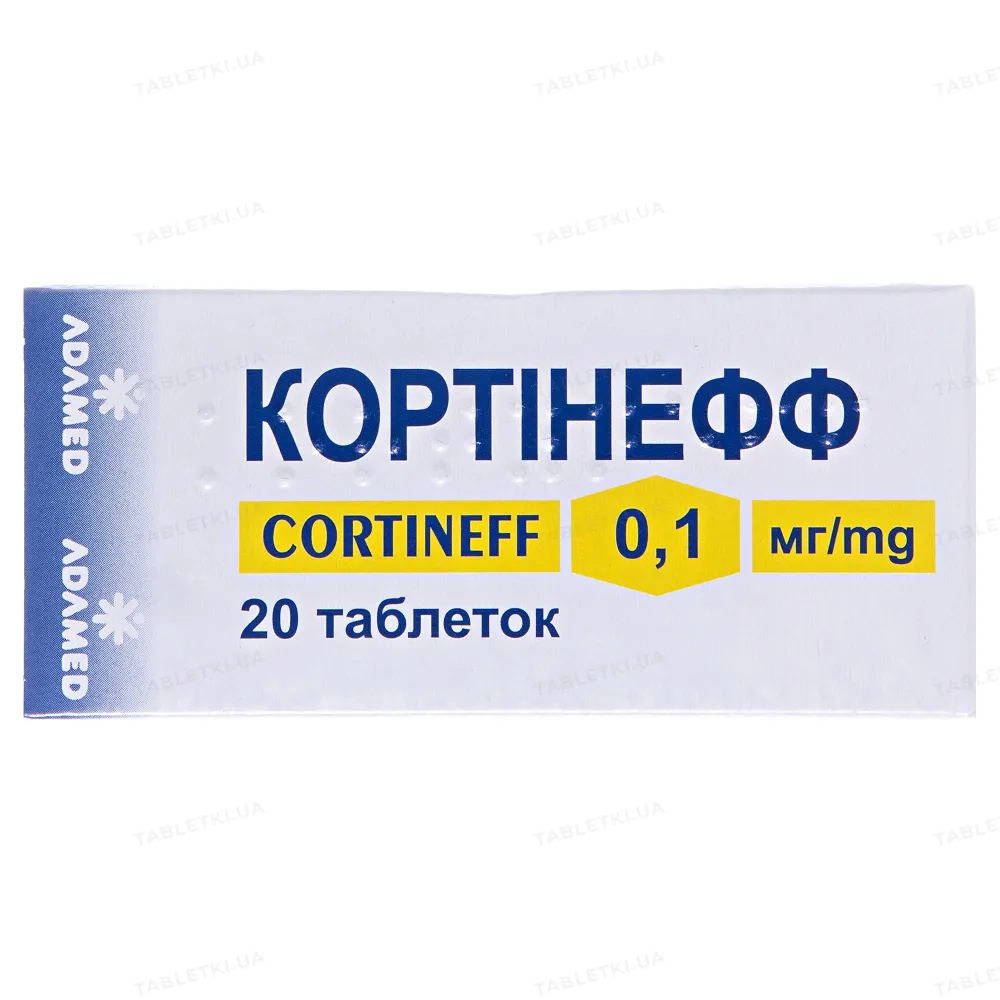
Table of Contents
INSTRUCTIONS FOR MEDICAL USE OF THE MEDICINAL PRODUCT KORTINEFF (CORTINEFF)
Composition:
Active substance: fludrocortisone acetate;
1 tablet contains 0.1 mg of fludrocortisone acetate;
Excipients: lactose monohydrate, potato starch, gelatin, magnesium stearate.
Pharmaceutical form. Tablets.
Main physicochemical properties: white tablets with a creamy tint, round-shaped, bevelled on both sides, with smooth surfaces and intact edges; engraved with the letter "F" on one side and "−" on the other.
Pharmacotherapeutic group.
Corticosteroids for systemic use. Mineralocorticoids. ATC code H02AA02.
Pharmacological properties.
Pharmacodynamics.
Cortineff (fludrocortisone) is a synthetic adrenocortical hormone, a fluorinated derivative of hydrocortisone with potent mineralocorticoid activity. Inflammatory conditions are not indications for the use of fludrocortisone.
Fludrocortisone acts on the distal portion of the renal tubules, stimulating reabsorption of sodium and water retention, and increasing excretion of potassium and hydrogen ions. Fludrocortisone may suppress adrenal cortical function, thyroid gland activity, and pituitary secretion of ACTH. It may also stimulate glycogen deposition in the liver, reduce the number of eosinophilic granulocytes, and may lead to a negative nitrogen balance.
Pharmacokinetics.
After oral administration, fludrocortisone is rapidly and completely absorbed from the gastrointestinal tract. Studies in humans and animals following intravenous and duodenal administration have shown that, depending on the species, 50% or more of the steroid remained unchanged 30 minutes after administration. After administration in the form of acetate, only the unesterified alcohol can be detected in the blood. The peak blood concentration is reached between 4 and 8 hours. Maximum serum concentration in healthy volunteers after intravenous administration occurs approximately 1.7 hours after dosing.
The elimination half-life after intravenous administration in animals and in healthy volunteers is 30 minutes. Following administration of the acetate to animals, a triphasic decline in blood concentration was observed, with each phase possibly corresponding to metabolite elimination.
Fludrocortisone is 70–80% bound to plasma proteins, primarily to the globulin fraction. In healthy volunteers, 80% is excreted in the urine, and the remaining 20% by other routes. Similar to the metabolism of other steroids, biliary excretion is balanced by reabsorption from the intestine, with only a small amount excreted in feces.
Clinical Characteristics.
Indications.
Replacement therapy for primary and secondary adrenal cortex insufficiency in Addison’s disease. Treatment of congenital adrenal hyperplasia with salt-wasting syndrome.
Contraindications.
Hypersensitivity to fludrocortisone or to any component of the drug. Systemic infection, unless specific treatment is administered.
Interaction with Other Medicinal Products and Other Forms of Interaction.
When Cortineff is used concomitantly:
- with barbiturates, anticonvulsants (phenytoin, carbamazepine), rifampicin, rifabutin, primidone, aminoglutethimide, antihistamines – the effect of fludrocortisone is reduced due to induction of microsomal enzymes;
- with anabolic steroids, androgens – increased risk of edema and rashes;
- with amphotericin injections and drugs that reduce potassium levels: patients should be monitored for hypokalemia;
- anticholinesterases: the effect of interaction with anticholinesterase drugs may be antagonistic;
- oral anticoagulants: corticosteroids may potentially reduce anticoagulant effect;
- antihypertensive drugs, including diuretics: corticosteroids have an antagonistic effect on antihypertensive drugs and diuretics; the hypokalemic effect of diuretics, including acetazolamide, is enhanced;
- antituberculosis drugs: serum concentration of isoniazid may be reduced;
- cyclosporine: signs of increased cyclosporine toxicity should be monitored when these drugs are used concomitantly;
- digitalis glycosides: concomitant use may increase digoxin toxicity;
- with oral contraceptives containing estrogens – metabolism is slowed and the effect of fludrocortisone is enhanced;
- enzyme inducers of the liver: (aminoglutethimide, barbiturates, carbamazepine, phenytoin, primidone, rifabutin, rifampicin): may increase metabolic clearance. Patients should be monitored for possible reduction in steroid effect; dosage should be adjusted accordingly;
- human growth hormone: possible inhibitory effect on its action;
- ketoconazole: clearance of corticosteroid may be reduced, leading to enhanced effects;
- depolarizing muscle relaxants: corticosteroids may decrease or increase neuromuscular blocking action;
- thyroid drugs: metabolic clearance of adrenocorticoids is reduced in patients with hypothyroidism and increased in patients with hyperthyroidism. Changes in thyroid status may therefore require dose adjustment;
- with antithrombotic agents (coumarin derivatives, indandione, heparin, streptokinase, urokinase) – effectiveness is reduced, and in some individuals may be increased.
Dosage should be prescribed considering prothrombin time values;
- with oral antidiabetic agents, insulin – reduced antidiabetic effect;
- with diuretics – reduced diuretic effect, hypokalemia, reduced effect of laxatives;
- with non-steroidal anti-inflammatory drugs – increased risk of peptic ulcer and gastrointestinal bleeding;
- with drugs and products containing sodium – edema, increased arterial pressure; dietary sodium restriction and limitation of sodium-rich medications may be necessary; corticosteroid use sometimes requires additional sodium intake.
Antihistamines reduce the effectiveness of fludrocortisone.
Concomitant use of vaccines containing live viruses and immunosuppressive doses of glucocorticosteroids may lead to development of viral diseases and reduced vaccine efficacy.
Concomitant administration of glucocorticoids and CYP3A inhibitors, including products containing cobicistat, is expected to increase the risk of systemic adverse reactions. Such interactions should be avoided unless benefit outweighs the increased risk of systemic adverse effects associated with glucocorticoid use. In such cases, patients should be monitored for systemic effects of glucocorticoids.
Possible systemic effects include: Cushing's syndrome, Cushing-like syndrome, adrenal suppression, growth retardation in children and adolescents, decreased bone mineral density, cataract, and glaucoma.
Salicylates: corticosteroids may reduce serum salicylate levels and reduce their efficacy. Conversely, discontinuation of corticosteroid therapy during high-dose salicylate treatment may lead to salicylate toxicity.
Special precautions for use.
Due to the strong mineralocorticoid effect of fludrocortisone, salt intake and fluid balance should be monitored to prevent the risk of hypertension, edema, or weight gain. During prolonged treatment, periodic monitoring of serum electrolyte levels is recommended. Because of the risk associated with sodium retention, Cortineff should be used only when clearly indicated.
Cortineff is a potent mineralocorticoid agent and should primarily be used for replacement therapy. Any adverse effects that may occur during treatment can likely be minimized by appropriate dose adjustment.
Prolonged use of fludrocortisone may lead to adrenocorticotrophic atrophy, which may persist for several years after discontinuation of therapy. Withdrawal of corticosteroid therapy should be carried out gradually according to a long-term tapering regimen to prevent the risk of adrenocortical insufficiency. In stressful situations (e.g., trauma, surgery), patients receiving long-term therapy should receive supplemental corticosteroid treatment, which should be continued alongside Cortineff therapy and for several years after its discontinuation.
Fludrocortisone may mask symptoms of infection and reduce resistance to infection as well as the ability to localize it.
Patients receiving immunosuppressive drugs are more susceptible to infections than healthy individuals. The course of varicella (chickenpox), herpes zoster, and measles may be more severe under corticosteroid treatment. Patients who have not previously had these diseases should avoid contact with infected individuals.
Patients who have not had chickenpox and are currently taking oral corticosteroids for non-replacement indications should be considered at risk for severe varicella. Exacerbations of conditions such as pneumonia, hepatitis, and disseminated intravascular coagulation may occur.
After exposure to chickenpox, administration of Varicella zoster immune globulin (VZIG) is recommended for patients currently receiving or who have received corticosteroids within the preceding three months. VZIG should be administered within 3 days, but no later than 10 days after exposure to chickenpox. Corticosteroid therapy should not be discontinued; instead, the dose should be increased. After exposure to measles, immune globulin (IG) should be administered.
Patients undergoing treatment with fludrocortisone should not receive live viral vaccines.
Administration of inactivated bacterial or viral vaccines may not elicit the expected antibody response.
Special warnings.
Since Cortineff is intended primarily for long-term use as replacement therapy, it should be administered at the lowest effective doses to minimize potential adverse effects related to glucocorticoid activity.
Fludrocortisone should be used with caution in patients with existing or recently healed gastrointestinal anastomoses, intestinal diverticula, thrombophlebitis, current or recent severe affective disorders (especially previous steroid-induced psychosis), skin diseases associated with rashes, or metastatic carcinoma.
The effects of corticosteroids may be enhanced in patients with hypothyroidism or reduced in patients with hyperthyroidism.
Fludrocortisone should be used cautiously in cases of chronic nephritis or renal insufficiency, osteoporosis (especially in postmenopausal women), active peptic ulcer or ulcer remission, myasthenia gravis, fungal or viral infections (local or systemic), glaucoma (or family history of glaucoma), hyperlipidemia, or hypoalbuminemia.
Administration of fludrocortisone to patients with active tuberculosis should be restricted to cases of disseminated or rapidly progressive tuberculosis and only in conjunction with antituberculosis therapy. Patients with latent tuberculosis or a positive tuberculin test receiving fludrocortisone should be monitored due to the risk of developing active tuberculosis. Patients undergoing prolonged corticosteroid therapy should receive prophylactic antituberculosis treatment.
Caution should be exercised when using fludrocortisone in patients with hypertension, congestive heart failure, steroid-induced myopathy, epilepsy, hepatic dysfunction, acute psychosis, or psychiatric disorders. Pre-existing emotional instability or psychiatric disorders may be exacerbated by fludrocortisone. The effect of fludrocortisone is stronger in patients with hypothyroidism or hepatic cirrhosis.
Patients, or caregivers, should be warned about potentially severe psychiatric adverse reactions that may occur during systemic steroid therapy. These symptoms may appear within several days or weeks after starting treatment. The risk may be higher with larger doses and systemic exposure, although dose levels do not reliably predict the onset, type, severity, or duration of reactions. Most reactions are reversible upon dose reduction or discontinuation of the drug, although specific treatment may be required. Patients or caregivers should not hesitate to seek medical advice if psychological symptoms develop that are concerning, especially depressive mood or suicidal ideation. Patients or caregivers should be informed about the possibility of psychiatric disturbances occurring during or immediately after dose adjustment of systemic corticosteroids, as such reactions have been reported, albeit rarely.
Caution is also advised in patients with current or past history of severe affective disorders or their first-degree relatives when using systemic corticosteroids, particularly regarding depressive or bipolar disorders and previous steroid-induced psychosis.
In patients with diabetes mellitus, worsening of the condition may occur, requiring higher insulin doses. Fludrocortisone may cause manifestation of latent diabetes mellitus.
In women, there is a risk of irregular menstrual bleeding.
Infants born to mothers who received high doses of corticosteroids during pregnancy or breastfeeding should be examined for possible adrenal insufficiency. Children receiving prolonged corticosteroid therapy may experience growth and developmental disturbances.
Patients with hypoprothrombinemia should use acetylsalicylic acid cautiously in combination with fludrocortisone.
In rare cases, patients receiving corticosteroids, especially those with previously confirmed hypersensitivity to drugs, may develop anaphylactic reactions.
Cortineff contains lactose. Patients with rare hereditary problems of galactose intolerance, Lapp lactase deficiency, or glucose-galactose malabsorption should not take this medicine.
Visual disturbances. Visual disturbances may occur following systemic or local use of corticosteroids. If a patient experiences symptoms such as blurred vision or other visual problems, referral to an ophthalmologist is recommended to evaluate possible causes such as cataract, glaucoma, or rare conditions like central serous chorioretinopathy (CSCR), which has been reported after both systemic and local corticosteroid use.
Use during pregnancy or breastfeeding.
Fludrocortisone is contraindicated in women of reproductive age and during pregnancy unless there are life-threatening indications. Pregnant women who develop preeclampsia or fluid retention should be closely monitored by a physician.
There may be a small risk of cleft palate and intrauterine growth retardation. Neonates may develop hypoadrenalism (adrenal insufficiency). Newborns of mothers who received significant doses of corticosteroids during pregnancy or breastfeeding should be carefully observed for signs of adrenal insufficiency.
Fludrocortisone passes into breast milk and may cause adverse reactions in the infant, including growth retardation or suppression of endogenous adrenal hormone secretion. Therefore, breastfeeding should be discontinued during treatment.
Ability to influence reaction speed when driving or operating machinery.
There are no data available regarding the effect on human psychophysical status or speed of neuromotor reactions.
Dosage and Administration
The dosage of the drug should be individually adjusted depending on the severity of the disease and the response to therapy. During treatment, it may become necessary to adjust the dose according to the course of the disease or during stressful situations such as surgery, trauma, or infection.
For adults: the usual recommended dose is 0.1 mg to 0.3 mg (1–3 tablets) daily. Tablets should not be divided.
If a dose is missed, the drug should be taken as soon as possible. However, if the next scheduled dose is approaching, the missed dose should be skipped and the prescribed dosing regimen should be continued. Do not take two doses at the same time.
Elderly patients: dose adjustment is not required.
Children
The safety and efficacy of use in children have not been officially established; therefore, the drug should not be used in pediatric practice.
Overdose
Monitoring serum electrolyte concentrations is necessary. Consider administration of potassium chloride and dietary sodium restriction. In case of ingestion of a large single dose of fludrocortisone, drink large amounts of water. To prevent overdose, monitoring of serum electrolyte concentrations is required. Administration of potassium chloride and dietary sodium restriction should be considered.
Side effects.
Fludrocortisone may mask the symptoms of infections, reduce their intensity, suppress immunity to infections, and impair the body's ability to localize them.
Most adverse effects are related to the mineralocorticoid activity of fludrocortisone and include water-electrolyte imbalances: sodium and fluid retention, arterial hypertension, edema, congestive heart failure, potassium loss, hypokalemic alkalosis, arrhythmias or ECG changes associated with potassium deficiency, and increased calcium excretion. Short-term use of fludrocortisone, similar to other corticosteroids, rarely causes adverse effects related to glucocorticoid activity. The risk of developing the adverse effects listed below primarily concerns patients receiving long-term fludrocortisone therapy or concomitant treatment with other corticosteroids.
Musculoskeletal system: muscle weakness, steroid myopathy, loss of muscle mass, osteoporosis, spinal compression fractures, aseptic necrosis of the femoral and humeral heads, pathological fractures of long bones, tendon rupture, avascular osteonecrosis.
Gastrointestinal tract: peptic ulcer and its complications: hemorrhage, perforation of the esophagus, stomach, or duodenum; perforation of the small or large intestine, especially in patients with intestinal inflammation; pancreatitis; abdominal distension; ulcerative esophagitis; digestive disturbances; candidiasis; increased appetite.
Skin: rashes, delayed wound healing; skin thinning; ecchymoses and hematomas; erythema; excessive sweating; purpura; atrophic skin striae; acne; skin manifestations resembling those typical of systemic lupus erythematosus; diminished response in skin tests; hirsutism.
Nervous system: euphoria, personality disorders, depression, sleep disturbances, seizures; increased intracranial pressure with papilledema (pseudotumor cerebri – usually after too rapid dose reduction); dizziness and headache; neuritis or paresthesia; exacerbation of psychotic symptoms; epilepsy.
Endocrine disorders: irregular menstruation or amenorrhea; development of Cushing's syndrome; growth suppression in children; secondary adrenal cortex and pituitary insufficiency, especially under stress conditions (illness, trauma, surgery); reduced carbohydrate tolerance; manifest diabetes mellitus and increased insulin or antidiabetic drug requirements in patients with pre-existing diabetes; hirsutism; weight gain; negative protein and calcium balance; increased appetite.
Eyes: posterior subcapsular cataract; increased intraocular pressure; glaucoma; exophthalmos; corneal or scleral thinning; exacerbation of fungal or viral eye infections; blurred vision.
Other adverse effects: necrotizing vasculitis or lymphangitis; thrombophlebitis; obliterative endarteritis; leukocytosis; insomnia; allergic reactions; anaphylactic reactions; angioneurotic edema; pruritus; urticaria; vertigo; papilledema.
Symptoms and signs of withdrawal syndrome: malaise, myalgia, arthralgia, rhinitis, conjunctivitis; painful, itchy skin thickening; weight loss. Too rapid discontinuation after prolonged use may lead to acute adrenal insufficiency, hypotension, and fatal outcome.
Shelf life. 3 years. Do not use the medication after the expiry date stated on the packaging.
Storage conditions.
Store in the original packaging at a temperature not exceeding 25 °C, protected from light and moisture, and out of reach of children.
Packaging.
20 tablets in an amber glass bottle with a polyethylene cap, 1 bottle per cardboard box.
20 tablets in a blister pack, 1 foil/PVC-Al blister per cardboard box.
Prescription status. Prescription only.
Manufacturer.
Adamed Pharma S.A., Poland.
Manufacturer's address and place of business.
ul. marsz. J. Pilsudskiego 5, 95–200 Pabianice, Poland.