Clacid® iv
Ukraine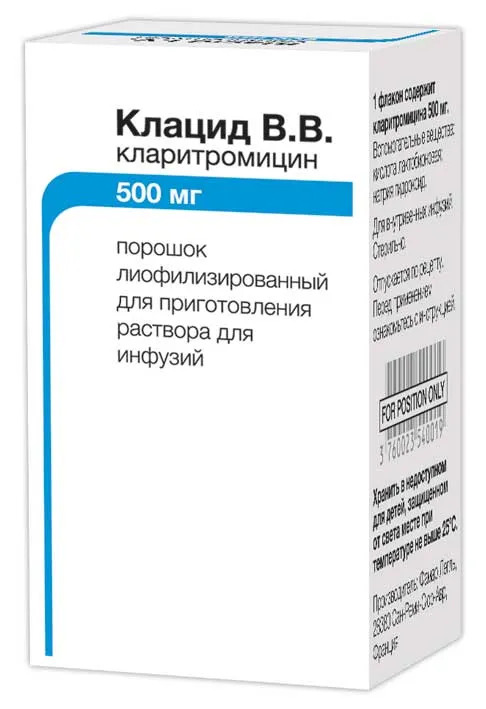
Table of Contents
INSTRUCTIONS FOR MEDICAL USE OF THE MEDICINAL PRODUCT KLAZID® I.V. (KLACID® I.V.)
Composition:
Active substance: clarithromycin;
One vial contains 500 mg of clarithromycin;
Excipients: lactobionic acid, sodium hydroxide.
Pharmaceutical form. Lyophilized powder for solution for infusion.
Main physico-chemical characteristics: lyophilized, compacted powder, white to almost white, with a faint aromatic odor.
Pharmacotherapeutic group. Antimicrobial agents for systemic use. Macrolides. Clarithromycin. ATC code J01FA09.
Pharmacological Properties
Pharmacodynamics
Clarithromycin is a semisynthetic antibiotic of the macrolide group.
Microbiology
The antibacterial activity of clarithromycin is due to its binding to the 50S ribosomal subunit of susceptible bacteria and inhibition of protein synthesis. The drug demonstrates high in vitro efficacy against a broad spectrum of aerobic and anaerobic gram-positive and gram-negative microorganisms, including hospital strains. Minimum inhibitory concentrations (MICs) of clarithromycin are typically two times lower than those of erythromycin.
Clarithromycin is highly effective in vitro against Legionella pneumophila and Mycoplasma pneumoniae. It exerts bactericidal activity against H. pylori, with clarithromycin activity being higher at neutral pH than at acidic pH. In vitro and in vivo data indicate high efficacy of clarithromycin against clinically significant strains of mycobacteria. In vitro studies have shown that Enterobacteriaceae and Pseudomonas strains, as well as non-lactose-producing gram-negative bacteria, are insensitive to clarithromycin.
Clarithromycin is active in vitro and clinically against most strains of the following microorganisms:
Aerobic gram-positive microorganisms: Staphylococcus aureus, Streptococcus pneumoniae, Streptococcus pyogenes, Listeria monocytogenes.
Aerobic gram-negative microorganisms: Haemophilus influenzae, Haemophilus parainfluenzae, Moraxella catarrhalis, Neisseria gonorrhoeae, Legionella pneumophila.
Other microorganisms: Mycoplasma pneumoniae, Chlamydia pneumoniae (TWAR).
Mycobacteria: Mycobacterium leprae, Mycobacterium kansasii, Mycobacterium chelonae, Mycobacterium fortuitum, Mycobacterium avium complex (MAC), including Mycobacterium avium and Mycobacterium intracellulare.
Beta-lactamases produced by microorganisms do not affect the efficacy of clarithromycin.
Most methicillin- and oxacillin-resistant strains of staphylococci are insensitive to clarithromycin.
Helicobacter: H. pylori.
Clarithromycin is active in vitro against most strains of the following microorganisms; however, the clinical significance of these data is unknown, and efficacy and safety of its use have not been established in controlled clinical trials.
Aerobic gram-positive microorganisms: Streptococcus agalactiae, Streptococci (groups C, F, G), Viridans group streptococci.
Aerobic gram-negative microorganisms: Bordetella pertussis, Pasteurella multocida.
Anaerobic gram-positive microorganisms: Clostridium perfringens, Peptococcus niger, Propionibacterium acnes.
Anaerobic gram-negative microorganisms: Bacteroides melaninogenicus.
Spirochetes: Borrelia burgdorferi, Treponema pallidum.
Campylobacters: Campylobacter jejuni.
Clarithromycin exerts bactericidal activity against several bacterial strains: Haemophilus influenzae, Streptococcus pneumoniae, Streptococcus pyogenes, Streptococcus agalactiae, Moraxella (Branhamella) catarrhalis, Neisseria gonorrhoeae, H. pylori, and Campylobacter spp.
The main metabolite of clarithromycin in the human body is the microbiologically active 14-hydroxyclarithromycin (14-OH-clarithromycin). For most microorganisms, the microbiological activity of the metabolite is equal to or 1–2 times weaker than that of the parent compound, except for H. influenzae, against which the metabolite is twice as effective. In vitro and in vivo, the parent compound and its main metabolite exhibit either additive or synergistic effects against H. influenzae, depending on the microbial strain.
Susceptibility Testing
Quantitative methods requiring measurement of zone diameter provide the most accurate assessment of bacterial susceptibility to antimicrobial agents. In one of the recommended procedures for susceptibility testing, disks impregnated with 15 μg of clarithromycin (Kirby-Bauer diffusion test) are used; the zone diameter of inhibition is correlated with MIC values for clarithromycin. MIC is determined by broth or agar dilution methods.
When these procedures are performed, a laboratory report indicating "susceptible" suggests that the infecting microorganism is likely to respond to therapy. A report of "resistant" indicates that the infecting microorganism is unlikely to respond to treatment. A report of "intermediate susceptibility" indicates that the therapeutic effect of the drug may be uncertain or that the microorganism may respond if higher doses are used (intermediate susceptibility is also referred to as moderate susceptibility).
Country- or region-specific data on absolute breakpoints for susceptibility, resistance, and intermediate susceptibility should be taken into account.
Pharmacokinetics
Distribution, Biotransformation, and Elimination
Healthy Volunteers
Maximum plasma concentration (Cmax) of clarithromycin ranges from 5.16 μg/mL to 9.40 μg/mL after 1-hour infusion of 500 mg and 1000 mg clarithromycin, respectively. Cmax of 14-OH-clarithromycin ranges from 0.66 μg/mL after 500 mg infusion to 1.06 μg/mL after 1000 mg infusion over 1 hour. The terminal elimination half-life of clarithromycin from plasma depends on the dose and ranges from 3.8 hours to 4.5 hours after administration of 500 mg and 1000 mg doses infused over 1 hour, respectively. The elimination half-life of 14-OH-clarithromycin from plasma shows moderate dose-dependent increase with higher doses, ranging from 7.3 hours to 9.3 hours after administration of 500 mg and 1000 mg doses infused over 1 hour, respectively. The area under the concentration-time curve (AUC) values for clarithromycin increased disproportionately with dose, indicating a nonlinear relationship, ranging from 22.29 h·μg/mL to 53.26 h·μg/mL after 500 mg and 1000 mg doses infused over 1 hour, respectively. AUC values for 14-OH-clarithromycin ranged from 8.16 h·μg/mL to 14.76 h·μg/mL after administration of 500 mg and 1000 mg doses over 1 hour, respectively.
With repeated dosing (every 12 hours), steady-state Cmax of clarithromycin increases from 5.5 μg/mL after 500 mg infusion to 8.6 μg/mL after 750 mg infusion. The apparent terminal elimination half-life is 5.3 hours and 4.8 hours after 500 mg and 750 mg infusions over 1 hour, respectively. Steady-state Cmax of 14-OH-clarithromycin increases from 1.02 μg/mL after 500 mg infusion to 1.37 μg/mL after 750 mg infusion. Terminal elimination half-lives of this metabolite are 7.9 hours and 5.4 hours after 500 mg and 750 mg infusions, respectively. No dose-dependency was observed.
Patients
Clarithromycin and its main active metabolite, 14-OH-clarithromycin, are well distributed into all tissues and body fluids. Tissue concentrations are generally several times higher than serum concentrations. The highest concentrations are recorded in the liver and lungs. Examples of tissue and serum concentrations are provided below.
| CONCENTRATION (after administration of 250 mg every 12 hours) |
||
| Tissue type |
Tissue (mcg/g) |
Blood serum (mcg/mL) |
| Tonsils |
1.6 |
0.8 |
| Lungs |
8.8 |
1.7 |
Clinical characteristics.
Indications.
Treatment of infections caused by clarithromycin-sensitive microorganisms when parenteral therapy is required:
- Infections of the upper respiratory tract.
- Infections of the lower respiratory tract (see "Special precautions for use" and "Pharmacological properties. Pharmacodynamics" regarding susceptibility testing).
- Skin and soft tissue infections (see "Special precautions for use" and "Pharmacological properties. Pharmacodynamics" regarding susceptibility testing).
- Disseminated or localized mycobacterial infections caused by Mycobacterium avium or Mycobacterium intracellulare, localized infections caused by Mycobacterium chelonae, Mycobacterium fortuitum, or Mycobacterium kansasii, particularly in HIV-infected patients.
Contraindications.
Hypersensitivity to macrolide antibiotics or to any of the excipients of the medicinal product (see section "Composition").
Concomitant administration of clarithromycin with any of the following drugs: astemizole, cisapride, domperidone, pimozide, terfenadine (as this may lead to QT interval prolongation and development of cardiac arrhythmias, including ventricular tachycardia, ventricular fibrillation, and torsades de pointes), ergot alkaloids such as ergotamine, dihydroergotamine (as this may lead to ergot toxicity), HMG-CoA reductase inhibitors (statins) that are predominantly metabolized by CYP3A4, particularly lovastatin or simvastatin (due to increased risk of myopathy, including rhabdomyolysis) (see "Special precautions for use", "Interaction with other medicinal products and other forms of interaction").
Concomitant use of clarithromycin and oral midazolam (see "Interaction with other medicinal products and other forms of interaction").
Congenital or documented acquired QT interval prolongation or history of ventricular cardiac arrhythmias, including torsades de pointes (see "Special precautions for use", "Interaction with other medicinal products and other forms of interaction").
Electrolyte disturbances (hypokalemia or hypomagnesemia, due to risk of QT interval prolongation).
Severe hepatic impairment and concomitant renal impairment.
Concomitant use of clarithromycin (and other strong CYP3A4 inhibitors) with colchicine (see "Special precautions for use", "Interaction with other medicinal products and other forms of interaction").
Concomitant use of clarithromycin with ticagrelor, ivabradine, or ranolazine.
Concomitant use of clarithromycin with lomitapide (see "Interaction with other medicinal products and other forms of interaction").
Interaction with other medicinal products and other forms of interaction.
Use of the following medicinal products is strictly contraindicated due to the potential for severe interaction outcomes.
Cisapride, pimozide, domperidone, astemizole, terfenadine
Increased serum levels of cisapride have been reported in patients receiving clarithromycin and cisapride concomitantly. This may lead to QT interval prolongation and arrhythmias, including ventricular tachycardia, ventricular fibrillation, and torsades de pointes. Similar effects have been observed in patients receiving clarithromycin and pimozide concomitantly (see "Contraindications").
Macrolides have been reported to alter the metabolism of terfenadine, leading to increased serum levels of terfenadine, which has sometimes been associated with arrhythmias such as QT interval prolongation, ventricular tachycardia, ventricular fibrillation, and torsades de pointes (see "Contraindications"). In a study involving 14 volunteers, concomitant administration of clarithromycin and terfenadine resulted in a 2- to 3-fold increase in the serum concentration of the acid metabolite of terfenadine and QT interval prolongation, although no clinically evident effect was observed. Similar phenomena have been observed with concomitant use of astemizole and other macrolides.
Ergot alkaloids
Post-marketing reports indicate that concomitant use of clarithromycin with ergotamine or dihydroergotamine has been associated with signs of acute ergotism, characterized by vasospasm and tissue ischemia of extremities and other tissues, including the central nervous system. Concomitant administration of clarithromycin and ergot alkaloids is contraindicated (see "Contraindications").
Oral midazolam
When midazolam was administered orally with clarithromycin tablets (500 mg twice daily), the AUC of midazolam increased 7-fold. Concomitant use of oral midazolam and clarithromycin is contraindicated (see "Contraindications").
HMG-CoA reductase inhibitors (statins)
Concomitant use of clarithromycin with lovastatin or simvastatin is contraindicated (see "Contraindications"), as these statins are predominantly metabolized by CYP3A4 and their concomitant use with clarithromycin increases their plasma concentration, thereby increasing the risk of myopathy, including rhabdomyolysis. Cases of rhabdomyolysis have been reported in patients receiving clarithromycin concomitantly with these statins. If clarithromycin treatment cannot be avoided, therapy with lovastatin or simvastatin should be discontinued during the course of treatment.
Caution should be exercised when prescribing clarithromycin concomitantly with other statins. In situations where concomitant use of clarithromycin with statins cannot be avoided, it is recommended to prescribe the lowest registered dose of the statin. Use of a statin not dependent on CYP3A metabolism (e.g., fluvastatin) may be considered. Monitoring of patients for signs and symptoms of myopathy is necessary.
Lomitapide
Concomitant use of clarithromycin with lomitapide is contraindicated due to the potential for significant increases in transaminase levels (see "Contraindications").
Concomitant use of clarithromycin with ticagrelor, ivabradine, and ranolazine, which are predominantly metabolized by CYP3A4, is contraindicated (see "Contraindications").
Effect of other medicinal products on clarithromycin.
Medicinal products that are CYP3A inducers (e.g., rifampicin, phenytoin, carbamazepine, phenobarbital, St. John’s wort) may induce clarithromycin metabolism. This may lead to subtherapeutic levels of clarithromycin and reduced efficacy. Additionally, monitoring of plasma levels of the CYP3A inducer may be necessary, as they may be increased due to CYP3A inhibition by clarithromycin (see also the package leaflet for the respective CYP3A4 inducer). Concomitant use of rifabutin and clarithromycin has led to increased rifabutin levels and decreased clarithromycin serum levels, with an increased risk of uveitis.
The effect of the following medicinal products on clarithromycin blood concentration is known or suspected, and thus dose adjustment of clarithromycin or alternative therapy may be required.
Efavirenz, nevirapine, rifampicin, rifabutin, and rifapentine
Potent inducers of cytochrome P450 enzymes, such as efavirenz, nevirapine, rifampicin, rifabutin, and rifapentine, may accelerate clarithromycin metabolism, decreasing its plasma concentration but increasing the concentration of 14-OH-clarithromycin – a microbiologically active metabolite. Since the microbiological activity of clarithromycin and 14-OH-clarithromycin varies against different bacteria, the expected therapeutic effect may not be achieved with concomitant use of clarithromycin and cytochrome P450 enzyme inducers.
Etravirine
The effect of clarithromycin was reduced by etravirine, although concentrations of the active metabolite 14-OH-clarithromycin were increased. Since 14-OH-clarithromycin has reduced activity against Mycobacterium avium complex (MAC), overall activity against this pathogen may be altered. Therefore, alternative agents to clarithromycin should be considered for the treatment of MAC.
Fluconazole
Concomitant administration of fluconazole 200 mg daily and clarithromycin 500 mg twice daily in 21 healthy volunteers resulted in a 33% increase in steady-state Cmin of clarithromycin and an 18% increase in AUC. Steady-state concentrations of the active metabolite 14-OH-clarithromycin were not significantly altered with concomitant fluconazole use. Dose adjustment of clarithromycin is not required.
Ritonavir
A pharmacokinetic study showed that concomitant administration of ritonavir 200 mg every 8 hours and clarithromycin 500 mg every 12 hours resulted in significant inhibition of clarithromycin metabolism. Cmax of clarithromycin increased by 31%, Cmin by 182%, and AUC by 77% with concomitant ritonavir. Complete inhibition of 14-OH-clarithromycin formation was observed. Due to the wide therapeutic range, dose reduction of clarithromycin is not required in patients with normal renal function. Dose adjustment is required in patients with renal impairment: for patients with CLCR 30–60 mL/min, the clarithromycin dose should be reduced by 50%; for patients with CLCR < 30 mL/min, the clarithromycin dose should be reduced by 75%. Clarithromycin doses exceeding 1 g/day should not be used with ritonavir.
The same dose adjustments should be applied to patients with impaired renal function when ritonavir is used as a pharmacokinetic booster with other HIV protease inhibitors, including atazanavir and saquinavir (see below "Bidirectional drug interactions").
Effect of clarithromycin on other medicinal products.
Antiarrhythmic agents
Post-marketing reports exist of torsades de pointes occurring with concomitant use of clarithromycin and quinidine or disopyramide. ECG monitoring is recommended to detect QT interval prolongation during concomitant use of clarithromycin with these drugs. Serum concentrations of these drugs should be monitored during clarithromycin therapy.
Post-marketing use reports indicate hypoglycemia with concomitant use of clarithromycin and disopyramide; therefore, blood glucose monitoring is necessary when these agents are used together.
Oral hypoglycemic agents/insulin
When used concomitantly with certain hypoglycemic agents such as nateglinide and repaglinide, clarithromycin may inhibit the CYP3A enzyme, potentially causing hypoglycemia. Careful monitoring of glucose levels is recommended.
CYP3A-related interactions |
Concomitant use of clarithromycin, a known CYP3A enzyme inhibitor, and a drug primarily metabolized by CYP3A, may lead to increased plasma concentrations of the latter, thereby potentially enhancing or prolonging its therapeutic effect and adverse reactions. Caution is advised when using clarithromycin in patients receiving therapy with CYP3A substrate drugs, especially if the CYP3A substrate has a narrow therapeutic range (e.g., carbamazepine) and/or is extensively metabolized by this enzyme. Dose adjustment may be required, and, if possible, careful monitoring of serum concentrations of the drug primarily metabolized by CYP3A is recommended in patients receiving clarithromycin concomitantly.
Corticosteroids
Caution should be exercised when using clarithromycin concomitantly with systemic or inhaled corticosteroids that are predominantly metabolized by CYP3A, due to the potential for increased systemic effects of corticosteroids. Patients should be closely monitored for adverse reactions associated with systemic corticosteroids when used concomitantly.
It is known (or suspected) that the following medicinal products or groups of products are metabolized by the same CYP3A isoenzyme: alprazolam, astemizole, carbamazepine, cilostazol, cisapride, cyclosporine, disopyramide, ergot alkaloids, lovastatin, methylprednisolone, midazolam, omeprazole, oral anticoagulants (e.g., warfarin, rivaroxaban, apixaban), atypical antipsychotics (e.g., quetiapine), pimozide, quinidine, rifabutin, sildenafil, simvastatin, tacrolimus, terfenadine, triazolam, and vinblastine – but this list is not exhaustive. A similar interaction mechanism has been observed with phenytoin, theophylline, and valproate, which are metabolized by other cytochrome P450 isoenzymes.
Direct oral anticoagulants (DOACs)
DOACs dabigatran and edoxaban are substrates of the efflux transporter P-glycoprotein (P-gp). Rivaroxaban and apixaban are metabolized via CYP3A4 and are also P-gp substrates. Caution should be exercised when using clarithromycin concomitantly with these drugs, especially in patients at high risk of bleeding (see "Special precautions for use").
Omeprazole
Clarithromycin (500 mg every 8 hours) was administered in combination with omeprazole (40 mg daily) to healthy adult volunteers. Steady-state plasma concentrations of omeprazole increased (Cmax, AUC0-24, and t1/2 increased by 30%, 89%, and 34%, respectively) with concomitant clarithromycin use. When omeprazole was administered alone, the mean gastric pH measured over 24 hours was 5.2; with concomitant omeprazole and clarithromycin, it was 5.7.
Sildenafil, tadalafil, and vardenafil
Each of these phosphodiesterase inhibitors is metabolized (at least partially) via CYP3A, and CYP3A may be inhibited by concomitantly administered clarithromycin. Concomitant use of clarithromycin with sildenafil, tadalafil, or vardenafil may lead to increased exposure to the phosphodiesterase inhibitor; therefore, consideration should be given to reducing the dose of sildenafil, tadalafil, or vardenafil.
Theophylline, carbamazepine
Clinical study results showed a slight but statistically significant (p≤0.05) increase in plasma concentrations of theophylline or carbamazepine when used concomitantly with clarithromycin.
Tolterodine
Tolterodine is primarily metabolized by the CYP2D6 isoenzyme of cytochrome P450 (CYP2D6). However, in patients lacking CYP2D6, metabolism occurs via CYP3A. In this population, inhibition of CYP3A leads to a significant increase in tolterodine plasma concentrations. Dose reduction of tolterodine may be necessary in such patients when used concomitantly with CYP3A inhibitors such as clarithromycin.
Triazolobenzodiazepines (e.g., alprazolam, midazolam, triazolam)
When midazolam was administered intravenously with clarithromycin tablets (500 mg twice daily), the AUC of midazolam increased 2.7-fold. Close monitoring of the patient is required when midazolam is administered intravenously with clarithromycin to allow timely dose adjustment. With oromucosal administration of midazolam, where presystemic elimination may be bypassed, an interaction similar to that observed with intravenous midazolam (rather than oral) is more likely. The same precautions should be observed when using other benzodiazepines metabolized by CYP3A, including triazolam and alprazolam. For benzodiazepines whose elimination does not depend on CYP3A (temazepam, nitrazepam, lorazepam), clinically significant interaction with clarithromycin is unlikely.
Post-marketing reports exist of drug interaction and development of central nervous system (CNS) adverse effects such as somnolence and confusion with concomitant use of clarithromycin and triazolam. Patients should be monitored, considering the potential for increased CNS pharmacological effects.
Other forms of interaction
Colchicine
Colchicine is a substrate of CYP3A and the efflux transporter P-glycoprotein (P-gp). Clarithromycin and other macrolides are known to inhibit CYP3A and P-gp. Concomitant use of clarithromycin and colchicine may lead to increased colchicine exposure due to inhibition of P-gp and/or CYP3A by clarithromycin. Concomitant use of clarithromycin and colchicine is contraindicated (see "Contraindications", "Special precautions for use").
Digoxin
Digoxin is considered a substrate of the efflux transporter P-glycoprotein (P-gp). Clarithromycin is known to inhibit P-gp. Concomitant use of clarithromycin and digoxin may lead to increased digoxin exposure due to P-gp inhibition by clarithromycin. Post-marketing reports indicate increased serum digoxin concentrations in patients receiving clarithromycin concomitantly with digoxin. In some patients, signs of digoxin toxicity developed, including potentially life-threatening arrhythmias. Serum digoxin concentrations should be carefully monitored in patients receiving digoxin concomitantly with clarithromycin.
Zidovudine
Concomitant oral administration of clarithromycin tablets and zidovudine in HIV-infected adult patients may lead to decreased steady-state serum concentrations of zidovudine. Clarithromycin may interfere with the absorption of oral zidovudine when administered concomitantly, but this can largely be avoided by maintaining a 4-hour interval between doses of clarithromycin and zidovudine. Such interaction has not been reported with use of clarithromycin suspension and zidovudine or didanosine in HIV-infected children. This interaction is unlikely when clarithromycin is administered by intravenous infusion.
Phenytoin and valproate
There have been spontaneous reports and publications on interactions between CYP3A inhibitors, including clarithromycin, and medicinal products not considered to be metabolized by CYP3A (e.g., phenytoin and valproate). Monitoring of serum levels of these drugs is recommended when co-administered with clarithromycin. Increased serum levels have been reported.
Bidirectional drug interactions
Hydroxychloroquine and chloroquine
Observational data indicate that concomitant use of azithromycin and hydroxychloroquine in patients with rheumatoid arthritis is associated with an increased risk of cardiovascular events and cardiovascular mortality. Due to the potential for similar risk with other macrolides used in combination with hydroxychloroquine or chloroquine, the benefit-risk ratio should be carefully considered before prescribing clarithromycin to patients taking hydroxychloroquine or chloroquine. Clarithromycin should be used with caution in patients receiving medicinal products that prolong the QT interval, due to the potential for inducing cardiac arrhythmias and serious cardiovascular adverse reactions.
Atazanavir
Concomitant use of clarithromycin (500 mg twice daily) with atazanavir (400 mg once daily), both substrates and inhibitors of CYP3A, resulted in a doubling of clarithromycin exposure and a 70% reduction in 14-OH-clarithromycin exposure, with a 28% increase in atazanavir AUC. Since clarithromycin has a wide therapeutic range, dose reduction is not necessary in patients with normal renal function. The clarithromycin dose should be reduced by 50% in patients with creatinine clearance of 30–60 mL/min and by 75% in patients with creatinine clearance <30 mL/min, using the appropriate formulation of clarithromycin. Clarithromycin doses above 1000 mg daily should not be used with protease inhibitors.
Calcium channel blockers
Due to the risk of arterial hypotension, clarithromycin should be used with caution concomitantly with calcium channel blockers metabolized by CYP3A4 (e.g., verapamil, amlodipine, diltiazem). Plasma concentrations of both clarithromycin and calcium channel blockers may increase with interaction. Arterial hypotension, bradyarrhythmias, and lactic acidosis have been observed in patients receiving clarithromycin and verapamil concomitantly.
Itraconazole
Clarithromycin and itraconazole are both substrates and inhibitors of CYP3A, and thus clarithromycin may increase plasma levels of itraconazole and vice versa. When itraconazole is used concomitantly with clarithromycin, patients should be closely monitored for signs and symptoms of enhanced or prolonged pharmacological effect.
Saquinavir
Concomitant administration of clarithromycin (500 mg twice daily) and saquinavir (soft gelatin capsules, 1200 mg three times daily), both substrates and inhibitors of CYP3A, in 12 healthy volunteers resulted in a 177% and 187% increase in steady-state AUC and Cmax of saquinavir, respectively, compared to saquinavir alone. Meanwhile, AUC and Cmax of clarithromycin increased by approximately 40% compared to clarithromycin alone. Dose adjustment is not necessary if both medicinal products are used concomitantly for a limited period at the studied doses/formulations. Results from drug interaction studies using soft gelatin capsules may not reflect effects observed with hard gelatin capsules of saquinavir. Results from drug interaction studies using saquinavir alone may not reflect effects observed with saquinavir/ritonavir therapy. When saquinavir is used with ritonavir, the potential effect of ritonavir on clarithromycin should be considered (see above).
Patients taking oral contraceptives should be advised that contraceptive failure may occur in case of diarrhea, vomiting, or breakthrough bleeding.
Special precautions for use.
Clarithromycin should not be prescribed to pregnant women without careful benefit/risk assessment, especially during the first trimester of pregnancy.
Prolonged use of clarithromycin, as with other antibiotics, may lead to overgrowth of resistant bacteria and fungi. If superinfection occurs, appropriate therapy should be initiated.
Clarithromycin is primarily metabolized by the liver. Therefore, caution should be exercised when administering the drug to patients with hepatic impairment. The drug should also be used with caution in patients with moderate or severe renal impairment.
The drug should be used with caution in patients with severe renal insufficiency.
During clarithromycin therapy, hepatic function abnormalities have been reported, including elevated liver enzymes, and hepatocellular and/or cholestatic hepatitis, with or without jaundice. These hepatic abnormalities may be severe in nature and are usually reversible. In some cases, hepatic failure with fatal outcome has been reported, which was primarily associated with serious underlying diseases and/or concomitant medication. Clarithromycin therapy should be discontinued immediately if signs and symptoms of hepatitis occur, such as anorexia, jaundice, darkening of urine, pruritus, or abdominal tenderness.
Pseudomembranous colitis, ranging from moderate to life-threatening severity, has been reported with nearly all antibacterial agents, including macrolides. Clostridium difficile-associated diarrhea (CDAD), ranging from mild to fatal colitis, has been reported with the use of nearly all antibacterial agents, including clarithromycin. Antibacterial therapy alters the normal intestinal flora, which may lead to overgrowth of C. difficile. Clostridium difficile-associated diarrhea should always be considered in any patient presenting with diarrhea following antibiotic use. A careful medical history is essential, as cases of Clostridium difficile-associated diarrhea have been reported up to two months after administration of antibacterial agents. If pseudomembranous colitis develops, clarithromycin therapy should be discontinued regardless of the indication. Microbiological testing should be performed and appropriate treatment initiated. Drugs that inhibit intestinal motility should be avoided.
Colchicine
Cases of colchicine toxicity (including fatal outcomes) have been reported with concomitant use of clarithromycin and colchicine, particularly in elderly patients, especially those with renal impairment (see "Interaction with other medicinal products and other forms of interaction"). Concomitant use of clarithromycin with colchicine is contraindicated (see "Contraindications").
Concomitant use of clarithromycin with triazolobenzodiazepines such as triazolam, intravenous or oromucosal midazolam, should be used with caution (see "Interaction with other medicinal products and other forms of interaction").
Cardiovascular complications
Prolongation of cardiac repolarization and QT interval, indicating a risk of cardiac arrhythmia and torsades de pointes, has been observed during treatment with macrolides, including clarithromycin (see "Adverse reactions"). Because the following conditions may increase the risk of ventricular arrhythmias (including torsades de pointes), clarithromycin should be used with caution in the following patient groups:
- Patients with ischemic heart disease, severe heart failure, conduction disorders, or clinically significant bradycardia;
- Patients who are concurrently taking other drugs associated with QT interval prolongation (see "Interaction with other medicinal products and other forms of interaction").
- Clarithromycin must not be used in patients with hypokalemia or hypomagnesemia (see "Contraindications").
- Concomitant use of clarithromycin with astemizole, cisapride, domperidone, pimozide, and terfenadine is contraindicated (see "Contraindications").
- Clarithromycin must not be used in patients with congenital or documented acquired QT prolongation or a history of ventricular arrhythmia (see "Contraindications").
- The benefit/risk ratio should be carefully considered before prescribing clarithromycin to patients taking hydroxychloroquine or chloroquine, due to the potential for increased risk of cardiovascular events or cardiovascular mortality (see "Interaction with other medicinal products and other forms of interaction").
Epidemiological studies investigating the risk of adverse cardiovascular outcomes with macrolide use have shown variable results. Some observational studies have identified a small short-term risk of arrhythmia, myocardial infarction, and cardiovascular mortality associated with macrolide use, including clarithromycin. These findings should be weighed against the benefits of treatment when prescribing clarithromycin.
Pneumonia
Due to increasing resistance of Streptococcus pneumoniae to macrolides, it is important to perform susceptibility testing when prescribing clarithromycin for the treatment of community-acquired pneumonia. For hospital-acquired pneumonia, clarithromycin should be used in combination with other appropriate antibiotics.
Skin and soft tissue infections of mild to moderate severity
These infections are most commonly caused by Staphylococcus aureus and Streptococcus pyogenes, each of which may be resistant to macrolides. Therefore, susceptibility testing is important. If beta-lactam antibiotics cannot be used (e.g., due to allergy), other antibiotics such as clindamycin may be used as first-line therapy. Currently, macrolides play a limited role in the treatment of certain skin and soft tissue infections, such as those caused by Corynebacterium minutissimum, acne vulgaris, erysipelas, and in situations where penicillins cannot be used.
In the event of severe acute hypersensitivity reactions, such as anaphylaxis, severe skin adverse reactions (e.g., acute generalized exanthematous pustulosis, Stevens-Johnson syndrome, toxic epidermal necrolysis, DRESS), or Henoch-Schönlein purpura, clarithromycin therapy should be discontinued immediately and appropriate treatment initiated without delay.
Clarithromycin should be used with caution when co-administered with inducers of the cytochrome CYP3A4 enzyme (see "Interaction with other medicinal products and other forms of interaction").
Potential cross-resistance between clarithromycin and other macrolides, as well as with lincomycin and clindamycin, should be considered.
HMG-CoA reductase inhibitors (statins)
Concomitant use of clarithromycin with lovastatin or simvastatin is contraindicated (see "Contraindications"). Clarithromycin should be prescribed with caution when used concomitantly with other statins. Cases of rhabdomyolysis have been reported in patients receiving clarithromycin and statins concurrently. Patients should be monitored for possible signs and symptoms of myopathy. In situations where concomitant use of clarithromycin with statins cannot be avoided, it is recommended to prescribe the lowest registered dose of the statin. Use of a statin not dependent on CYP3A metabolism (e.g., fluvastatin) may be considered (see "Interaction with other medicinal products and other forms of interaction").
Oral hypoglycemic agents/insulin
Concomitant use of clarithromycin with oral hypoglycemic agents (such as sulfonylureas) and/or insulin may cause pronounced hypoglycemia. Close monitoring of blood glucose levels is recommended.
Oral anticoagulants
When clarithromycin is used concomitantly with warfarin, there is a risk of serious bleeding, significant increase in INR (International Normalized Ratio), and prolonged prothrombin time. INR and prothrombin time should be monitored frequently while patients are receiving both clarithromycin and oral anticoagulants.
Caution is advised when clarithromycin is used concomitantly with direct oral anticoagulants such as dabigatran, rivaroxaban, apixaban, and edoxaban, especially in patients at high risk of bleeding (see "Interaction with other medicinal products and other forms of interaction").
Excipients
This medicinal product contains less than 1 mmol of sodium (23 mg) per vial, i.e., it is essentially "sodium-free."
Use during pregnancy or breastfeeding.
Pregnancy
The safety of clarithromycin use during pregnancy has not been established. Based on various findings from animal studies and human experience, a potential adverse effect on embryofetal development cannot be excluded. Some observational studies assessing the impact of clarithromycin during the first and second trimesters have reported an increased risk of miscarriage compared to no antibiotic use or use of other antibiotics during the same period. Available epidemiological studies on the risk of major congenital malformations associated with macrolide use, including clarithromycin, during pregnancy provide conflicting results. Therefore, use of the drug during pregnancy is not recommended without careful benefit/risk assessment.
Breastfeeding
Clarithromycin passes into human breast milk in small amounts. It has been estimated that an exclusively breastfed infant receives approximately 1.7% of the maternal dose of clarithromycin, adjusted for maternal body weight.
The safety of clarithromycin use during breastfeeding has not been established.
Ability to affect reaction speed when driving or operating machinery.
Data on the effect of clarithromycin are lacking. However, possible adverse reactions affecting the nervous system, such as seizures, dizziness, vertigo, hallucinations, confusion, and disorientation, which may impair psychomotor performance, should be taken into account.
Method of Administration and Dosage.
For adult patients, the usual dose is 500 mg twice daily at 12-hour intervals as a prolonged (over 60 minutes) intravenous infusion after dilution of the drug in an appropriate infusion solution.
The dosage for children aged 12 years and older is the same as for adults.
Clacid® I.V. must not be administered by bolus injection or intramuscular route.
Use in patients with mycobacterial infection.
For adult patients with localized and disseminated mycobacterial infections caused by M. avium, M. intracellulare, M. chelonae, M. fortuitum, M. kansasii, the recommended dose of clarithromycin is 1 g daily, divided into two equal doses.
Treatment should be continued for 2–5 days depending on the severity of the patient's condition, after which, if possible, transition to oral administration of the drug should be made.
Use in patients with renal impairment: in patients with renal impairment (creatinine clearance less than 30 mL/min), the clarithromycin dose should be reduced to half the usual recommended dose.
Preparation of infusion solution.
- Prepare the initial solution of Clacid® I.V. for intravenous administration by adding 10 mL of sterile water for injection to the vial containing 500 mg of clarithromycin. Use only sterile water for injection, as other solvents may cause precipitation. Solvents containing preservatives or inorganic salts must not be used. Note: when diluted as described above, the solution contains an effective antimicrobial preservative; 1 mL of solution contains 50 mg of clarithromycin.
Chemical and physical stability is maintained for 48 hours at 5 °C and for 24 hours at 25 °C. From a microbiological standpoint, the diluted product should be used immediately. If not used immediately, storage under aseptic conditions is generally recommended for no longer than 24 hours at a temperature of 2 to 8 °C, except when dilution is performed under controlled and validated aseptic conditions (the responsibility for storage time and conditions lies with the user).
- Prior to administration, the initial solution of Clacid® I.V. (500 mg in 10 mL of water for injection) should be further diluted in at least 250 mL of one of the following diluents: 5% dextrose in lactated Ringer’s solution, 5% dextrose solution, lactated Ringer’s solution, 5% dextrose in 0.3% sodium chloride solution, Normosol-M in 5% dextrose, Normosol-R in 5% dextrose, 5% dextrose in 0.45% sodium chloride solution, or 0.9% sodium chloride solution.
Chemical and physical stability is maintained for 48 hours at 5 °C and for 6 hours at 25 °C. From a microbiological standpoint, the prepared solution should be used immediately. If not used immediately, storage under aseptic conditions is generally recommended for no longer than 24 hours at a temperature of 2 to 8 °C, except when dilution is performed under controlled and validated aseptic conditions (the responsibility for storage time and conditions lies with the user).
No medications or reagents should be added to the Clacid® I.V. infusion solution until their impact on the chemical and physical stability of the antibiotic solution has been established.
Children.
There is insufficient data on dosage recommendations for intravenous administration of clarithromycin in children under 12 years of age; therefore, use of this dosage form is not recommended in this age group. For such patients, Clacid® granules for oral suspension should be used instead.
The dosage for children aged 12 years and older is the same as for adults.
Overdose.
In case of overdose, clarithromycin administration should be discontinued and appropriate symptomatic treatment initiated.
Available reports indicate that clarithromycin overdose following oral administration may cause gastrointestinal symptoms. In one patient with a history of bipolar disorder who ingested 8 g of clarithromycin, altered mental status, paranoid behavior, hypokalemia, and hypoxemia developed. Adverse reactions associated with overdose should be managed with elimination procedures and symptomatic therapy. As with other macrolides, hemodialysis or peritoneal dialysis are unlikely to significantly affect serum clarithromycin concentrations.
Adverse Reactions
The most common and frequent adverse reactions associated with clarithromycin treatment in adults and children are abdominal pain, diarrhea, nausea, vomiting, and altered taste. These adverse reactions are generally mild and consistent with the known safety profile of macrolide antibiotics. During clinical studies, no significant difference was observed in the frequency of these gastrointestinal adverse reactions between patient groups with or without mycobacterial infections.
The adverse reactions listed below were reported during clinical trials and post-marketing use of various dosage forms and strengths of clarithromycin, including lyophilized powder. The reactions considered at least possibly related to clarithromycin are categorized by system organ class and frequency of occurrence: very common (≥1/10), common (≥1/100 to <1/10), uncommon (≥1/1,000 to <1/100), and frequency not known* (reactions reported during post-marketing surveillance; frequency cannot be estimated from available data). Within each group, adverse reactions are listed in order of decreasing severity, when severity could be assessed.
Infections and infestations: uncommon – cellulitis\textsuperscript{1}, candidiasis, gastroenteritis\textsuperscript{2}, infection\textsuperscript{3}, vaginal infection; frequency not known – pseudomembranous colitis, Behçet’s-like inflammation.
Blood and lymphatic system disorders: uncommon – leukopenia, neutropenia\textsuperscript{4}, thrombocytosis\textsuperscript{3}, eosinophilia\textsuperscript{4}; frequency not known – agranulocytosis, thrombocytopenia.
Immune system disorders: uncommon – anaphylactoid reactions\textsuperscript{1}, hypersensitivity; frequency not known – anaphylactic reactions, angioedema.
Metabolism and nutrition disorders: uncommon – anorexia, decreased appetite; frequency not known – hypoglycemia.
Psychiatric disorders: common – insomnia; uncommon – anxiety, nervousness\textsuperscript{3}; frequency not known – psychosis, confusion, depersonalization, depression, disorientation, hallucinations, nightmares, mania.
Nervous system disorders: common – dysgeusia (distorted taste sensation), headache; uncommon – loss of consciousness\textsuperscript{1}, dyskinesia\textsuperscript{1}, dizziness, somnolence, tremor; frequency not known – seizures, ageusia (loss of taste), parosmia, anosmia, paresthesia.
Ear and labyrinth disorders: uncommon – vertigo, hearing impairment, tinnitus; frequency not known – hearing loss.
Cardiac disorders: uncommon – cardiac arrest\textsuperscript{1}, atrial fibrillation\textsuperscript{1}, QT interval prolongation, extrasystoles\textsuperscript{1}, palpitations; frequency not known – torsades de pointes, ventricular tachycardia, ventricular fibrillation.
Vascular disorders: common – vasodilation\textsuperscript{1}; frequency not known – hemorrhage.
Respiratory, thoracic and mediastinal disorders: uncommon – asthma\textsuperscript{1}, epistaxis\textsuperscript{2}, pulmonary embolism\textsuperscript{1}.
Gastrointestinal disorders: common – diarrhea, vomiting, dyspepsia, nausea, abdominal pain; uncommon – esophagitis\textsuperscript{1}, gastroesophageal reflux disease\textsuperscript{2}, gastritis, proctalgia\textsuperscript{2}, stomatitis, glossitis, abdominal distension\textsuperscript{4}, constipation, dry mouth, eructation, flatulence; frequency not known – acute pancreatitis, tongue discoloration, tooth discoloration.
Hepatobiliary disorders: common – abnormal liver function tests; uncommon – cholestasis\textsuperscript{4}, hepatitis\textsuperscript{4}, increased levels of ALT, AST, GGT\textsuperscript{4}; frequency not known – liver failure, hepatocellular jaundice.
Skin and subcutaneous tissue disorders: common – rash, hyperhidrosis; uncommon – bullous dermatitis\textsuperscript{1}, pruritus, urticaria, maculopapular rash\textsuperscript{3}; frequency not known – severe skin reactions (e.g., acute generalized exanthematous pustulosis, Stevens-Johnson syndrome, toxic epidermal necrolysis, drug reaction with eosinophilia and systemic symptoms (DRESS)), acne, Henoch-Schönlein purpura.
Musculoskeletal and connective tissue disorders: uncommon – muscle spasms\textsuperscript{3}, skeletal muscle rigidity\textsuperscript{1}, myalgia\textsuperscript{2}; frequency not known – rhabdomyolysis\textsuperscript{2**}, myopathy.
Renal and urinary disorders: uncommon – increased blood creatinine\textsuperscript{1}, increased blood urea\textsuperscript{1}; frequency not known – renal failure, interstitial nephritis.
General disorders and administration site conditions: very common – phlebitis at injection site\textsuperscript{1}; common – pain at injection site\textsuperscript{1}, inflammation at injection site\textsuperscript{1}; uncommon – malaise\textsuperscript{4}, fever\textsuperscript{3}, asthenia, chest pain\textsuperscript{4}, chills\textsuperscript{4}, fatigue\textsuperscript{4}.
Investigations: uncommon – altered albumin-globulin ratio\textsuperscript{1}, increased blood alkaline phosphatase\textsuperscript{4}, increased blood lactate dehydrogenase\textsuperscript{4}; frequency not known – increased international normalized ratio (INR), prolonged prothrombin time, urine discoloration.
* Frequency not known: these reactions are based on voluntary reports from a population of uncertain size. Therefore, it is not always possible to reliably estimate their frequency or establish a causal relationship to drug exposure. The overall clinical experience with clarithromycin exceeds 1 billion patient-days.
** In some rhabdomyolysis reports, clarithromycin was co-administered with other medicinal products known to be associated with rhabdomyolysis (e.g., statins, fibrates, colchicine, or allopurinol).
\textsuperscript{1,2,3,4} These adverse reactions were reported only with the following dosage forms: \textsuperscript{1} – lyophilized powder for infusion solution, \textsuperscript{2} – extended-release tablets, \textsuperscript{3} – suspension, \textsuperscript{4} – immediate-release tablets.
The frequency, type, and severity of adverse reactions in children are expected to be similar to those in adults.
Patients with Immune System Disorders
In AIDS patients and other immunocompromised individuals receiving high-dose, long-term clarithromycin therapy for mycobacterial infections, it may be difficult to distinguish drug-related adverse reactions from symptoms of the underlying or concomitant diseases.
In adult patients receiving clarithromycin at a daily dose of 1000 mg, the most commonly reported adverse effects were nausea, vomiting, altered taste, abdominal pain, diarrhea, rash, abdominal distension, headache, constipation, hearing disturbances, and elevated serum ALT and AST levels. Dyspnea, insomnia, and dry mouth occurred less frequently.
In these immunocompromised patients, laboratory parameters were analyzed for significant abnormalities (i.e., values beyond the extreme upper or lower limits) for a given test. Based on this criterion, significant abnormal elevations in ALT and AST levels and abnormal decreases in white blood cell and platelet counts were observed in 2–3% of patients receiving 1000 mg of clarithromycin daily. A smaller percentage of patients showed increased blood urea nitrogen levels.
Shelf life. 3 years.
Storage conditions. Store out of reach of children at a temperature not exceeding 30 °C.
Incompatibilities. Only sterile water for injection should be used to prepare the initial solution, as other solvents may cause precipitate formation. Solvents containing preservatives or inorganic salts must not be used. No drugs or reagents should be added to the infusion solution of Klacid® I.V. until their impact on the chemical and physical stability of the antibiotic solution has been established.
Packaging. 1 vial per cardboard box.
Prescription status. Prescription only.
Manufacturer. Delpharm Saint Remy, France / Delpharm Saint Remy, France.
Manufacturer's address. Rue de l’Isle, Saint Remy Sur Avre, 28380, France.
If any adverse reactions occur during treatment or if there are any quality complaints regarding the product, please report to Abbott Ukraine LLC at:
+38 044-498-60-80 or by e-mail: [email protected].