Humulin regular
UkraineTable of Contents
INSTRUCTIONS FOR MEDICAL USE OF THE MEDICINAL PRODUCT HUMULIN® REGULAR (HUMULIN® REGULAR)
Composition:
Active substance: human insulin (recombinant DNA);
1 ml of solution contains 100 IU of human insulin (recombinant DNA);
Excipients: metacresol; glycerol; hydrochloric acid, 10% solution; sodium hydroxide, 10% solution; water for injections.
Pharmaceutical form. Solution for injection.
Main physicochemical properties: clear, colorless solution.
Pharmacotherapeutic group. Antidiabetics. Insulins and short-acting analogues.
ATC code A10AB01.
Pharmacological properties.
Pharmacodynamics.
Humulin Regular is a short-acting insulin preparation.
The primary action of insulin is the regulation of glucose metabolism. In addition, insulin affects various anabolic and anticatabolic processes in different tissues. In muscle tissue, these effects include enhanced synthesis of glycogen, fatty acids, glycerol, and protein, as well as increased amino acid uptake, accompanied by simultaneous suppression of glycogenolysis, gluconeogenesis, ketogenesis, lipolysis, protein catabolism, and amino acid release.
Below, the typical insulin activity profile (glucose utilization curve) after subcutaneous injection is shown by the bold line. The possible variability in duration and/or intensity of insulin activity among different patients is illustrated by the shaded area on the graph. Individual variability depends on factors such as dose volume, temperature at the injection site, and the patient's level of physical activity.
| Insulin activity |
|
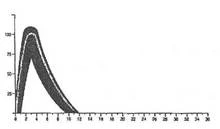
Time (hours)
Pharmacokinetics.
Humulin Regular is human insulin produced using recombinant DNA technology.
The pharmacokinetics of insulin do not reflect the metabolic activity of the hormone. Therefore, when considering insulin activity, it is more appropriate to examine glucose utilization curves (shown above).
No serious adverse effects associated with the use of the drug were observed during toxicological studies.
Clinical characteristics.
Indications. Treatment of patients with diabetes mellitus who require insulin administration to maintain normal glucose homeostasis.
Contraindications.
Hypoglycemia. Hypersensitivity to the active substance or to any of the excipients of the medicinal product, except in cases where it is used as desensitizing therapy.
Interaction with other medicinal products and other types of interactions.
Some medicinal products affect glucose metabolism; therefore, consultation with a physician is required regarding the concomitant use of any other medicinal products with human insulin. The physician should consider possible interactions if the patient is taking any other medicinal products.
Insulin requirements may increase when using medicinal products with hyperglycemic activity, such as glucocorticoids, thyroid hormones and growth hormone, danazol, β2-sympathomimetics (e.g. ritodrine, salbutamol, terbutaline), thiazides.
Insulin requirements may decrease when using medicinal products with hypoglycemic activity, such as oral hypoglycemic agents, salicylates (e.g. acetylsalicylic acid), certain antidepressants (monoamine oxidase inhibitors), certain angiotensin-converting enzyme inhibitors (captopril, enalapril), angiotensin II receptor blockers, non-selective beta-blockers, or alcohol.
Somatostatin analogues (octreotide, lanreotide) may either increase or decrease insulin requirements.
Special precautions for use
Any change in the type or brand of insulin must be carried out under strict medical supervision. Changes in concentration, brand (manufacturer), type (soluble, NPH, mixed), species (animal-sourced insulin, human insulin, human insulin analog), and/or method of production (recombinant DNA insulin or animal-sourced insulin) may require adjustment of dosage.
Dosage requirements when treating with human insulin may differ from those when using animal-sourced insulins. Dosage adjustments may be needed starting from the first dose or during the first several weeks or months of treatment.
In some patients who have experienced hypoglycemic reactions after switching from animal-sourced insulin to human insulin, early warning symptoms of hypoglycemia have been reported to be less pronounced or different from those previously observed during treatment with animal insulin. Patients with significantly improved blood glucose levels (e.g., due to intensified insulin therapy) may no longer experience some or any of the early warning symptoms of hypoglycemia, and they should be informed accordingly. Conditions in which early warning symptoms of hypoglycemia may be less specific or less pronounced include long-standing diabetes mellitus, diabetic neuropathy, or concomitant use of medications such as beta-adrenergic blockers.
Untreated hypoglycemic or hyperglycemic reactions may lead to loss of consciousness, coma, and potentially fatal outcomes.
Inadequate dosing or abrupt discontinuation of treatment, particularly in insulin-dependent diabetes, may result in hyperglycemia and ketoacidosis—conditions that are potentially life-threatening.
Antibody formation may occur during treatment with human insulin, although to a lesser extent than with purified animal-sourced insulin.
Insulin requirements may change significantly in diseases of the adrenal glands, pituitary gland, or thyroid gland, as well as in the presence of renal or hepatic insufficiency.
Insulin requirements may also increase during illness or emotional stress. Dosage adjustments may be necessary when there are changes in the level of physical activity or usual dietary patterns.
Patients should be instructed on the necessity of regularly rotating injection sites to minimize the risk of developing lipodystrophy or cutaneous amyloidosis. There is a potential risk of delayed insulin absorption and impaired glycemic control following insulin injections into areas affected by such reactions. Cases of hypoglycemia have been reported after sudden changes in injection sites to areas not affected by amyloidosis or lipodystrophy. After changing injection sites, blood glucose monitoring is recommended, and dosage adjustments of antidiabetic agents may need to be considered.
Combination with pioglitazone
Cases of heart failure have been reported with concomitant use of pioglitazone and insulin, particularly in patients with risk factors for heart failure. This information should be taken into account when prescribing the combination of Humulin Regular and pioglitazone. When using this combination, patients should be monitored for signs and symptoms of heart failure, weight gain, and edema. Pioglitazone therapy should be discontinued if cardiac symptoms worsen.
Traceability
To improve traceability of biological medicinal products, the name and batch number of the administered product should be clearly documented.
Excipients
This medicinal product contains less than 1 mmol sodium (23 mg) per dose unit, i.e., essentially "sodium-free."
Use during pregnancy or breastfeeding
Patients with insulin-dependent diabetes mellitus or gestational diabetes requiring insulin therapy need careful monitoring throughout pregnancy. Insulin requirements usually decrease during the first trimester of pregnancy and then increase during the second and third trimesters. Patients with diabetes should inform their physician if they become pregnant or are planning pregnancy.
Close monitoring of blood glucose levels and general health status is required for pregnant patients with diabetes.
Breastfeeding women with diabetes may require adjustments in insulin dosage and/or dietary regimen.
Effect on ability to drive and use machines
The ability of insulin-treated patients to concentrate and react may be impaired as a result of hypoglycemia. This may constitute a risk in situations where such abilities are of particular importance (e.g., driving a vehicle or operating machinery).
Patients should be informed about the specific preventive measures necessary to avoid hypoglycemia while driving. This is especially important for patients with reduced or absent awareness of hypoglycemic warning symptoms or those who frequently experience hypoglycemic episodes. In such circumstances, the appropriateness of driving should be carefully evaluated.
Administration and Dosage
The dosage is determined by the physician according to the individual needs of the patient.
Humulin Regular should be administered only by subcutaneous injection using a reusable pen-injector (for the cartridge formulation) or a pre-filled pen-injector (for the pen formulation, such as the KwikPen).
If administration via syringe or intravenous injection is required, Humulin Regular in vials should be used.
Subcutaneous injections should be administered in the abdominal wall, thigh, buttocks, or upper arm. Injection sites should be rotated regularly to avoid repeated use of the same site more than once per month, in order to minimize the risk of developing lipodystrophy or cutaneous amyloidosis (see sections "Special Precautions" and "Adverse Reactions").
Care must be taken during subcutaneous administration of Humulin Regular to avoid intravascular injection. The injection site should not be massaged after injection. Patients must be trained in the correct injection technique.
Instructions for Use
Each pen-injector/cartridge must be used by only one patient, even if the needle is changed, to prevent the possible transmission of infectious agents.
Humulin Regular in cartridges must be used only with reusable pen-injectors manufactured by Eli Lilly and Company and its affiliates. It should not be used with other reusable pen-injectors, as the accuracy of dosing has not been established for such devices.
a) Preparing the Dose
Humulin Regular in cartridges does not require resuspension and should be used only if the solution is clear, colorless, free of visible particles, and appears watery.
Cartridges are not designed for mixing different insulins. Empty cartridges must not be reused.
For instructions on how to load a cartridge into a pen-injector, attach a needle, and administer insulin, refer to the pen-injector manufacturer’s instructions.
b) Administration
Administer the prescribed insulin dose as directed by the physician.
Instructions for Use
Each time a new KwikPen pre-filled with Humulin Regular is used, read the accompanying Instructions for Use carefully, as they may contain updated information. This information does not replace the necessity of discussing the patient’s health status and prescribed treatment with a physician.
The pre-filled KwikPen containing Humulin Regular is a single-use pen-injector containing 300 IU (3 mL) of insulin. Multiple injections can be made using one pen-injector. The dose increment is 1 unit. Doses from 1 to 60 units of insulin can be set for a single injection. If a dose greater than 60 units is required, two or more injections should be administered. After each injection, the plunger moves only a small distance, and movement may not be easily noticeable. The plunger will reach the end of the cartridge only after all 300 units have been used.
Use of the pen-injector is not recommended for patients with complete vision loss or impaired vision unless they are assisted by someone trained in the proper use of the pen-injector.
Schematic illustration of the KwikPen pen-injector
| Parts of the KwikPen |
||||||||||||
| Cap holder |
Cartridge holder |
Pen label |
Dose indicator |
|||||||||
|
|
|
|||||||||||
| Pen cap |
Rubber disc |
Plunger |
Pen body |
Dose window |
Dose button |
|||||||

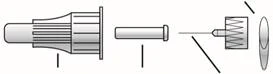
| Parts of the pen needle (Needles are not included in the package) |
|||||
| Tab paper |
|||||
|
|
|||||
| Needle outer cap |
Needle inner cap |
Needle |
|||
Description of the Humulin Regular QuickPen Pen Device
The pen body is beige in color, and the button is yellow.
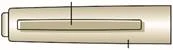
The label is white with a golden-yellow stripe.
Use of the QuickPen device is recommended only with needles from Becton, Dickinson and Company (BD).
Preparing the QuickPen Device
- Wash hands with soap.
- Read the label text on the pen to ensure that the patient is using the correct type of insulin. This is especially important if the patient uses more than one type of insulin.
- Do not use the pen after the expiration date printed on the label. Do not use the pen for more than 28 days, even if insulin remains in it.
- Always use a new needle for each injection to prevent infection and needle blockage.
| Step 1:
|
|
| Step 2
|
|
| Step 3:
|
|
| Step 4:
|
|
| Step 5:
|
|
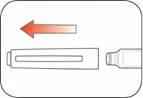
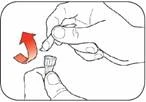
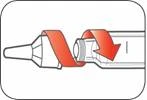
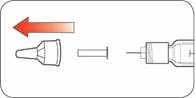
Checking the KwikPen insulin delivery.
The KwikPen insulin delivery check should be performed before each injection.
- Checking insulin delivery from the KwikPen is necessary to remove any air that may have accumulated in the needle or insulin cartridge during normal use, and to ensure that the pen is functioning properly.
- If the patient does not perform an insulin delivery check before each injection, they may receive either too low or too high an insulin dose.
| Step 6:
|
|
| Step 7:
|
|
| Step 8:
The presence of small air bubbles is normal and will not affect the insulin dose. |
|
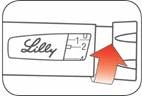
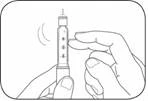
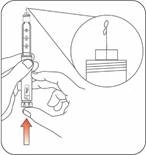
Dose Setting
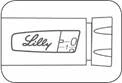
- Insulin doses from 1 to 60 units can be set for a single injection.
- If a dose greater than 60 units is required, two or more injections should be administered.
- If assistance is needed in deciding how exactly to divide the dose, consult your doctor.
- For each separate injection, use a new needle and repeat the insulin flow check.
| Step 9:
|
(Example: the dose window shows 12 units)
(Example: the dose window shows 25 units) |
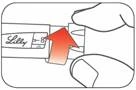
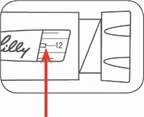
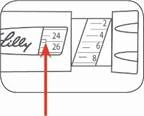
- The pen will not allow you to administer a dose greater than the number of units remaining in the pen.
- If a dose greater than the number of units remaining in the pen is required, you may administer the remaining units, then complete the dose using a new pen, or administer the full dose using a new pen.
- It is normal for a small amount of insulin to remain in the pen that cannot be administered.
Administering a Dose
- Use the injection technique recommended by your doctor.
- Always rotate injection sites.
- Never attempt to change the dose during insulin administration.
| Step 10:
|
|
|
| Step 11:
|
|
|
|
|
|
| Do not attempt to administer insulin by turning the dose button. It is not possible to deliver the required insulin dose this way. If the dose button is difficult to press:
|
||
| Step 12:
After each injection, the plunger moves slightly, and you may not notice its movement. If blood appears after removing the needle from the skin, gently press a piece of gauze or an alcohol swab against the injection site. Do not rub the injection site. |
|
|
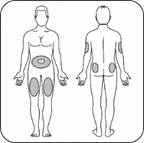
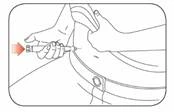

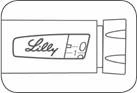
After injection.
| Step 13:
|
|
| Step 14:
|
|
| Step 15:
Storage of the pen
|
|
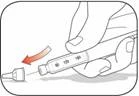
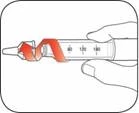
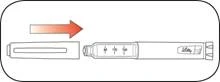
Children.
The dosage, administration schedule, and number of injections for children are determined by the physician, taking into account the individual patient's needs and the specific circumstances of each case.
Overdose.
There is no specific definition for insulin overdose, as blood glucose levels result from a complex interaction between insulin levels, glucose intake, and other metabolic processes. Hypoglycemia may occur due to an excess of insulin relative to the amount of food consumed and energy expenditure.
Symptoms of hypoglycemia include lethargy, confusion, rapid heartbeat, headache, sweating, and vomiting.
Mild hypoglycemia is usually treated by oral administration of glucose or carbohydrate-containing products. Moderate hypoglycemia can be managed by intramuscular or subcutaneous administration of glucagon, followed by oral carbohydrate intake once the patient's condition has stabilized. For patients who do not respond to glucagon administration, intravenous glucose solution must be administered. If the patient is in a comatose state, glucagon should be given intramuscularly or subcutaneously. In the absence of glucagon or if there is no response to glucagon, intravenous glucose solution must be administered. The patient should be fed as soon as he regains consciousness.
Continued carbohydrate intake and medical monitoring may be necessary, as hypoglycemia may recur even after apparent clinical improvement.
Adverse Reactions
Hypoglycemia is the most common adverse effect of insulin therapy in patients with diabetes mellitus. Severe hypoglycemia may lead to loss of consciousness and, in extreme cases, to fatal outcomes. The exact frequency of hypoglycemic episodes cannot be determined, as it results from the combined influence of insulin dose and other factors such as the patient's diet and level of physical activity.
Local allergic reactions are common (frequency from 1/100 to <1/10), including injection site reactions such as erythema, swelling, and pruritus. These reactions usually resolve within a period of several days to several weeks. Sometimes, these conditions are not related to insulin itself but to other factors, for example, the presence of irritant substances in skin cleansing agents or inadequate injection technique.
Systemic allergic reactions are very rare (<1/10,000), but potentially more serious and represent a generalized form of allergy to insulin. Symptoms may include generalized rash, dyspnea, wheezing, hypotension, tachycardia, and increased sweating. Severe cases of generalized allergy can be life-threatening. In exceptional cases of severe allergy to Humulin Regular, appropriate emergency measures must be taken immediately. Insulin substitution or desensitization therapy may be required.
Lipodystrophy at the injection site occurs infrequently (frequency from 1/1000 to <1/100).
Skin and subcutaneous tissue disorders: cutaneous amyloidosis, occurring at an unknown frequency.
Lipodystrophy and cutaneous amyloidosis may occur at the injection site and can delay local insulin absorption. Regular rotation of injection sites within a given area may help reduce or prevent these reactions (see section "Special Instructions").
Edema has been reported during insulin therapy, particularly when previous poor metabolic control is improved by intensive insulin treatment.
Shelf life. 3 years.
Storage conditions. Store out of reach and sight of children, in a cool place at a temperature between 2°C and 8°C. Do not freeze.
During use, store at room temperature between 15°C and 25°C for up to 28 days, protected from excessive heat and direct sunlight.
Incompatibility. Humulin Regular must not be mixed with insulins from other manufacturers or with animal-sourced insulins.
Packaging. 3 ml glass cartridges; 5 cartridges per cardboard box. 3 ml glass cartridges in QuickPen pens; 5 pens per cardboard box.
Prescription status. Prescription only.
Manufacturer. Eli Lilly France, France.
Manufacturer's address and location of operations.
Zone Industrielle 2, Rue du Colonel Lilly, 67640 Fegersheim, France.