Chlorhexidine
Ukraine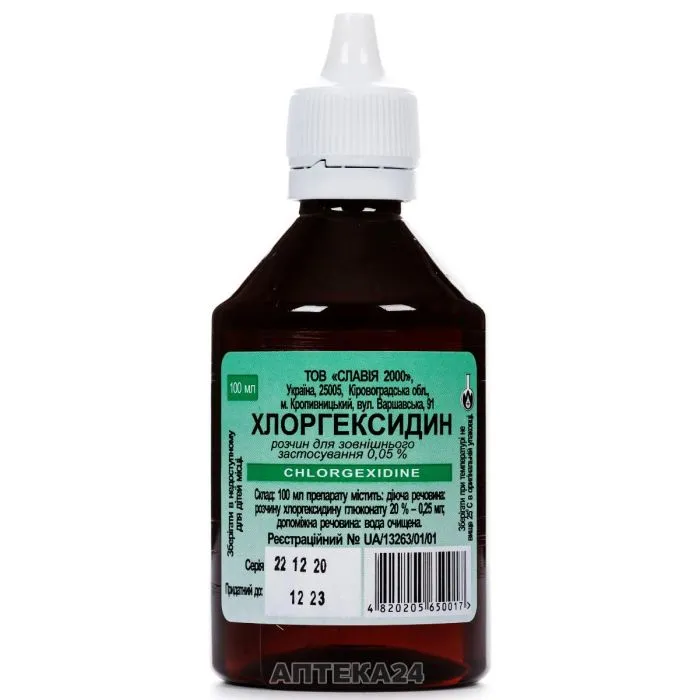
INSTRUCTION |
CHLORHEXIDINE |
Composition:active ingredient: chlorhexidine gluconate; 100 ml of solution contain chlorhexidine gluconate solution (20%) — 0.25 ml; excipient: purified water. |
| Pharmaceutical form. Topical solution. Main physicochemical properties: clear, colorless, odorless liquid. |
| Pharmacotherapeutic group. Antiseptics and disinfectants. ATC code D08AC02. |
Pharmacological properties.Pharmacodynamics. Chlorhexidine (1,6-di-(p-chlorophenyl-guanido)-hexane) belongs to the group of antiseptic agents. It exerts a rapid and pronounced bactericidal effect against gram-positive and gram-negative bacteria (does not affect acid-resistant forms of the latter), microbial spores, viruses, protozoa, and fungi; has weak activity against certain species of Proteus and Pseudomonas. Also active against treponemes, gonococci, and trichomonads. Due to its stability, after application to the skin of hands or surgical sites, it remains in certain amounts and continues to exert a bactericidal effect. Retains activity in the presence of blood and pus, although somewhat reduced. Pharmacokinetics. Does not penetrate through intact skin. |
Clinical characteristics.Indications. Purulent-septic processes, disinfection of minor injuries (wounds, abrasions, burns), as well as prevention of sexually transmitted diseases (syphilis, gonorrhea, trichomoniasis). |
| Contraindications. Increased sensitivity to chlorhexidine. Predisposition to allergic reactions and allergic diseases, dermatitis, viral skin diseases. Not recommended for use on conjunctiva or for cavity irrigation, on wounds with large surface area, during surgery in areas of the central nervous system and auditory canal, in ophthalmology, or for administration into the ear canal. |
| Special safety precautions. In patients with open head trauma, spinal cord injuries, or perforation of the eardrum, care should be taken to avoid contact of the medicinal product with the surface of the brain, meninges, and middle ear cavity. In case of contact with the mucous membranes of the eyes, they should be promptly and thoroughly rinsed with water. Do not dilute with hard water. Can be sterilized in an autoclave at 116 °C for 30 minutes. Do not sterilize using ionizing radiation. Do not violate the instructions for use of the medicinal product, as this may harm health. |
| Interaction with other medicinal products and other forms of interaction. Simultaneous use of chlorhexidine and iodine-containing products is not recommended due to the risk of dermatitis. Chlorhexidine gluconate is a cationic substance and is incompatible with soap and other anionic substances (colloids, gum arabic, carboxymethylcellulose). It is compatible with products containing cationic groups (benzalkonium chloride, cetrimide bromide). Ethanol enhances the effect of the product. At a concentration of 0.05%, chlorhexidine gluconate is incompatible with borates, carbonates, chlorides, citrates, phosphates, and sulfates, as poorly soluble precipitates may form. |
Special instructions.Use during pregnancy or breastfeeding. The medicinal product may be used during pregnancy or breastfeeding only if the benefit to the mother outweighs the potential risk to the fetus/child. Do not treat the surface of mammary glands before breastfeeding. Ability to influence reaction speed when driving or operating machinery. No effect. |
Method of administration and dosage.The medicinal product is for external and local use only. For minor skin injuries, treat the skin around the wound with the solution, then apply a gauze pad soaked in the solution to the wound and secure it with a bandage or adhesive plaster. Before using the product for prevention of sexually transmitted diseases, urinate, and wash hands and genital organs. Then remove the cap from the bottle, squeeze the bottle walls, and apply the solution stream to the pubic skin, inner surfaces of the thighs, and genital organs. Insert the nozzle tip into the external urethral opening, press it tightly against the urethral wall, and squeeze 1.5–3 ml of solution (for men) or 1–1.5 ml of solution (for women). Then, without spreading the fingers, withdraw the nozzle from the urethra and retain the solution for 2–3 minutes. Women should additionally irrigate the vagina with the remaining solution. After the procedure, it is recommended not to urinate for 2 hours. Antiseptic treatment of skin and mucous membranes with chlorhexidine is effective if performed within 2 hours after sexual intercourse. Children. The medicinal product is not intended for use in children under 12 years of age. |
| Overdose. Overdose cases with topical application are unknown. In case of accidental ingestion of a large amount of the substance (300 mg of chlorhexidine, equivalent to 0.5 L of a 0.05% solution), a fatal outcome with signs of hepatic and renal failure may occur. When ingested, the drug is practically not adsorbed — gastric lavage should be performed using milk, gelatin, or raw egg. Symptomatic therapy should be administered if necessary. |
Adverse reactions.The medicinal product is generally well tolerated; however, hypersensitivity reactions may occur in individual cases. In cases of increased individual sensitivity, dryness and itching of the skin, dermatitis, stickiness of the hands lasting for 3–5 minutes, and photosensitization are possible. If any adverse events occur, medical advice should be sought. Reporting of adverse reactions. Reporting of adverse reactions after drug registration is of great importance, as it enables continuous monitoring of the benefit-risk balance of this medicinal product. Medical and pharmaceutical professionals, as well as patients or their legal representatives, are encouraged to report all suspected adverse reactions and lack of efficacy via the Automated Information System for Pharmacovigilance at: https://aisf.dec.gov.ua. |
| Shelf life. 3 years. The medicinal product must not be used after the expiry date stated on the packaging. |
| Storage conditions. Store at a temperature not exceeding 25 ºC in the original packaging. Keep out of reach of children. |
| Packaging. 50 ml, 100 ml, 200 ml in bottles. |
| Prescription status. Over-the-counter. |
| Manufacturer. LLC "Slaviya 2000". |
| Manufacturer's address. 91 Varsavska Street, Kropyvnytskyi, Kirovohrad Oblast, 25005, Ukraine. |