Kever
Ukraine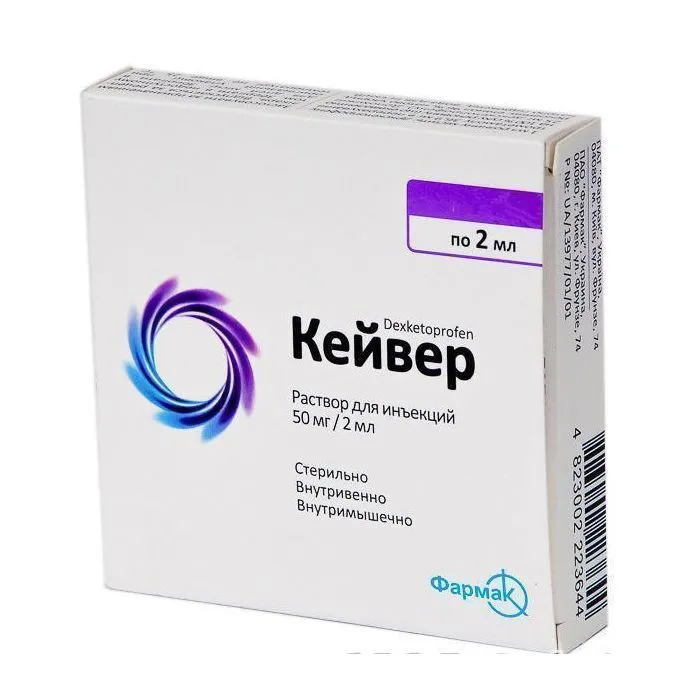
Table of Contents
INSTRUCTIONS FOR MEDICAL USE OF THE MEDICINAL PRODUCT KEVER® (KEYWER)
Composition:
Active substance: 1 ml of solution contains: dexketoprofen trometamol equivalent to 100% dry substance 36.9 mg, which corresponds to dexketoprofen 25 mg;
Excipients: ethanol 96%, sodium chloride, sodium hydroxide, water for injections.
Pharmaceutical form. Injection solution.
Main physicochemical properties: clear, colorless liquid.
Pharmacotherapeutic group. Non-steroidal anti-inflammatory and antirheumatic agents. Propionic acid derivatives. Dexketoprofen. ATC code M01A E17.
Pharmacological properties.
Pharmacodynamics.
Dexketoprofen trometamol is a propionic acid salt exerting analgesic, anti-inflammatory, and antipyretic effects, belonging to the class of nonsteroidal anti-inflammatory drugs (NSAIDs). Its mechanism of action is based on reducing the synthesis of prostaglandins through inhibition of cyclooxygenase. Specifically, it inhibits the conversion of arachidonic acid into cyclic endoperoxides PGG2 and PGH2, from which prostaglandins PGE1, PGE2, PGF2α, PGD2, as well as prostacyclin PGI2 and thromboxanes TxА2 and TxВ2 are formed. In addition, the inhibition of prostaglandin synthesis may affect other inflammatory mediators such as kinins, which may also indirectly influence the primary action of the drug. Dexketoprofen trometamol has been shown to inhibit the activity of both cyclooxygenase-1 and cyclooxygenase-2. Clinical studies in various types of pain have demonstrated that dexketoprofen trometamol exerts a pronounced analgesic effect. The analgesic effect of dexketoprofen trometamol following intramuscular and intravenous administration in patients with moderate to severe pain has been studied in various painful conditions associated with surgical procedures (orthopedic and gynecological surgeries, abdominal surgeries), as well as musculoskeletal pain (acute low back pain) and renal colic. In these studies, the analgesic effect of the drug began rapidly and reached its maximum within the first 45 minutes. The duration of analgesic action after administration of 50 mg of dexketoprofen trometamol typically lasts 8 hours. Clinical studies have shown that using Kaevar® allows a significant reduction in opioid dosage when used concomitantly to manage postoperative pain. When patients receiving morphine via a patient-controlled analgesia device for postoperative pain relief were also administered dexketoprofen trometamol, they required significantly less morphine (30–45% less) compared to patients receiving placebo.
Pharmacokinetics.
After intramuscular administration of dexketoprofen trometamol, maximum plasma concentration (Cmax) is achieved approximately within 20 minutes (10–45 minutes). It has been demonstrated that after single intramuscular or intravenous administration of 25–50 mg of the drug, the area under the concentration-time curve (AUC) is dose-proportional. Pharmacokinetic studies of repeated administration have shown that AUC and mean Cmax after the last intramuscular or intravenous dose do not differ from those after single administration, indicating absence of drug accumulation. Similar to other drugs with a high degree of plasma protein binding (99%), the volume of distribution of dexketoprofen averages 0.25 L/kg. The distribution half-life is approximately 0.35 hours, and the elimination half-life ranges from 1 to 2.7 hours. The metabolism of dexketoprofen occurs mainly via conjugation with glucuronic acid, followed by renal excretion. After administration of dexketoprofen trometamol, only the S-(+) optical isomer is detected in urine, indicating absence of transformation into the R-(-) optical isomer. Following administration of single and repeated doses, the exposure to the drug in elderly healthy volunteers (aged 65 years and older) participating in the study was considerably higher (up to 55%) compared to younger volunteers; however, no statistically significant differences in Cmax or time to reach Cmax were observed. The mean elimination half-life was prolonged (by up to 48%), and the total body clearance was reduced.
Clinical characteristics.
Indications.
Symptomatic treatment of moderate to severe acute pain when oral administration of the drug is inappropriate, such as in postoperative pain, renal colic, and low back pain (back pain).
Contraindications.
- Hypersensitivity to dexketoprofen, to any other nonsteroidal anti-inflammatory drug (NSAID), or to any of the excipients of the drug;
- if substances of similar action, such as acetylsalicylic acid or other NSAIDs, provoke asthma attacks, bronchospasm, acute rhinitis, or cause nasal polyps, urticaria, or angioedema;
- if photoallergic or phototoxic reactions occurred during treatment with ketoprofen or fibrates;
- active peptic ulcer / gastrointestinal bleeding, or history of gastrointestinal bleeding, ulcers, or perforations;
- chronic dyspepsia;
- active gastrointestinal bleeding, other active bleeding, or increased bleeding tendency;
- history of gastrointestinal bleeding or perforation associated with previous NSAID therapy;
- Crohn’s disease or ulcerative colitis;
- severe heart failure;
- moderate to severe renal impairment (creatinine clearance < 50 ml/min);
- severe hepatic impairment (Child–Pugh score 10–15 points);
- hemorrhagic diathesis and other coagulation disorders;
- in case of pronounced dehydration (due to vomiting, diarrhea, or insufficient fluid intake);
- third trimester of pregnancy and breastfeeding period;
- use for neuroaxial (intrathecal or epidural) administration (due to ethanol content).
Interaction with other medicinal products and other forms of interaction.
Concomitant use of the following agents with NSAIDs is not recommended
- Other NSAIDs, including salicylates in high doses (≥ 3 g/day). Concurrent use of multiple NSAIDs increases the risk of gastrointestinal ulceration and gastrointestinal bleeding due to their mutually enhancing effects.
- Anticoagulants: NSAIDs enhance the effect of anticoagulants, such as warfarin, due to the high degree of plasma protein binding of dexketoprofen, as well as due to inhibition of platelet function and damage to the gastric and duodenal mucosa. If concomitant use is necessary, it should be performed under strict medical supervision with monitoring of appropriate laboratory parameters.
- Heparin: increased risk of bleeding (due to inhibition of platelet function and damage to the gastric and duodenal mucosa). If concomitant use is necessary, it should be performed under strict medical supervision with monitoring of appropriate laboratory parameters.
- Corticosteroids: increased risk of gastrointestinal ulceration and gastrointestinal bleeding.
- Lithium (reports exist for several NSAIDs): NSAIDs increase lithium blood levels, potentially leading to toxicity (due to reduced renal excretion of lithium); therefore, lithium blood levels should be monitored at the start of dexketoprofen treatment, during dose adjustment, or upon discontinuation of the drug.
- High-dose methotrexate (≥ 15 mg per week): due to reduced renal clearance of methotrexate under the influence of NSAIDs, its overall negative effect on the blood system is enhanced.
- Hydantoin derivatives and sulfonamides: possible enhancement of toxicity of these agents.
Concomitant use of the following agents with NSAIDs requires caution
- Diuretics, angiotensin-converting enzyme (ACE) inhibitors, aminoglycoside antibiotics, and angiotensin II receptor antagonists. Dexketoprofen reduces the effectiveness of diuretics and other antihypertensive agents. In some patients with impaired renal function (e.g., in dehydration or elderly patients), concomitant use of cyclooxygenase inhibitors with ACE inhibitors, angiotensin II receptor antagonists, or aminoglycoside antibiotics may worsen renal function, which is usually reversible. When using dexketoprofen together with any diuretic, ensure the patient is not dehydrated and monitor renal function at the beginning of treatment.
- Low-dose methotrexate (< 15 mg per week): due to reduced renal clearance of methotrexate under the influence of NSAIDs, its overall negative effect on the blood system is enhanced. During the first weeks of concomitant use, weekly blood tests are required. Even with mild renal impairment and in elderly patients, treatment should be conducted under strict medical supervision.
- Pentoxifylline: risk of bleeding. Monitoring should be intensified, and bleeding time should be checked more frequently.
- Zidovudine: risk of increased toxic effect on erythrocytes due to effects on reticulocytes, which after 1 week of NSAID use may lead to severe anemia. A blood test and reticulocyte count should be performed 1–2 weeks after starting NSAID treatment.
- Sulfonylurea agents: NSAIDs may enhance the hypoglycemic effect of these agents by displacing sulfonylureas from plasma protein binding sites.
Potential interactions should be considered when using the following agents
- Beta-blockers: NSAIDs may attenuate their antihypertensive effect due to inhibition of prostaglandin synthesis.
- Cyclosporine and tacrolimus: possible enhancement of nephrotoxicity due to the effect of NSAIDs on renal prostaglandins; renal function should be monitored during combination therapy.
- Thrombolytic agents: increased risk of bleeding.
- Antiplatelet agents and selective serotonin reuptake inhibitors (SSRIs): increased risk of gastrointestinal bleeding.
- Probenecid: possible increase in dexketoprofen plasma concentration, likely due to inhibition of renal tubular secretion and glucuronidation of the drug, requiring dose adjustment of dexketoprofen.
- Cardiac glycosides: NSAIDs may increase glycoside plasma concentrations.
- Mifepristone: theoretically, there is a risk of altered mifepristone efficacy under the influence of prostaglandin synthetase inhibitors. Limited data suggest that concomitant administration of NSAIDs on the same day as prostaglandin does not adversely affect the efficacy of mifepristone or prostaglandin regarding cervical ripening or contractility, nor does it reduce the clinical efficacy of drugs for medical termination of pregnancy.
- Quinolones: animal studies have shown that high-dose quinolone derivatives in combination with NSAIDs increase the risk of seizures.
- Tenofovir: when used concomitantly with NSAIDs, plasma concentrations of blood urea nitrogen and creatinine may increase; therefore, renal function should be monitored to assess the potential impact of concomitant use of these drugs.
- Deferasirox: when used concomitantly with NSAIDs, the risk of gastrointestinal toxicity may increase; careful patient monitoring is required when using this drug together with deferasirox.
- Pemetrexed: when used concomitantly with NSAIDs, pemetrexed elimination may be reduced; therefore, particular caution is required when using high-dose NSAIDs. Patients with mild to moderate renal impairment (creatinine clearance 45–79 ml/min) should avoid using NSAIDs for two days before and two days after pemetrexed administration.
Special precautions for use.
The drug should be used with caution in patients with a history of allergic conditions. Avoid using Kever® in combination with other NSAIDs, including selective COX-2 inhibitors. Adverse reactions can be minimized by using the lowest effective dose for the shortest duration necessary to control symptoms.
Gastrointestinal safety
Gastrointestinal bleeding, ulceration, or perforation, sometimes fatal, have been reported with all NSAIDs at any time during therapy, regardless of the presence of previous gastrointestinal symptoms or history of serious gastrointestinal disorders. If gastrointestinal bleeding occurs, the drug should be discontinued. The risk of gastrointestinal bleeding, ulceration, or perforation increases with higher NSAID doses, in patients with a history of peptic ulcer, especially if complicated by bleeding or perforation, and in elderly patients. Elderly patients have an increased frequency of adverse reactions to NSAIDs, particularly gastrointestinal bleeding and perforation, sometimes fatal. Treatment of such patients should be initiated with the lowest possible dose. NSAIDs should be prescribed with caution to patients with a history of gastrointestinal disorders due to the risk of exacerbation. NSAID use may provoke relapses of ulcerative colitis and Crohn's disease in patients in remission. Before initiating treatment with dexketoprofen trometamol in patients with a history of esophagitis, gastritis, and/or peptic ulcer, it is essential to ensure that these conditions are in remission. Patients with existing gastrointestinal symptoms or a history of gastrointestinal disorders should be monitored for possible gastrointestinal complications during treatment, particularly gastrointestinal bleeding.
For such patients and for those taking low-dose acetylsalicylic acid or other agents that increase the risk of gastrointestinal adverse reactions, consideration should be given to concomitant therapy with protective agents such as misoprostol or proton pump inhibitors.
Patients, especially elderly ones, with a history of gastrointestinal adverse reactions should inform their physician about any unusual gastrointestinal symptoms, including gastrointestinal bleeding, particularly during the initial stages of treatment.
The drug should be prescribed with caution to patients who are concurrently using agents that may increase the risk of ulceration or bleeding, such as oral corticosteroids, anticoagulants (e.g., warfarin), selective serotonin reuptake inhibitors, or antiplatelet agents such as acetylsalicylic acid.
Renal safety
The drug should be used with caution in patients with impaired renal function, as NSAIDs may worsen renal function, cause fluid retention, and lead to peripheral edema. Due to the increased risk of nephrotoxicity, the drug should be used cautiously in patients receiving diuretic therapy or those at risk of hypovolemia. During treatment, adequate fluid intake should be maintained to prevent dehydration, which may exacerbate renal toxicity. Like other NSAIDs, the medicinal product may increase plasma urea nitrogen and creatinine concentrations. Similar to other prostaglandin synthesis inhibitors, its use may be associated with renal adverse reactions, including glomerulonephritis, interstitial nephritis, papillary necrosis, nephrotic syndrome, and acute renal failure. Renal function disturbances occur most frequently in elderly patients.
Hepatic safety
The drug should be administered with caution to patients with impaired liver function. Like other NSAIDs, the drug may cause transient and minor elevations in certain liver function tests, as well as significant increases in AST and ALT levels. If such increases occur, treatment should be discontinued. Hepatic function disturbances occur most frequently in elderly patients.
Cardiovascular and cerebrovascular safety
Patients with arterial hypertension and/or mild to moderate congestive heart failure should be closely monitored due to the potential for fluid retention and peripheral edema.
According to available clinical and epidemiological data, the use of certain NSAIDs, particularly at high doses and for prolonged periods, may be associated with a small increased risk of thrombotic events such as myocardial infarction or stroke. Data to exclude dexketoprofen trometamol from this risk are insufficient.
Dexketoprofen trometamol should be used only after careful patient assessment in cases of uncontrolled arterial hypertension, congestive heart failure, confirmed ischemic heart disease, peripheral arterial disease, and/or cerebrovascular disease. The same applies before initiating long-term treatment in patients with cardiovascular risk factors (e.g., arterial hypertension, hyperlipidemia, diabetes mellitus, smoking).
Non-selective NSAIDs can reduce platelet aggregation and prolong bleeding time by inhibiting prostaglandin synthesis. The concomitant use of dexketoprofen trometamol and prophylactic doses of low-molecular-weight heparin in the postoperative period has been studied in clinical trials, with no effect on coagulation parameters observed. However, patients receiving dexketoprofen trometamol concomitantly with agents affecting hemostasis, such as warfarin, other coumarins, or heparins, should be closely monitored.
Particular caution is required when treating patients with a history of heart disease, especially those with previous episodes of heart failure, as the risk of heart failure may increase during treatment. Cardiovascular system disturbances occur most frequently in elderly patients.
Skin reactions
There have been reports of very rare cases of serious skin reactions (some fatal) associated with NSAID use, including exfoliative dermatitis, Stevens-Johnson syndrome, and toxic epidermal necrolysis. The highest risk of such reactions appears to occur early in treatment, with most cases developing within the first month of therapy. If skin rashes, signs of mucosal involvement, or other symptoms of hypersensitivity occur, Kever® should be discontinued.
Masking symptoms of underlying infections
Kever® may mask symptoms of infections, potentially interfering with diagnosis and timely treatment, thereby worsening infection outcomes. Such cases have been observed in bacterial pneumonia and bacterial complications of varicella. When Kever® is administered to relieve pain associated with an infectious process, monitoring of the infection is recommended. In outpatient settings, patients should consult a physician if symptoms persist or worsen.
Other information
Special caution should be exercised when prescribing the drug to patients:
- with hereditary disorders of porphyrin metabolism (e.g., acute intermittent porphyria);
- with dehydration;
- immediately after major surgical procedures.
If prolonged use of dexketoprofen is deemed necessary by the physician, regular monitoring of liver and kidney function is recommended.
In very rare cases, severe acute hypersensitivity reactions (e.g., anaphylactic shock) have been observed. If early signs of severe hypersensitivity reactions occur after taking Kever®, treatment should be discontinued. Depending on symptoms, any necessary treatment should be administered under medical supervision.
Patients suffering from asthma in combination with chronic rhinitis, chronic sinusitis, and/or nasal polyps are at higher risk of allergy to acetylsalicylic acid and/or NSAIDs compared to other patients. Administration of this drug may trigger asthma attacks or bronchospasm, particularly in patients with hypersensitivity to acetylsalicylic acid or NSAIDs.
Severe infectious complications of skin and soft tissues may occur during varicella. Data to exclude a role of NSAIDs in exacerbating this infectious process are currently lacking. Therefore, the use of Kever® is not recommended in cases of varicella.
Kever® should be administered with caution to patients with blood disorders, systemic lupus erythematosus, and mixed connective tissue diseases.
In isolated cases, NSAID use has been associated with the activation of soft tissue infections. Therefore, if signs or symptoms of bacterial infection appear or worsen during treatment, patients are advised to seek immediate medical attention.
One ampoule of Kever® contains 200 mg of ethanol, equivalent to 5 mL of beer or 2.08 mL of wine per dose. The drug may have a negative effect on individuals suffering from alcoholism. The ethanol content should be considered when using the drug during the first and second trimesters of pregnancy, in children, and in patients at risk, such as those with liver disease or epilepsy. The medicinal product contains less than 1 mmol of sodium (23 mg) per dose, i.e., practically sodium-free.
Use during pregnancy or breastfeeding.
The use of Kever® is contraindicated during the third trimester of pregnancy and during breastfeeding.
Pregnancy
Inhibition of prostaglandin synthesis may adversely affect pregnancy and/or fetal development. According to epidemiological studies, the use of drugs that inhibit prostaglandin synthesis during early pregnancy increases the risk of miscarriage, congenital heart defects, and abdominal wall defects in the fetus. The absolute risk of cardiovascular malformations increases from <1% to approximately 1.5%. The risk is considered to increase with higher drug doses and longer duration of therapy. In animal studies, prostaglandin synthesis inhibitors have been shown to increase pre- and post-implantation losses and embryofetal mortality. Furthermore, in animals treated with prostaglandin synthesis inhibitors during organogenesis, an increased incidence of fetal developmental abnormalities, including cardiovascular malformations, has been observed. However, animal studies with dexketoprofen trometamol did not reveal toxicity to reproductive organs. Starting from the 20th week of pregnancy, the use of Kever® may cause oligohydramnios due to fetal renal dysfunction. This may occur soon after the start of treatment and is usually reversible upon discontinuation. Dexketoprofen trometamol may be used during the first and second trimesters of pregnancy only if absolutely necessary. When prescribing dexketoprofen trometamol to women planning pregnancy or during the first and second trimesters, the lowest effective dose for the shortest possible duration should be used. Fetal oligohydramnios monitoring should be considered after exposure to Kever® for several days starting from the 20th week of pregnancy. Kever® should be discontinued if oligohydramnios is detected.
During the third trimester of pregnancy, all prostaglandin synthesis inhibitors may cause the following:
Risks to the fetus:
- Cardio-pulmonary toxic syndrome (with closure of the ductus arteriosus and pulmonary hypertension);
- Impaired renal function, potentially progressing to renal failure and oligohydramnios (see above);
Risks to the mother and child near term:
- Prolonged bleeding time (due to platelet aggregation inhibition), which may occur even with low-dose use;
- Delayed uterine contractions, leading to prolonged labor.
Breastfeeding
There are no data on the passage of dexketoprofen into breast milk. Kever® is contraindicated during breastfeeding.
Fertility
Like all other NSAIDs, dexketoprofen trometamol may reduce female fertility and therefore is not recommended for women planning pregnancy. Discontinuation of the drug should be considered in women experiencing difficulties with conception or undergoing infertility evaluation.
Ability to affect reaction speed when driving or operating machinery.
Dizziness, visual disturbances, or drowsiness may occur during treatment with Kever®; therefore, a weak or moderate effect on the ability to drive or operate machinery cannot be excluded. Patients should be aware of this and objectively assess their ability to perform such tasks.
Method of Administration and Dosage.
Adults. The recommended dose is 50 mg every 8–12 hours. If necessary, the dose may be repeated after 6 hours. The maximum daily dose should not exceed 150 mg. The drug is intended for short-term use and should be administered only during episodes of acute pain (no longer than 2 days). Patients should be switched to oral analgesics as soon as possible, if feasible. Adverse reactions can be minimized by using the lowest effective dose for the shortest duration necessary to control symptoms. For moderate to severe postoperative pain, the drug may be used as indicated at the same recommended doses in combination with opioid analgesics.
Elderly patients. Dose adjustment is generally not required. However, due to age-related physiological decline in renal function, a lower dose is recommended: the maximum daily dose should be limited to 50 mg in patients with mild renal impairment.
Liver disease. In patients with mild to moderate hepatic impairment (5–9 points on the Child–Pugh scale), the maximum daily dose should be reduced to 50 mg, and liver function should be closely monitored. The drug is contraindicated in patients with severe hepatic impairment (10–15 points on the Child–Pugh scale).
Renal dysfunction. In patients with mild renal impairment (creatinine clearance 50–80 mL/min), the maximum daily dose should be reduced to 50 mg. The drug is contraindicated in patients with moderate to severe renal impairment (creatinine clearance < 50 mL/min).
Children. The drug should not be used due to lack of data on efficacy and safety.
Intramuscular administration. The injection solution should be administered slowly and deeply into the muscle.
Intravenous infusion. For intravenous infusion, the contents of a 2 mL ampoule should be diluted in 30–100 mL of 0.9% sodium chloride solution, glucose solution, or lactated Ringer's solution. The infusion solution must be prepared under aseptic conditions, avoiding exposure to natural daylight. The prepared solution should be clear and transparent. The infusion should be administered over 10–30 minutes. Avoid exposure of the prepared solution to natural daylight.
Kever® diluted in 100 mL of 0.9% sodium chloride solution or glucose solution may be mixed with dopamine, heparin, hydroxyzine, lidocaine, morphine, pethidine, and theophylline.
Kever® must not be mixed in the infusion solution with promethazine or pentazocine.
Intravenous injection (bolus administration). If necessary, the contents of one ampoule (2 mL of injection solution) should be administered intravenously over no less than 15 seconds.
The drug may be mixed in small volumes (e.g., in a syringe) with injection solutions of heparin, lidocaine, morphine, and theophylline.
Kever® must not be mixed in small volumes (e.g., in a syringe) with dopamine, promethazine, pentazocine, pethidine, or hydrocortisone solutions, as a white precipitate may form.
The drug should be mixed only with medicinal products specified above.
When administered intramuscularly or intravenously by injection, the drug should be administered immediately after being drawn from the ampoule. The solution for intravenous infusion should be used immediately after preparation. Subsequently, responsibility for storage conditions and duration lies with the healthcare provider. The prepared solution retains its properties for 24 hours at 25°C, provided it is protected from daylight.
No changes in active ingredient content due to adsorption have been observed during storage of diluted solutions of the drug in polyethylene bags or in administration devices made of ethyl vinyl acetate, cellulose propionate, low-density polyethylene, or polyvinyl chloride.
Kever® is intended for single use only; any unused portion of the prepared solution must be discarded. Before administration, ensure that the solution is clear and colorless. The solution must not be used if it contains solid particles.
Children.
The drug should not be administered to children and adolescents due to lack of data on efficacy and safety.
Overdose.
Symptoms of overdose are unknown. Similar medicinal products may cause gastrointestinal disturbances (nausea, vomiting, anorexia, abdominal pain) and nervous system effects (drowsiness, dizziness, disorientation, headache). In case of accidental overdose, symptomatic treatment appropriate to the patient's condition should be initiated immediately. Dexketoprofen trometamol is eliminated from the body by dialysis.
Adverse reactions.
The table below lists adverse reactions distributed by organs and organ systems and frequency of occurrence, which are considered at least possibly related to dexketoprofen trometamol based on clinical trial data, as well as adverse reactions reported after the drug was marketed.
| Organs and organ systems |
Common (from 1/100 to 1/10) |
Uncommon (from 1/1000 to 1/100) |
Rare (from 1/10000 to 1/1000) |
Very rare (less than 1/10000) |
|||
| Blood and lymphatic system disorders |
_ |
Anaemia |
_ |
Neutropenia, thrombocytopenia |
|||
| Immune system disorders |
_ |
_ |
Laryngeal edema |
Anaphylactic reactions, including anaphylactic shock |
|||
| Nutrition and metabolism disorders |
_ |
_ |
Hypoglycemia, hyperglycemia, hypertriglyceridemia, anorexia, loss of appetite |
||||
| Psychiatric disorders |
_ |
Insomnia, restlessness |
_ |
_ |
|||
| Nervous system disorders |
_ |
Headache, dizziness, somnolence |
Paresthesia, unconsciousness |
_ |
|||
| Eye disorders |
_ |
Blurred vision |
_ |
_ |
|||
| Ear and labyrinth disorders |
_ |
Vertigo |
Tinnitus |
_ |
|||
| Cardiac disorders |
_ |
Palpitations |
Extrasystoles, tachycardia |
_ |
|||
| Vascular disorders |
_ |
Arterial hypotension, flushing |
Arterial hypertension, superficial thrombophlebitis |
_ |
|||
| Respiratory, thoracic and mediastinal disorders |
_ |
_ |
Bradypnea |
Bronchospasm, dyspnea |
|||
| Gastrointestinal disorders |
Nausea, vomiting |
Abdominal pain, dyspepsia, diarrhea, constipation, vomiting with blood, dry mouth |
Peptic ulcer, hemorrhage or perforation |
Pancreatitis |
|||
| Hepatobiliary disorders |
_ |
_ |
Hepatocellular pathology |
||||
| Skin and subcutaneous tissue disorders |
_ |
Dermatitis, pruritus, rash, increased sweating |
Urticaria, acne |
Stevens-Johnson syndrome, toxic epidermal necrolysis (Lyell's syndrome), angioneurotic edema, facial swelling, photosensitization |
|||
Musculoskeletal and connective tissue disorders |
_ |
_ |
Muscle rigidity, joint stiffness, muscle spasms, back pain |
_ |
|||
| Renal and urinary disorders |
_ |
_ |
Acute renal failure, polyuria, renal pain, ketonuria, proteinuria |
Nephritis, nephrotic syndrome |
|||
| Reproductive system disorders |
_ |
_ |
Menstrual disorders, prostate function disorders |
_ |
|||
| General and administration site disorders |
Pain at injection site, injection site reactions, including inflammation, hematoma, bleeding |
Malaise, fatigue, pain, chills, asthenia, malaise |
Tremor, peripheral edema |
_ |
|||
| Investigations |
_ |
_ |
Abnormal liver function tests |
_ |
|||
Gastrointestinal disorders were observed most frequently.
The development of peptic ulcer, perforation, or gastrointestinal bleeding, sometimes with fatal outcome, is possible, especially in elderly patients. According to available data, nausea, vomiting, diarrhea, flatulence, constipation, dyspeptic symptoms, abdominal pain, melena, vomiting with blood, ulcerative stomatitis, exacerbation of colitis and Crohn's disease may occur during treatment with the drug. Gastritis is observed less frequently. Edema, arterial hypertension, and heart failure, which may be caused by the use of NSAIDs, have also been reported. As with other NSAIDs, the following adverse reactions are possible: aseptic meningitis, which generally occurs in patients with systemic lupus erythematosus or mixed connective tissue diseases, and blood disorders (purpura, aplastic and hemolytic anemia, rarely agranulocytosis and bone marrow hypoplasia). Bullous reactions, including Stevens-Johnson syndrome and toxic epidermal necrolysis (very rare), are also possible.
According to results of clinical studies and epidemiological data, the use of certain NSAIDs, particularly at high doses and over prolonged periods, may be associated with a small increased risk of thrombotic events such as myocardial infarction and stroke.
Shelf life. 2 years.
Do not use the medication after the expiry date stated on the packaging.
Storage conditions.
Store in the original packaging at a temperature not exceeding 25 °C.
Keep out of the reach of children.
Incompatibility.
Kever® must not be mixed in small volumes (e.g., in a syringe) with dopamine, promethazine, pentazocine, meperidine, or hydrocortisone solutions, as a white precipitate forms.
Diluted infusion solutions prepared as described in the section "Intravenous infusions" must not be mixed with promethazine or pentazocine.
Packaging.
2 ml in an ampoule. 5 or 10 ampoules per pack.
Prescription category. Prescription only.
Manufacturer. JSC "Farmak".
Manufacturer's address and place of business.
74 Kyrylivska Street, Kyiv, 04080, Ukraine.