Ketonal® forte
Ukraine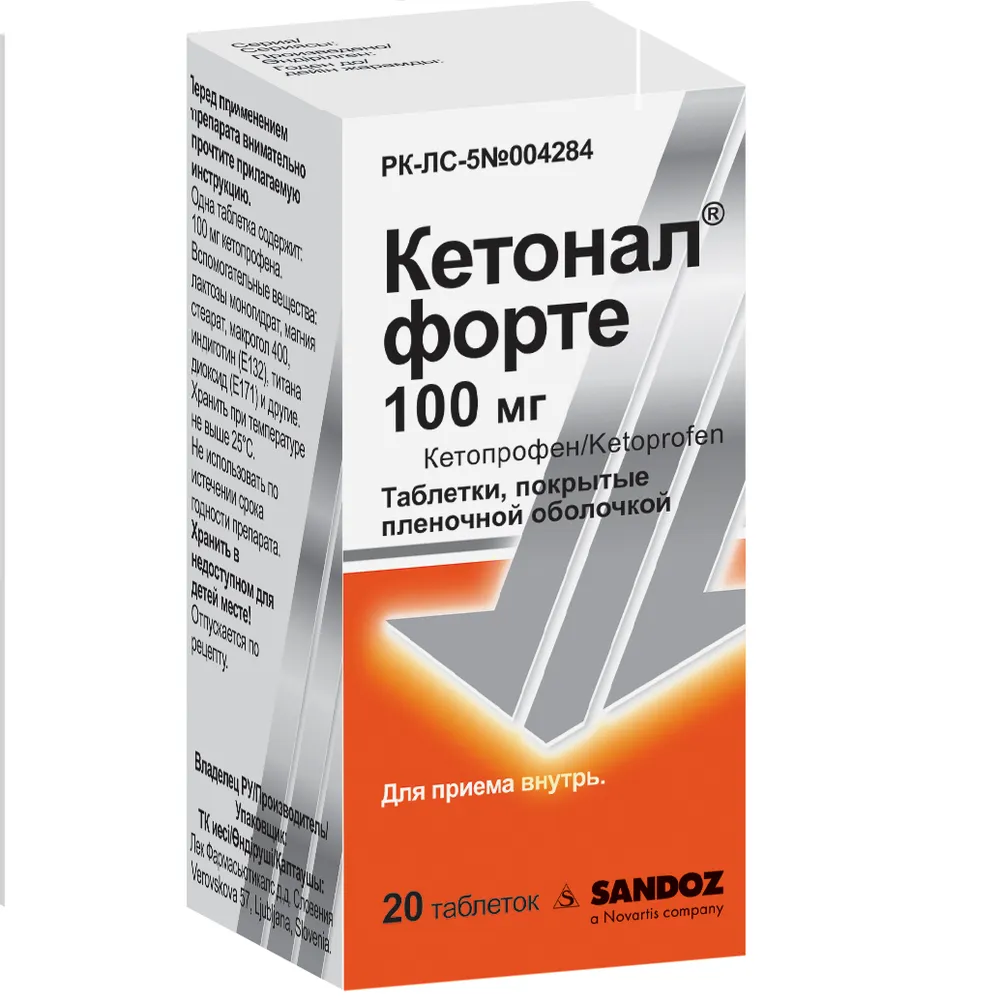
Table of Contents
INSTRUCTIONS FOR MEDICAL USE OF THE MEDICINAL PRODUCT KETONALâ FORTE (KETONALâ FORTE)
Composition:
active substance: ketoprofen;
1 tablet contains 100 mg of ketoprofen;
excipients: monohydrate lactose, corn starch, povidone, colloidal anhydrous silicon dioxide, talc, magnesium stearate;
coating: hypromellose, polyethylene glycol, indigo carmine (E 132), titanium dioxide (E 171), talc, carnauba wax.
Dosage form. Film-coated tablets.
Main physicochemical properties: light-blue colored, round, biconvex film-coated tablets.
Pharmacotherapeutic group.
Non-steroidal anti-inflammatory and antirheumatic agents. Propionic acid derivatives. Ketoprofen. ATC code M01A E03.
Pharmacological Properties
Pharmacodynamics
Ketoprofen is a nonsteroidal anti-inflammatory drug (NSAID) that exerts analgesic, anti-inflammatory, and antipyretic effects. In inflammation, ketoprofen inhibits the synthesis of prostaglandins and leukotrienes by suppressing cyclooxygenase activity and partially inhibiting lipoxygenase. It also inhibits bradykinin synthesis and stabilizes lysosomal membranes.
It produces central and peripheral analgesic effects and alleviates symptoms of inflammatory-degenerative disorders of the musculoskeletal system.
In women, ketoprofen reduces symptoms of primary dysmenorrhea by inhibiting prostaglandin synthesis.
Pharmacokinetics
Absorption. After oral administration, ketoprofen is rapidly absorbed from the gastrointestinal tract. Following a 100 mg dose, maximum plasma concentration (10.4 µg/mL) is reached in approximately 1.5 hours. The bioavailability of ketoprofen is 90% and is directly proportional to the administered dose.
Distribution. Plasma protein binding is 99%. The volume of distribution is 0.1–0.2 L/kg. Ketoprofen penetrates into synovial fluid. Three hours after administration of 100 mg, its plasma concentration is about 3 µg/mL, while the concentration in synovial fluid is 1.5 µg/mL. Although the concentration of ketoprofen in synovial fluid is somewhat lower than in plasma, it is more stable (maintained up to 30 hours), resulting in prolonged reduction of pain and joint stiffness. A stable plasma concentration of ketoprofen is maintained for 24 hours after administration of oral formulations. The pharmacokinetics of ketoprofen are independent of patient age. Tissue accumulation of ketoprofen does not occur.
Metabolism and Elimination. Ketoprofen is extensively metabolized in the liver by microsomal enzymes. It is excreted from the body as a glucuronic acid conjugate. The elimination half-life is 2 hours. Up to 80% of the administered dose is excreted in urine, usually (over 90%) as glucuronide, and about 10% in feces.
In patients with impaired renal function, elimination of ketoprofen is slowed and the elimination half-life is prolonged by 1 hour. In patients with impaired liver function, ketoprofen may accumulate in tissues. In elderly patients, metabolism and elimination of ketoprofen are slowed; however, this is clinically significant only in the presence of impaired renal function.
Clinical characteristics.
Indications.
Joint diseases: rheumatoid arthritis; seronegative spondyloarthritides (ankylosing spondylitis, psoriatic arthritis, reactive arthritis); gout, pseudogout; osteoarthritis; periarticular rheumatism (tendinitis, bursitis, shoulder capsulitis).
Pain syndromes: lumbar back pain (lumbago), post-traumatic joint and muscle pain; algodysmenorrhea.
Contraindications.
Hypersensitivity to ketoprofen or to any excipients of the drug; contraindicated in patients in whom administration of ketoprofen, acetylsalicylic acid, or other NSAIDs induces bronchospasm, asthmatic attacks, urticaria, angioneurotic edema, acute rhinitis, or other allergic reactions. Severe heart failure; treatment of perioperative pain in patients undergoing coronary artery bypass graft (CABG) surgery; chronic dyspepsia; active or recurrent peptic ulcer of the stomach and/or duodenum; history of gastrointestinal bleeding/perforation/ulcers; cerebrovascular or other bleeding episodes; tendency to hemorrhage; severe impairment of liver or kidney function; history of bronchial asthma or rhinitis; third trimester of pregnancy.
Interaction with other medicinal products and other forms of interaction.
Risk of hyperkalemia
Certain medicinal products, such as potassium salts, diuretics, angiotensin-converting enzyme (ACE) inhibitors, angiotensin II receptor blockers, NSAIDs, heparins (low molecular weight or unfractionated), cyclosporine, tacrolimus, and trimethoprim, may cause hyperkalemia.
Development of hyperkalemia may depend on the presence of additional risk factors. The risk of hyperkalemia increases with concomitant use of the above-mentioned medicinal products.
Risk associated with the use of antiplatelet agents
Several medicinal products cause interactions due to inhibition of platelet aggregation, including acetylsalicylic acid and NSAIDs, ticlopidine, clopidogrel, tirofiban, eptifibatide, abciximab, and iloprost.
Concomitant use of antiplatelet agents increases the risk of bleeding, as does simultaneous administration of heparin, oral anticoagulants, or thrombolytic agents. In such cases, clinical monitoring and laboratory tests are recommended.
It is not recommended to use ketoprofen concomitantly with:
- other NSAIDs and salicylates, including selective cyclooxygenase-2 (COX-2) inhibitors;
- oral anticoagulants and parenterally administered heparin;
- lithium (ketoprofen may reduce lithium excretion);
- methotrexate (at doses exceeding 15 mg/week); serious, sometimes fatal, toxicity has occurred after co-administration of ketoprofen with methotrexate (mainly high doses); this toxicity is due to increased and prolonged methotrexate plasma concentrations;
- mifepristone, as its effect may be reduced. Non-steroidal anti-rheumatic agents should be administered 8–12 days after mifepristone use.
Use ketoprofen with caution when administered concomitantly with:
- diuretics, ACE inhibitors, and angiotensin II receptor blockers, due to increased risk of renal impairment; ketoprofen may reduce the effects of antihypertensive agents and diuretics; diuretics may increase the risk of NSAID-induced nephrotoxicity;
- methotrexate (at doses less than 15 mg/week);
- anticoagulants, sulfonamides, and hydantoins, as dose adjustments may be required to prevent increased plasma levels of these drugs due to competition for plasma protein binding;
- anticoagulants such as warfarin, due to enhanced anticoagulant effect;
- oral antidiabetic agents and antiepileptic drugs (phenytoin), due to potentiation of their effects;
- cardiac glycosides, due to possible worsening of heart failure, decreased glomerular filtration rate, and increased plasma glycoside levels;
- pentoxifylline, due to increased risk of bleeding; monitoring of blood coagulation parameters is required.
Special attention is required when using ketoprofen concomitantly with:
- other medicinal products that inhibit platelet aggregation (ticlopidine, clopidogrel, tirofiban, eptifibatide, abciximab, iloprost), due to increased risk of bleeding; other medicinal products that may cause hyperkalemia (potassium salts, ACE inhibitors, angiotensin II receptor blockers, other NSAIDs, heparins (low molecular weight or unfractionated), cyclosporine, tacrolimus, trimethoprim), due to risk of hyperkalemia;
- antihypertensive agents (beta-blockers, ACE inhibitors, diuretics), due to risk of reduced efficacy (due to inhibition of prostaglandin synthesis, ketoprofen may reduce their antihypertensive effect);
- tacrolimus and cyclosporine, due to increased risk of nephrotoxicity, especially in elderly patients;
- possible reduction in efficacy of intrauterine contraceptives;
- oral hypoglycemic agents, due to possible potentiation of their hypoglycemic effect;
- corticosteroids, due to increased risk of gastrointestinal bleeding;
- probenecid, as concomitant use may significantly reduce plasma clearance of ketoprofen;
- selective serotonin reuptake inhibitors (SSRIs), due to increased risk of gastrointestinal bleeding;
- pentoxifylline, due to increased risk of bleeding.
Ketoprofen may reduce glomerular filtration rate and increase serum concentrations of cardiac glycosides.
Aluminum-containing antacid compounds do not reduce the absorption of ketoprofen.
Special precautions for use
Patients with bronchial asthma, chronic rhinitis, chronic sinusitis, and/or nasal polyps have an increased risk of developing allergy to acetylsalicylic acid and other NSAIDs. Ketoprofen may provoke asthma attacks or bronchospasm in these individuals, particularly in those with hypersensitivity to acetylsalicylic acid and other NSAIDs.
Use of ketoprofen may cause gastrointestinal bleeding, peptic ulceration of the stomach and/or duodenum, or perforation, which may occur even in the absence of prodromal symptoms. Ketoprofen should be prescribed with caution in patients with a history of gastrointestinal disorders. The risk of gastrointestinal bleeding is higher in elderly patients, those predisposed to such bleeding, patients with low body weight, and individuals with platelet function disorders or those taking anticoagulants or antiplatelet agents. If gastrointestinal bleeding or symptoms of peptic ulcer disease of the stomach and/or duodenum occur, the drug should be discontinued immediately. In cases of mild gastrointestinal symptoms, medications that neutralize gastric acid or coat the gastric mucosa may be used. These patients should initiate treatment with the lowest possible dose. Such patients should receive concomitant therapy with gastroprotective agents (e.g., misoprostol or proton pump inhibitors).
Epidemiological data indicate that ketoprofen may be associated with a high risk of severe gastrointestinal toxicity, similar to certain other NSAIDs, especially when used at high doses. Clinical studies and epidemiological data also suggest that the use of certain NSAIDs (particularly at high doses and during prolonged treatment) may be associated with an increased risk of arterial thrombosis (e.g., myocardial infarction or stroke). There is insufficient data to exclude such a risk for ketoprofen.
Concomitant use of ketoprofen with other NSAIDs, including selective cyclooxygenase-2 inhibitors, should be avoided.
Ketoprofen and other NSAIDs may mask symptoms of developing infectious diseases. Masking of symptoms of underlying infections: Ketonal Forte may mask symptoms of infectious diseases, potentially leading to delayed initiation of appropriate treatment and thus complicating the course of the illness. This has been observed in community-acquired bacterial pneumonia and bacterial complications of varicella. When Ketonal Forte is used for fever or pain relief in infections, monitoring for infectious disease progression is recommended. In outpatient settings, patients should consult a physician if symptoms persist or worsen.
Ketoprofen should be prescribed cautiously in patients with gastrointestinal disorders, with careful monitoring for conditions such as gastritis and/or duodenitis, ulcerative colitis, and Crohn’s disease.
The drug should be used with caution in patients with coagulation disorders, hemophilia, von Willebrand disease, severe thrombocytopenia, renal or hepatic insufficiency, and in individuals taking anticoagulants (coumarin derivatives and heparin, particularly low-molecular-weight heparins).
Careful monitoring of diuresis and renal function is required in patients with hepatic impairment, those receiving diuretics, and in patients with hypovolemia following major surgery, especially in the elderly.
Ketoprofen should be used cautiously in individuals suffering from alcoholism.
The drug should be taken with caution in patients receiving concomitant medications that may increase the risk of bleeding or ulceration, such as oral corticosteroids, anticoagulants (warfarin), selective serotonin reuptake inhibitors, and antithrombotic agents (acetylsalicylic acid).
Careful monitoring is also required in patients with a history of photosensitivity or phototoxicity during ketoprofen use. In elderly patients and those with heart failure or hepatic dysfunction, chronic renal insufficiency, and fluid imbalance (e.g., dehydration due to diuretic use, postoperative hypovolemia), ketoprofen may cause renal dysfunction due to inhibition of prostaglandin synthesis.
During the initial treatment period, urine output and other renal function parameters should be closely monitored in such patients. Renal dysfunction may lead to edema and increased serum non-protein nitrogen concentration.
In patients with heart failure, particularly the elderly, fluid and sodium retention may exacerbate adverse reactions. Cardiac and renal function should be monitored in these patients.
Patients with uncontrolled hypertension, chronic heart failure, established ischemic heart disease, peripheral arterial disease, and/or cerebrovascular disease may take ketoprofen only under careful monitoring. Patients with risk factors such as hyperlipidemia, diabetes, or smoking should undergo thorough evaluation before initiating long-term treatment.
Patients with hepatic dysfunction require careful monitoring (periodic assessment of transaminase activity) and individualized dose adjustment.
Particular caution is required when prescribing ketoprofen to elderly patients, especially those with hepatic or renal dysfunction; these patients require dose reduction. During prolonged ketoprofen therapy, blood morphology, liver, and kidney function should be monitored.
In rare cases, severe skin reactions including exfoliative dermatitis, Stevens-Johnson syndrome, and toxic epidermal necrolysis have been reported with NSAID use. The risk of such reactions is highest at the beginning of therapy (most cases occur within the first months of treatment). Ketonal® should be discontinued at the first signs of skin rash, mucosal lesions, or other symptoms of hypersensitivity.
During prolonged ketoprofen treatment, particularly in elderly patients, blood counts, as well as liver and kidney function, should be monitored. The dose of ketoprofen should be adjusted when creatinine clearance is below 0.33 ml/s (20 ml/min).
The drug should be discontinued prior to major surgical procedures.
Ketoprofen may adversely affect female reproductive function; therefore, it should not be taken by women planning pregnancy. Women who are infertile or undergoing infertility evaluation should discontinue ketoprofen use.
Using the drug at the lowest effective dose for the shortest duration necessary to relieve symptoms reduces the risk of adverse effects and impact on the gastrointestinal tract and cardiovascular system.
Drug use should be discontinued if visual disturbances, such as blurred vision, occur.
The product contains lactose and therefore should not be administered to patients with rare hereditary intolerance to galactose, lactase deficiency, or glucose-galactose malabsorption syndrome.
Elderly patients: Absorption of ketoprofen is unchanged, but the elimination half-life is prolonged (3 hours), and renal and plasma clearance are reduced. In elderly patients, the risk of adverse reactions is increased. Monitoring for gastrointestinal bleeding should be performed after 4 weeks of treatment.
Patients with renal impairment: Renal and plasma clearance are reduced, and elimination half-life is prolonged proportionally to the severity of renal impairment.
Patients with hepatic impairment: Plasma clearance and elimination half-life are unchanged; however, the amount of unbound (free) drug increases nearly twofold.
Use during pregnancy or breastfeeding.
Inhibition of prostaglandin synthesis may adversely affect pregnancy and/or fetal/embryonic development. Epidemiological data indicate an increased risk of miscarriage, congenital heart defects, and gastroschisis with use of prostaglandin synthesis inhibitors in early pregnancy. The absolute risk of cardiovascular malformations increases from 1% to approximately 1.5%. The risk of such events is considered to increase with higher drug doses and longer duration of therapy. In animal studies, administration of prostaglandin synthesis inhibitors increased pre- and post-implantation fetal loss and embryofetal mortality. Furthermore, in animals treated with prostaglandin synthesis inhibitors during organogenesis, the frequency of various developmental abnormalities, including cardiovascular defects, increased. Use of the medicinal product Ketonal® Forte from the 20th week of pregnancy may cause oligohydramnios due to fetal renal dysfunction. This may occur soon after starting treatment and is usually reversible upon discontinuation of the drug. Additionally, cases of arterial duct constriction after second-trimester treatment have been reported, most of which resolved after stopping the drug. Therefore, ketoprofen should not be used during the first and second trimesters of pregnancy unless clearly indicated. If ketoprofen is used in women planning pregnancy or during the first and second trimesters of pregnancy, the dose should be as low as possible and the duration of treatment as short as possible.
Prenatal monitoring for oligohydramnios and arterial duct constriction should be considered after exposure to Ketonal® Forte for several days starting from the 20th gestational week. Use of Ketonal should be discontinued if oligohydramnios or arterial duct constriction is detected.
During the third trimester of pregnancy, all prostaglandin synthesis inhibitors may pose risks:
for the fetus:
- cardiopulmonary toxicity (premature constriction/closure of the arterial duct and pulmonary hypertension);
- renal dysfunction (see above);
for the mother at the end of pregnancy and for the newborn:
- possible prolongation of bleeding time, anti-aggregatory effect, which may occur even at very low doses;
- inhibition of uterine contractions, leading to delayed or prolonged labor.
Breastfeeding
There are no data on the passage of ketoprofen into human milk. Ketoprofen is not recommended for use in breastfeeding mothers.
Ability to influence reaction speed when driving or operating machinery.
Patients who experience visual disturbances, dizziness, seizures, fatigue, drowsiness, or other central nervous system disorders during treatment should refrain from driving or operating machinery.
Dosage and Administration
Dosage should be individually adjusted depending on the patient's condition and response to treatment.
The recommended dose for adults is 1 tablet twice daily.
The recommended dose for the treatment of rheumatoid arthritis and osteoarthritis is 1 tablet twice daily.
The recommended dose for mild to moderate pain and dysmenorrhea is 1 tablet once daily.
The duration of treatment depends on the severity and course of the disease. However, adverse effects can be minimized by using the lowest effective dose for the shortest possible duration.
The maximum daily dose of ketoprofen is 200 mg.
Ketonalâ Forte tablets may be used in combination with Ketonalâ suppositories according to the following regimen: 1 tablet in the morning and 1 suppository (100 mg) in the evening. When different dosage forms of the drug are used concomitantly (capsules, tablets, suppositories, injectable solution), the total daily dose must not exceed 200 mg.
Tablets should be taken during meals with water. Tablets must be swallowed whole, without chewing.
To prevent the adverse effects of ketoprofen on the gastrointestinal mucosa, antacid agents may be taken concomitantly.
Children
The drug is contraindicated in children.
Overdose
Symptoms: tinnitus, disorientation, agitation, dyspnea, drowsiness, arterial hypotension or hypertension, gastrointestinal bleeding, nausea, vomiting, epigastric pain, hematemesis, black stools, impaired consciousness, respiratory depression, convulsions, decreased kidney function and renal failure; coma is rare.
Treatment: gastric lavage, administration of activated charcoal. Symptomatic and supportive therapy to correct dehydration, monitor diuresis, and correct acidosis if present. In case of renal failure, hemodialysis should be performed. H2-receptor antagonists, proton pump inhibitors, and prostaglandins may help reduce the harmful gastrointestinal effects of ketoprofen. There is no specific antidote.
Adverse Reactions
Undesirable adverse reactions are listed under headings according to frequency: very common (≥ 1/10); common (≥ 1/100, < 1/10); uncommon (≥ 1/1000, < 1/100); rare (≥ 1/10,000, < 1/1000); very rare (< 1/10,000), frequency not known (cannot be estimated from available data).
Side effects are usually transient. Gastrointestinal disorders occur most frequently.
Blood system:
Uncommon – haemorrhagic anaemia, haemolysis, purpura, thrombocytopenia, agranulocytosis, bone marrow failure; frequency not known – neutropenia.
High doses of ketoprofen may inhibit platelet aggregation, thereby prolonging bleeding time, and may cause epistaxis and bruising.
Immune system:
Respiratory hypersensitivity reactions, including asthma, worsening of asthma, bronchospasm or dyspnoea (especially in patients with hypersensitivity to acetylsalicylic acid and other NSAIDs); rare – angioneurotic oedema and anaphylaxis, hypersensitivity, anaphylactic reaction including shock.
Psychiatric disorders:
Common – nervousness, nightmares, somnolence; rarely reported – delirium with visual and auditory hallucinations, disorientation; frequency not known – mood changes.
Nervous system disorders:
Common – headache, asthenia, discomfort, fatigue, weakness, dizziness, paraesthesia, vertigo, somnolence; rare – speech disorders, dysgeusia; very rare – pseudotumour cerebri; uncommon – convulsions; frequency not known – depression, confusion, hallucinations, malaise. Cases of aseptic meningitis (particularly in patients with pre-existing autoimmune diseases such as systemic lupus erythematosus or mixed connective tissue disease) have been reported, with symptoms such as nuchal rigidity, nausea, vomiting, fever, and loss of orientation.
Eye disorders:
Common – visual disturbances; rare – conjunctivitis, blurred vision; frequency not known – optic neuritis.
Ear and labyrinth disorders:
Common – tinnitus.
Cardiovascular system:
Common – oedema; uncommon – heart failure, arterial hypertension, vasodilation.
Clinical studies and epidemiological data suggest that the use of certain NSAIDs (particularly at high doses and long-term treatment) may be associated with a small increased risk of arterial thrombotic events (e.g., myocardial infarction, stroke). There are insufficient data to exclude such a risk for ketoprofen.
Respiratory system:
Uncommon – haemoptysis, dyspnoea, pharyngitis, rhinitis, bronchospasm (especially in patients with known hypersensitivity to acetylsalicylic acid and other NSAIDs), laryngeal oedema (signs of anaphylactic reaction); rare – asthma attacks; frequency not known – dyspnoea.
Gastrointestinal disorders:
Very common – dyspepsia; common – nausea, abdominal pain, diarrhoea, constipation, flatulence, anorexia, vomiting, stomatitis; rare – gastritis, gastric ulcer; very rare – colitis, intestinal perforation (as a complication of diverticulosis), exacerbation of ulcerative colitis or Crohn’s disease, enteropathy with perforation, stenosis. Perforation, gastrointestinal haemorrhage, melaena, and haematemesis may occur. Enteropathy may be associated with occult bleeding and protein loss.
There have been reports of rectal perforation in elderly women.
Ulceration, haemorrhage, or perforation may develop in 1% of patients within 3–6 months of treatment or in 2–4% of patients after 1 year of treatment with NSAIDs.
Hepatobiliary disorders:
Rare – severe liver function disturbances associated with jaundice, hepatitis.
Skin and subcutaneous tissue disorders:
Common – skin rashes; uncommon – alopecia, eczema, purpura-like rashes, hyperhidrosis, urticaria, exfoliative dermatitis, pruritus; rare – photosensitivity, photoallergic dermatitis; very rare – bullous reactions, including Stevens-Johnson syndrome and toxic epidermal necrolysis, exfoliative and bullous dermatoses, erythema multiforme, angioneurotic oedema.
Renal and urinary disorders:
Very rare – acute renal failure, interstitial nephritis, nephrotic syndrome, acute pyelonephritis, abnormal renal function tests.
General disorders:
Rare – oedema; frequency not known – taste disturbances.
Reproductive system:
Uncommon – menometrorrhagia.
Laboratory findings:
Common – weight gain; very common – liver function test abnormalities, increased serum transaminases and bilirubin due to diabetes-related disorders; uncommon – during NSAID treatment, significant increases in ALT and AST levels may occur.
Ketoprofen reduces platelet aggregation, thereby prolonging bleeding time.
Shelf life
Tablets in blister pack – 3 years.
Tablets in bottle – 5 years.
Storage conditions
Store at temperatures not exceeding 25 °C.
Keep out of reach and sight of children.
Packaging
10 tablets in a blister; 1 blister in a cardboard box.
20 tablets in a bottle; 1 bottle in a cardboard box.
Prescription status
Prescription only.
Manufacturer
Lek Pharmaceuticals d.d., Slovenia.
Manufacturer's address and place of business
Verovškova 57, Ljubljana 1526, Slovenia.