Carboplatin medak
Ukraine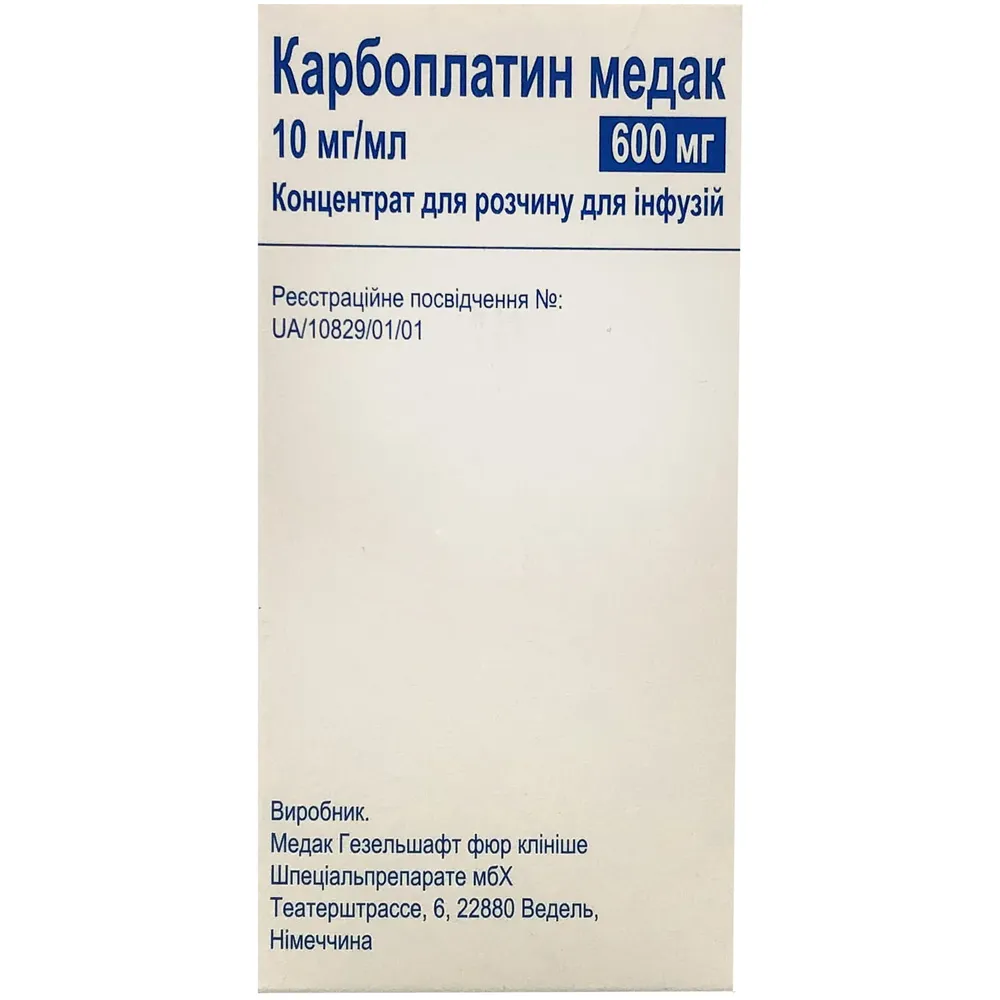
Table of Contents
INSTRUCTIONS FOR MEDICAL USE OF THE MEDICINAL PRODUCT CARBOPLATIN MEDAC (CARBOPLATIN MEDAC)
Composition:
Active substance: carboplatin;
1 ml of concentrate contains 10 mg of carboplatin;
Excipient: water for injections.
Pharmaceutical form. Concentrate for solution for infusion.
Main physicochemical properties: clear, colorless or pale yellow solution.
Pharmaco-therapeutic group. Antineoplastic agents. Platinum compounds.
ATC code L01X A02.
Pharmacological Properties.
Pharmacodynamics.
Carboplatin is an antineoplastic agent that is an inorganic platinum complex. The antitumor activity of carboplatin is comparable to that of cisplatin against a broad spectrum of tumors regardless of their localization.
Mechanism of action.
Its antitumor mechanism of action is associated with inhibition of nucleic acid synthesis, leading to cell death. The ability of the drug to induce regression of primary tumors and metastases is also related to its effect on the body's immune system.
Studies analyzing DNA binding have demonstrated qualitative similarities in the mechanisms of action of carboplatin and cisplatin. Like cisplatin, carboplatin causes changes in the superhelical conformation of DNA, which are associated with DNA shortening effects. It also induces interstrand and intrastrand cross-links in DNA.
Pharmacokinetics.
Distribution.
After intravenous administration, plasma concentrations of carboplatin and free platinum decline according to biphasic kinetics. The initial elimination half-life of free platinum is approximately 1–2 hours, while the terminal elimination half-life is 3–6 hours; total platinum has a similar initial half-life, but a longer terminal half-life (approximately 24 hours). With repeated daily dosing over four consecutive days, accumulation of platinum in plasma is not observed. Approximately 87% of platinum in plasma is protein-bound within 24 hours after administration.
Elimination.
Carboplatin is excreted in the urine, with recovery of approximately 70% of the administered platinum within 24 hours. The majority of the substance is excreted within the first 6 hours.
Total and renal clearance of free ultrafilterable platinum correlates with glomerular filtration rate, but not with tubular secretion.
Linearity/Non-linearity.
After administration of carboplatin, there is a linear relationship between dose and plasma concentrations of both total and free ultrafilterable platinum. The area under the plasma concentration–time curve (AUC) for total platinum also shows a linear dependence on dose when creatinine clearance is ≥ 60 mL/min.
Clinical Characteristics.
Indications.
Ovarian epithelial cancer and small cell lung cancer — as monotherapy or in combination with other antineoplastic agents.
Contraindications.
- Hypersensitivity to carboplatin or to other platinum-containing compounds.
- Previous severe renal dysfunction (creatinine clearance < 30 mL/min), except when, in the opinion of the physician and patient, potential benefits of treatment outweigh the risks (see section "Method of administration and dosage").
- Severe myelosuppression.
- Bleeding tumors.
- Recent significant blood loss.
- Concomitant use with yellow fever vaccine.
- Patients with a history of severe allergic reaction to platinum-containing components.
- Breastfeeding (see section "Use during pregnancy or breastfeeding")
Special precautions.
Carboplatin therapy should be administered under the supervision of an oncologist experienced in the use of chemotherapeutic agents, and in an inpatient setting where adequate patient monitoring is possible. Diagnostic and therapeutic facilities must be readily accessible for managing treatment and potential complications. If bone marrow, renal, or hepatic function impairment is detected, the drug should be discontinued.
When handling the drug, standard precautions for cytotoxic agents must be observed.
Preparation and administration of the drug solution, as with other antineoplastic agents, require caution and the use of gloves. In case of contact of the solution with skin or mucous membranes, the skin should be immediately and thoroughly washed with soap and water, and mucous membranes should be rinsed with water.
Preparation should be carried out in a specially designated area. The work surface should be covered with absorbent paper with a plastic backing for single use.
Materials (syringes, needles, liquid contents, etc.) used in the preparation of the cytotoxic agent must be disposed of with special care and in accordance with safety procedures.
Any unused drug or waste must be destroyed in compliance with national regulations for the disposal of toxic waste.
Interaction with other medicinal products and other forms of interaction.
Carboplatin is mostly used in combination with antineoplastic agents having similar cytotoxic effects. Under these circumstances, additive toxicity may occur.
When carboplatin is combined with other myelosuppressive agents, enhanced effects on the bone marrow of carboplatin and/or the co-administered agents may occur. In patients receiving concomitant therapy with other nephrotoxic substances, there is an increased risk of more pronounced and prolonged myelotoxicity due to reduced renal clearance of carboplatin.
When taking oral anticoagulants, intensified monitoring of the international normalized ratio (INR) is necessary due to the potential interaction between oral anticoagulants and carboplatin.
Concomitant use is contraindicated with yellow fever vaccine — risk of generalized vaccine disease leading to fatal outcomes.
Concomitant use with nephrotoxic or ototoxic agents such as aminoglycosides, vancomycin, capreomycin, and diuretics is not recommended, as combined use may lead to increased or enhanced toxicity due to carboplatin-induced changes in renal clearance of these agents, especially in patients with renal insufficiency.
Concomitant use is not recommended
- With live attenuated vaccines (except yellow fever vaccine) — risk of systemic disease that may lead to fatal outcomes. With inactivated vaccine (poliomyelitis).
- With phenytoin, fosphenytoin.
Phenytoin, fosphenytoin: risk of seizure exacerbation due to decreased phenytoin absorption following gastrointestinal cytotoxic agent administration, or risk of toxic increase or loss of efficacy of the cytotoxic agent due to increased hepatic metabolism of phenytoin.
Caution is required when used concomitantly with the following substances.
Concomitant use with agents exhibiting myelosuppressive, nephrotoxic, neurotoxic, or ototoxic effects may lead to mutual enhancement of toxic effects. Cisplatin enhances the neuro- and ototoxicity of carboplatin. Concomitant administration with aminoglycoside antibiotics should be avoided.
- Cyclosporines (including tacrolimus and sirolimus) — concomitant use leads to increased immunosuppression with risk of lymphoproliferative disorders.
- Chelating agents — concomitant use should be avoided, as it may reduce the antitumor effect of carboplatin.
Experimental data have shown that carboplatin acts synergistically with etoposide and vindesine. Avoid contact of carboplatin solutions with injection needles and other equipment containing aluminum (precipitation may occur when carboplatin comes into contact with aluminum).
Special precautions for use.
Warnings
Carboplatin should be administered in accordance with the instructions for handling cytotoxic agents.
In case of extravasation, the infusion must be stopped immediately and local symptomatic treatment initiated.
Regular blood counts, as well as functional tests to assess kidney and liver function, are required. If significant bone marrow suppression or abnormal kidney or liver function is detected, the drug should be discontinued.
Patients who have undergone extensive prior therapy (especially with cisplatin), patients in poor general health or over 65 years of age, and patients receiving concomitant treatment with nephrotoxic drugs may, like patients with severe renal impairment, experience severe or prolonged myelosuppression. Initial doses should be reduced for these patient groups (see section "Dosage and administration").
The interval between carboplatin treatment cycles should be no less than 4 weeks.
Hematological toxicity
Hemolytic anemia associated with serological antibodies to the drug has been reported in patients receiving carboplatin. Such reactions may be fatal.
Leukopenia, neutropenia, and thrombocytopenia are dose-dependent and dose-limiting factors during treatment.
Frequent monitoring of peripheral blood parameters is required during and after carboplatin therapy. If toxic effects occur, carboplatin treatment should be discontinued until parameters normalize. In patients receiving carboplatin monotherapy, nadir counts occur on average on day 21, and in combination therapy on day 15. A new cycle of carboplatin treatment should not be initiated until leukocyte and platelet counts have normalized (i.e., leukocyte levels ≥2000/mm³ and platelet levels ≥100,000/mm³). Administration of carboplatin causes thrombocytopenia, leukopenia, and anemia. Anemia is common and cumulative, and in some cases may require blood transfusion.
The severity of myelosuppression, particularly thrombocytopenia, increases in patients who have undergone prior therapy, especially with cisplatin, and/or who have renal impairment. Initial doses of carboplatin should be appropriately reduced for these patient groups. Combined therapy with carboplatin and other myelosuppressive treatments must be carefully planned with regard to dose and timing to minimize additive adverse effects. Myelosuppressive effects may be cumulative when combined with other chemotherapy. Patients with severe and persistent myelosuppression are at high risk of infectious complications, including fatal outcomes. If such complications occur, carboplatin therapy should be discontinued immediately.
To minimize additive effects, combination therapy involving carboplatin and other myelosuppressive agents must be carefully planned, particularly with regard to dosing and scheduling.
Patients experiencing severe bone marrow suppression may require supportive transfusion therapy. Continuous monitoring for potential toxic effects during carboplatin treatment is mandatory. A neurological examination should be performed before each treatment cycle to detect signs of neurotoxicity.
Cases of acute promyelocytic leukemia and myelodysplastic syndrome (MDS)/acute myeloid leukemia (AML) have been reported several years after treatment with carboplatin and other antineoplastic therapies.
Hemolytic-uremic syndrome (HUS)
Hemolytic-uremic syndrome (HUS) is a life-threatening adverse effect. Administration of carboplatin should be discontinued at the first signs of microangiopathic hemolytic anemia, such as rapid decline in hemoglobin levels accompanied by thrombocytopenia, elevated serum bilirubin, serum creatinine, blood urea nitrogen, or lactate dehydrogenase. Renal failure may be irreversible after discontinuation of therapy and may require dialysis.
Allergic reactions
Allergic reactions, such as erythema, unexplained fever, and pruritus, may occur during carboplatin administration. In some cases, anaphylaxis, Quincke's edema, and anaphylactoid reactions, including bronchospasm, urticaria, and facial swelling, have occurred; very rarely, treatment has been fatal. Treatment must be discontinued immediately and appropriate therapeutic measures initiated. Reactions are similar to those observed with other platinum-containing agents and may occur within minutes after administration. The frequency of allergic reactions may increase with prior exposure to platinum-containing agents, even if reactions occurred only after carboplatin administration.
Patients with a history of allergic reactions to other platinum compounds should be monitored for allergic symptoms and provided supportive treatment, including administration of antihistamines, adrenaline, and/or glucocorticoids. Further use of carboplatin after development of allergic reactions is contraindicated. Cross-reactive hypersensitivity reactions progressing to Kounis syndrome (acute allergic coronary artery spasm that may lead to myocardial infarction, see section "Adverse reactions") have been reported with all platinum compounds, sometimes with fatal outcomes.
Renal toxicity and effects on liver function
Carboplatin may impair kidney and liver function. Very high doses of carboplatin (exceeding the recommended dose by five times in monotherapy) have led to severe abnormalities in liver and kidney function. It is not yet established whether adequate hydration can counteract this renal effect. In cases of moderate to severe renal or hepatic impairment, dose reduction or treatment interruption is required (see section "Adverse reactions"). The frequency and severity of nephrotoxicity may increase in patients with pre-existing renal impairment. It is unclear whether an appropriate hydration regimen can overcome this effect, but dose reduction or treatment discontinuation is necessary in the presence of moderate renal function changes.
Patients with pre-existing renal impairment are more likely to experience more frequent and severe nephrotoxic effects during carboplatin therapy. Additionally, the risk of renal dysfunction is higher in patients who experienced nephrotoxicity during cisplatin treatment. Although there are no clinical data indicating enhanced nephrotoxic effects, carboplatin is not recommended to be combined with aminoglycosides or other nephrotoxic substances.
Renal function parameters should be monitored before and during treatment in patients with impaired renal function.
The myelosuppressive effect of carboplatin is highly dependent on renal clearance.
In patients with impaired renal function, the hematopoietic effects of carboplatin are more pronounced and prolonged compared to patients with normal renal function; therefore, carboplatin therapy should be administered with particular caution in this risk group.
Initial dosing should be reduced for these patient groups (see section "Dosage and administration").
Veno-occlusive liver disease
Cases of hepatic venous obstruction (sinusoidal obstruction syndrome of the liver), some with fatal outcomes, have been reported. Patients should be evaluated for signs and symptoms of liver dysfunction or portal hypertension that are unlikely to be due to liver metastases.
Neurological toxicity
Regular neurological examinations and hearing assessments are required, especially in patients receiving high doses of carboplatin.
Patients should be informed about the possibility of persistent symptoms of peripheral sensory neuropathy after completion of treatment. Localized mild paresthesia with functional impairment may persist for up to 3 years after completion of adjuvant therapy.
The frequency of peripheral neurological toxicity increases in patients aged 65 years and older and in patients who have previously received platinum-containing agents or cisplatin or other ototoxic medications.
Visual disturbances, including vision loss, have been reported after administration of carboplatin at doses higher than recommended in patients with renal insufficiency. Vision usually recovers fully or substantially after discontinuation of therapy. Regular monitoring and neurological examination are recommended.
Gastrointestinal toxicity
Carboplatin causes vomiting. The frequency and severity of vomiting can be reduced by premedication with antiemetic agents, continuous 24-hour infusion of carboplatin, or administration of divided doses over 5 days instead of a single infusion. Selective serotonin type 3 (5-HT3) receptor antagonists (e.g., ondansetron) or substituted benzamides (e.g., metoclopramide) may be particularly effective antiemetics, and combination therapy may be considered for patients with refractory or severe vomiting.
Reversible posterior leukoencephalopathy syndrome (RPLS)
Cases of reversible posterior leukoencephalopathy syndrome (RPLS) have been reported in patients receiving carboplatin as part of combination chemotherapy. RPLS is a rare, reversible neurological disorder that rapidly develops after discontinuation of treatment and may include seizures, hypertension, headache, confusion, blindness, and other visual and neurological disturbances. Diagnosis of RPLS is confirmed by brain imaging, preferably using MRI (magnetic resonance imaging).
Tumor lysis syndrome (TLS)
Cases of tumor lysis syndrome (TLS) have been reported in the post-marketing period in patients treated with carboplatin or carboplatin in combination with other chemotherapeutic agents. Patients at high risk of TLS—those with tumors characterized by high proliferative activity, extensive tumor burden, or high sensitivity to cytotoxic agents—should be monitored, and appropriate preventive measures should be taken.
Use in elderly patients
During combined therapy with carboplatin and cyclophosphamide, elderly patients were more prone to develop severe thrombocytopenia than younger patients.
Since renal function is often reduced in elderly patients, this factor must be considered when determining the drug dosage (see section "Dosage and administration").
Carboplatin dosing
Estimation of glomerular filtration rate using the Cockcroft–Gault method, which is important for treatment, should be supplemented by standard measurement methods (e.g., inulin, 51Cr–EDTA, 99mTc–DTPA, 125I–iothalamate, or iothalamate) whenever possible in certain subgroups (e.g., age 40–59 years or body mass index (BMI) 20–25).
Other
Administration of live or attenuated live vaccines to immunocompromised patients during chemotherapy, including with carboplatin, may lead to severe infections, sometimes with fatal outcomes. Therefore, live vaccines should be avoided during carboplatin treatment. Inactivated or non-live vaccines may be administered, although the immune response may be reduced (see also section "Interaction with other medicinal products and other forms of interaction").
Data on the carcinogenic potential of carboplatin are lacking. However, there are reports of carcinogenic effects of substances with a similar mechanism of action and mutagenicity. Appropriate measures to prevent pregnancy should be taken during treatment and for at least 6 months thereafter. Men should also use contraception during treatment and for at least 3 months after treatment due to the mutagenic potential of carboplatin, which may damage chromosomes in human spermatozoa. Sperm cryopreservation is recommended before starting therapy. Pregnant women should avoid contact with carboplatin.
Premedication with antiemetics may help reduce the frequency and severity of nausea and vomiting caused by carboplatin.
Hepatotoxic effects associated with nephrotoxic effects have been observed with very high-dose carboplatin therapy.
Instruments containing aluminum must not be used during the preparation and administration of carboplatin (see section "Interaction with other medicinal products and other forms of interaction").
Paediatric population
The safety and efficacy of carboplatin in children and adolescents have not been established.
Use during pregnancy or breastfeeding.
Pregnancy
Carboplatin may harm the fetus if used during pregnancy. Carboplatin has demonstrated embryotoxic and teratogenic effects in rat studies during organogenesis. Controlled studies in pregnant women have not been conducted. If use during pregnancy is necessary, the patient must be informed of the fetal risk. Women of reproductive potential should use contraception during treatment and for at least 6 months after treatment.
Lactation
It is not fully established whether carboplatin or its platinum-containing metabolites are excreted in breast milk. However, due to the potential for serious adverse reactions in infants, breastfeeding must be discontinued during carboplatin treatment (see section "Contraindications").
Effects on fertility
Carboplatin is genotoxic; therefore, patients of reproductive potential (women and men) and their partners should use effective contraception during treatment and for at least 3 months after therapy. Men are advised to undergo sperm cryopreservation before starting carboplatin therapy due to the risk of irreversible infertility.
Ability to affect driving and use of machines
Carboplatin may cause nausea, vomiting, visual disturbances, and ototoxicity; therefore, driving and operating machinery are not recommended during treatment. Depending on individual sensitivity, carboplatin may impair the ability to drive or operate machinery.
Method of administration and dosage.
Carboplatin is intended for intravenous use only, after dilution.
For adult patients who have not received prior treatment and who have normal renal function, carboplatin injections should be administered at a dose of 400 mg/m² of body surface area by short intravenous infusions (lasting 15–60 minutes).
Doses may also be calculated using the Calvert formula based on the patient's glomerular filtration rate (GFR) and the desired area under the pharmacokinetic concentration-time curve (AUC). It should be noted that doses calculated by the Calvert formula are expressed in milligrams, not mg/m².
Dose (mg) = desired AUC (mg/ml × min) × [GFR (ml/min) + 25]
| Target AUC |
Chemotherapy |
Patient status |
| 5–7 mg/ml × h |
Carboplatin monotherapy |
Previously untreated |
| 4–6 mg/ml × h |
Carboplatin monotherapy |
Previously treated |
| 4–6 mg/ml × h |
Carboplatin + cyclophosphamide |
Previously untreated |
Do not use the Calvert formula to calculate doses for patients who have received prior prolonged therapy with the following agents:
- Mitomycin C;
- Nitrosourea;
- Combination therapy with doxorubicin/cyclophosphamide/cisplatin;
- Combination therapy with 5 or more agents;
- Radiation therapy ≥ 4500 rad delivered to an area of 20×20 cm or larger at more than one site.
Carboplatin therapy must be discontinued if the tumor does not respond to treatment, the disease progresses, or unacceptable adverse reactions occur.
Treatment courses may be repeated at intervals of not less than 4 weeks, provided blood counts are: neutrophils ≥ 2000/mm³ and platelets ≥ 100,000/mm³ (see section "Special instructions").
A 20–25% reduction in the initial dose is recommended for patients with risk factors such as prior myelosuppressive therapy (see section "Special instructions") and poor performance status (ECOG-Zubrod 2–4 or Karnofsky score below 80%).
All dosage recommendations listed above apply to the initial treatment course; subsequent doses should be adjusted based on weekly blood test results.
Renal impairment
Optimal use of carboplatin injections in patients with impaired renal function requires appropriate dose adjustments and continuous monitoring of hematological parameters and renal function (see section "Special instructions").
In patients with creatinine clearance below 60 mL/min, the risk of developing severe myelosuppression increases.
With the following dosage recommendations, the incidence of severe leukopenia, neutropenia, or thrombocytopenia was maintained at approximately 25%:
| Baseline creatinine clearance |
Initial dose (Day 1) |
| 41 – 59 mL/min |
250 mg/m², intravenous injection |
| 16 – 40 mL/min |
200 mg/m², intravenous injection |
In patients with creatinine clearance below 30 mL/min, an individual benefit/risk assessment should be performed prior to initiating carboplatin therapy.
There is insufficient data on the use of carboplatin injections in patients with creatinine clearance of 15 mL/min or less to provide treatment recommendations.
All the above dosing recommendations apply to the initial treatment course. Subsequent doses should be adjusted according to patient tolerance and acceptable levels of myelosuppression.
Combination therapy
The use of carboplatin in combination with other antineoplastic agents requires individual dose adjustments and must be determined according to the specific regimen and schedule (see section "Special precautions for use").
Paediatric population
There is insufficient experience with the use of carboplatin in children; therefore, no dosing recommendations can be made for this age group.
Elderly patients
Carboplatin doses during the first and subsequent treatment cycles should be adjusted according to the patient's overall health status.
Reconstitution
Prior to administration, the drug should be diluted with 5% dextrose solution or 0.9% sodium chloride solution to a concentration of 0.5 mg/mL.
The diluted solution is stable for 24 hours when stored refrigerated (4°C). From a microbiological standpoint, the diluted solution should be administered immediately.
Carboplatin may interact with aluminium, forming a black precipitate. Needles, syringes, catheters, or intravenous administration sets containing aluminium components that may come into contact with carboplatin should not be used for preparation or administration of the drug (see section "Incompatibilities"). The solution should be drawn directly from the vial immediately before use. Single withdrawal of the medicinal product from the vial is permitted. Appropriate handling procedures for cytotoxic agents should be followed when working with the drug.
Children
There is insufficient information on the use of the medicinal product in the paediatric population; therefore, it should not be administered to children.
Overdose
Symptoms of overdose. During initial clinical trials, carboplatin was administered at doses up to 1600 mg/m² per course. At this dosage, life-threatening hematological adverse reactions such as granulocytopenia, thrombocytopenia, and anemia were observed. The nadir values for granulocytes, platelets, and hemoglobin occurred on days 9–25 (on average, days 12–17). Granulocyte counts recovered to ≥ 500/µL within 8–14 days (on average, by day 11), and platelet counts recovered to ≥ 25,000/µL within 3–8 days (on average, by day 7).
In addition, the following non-hematological adverse reactions were observed: renal dysfunction with a 50% reduction in glomerular filtration rate, neuropathies, ototoxicity, vision loss, hyperbilirubinemia, mucositis, diarrhea, nausea and vomiting with headache, erythema, and severe infection. Hearing disturbances were in most cases transient and reversible.
Treatment of overdose.
There is no specific antidote for carboplatin overdose. Possible complications of overdose may include bone marrow suppression as well as hepatic and renal dysfunction. In the management of hematological adverse reactions, bone marrow transplantation and transfusions (platelets, blood) may be effective.
Adverse Reactions
The frequency of adverse reactions is classified as follows:
Very common (≥1/10), common (≥1/100 to <1/10), uncommon (≥1/1000 to <1/100), rare (≥1/10000 to <1/1000), very rare (<1/10000), frequency not known (cannot be estimated from the available data).
Infections and infestations
Common – infectious complications*.
Frequency not known – pneumonia.
Benign, malignant and unspecified neoplasms (including cysts and polyps)
Uncommon – recurrence of tumours (including promyelocytic leukaemia occurring 6 years after carboplatin monotherapy and prior radiotherapy) has been observed after completion of carboplatin monotherapy as well as combination therapy (causal relationship not established).
Frequency not known – secondary malignancies associated with treatment.
Blood and lymphatic system disorders
Very common – thrombocytopenia, neutropenia, leucopenia, anaemia.
Common – haemorrhage*, infection-related complications in patients with poor general health status (<1% lead to fatal outcome).
Rare – febrile neutropenia, sepsis/septic shock.
Frequency not known – blood dyscrasias, haemolytic-uraemic syndrome.
Bone marrow suppression may be more severe and prolonged in patients aged 65 years and older.
Myelosuppression is the dose-limiting factor in carboplatin therapy. With carboplatin monotherapy at maximally tolerated doses, thrombocytopenia (platelet count < 50,000/mm³) occurs in 25% of patients. Neutropenia (granulocyte count < 1,000/mm³) occurs in 18% of patients. Leucopenia (white blood cell count < 2,000/mm³) occurs in 14% of patients. The nadir of platelets, granulocytes, and leucocytes is usually observed on day 21 after the start of treatment. Myelosuppression may be enhanced when carboplatin is used in combination with other myelosuppressive agents.
Myelotoxicity is more pronounced in patients previously treated with cisplatin, those with impaired renal function, and those with more severe somatic status. These effects, although usually reversible, led to infectious and haemorrhagic complications in 4% and 5% of patients receiving carboplatin injections, respectively. These complications resulted in fatal outcomes in less than 1% of patients.
Anaemia (haemoglobin level < 8 g/dL) occurs in 15% of patients with normal baseline values, with severity increasing with cumulative carboplatin dose.
Myelosuppression may be more severe and prolonged in patients with impaired renal function, those who have undergone intensive prior therapy, those with low performance status, and those aged over 65 years.
With maximally tolerated doses of carboplatin administered as monotherapy, thrombocytopenia with a nadir platelet count below 50 x 10⁹/L occurs in approximately one-third of patients. The nadir typically occurs between days 14 and 21, with recovery by day 35 after the start of therapy.
Leucopenia also occurs in approximately 20% of patients, but recovery from the nadir (days 14–28) may be slower and usually occurs by day 42 after the start of therapy. Neutropenia with granulocyte count below 1 x 10⁹/L occurs in approximately one-fifth of patients. Haemoglobin values below 9.5 mg/100 mL were observed in 48% of patients with normal baseline values.
With monotherapy using carboplatin at recommended doses and administration intervals, myelosuppression is usually reversible and noncumulative.
Platelet counts usually recover within 35 days after drug administration.
White blood cell counts usually recover somewhat more slowly than platelets—within 42 days after drug administration.
Carboplatin treatment may be continued only if platelet count is at least 100,000/μL and leucocyte count is at least 4,000/μL. If cell counts are below these levels, therapy must be discontinued until normal values are restored (usually within 5–6 weeks). In severe cases, supportive transfusion therapy or blood transfusions may be required.
Respiratory, thoracic and mediastinal disorders
Very rare: pulmonary fibrosis, presenting as chest tightness and dyspnoea. This should be considered if pulmonary hypersensitivity is excluded.
Immune system disorders
Common – hypersensitivity reactions (including skin rashes, urticaria, erythema, unexplained fever, or pruritus), anaphylactoid reactions, sometimes with fatal outcomes, especially within the first minutes after drug administration (angioneurotic oedema, dyspnoea, bronchospasm, urticaria, anaphylactic shock, hypotension, dizziness, tachycardia).
Allergic reactions to carboplatin have been reported in less than 2% of patients.
Treatment is symptomatic (see section "Special precautions for use").
Metabolism and nutrition disorders
Very common – following carboplatin therapy, decreased serum electrolyte levels (magnesium, potassium, sodium, calcium) have been reported; however, these manifestations were not severe enough to cause clinical signs or symptoms. Early hyponatraemia has also been reported.
Rare – anorexia, hyponatraemia.
Frequency not known – dehydration, tumour lysis syndrome.
Nervous system disorders
Common – peripheral neuropathy, paraesthesia, decreased tendon reflexes, sensory disturbances, taste disturbances.
The incidence of peripheral neuropathy following carboplatin therapy is 4%. In most patients, neurotoxicity is limited to paraesthesias and reduced deep tendon reflexes. The frequency and severity of adverse effects are increased in patients aged 65 years or older or those previously treated with cisplatin. Paraesthesias present before the start of carboplatin therapy, primarily due to prior cisplatin therapy, may persist or worsen during carboplatin treatment.
In isolated cases, symptoms related to the central nervous system have been reported, which are often attributable to concomitant antiemetic use. Clinically significant sensory disturbances (e.g., visual disturbances, taste changes) occurred in 1% of patients. The incidence of neurological adverse effects was higher in patients receiving carboplatin as part of combination therapy, possibly due to cumulative effects.
Uncommon – symptoms related to the central nervous system (often associated with antiemetic use).
Frequency not known – cerebrovascular disorders*, reversible posterior leukoencephalopathy syndrome (RPLS), possible hallucinations, anxiety, and frightening dreams, encephalopathy.
Eye disorders
Common – visual disturbances. Isolated cases of vision loss.
Transient worsening of vision, including temporary vision loss, has been reported during treatment with platinum-containing agents. These disturbances usually occur only with high-dose therapy in patients with impaired renal function.
Frequency not known – optic neuritis.
Ear and labyrinth disorders
Very common – hearing loss in the high-frequency range (4000–8000 Hz) was detected in 15% of patients.
Common – ototoxicity.
Clinical symptoms were observed in only 1% of patients, predominantly manifesting as tinnitus.
In patients with hearing loss due to prior cisplatin therapy, hearing impairment may persist or worsen. Clinically significant hearing loss has been observed in children who received higher-than-recommended doses of carboplatin in combination with other ototoxic agents.
Cardiac disorders
Common – cardiac disorders*.
Very rare – isolated cases of cardiovascular disease (heart failure, embolism), as well as cerebrovascular events (stroke) (causal relationship with carboplatin use not established), arrhythmia. Isolated cases of hypertension have been reported.
Frequency not known – heart failure*, ischaemic heart disease (e.g., myocardial infarction, cardiac arrest, angina, myocardial ischaemia), Kounis syndrome.
Vascular disorders
Frequency not known – embolism*, arterial hypertension, arterial hypotension.
Haemorrhagic complications may occur.
Respiratory, thoracic and mediastinal disorders
Common – pulmonary fibrosis with chest tightness and dyspnoea, interstitial lung disease, bronchospasm.
Gastrointestinal disorders
Very common – vomiting, nausea, abdominal pain.
Vomiting occurs in 65% of patients, with severe symptoms in one-third of these. Additionally, nausea occurs in 15% of patients. Patients previously treated with cisplatin are more prone to gastrointestinal symptoms. These symptoms are usually controlled with antiemetics and resolve within the first 24 hours after carboplatin administration. One-quarter of patients experience neither nausea nor vomiting. Only 1% of patients experience vomiting refractory to medical treatment. Additionally, 17% of patients reported gastrointestinal pain.
Common – diarrhoea (8%), constipation (6%), mucositis, inflammation of the oral and oesophageal mucosa.
Frequency not known – stomatitis, pancreatitis.
Hepatobiliary disorders
Very common – changes in liver function of mild to moderate severity have been reported in approximately one-third of patients with normal baseline values receiving carboplatin. Alkaline phosphatase increases more frequently (in 24% of patients) than serum glutamic-oxaloacetic transaminase (in 15% of patients), serum alanine aminotransferase, or total bilirubin (in 5% of patients). Most abnormalities spontaneously normalize during the course of treatment. In half of patients, these changes were predominantly mild and reversible.
In a limited group of patients receiving high-dose carboplatin injections and undergoing autologous bone marrow transplantation, liver function test abnormalities were observed.
Frequency not known – severe liver dysfunction (including acute hepatic necrosis) occurring after administration of higher-than-recommended doses of carboplatin.
Skin and subcutaneous tissue disorders
Common – alopecia, skin disorders.
Rare – exfoliative dermatitis.
Frequency not known – urticaria, rash, erythema, pruritus.
Musculoskeletal and connective tissue disorders
Common – musculoskeletal disorders.
Frequency not known – asthenia, myalgia, arthralgia.
Renal and urinary disorders
Very common – renal toxicity.
Renal toxicity generally does not require dose limitation in patients receiving carboplatin and does not necessitate preventive measures such as high-volume hydration or forced diuresis. However, blood urea and serum creatinine levels may increase.
Renal insufficiency may occur, defined as a creatinine clearance below 60 mL/min. The likelihood and severity of nephrotoxicity may increase in patients with pre-existing renal impairment before starting carboplatin therapy. It is unknown whether this adverse effect can be prevented by appropriate hydration regimens, but dose reduction or discontinuation of carboplatin therapy is required if renal test results are abnormal (creatinine clearance 30–59 mL/min). Carboplatin is contraindicated in patients with creatinine clearance < 30 mL/min.
Common – urogenital disorders, hyperuricaemia.
Abnormal renal function rarely develops during administration of standard doses, despite carboplatin injections being given without high-volume hydration or forced diuresis. Elevated serum creatinine levels were recorded in 6% of patients, increased blood urea nitrogen in 14%, and elevated uric acid in 5%. These abnormalities were generally mild and reversible in approximately half of patients. Creatinine clearance measurement is the most accurate test of renal function in patients receiving carboplatin injections. Among patients with baseline creatinine clearance ≥60 mL/min, 27% experienced a decline in creatinine clearance during carboplatin therapy.
Hyperuricaemia occurs in approximately 25% of patients. Allopurinol may be used to reduce serum uric acid concentration.
Uncommon – renal insufficiency.
Reproductive system and breast disorders
Frequency not known – azoospermia and amenorrhoea.
General disorders and administration site conditions
Common – asthenia.
Frequency not known – fever and chills without evident signs of infection, headache, malaise, injection site reactions such as erythema, swelling, urticaria, necrosis due to extravasation.
Laboratory test changes
Very common – decreased renal creatinine clearance, increased blood urea levels, increased serum alkaline phosphatase, increased aspartate aminotransferase, liver function test abnormalities, decreased serum sodium, potassium, calcium, and/or magnesium levels.
Common – increased serum bilirubin, increased serum creatinine, increased serum uric acid.
Other adverse effects
Secondary acute malignant neoplasms following cytostatic combination therapy with carboplatin. Acute promyelocytic leukaemia occurring 6 years after carboplatin monotherapy and prior radiotherapy.
Alopecia, pruritus, mucositis, asthenia, malaise, dysgeusia, anxiety, weight loss, tachycardia.
In isolated cases, haemolytic-uraemic syndrome has been reported.
Isolated cases of cardiovascular disease (heart failure, embolism), isolated cases of stroke. Cases of increased blood pressure have been observed.
*Fatal outcomes <1%, fatal cardiovascular outcomes <1%, including heart failure, embolism, and cerebrovascular disease.
Reporting suspected adverse reactions.
Reporting suspected adverse reactions after medicinal product authorization is important. It allows continued monitoring of the benefit-risk balance of the medicinal product. Healthcare professionals, pharmacists, patients, and their legal representatives should report all suspected adverse reactions and lack of efficacy via the Automated Pharmacovigilance Information System at: https://aisf.dec.gov.ua.
Shelf life. 24 months.
Storage conditions.
Store in the original packaging to protect from light. Store at temperatures not exceeding 25°C. Do not freeze. Keep out of reach of children.
Incompatibilities.
Do not mix with other medicinal products in the same container, except those specified in the section "Dosage and administration".
Packaging.
Concentrate for infusion solution 10 mg/mL in 5 mL, 15 mL, 45 mL, 60 mL, and 100 mL vials. One vial per cardboard package.
Prescription category. Prescription only.
Manufacturer.
Medac Gesellschaft für klinische Spezialpräparate mbH
Medac Gesellschaft fur klinische Spezialpraparate m.b.H.
Onkotec Pharma Produktion GmbH
Manufacturer's address.
Theaterstrasse, 6, 22880 Wedel, Germany
Am Pharmapark, 06861 Dessau-Rosslau, Germany